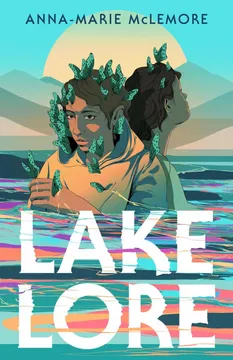


Plot Summary
A Field Trip Opens Below
On a school trip, Lore2 asks a guide how much water fills the lake, then shrinks back when Merritt Harnish4 mocks their halting reading. After Lore2 punches him, Jilly Uhlenbruck14 laughs, and Merritt's4 friends chase Lore2 toward the inlet. Bastián,1 a child who has privately seen a world beneath the lake, spots Lore2 running and recognizes something familiar in their guardedness.
Shimmering water wings lift from the lake, revealing a hidden landscape of glowing-eyed creatures and towering aquatic plants. Bastián1 leads Lore2 inside so they can escape pursuit. Lore2 leaves once the danger passes, calling thanks over their shoulder. Bastián1 realizes too late that they should have asked Lore's2 name.
The first refuge is also the first act of recognition. Bastián responds to Lore's fear before either child has language for what they share, and the lake makes that recognition physically real. The contrast between the adults' diminishing folklore and the children's direct experience establishes a world where what cannot be explained still has consequences. Lore's flight and Bastián's delayed question also plant the book's recurring tension: care may arrive instinctively, while connection requires the harder work of staying present.
Bad Days Take Shape
As Bastián1 grows up, his family seeks help for his restlessness, overwhelm, and difficulty holding instructions in mind. His older brother Antonio3 teaches him to build alebrijes from wire, papier-mâché, and paint, giving Bastián1 a way to make difficult feelings tangible.
When one dropped creature comes alive beneath the lake, Bastián1 begins sending the finished figures there, believing the painful days they represent can be left behind. Lore,2 meanwhile, faces years of ridicule over dyslexia and gender.
After Merritt4 grabs their shirt and binder at school, Lore2 fights back, injuring him, then endures suspension and threats from his friends. Fearing further harm, Lore's parents12 move the family. Lore2 later chooses their name from the fading LAKELORE sign.
The children develop opposite versions of the same survival strategy. Bastián gives distress an external form and sends it away; Lore learns to conceal distress until it becomes impossible to contain. Neither response is simply a flaw: each is an adaptation to a world that offers inadequate support. The alebrijes begin as a practical tool for managing Bastián's mind, while Lore's chosen name turns a nearly erased local sign into a source of self-recognition. Their coping methods will eventually meet at the lake, where the difference between making space and making something disappear becomes crucial.
The Shore Finds Them Again
Years later, Lore2 moves with their parents to Bastián's1 town and begins work restoring furniture in their new home. Bastián,1 now sixteen, starts testosterone; at the clinic, water and underwater plants briefly appear around the nurse giving the first injection. Lore2 sees similar blue light in a washing machine and in a book, then remembers the childhood field trip.
At the old inlet, Lore2 finds Bastián1 struggling against water rushing over the rocks and pulls them to safety. Bastián1 recognizes Lore,2 who gives their name and pronouns. Before they can make sense of the reunion, the shore darkens and changes around them. The landscape resembles the lakebed, but Bastián1 insists they are not beneath the lake.
The reunion ties two previously separate forms of transition together: Bastián's bodily affirmation and Lore's return to the place where their name began. Their rescue reverses the childhood scene without erasing it. This time Lore is the one who reaches down, and both can identify themselves. Yet the altered shoreline refuses to behave like a simple return to the past. The familiar world is present but rearranged, suggesting that memory does not reopen as an intact place. It changes the conditions of the present, even before either character understands why.
A Lake Without a Way Back
Lore2 notices water withdrawing across the altered landscape and follows it, prompting Bastián1 to recognize the movement as a lake seiche. When the scenery abruptly returns to normal, Lore2 is soaked and late for an appointment with Amanda,9 a learning specialist. Lore2 waits for hours until Amanda9 can begin their session, then finds their book opening onto a patch of luminous darkness.
They go to Bastián's1 home to ask what is happening. Bastián1 explains the world beneath the lake and the living alebrijes, admitting that they have used the place to send away difficult experiences. Lore2 connects the fading LAKELORE sign to their chosen name. Bastián1 asks Lore2 to avoid the lake, but neither knows how to stop its appearances.
This section shifts the lake from private wonder to shared problem. Lore's attentiveness to the retreating water gives them a role in interpreting the magic, while Bastián's knowledge proves incomplete. Their conversation also establishes an uneven intimacy: Bastián can explain the mechanics of the alebrijes but not the new disturbance, and Lore can connect the sign to identity without yet disclosing the fear that brought them there. The learning appointment grounds the uncanny in ordinary stakes, since magical disruptions now threaten Lore's fragile attempt to begin again.
The House Starts Laughing
The lake's altered colors spread through Bastián's1 house and street, and living alebrijes fly past as Lore2 arrives to find them. Bastián1 crosses a watery opening in the wall, while Lore2 helps them return and describes the strange laugh that has been coming from their new home. Bastián1 suspects their alebrijes may be drawing the hidden world upward.
They bring Lore2 to their queer friend group, where Abril5 investigates the building's local history. Her grandmother's stories describe a house that reacts to neglect and expects care. Lore2 responds by cleaning, opening curtains, and tending the old rooms. Bastián's1 friends make space for Lore,2 while the house's laughter keeps reminding them that its disturbance is not yet settled.
The house turns the supernatural conflict into a question of relationship rather than conquest. Abril's family lore offers a practice of attention, not an exorcism, and Lore responds by caring for the building instead of treating it as an enemy. The friends' easy welcome provides a contrasting social space: unlike the school Lore left, this group does not require them to earn basic respect. Still, the laugh makes clear that good intentions cannot resolve a history no one has yet named. The house's response is intimate because it seems to echo something inside Lore.
They Learn Each Other's Weather
When the lake settles into a quieter landscape, Lore2 explains how dyslexia separates the words they hear from the words they see, and why familiar text can be easier than sounding out a new word. Bastián1 listens without trying to correct them. Later, Lore2 encounters Bastián1 at work, where they invent daily gender forecasts that let each describe their changing sense of self without forcing it into fixed labels.
Bastián1 admits they are struggling to learn their home testosterone injections. Lore2 offers to help, reads the instructions aloud, and guides Bastián1 through practice injections using oranges. Bastián1 repeatedly asks for steps to be repeated, and Lore2 patiently adapts the instructions until Bastián1 can follow them.
Intimacy grows through accommodations rather than grand declarations. Lore translates written directions into a form Bastián can use; Bastián receives Lore's account of dyslexia without treating it as a deficit to be corrected. Their gender forecasts similarly resist the demand for permanent categories, making change speakable without requiring a defense. These acts are concrete expressions of care: each character notices how the other's mind works and adjusts their own behavior. The scene also challenges the idea that independence means managing everything alone. Asking for help becomes a learned skill, and offering it becomes a form of trust.
Paint Becomes a Flood
Believing Bastián's1 method might calm the house, Lore2 opens paint samples at the inlet and lets their colors drift into the hidden world. The laugh seems to follow the paint away, but the relief does not last. Water and kelp later surge through Lore's2 home, lifting unfinished furniture and filling the rooms with hostile echoes.
Lore2 freezes beneath a moving table as voices repeat the ridicule they endured at school. Bastián1 reaches them, pulls them clear of a crashing cabinet, and leads them into the street. Lore2 blames themself for the destruction. Bastián1 asks before embracing them, and the two remain together while the water recedes. Their first shared refuge is now physical closeness.
Lore's experiment is not foolishness so much as an attempt to borrow a coping practice whose limits they do not yet understand. The lake accepts the paint, but the act does not settle what the paint carries. Instead, the flood makes buried harm spatial and immediate, turning the furniture Lore restores for their family into a danger. Bastián's consent-seeking embrace offers a counterexperience to the violation Lore has endured. Care here does not erase the event or solve the magic; it interrupts isolation long enough for Lore to return to the present.
The Parts They Hid
After the flood, Lore2 admits they caused it by copying Bastián's1 ritual with paint. Bastián1 insists the method is the only way they know to manage distress, while Lore2 questions whether painful parts must always be sent away. When Bastián1 admits they fear being liked only because others never see their most difficult moments, Lore2 cannot answer honestly.
They leave rather than reveal their own history. Alone, Bastián1 returns to the lake and refuses to follow the alebrijes when they invite them closer. The distance between the two grows, even as Bastián1 begins to suspect the creatures are carrying more than unwanted memories. Their conflict leaves both characters facing the cost of treating shame as something that can be removed.
The rupture comes from a genuine difference in what safety requires. For Bastián, the alebrijes provide enough distance to function; for Lore, the same distance risks turning self-protection into self-erasure. Neither has the language to distinguish a useful coping strategy from a demand to disown part of oneself. Lore's silence protects a specific secret, but it also deprives Bastián of the context behind their challenge. Bastián's retreat to the lake is not yet reconciliation. It is the first moment they consider that the things they have sent away may belong to them.
The Past Breaks Through
The magic intensifies, turning Bastián's1 home into a flooded landscape where broken cups, torn recipe pages, and old hiding places return. Lore2 arrives and asks permission before touching Bastián,1 helping them remain present as memories rise. Elsewhere, Lore2 hears the old taunts and relives the school harassment that preceded their fight with Merritt.4
They recall how he grabbed their shirt and binder, how they struck back, and how adults failed to protect them. The laugh that has haunted the new house finally makes sense: it is the frightened laugh Lore2 once forced to survive the bullying. Both discover that the hidden world is returning experiences they tried to exile, not inventing new ones.
The supernatural crisis exposes the limits of containment. The lake does not punish either character; it makes visible what their coping systems could not permanently bury. Lore's forced laugh is especially revealing because it once functioned as social camouflage, then returned as an apparently alien sound. Bastián's objects similarly show that ordinary mistakes became lasting evidence in their mind. Consent and presence matter in this climax: Lore asks before touching, and Bastián lets them stay. Their careful contact does not cancel the past, but it prevents the past from having the only voice in the room.
They Choose What to Keep
After the visions, Bastián1 visits Antonio3 and discovers that his brother3 kept many alebrijes made on bad days. Antonio3 explains that the figures helped him shape difficult feelings, not erase them. Bastián1 then finds, beneath the lake, reminders not only of distress but of the tools and adaptations that helped them live.
Lore,2 meanwhile, tells Amanda9 more about the harassment and learns that fighting back did not justify the school's failure to protect them. When a man harasses Lore2 on a bus, they hold his gaze until he gets off, choosing not to perform a reassuring smile. Lore2 then contacts Bastián's1 friends and asks how to reach Antonio's3 home. Both begin turning toward connection instead of concealment.
The characters' progress is not a sudden cure but a change in what they are willing to preserve. Antonio's collection reframes the alebrijes as records of making, not containers for discarded defects. Lore's encounter on the bus similarly separates the act of looking back from surrender: they can confront a stranger without repeating the old pattern of appeasing bullies. Amanda's recognition gives Lore a language for institutional failure, but Lore's own action supplies the immediate change. Each begins to reclaim authorship over the meaning of past events.
The Lake Keeps Their Names
At Antonio's3 home, Lore2 tells Bastián1 the full story of Merritt,4 the field-trip chase, and the fight that forced their family to move. Bastián1 does not demand an apology or reduce Lore2 to the violence; they recognize that Lore2 fought when no one else protected them. Lore2 admits they want both friendship and the possibility of love. They kiss, with Bastián's1 painted hand leaving color on Lore's2 cheek.
Before the school year, Lore2 repaints the faded LAKELORE letters in blue, restoring the sign that helped them find their name. Bastián1 succeeds in giving themself a testosterone injection and makes alebrijes without sending them away. At the inlet, the pair enter the hidden world by choice, no longer trying to separate it from themselves.
The ending resolves the book's central question through changed practice, not a magical cure. Lore can tell the truth without making the fight their entire identity; Bastián can create without turning every difficult day into something to exile. Repainting the sign is an act of repair that honors both the lake's history and Lore's chosen name. Their return beneath the water is no longer an escape arranged by Bastián for a frightened child. They approach together, able to see one another without asking either person to become simpler, safer, or more legible.
Analysis
Lakelore makes magical realism a language for experiences that are often treated as invisible or unbelievable. Bastián's1 ADHD and Lore's2 dyslexia are not metaphors to be solved by fantasy; both shape concrete routines, school experiences, and the amount of effort each character spends appearing fine. The magic instead literalizes the pressure of managing what other people cannot see. Bastián's1 alebrijes turn distress into something workable, but sending every difficult part away risks turning self-regulation into self-rejection. Lore's2 attempt to imitate that method shows that a useful practice cannot be detached from the person and history that shaped it.
The lake also tests what a community does with knowledge. The old sign's folklore has nearly disappeared, yet local understanding persists through Abril's grandmother,5 through Bastián's1 observations, and through Lore's2 attention to the water. Care in this story is similarly cumulative and practical: Bastián1 asks before touching Lore,2 Lore2 rereads the injection instructions with them, and Antonio3 preserves art made during bad days. These gestures do not remove disability, trauma, or uncertainty. They make living with them less solitary.
The romance succeeds because it does not ask either teenager to become a symbol of healing for the other. They misread, withdraw, and hurt each other, then choose more honest forms of contact. Their final return to the lake does not mean they have mastered every inner current. It means they can enter the same strange landscape without requiring one another to hide the parts that are difficult to carry.
Review Summary
Lakelore receives generally positive reviews, averaging 3.85/5. Readers praise Anna-Marie McLemore's lyrical, atmospheric prose and meaningful representation of neurodivergent, non-binary, and Latinx characters. Many reviewers, particularly those with ADHD or dyslexia, felt deeply seen. Common criticisms include underdeveloped worldbuilding around the lake, repetitive pacing, and occasionally preachy themes. The magical realism elements and emotional resonance are frequently highlighted as strengths, while some readers found the plot unclear and side characters underdeveloped.
Characters
Bastián Silvano
The lake's careful makerBastián is a Mexican American, nonbinary teenager who is also a boy, and the only person in town who knows the hidden world beneath the lake before Lore2 finds it. They live with ADHD, including restless energy, sensory overwhelm, impulsivity, and working-memory difficulties. Their alebrijes give their hands something focused to do and help them manage feelings that otherwise crowd their attention. Bastián is curious and observant, though their speed of thought can make conversation difficult and their fear of burdening others can keep them from asking for help. Family, art, and gender affirmation matter deeply to them. They want to be understood, yet struggle to believe others can accept every part of them.
Lore Garcia
The name found at the lakeLore is a Mexican American, nonbinary teenager whose gender shifts across a range that includes boy and girl. They are dyslexic, with a strong visual memory and a distinctive way of recognizing written words, but years of correction and ridicule have made reading feel exposed. Lore is perceptive, funny, resourceful, and skilled with their hands, especially when restoring furniture with their parents. They can read a room quickly, but that vigilance comes from having to anticipate danger and judgment. Their instinct to protect themself by withholding painful history makes connection difficult. Lore wants a fresh beginning without pretending that the past did not shape them.
Antonio
Bastián's craft mentorAntonio is Bastián's1 much older brother, a patient maker of alebrijes who teaches Bastián1 the family craft. He offers companionship without demanding that Bastián1 explain every feeling first, and his example gives the younger sibling a way to work through frustration with their hands. Antonio's steadiness matters because he treats making as a practice, not a cure or a test of character.
Merritt Harnish
Lore's school tormentorMerritt is a classmate who mocks Lore's2 reading and later targets their gender expression. He uses an audience to make cruelty seem like ordinary humor, then reacts badly when Lore2 refuses the role he has assigned them. His presence exposes how bullying gains power when peers and adults treat repeated humiliation as harmless.
Abril
The folklore researcherAbril is one of Bastián's1 queer friends and the granddaughter of a woman who knows local lake stories. She is confident, playful, and eager to investigate what others dismiss as superstition. Her knowledge connects the teenagers' immediate problem to the town's longer relationship with the lake and its buildings.
Vivienne
The welcoming matchmakerVivienne is Abril's5 girlfriend and one of Bastián's1 closest friends. Warm and outgoing, she actively seeks out queer newcomers because she understands how isolating it can be to think no one nearby shares your experience. Her enthusiasm can be intrusive, but it comes from a sincere wish to make people feel less alone.
Sloan
The group's quick witSloan belongs to Bastián's1 close-knit circle of queer friends. He is outspoken and enjoys testing new people with playful questions, but his teasing is part of an inclusive group culture rather than a bid to humiliate. He helps make the friend group feel like a place where unconventional answers can be welcomed.
Maddie
The generous organizerMaddie is one of Bastián's1 friends and a thoughtful presence in the group. She helps turn their concern for Lore2 into practical support, including sharing information and organizing a way for Lore2 to reach Bastián1. Her attentiveness makes her a steady counterweight to the group's more exuberant personalities.
Amanda
The learning specialistAmanda is Lore's2 learning specialist, a curious and patient educator who asks about how Lore2 learns rather than assuming that difficulty means lack of ability. She offers practical ways to discuss dyslexia and the harm Lore2 has experienced. Her role matters because she makes room for Lore's2 own account without requiring an immediate disclosure.
Ava
Bastián's observant motherAva is one of Bastián's1 mothers. She is welcoming, direct, and attentive to the ways Bastián's1 focus can narrow until they forget the rest of the day. Her humor makes care feel ordinary, while her willingness to ask for help gives Lore2 an opening to support Bastián1.
Bastián's other mother
A steady family allyBastián's other mother shares a supportive home with Ava10 and their children. She helps manage appointments and encourages Bastián's1 relationships with family, while respecting their identity and medical decisions. Together, the two mothers offer a home where care is practical and Bastián1 is not asked to justify who they are.
Lore's mother
A parent who reads aloudLore's mother works in furniture restoration with her husband13 and child2. She has dyslexia herself and understands that difficulty reading is not a measure of intelligence. Her patience, shared reading, and willingness to comfort Lore2 give them a model of support that does not depend on perfect performance.
Lore's father
The family's quiet encouragerLore's father restores furniture and shares books with Lore2, reading aloud even when the child needs time to follow. He helps make curiosity and learning part of their family life. His support is understated but formative, especially when Lore2 struggles to trust their own abilities.
Jilly Uhlenbruck
The laughing onlookerJilly is a girl from Lore's2 childhood school who laughs when Lore2 punches Merritt4. Her reaction sharpens Merritt's4 humiliation and helps turn a private conflict into a public performance.
Dr. Robins
Bastián's ADHD doctorDr. Robins treats Bastián's1 ADHD and discusses medication, mental health, and adapting strategies when they stop working. His clear, unhurried manner gives Bastián1 room to say when they do not understand.
Michelle
Antonio's welcoming wifeMichelle is Antonio's3 wife. She welcomes Bastián1 into their home and supports the siblings' time together, adding another source of family warmth and practical care.
Plot Devices
The world under the lake
A hidden emotional landscapeThe lake opens onto a half-water, half-air world filled with strange plants, fish, sea glass, and living alebrijes. At first, Bastián1 treats it as a private place where difficult experiences can be sent away. As Lore2 becomes connected to it, the landscape begins appearing above the surface and changing familiar rooms and streets. Its shifting conditions make inner experience visible without reducing the characters' emotions to a simple magical explanation.
Alebrijes
Feelings made into creaturesBastián1 makes colorful animal figures from wire, papier-mâché, and paint, following a craft passed down through the family. The process helps them focus and shape difficult feelings. When an alebrije enters the hidden lake world, it becomes alive. Bastián1 initially uses the figures to distance themself from distress, but their return forces a reconsideration of whether coping means discarding hard experiences or making something from them.
Paint and color
A borrowed release ritualLore2 carries paint samples because their names and colors bring comfort and because paint is part of their family's restoration work. Seeing Bastián1 send alebrijes into the lake, Lore2 tries to use paint in the same way, hoping to send the laugh and other distress away from their home. The attempt provides a tangible bridge between the characters' methods of coping, but it also reveals that a ritual cannot simply be copied without understanding what it holds.
Seiches
The lake's shifting thresholdSeiches are the lake's real, gradual water movements, but in the story they also help the characters notice when the ordinary world is changing. Lore2 spots water retreating across the altered landscape and follows its direction, helping them and Bastián1 return to town. The natural phenomenon gives the magic a physical rhythm and connects local knowledge with what the characters experience firsthand.
The LAKELORE sign
A landmark for identityThe weathered sign once displayed local stories about the lake, but storms have left only its fading name. Lore2 finds their chosen name in its letters after the childhood encounter with Bastián1. It anchors Lore's2 identity to the place without making that identity dependent on anyone else's approval. Later, restoring the lettering becomes a small act of care for the landscape and for the history that helped Lore2 recognize themself.

Download PDF
Download EPUB
.epub digital book format is ideal for reading ebooks on phones, tablets, and e-readers.








