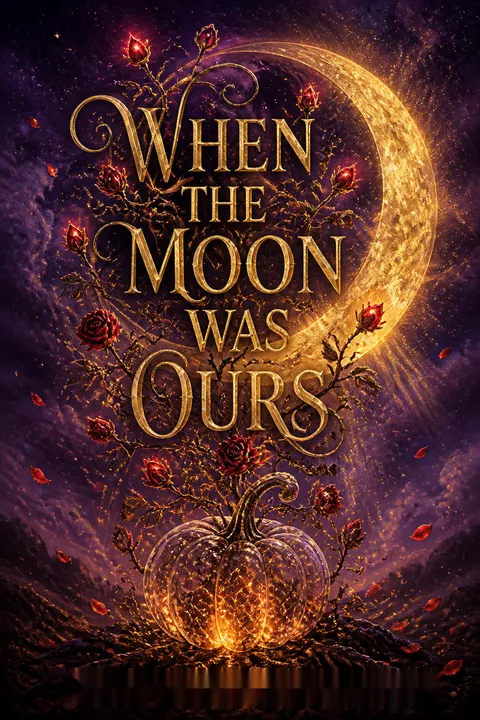


Plot Summary
Rust Water Girl
The town topples a rusted water tower to drain its stagnant water over a dry field. When the flood recedes, a terrified girl lies in the brush, unknown to everyone watching. Sam, a boy who paints glowing moons, steps forward while the adults keep their distance. He covers her with his jacket and calms her enough for Aracely, a neighbor who becomes her guardian, to take her in.
The girl is Miel. Roses soon grow from an open wound on her wrist, and she cuts them away, while Sam strings painted moons between their houses so she can cross the dark. The town gives him the name Moon, linking their lives to the first act of kindness that brought them together.
The story begins with a community trying to manage water as a practical problem, then discovers a child whom its categories cannot explain. Sam’s response matters because he offers care before he asks for an origin story. That choice creates the emotional grammar of their friendship: closeness without interrogation. The town turns both children into folklore, but the private bond between them is built from precise acts, a jacket, a steady voice, handmade light. Magic arrives as an extension of ordinary care, not as an escape from the social world.
Moons and Pollen
Years of shared nights have made Sam and Miel fluent in each other’s habits. He knows her fear of pumpkins; she knows why he keeps his shirt on and helps him manage the practical demands of school. When Sam shows her the brush he uses to pollinate pumpkin flowers, its bristles graze the rose on her wrist. Their old ease turns charged, and they kiss, then sleep together in Sam’s paint-scented room.
He is careful around her thorns, and she respects the parts of his body he does not want touched. The next morning, Miel learns that Chloe Bonner, eldest of the four red-haired sisters whose attention unsettles the town, has returned. The tenderness between the friends now faces a threat neither has named.
Their intimacy is not a sudden escape from friendship but a change in its terms. The pollination brush gives the moment a concrete trigger, while its agricultural purpose quietly links touch with growth and consequence. Both characters negotiate consent through attentiveness to the other’s limits, even as they remain unsure how to talk about desire. Miel’s comparison of herself with the polished Bonner sisters reveals how insecurity enters even a loving bond. Sam’s care does not erase that fear; it gives the relationship enough trust to expose it.
Four Sisters Return
Chloe’s return gathers her sisters back into the force that has long made other girls wary of them. Miel sees Sam working their family farm and fears the sisters will turn their attention to him, as they have to other boys. At the river, she cuts away a rose whose petals have begun to take on the Bonners’ hair colors.
There she finds Ivy crying over a boy who has not been captivated by her. Miel offers comfort, and Ivy asks about the painful roses. A week later, Ivy summons Miel to the Bonner house. All four sisters are waiting, with a vase ready. They demand every rose Miel grows, convinced the flowers can restore their hold over the town’s affections.
The Bonners’ reputation works as social power before any overt threat appears. Their return makes Miel interpret even ordinary attention as a contest she may lose, while Ivy’s tears briefly reveal the loneliness beneath the family’s glamour. Miel’s small offer of compassion creates an opening, but the sisters convert that opening into a demand. The shift shows how intimacy can be misread as access: Miel treats Ivy as a person in pain, while Ivy treats Miel’s body as a resource. Their conflict is therefore about control as much as jealousy.
The Stained Glass Coffin
When Miel refuses to surrender her roses, Ivy cuts one from her wrist. Outside, pumpkins in the Bonner fields begin turning to colored glass, as if the sisters’ strained bond has leaked into the land. Miel later returns and rejects the demand again, but Ivy leads her into the woods, where Lian and Peyton help force her into an old stained-glass coffin.
Trapped among its bright panels, Miel relives her mother sealing her inside a pumpkin as a child, hoping to rid her of the roses. Peyton eventually opens the coffin and lets Miel out. As Miel runs, she breaks several glass pumpkins, releasing the storm within them. Sam finds her amid the shards and brings her home, where Aracely helps her recover.
The coffin turns the Bonners’ private unity into a literal enclosure: it protects their shared identity while making dissent physically dangerous. Miel’s childhood memory connects the new imprisonment to older attempts to cure her by confining her body. Peyton’s intervention complicates the sisters’ collective power, showing that loyalty does not make them identical in conscience. When Miel breaks the pumpkins, she does not defeat the force behind them, but makes its hidden presence visible. Sam’s rescue restores a human point of contact after spectacle and fear have taken over.
Secrets in the Indigo Room
After the rescue, Sam notices how closely Aracely resembles Miel and asks who she is to her. Aracely reveals that she is Miel’s family, then explains her own history to Sam in confidence. Their shared understanding of gender helps her recognize his uncertainty about the future he has imagined through stories of bacha posh, girls raised as sons.
She also tells him his mother moved to protect his chance to live as himself. Meanwhile, Miel loses focus while assisting Aracely with a lovesickness cure for Emma Owens, the school secretary who knows Sam’s legal records. The cure fails, and Emma’s returning distress leaves her vulnerable to the Bonner sisters’ influence. A private safeguard around Sam’s records has weakened.
Several forms of care collide here: Aracely’s healing practice, Yasmin’s decisions as a parent, and Miel’s instinct to help. The failed cure is not a moral failure so much as evidence that attention is part of the work; Miel’s distress has consequences beyond her own body. Aracely’s disclosure gives Sam a rare witness to his uncertainty, but it does not prescribe an identity for him. The scene treats cultural inheritance as a possible language, not a verdict. Its danger comes from privacy becoming vulnerable through ordinary human trust.
The Birth Certificate
The Bonner sisters obtain a copy of Sam’s birth certificate through Emma and use it to pressure Miel. They threaten to expose his birth name and to spread a damaging story about Miel’s mother. Miel fears the harm public scrutiny could do to Sam, so she agrees to give the sisters her next rose. When that flower grows, she cuts it off and gives it to them.
She then pushes Sam away, claiming their friendship makes romance impossible, because the Bonners can reach him through her. The sisters take Miel into the woods and lock her inside the stained-glass coffin again. The rose in their vase and Sam’s legal record have become leverage, while Miel is left alone with the fear that protecting him has cost her their closeness.
The Bonners’ tactic weaponizes two different kinds of vulnerability: Miel’s attachment to her mother’s memory and Sam’s right to control information about himself. Miel’s decision is protective, but it also repeats the logic she resents, that another person should be managed for their own good. Her false breakup tries to keep Sam safe by removing herself as a target, yet it deprives both of them of the chance to decide together. The coffin makes the cost visible: self-sacrifice has not ended the coercion, only isolated its target.
The River Takes Sam
After Miel rejects him, Sam walks into the cold river hoping its magic will settle the question of who he is, or simply take the decision away. Miel sees him sink and enters water she has feared since childhood to pull him to shore. Realizing he went in deliberately, she strikes him in shock.
Their argument exposes how much each has concealed, including Miel’s fear that she cannot touch him without hurting him and Sam’s resentment at being kept outside her past. When he grips her arm, her thorns scratch his palm. She walks away. At the riverbank, the rose she had meant to give the Bonners breaks off and disappears in the current. Ivy finds Miel afterward and locks her in the coffin again, this time without a sister left to guard the door.
The river makes Sam’s identity crisis bodily and immediate: he seeks not a theory but an external force that might decide for him. Miel’s rescue reverses their first meeting, yet it cannot instantly restore their old intimacy. Her slap and his anger register the cost of loving someone whose unspoken boundaries are difficult to read. The lost rose is an accidental consequence, not a refusal staged for effect, but Ivy treats it as defiance. Their different interpretations of control deepen the crisis: Sam wants honesty, Miel wants to protect him, and both end up alone.
A Cure Refused
At school, Sam attacks a boy who makes a degrading remark about Miel. Peyton intervenes and helps keep him from harsher punishment, though she admits nothing about her sisters’ schemes. Aracely collects Sam and confronts him about his distress. He asks her to remove his love for Miel, but when the cure begins, he pulls away because that love belongs to him, even when it hurts.
He gathers his painted moons from the woods. Aracely then shows him blood on her wrist, evidence that Miel has not come home. Sam searches by moonlight and finds Miel near the coffin, bleeding from the place where Ivy tore out a rose. He wraps her wound and carries her toward help as Miel grips his hand, afraid he will leave.
Sam’s fight begins as a defense of Miel, but the cure scene shifts the question from protection to ownership of the self. Aracely can treat lovesickness as a condition, yet Sam distinguishes pain from illness and refuses to have his feelings removed without his consent. His search becomes an answer to the isolation imposed by the coffin, not a claim that he can solve Miel’s history for her. The injury makes his devotion practical: he applies pressure, finds her, and stays. Care here is neither cure nor rescue fantasy; it is sustained presence.
Alfajores and a Name
Once Miel is safe, she and Sam bake alfajores together, mixing spices and candied flowers as they slowly return to conversation. Miel apologizes for pushing him toward answers he was not ready to give; Sam explains that silence can mean he has not yet found those answers.
She asks Aracely to help her face pumpkins rather than keep hiding from them. Sam quits his job on the Bonner farm, refusing to participate in whatever the sisters are doing.
Peyton tells him that, as a child, she had offered Miel her cherished pumpkin to comfort her, never intending to frighten her. Her memory helps separate Peyton’s kindness from the threat the sisters became together. Meanwhile, Miel and Sam make space for affection without treating it as a cure for either of them.
The kitchen gives the story a counterpoint to its coercive rooms. Baking requires shared attention, but not forced disclosure; Miel and Sam can repair trust through tasks while leaving difficult questions open. Miel’s apology marks a change in how she understands care: loving Sam does not authorize her to determine his timing. Peyton’s memory similarly revises an old fear without erasing its impact. The same pumpkin that once symbolized danger can become an object Miel chooses to approach. Recovery begins not by making the past harmless, but by allowing new actions around it.
Pumpkins Hold Memory
At the town’s pumpkin-lighting, Miel stands beside Aracely instead of hiding. The river and lanterns overwhelm her, and memories return: her mother once placed her inside a pumpkin to cure her roses, while her brother Leandro tried to protect her during the family’s later crisis in the water. Miel recognizes that Aracely is the sister she lost, though Aracely has lived for years under another name and as a woman.
Aracely explains that the river took her and returned her transformed. She also confirms that their father burned Miel’s wrist in an attempt to stop the roses, while their mother tried other frightening cures out of fear. In the same period, Sam tells Yasmin that he wants to live as Samir, and his mother accepts his decision.
The lantern ritual forces Miel to encounter the difference between a memory and the story she has survived by telling herself. The past does not resolve into a simple division between a loving mother and a cruel one; both parents acted through fear, but their intentions do not erase the harm. Aracely’s history gives Miel a living connection to the family she thought she had lost, while also insisting that transformation is not disappearance. Sam’s separate conversation with Yasmin follows a parallel movement: he stops waiting for water or tradition to decide what he can name.
The Bonner Glass Breaks
Miel confronts Ivy and refuses to surrender another rose. Ivy tears the blooming flower from her wrist, leaving Miel dangerously weak. Sam finds her and, when a new vine reaches toward him, lets it draw his blood to restore her. Together they face the Bonner sisters.
Sam names himself as a boy and claims the name Samir. Miel says she understands that her mother loved her, even through harm. Peyton acknowledges her attraction to girls, Lian reveals that others have misjudged her, and Chloe gives her daughter the name Clara.
Ivy admits she has no life she considers her own outside the sisters. Their truths crack the stained-glass coffin until it shatters, and the glass pumpkins break apart and rise into the sky. The sisters leave separately, no longer acting as one force.
The climax turns disclosure into a material event without suggesting that exposure is always safe. Each person speaks only about what belongs to them: Sam claims his name, Miel revises her account of her mother, and the sisters name private realities they had hidden even from one another. Ivy’s confession identifies the fear beneath her control, but does not excuse the violence she has done. The breaking glass marks the end of a system that demanded sameness as proof of love. Its ascent transforms what once imprisoned and threatened into fragments no one can possess.
Light Without Possession
After the sisters separate, Miel’s hair takes on a deep red cast, and Ivy sends her pressed roses with a lock of her own hair, an awkward acknowledgment of what she took. Miel and Aracely release one of Samir’s pale moons into the wind as a light for their mother, hoping she can finally leave the river’s grief behind.
Miel and Samir also find their way back to physical closeness. He meets her without his binder, choosing how much of his body to share, and she responds with desire rather than inspection.
He plans to make his name official, while Miel learns to approach the pumpkins and the river on her own terms. Their friendship remains changed, but neither asks the other to become simpler or fully understood before they can stay together.
The ending refuses a single cure for grief, identity, or love. The moon is offered rather than used to summon the dead, and the gesture lets Miel and Aracely imagine release without claiming certainty about what follows. Samir’s choice to remove his binder in private is an act of self-definition, not a demand that he perform comfort for Miel. Their intimacy works because he controls the terms and she honors them. The book closes with futures still unfolding: a legal name to change, fears to face, and a relationship grounded in the right to remain unfinished.
Analysis
When the Moon Was Ours makes identity and memory physical without reducing either to a puzzle with one final solution. Roses emerge from Miel’s wrist; Sam binds his chest; a stained-glass box turns family unity into confinement. These images place social pressures on bodies that already carry their own histories. The novel’s central ethical question is not simply whether others can recognize a person correctly, but whether they can resist claiming the right to define that person. Miel’s secrecy is protective and loving, yet it sometimes denies Sam the chance to act for himself. Sam’s own silence can preserve privacy, but it also leaves him alone with decisions he hopes magic will make for him. Their growth comes through learning that care must include consent and room for uncertainty.
The book also refuses easy judgments about inherited culture and family belief. Sam’s grandmother’s account of bacha posh gives him a framework for living as a boy, but the framework cannot dictate his adult identity. Miel’s parents fear the roses because of stories passed down through their community, and that fear becomes harmful even when it grows from love. The novel distinguishes understanding a motive from excusing its damage. Aracely’s transformation offers another model: becoming herself requires no public permission, but sharing the history behind that change remains a choice she must make in her own time.
Magic here does not solve grief by erasing it. The river returns people altered, the roses carry both pain and life, and the moons provide companionship without speaking in anyone’s place. At the climax, the Bonner sisters loosen their grip not through defeat alone but through individual truths that break the structure demanding they remain interchangeable. The glass rises into the sky, beautiful but no longer a prison. The final intimacy between Miel and Samir carries the same principle: love can make a person feel seen, but it cannot own the body or name it sees.
Review Summary
When the Moon Was Ours is praised for its beautiful, lyrical prose and magical realism elements. Readers appreciate the diverse representation, particularly of transgender and Latinx characters. The story of Miel and Sam's relationship is described as tender and profound. Many reviewers note the book's exploration of identity, family, and cultural traditions. While some found the pacing slow or the plot confusing, most were captivated by McLemore's writing style and character development. The book is frequently described as unique, touching, and important.
Characters
Miel
Water-born rose keeperMiel is a girl found in the floodwater beneath an abandoned tower, raised by Aracely and bound to Sam through years of shared nights. Roses grow from her wrist, and her body carries fears she cannot explain easily, especially of pumpkins and deep water. She protects what she grows partly because her mother feared the roses, and partly because the town turns any unusual body into public property. Her loyalty to Sam is genuine but can become overprotective when she withholds information to spare him pain. Her developing strength comes from learning that care can mean setting limits, telling the truth about her past, and choosing which fears she is ready to meet.
Sam
Moon-painting best friendSam is a Pakistani and Italian teen who paints moons and hangs them where their light can comfort children. He is Miel’s oldest friend, a careful listener, and a capable worker on the Bonner farm. He lives as a boy while trying to understand how much of his future is shaped by family history, cultural tradition, and his own sense of himself. His mother’s stories and his grandmother’s account of bacha posh offer him language, but not an answer he can simply adopt. Sam often treats silence as protection, even when it leaves Miel guessing. His arc is shaped by learning that he can claim his own name and feelings without waiting for someone else to decide what they mean.
Aracely
Curandera and guardianAracely is Miel’s guardian and the town’s gifted healer of lovesickness. Her confidence, humor, and practical knowledge make her a refuge for people who privately depend on her while sometimes calling her a witch in public. She treats healing as skilled labor, not a mysterious performance, and expects those around her to take responsibility for their part in it. Aracely is protective of Miel but also understands the danger of pressing questions on someone who is not ready to answer. Her relationship with Sam grows through mutual recognition of the difficulty of living within expectations that do not fit. Beneath her easy authority lies a history she struggles to share.
Ivy Bonner
The sisters' strategistIvy is the second-oldest Bonner sister and often the one who gives the group’s decisions direction. Her copper hair, confidence, and composure feed the town’s stories about the sisters’ power, but her calm can also conceal deep insecurity. She sees the Bonner girls as a unit whose strength depends on remaining together, and she reacts sharply when that unity seems threatened. Her interest in Miel’s roses grows from a desire to control what she cannot repair inside her family. Ivy is not driven by simple cruelty; she is frightened of losing the structure that gives her a sense of self, and that fear makes her capable of harming people outside the circle she protects.
Lian Bonner
Quiet, underestimated sisterLian is the second-oldest Bonner sister, with dark auburn hair and a talent for visual patterns that others overlook. The town mistakes her difficulty with schoolwork for lack of intelligence, and she has learned to let that judgment stand rather than invite more attention. She can be blunt without intending cruelty, and her loyalty to her sisters is shaped by the sheltered life they share. Sam sees capacities in Lian that the town dismisses, though she is not ready to accept his help on his terms.
Chloe Bonner
Returned eldest sisterChloe is the eldest Bonner sister, whose absence changes the balance among the four girls. Her return carries the weight of a difficult period spent away from home and of a new responsibility as a mother. She is poised and perceptive, but her family’s attention can make her both central and isolated. The town sees her through gossip about her pregnancy; Chloe’s own life is more complicated than the story others tell about her.
Peyton Bonner
The youngest sisterPeyton is the youngest Bonner, with carefully curled hair and a fondness for the pumpkin she once named Lady Jane Grey. Her sweetness can look like passivity, especially beside her sisters’ forceful personalities, but she makes her own choices and understands more than she lets on. Peyton keeps parts of her romantic life private from her family and the town. Her childhood impulse to offer Miel a treasured pumpkin shows that the sisters’ frightening reputation can obscure the individual intentions of each girl.
Yasmin
Storytelling, watchful motherYasmin is Sam’s mother, a former teacher who now cares for and tutors children in town. She tells stories with warmth and authority, and her practical patience gives Sam room to think even when she does not immediately understand what he needs. Her history includes choices made to protect her child from a community that might punish difference. Yasmin’s instinct is to wait rather than force a conclusion, a form of love that offers Sam space but can frustrate those who want him to reach certainty sooner.
Miel's mother
A frightened, loving motherMiel’s mother is shaped by family folklore and by warnings that roses growing from a child’s body bring danger. She loves her children, but fear and the advice of respected adults lead her toward attempts to cure Miel that leave lasting harm. Her story complicates Miel’s memories of protection and betrayal: affection does not make every choice safe, and fear can turn care into confinement.
Miel's father
A healer undone by fearMiel’s father is a healer who knows how to tend wounds and set bones. When roses appear on his daughter’s wrist, family stories about their danger overpower his professional skill and compassion. He believes he is acting to protect his family, but his fear pushes him toward violence and fracture. His choices leave Miel with questions about whether love can coexist with harm.
Emma Owens
The lovesick school secretaryEmma Owens runs the school office and repeatedly seeks Aracely’s help when romance leaves her heartbroken. Her longing makes her vulnerable to people who know how to sound sympathetic, and her position gives her access to sensitive school records.
Mr. Bonner
The pumpkin-farm patriarchMr. Bonner owns the farm where Sam works and where the strange glass pumpkins begin to appear. He is mild in manner and uneasy around his daughters’ forceful family dynamic, often treating their unusual behavior as something he cannot control.
Plot Devices
Sam's painted moons
A language of careSam paints lunar landscapes onto globes and hangs the glowing moons along paths, near homes, and outside Miel’s window. Their light helps children sleep and gives Sam a way to communicate when direct words feel difficult. Each moon’s color can carry a private meaning for him and Miel, making the lights both practical gifts and an emotional vocabulary. Their changing use tracks the relationship without replacing honest speech: a moon can signal care, but it cannot decide either character’s identity or repair every silence.
Miel's roses
The body made visibleRoses grow through an unhealed opening in Miel’s wrist, and removing one causes pain and blood. The town surrounds them with rumors that they can compel love, while Miel’s family treats them as a feared inheritance. The Bonner sisters seize on those rumors and demand the flowers as tools of control. Their true power is more complicated: the roses respond to Miel’s feelings and eventually affect the people physically connected to her. The device makes a private body visible to others, raising questions about consent, ownership, and the stories people impose on unfamiliar traits.
The stained-glass coffin
A prison for samenessThe Bonner family’s old stained-glass box is large enough to hold a person and can be latched from outside. The sisters use it to confine Miel, while its vivid panels echo the shared identity they try to preserve. The coffin connects their family mythology to the glass pumpkins spreading across the farm. It is not merely a hiding place: its enclosure makes physical the pressure to remain one unit and to keep unwanted truths sealed away. Its eventual destruction follows the sisters’ willingness to speak about lives that belong to them individually.
The river
Transformation and memoryThe river carries the family’s losses and the novel’s transformations. It takes Miel and her brother from their original lives, returns them in altered circumstances, and remains tied to Miel’s fear of drowning. Sam also enters it when he hopes it will decide what he cannot yet decide for himself. Water therefore offers neither simple salvation nor simple danger. It can preserve, take, and return, while its currents hold memories that the characters have tried to keep beyond reach.
Aracely's lovesickness cures
Heartache made visibleAracely draws lovesickness from a person using eggs, herbs, fruit, prayer, and steady touch. The affliction behaves like a small restless creature that must be released through an open window. Her healing makes emotional pain tangible, but the process is not automatic: she must read each person and work carefully. When Miel loses focus during a cure, the lovesickness returns to the client, bringing practical consequences and exposing how private information can move through a community. The device treats feeling as real without implying that every painful attachment should be removed.

Download PDF
Download EPUB
.epub digital book format is ideal for reading ebooks on phones, tablets, and e-readers.








