

Key Takeaways
Own less so your attention can return to living
A life-changing discovery. Dominique Loreau’s argument grows from her move from France to Japan, where years of studying ink painting and Zen practice led her to question how much a good life requires. Her answer is not bare deprivation: keep what supports comfort, beauty, and meaningful activity, and release the rest. Possessions can become stand-ins for identity and security, yet each also demands space, cleaning, decisions, and care. In Loreau’s view, reducing that load frees attention for people, ideas, and sensations.
Make space deliberately. She recommends listing what complicates life, asking what is genuinely useful, and letting go of unused things through giving, selling, or discarding. The goal is not an empty home for its own sake, but a lighter life with fewer distractions.
The book’s most persuasive insight is that ownership has an ongoing cost, not just a purchase price. Every object makes small claims on attention, storage, maintenance, and future decisions. This connects minimalism to the broader idea of cognitive load: surroundings can either support focus or keep presenting unfinished choices. The argument is strongest when framed as an invitation to audit, rather than a universal command to own almost nothing. A family with children, a person with a disability, or someone whose work depends on equipment may need more objects. The useful question is not how little can be owned, but which possessions return more value than they consume.
Let your home make ordinary life easier, quieter, and clearer
A home shapes habits. Loreau treats domestic space as more than decoration: it can either restore attention or add friction to daily life. A cramped shower, tangled cords, noisy appliances, and cupboards with no clear purpose create repeated small irritations. She favors comfortable, flexible rooms with natural light, functional storage, and enough open floor to move freely. Japanese interiors offer her a model: bedding and work surfaces can be put away after use, allowing a room to serve different purposes without remaining visually busy.
Design for use. Put storage near the activity it supports, keep frequently used things within easy reach, and fix the household annoyances that repeatedly interrupt the day. Loreau calls a carefully planned interior with little upkeep “superfluidity.” Empty space is not wasted space; it lets useful objects and daily activities stand out.
This turns decluttering from a moral performance into a design problem. If a room repeatedly produces mess, the cause may be poor storage or an awkward workflow, not a failure of discipline. That distinction echoes human-factors design, which improves behavior by making the desired action easier to perform. The aesthetic argument also has practical force: visual calm can reduce competing demands on attention. Still, simplicity should not be confused with sterile whiteness or a single fashionable look. A genuinely restorative home is shaped by its residents, their routines, and their access needs, not by a magazine image of emptiness.
Choose fewer things that feel useful, durable, and beautiful in use
Use is the test. Loreau asks readers to judge objects by how they work in the hand and in daily life, not by labels or display value. A jug that pours comfortably, a sturdy plate used every day, or a coat that improves with wear can earn its place. Fragile objects that inspire fear, cheap substitutes that quickly fail, and decorations that merely fill shelves do not necessarily enrich a home. She favors natural materials and well-made basics, while acknowledging that buying fewer, better items may require saving before a purchase.
Build a coherent world. The aim is not luxury as status. It is a small number of objects that suit their owner, work reliably, and sit well together. Loreau also recommends testing purchases physically: handle, open, lift, and try an object before deciding whether it fits.
The emphasis on use corrects a common weakness in minimalist advice: counting possessions can become another status game. A small collection of expensive things is not automatically simpler or more ethical than a larger, practical one. Loreau’s better standard is experiential: does this object support a real task, offer lasting pleasure, and remain comfortable to maintain? That resembles craft traditions in which form is judged through repeated contact, not a photograph. The caution is that durability and natural materials are not always affordable or environmentally superior in every case. Repairability, actual lifespan, and the owner’s circumstances matter more than a blanket rule to buy the finest.
Give today more attention than the imagined life you keep postponing
The present is the material. Loreau argues that time is not valuable merely because it is available; its quality depends on how it is experienced. People complain of having too little time, then fill spare moments with worry, regret, or passive distraction. Her alternative is to practice being present even during ordinary tasks, and to protect time for rest, thought, and enjoyment. A day spent reading, cooking, or watching the moon can be worthwhile without producing an achievement.
Use small rituals. A ritual is a repeated action given personal meaning, such as preparing a drink with care, arranging flowers, or making time for a bath. These routines can give the day shape and pleasure. Loreau also suggests walking, naps, and short periods for personally important projects. A ritual should feel nourishing, not become another obligation to perform perfectly.
The book gives leisure a dignity that productivity culture often denies it. A pause is not necessarily wasted time; it can restore attention and allow experience to register. Rituals help by attaching meaning to repeatable actions, turning vague intentions into recognizable moments. Their value depends on flexibility, however. A routine that becomes a source of guilt has stopped serving the person who created it. The strongest version of Loreau’s idea is not to aestheticize every minute, but to notice which ordinary activities deserve care and which forms of busyness simply crowd out rest.
Save money to buy independence, not another round of wants
Money buys options. Loreau describes money as a resource that can either support security or disappear through scattered, forgettable purchases. A bargain is not economical if it fails quickly or brings little satisfaction; many small impulse buys can drain more than one considered purchase. She urges readers to distinguish needs from desires, track income and expenses, avoid spending beyond their means, and save for greater freedom rather than a larger shopping budget.
Make finances visible. Her practical suggestions include keeping simple accounts, limiting the number of financial accounts and cards, and setting aside calm time to review bills. The purpose is not to turn money management into an obsession. It is to replace vague anxiety with knowledge of what is available, what is committed, and what can safely be spent.
This is a useful reframing of frugality: savings are valuable not only because they accumulate, but because they reduce dependence and widen future choices. Tracking spending can reveal the gap between what someone claims to value and what their money actually supports. Yet the advice assumes some discretionary income. For people facing low wages, unstable housing, debt, or medical costs, careful accounting cannot create resources that are not there. The principle still applies, but responsibility must not be shifted entirely onto individuals. Financial simplicity is partly personal practice and partly a matter of material conditions.
Care for your body through steady habits, not elaborate fixes
Self-care is foundational. Loreau treats the body as a home that deserves attention rather than a nuisance to ignore. She links confidence and comfort to basic care: sleep, grooming, movement, and clothes that fit well. In her account, a simple beauty routine can be more sustainable than a crowded bathroom cabinet or a succession of products promising transformation. She also values posture, walking, stretching, and regular exercise as ways to feel more at ease in the body.
Keep the goal humane. The book often connects appearance with discipline and self-respect, but its most useful advice is practical: notice what helps you feel healthy and capable, and make it repeatable. Loreau also recommends body brushing, special diets, and other treatments; those specific health claims should not be assumed to be medically established or appropriate for everyone.
The central distinction is between caring for the body and treating it as a project that must be corrected. Repeated, manageable habits can support agency without requiring an expensive regimen. This is compatible with a broad view of health that includes function, comfort, and emotional well-being, not just appearance. Some of the book’s language, however, risks making weight or grooming a test of character. Bodies vary, illness is not always preventable, and health is shaped by circumstance as well as choice. Self-care is most valuable when it expands a person’s life, not when it becomes another reason to judge it.
Eat with attention, and let satisfying quality replace excess
Make the meal smaller and richer in attention. Loreau favors fresh, simply prepared food, modest portions, and slow eating. She describes using a wooden bowl sized to her needs, filled with a small range of foods such as rice, vegetables, and fish, tofu, or egg. The bowl makes the portion visible, while careful presentation and a pleasant setting help make a simple meal feel complete. She argues that eating slowly and noticing hunger can interrupt eating driven by boredom, stress, or habit.
Keep the principle, not every prescription. The broader lesson is to notice what, when, and why you eat, and to value food for nourishment and pleasure rather than sheer quantity. The book also promotes fasting and restrictive rules. Those recommendations are not universally safe, and its claims about detoxification should not replace individualized medical or nutrition advice.
The book’s strongest contribution here is attentional: eating slowly can make a meal more satisfying and help distinguish appetite from automatic snacking. Presentation matters too, because eating is sensory and social, not merely a calculation of nutrients. The wooden bowl works as a practical cue, but it should not be mistaken for a scientifically universal portion measure. Nor does restraint suit every person or medical situation. A balanced application preserves the invitation to eat deliberately while rejecting shame, rigid food rules, and the claim that one culturally specific pattern fits all bodies.
Clear mental clutter by choosing what deserves your attention
An inner ecology. Loreau uses this term for the work of noticing and reducing mental habits that repeatedly produce confusion, anxiety, or resentment. She compares recurring thoughts to clutter in a room: when they occupy all available space, it becomes harder to notice fresh ideas. Her practices include writing down recurring concerns, reviewing the day, reading attentively, and sitting quietly long enough to observe thoughts without following each one.
Practice, not magic. The book’s meditation practice aims at “non-thinking,” a temporary quieting of deliberate thought rather than a solution to every problem. Loreau sees writing as another tool: naming a concern can create distance and make priorities clearer. Her advice to stop feeding repetitive negativity can help redirect attention, but it should not be read as a claim that serious distress disappears through positive thinking alone.
The useful mechanism is attention, not thought control. Writing can externalize a worry, while meditation can help a person notice that a thought is present without treating it as a command. These practices create room between mental event and response, a capacity with value across work, relationships, and decision-making. The risk is turning acceptance into avoidance. Some problems require analysis, practical action, or professional support; continually pushing them away may make them harder to resolve. A balanced approach asks whether a thought calls for action, understanding, or simply a chance to pass.
Protect your relationships with honest limits, careful listening, and solitude
Fewer, truer obligations. Loreau recommends reducing time spent in relationships that consistently drain or constrain a person, while allowing others their imperfections. Saying no to an invitation can preserve time for commitments that matter. She advises explaining refusals briefly rather than building elaborate excuses, and stresses listening more than speaking, avoiding needless criticism, and not trying to manage everyone else’s life.
Solitude is a skill. Loreau presents time alone as a way to recover energy, reflect, read, cook, or create. It need not mean rejecting other people. A person who can enjoy their own company may meet others with less dependence and more generosity. The book also warns against giving advice or help in ways that keep someone from learning to handle their own choices.
This section treats boundaries as a form of relationship maintenance rather than hostility. A clear refusal can prevent resentment, while attentive listening makes room for another person without turning the conversation into a contest. Solitude can also reduce the pressure to use relationships as a constant source of reassurance. The advice benefits from one qualification: not every difficult relationship is disposable, and directness is shaped by power, culture, and safety. Good boundaries are not simply withdrawal. They make it clearer what kind of contact is possible and what each person can reasonably offer.
Practice one small discipline each day until it becomes part of you
Change through repetition. Loreau sees discipline not as punishment but as a way to make chosen actions more natural. The tea ceremony illustrates the idea: simple gestures and a small number of utensils are repeated with care until technique and attention become one. In everyday life, she recommends modest commitments, such as spending a short stretch of time on a meaningful project, walking, writing, or reviewing the day. Small efforts are easier to begin than a sweeping promise to transform an entire life.
Learn, then make it yours. Reading, note-taking, teaching, and writing all help turn borrowed ideas into personal understanding. Loreau suggests choosing practices that can be sustained and adjusted to a person’s energy and circumstances. The point is not flawless performance. It is to shape identity through repeated actions that express what matters.
The tea ceremony makes the book’s larger philosophy tangible: simplicity is not merely having fewer things, but attending closely to what remains. Repetition can reduce the effort required to begin and can make a value visible in conduct. This is a stronger foundation for change than relying on inspiration alone. Still, discipline should serve a chosen purpose rather than become an aesthetic ideal of constant self-improvement. Rest, interruption, and changing priorities are part of a real life. A practice is worth keeping when it supports a valued direction, not just because it has been repeated.
Analysis
Loreau’s book is best understood as a personal philosophy organized around three linked domains: possessions, the body, and the mind. Its central claim is that excess is not merely a matter of owning too much. Excess consumes attention, time, energy, and the ability to notice what is already valuable. The proposed remedy is deliberate reduction, paired with care: fewer objects, but better chosen; fewer routines, but more consciously performed; fewer automatic reactions, but more considered choices.
The book’s narrative authority comes from the author’s cross-cultural experience. Her account of moving from France to Japan, studying ink painting, and encountering Zen practice gives the argument a lived origin. Japanese rooms, tea rituals, and everyday objects function as examples of a different relation to space and use. These are compelling illustrations, though they should not be mistaken for a single, uniform Japanese way of life. The book sometimes turns cultural observation into broad generalization, and its prescriptions reflect a particular aesthetic and personal preference.
Its most durable insight is practical: environments shape behavior. Clutter and awkward systems demand repeated decisions; thoughtfully arranged spaces can make care and focus easier. The same logic extends to spending, meals, time, and relationships. A budget, a simple meal, a ritual, or a firm refusal can protect attention from being spent by default.
The weaker portions appear when metaphor becomes medical explanation. Claims about fasting, detoxification, weight, and beauty are sometimes stated too confidently, and should not be treated as clinical guidance. The book also risks moralizing thinness, grooming, and self-control. A modern reading should preserve its invitation to care for the body while rejecting the implication that health or appearance reliably measures discipline.
Ultimately, simplicity here is not an inventory target. It is a method for deciding what deserves space in a life. The best test is not whether a choice looks austere, but whether it returns time, comfort, freedom, or attention to the person living with it.
Review Summary
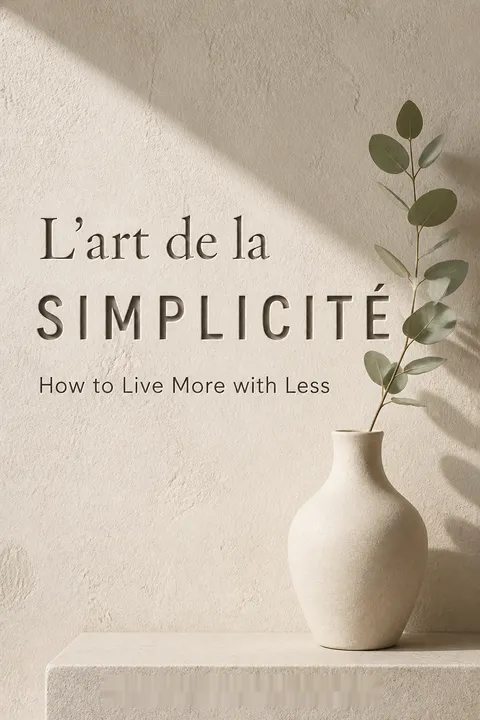
L'art de la Simplicité receives mixed reviews. Some praise its insights on minimalism and simplicity, finding it inspiring and calming. Others criticize it as repetitive, contradictory, and overly focused on expensive luxury items. Many readers appreciate the book's emphasis on decluttering and mindful living, but some find the advice impractical or pretentious. The book's focus on women and apparent classism are points of contention. Overall, readers tend to enjoy the core message of simplifying life, but opinions vary widely on the execution and specific recommendations.
People Also Read

Glossary
wabi-sabi
Beauty in humble imperfectionA Japanese aesthetic idea that values the quiet beauty of things that are incomplete, irregular, weathered, or modest. In Loreau’s account, materials such as aged wood, cracked surfaces, and naturally shaped stones can express change and imperfection without needing decoration. The concept encourages attention to understated qualities rather than polished display.
qi
Traditional vital energyA concept in Chinese traditions referring to the vital energy or life force understood to move through people and their surroundings. Loreau uses it to describe how the arrangement, cleanliness, sounds, and materials of a home may affect a person’s sense of well-being. It is a traditional explanatory concept, not a scientifically established energy measurement.
inner ecology
Care of mental lifeLoreau’s term for the effort to cultivate a clearer inner life by noticing and reducing recurring thoughts and emotions that foster anxiety, resentment, or confusion. The metaphor treats attention as an environment that can become crowded or more open. Practices such as reflection, writing, meditation, and selecting what to attend to are presented as ways to tend it.
superfluidity
An easy-to-maintain interiorLoreau’s description of a carefully planned home that provides comfort and calm while requiring little ongoing tidying or maintenance. It depends on functional choices, flexible use of space, suitable storage, and the removal of objects or details that create repeated friction. The term describes an interior ideal, not a technical architectural standard.
non-thinking
Quieting deliberate thoughtLoreau’s name for a meditative state in which a person stops pursuing each thought and lets mental activity settle. It does not mean becoming unconscious or suppressing every thought by force. The practice involves quiet posture, attention to breathing, and gently returning from distractions, with the aim of greater calm and concentration.
sei hin
Cleanliness joined with beautyA Japanese expression Loreau presents through two elements: sei, associated with cleanliness, and hin, associated with beauty. She uses the term to describe an ideal in which purity of heart and aesthetic care matter more than material wealth. In the book, it supports the idea that modest living can be refined rather than deprived.
FAQ
1. What is "L'art de la Simplicité" by Dominique Loreau about?
- Philosophy of Simplicity: The book explores the art of living simply, drawing on Japanese Zen principles and the author's personal experiences in Japan.
- Holistic Approach: It covers material minimalism, self-care, mindful living, and the cultivation of beauty and order in all aspects of life.
- Practical Guidance: Loreau provides actionable advice on decluttering, organizing, and refining one’s home, body, and mind.
- East Meets West: The book blends Eastern philosophies with Western lifestyles, encouraging readers to find fulfillment through less rather than more.
2. Why should I read "L'art de la Simplicité" by Dominique Loreau?
- Reduce Overwhelm: The book offers strategies to combat the stress and chaos of modern, consumer-driven life.
- Enhance Well-being: Loreau’s methods promise greater peace, clarity, and happiness by focusing on essentials and letting go of excess.
- Timeless Wisdom: It draws on centuries-old philosophies, making its lessons relevant across cultures and eras.
- Practical and Inspirational: Readers receive both philosophical insights and concrete steps to simplify their homes, routines, and thoughts.
3. What are the key takeaways from "L'art de la Simplicité"?
- Less is More: True freedom and happiness come from owning and desiring less, not more.
- Simplicity as a Lifestyle: Minimalism is not just about decluttering, but about cultivating beauty, order, and mindfulness in every area of life.
- Self-Care is Essential: Taking care of your body, mind, and spirit is a foundation for a fulfilling life.
- Rituals and Mindfulness: Everyday actions, when performed with intention and care, can become sources of joy and meaning.
4. How does Dominique Loreau define and practice minimalism in "L'art de la Simplicité"?
- Material Minimalism: Loreau advocates for owning only what is essential, beautiful, and functional, and regularly evaluating possessions for their true value.
- Spiritual and Mental Minimalism: She emphasizes decluttering the mind by letting go of negative thoughts, anxieties, and unnecessary mental baggage.
- Aesthetic Minimalism: The book encourages creating harmonious, uncluttered spaces that nurture the senses and spirit.
- Practical Minimalism: Loreau provides tips for simplifying wardrobes, homes, and daily routines, making minimalism accessible and actionable.
5. What are Dominique Loreau’s main methods for decluttering and organizing the home?
- Eliminate the Nonessential: Regularly assess belongings and remove anything that is not useful, beautiful, or loved.
- Create Space and Light: Prioritize empty space, natural light, and order over decoration and accumulation.
- Functional Storage: Design storage solutions that are practical and keep items close to where they are used.
- Maintenance Rituals: Keep the home clean and tidy as a daily practice, turning housework into a mindful, satisfying ritual.
6. How does "L'art de la Simplicité" address the relationship between material possessions and personal well-being?
- Possessions as Burdens: Loreau argues that excess possessions drain energy, time, and focus, leading to stress and dissatisfaction.
- Freedom Through Letting Go: Releasing attachment to things brings a sense of liberation and clarity.
- Quality Over Quantity: She recommends investing in fewer, higher-quality items that age well and bring lasting satisfaction.
- Home as Sanctuary: A simplified, harmonious environment supports mental and emotional health.
7. What advice does Dominique Loreau give for cultivating personal style and a minimalist wardrobe?
- Classic, Versatile Pieces: Build a wardrobe of timeless, well-made clothing in neutral colors that can be mixed and matched.
- Quality and Fit: Choose fewer items of higher quality that fit well and make you feel confident.
- Declutter Regularly: Remove clothes that are worn out, ill-fitting, or no longer suit your style or needs.
- Wardrobe as Self-Expression: Let your clothing reflect your true self, not fleeting trends or external expectations.
8. How does "L'art de la Simplicité" connect simplicity with beauty and aesthetics?
- Beauty as a Need: Loreau believes beauty is essential for the soul, just as food is for the body.
- Wabi-Sabi and Zen: She draws on Japanese concepts like wabi-sabi, finding beauty in imperfection, simplicity, and natural materials.
- Harmony and Order: Aesthetic pleasure arises from harmonious arrangements, empty space, and attention to detail.
- Everyday Elegance: Even mundane tasks and objects can be elevated through care, mindfulness, and refined taste.
9. What are the key practices for self-care and body care in "L'art de la Simplicité"?
- Minimalist Beauty Routines: Use fewer, high-quality products and natural ingredients for skin, hair, and nails.
- Daily Rituals: Incorporate simple, enjoyable rituals like bathing, body brushing, and gentle exercise.
- Healthy Eating: Eat less but better, focusing on fresh, unprocessed foods and mindful eating habits.
- Respect for the Body: Treat the body as a temple, maintaining cleanliness, grooming, and physical health as acts of self-respect.
10. How does Dominique Loreau recommend simplifying time management and daily routines?
- Prioritize the Present: Focus on the quality of each moment rather than rushing or multitasking.
- Ritualize Tasks: Turn daily activities into meaningful rituals to bring order and satisfaction.
- Eliminate the Unnecessary: Reduce commitments, say no gracefully, and avoid over-scheduling.
- Plan and Prepare: Use lists, schedules, and routines to create structure and free up mental space.
11. What role does mindfulness and meditation play in "L'art de la Simplicité"?
- Mindful Living: Loreau encourages full attention to the present, whether in chores, eating, or self-care.
- Meditation Practice: She advocates for regular meditation to clear the mind, reduce anxiety, and cultivate inner peace.
- Rituals for Awareness: Everyday rituals, when performed mindfully, become opportunities for reflection and self-knowledge.
- Mental Decluttering: Letting go of negative thoughts and focusing on essentials is as important as physical decluttering.
12. What are the most memorable quotes from "L'art de la Simplicité" and what do they mean?
- “A man is rich in proportion to the number of things which he can afford to let alone.” (Thoreau, quoted by Loreau): True wealth is measured by freedom from unnecessary possessions and desires.
- “If from all your wealth, two meager loaves remain, sell one, and with your gains, buy hyacinths to feed your soul.” (Sadi, quoted by Loreau): Beauty and nourishment for the soul are as vital as material needs.
- “We do not possess things. We are possessed by things.” (Loreau): Our attachments can control us more than we control them.
- “Perfection is not doing exceptional things, but doing ordinary things exceptionally well.” (Japanese proverb): Excellence and fulfillment come from mindful attention to everyday actions.
- “The key to loving how you live is in knowing what it is you truly love.” (Sarah Ban Breathnach, quoted by Loreau): Self-knowledge is the foundation for a life of simplicity and joy.
Download PDF
Download EPUB
.epub digital book format is ideal for reading ebooks on phones, tablets, and e-readers.








