

Plot Summary
Jealousy Becomes an Order
Bratt Lewis, Rachel’s fiancé and a captain in the military force, discovers that she is training a fellow soldier, Alan, after hours in the rain. He berates her, then arranges Alan’s transfer. When Dominick Parker confronts him, Rachel learns the deeper history: Bratt once had Parker sent to a deadly desert posting because Parker had courted her.
Parker survived the deployment, but his sister died while he was away. Rachel recognizes that Bratt has repeatedly used his rank to remove men he considers romantic threats. She blocks Alan’s departure and seeks a senior officer’s review, turning a private quarrel into an open challenge to Bratt’s authority.
Bratt’s jealousy is not merely a private insecurity; his rank gives it institutional force. By moving soldiers who attract Rachel’s attention, he converts romantic fear into professional punishment, making the military hierarchy an extension of his possessiveness. Rachel’s intervention marks a shift from treating his behavior as devotion to recognizing its consequences for other people. Parker’s account also complicates the polished image Bratt maintains: his charm and competence coexist with a willingness to let others pay for his emotional discomfort. The scene establishes the book’s central danger, intimacy repeatedly becoming a justification for control.
The Dumar Infiltration
Rachel joins an undercover operation at the Dumar Hotel, where Colonel Christopher Morgan poses as a criminal with two companions. The team targets a gathering of traffickers and the powerful Halcones. While Angela secures access keys, Rachel and Christopher reach the organizer’s office and retrieve a flash drive.
A gunfight erupts before they can leave, forcing them to smash a window and jump into a pool, then escape through the woods. Christopher uses their flight to press Rachel for another affair. She refuses, reminding him that she is engaged to Bratt, but his threats and attraction follow her back to the command. On Bratt’s birthday, she chooses to return to his room instead.
The operation makes Rachel’s professional competence visible while exposing the difference between tactical teamwork and personal trust. She risks herself to secure evidence, but Christopher treats the danger as another opening to pursue her. Her refusal is real, yet it does not resolve the desire that keeps drawing her back toward him. The contrast matters: Bratt offers the familiar safety of a long relationship, while Christopher destabilizes the boundaries she is trying to preserve. The stolen flash drive advances the criminal investigation, but the escape also leaves Rachel carrying a private threat that no mission briefing can contain.
A Birthday in Ruins
Rachel’s friends turn Bratt’s birthday into a crowded surprise party, despite her wish for something intimate. Bratt is delighted, and, before she can stop him, he announces their engagement to the guests. Christopher answers with a deliberately cutting toast that mocks their future and hints at Rachel’s dishonesty.
Later, he corners her in the basement and they have sex, crossing the line she had tried to hold. Their secrecy fractures when Rachel’s friends lead her back to Bratt’s family, who reject her and threaten to disown him if he marries her. Bratt follows his mother and sister rather than staying with Rachel. Before the argument can settle, news arrives that the Halcones have launched a mass attack across London.
The birthday party puts three versions of Rachel’s future in one room: Bratt’s public promise, Christopher’s taunting claim, and the family’s attempt to dictate who may belong. Bratt’s announcement turns commitment into spectacle before Rachel has chosen how to answer, while Christopher’s toast exposes their secret without accepting responsibility for its cost. Her affair is not presented as freedom from the men’s control; it deepens her entanglement with both. The family conflict then shows how social approval becomes another bargaining tool. The attack cuts through this domestic theater, making private choices collide with the lethal public world of the novel.
The Hospital Trap
Rachel’s unit is sent to the state hospital, where the Halcones claim to hold hundreds of hostages. The general orders an assault despite Christopher’s suspicion that the reported numbers and the easy access are wrong. Rachel senses explosives and tries to stop the advance, but the warning comes too late. A massive blast tears through the building, killing sixteen soldiers and many civilians.
The attackers reveal that the hospital was a trap intended to punish the force and seize the ambassador’s wife. Christopher is missing among the rubble, and Rachel collapses after inhaling contaminated air. At the hospital, Antoni Mascherano slips past security to threaten her, revealing that he has been tracking her and intends to claim her.
The hospital attack turns institutional overconfidence into physical ruin. The general’s insistence on speed overrides Christopher’s caution and Rachel’s trained perception, so the chain of command becomes part of the trap. Rachel survives, but survival brings no shelter: Antoni penetrates the military hospital and makes clear that her danger is personal as well as political. His visit also reframes the criminal network as patient and intimate, not merely a distant target of investigations. The blast leaves the force grieving and divided, while Rachel’s collapse shows how quickly a soldier’s practiced control can fail under cumulative stress.
The Coma and the Ring
After thirty-two hours of searching the contaminated hospital ruins, Bratt finds Christopher beneath a collapsed reception counter, alive but barely breathing, and carries him out. Christopher is placed in a coma and later transferred to Hong Kong for intensive treatment. While his family waits, Rachel clashes with Bratt’s mother and sister, who demand that she give up her friends, social life, and independence to earn acceptance.
Bratt initially asks her to comply. Rachel sneaks into the hospital to see Christopher, then returns to Bratt and ends their engagement, admitting that she no longer loves him as a partner. Bratt refuses to accept the separation, but Rachel removes the ring and leaves him to face her decision.
The rescue gives Bratt a moment of courage that cannot erase the harm caused by his possessiveness. At the same time, the family’s conditions turn marriage into a test of submission rather than mutual commitment. Rachel’s decision to end the engagement is painful partly because Bratt has been her first great love, but she recognizes that affection and obligation are no longer the same thing. Her secret hospital visit reveals where her desire has shifted, even as Christopher remains unconscious and unavailable. The ring therefore becomes more than a promise withdrawn: it marks Rachel’s first conscious refusal to trade her autonomy for belonging.
Cadin’s Photograph
Bratt finds a government notice among Rachel’s mail: she was fined in Cadin for having sex in public on the night of May 6, while he was stationed in Germany. Rachel denies knowing the town when he visits, so he contacts the local sheriff and asks for the evidence. The sheriff confirms that Rachel was with another person and sends a photograph showing her with Christopher.
Bratt’s suspicions harden into certainty. He orders Meredith to search Rachel’s belongings and identify the man, then returns to London consumed by jealousy. The image does not explain the entire relationship, but it confirms what Bratt most feared and turns his grief over the broken engagement into a search for revenge.
The photograph functions as proof, but also as a narrowing device: Bratt stops considering Rachel’s interior conflict and reduces the evidence to a case against a rival. His reliance on an official record makes private betrayal legible through bureaucratic surveillance, linking the novel’s romantic plot to its security-state setting. His pain is genuine, yet it quickly becomes entitlement, expressed in plans to punish the unnamed lover. Rachel’s denial leaves her isolated, while Bratt’s certainty gives him a story that feels simpler than the truth. The chapter exposes how information can clarify an event while distorting the motives and relationships behind it.
The Bridge Ambush
Rachel accompanies a convoy carrying Alessandro Mascherano to court, expecting a hearing that could help dismantle the family’s network. Isabel Rinaldi and armed Halcones attack the convoy before the group reaches its destination. Rachel, Harry Smith, and Scott try to get Alessandro out, but their vehicle overturns under fire.
The attackers seize Rachel and prepare to kill Harry. Rachel begs them to spare him, but Danika shoots him in the chest. Harry dies in Rachel’s arms, asking her to pass a message to Brenda, who is pregnant with his child. The force evacuates under fire, leaving Rachel with her closest friend’s blood on her uniform and a new reason to pursue the Mascheranos.
Harry’s death transforms the threat from something Rachel investigates into a loss she must carry. The convoy attack makes the cost of the war brutally specific: Harry is not an anonymous casualty but Rachel’s chosen brother, and his unborn child makes his absence extend into the future. His final concern is Brenda, not revenge, which preserves his tenderness even as the scene strips away any illusion of soldierly invulnerability. Rachel’s plea fails to save him, emphasizing the limits of courage when a criminal faction controls the ground. Grief deepens her resolve, but it also leaves her more vulnerable to the emotional extremes that follow.
The Affair Exposed
After Harry’s funeral, Christopher finds Rachel at the cemetery and tells her that Bratt has uncovered the affair. Rachel admits that she loves Christopher, though he insists he cannot offer love in return. They later meet at her apartment and sleep together. Bratt arrives unexpectedly and finds them in bed; he draws a gun, attacks Christopher, and strikes Rachel when she tries to intervene.
Christopher turns on Bratt and beats him until their friends separate them. The confrontation destroys any chance of keeping the affair private. Rachel is left injured and ashamed, while Bratt sees the betrayal as a double wound from the two people he trusted most.
The exposure collapses the private arrangement Rachel and Christopher had tried to contain. Bratt’s violence is not simply heartbreak expressed badly; he treats Rachel as property and makes his grievance physical. Christopher’s defense of her is forceful, yet it does not settle the central uncertainty about what he feels or what he can offer. Rachel’s confession of love therefore meets an asymmetry: she names a bond he still resists naming. The scene makes secrecy impossible, but truth alone does not heal anyone. Instead, each person’s claim to loyalty becomes a weapon, and the damaged friendship between the men intensifies the danger surrounding Rachel.
Celeste at the Wedding
Rachel’s friends help her through Harry’s funeral and the strained weeks that follow. At Luisa and Simon’s wedding, Bratt asks her to reconsider their relationship, but Rachel cannot return to him; her feelings remain fixed on Christopher, despite his refusal to promise a future. She catches the bouquet, an ironic marker of a future she is not ready to claim.
Later, Rachel visits a gallery and discovers that Parker’s painting Celeste is a portrait of her, made years earlier when he admired her from afar. At the same time, the military prepares a rescue operation in Mexico, where the missing civilians are believed to be held. Rachel chooses duty and joins the mission.
The wedding contrasts a relationship built on reciprocal commitment with Rachel’s unstable attachment to Christopher. Luisa and Simon’s marriage is not a cure for Rachel’s grief, but it gives her a concrete example of affection that does not demand surrender. Bratt’s appeal acknowledges their shared history, yet Rachel understands that history cannot manufacture present desire. Parker’s portrait supplies a different kind of recognition: he saw her as a person before she became the prize in other men’s rivalries. Her decision to join the Mexico operation redirects unresolved personal turmoil into professional purpose, though that purpose will expose her to greater danger.
The Rescue at San Fernando
The force infiltrates the San Fernando compound, a Mexican brothel where more than a thousand kidnapped people are held and experimented on. Rachel’s team enters through the roof and reaches the underground cells, while Bratt’s soldiers cover their evacuation. Rachel learns that several captives, including a child, have been taken to a lower torture chamber.
She and Parker go down to retrieve them, but a frightened recruit abandons the exit and seals them inside. As the compound burns and armed men close in, Antoni’s forces find them. Parker is beaten, and Antoni’s men take Rachel alive, declaring that she belongs to their leader. Christopher and the rescue teams evacuate without her, unaware that the enemy has carried her away.
The rescue operation begins as a moral answer to the mass disappearance of civilians, but its structure reveals the limits of planning under pressure. Rachel refuses to leave a captive child behind, placing another life ahead of her own safety; the recruit’s panic then turns that choice into a trap. Her capture is not a random reversal but the consequence of a conflict between mission efficiency and individual responsibility. The brothel’s hidden cells make visible what the criminal economy tries to keep concealed: people reduced to inventory. Antoni’s claim over Rachel extends that logic to the protagonist herself, making the rescue’s failure personal and political at once.
The HACOC Crown
Antoni is chosen as leader of the criminal pyramid and presents his family’s heirloom jade necklace as the mark of his future bride. He keeps Rachel at his Italian compound, where he injects her with HACOC, a rapidly addictive mixture designed to create dependence and obedience. He wants her military knowledge as well as her body, and he demands information about Christopher and the force.
Rachel refuses to betray them. Fiorella, a scarred captive who once served the Mascheranos, secretly offers help and explains that her own daughter was taken from her. Rachel pretends to accept Antoni’s courtship so she can avoid further doses and gain room to act. Antoni kills his brother Brandon after Rachel demands it as proof of protection.
Antoni’s power rests on making coercion resemble intimacy. The necklace, wedding plans, and language of partnership disguise the fact that Rachel is imprisoned and chemically controlled. HACOC turns dependence into a political instrument: it does not only weaken the body, it threatens Rachel’s ability to trust her own perceptions. Her apparent agreement is therefore tactical rather than romantic, an attempt to preserve whatever agency remains. Fiorella’s history offers a counterpoint to Antoni’s possessive fantasy; she understands captivity from within and seeks to recover her daughter, not a place in the criminal hierarchy. The scene makes survival contingent on performance.
A Failed Escape
Rachel learns that Brandon plans to torture and kill her, so she accepts Fiorella’s help and feigns loyalty to Antoni. When Antoni publicly presents her as his future wife, Rachel uses the opportunity to leave the compound. She slips away from Alessandro and Danika, the siblings who killed Harry, then kills them in the woods.
Injured by a stake during her flight, she hides in a stable. Antoni finds her, shoots around her rather than killing her, then has her beaten with a whip and confined without food. He orders the guards to keep her dependent on HACOC. Fiorella’s escape route has failed, but her warning and assistance have given Rachel one brief act of retaliation and resistance.
Rachel’s escape is both a tactical failure and a significant recovery of agency. Killing Danika and Jared is not a clean victory; it is a direct answer to Harry’s murder, carried out while Rachel is impaired and terrified. The retaliation gives her control for a moment, but Antoni’s punishment shows how quickly individual action can be absorbed by a system built to retaliate. His decision to keep her alive preserves his fantasy of possession, while the drug and deprivation aim to reduce her to a compliant instrument. Fiorella’s help matters even though it cannot secure freedom, because it interrupts the isolation on which coercive control depends.
The Burning Cell
Isabel tries to burn Rachel alive after Antoni chooses her as his bride, but Fiorella intervenes and saves her with an extinguisher. Antoni catches Isabel and makes clear that he intends to keep Rachel. The danger does not end: Fiorella later returns to Rachel’s cell, where Isabel discovers her and kills her in front of Rachel.
Rachel is wounded, chained, and losing her strength to drug dependence. Fiorella’s death removes the one ally who understood both the compound and the cost of escape. Before Rachel can recover, the Mascheranos prepare her for a forced wedding, using the threat to her family and the withdrawal symptoms to keep her compliant.
Fiorella’s death marks the collapse of Rachel’s remaining support inside the compound. The rescue from the fire briefly suggests that care can interrupt the machinery of abuse, but Isabel’s killing of Fiorella demonstrates how quickly that possibility can be extinguished. Rachel is left with the knowledge that an ally paid for helping her, a burden that deepens her shame and despair. HACOC compounds the loss by confusing physical craving with consent and obedience. The forced wedding is not a romantic culmination but a political ceremony staged over a captive body. Its spectacle makes public what the captors have been trying to enforce privately.
The Wedding Assault
Christopher leads a covert assault on the Mascherano estate during Antoni and Rachel’s wedding. Disguised soldiers infiltrate the guests and staff; when the ceremony begins, the force attacks. Christopher kills Alessandro, then pushes through gunfire toward Rachel. Simon is hit but survives because his body armor stops the bullets.
Antoni tries to take Rachel by helicopter, but the attack destroys his escape route and forces him to abandon her. Christopher reaches Rachel as she collapses, then carries her toward the coast. The team jumps into rough water to evade the incoming explosives. Rachel nearly drowns and stops breathing, but the medics revive her after Christopher refuses to let them give up.
The rescue pays off the earlier military preparations while refusing the fantasy of a clean extraction. Christopher’s willingness to risk the whole team is fueled by love, but the assault also exposes how personal attachment can distort command decisions. The ceremony’s collapse is a reversal of Antoni’s attempt to make coercion look legitimate: the public ritual becomes a battlefield. Simon’s survival depends on equipment, not bravado, while Rachel’s near death depends on urgent collective care. Christopher’s refusal to accept her apparent death is emotionally powerful but ethically perilous; his force of will cannot replace the medics, though it keeps him fighting for her long enough.
A Life Surrendered
Rachel wakes in a London hospital and begins severe withdrawal from HACOC. A letter from Antoni offers another dose and orders her to meet him, confirming that her freedom has not ended the threat. When the Mascheranos target her sisters, Rachel accepts that staying near her family could expose them to further attacks.
At her military hearing, the council clears her of collaboration but debates the danger she brings to the force. Rachel rejects protection under Christopher and chooses permanent exile. The military stages her death by sending a double to meet the enemy, then gives Rachel a new identity and forbids contact with everyone she loves. She leaves her rank, family, friends, and former life behind.
Rachel’s exile is simultaneously an act of protection and a devastating form of self-erasure. She has survived captivity, but survival does not restore the life she had; HACOC has left her facing addiction, and the threat to her sisters makes ordinary reintegration dangerous. The staged death turns institutional protection into a second disappearance, this time chosen rather than imposed. Yet choice is constrained: she can preserve her family’s safety only by surrendering her name, work, and relationships. Her refusal to depend on Christopher is not proof that she no longer loves him; it is an attempt to stop love from becoming another force that decides her life for her.
Epilogue
One year later, Christopher remains a celebrated colonel, with medals, authority, and money, yet Rachel’s absence still unsettles him. He continues pursuing the Mascheranos while hiding his deeper motives behind military ambition. At a clandestine fighting venue, he watches a brutal match and remembers the woman he could not keep.
Alone afterward, he clings to a small possession from their affair and insists to himself that she meant nothing. His public power has grown, but his private life remains organized around denial, anger, and an unresolved attachment he refuses to name.
The epilogue refuses the expected reward of rescue. Christopher has the career and influence he once pursued, but neither can fill the absence Rachel leaves behind. His denial is not emotional closure; it is a strategy for preserving the identity he has built around invulnerability. The fighting venue externalizes that strategy: he returns to controlled violence whenever feeling threatens to expose need. His obsession also echoes Antoni’s possessiveness, though Christopher’s power is institutional rather than criminal. The parallel does not make the men equivalent, but it warns that desire can become domination when a person treats another’s autonomy as an obstacle to be overcome.
Analysis
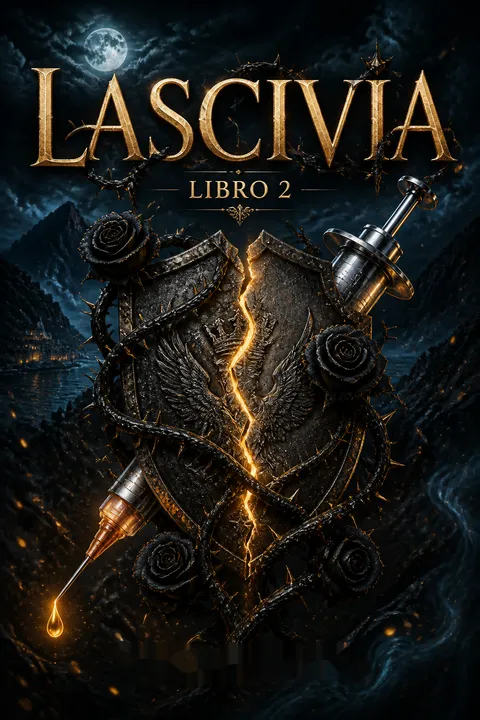
Lascivia. Libro 2 builds its romance around a problem that neither desire nor rescue can solve cleanly: the difference between wanting someone and respecting that person’s freedom. Bratt’s jealousy first appears as a lover’s fear, but his military authority turns it into punishment for other soldiers. Christopher’s possessiveness is more openly predatory, even when it becomes protective. Antoni makes the same confusion more literal, treating captivity, chemical dependence, and marriage as forms of possession. The three men are not interchangeable, but each tests how power can disguise itself as devotion.
Rachel’s central conflict is therefore not simply choosing between two men. She must decide whether her own desire is trustworthy after it has become entangled with guilt, danger, and coercion. Her affair with Christopher harms Bratt and destabilizes their community, but the story does not reduce her to a moral lesson. She acts selfishly, then faces consequences without pretending that shame can undo them. Her eventual exile is an act of agency, yet it is also a devastating surrender of identity and connection. The choice protects her family at the cost of the life she had built.
The military plot gives these intimate failures a public scale. Orders, surveillance, and rescue operations repeatedly reveal that institutions can save lives while also narrowing individual choices. Harry’s death and Fiorella’s murder show the human cost of criminal systems that convert people into leverage. HACOC sharpens the novel’s concern with compromised consent by making the body itself a site of ongoing coercion, even after escape.
The ending refuses easy catharsis. Rachel survives, but survival begins a long struggle with addiction and isolation. Christopher gains power yet remains emotionally trapped by denial. Their separation is not proof that love is false; it is evidence that love alone cannot repair harm, end a war, or create safety. The novel’s sharpest claim is that choosing someone does not grant ownership of them, and that a person’s most consequential act of love may be to leave.
Review Summary
Lascivia. Libro 2 receives polarized reviews with an overall 4.19 rating. Readers praise the emotional depth, increased action, and mafia plot development compared to the first book. Many appreciate the surprising ending where the toxic protagonists separate. However, criticisms focus on toxic relationships, excessive sexual content, problematic consent issues, repetitive scenes, weak character development (especially Rachel), and frustrating secondary characters like Bratt. The writing quality reportedly improves toward the end. Despite flaws including machismo and misogyny, many found it addictive and emotionally engaging, though several warn it's extremely dark and not for everyone.
People Also Read








Characters
Rachel James
The imperiled field officerRachel is a talented, courageous lieutenant whose military discipline coexists with a passionate, impulsive private life. She values competence, loyalty, and the people who have become her chosen family, yet she struggles to act decisively when love and duty pull in opposite directions. Her relationship with Bratt is built on years of shared history, while her attraction to Christopher unsettles her sense of what she owes others. Rachel’s instinct to protect people can become self-sacrifice, and her secrecy grows from fear of losing the life she has earned. She is neither a flawless soldier nor a passive romantic heroine; her contradictions drive both the emotional conflict and the danger.
Christopher Morgan
The ruthless colonelChristopher is a decorated colonel, the son of the FEMF’s minister, and Bratt’s lifelong friend. He hides vulnerability behind arrogance, sexual confidence, and a belief that emotional dependence is a weakness. His authority makes his possessiveness dangerous, especially when he confuses protection with the right to decide for Rachel. He is capable of extraordinary courage and fierce loyalty, but he often acts before acknowledging the harm his choices cause. His relationship with Rachel forces his self-image into conflict with feelings he has trained himself to dismiss. The central tension in his character is whether he can care for someone without trying to control the terms of her safety.
Bratt Lewis
The devoted, jealous fiancéBratt is an accomplished captain and Rachel’s longtime partner. He is generous, affectionate, and deeply invested in building a future with her, but his fear of losing her curdles into jealousy and abuse of authority. He transfers soldiers he sees as rivals and expects Rachel to fit comfortably within his family’s expectations. Bratt’s love is sincere, yet he often treats sincerity as proof that his decisions are justified. His bond with Christopher gives the betrayal its greatest force: the man he trusts as a brother becomes entangled with the woman he hopes to marry. Bratt’s struggle is to distinguish love from possession.
Antoni Mascherano
The criminal pyramid’s heirAntoni is a powerful Italian crime leader, a biochemist, and a calculating adversary of the FEMF. He combines a cultivated manner with an appetite for control, treating people as strategic assets even when he claims to love them. His pursuit of Rachel grows from attraction into a project of possession, reinforced by the family’s power and the addictive drug he developed. He understands the vulnerabilities created by fear and desire, and he uses both deliberately. Antoni’s self-control makes him more threatening than a merely impulsive villain: he plans, bargains, and waits, presenting coercion as protection or partnership.
Harry Smith
Rachel’s chosen brotherHarry is Rachel’s closest friend, a fellow soldier, and one of the few people she trusts with her private fears. Orphaned by a mafia massacre as a child, he carries a deep anxiety about family, legacy, and dying without anyone to remember him. That history makes his reluctance to marry Brenda more than simple hesitation: he fears bringing danger and loss into her large family. Harry is brave and dependable, but not untouched by trauma. He is often the person who steadies Rachel and her friends, and his loyalty gives emotional weight to the military world they share.
Dominick Parker
The wronged rival soldierParker is a German-born captain and skilled soldier who once admired Rachel before Bratt’s jealousy drove him into a dangerous desert posting. His bitterness toward Bratt is grounded in real harm, though it can make him abrasive and unforgiving. He is an artist as well as a tactician, a private tenderness that contrasts with his command-room severity. Parker’s history with Rachel complicates her understanding of Bratt and forces her to confront the consequences of decisions made in her name.
Fiorella
The captive who helpsFiorella is a scarred survivor held within the Mascherano household. She knows the estate’s routines and the methods used to control its captives, and she recognizes Rachel as someone who may still have a route back to the outside world. Her hope centers on finding her daughter, not winning favor with the criminals who hold them. Fiorella’s quiet courage offers Rachel practical aid and human connection inside a place designed to strip both away.
Isabel Rinaldi
The jealous mafia enforcerIsabel is a brutal, ambitious member of the Mascherano circle and once Braulio’s lover. She expects to remain influential beside Antoni and sees Rachel as a threat to her position. Isabel uses violence readily, especially against people who cannot defend themselves, and disguises rivalry as loyalty to the family. Her insecurity is sharpened by a world in which status depends on proximity to powerful men.
Brandon Mascherano
The violent elder brotherBrandon is Antoni’s older brother and a forceful figure in the criminal family. He resents Antoni’s authority and sees Rachel as a destabilizing influence on the clan. Where Antoni prefers calculated possession, Brandon is more openly brutal and impatient. His ambition makes him dangerous to captives and to his own relatives, while his rivalry exposes the instability beneath the family’s unified public image.
Alessandro Mascherano
The scarred family enforcerAlessandro is a member of the Mascherano family who carries out its coercive work. He is directly involved in controlling captives and confronting Rachel, and his scarred appearance reflects a history of violence rather than remorse. He is loyal to the family’s power structure, but his obedience does not make him less dangerous. His presence links the household’s private brutality to the wider criminal network.
Simon Miller
The loyal friend and captainSimon is Bratt and Christopher’s longtime friend, a capable captain, and Luisa’s partner. His humor softens tense moments, but he takes responsibility seriously and often acts as the group’s emotional mediator. Simon understands the cost of military life and wants a family without pretending that danger can be ignored. His friendship with Rachel survives the strain of her choices because he values the person beyond the scandal.
Luisa Banner
Rachel’s fierce confidanteLuisa is Rachel’s closest friend and an outspoken defender of the women around her. She is funny, loyal, and quick to confront men who evade responsibility. Her relationship with Simon provides a contrasting model of partnership grounded in trust and direct communication. Luisa’s blunt advice can be forceful, but it comes from a profound fear of watching Rachel suffer alone.
Brenda Franco
The grieving expectant motherBrenda is one of Rachel’s closest friends and a soldier in the same community. Her relationship with Harry is affectionate but strained by his fear of marriage and family. Brenda is resilient and direct, though grief and pregnancy make her vulnerable to the losses around her. Her friends rally around her, and she becomes a reminder that the consequences of the war reach beyond the people carrying weapons.
Scott
The reckless fellow soldierScott is a friend within Rachel’s military circle, known for immaturity and poor judgment in relationships. When Laurens becomes pregnant, he initially responds by offering money for an abortion rather than accepting responsibility. His friends challenge him to act like an adult. Scott’s subplot adds a smaller but pointed example of how intimacy creates obligations that people may try to evade.
Alex Morgan
The formidable FEMF ministerAlex is the highest-ranking leader of the FEMF and Christopher’s estranged father. He is decisive, intimidating, and willing to bend rules when he believes the institution or his family is at stake. His relationship with Christopher is marked by pride, resentment, and an inability to express care without issuing commands. Alex’s authority can protect Rachel, but it also reveals the moral compromises that accompany power.
Rick James
Rachel’s protective fatherRick is a respected former general and Rachel’s father. He is proud of her military achievements and values courage, but his trust in her sometimes leaves him unaware of the private dangers she faces. Rick’s instinct is to protect his family without stripping his daughters of their independence. His long friendship with Alex links the James family to the highest levels of the FEMF.
Sabrina Lewis
Bratt’s troubled sisterSabrina is Bratt’s sister and Christopher’s estranged wife. She is proud of her family’s status and openly hostile toward Rachel, whom she sees as a threat to her place in the Lewis family. Beneath her social confidence lies deep insecurity and a need to be chosen and affirmed. Her marriage and family conflicts sharpen the novel’s questions about how jealousy and rejection can distort a person’s sense of self.
Martha Lewis
The status-conscious matriarchMartha is Bratt’s mother and a powerful social presence within the Lewis family. She judges Rachel by class, manners, and family reputation, and tries to make acceptance conditional on Rachel’s obedience. Martha’s hostility is not merely personal dislike; it reflects her fear that the family’s status and control are slipping. Her approval matters deeply to Bratt, which gives her influence over his romantic choices.
Joset Lewis
The conciliatory Lewis patriarchJoset is Bratt’s father and a senior figure in the military family. Compared with Martha, he is more conciliatory and willing to let Bratt make his own decisions. He represents the possibility of family loyalty without constant judgment, though his gentleness does not always overcome the pressure exerted by his wife and daughter.
Meredith Lyons
Bratt’s observant sergeantMeredith is a disciplined sergeant who works closely with Bratt and wants his approval. She follows orders even when personal feelings complicate her judgment, and she becomes involved in monitoring Rachel. Meredith’s attraction to Bratt makes her both an efficient subordinate and a potentially biased observer, revealing how professional hierarchies can become entangled with private desire.
Angela Klein
The undercover German officerAngela is a German officer whose fluency and confidence make her useful in undercover work. She is attracted to Christopher and pursues him despite his emotional distance. Her complicated family background makes her sensitive to shame and judgment, especially when Sabrina attacks her in public. Angela’s professional competence often exceeds the recognition she receives from the men around her.
Laila Lincorp
Rachel’s bold fellow officerLaila is a confident officer and one of Rachel’s closest friends. She is direct, funny, and brave under pressure, often using humor to keep the group moving through fear. Her loyalty is practical as well as emotional: she supports Rachel in operations and insists that their friendship survive the distance created by difficult choices.
Olimpia Muller
The decisive deputy ministerOlimpia is a senior FEMF leader who balances institutional caution against the demands of urgent rescue work. She helps oversee Rachel’s inquiry and understands that the organization must distinguish suspicion from proof.
Johana Cardona
The internal affairs investigatorJohana belongs to Internal Affairs and questions Rachel about the information she withheld. She is methodical and evidence-minded, testing whether Rachel acted under pressure or helped the Mascheranos.
Angelo Mascherano
The family’s old adviserAngelo is Antoni’s padrino and uncle, an elder respected within the criminal hierarchy. He values tradition and clan unity, and he uses his authority to mediate family disputes when they threaten the organization.
Plot Devices
HACOC
Chemical obedience and withdrawalHACOC is Antoni’s mixture of heroin, amphetamines, cannabis, opioids, and cocaine. The drug creates dependence quickly and is used to weaken captives, intensify fear, and make obedience feel like the only relief. For Rachel, its effects blur memory, distort perception, and later produce dangerous withdrawal symptoms even after she has escaped. The device makes captivity continue inside the body, preventing rescue from serving as an instant return to freedom. It also gives the criminal network an instrument of control that is both physical and psychological.
FEMF command structure
Rank as protection and threatThe FEMF is an elite military and law-enforcement organization whose hierarchy shapes the entire story. Rank lets Bratt punish perceived rivals, gives Christopher command over dangerous operations, and allows Alex to override the council during a rescue crisis. The institution can investigate, protect, and exonerate Rachel, but it also restricts her movements and ultimately enforces exile. The same structure that gives the characters purpose can turn their private conflicts into official decisions, making power both a shield and a source of harm.
Covert evidence and surveillance
Secrets made visibleThe story repeatedly uses cameras, records, tracking systems, and seized evidence to expose what characters try to hide. A flash drive from the Dumar operation advances the investigation, while a Cadin fine and photograph reveal Rachel and Christopher’s affair to Bratt. Surveillance also follows Rachel through military facilities and helps locate her during the rescue. These tools create a sharp contrast between public evidence and private motive: images can confirm where people were, but they cannot easily explain why they acted or what they felt.
Celeste portrait
A hidden record of regardParker’s painting of Rachel, created years before the central crisis, offers a visual record of how he saw her before she became a point of conflict between men. Rachel discovers it in a gallery, where its scale and detail make clear that Parker’s admiration was long-standing and attentive. The painting complicates her memory of him: beneath his hostility is an artist who noticed her individuality. It also contrasts with the surveillance images that expose her affair, since Celeste preserves a private interpretation rather than a prosecutable fact.
Permanent exile
Safety through erasureThe FEMF’s exile program gives threatened agents new identities and removes them from contact with their former lives. Rachel chooses it when the Mascheranos target her family, accepting a staged death and the loss of her rank, home, and relationships. The device resolves the immediate danger without repairing the damage that produced it. It makes protection inseparable from disappearance: Rachel can reduce the threat to those she loves only by consenting to become unreachable to them.
Pecados Placenteros Series


About the Author
Other books by Eva Muñoz

Download PDF
Download EPUB
.epub digital book format is ideal for reading ebooks on phones, tablets, and e-readers.








