


Plot Summary
The Weight of the Innocent
In Hong Kong, Rachel waits beside Stefan and Miriam while Ernesto undergoes emergency surgery. When the doctors say an aneurysm killed him, she pays to bring his body to France and supports the grieving family and the orphanage children. Cayetana, Stefan's aunt, reads Rachel's future in a coffee cup: pain, a bloody conflict, and the initials MM.
Rachel dismisses the prediction, but a photograph of Gema beside Christopher soon stirs jealousy she cannot hide. She returns to London, still in love with Christopher and still unable to trust the future between them. When Stefan, lonely after his loss, tries to comfort her physically, she stops him and makes clear that her feelings remain elsewhere.
The opening binds private grief to the novel's larger threat. Rachel can pay for transport, medical care, and travel, yet she cannot bargain with death; her helplessness echoes the limits she will confront in both love and military command. Cayetana's initials and prophecy function as unease rather than proof, especially because Rachel is already inclined to connect danger with the people she loves. Her refusal of Stefan also establishes a crucial distinction: compassion and attraction do not equal commitment. She can care for him and still be emotionally fixed on Christopher.
The Raven at Her Door
Casos Internos arrests Sergeant Trevor Scott without warning at the command, alarming Gema and the campaign staff. Rachel visits Scott and learns he has been seeing a woman connected to the mafia, though he denies knowing her criminal ties.
She confronts Carter Bass, who keeps Scott in custody and threatens to arrest Simon Miller unless Rachel produces evidence. She submits information showing Simon has contact with Corina, while detective Elliot MacGyver warns that the real danger may be an infiltrator inside the FEMF.
Soon Rachel finds a dead raven and a threatening message signed A. M. Elliot also reveals Antoni has a son, Damon, and suspects Philippe Mascherano has infiltrated the army. Rachel must investigate quietly, because warning her superiors could alert the traitor.
Institutional authority becomes a source of danger rather than reassurance. Casos Internos can arrest colleagues first and ask questions later, so Rachel's loyalty to the FEMF is forced into conflict with loyalty to people inside it. The raven threat turns a vague sense of menace into a personal warning, while Elliot's theory makes the command itself feel compromised. Rachel's choice to gather proof discreetly is not simple secrecy: it is an attempt to protect her colleagues in a system where information can become a weapon.
The McLaren and the Kiss
Rachel returns to Christopher's penthouse with Stefan, hoping to explain why she left him in France. Gema is there, and Stefan provokes Christopher by admitting that he tried to seduce Rachel.
Christopher beats him, then turns toward Rachel; she flinches because Bratt once struck her, and Christopher mistakes her fear for an accusation. Rachel later tells Stefan that Christopher's protection is the difference between comfort and safety when Antoni comes for her.
At a Cambridge event, she confronts Christopher over Gema, drinks too much, and he escorts her back to her room. The next day she steals his McLaren, then returns it to him through a private dinner and admits she still loves him. He reveals he will protect her even if Antoni is released.
The reunion exposes the difference between emotional safety and physical protection. Rachel is not blind to Christopher's volatility, but she trusts that he will defend her against the danger represented by Antoni. That trust is both a source of strength and a vulnerability, because Christopher often interprets devotion as ownership. Their mutual jealousy does not resolve their conflicts; instead, it becomes a language that lets them admit attachment while avoiding the harder question of how to treat one another.
Fifty-Eight Seconds
During an operation in a crowded London tower, Rachel's unit pursues a Syrian target while civilians block the perimeter. Explosive devices suddenly enter the building, and the countdown reveals a network linked to a central detonator.
Captain Parker orders Rachel to evacuate, but she stays because hundreds of people remain outside. She dismantles the device with seconds left, then kicks away a second bomb as it explodes, throwing her through glass and damaging part of the structure.
The target escapes and the operation causes casualties and costly damage, so Parker and Christopher reprimand her for risking her team. Soon afterward, Casos Internos approves an undercover operation at the Hipnosis club, where Rachel, Angela Klein, and Meredith Lyons will investigate a dangerous altered form of HACOC.
Rachel's decision is ethically legible but institutionally costly. She refuses a clean command response because evacuation alone would leave civilians exposed, and her courage saves lives while also contributing to a failed capture and injured troops. The scene complicates heroism: the same instinct that makes her willing to die for strangers can override the judgment her team needs from a leader. That fault line will matter later, when her work and personal vulnerabilities become entangled in a much more dangerous operation.
The False Hela
At the Hipnosis, the three agents enter disguised as dancers called the Nórdicas, hoping to trace who is altering HACOC. Meredith has secretly come to believe Rachel slept with Bratt after finding Rachel's collar at his apartment, where Bratt was actually with Milla Goluvet.
In the club, Meredith identifies Rachel as Antoni's mafia dama and reveals her real name to the criminals. They inject Rachel with HACOC and assault Angela, who is also drugged and badly beaten.
Rachel's former dependency returns as the drug distorts her perceptions and drags her through memories of Harry's death, her exile, and Antoni's abuse. Meredith's jealousy has turned a professional operation into a trap, leaving both women captive and the FEMF unable to trust its own reports.
The betrayal begins with a misreading, but Meredith's action is still deliberate: she lets private resentment determine what happens to colleagues in a lethal setting. Rachel's public identity as Antoni's chosen woman becomes an exploitable weakness, while her history with HACOC makes the attack more than an injury. The drug attacks memory, agency, and self-image at once. Meredith's fear of losing Bratt is converted into a form of punishment, showing how romantic rivalry can become catastrophic when it is protected by institutional access.
Glass, Blood, and Rescue
Antoni's brother Philippe urges negotiation while Antoni prepares a violent answer to the seizure of Rachel. At the Hipnosis, Rachel is held in a glass room as the criminals prepare to use her as leverage for the HACOC formula. Christopher and the FEMF storm the club, using Lucian Mascherano as leverage to force the attackers to stand down.
Christopher breaks the glass and kills the man threatening Rachel, then gets her out while Angela is carried away severely injured. Doctors say Rachel's body may never safely bear children, and Angela has lost a pregnancy after repeated assault. Meanwhile, Christopher later hunts Meredith and kills her, also killing Martha Lewis when she arrives. He frames the murders as Bratva violence.
The rescue is a victory with an immediate moral cost. Christopher's force ends the assault and retrieves Rachel, but his response to Meredith and Martha replaces justice with private vengeance. Rachel's body bears the consequences of the criminal world, while the medical prediction about infertility becomes another form of grief imposed before she can choose a future. The scene also establishes Lucian as leverage and foreshadows the struggle among Antoni, Philippe, and the Russians over both the HACOC formula and control of the mafia.
The Second Descent
After the rescue, Rachel relapses into HACOC withdrawal and asks for other drugs to quiet the pain. She lashes out at Stefan and injures a nurse while trying to obtain morphine. Christopher removes her from London against medical advice, but when she escapes in a storm, he finds her in a drug den, convulsing after an overdose.
He gets her to safety and admits that he loves her, though he continues to treat control as proof of devotion. His uncle Reece Morgan takes charge at the CCT, where Rachel endures a brutal recovery, psychological treatment, and isolation on an island. Over twenty weeks, she regains strength, learns survival skills, and tests clean with HACOC greatly reduced, while Christopher struggles with distance and dependence.
The relapse makes addiction visible as a conflict between the body's demands and the person's wish to live. Rachel's violence toward people trying to help her does not erase her responsibility, but it shows how withdrawal narrows choice until survival itself feels unbearable. Christopher's rescue is sincere, yet his possessiveness cannot substitute for treatment. Reece's insistence that recovery must be Rachel's work challenges both lovers: she must build a self not dependent on a drug or a man, while Christopher must confront the fact that wanting her is not the same as helping her.
Peyton and the False Affair
While Rachel recovers, Luisa Banner finds bills for a house, medicine, and toys paid from her shared funds and concludes that her husband Simon is supporting an affair with Corina.
She throws him out and turns to contractor Orson, but Simon later explains that Corina is his biological sister and that the child, George, is his brother. He had hidden his adoption and family history because he feared Luisa would judge them. Luisa gives birth early to their daughter Peyton, with Rachel beside her, but remains hostile when Simon introduces Corina and his brother.
Their marriage is left strained rather than repaired. In a separate breach, Meredith learns she misidentified Rachel as Bratt's lover, yet fear and shame keep her from correcting the damage.
Luisa's mistake grows from evidence she interprets through past betrayal, but Simon's secrecy gives that interpretation room to harden. His fear of judgment protects his vulnerable family history at the cost of trust in his marriage. The birth of Peyton brings joy without repairing the couple's rupture; even a new child cannot instantly undo accumulated suspicion. The subplot mirrors Rachel's broader story: love without truthful communication becomes a contest over who is entitled to know, and the cost falls on people who did not choose the deception.
Clean Enough to Return
Reece and his team help Rachel reduce the HACOC in her system through medical treatment, therapy, and demanding work on a remote island. After twenty weeks she passes a major test with only a small amount remaining and asks to return to the FEMF as a captain. Alex assigns her to lead the Alta Guardia, the special unit charged with protecting Christopher.
The recruits dismiss her as a model and refuse her orders, so Rachel defeats Ivan Baxter in the ring and wins their attention through skill rather than rank alone. She returns to London with a new responsibility and a clearer sense of her own abilities, though her emotional and sexual dependence on Christopher remains a risk to her recovery.
Recovery here is not a miraculous return to an untouched self. Rachel rebuilds competence through repeated, embodied acts: training, surviving discomfort, learning to command, and accepting support without surrendering agency. The sexist soldiers test whether her authority can survive a culture that reads her body before her credentials. Her success in the ring answers that challenge concretely, but it does not resolve the deeper dependence on Christopher. The chapter separates professional strength from emotional health, showing that mastery in one domain does not automatically cure vulnerability in another.
The Wedding and the Twins
As Christopher's campaign tightens, Rachel and Christopher repeatedly reunite through sex, jealousy, and possessive promises, while Gema remains his public political ally. Rachel is appointed to protect Christopher and the Alta Guardia, and the two finally marry in a military ceremony after a spiritual blessing on the island.
Later, Rachel learns she is pregnant with twins, despite earlier medical predictions that she could not safely have children. She initially hides the news from Christopher and relies on Alex and Reece for support, fearing he will reject the babies or treat them as an obstacle to his campaign. When the truth emerges, Alex supports her decision to continue the pregnancy, while doctors warn that the HACOC exposure makes it dangerous.
The marriage gives public form to a bond that has long existed without stable boundaries, but the ceremony does not cure their distrust. Rachel's twin pregnancy overturns the medical prognosis and turns private desire into a high-stakes decision about bodies, risk, and parenthood. Her secrecy is understandable as self-protection, yet it repeats the pattern of withholding crucial information that has damaged other relationships in the book. The babies become both a source of hope and a pressure point: they bind Rachel and Christopher while intensifying the danger surrounding them.
The Infiltrator's Name
As violence spreads among the mafia clans and the FEMF, Rachel investigates the missing evidence from Elliot's files. She and Stefan rescue Naomi Santoro from a burning property targeted by the military, then protect her in Rachel's apartment.
Naomi is frightened and initially refuses to help, but eventually identifies Paul Alberts as Philippe Mascherano, the infiltrator who has been working inside the command. Rachel's suspicions about the compromised investigation are confirmed, while Derek helps retrieve data from Elliot's encrypted computer.
Philippe's network has manipulated Casos Internos and positioned allies close to the Élite. Rachel tries to warn Alex, but the discovery comes amid threats, political fractures, and a campaign increasingly shaped by the mafia's ability to strike from within.
Naomi's identification changes the investigation from a theory into a personal betrayal: the enemy is not outside the institution but has been trusted inside it. The revelation also reframes the earlier arrests and accusations, which were not merely bureaucratic excess but part of a larger effort to destabilize the Élite. Rachel's response is protective rather than extractive; she shelters a child before asking for information. That choice contrasts with the factions around her, which treat people as leverage, and makes the cost of her ethical commitments increasingly dangerous.
The Morgan Convoy Falls
The campaign's public appearances become targets as the Bratva and other criminal groups escalate their attacks. A convoy carrying members of the Morgan family is ambushed, and the assault kills Reece and Regina while leaving Alex devastated and Christopher consumed by revenge. Rachel is caught between the duty to protect the family and her growing fear that Christopher's violence is swallowing every boundary.
The deaths fracture the Morgan household and make the political contest feel secondary to survival. Christopher rejects restraint, while Alex tries to keep the FEMF from triggering a wider massacre. Rachel's work with the Alta Guardia becomes more urgent, but the losses deepen her sense that no one can protect everyone.
The ambush converts the novel's abstract war of power into intimate bereavement. Reece and Regina are not simply political assets; they are among the few people who offered care and continuity to Christopher and Rachel. Their deaths strip away the family's protective mythology and expose how little control even powerful people possess. Christopher's response threatens to turn grief into further violence, while Alex's caution risks appearing like weakness. Rachel is forced to occupy the space between these impulses, knowing that both passivity and retaliation may endanger more people.
The Brother's Last Ambush
Philippe is exposed as Derek Leroy, the supposed ally who helped Rachel access the investigation. He takes Naomi and uses the chaos around the FEMF to threaten Rachel's family and the twins. Rachel escapes a deadly trap with Stefan and learns that Philippe has been manipulating the conflict between the mafia and the command.
During a violent confrontation, Christopher and the Élite are drawn into a final struggle with the Bratva and the Mascherano faction. Rachel is separated from her children and from Christopher as the fighting turns into a series of ambushes. Antoni regains control of the mafia, while Rachel is left with the cost of choosing between the people she loves and the power structures closing around her.
Philippe's deception gives the novel's scattered betrayals a single organizing intelligence, but the revelation does not restore order; it accelerates collapse. Rachel's instinct is to protect children and colleagues, while the men around her treat those same lives as bargaining pieces. The flight and separation that follow make her earlier promise to protect the twins impossible to fulfill by sheer will. The narrative thus refuses a simple triumph over the infiltrator: uncovering a hidden enemy is not enough when the systems around him remain violent and compromised.
The Dama's New Life
A year later, the epilogue finds Rachel in a radically altered life. She believes she is married to Antoni Mascherano and calls herself the Dama of the mafia, while her memories of Christopher and her former identity are absent or fractured. She believes the FEMF killed her children in an operation and has turned her grief into a reason to oppose the Morgans.
Antoni's power and her new role appear settled, but the portrait of her past remains visible in the way she speaks of loss and revenge. The book ends not with the election resolved or the family healed, but with Rachel's identity captured by the very criminal world she once fought.
The epilogue transforms the romance's central danger into a question of identity. Rachel's apparent security beside Antoni is built on missing memory, a false or imposed account of her life, and grief she cannot properly place. The woman who once resisted being owned now occupies the highest position in a criminal hierarchy, but the title does not prove freedom. Her belief that the FEMF killed her children fuses bereavement with political hatred, leaving the next conflict poised between the person she has become and the history she can no longer remember.
Epilogue
A year later, Rachel lives as Antoni Mascherano's wife and the Dama of the mafia, convinced that the FEMF killed her children. Her memories of Christopher and her former life are gone or fractured, and grief has hardened into hostility toward the Morgans.
The woman who once fought to remain free now stands beside the criminal power she tried to oppose, while the past survives only in fragments. The story closes on this altered identity, with Rachel's position secure but the truth of how she came to it still buried.
The epilogue refuses a conventional romantic resolution. Rachel's new status appears powerful, yet it depends on memory loss and a story of her past that directs her grief toward the wrong enemy. The transformation is especially unsettling because it reverses her earlier struggle: she once resisted being treated as property, but now identifies herself through a title within the mafia. Her apparent certainty is not healing; it is the product of absence. The ending leaves the central conflict alive inside Rachel herself, between a life she believes and a life she cannot recall.
Analysis
The novel makes intimacy and authority difficult to separate. Christopher's protection is real, but he often turns it into ownership; Rachel's desire for him is equally real, yet it repeatedly pulls her away from the boundaries she needs to survive. The story does not treat addiction as a decorative metaphor: HACOC changes Rachel's body, memory, judgment, and future, and recovery requires more than romance. At the same time, the military and the mafia mirror one another. Both use hierarchy, loyalty, punishment, and spectacle to demand obedience, while the election converts personal relationships into public strategy.
Several characters mistake control for care. Meredith tries to secure love by punishing a rival. Simon hides family truths to avoid judgment, then discovers that silence produces the very mistrust he feared. Alex seeks order but cannot repair the distance created by his own choices. Rachel, meanwhile, repeatedly protects others at personal cost, from civilians in the tower to children caught in the criminal world. Her professional courage is not the same as emotional freedom, and her recovery exposes how vulnerable she remains to both drugs and Christopher.
The ending refuses to reward the lovers with uncomplicated peace. A wedding and pregnancy briefly promise continuity, but betrayal, violence, and separation overwhelm those hopes. In the epilogue, Rachel's new identity as Antoni's wife rests on fractured memory and a belief that her children were killed by the FEMF. The final image therefore turns the novel's central question back on itself: if memory, loyalty, and love can all be manipulated, what part of a person remains truly her own?
Review Summary
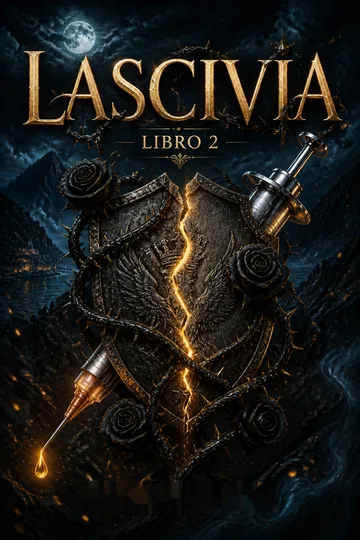
Lujuria: Libro 2 receives polarizing reviews, averaging 4.34/5. Many readers praise its emotional intensity, action sequences, and complex characters, often citing the shocking ending as unforgettable. Fans adore the passionate, albeit toxic, relationship between Rachel and Christopher Morgan. Critical reviews highlight significant concerns including poorly developed characters, excessive sexual content, numerous narrative inconsistencies, glorified machismo, and mishandled sensitive topics like assault and abuse. Despite its flaws, even skeptical readers acknowledge the story's addictive quality, with many continuing the saga despite reservations.
People Also Read




Characters
Rachel James
The defiant tenienteA highly trained FEMF officer, criminologist, and survivor of HACOC dependence, Rachel is driven by loyalty to her colleagues and a fierce wish to remain useful rather than protected. Her professional instincts are strong, but her feelings for Christopher repeatedly pull her into a relationship where desire, safety, jealousy, and control are difficult to separate. She can be reckless when civilians or loved ones are threatened, and she tends to interpret endurance as proof that she should keep going. Her family gives her a model of affection and belonging that she struggles to preserve while living among the Morgan and Mascherano power structures.
Christopher Morgan
The volatile coronelChristopher is a celebrated FEMF officer, political candidate, and heir to the Morgan family's power. He pursues control with the same intensity he brings to combat, and he reads devotion as a claim rather than a mutual agreement. His attachment to Rachel is genuine, but he expresses it through possessiveness, sexual urgency, and threats against anyone he sees as a rival. He is capable of strategic brilliance and protective action, yet his pride makes him cruel when he feels rejected or powerless. The tension between his ambition and his need for Rachel defines much of his conduct.
Gema Lancaster
The campaign's polished faceGema is a capable soldier and campaign strategist whose public confidence helps Christopher appeal to voters. She is devoted to him and to the Morgan family, but her loyalty is entangled with a long-standing hope that he will choose her. That hope makes her vulnerable to comparison, humiliation, and the urge to prove her value through public service. Gema is neither merely a rival nor merely a political accessory: she wants recognition, a meaningful role, and a future that matches the work she invests. Her warmth and ambition coexist with an intense fear of being discarded.
Alex Morgan
The embattled ministerChristopher's father and the sitting minister of the FEMF, Alex carries both institutional authority and a painful history of failing his family. He values order, caution, and political survival, which repeatedly clash with Christopher's appetite for unilateral power. His relationship with Sara remains emotionally complicated, and his bond with his son is marked by love expressed through command, guilt, and too few honest conversations. Alex wants to protect the FEMF and the people close to him, but his authority cannot erase the consequences of his past choices.
Stefan Gelcem
Rachel's steadfast friendA gentle soldier who works with the FEMF and helps Rachel through grief, danger, and recovery. Stefan is attentive where Christopher is forceful, and he offers practical care without pretending that kindness alone can solve Rachel's problems. He is connected to the orphanage and the Gelcem family, whose generosity gives Rachel a glimpse of a less coercive kind of loyalty. His affection for her is real, but he understands that her heart is elsewhere.
Luisa Banner
Rachel's closest confidanteRachel's lifelong friend is a psychologist whose knowledge of behavior often helps her see what others avoid. Luisa is intelligent, forceful, and proud of her independence, but her suspicion of betrayal can make her act before she has the full story. Her marriage to Simon becomes a test of whether practical honesty can survive fear and accumulated resentment. She cares deeply for Rachel, even when her blunt judgments create new wounds.
Simon Miller
The guarded husbandA captain and Luisa's husband, Simon is sentimental beneath an easygoing exterior. He has kept his adoption and biological family history private, not because he lacks love for Luisa but because he expects judgment. His hidden responsibilities toward Corina and George become a source of mistrust at the worst possible time. Simon wants to be a good husband and father, yet his habit of withholding difficult truths undermines that intention.
Meredith Lyons
The wounded conspiratorA skilled FEMF soldier and Bratt's partner, Meredith has a strong sense of duty and a deep need to be chosen. Her loyalty becomes unstable when she feels threatened by Rachel and misreads evidence about Bratt's relationships. She is shaped by grief, jealousy, and a desire to secure a future with the man she loves. Her story exposes how personal insecurity can warp professional judgment, especially inside a chain of command where access carries real power.
Bratt Lewis
The decorated captainA respected captain and Rachel's former partner, Bratt is ambitious, competitive, and often proud of his status in the FEMF. He once loved Rachel, but their history leaves both of them sensitive to betrayal and comparison. His choices affect Meredith, Milla, and his own standing among the officers. Bratt can be an effective leader, yet he is not immune to the personal rivalries that make the command's professional world combustible.
Angela Klein
The resilient infiltratorA disciplined and capable teniente, Angela works undercover as one of the Nórdicas and is trusted by Rachel. She is known for reading danger quickly and adapting under pressure, while keeping much of her private life guarded. Her professional competence can make others mistake her for invulnerable, though she too needs care and solidarity. Angela's loyalty is expressed through action: she stays with colleagues when the operation turns dangerous.
Antoni Mascherano
The imprisoned mafia leaderA brilliant bioquímico and head of the Italian mafia pyramid, Antoni uses the rare formula for HACOC to preserve his power. He is calculating, possessive, and skilled at turning personal attachment into leverage. His fixation on Rachel combines genuine fascination with a belief that she belongs within his sphere of control. Antoni's conflict with his brother Philippe, the Romanovs, and the FEMF reveals a leader who treats loyalty, family, and violence as parts of the same political system.
Philippe Mascherano
The patient rivalAntoni's younger brother, Philippe is less flamboyant and more diplomatic, but he is no bystander in the struggle for the mafia's leadership. He believes negotiation can protect the clans from needless bloodshed, while his dependence on Antoni makes it difficult to challenge the older brother openly. Philippe is shaped by family loyalty and ambition in equal measure. His calm manner conceals a strategic mind, and his choices place him at the intersection of the mafia's internal hierarchy and the FEMF's compromised command.
Reece Morgan
The healer and mentorChristopher's uncle, a toxicology specialist and head of the CCT, combines scientific rigor with disarming humor. He offers Rachel an intensive path through HACOC recovery and insists that she take responsibility for her own healing. Reece is affectionate with Christopher in a way the young coronel often resists, and he provides the family warmth that the Morgan household otherwise lacks. His candor can be blunt, but it is rooted in a serious commitment to keeping people alive.
Naomi Santoro
The frightened witnessThe daughter of Fiorella, Naomi is a child caught in the Mascherano household and treated as a servant by Dalila. Fear has taught her to expect pain from adults, so trust arrives slowly and unevenly. Her memories and observations matter to the investigation, but she is not simply a clue: she needs safety, patience, and a chance to speak without coercion. Her connection to Lucian and Rachel gives the story a fragile thread of care within the mafia's violence.
Dalila Mascherano
The ruthless heirThe daughter of Brandon Mascherano, Dalila is ambitious, volatile, and hungry for recognition within a world ruled by family names and force. She resents being treated as lesser than the men around her, yet repeats the cruelty that shaped her own upbringing. Her treatment of Naomi and the younger Mascherano children reveals a character who confuses authority with domination. Dalila's alliance with criminal factions is driven by revenge as much as by a desire to claim a place in the mafia.
Alex Morgan
Christopher's political fatherAs minister and former husband of Sara, Alex balances public responsibility with private regret. He wants to protect Christopher and the FEMF, but years of emotional distance have left his son unwilling to accept his guidance. Alex's preference for rules and caution is not simple cowardice; it reflects his awareness that a single decision can endanger entire commands. His history with Sara suggests a man who recognizes the cost of his own failures but struggles to repair what they damaged.
Sara Hars
The estranged motherChristopher's mother is warm, accomplished, and accustomed to creating calm through food, hospitality, and care. She left Alex after years of infidelity and has built a life beyond the Morgan household, yet her love for Christopher remains strong. Sara often tries to bridge the distance between father and son without denying the hurt that created it. Her quiet steadiness contrasts with the family's appetite for confrontation, though she is not free of grief or regret.
Lucian Mascherano
The child between clansLucian is a young member of the Mascherano family whose gentle nature and instinct to protect his brother stand apart from the violence around him. He is attached to the few adults who show him care, but he is wary of what his family's name means. His presence becomes politically important because both the mafia and the FEMF can use him as leverage. Beneath that role, he is a child trying to understand which adults can be trusted.
Plot Devices
HACOC
The body as battlefieldThe powerful drug developed by Antoni is both a source of mafia leverage and a direct threat to Rachel. Her former dependence makes her especially vulnerable when the criminals at the Hipnosis inject her again. HACOC produces euphoria, hallucinations, violent withdrawal, and lasting physical damage, so its effects shape both the action and Rachel's sense of self. The drug also drives the CCT recovery plot and later complicates pregnancy. Its importance lies in making power intimate: the mafia does not merely control territory, it can alter what a person feels, remembers, and believes.
Casos Internos
A compromised watchdogThe FEMF's internal oversight branch is meant to ensure that soldiers follow the law, but it becomes a tool for arrests, pressure, and misinformation. Carter Bass investigates members of the Élite, forcing Rachel to gather evidence while fearing that a real infiltrator may be inside the command. Later, the branch's apparent authority helps conceal Philippe's position and endangers those it claims to protect. It turns the military setting into a place where orders and evidence cannot be trusted without scrutiny.
The FEMF election
A public road to powerThe race for minister gives Christopher a public goal and gives the mafia an opportunity to shape the institution from within. Gema manages publicity and humanitarian campaigns, while Christopher's rivals, Leonel Waters and Kazuki Shima, compete for votes. The campaign repeatedly collides with military operations, attacks, and family tensions. Its political stakes make every arrest, scandal, and act of violence consequential beyond the characters' private lives, while the public image of a stable first family becomes another form of leverage.
The Nórdicas operation
A cover that collapsesRachel, Angela, and Meredith infiltrate the Hipnosis by posing as dancers from the Nórdicas. The disguise grants access to the club's clients and its illegal experiments with an altered form of HACOC. Meredith's betrayal exposes Rachel's identity and turns the operation into a trap. The device links undercover performance to the novel's concerns about who controls a person's body and name: the agents use a role to gather evidence, while the criminals use the same role to expose and exploit them.
The promised rescue
Protection becomes possessionChristopher repeatedly promises to find and protect Rachel, a commitment rooted in his genuine fear of losing her. Yet his protection often becomes coercive: he decides where she goes, who may approach her, and what risks she is allowed to take. The promise matters because Rachel also needs protection from Antoni, whose threats are real. The plot continually tests whether safety can exist without surrendering autonomy, and whether Christopher can distinguish love from the right to control.
Pecados Placenteros Series


About the Author
Other books by Eva Muñoz
Download PDF
Download EPUB
.epub digital book format is ideal for reading ebooks on phones, tablets, and e-readers.








