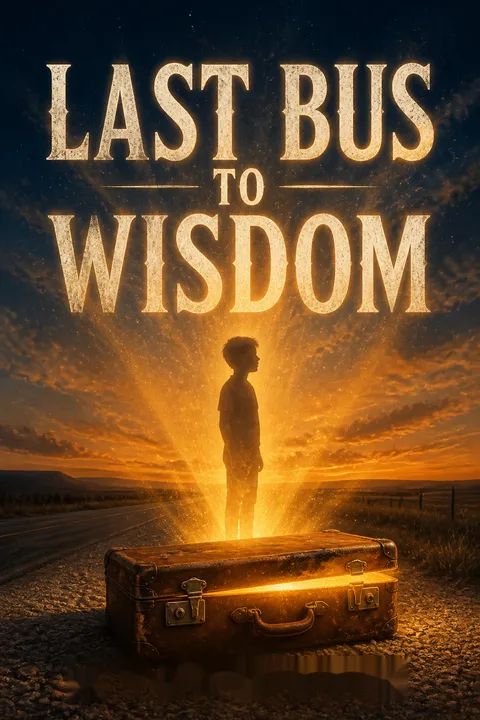


Plot Summary
The Power Wagon Refusal
Eleven-year-old Donal Cameron lives with his grandmother, Dorie, in the Double W ranch cook shack. When illness requires surgery and the ranch needs its quarters for a replacement cook, Dorie sends him to Wisconsin to stay with relatives she barely knows. Donal begs to remain and work the hay season, but ranch owner Wendell Williamson has replaced the horse-drawn stacker with a machine and refuses him a job.
As he leaves, Donal snatches back a black obsidian arrowhead he once found in a creek and had surrendered to Wendell. He keeps the stone, a private treasure and possible talisman, while carrying his dead parents' memory and fear that Dorie may never recover.
The journey begins not with a boy's appetite for adventure but with adults making decisions around his vulnerability. Donal's proposed hay job is more than summer work: it is his attempt to preserve the only home he has known and keep Dorie's place on the ranch secure. Wendell's preference for machinery makes the rejection feel personal even though it is economic. Taking the arrowhead reverses, in miniature, the powerlessness of being sent away. Donal cannot choose where he goes, but he can reclaim one object and give it meaning.
Letty Knows the Crosses
On the first leg of the trip, Donal invents a father who works at Reader's Digest, then carries the story onto the Greyhound, where three soldiers headed for Korea humor him and sign his memory book. He also meets Letty Minetti, a waitress leaving Great Falls for a new job in Havre.
Her name unlocks a connection: Dorie had once worked with Letty and trusted her to place flowers at the roadside crosses marking Donal's parents' deaths. Letty understands why the boy is traveling alone, listens to his fears about Dorie's operation, and offers him a first kiss as comfort before she gets off. Donal leaves the encounter with a new inscription and a stranger who feels briefly like family.
Donal's inventions help him control what strangers know, but Letty's recognition makes the past more powerful than his cover story. She connects his present isolation to the crosses that mark his parents' deaths, turning a casual bus conversation into an encounter with grief. Her kindness is not sentimental rescue: she offers a small, bounded act of warmth, then continues her own uncertain journey. The memory book helps Donal preserve this contact without having to explain what it means. His collecting is already becoming a way to make brief connections durable.
The Jailbreaker Beside Him
After Letty leaves, Donal finds himself beside a handcuffed passenger being returned to jail by Sheriff Carl Kinnick. The prisoner, Harv, explains that he was arrested while trying to reach Letty, and that the sheriff keeps catching him after escapes from the Wolf Point jail. Donal discovers that Harv and Carl are stepbrothers, though their affection is buried under irritation and custody.
The sheriff questions Donal about traveling alone and suspects he may be a runaway; Donal shows Dorie's address and earns the lawman's reluctant belief. Before Harv gets off, he writes a careful romantic verse in Donal's book, making the boy hope the couple will reunite. The bus carries Donal east, with its passengers' lives filling his pages.
The encounter introduces law as something more complicated than a simple division between good and bad. Carl has authority and a legitimate reason to return Harv to jail, yet his personal history with his stepbrother keeps the exchange charged with resentment and familiarity. Donal's fear of being mistaken for a runaway reveals how precarious his status is: he is not escaping home, but he has no adult beside him to make that distinction credible. Harv's inscription turns a criminal record into a declaration of loyalty, one of the book's recurring reversals of appearances.
The Suitcase Grab
As the bus crosses Minnesota, a well-dressed salesman befriends Donal and draws out increasingly extravagant stories about his rodeo life and valuable moccasins. The stranger leaves at a rural stop, then tries to steal Donal's wicker suitcase from the luggage compartment, assuming the boy will not notice.
The driver catches him before he can escape, and Donal declines to press charges because he wants the journey to continue. He retrieves his money, moccasins, and arrowhead, but the incident teaches him that charm can conceal a threat.
Later, in Minneapolis, Donal becomes distracted by the city and misses his departing bus, leaving his jacket and address behind. The trip's dangers have shifted from awkward conversation to the real risk of being stranded.
Donal's storytelling first gives him confidence and companionship, but the salesman converts it into a map of what can be taken from him. The boy's choice not to press charges shows how little power he believes he has over the journey: stopping the bus or summoning authorities might cost more than enduring the theft attempt. His later missed connection is not simply carelessness. It exposes the gap between a child's sense of independence and the systems that make travel safe, including luggage, schedules, and a reliable adult.
The Minneapolis Chase
A newspaper delivery driver hears Donal's distress and races him across the Twin Cities in a van, forcing the Greyhound driver to stop before the bus leaves St. Paul. Back aboard, Donal meets Mae and Joe Schneider, an elderly couple who defend him and listen to the story of his parents and Dorie. Their kindness steadies him, but a noisy group of boys traveling to camp soon steals his memory book as a prank.
Donal fights them for it, chips a tooth, and gets his book back, but the slip bearing his Wisconsin relatives' address is lost. At the Manitowoc depot, amid a crowd of redheaded campers, he cannot find his aunt and uncle or call them. As panic takes hold, a woman and man identify him by his resemblance to Dorie.
This sequence tests Donal's independence through a chain of practical failures: a missed bus, a lost address, and a crowded depot where resemblance is his only useful credential. The newspaper driver and the Schneiders offer help without demanding that Donal first become an impressive or entertaining child. By contrast, the campers treat his memory book as a toy, forcing him to defend the object that holds his links to people he has met. The episode shows how quickly the book shifts from hobby to lifeline, even as its fragility leaves Donal exposed.
The Aunt in the Attic
Donal's greeters are Herman Brinker and Dorie's sister, Kitty, a large, polished woman he mistakes for the singer Kate Smith. The resemblance collapses when Kitty eats while the radio plays Kate Smith's familiar song, and she worries that Donal's imagination means something is wrong with him.
She gives him an attic room instead of the sewing room he hoped to occupy, where a wall plaque about dying in one's sleep magnifies his fear for Dorie. Herman, gentler and curious about Montana, visits Donal after dark to show him a German adventure novel and admire the Blackfoot moccasins. Donal begins the summer feeling misread by Kitty but cautiously welcomed by the eccentric man she calls her husband.
Donal's mistaken identification turns celebrity into a protective fantasy: the famous aunt he hopes to meet would make his arrival feel like a triumph. Kitty's response punctures that fantasy and, more painfully, treats imagination as a defect rather than a resource. The attic intensifies the mismatch between his need for comfort and her preference for order. Herman's quiet visit offers another model of attention. He takes Donal's stories and objects seriously, establishing the contrast that will shape the boy's divided loyalties.
Portraits in the Greenhouse
A phone call from Sister Carma Jean brings partial relief: Dorie has survived surgery, though complications will prolong her recovery. Kitty then discovers that the thirty dollars pinned inside Donal's shirt went out with the garbage, leaving him without spending money or the school clothes Dorie intended him to buy.
She sends him to Herman's greenhouse, where old photographic plates form dim portraits in the glass. Herman shares stories about a shipwreck on the Great Lakes, the loss of his eye, and how he came to be known by different names. He also introduces Donal to the idea of Manitou, the Great Spirit, and treats the boy's Blackfoot interests with respect. Donal finds a companion, but the adults' household remains tense.
The greenhouse makes memory visible: ordinary people from old portraits remain present in the glass, much as the dead remain present in Dorie's sayings and Donal's recollections. Herman's willingness to explain his eye and listen to Donal gives the boy a form of recognition he lacks in Kitty's house. Yet the lost money changes the material stakes. Kindness does not buy clothes, comic books, or independence, and Kitty's control over household resources deepens Donal's sense of dependence. The section binds spiritual curiosity to a practical need for safety.
The Letter That Vanished
Kitty insists that Donal learn canasta so he can replace a missing member of her weekly card party. When he loses patience with the rules, Herman secretly coaches him with a second deck and a strategy that helps him win. Donal later sneaks into Kitty's sewing room to take what he believes is his share of their winnings; she catches him and decides to send him back to Montana.
Herman supports Donal during the confrontation, then learns that Kitty plans to place him in foster care. He retrieves and destroys her letter to Dorie, buys bus tickets west, and joins Donal rather than letting him travel alone. The two invent a plan to mail Dorie letters from Manitowoc so she will believe Donal is still staying with Kitty.
Canasta becomes a proxy for the household's deeper struggle over who has the right to set terms. Kitty sees the game as discipline and social obligation; Donal experiences it as another demand imposed on a child with no money or choice. His theft is wrong, but it grows from an unresolved grievance about the lost cash and Kitty's refusal to treat him as a partner. Herman's decision to join him turns protection into complicity. Their false letters are an act of care and a lie, a combination that will keep their bond alive while placing both at risk.
A Finger Points West
On the westbound buses, Herman turns travel into a shared game, while Donal writes in advance to Dorie, describing an invented, happy summer in Wisconsin. During a night ride, Donal meets a restless writer who fills a notebook by penlight and adds a thoughtful entry to the memory book. In Miles City, Donal persuades Herman to spend the Green Stamps he earned on the bus for two cowboy hats, and the store clerk adds a comic verse.
Donal then uses his knowledge of Blackfoot schooling and seasonal moons to direct them toward Crow Fair. The parade's thousands of riders, drums, regalia, and decorated horses overwhelm both travelers. Herman sees the Indian world he has imagined in books; Donal recognizes traditions he knows from home.
The road gives Donal and Herman a temporary freedom from fixed identities. Donal's letters create a second, imagined journey for Dorie, while the bus writer affirms that invention can be an honest response to hardship rather than mere deception. The Green Stamps, once a small reward for miles traveled, become a way to turn past motion into present companionship. Crow Fair then corrects Herman's book-fed fantasies with a living community. Donal is not simply showing his older companion the West; he is guiding him toward a reality that exceeds the stories he has depended on.
Red Chief at Crow Fair
At Crow Fair, Donal and Herman watch world champion bronc rider Rags Rasmussen stay aboard Buzzard Head, the circuit's most dangerous horse. Donal gets Rags's autograph and sees the champion's Diamond Buckle brand on a purple Cadillac. Then a bareback horse bearing the Double W brand reveals Wendell Williamson among the rodeo workers.
Wendell spots Donal and demands the arrowhead back, summoning tribal police. Herman hides the boy with Blackfoot leatherworker Louie Slewfoot, who disguises him in a fancy-dancer's regalia and gives the arrowhead a medicine pouch. Donal joins the dancers, using the name Red Chief, and slips out through the arena gate. The escape succeeds, but it brings the stolen stone and Donal's loyalty to the surface.
Crow Fair converts Donal's private identity into a public performance. His nickname, once a child's joke about red hair, becomes a temporary means of passage through a crowd searching for him. The disguise is not presented as a claim to Native identity; it is a desperate rescue arranged by Louie, who also recognizes the arrowhead's significance. Rags's ride has already shown Donal a model of courage built on timing and discipline. Now Donal must act under pressure himself, carrying an object whose ownership is morally unresolved.
The Wanted Poster
The travelers reach Yellowstone, where a small minister gives them a Bible and asks about their faith. Donal and Herman evade his questions by pretending exhaustion, but the supposed preacher uses the opportunity to steal Herman's wallet. His name in Donal's memory book reveals the joke: it identifies him as a thief from scripture.
Herman recognizes him as the man who took their money, but the bus driver says he got off earlier. At the geyser, Herman admits he is a German citizen who entered America without papers and could be imprisoned as an enemy alien. The two discover Herman's wanted poster at the park, and he believes Kitty reported him. He also explains that Kitty is not truly his wife, but has let him use her name for years.
The theft forces a private vulnerability into public danger. Losing money would be serious for anyone, but for Herman it makes seeking official help risky because his legal identity could expose him. The Bible's stolen-author joke sharpens the novel's interest in the difference between a respectable appearance and a trustworthy person. Herman's confession also reorders Donal's understanding of the household he fled. The supposed marriage was a protective fiction, and its collapse leaves both men with fewer defenses than they knew.
The Last Bus to Wisdom
Herman refuses to report the theft because police inquiries could expose his status, and the wanted poster makes Yellowstone unsafe. Donal remembers the Schneiders, whose son is a park doctor, and asks Dr. Paul Schneider for money to reach Wisdom, Montana. The doctor recognizes the family inscriptions in Donal's book and gives him enough for fare and food.
In Butte, the pair spot Herman's poster again, but he removes his glass eye to alter his appearance. Their final bus is an old vehicle carrying hoboes bound for seasonal hay work. Donal and Herman join them under new names, Snag and One Eye, and are welcomed by Highpockets, the crew's leader. Harv, newly escaped from jail, appears at their campfire that night.
The rescue depends on Donal's habit of remembering people. The memory book, initially a record of amusing strangers, now lets him prove a relationship to the Schneiders and ask for help without a guardian. Herman's removal of his glass eye is a practical disguise, but also a stark reminder of how much he has had to alter himself to survive. The hoboes offer a different kind of protection from institutions: a community held together by shared work, chosen names, and mutual wariness of the law.
A Job in the Big Hole
When ranch foreman Jones recruits the hoboes for haying, Donal nearly loses his chance as the crew fills every position. He argues that a stacker team driver would free Jones to handle breakdowns and other ranch emergencies, then offers to prove he can harness horses. The test succeeds, and he and Herman are hired.
Donal discovers the ranch belongs to Rags Rasmussen, the champion he saw at Crow Fair, and learns that his team includes Queen, a steady gray mare, and Brandy. Herman is assigned to sharpen mower sickles, though he has mistaken the job for scythe work. Donal quietly shows him the grindstone and explains the tools, saving them from immediate dismissal. At last, Donal works the job Wendell denied him.
The hiring scene turns Donal's earlier rejection into a test he can actually meet. He does not get the position through luck alone: he observes what the foreman needs, makes a concrete argument, and accepts the risk of demonstrating his skill. His help to Herman reverses their usual roles, as the child becomes the translator and practical guide. The ranch is not an effortless refuge, but its work gives Donal a form of agency measured in reins, harness, and earned wages.
Rags Signs the Dream
As the hay crew settles into work, Herman's rough sickle-sharpening and Donal's growing confidence make the ranch feel like a possible home. Donal also struggles with Smiley, a disgruntled former rodeo clown who boasts crudely and resents his chores. When Rags returns from a rodeo, Donal tells him he hopes to become an announcer rather than a bronc rider.
Rags takes the ambition seriously and encourages him, then allows him to use the ranch phone. Donal reaches Dorie, reports that Kitty is treating him well, and hears that she has survived surgery but remains weak. He hides the truth about Herman and the ranch, while Dorie believes he is safely in Wisconsin. The call comforts him and deepens the deception he must carry.
Rags offers Donal something different from praise for being clever: he recognizes a specific ambition and treats it as plausible. That recognition helps the boy imagine a future larger than mere survival. Yet the call to Dorie demonstrates the cost of his new freedom. He has found work, skill, and a mentor, but he cannot share those gains without exposing Herman and the false story keeping Dorie calm. His growing independence therefore depends on maintaining a lie to the person whose care made him leave.
A Paycheck and a Brawl
At the first payday, Donal and Herman worry that their assumed names will prevent them from cashing their checks, but Wisdom's bartender accepts their signatures. Smiley then steals Donal's Blackfoot moccasins and wears them as a joke; Donal and Herman wrestle them back with Harv's help.
At the saloon, Herman's trained palate draws a wager from another hobo crew. He correctly identifies several Montana beers, but the opponent secretly substitutes a cough drop for the final sample.
The deception sparks a bar fight, and Donal pulls the increasingly drunk Herman outside. Later, Donal calls Dorie and learns she is recovering, has a job lined up with Letty in Glasgow, and expects him home. The prospect he once longed for now divides him from the life he has built with Herman.
The paycheck makes Donal's labor tangible, while the moccasin theft turns an intimate cultural possession into a target for careless mockery. Herman's tasting contest begins as comic proof of his unusual skill, then becomes a test of loyalty when the other crew cheats. Donal's choice to remove Herman from the fight shows how their partnership has matured into reciprocal care. Dorie's good news should resolve the opening fear, but instead creates a new ethical problem: returning to her means abandoning someone who has become family.
Pitchforks at the Door
The next morning, Sheriff Carl Kinnick arrives with the local deputy to arrest Harv and begins questioning Donal and Herman as suspicious companions. Harv agrees to serve his sentence if Carl will keep him in Glasgow, where Letty can visit, rather than send him back to Wolf Point.
When Carl reaches for his gun and threatens to take Herman and Donal too, Highpockets arms the hoboes with pitchforks, while Rags and Jones make clear they will witness any unjust shooting. Carl backs down and accepts Harv's terms. In Rags's office, the men explain their lies and the danger around Herman. Rags agrees Donal may remain if Herman takes responsibility. Donal chooses to stay, and Rags raises the possibility of hiring Dorie as the ranch cook.
The confrontation gathers the novel's separate forms of vulnerability into one scene: Harv's repeated escapes, Herman's undocumented status, and Donal's lack of a secure guardian. The hoboes' solidarity is not abstract; they place tools between the sheriff and the people he means to seize. Harv secures a humane compromise by accepting punishment on terms that preserve his connection to Letty. Donal's final choice is not a rejection of Dorie but a recognition that care can create obligations in more than one direction. Rags's offer hints that the two sides of his life might eventually meet.
Analysis
The novel treats imagination as a working skill rather than an escape from reality. Donal invents a father, embellishes his travels, and creates a version of Wisconsin for Dorie because he has learned that information can make a child vulnerable. Yet his stories also let him read strangers, ask for help, and create relationships across brief encounters. The memory book gives this impulse a form: people who might otherwise vanish leave a mark that can later matter in practical ways.
The contrast between institutions and chosen communities drives the plot. Ranch ownership, the hospital, the sheriff's badge, and immigration law all sort people into categories that can determine where they live or whether they are free. Those systems do not always act cruelly, but they rarely see the whole person. The hoboes' code, the Schneiders' generosity, Louie's judgment at Crow Fair, and Rags's willingness to listen provide imperfect alternatives built on recognition and reciprocal action.
Donal's deepest conflict is not simply whether he prefers Montana or Wisconsin. He wants to return to Dorie, whose surgery begins the story, but he also becomes responsible for Herman, a man whose safety depends on secrecy and companionship. His choice to stay is therefore neither a rejection of home nor a clean victory over hardship. It acknowledges that family can be formed through shared labor and risk, even while the original bond remains.
The book's humor keeps this emotional weight from becoming abstract. A stolen suitcase, a false preacher, a cough drop passed off as beer, or a dangerous cow all force characters to respond concretely. Donal grows not by becoming less imaginative, but by learning when invention can protect someone and when honesty must guide a choice.
Review Summary
Last Bus to Wisdom is widely praised as a charming, heartwarming coming-of-age story following 11-year-old Donal Cameron's 1951 cross-country Greyhound adventure. Reviewers consistently highlight Doig's gift for storytelling, vivid characters, and evocative period detail. The bond between Donal and "Herman the German" is frequently cited as the novel's emotional core. Many compare it favorably to Huckleberry Finn and The Lincoln Highway. Critics note the plot relies on convenient coincidences and can feel slow-paced. As Doig's final novel, published posthumously, many readers approach it with particular tenderness and appreciation.
People Also Read





Characters
Donal Cameron
Redheaded boy storytellerDonal is an eleven-year-old Montana boy raised by his grandmother after his parents' deaths. He is observant, restless, hungry for work and recognition, and quick to invent stories when strangers make him feel exposed. His memory book reflects both his collecting instinct and his desire to make brief encounters last. Donal's imagination is not simply escapism: it helps him read people, improvise under pressure, and protect himself. He is also impulsive, especially when he feels cheated or trapped. His loyalty to the adults who show him real respect makes his need to be independent inseparable from his need to belong.
Herman Brinker
One-eyed road companionHerman is an eccentric older man who shares a Manitowoc household with Kitty and has an unusual store of practical and literary knowledge. He reads Western adventures with the seriousness of a boy, tends plants in a greenhouse made from old photographic plates, and can identify drinks by taste. His awkward language and horse-like grin can make him seem comic, but he is attentive to Donal and willing to take risks on his behalf. Herman responds to hardship with improvisation rather than self-pity. He and Donal connect through stories, travel, and the conviction that two people can manage what neither could face alone.
Dorie Blegen
Grandmother and anchorDorie, whom Donal calls Gram, has raised him through years of precarious work on Montana ranches and construction sites. She is resourceful, proud, and protective, though illness and poverty leave her with few choices when surgery becomes necessary. Her sayings give Donal a vocabulary for hardship, and her practical lessons shape how he travels. She wants him safe and prepared, but she also understands his appetite for independence. Their bond is loving and sometimes strained by Donal's fear of losing the only stable home he has known.
Kitty
Aunt with a commanding householdKitty is Dorie's estranged sister and Donal's unfamiliar great-aunt. She is socially confident, devoted to routines, and accustomed to directing her home and the people in it. Her concern for appearances and money can harden into control, particularly when she does not know how to respond to Donal's energy or imagination. She is not a simple villain: she takes him in during a difficult period and is herself managing an uneasy household. The gap between her musical voice and her sharp judgments makes her both imposing and difficult for Donal to understand.
Letty Minetti
Waitress seeking a new startLetty is a lively waitress who has worked with Dorie and recognizes Donal's family story when they meet on the bus. She uses humor and direct kindness to put him at ease, while her own life remains unsettled by an unhappy marriage and a long-distance romance. Letty is practical about work and money, yet hopeful enough to pursue a fresh start in another town. Her warm attention shows Donal that an adult can see him as a person rather than a problem to be managed.
Harv Kinnick
Jailbreaker and devoted loverHarv is a tall, quiet trucker whose repeated escapes from jail are driven by his determination to reach Letty. He is patient under provocation and prefers practical solutions to displays of force, though he is capable in a fight. His relationship with Sheriff Carl, his stepbrother, complicates his encounters with the law. Harv's reserve makes his loyalty more striking: he speaks little, but his choices repeatedly show what he is willing to endure for the people he loves.
Rags Rasmussen
Champion cowboy and employerRags is a celebrated saddle bronc rider whose immaculate clothes and easy manner make him a conspicuous figure at rodeos. He is more than a public champion: as the owner of a working ranch, he understands that skill and nerve matter outside the arena too. Rags listens carefully to Donal, respects the boy's ambitions, and balances generosity with responsibility for his crew. His relaxed confidence gives Donal a model of adulthood that combines achievement with attention to others.
Jones
Blunt ranch foremanJones runs the hay crew on Rags's ranch and values competence over a worker's past. He is impatient, practical, and quick to swear when machinery, weather, or people complicate the work. Despite his gruffness, he gives Donal a chance to prove his teamster skills and accepts Herman's usefulness once it becomes clear. Jones represents the demands of a working community: belonging is possible, but each person must contribute.
Highpockets
Hobo crew's big bossHighpockets leads the seasonal workers with a steady authority earned through experience rather than formal position. He protects the crew from needless trouble, settles disputes, and notices when someone is being treated unfairly. His loyalty is practical and collective: he expects people to work, but he also expects them to stand by one another. For Donal and Herman, he makes the hoboes' temporary camp feel like a community.
Carl Kinnick
Sheriff and Harv's stepbrotherCarl is a small, combative sheriff who takes Harv's repeated escapes personally and pursues him beyond the limits of simple law enforcement. His badge amplifies his need to control situations, yet his connection to Harv reveals an older family grievance beneath the official role. Carl's suspicion of Donal also shows how readily a lone child can be mistaken for a runaway. His stubbornness is tempered by the possibility of a negotiated outcome.
Wendell Williamson
Tightfisted ranch ownerWendell owns the Double W ranch where Dorie cooks and Donal grows up. He is stingy with money, favors machinery over horse labor, and treats the obsidian arrowhead as ranch property after Donal finds it. Donal's resentment toward him grows from the way his decisions threaten both the boy's work and Dorie's place.
Louie Slewfoot
Blackfoot leatherworker and rescuerLouie is a Blackfoot leatherworker selling custom dance gear at Crow Fair. He is shrewd, funny, and initially wary of Donal's request, knowing ceremonial clothing should not be treated as a costume. Once he understands the danger and sees the arrowhead, he improvises a disguise that gives Donal a chance to escape. Louie combines cultural seriousness with a practical willingness to help.
Mae and Joe Schneider
Kindly traveling grandparentsMae and Joe are an elderly couple who meet Donal on the Greyhound. They defend him after he is left behind during a bus change, listen to his story, and leave inscriptions in his book. Their family warmth gives him a glimpse of the kind of security he longs for, and their connection later helps him ask their son for assistance.
Paul Schneider
Doctor who helps a strangerPaul is Mae and Joe's adult son and a physician working in Yellowstone. He is initially wary when Donal approaches him with a request for money, but the family's inscriptions and the boy's explanation persuade him to help. His generosity turns a remembered kindness into a practical lifeline.
Plot Devices
Donal's memory book
A portable human archiveDonal's autograph book gathers verses and signatures from passengers, workers, and strangers he meets on the road. At first it feeds his ambition to build a remarkable collection and gives him an excuse to approach people. It gradually becomes a record of relationships and a practical tool: Mae and Joe's inscriptions help him establish his connection to their son, and the book preserves clues that expose a thief. It also carries the false address and letters that support Donal and Herman's cover story. The book links memory, invention, and survival. Its role in the plot includes revelations, so this device contains spoilers.
The obsidian arrowhead
A pocket-sized claim to luckDonal finds the black arrowhead in a creek and is forced to surrender it to Wendell Williamson, who treats it as ranch property. After Wendell refuses Donal a haying job, Donal takes it back and carries it across the country, first wrapped to keep its sharp point from injuring him and later in a medicine pouch. The stone gives him a physical focus for courage, while also raising a genuine question about ownership and cultural meaning. Its discovery leads to a confrontation at Crow Fair and helps motivate Louie Slewfoot to aid Donal. Its role in the plot includes spoilers.
Greyhound routes
A moving frontierThe Greyhound network carries Donal from Montana to Wisconsin, then carries him and Herman west toward the Big Hole. Every stop introduces new people, risks, and possible directions, while missed connections and crowded depots expose the danger of traveling without an adult. The bus is both transportation and a temporary community, where strangers share seats, stories, food, and warnings. Its printed route map also becomes a means of choosing the next destination. The travel motif drives the book's episodic structure and gives Donal the freedom to encounter lives far beyond his home.
Invented names and letters
A shelter made of storiesDonal first invents a father and a destination to manage strangers' questions. Later, he and Herman use assumed names to conceal their identities, while Donal writes letters that make his life in Wisconsin sound safe and cheerful. The inventions protect them from scrutiny and let Donal shape how Dorie imagines his absence. But every alias risks a contradiction, and every false letter increases the distance between Donal's actual loyalties and what his grandmother believes. Storytelling is thus both a child's defense and a burden with real consequences. This device includes plot revelations.
The haying crew
Belonging earned through workThe last bus to Wisdom delivers Donal and Herman to a community of seasonal workers. The crew offers food, shelter, protection, and a place within its rough code, but belonging depends on contributing to the labor. Donal earns his place by harnessing and driving Queen and Brandy on the stacker team. Herman finds work sharpening sickles and later becomes the ranch choreboy. Haying converts their improvisational travels into a daily rhythm of shared responsibilities. It is the practical alternative to the unstable homes and institutions Donal fears, and it gives the pair a reason to imagine remaining together.
Two Medicine Country Series

Download PDF
Download EPUB
.epub digital book format is ideal for reading ebooks on phones, tablets, and e-readers.








