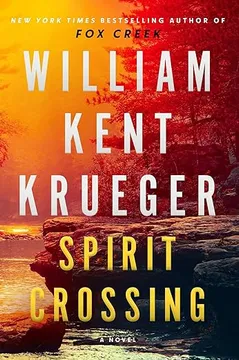


Plot Summary
Still Island, Unspoken
After seven years working in Guatemala, Annie O’Connor returns to Tamarack County for her brother Stephen’s wedding. She has brought Maria Cocum Lopez, a Mayan nurse she loves, but has introduced her to the family only as a friend. On Still Island, where Annie once came to think through difficult choices, the two women spend a last quiet night before facing her relatives.
Maria urges Annie to be honest; Annie delays, afraid that revealing their relationship will complicate the family gathering. She is also withholding a more frightening truth from everyone. At the O’Connor home, her father Cork and sister Jenny welcome her warmly, while the family prepares for the wedding and the return of a daughter who seems both familiar and far away.
Annie’s homecoming begins with a double concealment: she cannot yet name her love openly, and she cannot explain the deeper reason she has come home. Her hesitation is not simple shame. It reflects a life shaped by service, faith, and the fear that other people’s needs will eclipse her own. Still Island gives the relationship a private space before the family can absorb it, while the wedding provides a public occasion that Annie hopes not to disrupt. The contrast establishes the novel’s emotional problem early: belonging can offer shelter, but honesty requires risking the shelter one already has.
The Buried Blueberry Patch
Cork takes his son Daniel, grandson Waaboo, and Daniel’s brother Stephen to pick blueberries. Their family patch has been trampled and stripped, so Cork leads them to a secluded clearing near the abandoned cabin of Erno Paavola, a man who once paid Cork for detective work with berries. While picking, Waaboo kneels beside a mound of bare earth and speaks as if someone stands before him.
He tells Daniel that a young woman is lost and sad. The men recognize that the mound may be a grave and call Sheriff Marsha Dross. Waaboo says the spirit looked Ojibwe and wanted help finding the path to the next world. His ordinary family outing has become the opening of a murder investigation.
The discovery joins a domestic ritual to a crime scene without making the family’s ordinary care seem trivial. Waaboo’s first response is compassion, not fear or curiosity about his own unusual perception. His grandfather’s teaching to leave berries for animals also contrasts with the person who has stripped the first patch bare and the person who buried a girl in the second. The land is not merely scenery or property here. It is a living archive whose damage can be read through human attention, whether that attention takes the form of tracking, police work, or spiritual sensitivity.
Tacicala and the Second Soul
The body is too old to be the missing Olivia Hamilton, and investigators turn away from the grave once the high-profile search seems unrelated. Daniel objects that the authorities have shown far less urgency over Crystal Two Knives, an Ojibwe girl missing for months. He asks Henry Meloux, an elder and Mide, to help Waaboo understand what he saw.
Henry learns that the spirit called herself Tacicala, Lakota for Fawn, and had mentioned another lost soul nearby. Meanwhile, Iron Lake’s new tribal police department claims a role in the case because the grave lies on disputed land. Chief Monte Bonhomme and Officer LuJean Desjardins decide to investigate rather than wait for outside agencies to act.
The first institutional conflict mirrors the unequal attention paid to the missing girls. Olivia’s disappearance mobilizes federal and state resources; Crystal’s is treated as an extension of her past troubles. Daniel names that difference because he has seen how procedural assumptions can turn a missing person into a presumed runaway. Henry’s interpretation does not replace forensic evidence, but it gives the investigation a direction the official teams have neglected. The contested land sharpens the problem: jurisdiction is not abstract when responsibility can be divided until nobody feels obliged to act.
Olivia Beneath the Cabin
Henry returns with Waaboo to Erno Paavola’s cabin, where the boy senses fear, anger, and sorrow inside the apparently empty room. Daniel notices that the floor has been swept despite years of abandonment. When he and Monte Bonhomme shift a heavy cupboard, they uncover a trapdoor leading to a cold storage room. Beneath a blanket on a cot lies Olivia Hamilton.
Her presence explains the second lost spirit Waaboo sensed, though he cannot yet identify who it was. The discovery brings the FBI and state investigators back to the property, but it also confirms that the blueberry grave and the hidden room belong to a larger pattern. What looked like Paavola’s eccentric survival shelter has been used to conceal a killing.
The cabin’s secret room converts a fantasy of survival into evidence of predation. Paavola had built a refuge for an imagined apocalypse, but its hidden space has served a very immediate human purpose: keeping a murdered girl out of sight. Waaboo detects an emotional residue that conventional searches miss, while Daniel supplies the physical observation that exposes the trapdoor. Neither way of knowing is sufficient alone. Their cooperation makes the scene a compact model of the book’s investigative ethic, in which attention must be widened rather than confined to the methods institutions already trust.
The Bracelet Daisy Made
The tribal police circulate Henry’s clue, and an officer from another reservation connects Fawn to Daisy Blacksmith, her Lakota grandmother. Daniel, Monte, and BIA agent Danette Shirley visit Daisy, who recounts a lifetime of separation from her daughter and granddaughter. Fawn was taken into foster care, repeatedly ran away from placements, and was released from juvenile detention at eighteen.
Daisy sent her a handmade beaded bracelet, but Fawn disappeared again before reaching home. Waaboo’s name for the buried spirit and the bracelet found with the body persuade Daisy that it is Fawn, though official identification remains pending. Her grief gives the case a face and history that the investigators’ files cannot supply.
Daisy’s account makes disappearance cumulative. Fawn’s absence follows earlier separations produced by addiction, foster care, detention, and the failure of agencies to take a Native family’s alarm seriously. The bracelet is a practical clue, but it also carries Daisy’s attempt to keep a bond alive across repeated ruptures. The scene refuses the convenient distinction between a troubled teenager and a credible victim. Fawn’s past behavior helps explain how predators could reach her, yet it does not diminish the urgency owed to her. The investigators encounter a family history, not a case number.
Spirit Crossing Breaks Open
The pipeline being built through sacred wetlands and across the Jiibay River brings Stephen, his fiancée Belle Morriseau, and Rainy into a growing protest. Annie and Maria join them, first witnessing private guards threaten Rainy’s vehicle and later seeing a mass demonstration meet a forceful police response.
Annie suffers a blinding episode during the chaos and loses sight of Stephen. Maria and a sympathetic deputy help her recover, while Annie recognizes the hostile security guard Lewis nearby.
Her headaches, trembling, and stumbling are worsening, but she continues to hide their cause from her family. The struggle at Spirit Crossing places her among people defending a home they cannot easily protect, even as her own body becomes less dependable.
The pipeline conflict is not a detachable political backdrop. It puts the family inside a struggle over whose safety, land, and testimony count, and it creates the setting where Annie encounters Lewis’s hostility. The protest’s uneven risks echo the investigation: institutions can describe their actions as neutral enforcement while leaving Indigenous communities to absorb the consequences. Annie’s physical collapse also alters her self-understanding. She has spent years acting as a capable helper, but now she must accept care in public, exactly where she most wants to remain useful.
Cancer at the Kitchen Table
After reporters crowd the O’Connor home because Waaboo helped locate Olivia, the family invents a safer public account that leaves his visions out. Annie later finds a stranger outside and then, alone in the house, confronts an intruder at the patio door with her old softball bat. Cork arrives, drives the man away, and sits with her afterward.
The strain finally breaks Annie’s silence: she tells Cork that she has advanced, inoperable glioblastoma and was given perhaps a year or two. She has concealed the diagnosis since Guatemala, hoping to spare her family and preserve the wedding as a celebration. Cork promises to let her tell the others herself, though carrying the secret now becomes his private burden.
The intruder turns Annie’s long-managed fear into a crisis that cannot be postponed. Her confession is not a bid for rescue. She has already consulted specialists and rejects the false comfort of another opinion. What she needs from Cork is recognition without immediate appropriation of her news. His promise honors her control over the timing, but it also demonstrates how love can become a form of painful restraint. In parallel, the family’s account to reporters protects Waaboo by limiting what strangers can know. Both choices show that truth is not always safest when made public.
A Shot Through the Blueberries
Daniel brings Waaboo back to the ruined clearing so the boy can try to reach Fawn’s spirit, with Jenny and Henry present. Waaboo senses something alive, angry, and dangerous before a rifle shot tears into the earth where he had been standing. Daniel shields his son and Jenny as Prophet pursues the shooter into the woods, but the man escapes in a vehicle.
Prophet finds a Thunderbird cap, and the group discovers an AirTag hidden on Cork’s Expedition, proof that someone has tracked their movements. Waaboo briefly feels Fawn less lost, but the immediate consequence is clear: whoever is watching them fears what the boy may discover. Jenny’s fear of exposing her son to danger is no longer hypothetical.
The attack converts Waaboo’s gift from a private burden into a vulnerability that other people can exploit. His perception offers the investigators a lead, but it also makes him visible to whoever wants the past kept buried. Jenny’s resistance now has material grounds, while Daniel must face the cost of treating his son’s sensitivity as investigative help. The AirTag makes surveillance literal and ordinary, a small consumer device turning family care into a trail that can be followed. The scene’s moral pressure lies in the gap between wanting to protect Waaboo and recognizing that he has agency of his own.
Lewis Reaches Crow Point
Cork and Marsha trace clues from the Howling Wolf to Adrian Lewis, a fired former police officer and pipeline guard whose distinctive damaged ear matches a witness’s description of Mathias Paavola’s drinking companion. Annie recognizes Lewis from the protests and suspects he has been watching her. An AirTag planted in her embroidered bag confirms that he followed her to Crow Point.
There, Lewis appears with a rifle and targets Annie, but Prophet knocks him down before he can fire. Henry’s group keeps Lewis until tribal officers arrive and take him into custody. Lewis’s chosen slur and his resentment over being fired reveal his misogyny, but he refuses to explain his connection to the two dead girls.
Lewis’s capture looks like a decisive turn, but the evidence around him remains incomplete. His personal grievance against Annie explains why he targets her, yet it cannot explain the hidden bodies or the earlier shot at Waaboo. The difference between motive and full causation matters: investigators must resist treating the most visibly violent man as the entire story. Crow Point, usually a place of refuge, becomes a scene of attempted murder, confirming that sacredness offers no automatic protection. Its defenders must act, not simply believe that goodness makes them safe.
A Bullet in the Cruiser
While Sheriff Dross transports Lewis from the reservation toward Aurora, an unseen shooter fires through the cruiser window and kills him with a head shot. The ambush occurs at a roadwork bottleneck, where the attacker has removed the traffic barriers and can escape around the curve.
Investigators recover a Remington .30-06 casing, matching ammunition found in Paavola’s apartment. Lewis’s own rifle used a different caliber, so the shot at Waaboo and the attack on Annie cannot simply be assigned to him. The death silences a volatile suspect but sharpens the link to Paavola and raises a new question: what did Lewis know that someone feared he would tell police?
Lewis’s death closes one investigative route while opening another. The case has depended on separating evidence that appears to converge: the men share a criminal world, but their weapons and actions are not interchangeable. The ambush also dramatizes the weakness of a system that can arrest a suspect yet cannot protect him during a transfer. Rather than giving the story a tidy villain to blame, the shooting forces the investigators to follow relationships, logistics, and loyalties. The apparent solution becomes more dangerous precisely when a suspect can no longer be questioned.
Margot Escapes the Trailer
Cork and Dross follow Lewis’s fifth-wheel trailer to a remote cabin, where they find signs that young women have been kept and exploited. A girl fleeing through the woods reaches the lake and nearly drowns before Dross pulls her to shore. The teenager calls herself Jade, then identifies herself as Margot Lachance.
She explains that Lewis, whom the girls called Toad, hurt them, while a man named Billy Bones arranged the operation and took two other girls away. Margot says Lewis killed Fawn after Fawn intervened to protect another girl, and that Mathias Paavola helped remove the body. Her account establishes that the murders grew out of trafficking, not an isolated encounter at a bar.
Margot’s testimony changes the investigation’s scale. The bodies in Paavola’s property are not isolated crimes but traces of a system built around vulnerable young women, coercion, and the promise of nowhere else to go. Her skepticism toward police is not irrational distrust; she has learned that official protection can resemble another form of confinement. Dross’s rescue in the water gives her a first, concrete reason to reconsider, but the narrative does not pretend that one act of care repairs years of exploitation. Margot’s survival makes her testimony possible, while also revealing how many others may remain out of reach.
Billy Bones Unmasked
The investigators connect Billy Bones to Liam Boyle, Irene’s abusive ex-husband and a former employee at the school where Fawn once lived. In Aitkin, they find Irene hiding in her family’s deteriorating childhood home with her brother Mathias. Mathias surrenders after Irene urges him to stop running.
She explains that Lewis killed Fawn and Olivia, while Liam recruited girls and arranged their exploitation by pipeline workers; Mathias helped conceal the bodies and manage the operation. He claims he tried to limit Lewis’s violence, but admits he knows where Liam may have taken Margot’s companions. The disclosures also explain why Liam feared Waaboo: the boy’s perceptions threatened to connect the hidden crimes.
The revelation exposes a hierarchy of responsibility rather than a single mastermind acting alone. Liam supplies the recruitment and coercive structure, Lewis supplies direct violence, and Mathias helps preserve the operation while telling himself he can moderate its harm. His self-image as protector cannot erase his complicity. Irene’s testimony is especially consequential because she has spent her working life helping troubled children, yet her closeness to Liam and Mathias left her unaware of the danger surrounding them. The novel makes complicity legible as a series of choices and omissions, not merely a monstrous identity.
The Last Shot at Crow Point
Before officers can secure every lead, Liam takes Annie at gunpoint and forces her toward Crow Point, blaming Waaboo for ruining his life. Annie, who has stopped hiding her fatal illness from herself, meets his rage with an insistence that he was shaped by cruelty rather than born evil. When Liam aims at her, Henry fires first, and Prophet helps protect the family.
Liam dies before he can reach Waaboo. The family then gathers around Annie as she begins telling the truth about her illness to those she has kept at a distance. Waaboo’s gift has helped expose the crimes, but Annie’s final encounter is not an investigation. It is her choice to face death without letting fear dictate how she loves.
Annie’s composure is not passive surrender. She recognizes that she cannot control the disease or make Liam answer for the forces that shaped him, but she can choose the terms of her remaining life. Her attempt at compassion does not excuse his violence, and Henry’s intervention prevents mercy from becoming self-sacrifice imposed on others. The confrontation also gathers the book’s two forms of danger: a killer who wants Waaboo silenced and a death Annie cannot defeat. What she can do is stop concealing herself from her family and meet uncertainty with the love she has struggled to trust.
Epilogue
Stephen and Belle marry in a rain-soaked barn, then postpone their honeymoon to continue supporting the Spirit Crossing protest. The pipeline eventually crosses the river and is completed. Before Thanksgiving, Crystal Two Knives returns, explaining that she left town with a new partner and stayed away while fearing her abusive ex.
Annie remains in Aurora, where Maria and the O’Connors care for her through hospice. On a snowy morning, Annie dies with Maria beside her and is buried near her mother. Cork honors her request with a simple message on her headstone: Be not afraid.
The ending refuses to make justice and consolation interchangeable. Stephen and Belle begin their marriage, but their political work cannot stop the pipeline, and the community’s victory is not measured by a clean reversal of power. Crystal’s return offers relief without erasing the failures that left her missing. Annie’s death is likewise not a cure or a triumph over illness. Its meaning comes from the care she receives and the relationship she chose to reveal. The final inscription condenses her change: fear remains part of being human, but it no longer has the authority to define her last act or her family’s memory.
Analysis
Spirit Crossing braids a murder investigation with two forms of dispossession: the unequal attention given to missing Indigenous women and the attempted extraction of resources from land sacred to the Anishinaabeg. The crimes do not emerge from a single moment of violence. They depend on a chain of vulnerabilities, including foster placements that fail, poverty, trafficking, institutional indifference, and men who convert access into control. The book is careful to distinguish the person who kills from the people who recruit, conceal, enable, or look away.
Its competing ways of knowing are equally important. Waaboo’s spiritual perception, Henry’s teachings, Daniel’s police work, Theresa’s forensic practice, and Daisy’s intimate knowledge of Fawn all contribute different kinds of evidence. The story does not make them interchangeable. Instead, it shows how investigations become more reliable when conventional expertise remains open to knowledge it cannot produce by itself. That openness is not credulity; it is a refusal to assume that the official method has already seen everything.
Annie’s arc gives the mystery an intimate counterweight. She cannot bargain with her illness or secure a final explanation for death, but she can stop concealing her love and let her family accompany her. Her movement from fear and anger toward acceptance does not erase grief or render violence forgivable. It changes what she allows fear to govern. Across the family, protection likewise becomes more mature when it means accompaniment rather than control. Waaboo cannot be shielded from every burden, Annie cannot be kept from dying, and the protesters cannot prevent the pipeline’s completion. Yet the book insists that failure to control an outcome does not make care meaningless. Bearing witness, finding a name, rescuing a survivor, and remaining beside the dying are actions with consequences even when they cannot repair the whole world.
Review Summary
Spirit Crossing receives mostly positive reviews, averaging 4.14/5 stars. Fans of the Cork O'Connor series praise Krueger's emotional storytelling, rich characters, and sensitive portrayal of Missing and Murdered Indigenous Women. Many appreciate how the novel weaves together themes of spirituality, family, environmental protest, and human trafficking. Critics note the book feels cluttered with too many subplots and characters, and some feel the social justice themes are heavy-handed. New readers may struggle without prior series knowledge, though some found it an accessible entry point.
Characters
Cork O’Connor
The searching fatherA former Tamarack County sheriff, Cork now runs Sam’s Place and works as a private investigator. He is Annie, Jenny, and Stephen’s father, Waaboo’s grandfather, and Daniel’s father-in-law. His instincts draw him toward neglected evidence and overlooked people, while his experience with policing makes him wary of jurisdictional turf wars. Cork’s patience is a form of respect: he often waits for family members to disclose what they cannot yet say. But his protective nature can become restless when danger threatens those he loves. He approaches the case as both a detective and a member of a community whose grief is too often treated as routine.
Daniel English
The tribal police officerDaniel is an Anishinaabe officer with the Iron Lake Tribal Police, Jenny’s husband, Waaboo’s father, and Cork’s son-in-law. Before entering law enforcement, he worked as a conservation officer and found meaning in protecting the reservation’s land and water. Police work brings him into conflict with people he is meant to serve, and Crystal Two Knives’s disappearance deepens his doubts about what he can accomplish. Daniel writes poetry and plays accordion, though discouragement has pushed both aside. His drive to help Fawn and other missing girls comes from personal knowledge of the people behind the statistics, but he must learn that devotion does not make his son’s safety a resource he can spend.
Waaboo
The spirit-sensitive childWaaboo is Daniel and Jenny’s seven-year-old son, adopted by Jenny after she found him as a newborn beneath a rock. Stephen gave him the nickname meaning little rabbit, while Henry’s spirit name connects him to an otter. He is playful, affectionate, and happiest near Iron Lake, but he also perceives spirits and emotional traces others cannot sense. His gift brings him into contact with people who have died violently, making empathy a burden as well as an ability. Waaboo does not approach the dead as puzzles to solve. He wants to ease their loneliness, and the adults around him must balance their wish to protect him with respect for his growing courage and agency.
Annie O’Connor
The returning daughterAnnie is Cork’s daughter and Jenny and Stephen’s sister. After years in Guatemala serving Indigenous communities, she returns for Stephen’s wedding with Maria, the woman she loves. Annie was raised Catholic and once considered becoming a nun, but her adult life has tested both her religious certainty and her ideas about service. She is strong-willed, candid in her convictions, and inclined to keep private pain from the people who might support her. Her work abroad has made her attentive to poverty, racial prejudice, and political violence; returning home shows her that none of those struggles belongs to only one country. Annie’s warmth and rebellious streak coexist with a fierce wish to control how others see her.
Jenny O’Connor
Waaboo’s fierce motherJenny is Cork’s daughter, Daniel’s wife, and Waaboo’s adoptive mother. She is also a novelist whose attention to people and their histories shapes the way she sees her family. Finding Waaboo as a newborn formed a bond that makes protection feel less like a preference than a promise. She understands that her son has a spiritual gift, yet she resists allowing adults to turn that gift into a tool for investigation. Jenny’s strength is direct and bodily: she stands beside Waaboo, challenges Daniel when she believes he is risking him, and expects the people around her to share responsibility. Her fear does not make her timid; it makes her vigilant.
Maria Cocum Lopez
Annie’s beloved companionMaria is a Mayan nurse from Guatemala and Annie’s partner. Raised in a poor mountain village, she learned midwifery from her mother and later trained as a nurse, choosing to work among people with limited access to medical care. She is steady without being naïve, and her belief in love and spiritual connection is tested by the violence she has witnessed. Maria’s care is practical: she tends Annie through illness, supports people injured at the protest, and accompanies the O’Connors into unfamiliar territory. She encourages Annie to speak honestly but does not confuse loving someone with controlling her. Her calm provides shelter, while her own courage keeps her from becoming merely a caretaker in Annie’s story.
Henry Meloux
The elder who listensHenry is an Anishinaabe Mide elder who has lived for decades in a cabin on Crow Point. He welcomes people who seek counsel and uses stories, ceremony, and careful listening to help them find their own understanding. Henry takes Waaboo’s visions seriously without treating the boy as an instrument, and he recognizes that spiritual gifts can carry both risk and responsibility. Annie trusts him because he can meet doubt without scolding it; Daniel turns to him when he cannot resolve the moral burden of police work. His authority comes less from commands than from patience and presence. Even in great age, Henry remains willing to learn from children and to act when someone is in danger.
Stephen O’Connor
The activist and groomStephen is Cork’s son and Annie and Jenny’s brother. After finishing his undergraduate degree, he returns to Tamarack County engaged to Belle Morriseau and preparing for law school. He helps document the Spirit Crossing protest and supports Belle’s legal work, often choosing to be physically present where tensions are highest. Stephen has experienced visions since childhood, which gives him a special understanding of Waaboo’s burden. He is devoted to his family, but his instinct to move toward conflict reflects both courage and a belief that witnessing injustice is itself a responsibility.
Belle Morriseau
The legal advocateBelle is Stephen’s fiancée, an Anishinaabe attorney, and a legal advocate for Native communities. She works with Justice North and helps defend people arrested during the Spirit Crossing protests. Belle combines practical strategy with personal commitment: she understands court procedure, but she also recognizes when protesters need someone to document events or organize support. Her partnership with Stephen rests on shared values as well as affection. She is not sheltered from the risks of activism, and she accepts the strain of balancing legal work, family, and the approaching wedding.
Rainy Bisonette
The family healerRainy is Cork’s wife, Jenny’s stepmother, and a nurse who also serves as a Mide healer. She moves comfortably between clinical care and Ojibwe spiritual practice, and she is a steady presence for the O’Connor family. At Spirit Crossing she offers medical help to protesters, while at home she notices Annie’s symptoms and gives her opportunities to speak without pressure. Rainy is practical, compassionate, and clear-eyed about the danger of trying to protect loved ones from every hardship. Her care extends beyond the household, but she remains alert to the needs of the people closest to her.
Prophet
The watchful guardianProphet is an enigmatic man living near Henry on Crow Point. Once known as LeLoup, he came to Henry under violent circumstances and found a different purpose in protecting the elder and the people who seek him out. Tall, quiet, and intensely observant, Prophet balances a dangerous past with a disciplined effort to listen before acting. He watches over Waaboo, cooks for the people at Crow Point, and understands the risks that follow those who are vulnerable. His presence suggests that transformation is possible without erasing the harm a person has done or the history that shaped him.
Marsha Dross
The county sheriffMarsha is the Tamarack County sheriff and a former deputy hired by Cork when he led the department. She is an outdoorswoman with a lively social side, but high-profile pressure can make her feel boxed in by political decisions and jurisdictional limits. Marsha wants to find Olivia alive, yet she also has to confront how quickly Crystal’s history influenced the response to her disappearance. Working with Cork allows her to investigate beyond the narrow path imposed on her, though she remains responsible for evidence and procedure. Her professionalism is strongest when it includes doubt about her own assumptions.
Monte Bonhomme
The tribal police chiefMonte is chief of the new Iron Lake Ojibwe Tribal Police Department and Daniel’s supervisor. His experience with reservation law enforcement helps him navigate overlapping jurisdictions, but he knows that agreements on paper do not guarantee equal treatment in practice. Monte is measured and pragmatic, building trust among departments where he can while choosing to act when cooperation fails. He supports Daniel’s investigative instincts and understands why Native families may distrust outside agencies. His authority rests on experience rather than bluster, and he is willing to pursue leads that other officials dismiss.
LuJean Desjardins
The reservation officerLuJean is an Iron Lake Ojibwe officer and one of the small tribal police force’s most capable members. Her formidable appearance contrasts with a dry, joking manner among colleagues. She has little patience for people who abuse power, but she understands that enforcement requires judgment as well as force. LuJean supports Monte and Daniel in the case and is particularly alert to the way outsiders treat Native communities. Her humor keeps tense situations human without diminishing the stakes.
Danette Shirley
The missing persons agentDanette is a Lakota agent with the Bureau of Indian Affairs Missing and Murdered Unit. Her father’s killing and her childhood on Pine Ridge shaped her decision to enter law enforcement, even though she has seen how often the system is short on resources and slow to respond. She brings cultural understanding to cases involving Native women and girls, and she listens to Waaboo with more openness than the younger outside investigators. Danette’s experience helps bridge spiritual testimony, family knowledge, and formal procedure without pretending that any single source can answer everything.
Theresa Lee
The forensic anthropologistTheresa is an Ojibwe forensic anthropologist and archaeologist who teaches at Tamarack Community College. Her work often involves recovering and identifying human remains, including remains that might otherwise be ignored. She approaches Waaboo’s visions cautiously, as a professional must, but she also recognizes that conventional investigations often leave Native families without answers. Theresa’s commitment to identification is personal as well as scientific: every recovered person deserves a name and a family’s chance to grieve.
Daisy Blacksmith
Fawn’s devoted grandmotherDaisy is a Lakota grandmother living with diabetes and limited mobility. Her life has been marked by the legacy of boarding school, addiction, and separation from the daughter and granddaughter she tried to care for. She worked toward sobriety and fought to raise Fawn, even when illness and poverty made that difficult. Daisy is candid about her mistakes and about the failures of systems that repeatedly took Fawn away without keeping her safe. Her handmade art and beading express a tenderness she has protected through years of loss.
Fawn Blacksmith
The gifted missing girlFawn is a Lakota teenager raised for much of her childhood by her grandmother, Daisy. She has fetal alcohol spectrum disorder and has been moved through foster care, detention, and other institutions. People who knew her remember her as sweet, helpful, and artistically gifted, though difficult experiences taught her to defend herself and distrust adults. Fawn’s story brings the consequences of neglect into the investigation: a young person can be labeled troubled while remaining acutely vulnerable to people who recognize her need for safety and affection.
Crystal Two Knives
The missing young womanCrystal is an Ojibwe young woman and the granddaughter of Cece Two Knives. Before she disappeared, she had a troubled history that led authorities to assume she would return on her own. Cork gave her work at Sam’s Place, where she proved capable and took pride in earning money for a car. She had also been involved with an abusive man and was trying to build a different life. Crystal’s absence exposes the danger of allowing past behavior to discredit a person’s present need for help.
Irene Boyle
The social workerIrene is Erno Paavola’s niece and Mathias’s sister. A former social worker who now directs a school for troubled youth, she has built a careful life after growing up in a chaotic family and leaving an alcoholic marriage. She is perceptive about the needs of young people, though her personal history with Liam complicates her judgment of him. Irene’s instinct to help children reflects both professional commitment and an effort to create the stability she lacked in her own childhood.
Mathias Paavola
The inherited landownerMathias is Erno Paavola’s nephew and Irene’s brother. He works as a welder on pipeline construction and lives with little order or comfort, often retreating into drinking and video games. As a child, he knew the remote property and its hidden features, making him a significant link to the land where the investigation begins. Mathias is guarded and difficult to read, shaped by a rough family background and an uneasy adult relationship with his sister.
Liam Boyle
Irene’s dangerous exLiam is Irene’s former husband and once worked at Sizemore School. He is described by people who know him as charming, intelligent, and difficult to trust, with a talent for making others feel understood. His mixed Ojibwe and Irish heritage is part of his background, though he rarely discusses it. Liam’s relationship with Irene remains emotionally complicated even after their marriage ends, and the warning signs she describes reveal how charm can conceal a capacity for cruelty.
Adrian Lewis
The volatile security guardAdrian is a former police officer who later works security for the pipeline company. Complaints about his conduct follow him across both jobs, and he reacts badly when challenged, particularly by women and protesters. A damaged ear and his habit of wearing a cap make him recognizable to people who have seen him around the bars and work sites. His resentment and volatility make him difficult for other law enforcement officers to manage.
Margot Lachance
The teenage survivorMargot is a White Earth Ojibwe teenager who has survived foster care, abuse, and trafficking. In the cabin network she is called Jade, a name that reflects how the people exploiting her reduce girls to roles and aliases. She is wary of police and distrustful of promises because she has learned to expect danger wherever she goes. Beneath her guardedness, Margot notices what happens to the other girls and makes her own decisions about when to run. Her perspective gives the investigation access to the lives of people hidden from official records.
Greta Hanover
The careful reporterGreta is a Duluth newspaper reporter with Ojibwe ancestry. She approaches the O’Connors after learning that Waaboo may have helped find Olivia’s body, but she recognizes the danger of turning a child’s private experience into a spectacle. Greta offers the family a controlled interview and attempts to discourage other reporters from harassing them. Her role tests whether journalism can inform the public without making vulnerable people pay the price.
Plot Devices
Waaboo’s visions
The unseen witnessWaaboo’s ability to perceive spirits and emotional traces gives the investigation leads unavailable through ordinary searches. He recognizes the presence of a young woman in the blueberry patch and senses another lost soul in Paavola’s cabin. His impressions guide adults toward evidence, but they are not treated as courtroom proof. The gift also creates danger: whoever is responsible for the crimes realizes that Waaboo may expose what they have hidden. The device joins spiritual belief to detective work while preserving the family’s ethical question: how can adults use a child’s insight without making him responsible for solving violence that adults have failed to stop?
The contested section
Jurisdiction as conflictThe land around Paavola’s cabin sits within an area whose ownership and legal status are disputed between Tamarack County and the Iron Lake Ojibwe. That conflict gives different police agencies overlapping claims and competing incentives. The tribal department argues that the Native woman found there falls within its responsibility, while state and federal investigators initially focus on Olivia Hamilton. The device makes bureaucracy part of the plot’s causality: delays, assumptions, and disputes determine who is heard and which leads receive attention. The legal conflict also reflects the larger struggle over Indigenous sovereignty and resources, especially as the pipeline threatens land and water nearby.
Paavola’s hidden property
A landscape concealing evidenceErno Paavola’s remote cabin, secret blueberry patch, carved gnomes, and concealed underground room create a connected geography of discovery. Cork reaches the patch because Paavola once paid him in blueberries and described the way to it. The gnomes mark a path that otherwise disappears into the forest, while the cabin’s hidden compartment turns a supposed survival shelter into a place where a body can be concealed. Because the land is inherited and known to a small circle, investigators must ask who else had access and why. The property links the deaths and the people around them without revealing the full chain of responsibility at once.
The trafficking aliases
A concealed criminal networkNames such as Billy Bones, Jade, Ruby, and Toad obscure the identities and relationships of the people involved in exploiting young women. The aliases help perpetrators maintain control and keep victims separated from their histories, families, and official records. Margot’s testimony begins to break that concealment by linking the girls’ names to specific men, locations, and acts of violence. The network also explains why the investigation cannot stop at the person who directly harmed a victim: recruitment, transportation, protection, and concealment all depend on different people making choices. The device is revealed gradually through witnesses whose safety and trust cannot be assumed.
The AirTag
Surveillance made physicalA small tracking device hidden on Cork’s vehicle shows that someone is monitoring the family’s movements. Later, another AirTag in Annie’s embroidered bag helps explain how an attacker can follow her to Crow Point. These devices turn the investigation’s growing visibility into immediate danger, connecting the family’s private spaces to the criminal network’s watchfulness. Their simplicity matters: no elaborate intelligence operation is needed when a discreet tracker can expose where a person goes. The tags also deepen the family’s conflict between staying together for safety and continuing to investigate. Their discovery confirms that the threats are deliberate, not merely a consequence of media attention or coincidence.
Cork O'Connor Series

About the Author
Other books by William Kent Krueger


Download PDF
Download EPUB
.epub digital book format is ideal for reading ebooks on phones, tablets, and e-readers.








