

Key Takeaways
Take people toward the summit instead of climbing alone.
Leadership is a shared ascent. Early in his career, Maxwell kept people at a distance after a trusted staff member broke his confidence. The distance reduced his risk of being hurt, but it also cut him off from the help and connection he needed. At twenty-five, he chose to build close relationships despite their risks. That decision changed his approach to leadership.
Make others stronger. Maxwell compares leaders to mountain guides: they know the route and help others reach ground they might not reach alone. He recalls climber Jim Whittaker describing his greatest satisfaction as helping other people reach Everest’s summit. Leadership, in this view, is not simply getting ahead. It is bringing people along, even when some eventually surpass the leader.
What's striking is the shift from leadership as rank to leadership as shared capacity. Close relationships give leaders access to information, trust, and the everyday realities that a title cannot reveal. Yet closeness is not the same as unlimited access or automatic trust. The earlier breach of confidence matters: connection requires judgment and boundaries. The useful test is whether relationships help people contribute and grow, not whether everyone feels personally close to the leader.
Lead yourself before your title magnifies your weaknesses.
Personal habits set the ceiling. Maxwell describes four leadership crises that began with his own failures: poor priorities left his first organization directionless; uncertainty clouded his vision in a later role; rushed decisions damaged trust; and reluctance to dismiss an underperforming staff member cost money and people. Each time, the central problem was not simply a difficult team. It was his own leadership.
Build self-command deliberately. Maxwell recommends learning to follow, practicing discipline, developing patience, and seeking accountability. He also warns that people often judge themselves by good intentions while judging others by their actions. Leaders can counter that bias by reviewing their results honestly and asking trusted people for advice before decisions are made, not just after something goes wrong.
Leadership authority magnifies the consequences of ordinary human blind spots. A self-review is therefore not private self-improvement alone; it is risk management for everyone affected by a leader’s choices. The strongest part of this argument is its emphasis on accountability before action, when advice can still change the outcome. The challenge is to make accountability candid rather than ceremonial. A leader who asks for feedback but punishes the answer has built a confession booth, not a safeguard.
Choose your principles before a crisis forces the choice.
Pressure reveals priorities. Maxwell calls consequential crossroads defining moments because the response both reveals a person’s character and shapes what happens next. Some arrive as crises, such as his 1998 heart attack, which prompted him to reconsider health, work, and family. Others arrive as opportunities. After participants at a leadership seminar asked for ongoing lessons, he agreed to create monthly recordings. That decision grew into a subscription service with more than 20,000 participants.
Prepare before the crossroads. Maxwell recommends reviewing past decisions to notice patterns, then settling important commitments in advance, including how to treat people, manage priorities, and protect health. Preparation cannot predict every event. It can, however, keep core values from being negotiated in the rush of a crisis and leave more attention for the specific problem at hand.
This is a practical account of precommitment: deciding in calmer conditions what principles should guide behavior under pressure. Such preparation can reduce the temptation to choose whatever brings immediate relief or approval. But a prewritten rule cannot replace judgment when values conflict or circumstances are genuinely new. The aim is not to automate leadership. It is to make a leader’s basic commitments visible enough that pressure does not quietly rewrite them.
Use criticism to improve, not to outsource your self-worth.
Separate signal from sting. Maxwell argues that visible leaders attract criticism simply because their actions are noticed. Some criticism targets the role; some identifies a real weakness. He describes discovering that he could be impatient, move too quickly, and underestimate how long change takes. Those observations were uncomfortable, but useful because they pointed to behaviors he could address.
Process feedback deliberately. He weighs who is speaking, how the message is delivered, and why it may have been offered. If criticism is accurate, he recommends changing the behavior. If not, a leader can accept that other people may still disapprove. His sequence is to understand himself, improve what needs improving, accept what cannot be changed, and stop making every critic the center of attention.
The distinction between useful feedback and personal condemnation helps prevent two common errors: defensiveness that blocks learning, and people-pleasing that erases judgment. Considering the source and motive can add context, but it should not become a convenient way to dismiss uncomfortable evidence. Patterns across several independent critics deserve attention even when each person communicates imperfectly. Self-acceptance is most useful when it makes change less threatening, not when it becomes an excuse to resist it.
Place people where passion and proven strengths can compound.
Fit releases energy. In his first small congregation, Maxwell rallied a community to aim for 300 attendees. When the count stopped at 299, he went across the street and persuaded a service-station owner to join the service. The episode showed him how enthusiasm could move a group beyond its own expectations. He argues that passion helps people persist, but that sustained contribution also depends on matching work to actual strengths.
Develop the right contribution. Maxwell recommends noticing what a person does especially well, getting specific about that ability, and listening to what others consistently praise. He cites workplace research in which only 20 percent of 1.7 million surveyed employees felt their strengths were used daily. Leaders should understand people’s abilities and interests, assign work accordingly, and help teammates complement one another.
The chapter usefully treats motivation and role design as leadership responsibilities rather than private employee problems. Matching work to strengths can improve both energy and contribution, especially when teams need different abilities rather than interchangeable performers. The caution is that the book sometimes treats natural talent as unusually fixed. Skills can develop, and an early assessment can be wrong. A good fit should be tested through opportunities and feedback, not turned into a permanent label that limits someone’s growth.
Face bad news early, and make dissent safe.
Optimism can obscure evidence. Maxwell recounts allowing one of his companies to lose money for five years because he did not want to change a team he cared about. Reading Jack Welch’s leadership principles helped him confront the business’s condition and make difficult changes. The delay had consequences for finances, employees, and relationships. A leader’s positive outlook is not a substitute for seeing what is happening.
Ask what is missing. Maxwell advises leaders to define the current situation, separate solvable problems from unsolvable ones, identify options, and check whether the team will act on a plan. He also urges leaders to admit mistakes and invite people to challenge decisions before they are final. Silence may look like agreement while a team is still in the room; it can become costly resistance afterward.
The chapter makes reality testing a leadership duty because followers cannot adjust to facts that are hidden from them. Inviting disagreement is especially important when the leader controls people’s opportunities, since formal permission does not always make speaking up feel safe. Still, candor alone is insufficient: leaders need a process for weighing evidence and deciding what to do with objections. The goal is not endless debate, but earlier detection of assumptions that could make a plan fail.
Protect your calendar for the work with the highest return.
Time is not recoverable. Maxwell rejects the idea that time itself can be managed; people can only manage their own choices. He uses the 80/20 principle to argue that a small share of activities often produces a large share of results. In his early career, he spent long hours on tasks that were busy but ineffective. He learned to ask what work produced the greatest return, what was most rewarding, and what was truly required.
Choose what gets your attention. Maxwell relied on an assistant to filter information, delegated work that others could do, and became more protective of his calendar. He also suggests ranking tasks by importance and urgency so that leaders plan beyond the next immediate demand. Every commitment crowds out something else. A full schedule is not proof that the most valuable work is getting done.
This advice treats attention as an allocation problem, not a character test. Leaders who stay involved in every detail may feel indispensable while preventing decisions from being made closer to the work. Delegation can free attention for priorities, but it also requires competence, trust, and clear responsibility. The 80/20 pattern is a prompt to investigate where value comes from, not a universal mathematical law. The right priorities still depend on the organization’s real obligations, including work that matters without producing an immediate return.
Listen before you lead, and prepare important meetings in private.
Attention earns trust. After a colleague told Maxwell that he seemed distracted in conversations, he began marking his notes with reminders to listen and look at the speaker. He also describes meeting African American leaders in Atlanta to learn about their experiences, approaching the conversations as a student rather than arriving to teach. Listening helped him understand people, learn from them, and notice concerns before they escalated.
Prepare before the room fills. Maxwell’s mentor taught him to speak with key participants before an important meeting, learn their concerns, and share context. He recommends structuring formal agendas into information to convey, issues to discuss, and items ready for decisions. These earlier conversations can reveal objections and prevent surprises. They should build understanding, not become a private deal that excludes people affected by the outcome.
Listening gives leaders a way to correct the information gap created by authority: people closest to a problem often see details that senior leaders cannot. Preparing influential participants can make a meeting more useful, but it also raises a fairness question. If decisions are effectively settled in private, the official meeting becomes theater. The sound use of pre-meetings is to surface disagreement and provide context, then make the reasoning and decision process clear to everyone involved.
Reflect on experience, then build a plan to keep learning.
Experience needs interpretation. Maxwell recalls a salesman asking him about his personal growth plan. He had none, and the question changed his approach: effort and time on the job do not automatically produce learning. He compares experience to a notebook. Some people leave its pages blank; others fill them without reviewing what happened. Reflection helps turn events, including mistakes, into insight that can inform future choices.
Make learning routine. Maxwell recommends asking what was learned each day, reviewing the year, and recording useful lessons. He also describes three learning postures: trying unfamiliar challenges, remaining in familiar comfort, or gradually disengaging. Leaders can support growth by creating work environments that affirm learning, challenge people, and allow mistakes to teach rather than simply punish.
Reflection is a bridge between doing and adapting. Without it, repetition can masquerade as experience, while the same failure recurs under slightly different circumstances. A written record makes learning easier to revisit and share. Yet reflection can become rumination if it never leads to changed behavior. The useful cycle is specific: examine what happened, identify a cause or assumption, choose an adjustment, and check whether that adjustment improves the next attempt.
Audit leadership by whether followers grow, succeed, and stay.
Look beyond the leader. Maxwell says leadership should be judged partly by what happens to the people being led. He proposes asking whether they follow, adapt to change, grow in capability, and succeed. A leader’s own achievements can look impressive while the team remains stagnant. Developing people is therefore not an optional extra; it is evidence of whether leadership is helping others become more effective.
Treat departures as information. Maxwell reports that some estimates attribute as many as 65 percent of company departures to managers. He identifies leaders who devalue people, break trust, lack competence, or feel threatened by capable employees as reasons people leave. Exit conversations can reveal whether a leader contributed to the decision. Not every departure is the leader’s fault, but repeated losses of strong people deserve an honest review.
This is a powerful shift from self-assessment to observable consequences. Followers’ progress can expose the difference between a leader’s confidence and the team’s lived experience. Departures are also useful signals, though not simple verdicts: employees leave for many reasons, and organizations can impose constraints that individual managers cannot fix. The diagnostic value comes from patterns. If capable people repeatedly leave the same leader or team, treating each exit as an isolated personal preference avoids the evidence.
Multiply your influence by developing leaders who can stand alone.
Build capacity, not dependence. Maxwell distinguishes gathering followers from developing leaders. A leader who develops other leaders expands what the organization can do because those people can guide teams of their own. He learned that senior colleagues helped his career by opening doors and lending credibility. In turn, he chose to support emerging leaders, while recognizing that an endorsement is useful only if its recipient builds capability and credibility of their own.
Invest with discernment. Maxwell describes influence as a loan: know a person’s character and plan, explain expectations, and check whether the opportunity produces growth. He also learned that teams change. Some people leave by choice, some outgrow the organization’s needs, and some no longer fit. Leaders should appreciate contributions, prepare successors, and avoid holding on to people simply because the past was good.
Influence is most valuable when it transfers capacity rather than merely attention. Sponsorship can help someone enter rooms or take on work they could not yet access alone, while accountability keeps the opportunity connected to development. The lending metaphor emphasizes stewardship, but it should not make mentorship feel like a debt to the sponsor. A healthy investment produces independent judgment and new opportunities for others, not an obligation to repay one powerful person.
Make deliberate tradeoffs so daily choices build your legacy.
Growth has a price. In 1995, Maxwell left a respected and successful pastorate because he wanted to reach a wider audience as a writer, speaker, and leadership developer. He knew the new direction would require giving up security and status. He argues that advancing often means choosing accomplishment over approval, focus over endless exploration, and meaningful contribution over simply doing more.
Make values visible in daily life. After a heart attack, Maxwell began thinking about what he wanted people to remember. He describes legacy as the impact and principles passed on to others, not merely possessions or professional honors. His answer changed over time toward helping leaders develop so they could help others. A legacy is not created by a polished statement alone. It takes shape through ordinary choices repeated across years.
The emphasis on tradeoffs helps make ambition concrete: every yes consumes time, energy, or security that could have gone elsewhere. A chosen legacy can serve as a compass when several worthwhile options compete. But sacrifice is not automatically virtuous, and status or income can matter for legitimate reasons. The useful question is whether the cost supports a clear purpose and responsibilities, rather than whether giving something up makes the decision seem noble.
Analysis
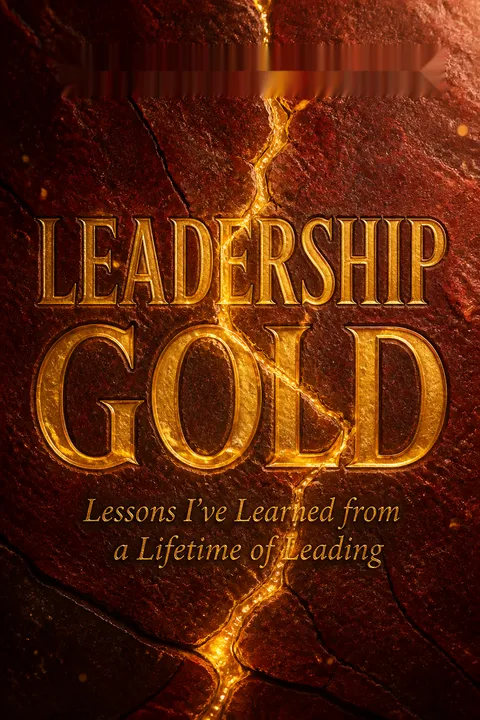
Leadership Gold is a collection of lessons rather than a single tightly argued theory. Its recurring claim is that a leader’s influence is justified by what it enables in other people. That connects its advice about listening, trust, strengths, accountability, and succession: each practice helps followers contribute more fully rather than making the leader appear more impressive. Maxwell’s personal stories give the principles credibility because they include failures, such as delayed personnel decisions and poor listening, not only achievements.
The book is especially useful as a behavioral checklist. It turns vague aspirations into observable questions: Do people grow? Does the leader hear unwelcome information? Is the calendar organized around high-value work? Are mistakes examined rather than repeated? These tests encourage leaders to look at consequences, not merely intention. The advice also holds together across different settings, from paid organizations to volunteer groups, where authority alone cannot secure commitment.
Its limitation is that memorable rules sometimes make complicated problems sound more controllable than they are. A manager can shape trust and retention, but cannot fully control them. A leader can recognize strengths, but assessments of talent are uncertain and can become self-fulfilling. The book’s optimism about leaders’ responsibility is ethically valuable, yet organizational conditions, resources, and unequal power also influence outcomes. Good application therefore requires both ownership and humility: own what leadership can change, and do not mistake a maxim for a complete diagnosis.
The strongest way to use the book is not to collect its slogans, but to turn a few of its questions into recurring practices. Review decisions, invite candid feedback, protect time for the work that matters, and ask whether people are becoming more capable. Its central insight is that leadership is not a personal possession. It is a continuing relationship whose quality is visible in the trust, judgment, and capacity that others carry forward.
Review Summary
Leadership Gold receives mostly positive reviews, with readers praising its practical insights and wisdom on leadership. Many find Maxwell's personal experiences and stories valuable. The book is seen as useful for both emerging and experienced leaders, offering exercises and mentoring tips. Some readers appreciate the author's humility and reflective approach. However, a few critics find the content repetitive or overly generalized. Overall, readers recommend it as an inspiring and informative guide for developing leadership skills.
People Also Read










Glossary
Strength zone
Best-fit abilitiesA strength zone is the area of work where a person’s abilities and talents are especially useful. Maxwell argues that people contribute most when they develop these strengths and that leaders should place team members where their abilities serve the group. The concept does not mean avoiding all challenge; it means distinguishing productive development from repeatedly assigning people work that poorly fits their capabilities.
Defining moments
Character-shaping crossroadsDefining moments are consequential events or decisions that reveal a leader’s character and influence the direction of future action. They may arise through crisis, failure, suffering, or an unexpected opportunity. Maxwell argues that people cannot schedule these moments, but can examine past responses and decide core values in advance, making it more likely that their choices under pressure reflect what they believe.
meeting before the meeting
Pre-meeting alignmentA meeting before the meeting is a conversation with key participants before a formal group meeting. It gives the leader a chance to share context, hear objections, build understanding, and avoid being surprised by concerns in the room. The practice is meant to make the formal meeting more productive, not to conceal decisions or substitute private agreement for a transparent process.
loan of influence
Accountable leadership sponsorshipThe loan of influence describes using one leader’s credibility, relationships, or authority to open opportunities for someone with less influence. Maxwell advises giving this support selectively, clarifying expectations, and checking whether the recipient develops their own leadership as a result. The aim is not permanent dependence on the sponsor, but increased capacity that the recipient can use to help others.
Challenge Zone
Active learning through challengeThe Challenge Zone is Maxwell’s term for a mode of learning in which a person attempts work or experiences beyond what is already familiar. He contrasts it with remaining in a Comfort Zone, where a person relies on known abilities, and a Coasting Zone, where effort and learning diminish. Leaders can encourage challenge by making growth expected and allowing people to learn from mistakes.
FAQ
What's Leadership Gold about?
- Focus on Leadership Lessons: Leadership Gold by John C. Maxwell distills lessons from his extensive leadership experience, offering practical insights for both emerging and seasoned leaders.
- Personal Growth and Development: Maxwell shares personal anecdotes to illustrate leadership as a continuous journey of learning and growth, encouraging readers to view experiences as development opportunities.
- Actionable Advice: Each chapter presents a "gold nugget" of wisdom, providing specific advice and strategies for effective leadership, making principles accessible to everyone.
Why should I read Leadership Gold?
- Timeless Leadership Principles: The book offers foundational leadership principles relevant across various contexts and industries, based on Maxwell's decades of experience.
- Practical Application: Readers will find actionable steps and exercises to improve their leadership skills, bridging the gap between theory and real-world application.
- Inspiration and Motivation: Maxwell's engaging writing style and personal stories inspire readers to reflect on their leadership journeys and strive for improvement.
What are the key takeaways of Leadership Gold?
- Leadership is Relational: Effective leadership is built on relationships, emphasizing the importance of connecting with those you lead.
- Defining Reality: A leader's first responsibility is to define reality, facing the truth about situations and people to be effective.
- Continuous Learning: Lifelong learning is crucial in leadership, with Maxwell encouraging readers to "keep learning to keep leading."
What are the best quotes from Leadership Gold and what do they mean?
- "Everything rises and falls on leadership.": This underscores the critical role leadership plays in the success or failure of any organization.
- "People quit people, not companies.": Highlights the importance of interpersonal relationships in the workplace for retaining talent.
- "Your biggest mistake is not asking what mistake you’re making.": Encourages self-reflection and openness to feedback for personal and professional growth.
How does John C. Maxwell define effective leadership in Leadership Gold?
- Influence and Impact: Effective leadership is the ability to influence others positively, focusing on inspiring and guiding people toward a common goal.
- Character and Integrity: Leaders must possess strong character and integrity, as trustworthiness is essential for leadership.
- Commitment to Growth: Effective leaders are committed to their own growth and the development of their team members, emphasizing continuous improvement.
What is the significance of personal growth in Leadership Gold?
- Intentional Growth Plan: Personal growth must be intentional, with a plan in place to reach one's potential.
- Daily Actions Matter: Daily actions contribute to long-term growth, encouraging investment in learning and self-improvement.
- Impact on Others: Personal growth enhances a leader's ability to influence and develop others.
How does Leadership Gold address the concept of mentoring?
- Targeted Training: Leaders should provide targeted training to mentees, aiming to make them capable of replacing the leader in specific areas.
- Creating Growth Environments: A growth environment is crucial for mentoring to flourish, requiring patience and dedication.
- Long-term Relationships: Mentoring is a long-term commitment that benefits both the mentor and mentee.
What is the 80/20 principle mentioned in Leadership Gold?
- Understanding the Principle: The 80/20 principle states that 80% of results come from 20% of efforts, emphasizing focus on impactful activities.
- Maximizing Productivity: By prioritizing tasks that yield the greatest results, leaders can enhance their effectiveness and simplify complex tasks.
- Application in Leadership: Leaders should evaluate their time and efforts based on this principle to ensure wise investment of their time.
What are some common mistakes leaders make according to Leadership Gold?
- Ignoring Reality: Failing to confront the reality of situations can cost leaders their vision, emphasizing the need to face the truth.
- Focusing on Weaknesses: Leaders often spend too much time on weaknesses instead of developing strengths, which can limit results.
- Neglecting Relationships: Not prioritizing relationships with team members can lead to loneliness and ineffective leadership.
How can I apply the lessons from Leadership Gold in my daily life?
- Self-Reflection: Reflect on your leadership style and areas for improvement using the book's application exercises.
- Set Clear Goals: Define leadership goals based on the book's principles, focusing on activities that yield the greatest results.
- Seek Feedback: Encourage open communication and ask for feedback to foster a culture of growth and improvement.
How does Leadership Gold suggest leaders should handle criticism?
- Know Yourself: Have a realistic view of yourself to handle criticism effectively, understanding it often reflects the position.
- Change Yourself: When criticism is valid, take responsibility and make necessary changes for personal growth.
- Accept Yourself: Accept your flaws to focus on improvement rather than defensiveness, fostering a healthier leadership environment.
How can I ensure that my legacy is intentional as discussed in Leadership Gold?
- Define Your Legacy: Consciously choose the legacy you want to leave, as no one will care about it as much as you do.
- Live Your Values: Living out your values daily is crucial for creating a lasting legacy, as daily actions sum up your legacy.
- Impact Future Generations: Focus on making a positive impact on future generations to ensure meaningful and enduring contributions.
About the Author
Other books by John C. Maxwell








Download PDF
Download EPUB
.epub digital book format is ideal for reading ebooks on phones, tablets, and e-readers.








