

Plot Summary
Prologue
After Thermopylae, the Persian king Xerxes orders his historian to record the testimony of Xeones, a gravely wounded Greek found beneath the dead. The captive wears a helot's cap beneath a Spartan officer's helmet, and his speech shifts between refined learning and rough soldier's slang.
Xerxes wants to know what made the Spartans fight, whom they loved, and how they faced death. Xeones agrees to tell what he witnessed as a boy and battle squire, insisting that the lives behind the armor must be understood before the final battle can mean anything.
The imperial frame begins with a reversal: a conquered king seeks knowledge from one of the people he has defeated. Xerxes can count troops and record tactics, but he cannot read the human scale of the battle from his throne. Xeones's mismatched clothing and speech also announce the novel's central concern with rank and belonging. A former outcast becomes the witness through whom both Greeks and Persians must encounter the lives hidden beneath public identities. His testimony is not neutral history; it is an act of loyalty to the dead.
The Eggs Before Dawn
At nearly ten, Xeones leaves his family's farm with his cousin Diomache, carrying ptarmigan eggs he hopes to sell for a flute. Before dawn they see a nearby farm burning, then meet cavalry that they first mistake for rescuers. The riders are Argive allies who have turned against Astakos. Diomache frees their donkey and runs with Xeones across the hills.
Her father, Tenagros, finds them and reports that Xeones's parents and the rest of the household are dead. He orders the children toward the city walls, but the boy's first frantic question is about Bruxieus, the blind servant who raised him. Tenagros smashes the eggs in Xeones's hands and drives them onward, leaving the boy's childhood shattered with their shells.
The invasion reaches Xeones through a child's errand, not a council chamber, making political betrayal bodily and immediate. The eggs are a modest promise of independence, and their destruction marks the point at which ordinary childhood plans become meaningless. Xeones's concern for Bruxieus, even after learning his parents are dead, reveals that family is already broader than blood or legal status. Diomache's quick judgment saves them, while Tenagros's panic and violence show how fear can turn survivors against one another even when they are trying to protect the young.
Ashes Without a City
Astakos has been betrayed from within and handed to Argos. Xeones, Diomache, and Bruxieus find the parents' bodies and bury them, but Argive soldiers then rape Diomache beside the ruined family home. She cannot walk afterward, and the three flee north rather than risk another town. In the hills, Diomache tries to end a pregnancy from the assault while Xeones imagines revenge and practices with a homemade spear.
Their hunger worsens through winter. After Xeones is caught stealing a goose, farmers nail his hands to a tanning board and threaten to mutilate him. Diomache and Bruxieus cut him free, but the crushed bones leave him convinced he can never become a warrior. His shame at begging for mercy becomes as painful as his injuries.
The sack destroys more than property: it removes the civic world that once gave each person a name, role, and protection. Xeones interprets survival as guilt, believing he failed his parents by being absent and failed himself by crying out under torture. Diomache's response to her assault is also shaped by a world that offers her little control over what happens to her body. Their bond persists, but trauma changes its terms. Bruxieus tries to preserve their humanity while the surrounding violence trains them toward isolation and retaliation.
A Bow in the Snow
As infection and fever ravage Xeones's hands, he refuses Bruxieus's offer to take him to a physician. He hates himself for having begged during the torture and sees no future without the ability to carry a spear. One night he slips away into a snowstorm, intending to die alone. In a pine grove he believes Apollo has appeared and redirected his attention to the bow.
Though Xeones's damaged hands cannot grip a spear or shield, they can still draw and steady a bow. Diomache and Bruxieus find him alive, and the vision gives him a way to imagine a future beyond his disability. Later, after Bruxieus dies, Diomache follows his plan toward Athens while Xeones chooses the road to Sparta, seeking a city whose warriors might give his life a shape.
The vision does not erase Xeones's disability or turn suffering into a simple reward. It makes survival imaginable by changing the question from what he has lost to what his hands can still do. Apollo's intervention is meaningful partly because it restores agency without promising safety. Xeones's choice of Sparta also begins as an act of self-creation: having lost his birth city, he chooses a community whose discipline seems capable of answering his shame. Yet he pays for that choice by separating from the person who has shared his earliest losses.
The Runway's First Lesson
In Sparta, Xeones becomes a sparring partner to Alexandros, a sensitive, musically gifted boy under the mentorship of the veteran Dienekes. Xeones witnesses the training ordeal in which Tripod, a formidable youth, is beaten to death rather than yield.
Dienekes consoles Alexandros afterward and distinguishes courage from reckless refusal to stop: a shield matters because it protects the whole line, not just its bearer. Later, during an eight-day field exercise, Alexandros neglects his shield, and the Olympic champion Polynikes humiliates and beats him until the boy recites its duty to his comrades.
When a fellow trainee dies from exhaustion, Alexandros blames himself. His broken nose and fear-linked breathing spasms threaten his future, so Dienekes trains him to recognize fear in the body and recover control.
Spartan training is presented as both instruction and coercion. Dienekes tries to draw a moral distinction between disciplined endurance and self-destructive pride, but the system around him repeatedly tests boys through pain that can kill. Alexandros's vulnerability makes the gap between ideal and body impossible to ignore. He is expected to become a weapon while remaining a person capable of music, grief, and tenderness. Xeones watches a society manufacture solidarity through punishment, and he begins learning that fear is not simply a private weakness but a force that can either fracture or bind a group.
The Channel and the Shield
When Leonidas leads an army against Antirhion, Alexandros defies his mother and follows the troops with Xeones. A dishonest boatman abandons them in the middle of the gulf, so the boys swim through the night, keeping each other alive with stories and talk of the people they love.
They reach the battle as the Spartans defeat the larger Antirhionian and Syracusan force. Alexandros finds his father, Olympieus, and Dienekes alive, but his family friend Meriones is dying from a spear wound.
The boy sings over him as the veteran asks to be buried among the fallen. Afterward, Alexandros and Xeones are punished for disobedience. Dienekes takes Xeones into his service as a second squire and returns his confiscated bow; Rooster, a helot attendant, becomes Olympieus's squire.
The swim turns Spartan courage from an abstraction into mutual dependence: Alexandros and Xeones survive because they keep one another oriented toward a future. At Antirhion, Alexandros's first view of battle combines victory with the intimate loss of Meriones, refusing the clean separation between glory and grief. The boys' punishment then shows that bravery does not exempt them from the city's authority. For Xeones, Dienekes's appointment and the returned bow offer both belonging and a usable identity, but the place he earns is still one of service.
Rooster Refuses the Scarlet
Rooster proves himself at Oenophyta when he saves Olympieus from Theban cavalry, using his master's shield and a captured horse to get him off the field. Sparta offers to enroll him as a mothax, a trainee who might earn citizenship, but Rooster refuses the honor and keeps his Messenian identity.
Years later, with war approaching, the refusal makes him a suspected danger because other helots admire him. After he again rejects Spartan status, Polynikes's secret police seize him, his wife, their children, and Alexandros.
At a hurried hearing, Alexandros admits he had tried to help Rooster escape. Arete then claims Rooster's infant son as Dienekes's own, forcing the men to spare and enroll the child. Alexandros persuades them to send Rooster away rather than make him a martyr, and Leonidas later grants him freedom.
Rooster's refusal exposes the limits of Spartan inclusion: the state offers advancement, but on terms that require him to disavow the people whose subjection defines his life. His pride is not mere stubbornness; it protects a collective identity that the city would otherwise absorb. Arete answers that conflict through an audacious fiction, using her household's honor to save a child and preserve the possibility of reconciliation. Alexandros, meanwhile, chooses persuasion over force, risking his own standing because he recognizes that a coerced ally may become an enemy.
The Veil at Phaleron
During years of Spartan campaigns, Xeones marries Thereia and has children, trying to silence his longing for Diomache. On an embassy to Athens, Arete arranges for him to find his cousin at a sanctuary of Persephone in Phaleron.
Diomache is now a mother of two, living apart from her husband and serving among the sanctuary's women. Her hardship has altered the girl Xeones remembers, but she speaks with calm authority about the life she has chosen.
She tells him that after the assault in Astakos she nearly died from an abortion, then dreamed of a veiled goddess whose compassion changed her understanding of suffering. Xeones begs her to leave with him; Diomache refuses. She sees their separate paths not as abandonment but as the lives they must each fulfill.
The reunion tests whether memory can claim ownership over another person's life. Xeones has preserved Diomache as the girl he meant to protect, but she has endured experiences and made commitments beyond his knowledge. Her refusal denies him the consoling role of rescuer, just as his own marriage complicates his plea. The sanctuary gives Diomache a language for survival that is neither simple optimism nor resignation. Her religious vision treats compassion as a way of perceiving value within a damaged life, not as proof that the damage was deserved or necessary.
Three Hundred Fathers
As Persia's invasion grows, Spartan envoys fail to persuade the island states and neighboring cities to join a united defense. The army's retreat from Tempe deepens public shame, and Spartan wives condemn their men for returning without fighting.
When the ephors finally announce the defense of Thermopylae, they select three hundred Spartans, all fathers of living sons, for a mission expected to end in death. Dienekes initially lacks a son and cannot be chosen, but Arete's intervention for Rooster's baby has created a child legally recognized as his.
He is selected alongside Alexandros and Olympieus. Before the march, Leonidas privately prepares Paraleia, Alexandros's mother, for the double grief of losing husband and son, explaining that the other Spartans will look to the women to learn how to bear the loss.
The all-father selection reveals a society trying to reconcile sacrifice with continuity: each chosen warrior has already produced an heir, yet the city still spends the father's life. Arete's earlier decision therefore changes the military plan as well as the child's future. Leonidas understands that an army's resolve depends on what happens away from the battlefield. By preparing Paraleia, he recognizes women not as spectators but as the custodians of public meaning, expected to turn private bereavement into a model other families can endure.
The Wall at Thermopylae
Leonidas marches north with a small Spartan advance force, joined by Greek allies as they reach the pass. The Lokrians flee after a confusion over the festival calendar, while rumors of Persian numbers and local surrender threaten to scatter the rest.
Leonidas sends scouts to map the approaches, burns supplies the enemy might use, and rebuilds the ruined Phokian Wall alongside his men. When a Persian envoy offers the Spartans wealth and rule over Greece in exchange for submission, the officers reject the bargain as a choice between freedom and service to a king.
Leonidas keeps the troops occupied, orders their armor polished, and reminds allied commanders that their conduct will set their soldiers' courage. His preparations make the narrow pass a position the Greeks can defend together.
The pass becomes defensible through work before it becomes a battlefield. Leonidas answers panic not with grand promises but with scouting, construction, grooming, and routine, practical acts that give frightened soldiers something to do. His treatment of the allies also matters: they are not merely supporting characters in a Spartan story but the people who must decide whether to remain. The Persian offer clarifies the political stakes. It promises status and security, but only by converting free communities into possessions of an empire.
Bronze Against the Myriads
The first Persian attack begins when a hare bolts between the armies and the hound Styx chases it; Persian archers kill the dog, and the Greeks take the omen as a signal to fight. Thespians meet the Medes first, then Spartan and allied ranks replace them in rotation.
The Greeks' heavy shields and close-formation training blunt the enemy's lighter equipment, though each advance costs lives and exhaustion. On the second day, mountain fighters and the Immortals attack in succession.
The Wall is breached, then held; the Greeks are driven backward, then counterattack after thunder and lightning strike the mountainside. The defenders read the storm as divine help, while Dienekes recognizes how fear and fatigue are distorting their judgment. The fleet also suffers losses, and no reliable reinforcements appear.
The two days of battle dismantle the idea that courage is a single heroic act. Greek discipline creates an advantage, but it cannot erase the physical cost of repeated combat or guarantee a clean victory. The hare and storm become signs because exhausted people need the world to answer their fear. Dienekes's skepticism is not a rejection of faith so much as a warning about possession, the state in which terror or triumph replaces judgment. Meanwhile, the Persians remain formidable individuals, not an anonymous mass, which complicates the Greeks' attempt to make killing impersonal.
A Warning From Rooster
Before the next day's fighting, Rooster returns from the Persian camp battered and bound. He reports that Xerxes has offered a fortune to anyone who can guide the Immortals along a mountain trail behind the Greeks.
Rooster also knows where the king's pavilion stands and offers to lead a small party there, hoping to win freedom for his family. The Spartans distrust him, but the arrival of a Persian officer confirms that a guide has betrayed the pass and the Immortals are already moving.
The allies at first dismiss the warning, buoyed by their survival and the storm's apparent intervention. Leonidas nevertheless accepts the danger. He releases the remaining allies to withdraw and sends Dienekes with ten others to attack Xerxes's tent, while the rest prepare for a final defense.
Rooster returns not as a redeemed convert but as a person trying to protect his family through the only leverage available to him. His intelligence is credible, yet the defenders' recent survival makes them vulnerable to interpreting luck as protection. Leonidas must separate morale from evidence: the army's hope cannot alter the geography of the mountain route. The decision to send a small raiding party and release the allies reflects two different obligations, striking at the enemy's command while refusing to waste every Greek life in a position already compromised.
The King's Pavilion
Dienekes divides the raiders into two groups, but rain, darkness, and treacherous cliffs delay them until they find the trail used by the Immortals. The parties reunite near the Persian camp, cross the freezing Asopus, and locate Xerxes's pavilion.
They kill sentries and break through the tent, where confusion, flying birds, and the Persian guards prevent them from reaching the king. Doreion, Hound, and Ball Player are killed; Lachides is also lost, and Dienekes is wounded. Mardonius severs Alexandros's hand as he prepares to throw his spear.
The survivors escape through the horse lines, carrying the injured. In a grove, Dienekes discovers Alexandros has died from blood loss and an unseen chest wound. Polynikes holds the grieving mentor while the men turn back toward the pass.
The raid's failure is not a failure of nerve. The men reach the center of Persian power, but architecture, guards, and sheer contingency defeat their plan. The pavilion's birds and tent supports, ordinary features of a royal household, become barriers that redirect the assault. Alexandros's death concentrates the novel's costs in one relationship: Dienekes loses the pupil he has shaped, while Xeones watches the companion who shared his most formative trials disappear. Their grief briefly breaks the Spartan discipline that has helped keep them alive.
The Last Hillock
The raiders return to find the allies withdrawing and the Spartans preparing to stay. Leonidas frees Rooster and the other helots, but Xeones chooses to remain with Dienekes. The Thespians refuse to leave as well.
Leonidas rejects another Persian offer to surrender their weapons, then explains that the Greeks must buy time for the retreating army. In the final fighting, the defenders leave the Wall and meet the Persians in the open. Leonidas is killed, and Spartans repeatedly force their way through the enemy to recover his body.
Polynikes, Dienekes, Alpheus, and other defenders fall as the last group is surrounded. Xeones is gravely wounded and buried beneath the dead, but Persian soldiers find him alive. His account of the battle is the reason he now lies captive before Xerxes.
The final stand is chosen with full knowledge of its likely outcome, which distinguishes it from the earlier hope that the pass might hold indefinitely. Leonidas gives the allies a practical route to survival and gives the Spartans a task proportionate to their remaining strength: delay the enemy. Xeones's decision to stay is not forced by his status; it is a chosen allegiance to people who have become his community. The recovery of Leonidas's body also shows that the Greeks' bonds persist even when military success is no longer possible.
The Story Outlives the Spear
After hearing of the Persian mutilation of Leonidas's corpse, Xeones refuses to continue until the exiled Spartan king Demaratos persuades him to seek Apollo's guidance. Xerxes later summons him, and the captive recognizes Mardonius as the man who once threw an axe at him during the night raid.
As Persian troops burn Athens, Xeones completes his testimony with Paraleia's account of Leonidas preparing her for the deaths of her husband and son. She accepts that the women must help their community endure grief. Xeones's wounds reopen, and he dies before the Persian retreat. The captain Orontes entrusts his body to three Athenians who carry it to the sanctuary of Persephone, where Diomache and the other priestesses can receive him.
The frame story turns memory into a form of survival, though not one that rescues Xeones from his wounds. Xerxes's recognition of the raider's testimony gives the captive unusual authority, while his identification of Mardonius makes the past physically present in the royal tent. Paraleia's story completes the book's argument about courage by shifting attention from the battlefield to those who must live with its losses. Orontes's final act crosses the enemy line without pretending that the war has ended: he grants a dead Greek the dignity of returning to someone who loved him.
Epilogue
The Persian historian survives the retreat and is later captured at Plataea. When Greek soldiers threaten him, he saves himself by naming the Spartans from Xeones's account. Their commander is Rooster, now a free Spartan warrior, who recognizes that the historian speaks truth and spares him.
The Greeks defeat the Persian army at Plataea, while Aristodemos, the Spartan survivor of Thermopylae, earns a reputation for extraordinary courage but is denied the prize of valor because his conduct seems driven by a wish to die. Years later, a veiled woman lingers alone at the Thermopylae memorial. The historian cannot identify her, but the Spartan epitaph preserves the dead men's obedience to their laws.
The coda refuses to let either side own the story completely. Xeones's testimony saves the Persian historian, and that historian's survival carries the testimony into the Greek aftermath. Rooster's authority has changed: the helot once feared as a possible traitor can now decide whether a Persian captive lives. The account also complicates public definitions of courage through Aristodemos, whose spectacular conduct is judged less valuable than the steadier desire to live and fight well. The veiled woman remains unnamed, so remembrance ends not in possession but in an image of private grief beside a public monument.
Analysis
Gates of Fire treats Thermopylae not as a contest between a few noble heroes and a faceless empire, but as an inquiry into how people are made capable of collective action. Its repeated training scenes show that courage is partly habit: a soldier learns to keep his shield upright, read the person beside him, and act even when fear has narrowed his attention. Yet the novel does not simply praise Spartan discipline. Tripod's death, Alexandros's injuries, and the city's coercive treatment of helots expose the human cost of a system that can confuse endurance with virtue. Rooster's refusal to accept citizenship on Spartan terms makes that contradiction unavoidable. The community whose solidarity sustains the phalanx is also built on the subjection of people it needs.
The book's central ethical pressure comes from the gap between individual and collective survival. Leonidas's decisions protect the allies' chance to fight again, while the Spartans accept that their own lives may be spent to buy time. Dienekes's teaching keeps returning to the person at one's shoulder, but the story tests whether such love can exist without political exclusion or violence. Diomache's spiritual vision and Arete's risky defense of Rooster's child offer forms of care that do not depend on battlefield status. They widen courage beyond male combat and make grief itself part of civic life.
The frame complicates victory, too. Xerxes's desire to hear Xeones suggests that conquest cannot explain what it has conquered. The Persian historian becomes the next custodian of a story that saves his life, while Rooster, once treated as a threat, decides whether he will live. In the end, memory is not a monument to effortless heroism. It is a contested inheritance: the living must decide which losses to name, which forms of courage to recognize, and whether loyalty can make a chosen community worthy of its sacrifices.
Review Summary
Gates of Fire by Steven Pressfield receives overwhelmingly positive reviews (4.4/5 from 43,524 readers), praised as a masterpiece of historical fiction depicting the Battle of Thermopylae. Readers commend its philosophical depth, powerful prose, and vivid battle descriptions. The narrative follows Xeones, a Spartan servant, recounting the story to Persian King Xerxes. Reviewers highlight themes of courage, camaraderie, sacrifice, and leadership. Many note it's on military reading lists and resonates with service members. Critics praise character development and historical accuracy, though some find pacing issues or excessive detail. A few readers found it boring or overly romanticized.
People Also Read


Characters
Xeones
Outcast turned witnessA freeborn boy driven from Astakos, Xeones grows up among violence, hunger, and the loss of his family. His damaged hands make the spear and shield unavailable, but he finds a different capacity in archery and becomes the battle squire of Dienekes. He is observant, self-doubting, and unusually attentive to the suffering of others, including people his own side calls enemies. His loyalty to Sparta is chosen rather than inherited, which gives his service both devotion and unease. Through him, military history becomes a record of particular people: who protected whom, who was loved, and what the living owe the dead.
Dienekes
Teacher of battlefield fearA battle-scarred Spartan officer and mentor to Alexandros, Dienekes studies fear as both a physical response and a force that can undo a unit. He trains through repetition, humor, and close attention to the men under his command, preferring responsibility to rank or acclaim. His loyalty to his brother, his wife Arete, and his students gives his reflections on courage a personal cost. Dienekes does not mistake discipline for invulnerability; he knows fear remains present even in experienced warriors. His central concern is how a person can act for others when self-preservation is urging retreat.
Alexandros
Sensitive Spartan heirThe son of the Spartan commander Olympieus, Alexandros is physically graceful, gifted in music, and temperamentally more reflective than the warrior ideal expects. His asthma and fear-linked breathing attacks make ordinary training dangerous, while his loyalty to Xeones and his affection for others draw him into risks he might otherwise avoid. Under Dienekes's mentorship, he learns to observe fear rather than simply submit to it. His difficulty is not a lack of courage but the pressure to prove himself through a model of masculinity that leaves little room for tenderness, uncertainty, or artistic gifts.
Diomache
Cousin and sanctuary devoteeXeones's older cousin, Diomache is resourceful from childhood and often acts decisively when adults are frightened or absent. The destruction of Astakos and her assault force her to build a life beyond the marriage and domestic future she once imagined. Her later devotion to Persephone gives her a way to understand suffering without reducing herself to it. She loves Xeones, but she is not merely the object of his longing or a life he can repair. Her choices belong to her, shaped by survival, motherhood, and a deepening spiritual commitment.
Bruxieus
Blind guardian and teacherA blind Elean servant in Xeones's childhood home, Bruxieus possesses practical knowledge of healing, trapping, and survival, along with a strong commitment to teaching. He treats Xeones and Diomache with a care that exceeds the obligations of his status. After Astakos falls, he feeds the children, teaches them Homer, and insists that compassion and hospitality matter even when the world has made them hard. Bruxieus understands that survival alone can leave a child feral and isolated. He gives Xeones both a moral education and the idea that belonging to a city can be chosen.
Rooster
Defiant helot warriorKnown as Rooster, Dekton is a powerful and outspoken helot who resents the Spartan system that claims his labor and limits his future. He distrusts the gods and treats offers of advancement with suspicion, especially when they demand distance from his Messenian identity. Yet his courage in battle and his protectiveness toward his family are unmistakable. His resentment is not simply personal anger; other helots see their own denied dignity in him. Rooster's relationship with Xeones is abrasive but enduring, built from shared service, argument, and a mutual willingness to protect one another.
Leonidas
King who shares dangerLeonidas leads Sparta through the threat of Persian invasion with an unusual mixture of strategic patience, humor, and physical presence. He shares hardship with ordinary soldiers, works beside them, and tries to give allied troops practical reasons to remain steady. He is not blind to fear or to the human cost of command; he understands that women, families, and survivors shape how a sacrifice will be remembered. His authority comes less from display than from taking on the burdens he asks others to bear. He sees leadership as service and treats the future of Greece as larger than Spartan prestige.
Arete
Dienekes's courageous wifeArete is Dienekes's wife and a mother of four daughters, perceptive about both household politics and the emotional lives of the people around her. She recognizes Xeones's attachment to Diomache and acts as a discreet matchmaker, but she also knows that affection cannot simply overrule obligation. Her compassion extends beyond her own family, especially to Rooster and his children. Arete's courage takes the form of action under pressure: she reads the stakes of a crisis quickly and is willing to risk her reputation to prevent needless harm. Her warmth coexists with a clear-eyed understanding of Spartan custom.
Polynikes
Champion driven by gloryAn Olympic sprinter and one of Sparta's most celebrated warriors, Polynikes is beautiful, disciplined, and fiercely competitive. He expects excellence from himself and others, sometimes turning instruction into cruelty when he believes weakness threatens the city. His rivalry with Dienekes is partly about honors, but more deeply about a kind of self-command he cannot easily reproduce. Polynikes trusts physical courage and public achievement, and his identity is tightly bound to being exceptional. Despite his harshness, he is capable of loyalty and recognizes genuine valor when it appears, even in people he once judged too quickly.
Olympieus
Commander and Alexandros's fatherOlympieus is a senior Spartan commander, Alexandros's father, and Arete's relative. He expects his son to meet the demands of the warrior state, yet his love for him is visible in the way he watches his training and receives him after battle. His long service has made him practical and respected, while his bond with the veteran squire Meriones shows a capacity for loyalty beyond rank. Olympieus represents the parental burden inside Spartan military culture: preparing a child for danger while knowing that the city may claim both generations.
Paraleia
Alexandros's resolute motherParaleia is Alexandros's mother and the wife of Olympieus. She understands Spartan training and family duty, but she does not confuse obedience with passivity. When her son follows the army, she demands an account of his conduct; when Leonidas later prepares her for the consequences of the Three Hundred, she must confront what the city asks of mothers. Her steadiness is not an absence of grief. It is a disciplined response to a culture in which private loss can determine whether a whole community holds together.
Xerxes
Persian king seeking conquestXerxes commands an empire whose reach and resources dwarf those of the Greek city-states. He wants not only territory but submission, and he sees the Spartans as a challenge to royal authority because they refuse to treat a king as a master. His interest in Xeones's testimony reveals a curiosity that ordinary military reports cannot satisfy. Xerxes can admire an enemy's courage while still directing an invasion against him, a tension that complicates his role as antagonist. The royal court's distance from its soldiers is one of the differences the novel places beside Spartan leadership.
Suicide
Fearless Scythian squireA Scythian squire who once sought death for a private crime, Suicide becomes Dienekes's mentor to Xeones in the practical work of war. He is an expert with short javelins, fearless to the point of recklessness, and more thoughtful than his nickname suggests. His reflections on the phalanx center on the invisible bond that makes individual soldiers act as one. He remains in Spartan service not for status or pay, but because he believes the discipline might help him quiet the selfish self that once governed him.
Demaratos
Exiled Spartan adviserA deposed Spartan king living at the Persian court, Demaratos occupies an uneasy position between his birthplace and his imperial hosts. He understands Spartan piety and uses that knowledge to persuade Xeones to continue his testimony after the captive learns of Leonidas's desecration. His counsel is strategic, but it also shows that cultural belonging can persist after political allegiance has broken. Demaratos knows how the Spartans interpret duty and speaks to Xeones through that moral vocabulary.
Artemisia
Queen and military counsellorArtemisia, queen of Halicarnassus, is one of Xerxes's most trusted advisers. She challenges the complacency of the Persian command and argues that defeating a small Spartan force does not mean Greece has been subdued. Her political judgment is sharpened by her understanding of Greek cities, armies, and leaders. She is direct enough to oppose powerful men in the royal council, yet her loyalty to Xerxes gives her advice a personal as well as strategic dimension.
Mardonius
Persian field commanderMardonius is a senior Persian commander and a close ally of Xerxes. He favors decisive military action and interprets the fall of Thermopylae as evidence that the Greek resistance can be finished. His confidence in imperial scale contrasts with Artemisia's caution about the cities and forces still unconquered. During the fighting, he is a direct threat to the Spartan raiders, bringing the war's political distance into close physical contact.
Orontes
Captain between two enemiesOrontes commands the Immortals' guard and supervises Xeones's testimony for Xerxes. He begins as a Persian officer responsible for a captive, but repeated interviews make him attentive to Xeones as a man rather than a source of information. His military duty and his growing respect for the Greek come into conflict, especially when orders threaten the captive's life. Orontes's character tests whether shared experience can create a measure of human recognition across enemy lines without erasing the violence of war.
Megistias
Seer who joins the defendersA Theban seer who comes to Thermopylae with his son out of loyalty to Greece rather than to his divided city. Megistias reads omens for the allied army, but his presence also makes visible the gap between prophecy and human decision. He stands among the defenders as a religious figure who chooses solidarity with the threatened communities over safety.
Dithyrambos
Thespaian architect and captainA Thespaian captain by trade an architect, Dithyrambos helps turn the defenders' fear into purposeful action. He favors bold measures, understands the morale of citizen-soldiers, and gives the Thespians a strong presence at the pass. His rough humor and willingness to remain beside the Spartans make him a bridge between the professional discipline of Sparta and the courage of the allied cities.
Elephantinos
Merchant turned camp companionA traveling merchant whose broken wagon brings him into contact with the allied army, Elephantinos becomes a familiar presence through his jokes, sharpening work, and small gifts. He has no military obligation to the defenders, but his affection for the young soldiers makes him stay. His choice offers a civilian measure of solidarity alongside the formal duties of the warriors.
Gorgo
Queen who steadies ParaleiaLeonidas's queen, Gorgo understands that her marriage and motherhood are inseparable from public duty. She prepares Paraleia for the burden of having both husband and son selected for Thermopylae, speaking to her as one woman who knows the costs of royal life to another. Her authority is quiet but consequential, grounded in experience rather than ceremony.
Plot Devices
Xeones's testimony
History through one survivorThe book frames its account as a Persian historian's transcription of Xeones's testimony to Xerxes. This structure lets the narrative move between the conquered Greek's personal memories and the Persian court's military present. It also makes the act of telling part of the plot: Xerxes wants to understand the people he defeated, while Xeones wants the dead to be remembered. The frame permits moments of irony, because the reader can see the consequences of events that Xeones is still recounting. It further prevents the battle from becoming an impersonal report. The account stays anchored in what one wounded witness saw, loved, misunderstood, and survived.
The phalanx and shield
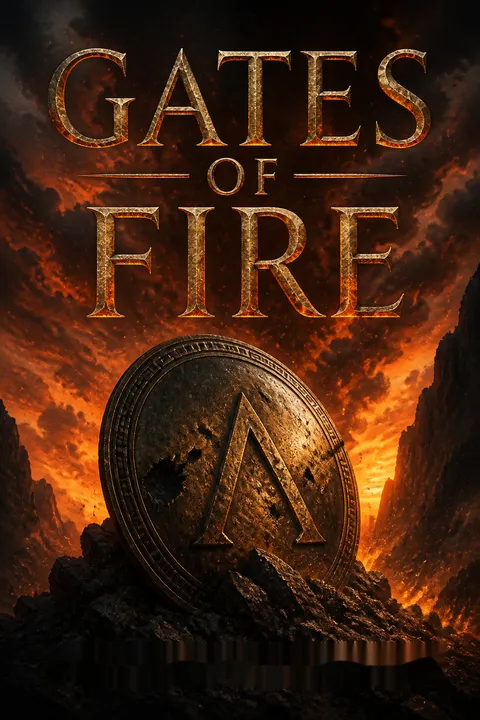
Make loyalty visibleThe Spartan shield is both weapon and shared protection. Training teaches that a soldier may lose armor worn for himself, but abandoning the shield that protects the neighboring fighter is a deeper failure. The phalanx turns this rule into physical practice: each person depends on the person beside him, and the line survives only if individuals hold position together. This device connects small training episodes, battles, and Dienekes's teaching about responsibility. It also clarifies the novel's model of courage. Valor is not merely a champion's spectacular achievement; it is the repeated act of remaining useful to the people who rely on you.
Xeones's bow
A future beyond injuryWhen torture damages Xeones's hands, he believes his life as a warrior is finished because he cannot use a spear or shield. The bow offers a different form of service suited to the movements his hands can still manage. It is tied to his childhood vision of Apollo and later becomes his work as Dienekes's squire. The bow does not restore what was lost or make Xeones invulnerable. Instead, it changes his understanding of usefulness and gives his devotion a practical form. At Thermopylae, the earlier choice to preserve it matters because it has helped make Xeones a participant rather than a bystander.
The wooden death tickets
Make loss countableBefore battle, Spartan warriors split marked wooden tokens and wear one half while leaving its mate behind. Afterward, matching the pieces identifies who has returned and which names remain among the dead. The simple object makes survival feel provisional: a man can reclaim his own token, or collect the token of someone who will never come back. At Antirhion, Leonidas uses the ritual to help soldiers absorb their fear and grief without pretending the losses are small. The tickets translate an immense battle into individual absences, ensuring that the dead remain named rather than disappearing into a casualty total.
The mountain path
Turn defense into entrapmentThermopylae's narrow pass neutralizes much of Persia's numerical advantage, but a hidden route over the mountains can place the Immortals behind the Greek position. The route is foreshadowed by Leonidas's insistence on scouting every approach and later becomes the focus of Rooster's warning. Its discovery changes the defenders' choices: holding the Wall is no longer enough, and the remaining allies must be released before they are surrounded. The path gives the climax a concrete geographical cause rather than a sudden reversal. It also links the campaign's terrain to the human choices of a local guide, a deserter, and a king who must decide when to withdraw others.
About the Author
Other books by Steven Pressfield



Download PDF
Download EPUB
.epub digital book format is ideal for reading ebooks on phones, tablets, and e-readers.








