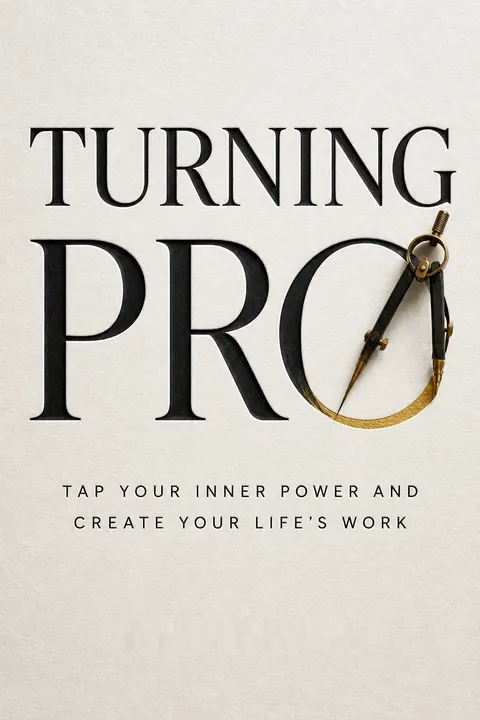


Key Takeaways
Turn pro by treating your calling as work, not a someday fantasy.
A hidden ambition. In his twenties, Steven Pressfield lived in a halfway house, worked as a truck driver, and kept his ambition to write buried. A dream about his clothes and boots becoming orderly helped him recognize that he wanted more from life. Yet his typewriter stayed hidden in his van. The gap between ambition and action became the central problem he had to face.
A decision, not a credential. Turning pro means deciding to take a calling seriously and doing its work despite fear, uncertainty, or a lack of recognition. It does not mean becoming famous or earning a living from the work. Pressfield presents it as a change in how someone meets the day, with real sacrifices and no guarantee of success.
The book gives ambition moral weight: it is not necessarily vanity, but may signal a neglected capacity or responsibility. That distinction can help people who dismiss their desires as selfish. Still, ambition alone is not proof of a destiny. A useful test is whether the pursuit makes a person more attentive, skilled, and responsible, rather than merely more preoccupied with status. Pressfield’s framework works best as a call to investigate a persistent desire, not as a command to abandon every practical obligation.
Treat your current life as a clue to the work you keep avoiding.
A career in shadow. Pressfield calls a shadow career an activity that resembles a person’s deeper calling but feels safer because it avoids the risk of doing the actual work. He drove trucks with commitment and pride. The road offered movement, independence, and a sense of adventure, qualities he associated with the writer’s life. But he was not writing. His chosen career was meaningful in itself, yet it also let him postpone the work he feared.
Read the resemblance. The point is not that a conventional job is false or lesser. It is to ask whether a recurring attraction, role, or lifestyle is serving as a substitute for a more exposing ambition. Pressfield’s trucking years showed him that being near the atmosphere of a calling is not the same as practicing it.
This is a sharp way to examine avoidance because it asks what a substitute activity provides, not simply whether it is enjoyable. The answer may be safety, identity, or the feeling of progress without the vulnerability of producing work. The interpretation should remain a question, not a verdict: people often choose jobs for income, family needs, or limited opportunity, and those choices are not automatically evasions. The useful signal is a persistent mismatch between what a life dramatizes and what its owner actually makes or does.
Decode recurring drama by asking what meaningful work it replaces.
A substitute for aspiration. Pressfield describes addiction broadly, including compulsive romance, distraction, repeated failure, and trouble. He argues that such patterns can absorb energy that might otherwise go into a difficult calling. A gifted friend repeatedly pursued consuming love affairs, each following a familiar course. The drama occupied her attention while her talents as a pianist, photographer, and athlete remained underused.
Look at the payoff. In Pressfield’s account, these patterns often repeat without building toward anything and can leave a person less able to act. He calls this displacement: activity that takes the place of the work or service a person senses they should undertake. The question is not merely what pleasure a habit offers, but what task, risk, or decision it helps someone avoid.
The metaphor of displaced aspiration can make self-sabotage easier to examine without reducing a person to a flaw. It encourages curiosity about what a behavior accomplishes in the short term, such as numbing fear or supplying drama. But the claim has limits: clinical addiction can involve biological, social, and psychological forces that this metaphor does not explain or treat. Reading a habit as a message may aid reflection, but it should not replace professional care or turn illness into a failure of will.
Quit auditioning for a tribe that is mostly busy managing itself.
Approval as a cage. Pressfield’s amateur is not a fool or a villain. This is the person who dreams, fears judgment, and waits for someone else to authorize the first step. The imagined tribe might be family, colleagues, a social circle, or a whole culture. Its approval seems essential, so the amateur edits choices to fit expectations and stays distracted from the voice that might point toward a different life.
Act without permission. Pressfield argues that people are often less focused on judging someone else than that person imagines. Turning pro means accepting that a calling may change friendships and invite criticism. It also means giving up the fantasy of being discovered or granted permission. The work begins when someone defines what matters and takes responsibility for pursuing it.
The book captures how anticipated judgment can become a form of self-censorship. Social psychology offers a useful parallel: people often overestimate how much others notice their choices, because each person is occupied with their own concerns. Yet belonging is not imaginary, and social rejection can carry material consequences, especially where family or community support is essential. The point is not to disregard relationships, but to distinguish actual obligations from an imagined audience whose verdict has never been delivered.
Count finishing the work as the first victory, not public approval.
A year of commitment. At thirty-one, Pressfield moved to a small town in northern California with $2,700, a cat, and an old typewriter. He lived cheaply, took out a limited amount of cash each week, and spent a year working on a book. When his savings ran out, he picked apples, then returned to the manuscript. He finally typed an ending. The book was not good enough to publish, but completing it changed his relationship to the work.
Completion before acclaim. Pressfield’s breakthrough was not a sale, a review, or proof of talent. It was staying with a project rather than abandoning it as he had abandoned earlier work and relationships. He still faced years of rejected manuscripts and screenplays. Turning pro began when he stopped treating a poor outcome as permission to quit.
This story separates process milestones from external validation. A completed draft creates something that can be evaluated, revised, or rejected; an unwritten ambition remains protected from judgment but also cannot improve. That distinction is valuable in any craft where feedback arrives slowly. The narrative should not imply that persistence guarantees eventual publication or that every project deserves endless effort. Its more defensible lesson is narrower: finishing one serious attempt can build the capacity to make the next attempt better.
Build a practice that gives your ambition a place, time, and aim.
A repeatable ritual. Pressfield defines a practice as regular, focused work intended to develop skill and deepen commitment. It has a space, a time, and an intention. A writer might return to the same desk each morning with a specific goal: improve a scene, solve a problem, or learn a technique. The routine makes the work less dependent on mood and turns attention into something deliberately trained.
Serious does not mean punishing. Pressfield emphasizes discipline, patience, humility, and continued learning. He recalls a horse trainer who made schooling demanding but enjoyable, stopping before the horse became exhausted. The aim was to build eagerness for the work, not obedience through force. A practice should challenge a person while leaving enough energy and curiosity to return.
The practice model combines structure with a healthy warning against confusing intensity with effectiveness. Repeated, focused effort creates conditions for learning, while a stable time and place reduce the daily cost of deciding whether to begin. The horse-training story adds a useful corrective: sustainable skill-building depends on responsiveness to fatigue and attention, not just pressure. Deliberate practice is not a magic hourly quota. It requires feedback, appropriate difficulty, and recovery, which vary by person and discipline.
Let the work itself pay part of your wage.
Two kinds of return. Pressfield distinguishes conventional rewards, such as money, attention, and applause, from what he calls a psychological salary: pride, belonging, growth, and the satisfaction of engaging in meaningful work. Artists and entrepreneurs may labor for a long time without much public notice. If recognition is the only reward, the silence can make the effort feel pointless.
Work as practice. Pressfield’s own early manuscripts and screenplays repeatedly failed to sell. He continued because the work taught him, held his interest, and felt unavoidable. The argument is not that income is irrelevant or that artists should accept exploitation. It is that the value of a practice cannot be measured only by its immediate commercial result. The work can matter before the market agrees.
This idea helps separate a craft’s intrinsic rewards from its uncertain market rewards. It can protect motivation during long stretches when recognition is scarce, and it encourages attention to learning, mastery, and contribution. But the psychological salary cannot pay rent, and invoking it carelessly can excuse poor working conditions or chronic financial insecurity. The strongest version of the argument treats inner reward as one source of resilience, while still recognizing the need for material support and fair compensation.
On blocked days, protect continuity with whatever useful work remains possible.
Keep your footing. Pressfield expects professionals to encounter fear, bad drafts, and difficult stretches. His advice is to stay composed and keep working at the scale the day permits. When a section of a book resists, a writer can move to a smaller passage or another task rather than treating the whole session as lost. The aim is not to pretend the obstacle is easy, but to avoid letting one hard patch end the effort.
Work through imperfect conditions. Pressfield’s horse-riding image, sit chilly, means keeping one’s composure and position when panic arrives. His related advice is that artists should not wait for every life problem to be solved before they begin. This is not a demand to ignore illness or genuine limits. It is a reminder that fear can be present without making every action impossible.
The section offers a practical alternative to all-or-nothing thinking. A reduced task can preserve identity and momentum without requiring a heroic performance every day. This resembles graded action in behavioral approaches, where manageable steps help people engage with feared or avoided tasks. The boundary matters: persistent exhaustion, illness, or crisis calls for rest and support, not automatic escalation. Continuity is useful when it serves the person and the work, not when it becomes another standard for self-punishment.
Attempt work beyond your expertise, then let disciplined imagination catch up.
Make room for surprise. Pressfield calls creative possibility the Mystery: ideas may emerge from imagination and intuition that exceed a creator’s conscious plans. In an improv exercise, students imagine opening an empty box and discover that something appears inside. The exercise challenges the fear of having nothing to offer. Pressfield also recalls writing a screenplay about prison despite never having been incarcerated. Several readers assumed he had personal experience of prison life.
Risk without pretending. The point is not that preparation is useless or that expertise can be faked in every field. It is that a creator need not limit work to what is already fully understood. A demanding attempt can draw out insight that research and planning alone do not supply. The professional enters uncertain territory, then uses craft and revision to shape what emerges.
This defense of imaginative reach is strongest when paired with the book’s emphasis on technique and revision. Creative work can generate knowledge by allowing a person to test possibilities, not merely report what was already known. Still, writing outside one’s experience brings obligations: research, humility, and attention to the people represented. The permission to attempt the unfamiliar is not permission to claim authority without earning it. Imagination opens the door; craft and accountability determine what should pass through.
Refine private struggle into crafted work that gives something to others.
Pain transformed by craft. Pressfield sees the artist and the addict as facing a similar human discomfort, but responding differently. The addict seeks escape or anesthesia; the artist works with experience and tries to shape it into something that can be shared. The finished piece is not simply a record of suffering. It is suffering, observation, and imagination organized through skill for an audience.
A gift returned. Pressfield frames the artist as a wanderer who comes back with something made from what was endured and learned. He also connects disciplined work to spiritual practice. In the Jewish ethical tradition he discusses, Mussar involves identifying a fault and working to change it. For Pressfield, professional discipline is one way to move beyond ego and make a contribution others can use.
The closing claim gives craft a social purpose: private experience becomes valuable to others when it is shaped, not merely disclosed. That idea connects artistic discipline with service, since the audience receives a form it can interpret rather than raw biography. It also avoids making self-expression the only measure of art. The caution is that suffering is neither required for creativity nor automatically ennobling. Careful making can transform experience, but harm should not be romanticized as an artistic credential.
Analysis
Turning Pro is a memoir-shaped argument about how a person stops rehearsing a vocation and starts practicing it. Pressfield’s history supplies the book’s proof of concept: the hidden typewriter, the trucking years, the apple harvest, the bare-bones year in California, and a first completed book that failed commercially. These episodes make the central distinction vivid. Becoming a professional is not the same as succeeding in public. It is a change in conduct, expressed through sustained work, craft, patience, and a willingness to face fear without waiting for it to disappear.
The book’s most useful diagnostic is the idea that a substitute life can echo the calling it displaces. Trucking gave Pressfield movement and adventure while keeping him away from writing. This prompts a concrete question: what does a person’s recurring drama allow them not to attempt? The answer can reveal avoidance, but the book’s language is sometimes too sweeping. It interprets addictions and compulsions as encrypted callings, and opposes its amateur-professional model to illness-based explanations. That framing can inspire reflection, but it cannot account for every addiction, mental-health condition, economic barrier, or caregiving obligation. Professional discipline is not a substitute for treatment, support, or material security.
The book also risks idealizing sacrifice. Isolation, austerity, and the willingness to endure adversity are central to Pressfield’s personal turning point, but they should not be mistaken for universal requirements. His more durable guidance is less dramatic: establish a working routine, improve technique, tolerate imperfect results, and find enough meaning in the practice to continue without applause. The horse trainer’s care and the idea of a psychological salary temper the book’s martial tone with sustainability.
Ultimately, Turning Pro is strongest as an invitation to make one honest attempt at the work that matters. Its spiritual language gives that effort weight, while its stories keep the advice grounded in ordinary behavior: sit down, stay with the task, and finish something.
Review Summary
Turning Pro received mostly positive reviews, with readers praising its motivational impact and insights on becoming a professional. Many found it a valuable follow-up to Pressfield's "The War of Art." Critics appreciated the concise writing style and practical advice on overcoming resistance and pursuing one's calling. However, some readers felt the book was repetitive, lacked concrete steps for "turning pro," and presented an overly rigid view of professionalism. Despite mixed opinions, many readers found the book inspiring and useful for creative pursuits.
People Also Read








Glossary
Resistance
Inner force against meaningful workPressfield’s name for the internal opposition that pushes people away from work they consider important. It appears as fear, self-doubt, procrastination, distraction, or self-sabotage. The book treats Resistance as a persistent adversary rather than a passing mood, and suggests that professional habits help a person act despite its presence.
turning pro
Committing to the callingA decision to approach a vocation with the seriousness of a professional, whether or not it provides income or recognition. In Pressfield’s usage, turning pro means accepting the work’s demands, organizing life around doing it, and returning to it despite fear, failure, and uncertainty. It is a shift in conduct, not a status awarded by others.
shadow career
Safer substitute for a callingA career or pursuit that resembles a person’s deeper ambition but avoids the specific risks of acting on it. Pressfield uses his truck-driving years as an example: the job offered movement and adventure like the writer’s life he imagined, while keeping him from writing. A shadow career may be worthwhile in itself and still function as avoidance.
shadow life
A life organized around avoidancePressfield’s description of a pattern of denial, compulsions, and substitute ambitions that keeps someone from meaningful work. It can look dramatic or busy, but tends to repeat without progress and may reduce a person’s ability to act. The term frames distraction as more than wasted time: it can become an alternative identity.
displacement activities
Actions that replace the workBehaviors that absorb attention in place of a person’s calling or important task. Pressfield applies the idea broadly, from substance use to romance, online distraction, and repeated failure. The key question is what the activity helps someone avoid. The term is a lens for examining behavior, not a clinical diagnosis or explanation for every compulsive habit.
practice
Daily focused disciplineA sustained routine of intentional work aimed at improving skill and deepening commitment. Pressfield describes a practice as having a place, a time, and a purpose, and as requiring humility, patience, and continued learning. It can bring personal or spiritual meaning even when conventional rewards such as money, fame, or applause are absent.
Mussar
Ethical discipline for self-correctionA Jewish ethical discipline that Pressfield describes as a way of identifying a fault and working to change it. He presents it as a disciplined approach to engaging the inner struggle that blocks a person from living according to their better nature. In the book, turning pro serves as a modern parallel to this practice.
yetzer hara
Opposing inner impulseA term from Jewish mystical vocabulary that Pressfield’s rabbi friend uses for a shadow force that obstructs the soul’s effort to become fully realized. The book compares it with Resistance, the inner opposition that diverts people from meaningful work. This is presented as a spiritual model, not a psychological diagnosis.
psychological salary
Inner reward from the workThe nonfinancial return a person can receive from committed work, including pride, belonging, growth, and the satisfaction of practicing a craft. Pressfield contrasts this with conventional rewards such as money, attention, and applause. The concept does not replace material income; it explains why meaningful work may remain valuable when public recognition is scarce.
FAQ
What's "Turning Pro" about?
- Transition from Amateur to Pro: "Turning Pro" by Steven Pressfield explores the journey of transforming from an amateur to a professional in one's craft or calling.
- Overcoming Resistance: The book delves into the concept of Resistance, a force that prevents individuals from achieving their true potential, and how turning pro helps overcome it.
- Practical Guidance: It provides practical advice and insights on how to make this transition, emphasizing discipline, commitment, and the mindset required to succeed.
- Personal Transformation: Pressfield shares personal anecdotes and stories to illustrate the profound changes that occur when one decides to turn pro.
Why should I read "Turning Pro"?
- Inspiration for Creatives: The book is a source of inspiration for artists, writers, entrepreneurs, and anyone seeking to pursue their true calling.
- Actionable Advice: It offers actionable advice on overcoming procrastination, self-doubt, and other barriers to success.
- Personal Growth: Readers can gain insights into personal growth and self-discovery through the process of turning pro.
- Empowerment: The book empowers readers to take control of their lives and commit to their passions with a professional mindset.
What are the key takeaways of "Turning Pro"?
- Resistance is the Enemy: Recognize Resistance as the primary obstacle to achieving your goals and learn strategies to combat it.
- Commitment is Crucial: Turning pro requires a deep commitment to your craft, involving discipline, sacrifice, and perseverance.
- Identity Shift: The transition involves a shift in identity from an amateur, who is driven by fear and ego, to a professional, who is focused and resilient.
- Daily Practice: Establishing a daily practice and routine is essential for maintaining progress and achieving mastery.
How does Steven Pressfield define "Turning Pro"?
- Mindset Change: Turning pro is a mental shift where one commits to their craft with seriousness and dedication.
- Leaving Amateur Ways: It involves leaving behind amateur habits, such as seeking validation and fearing failure, to embrace a professional approach.
- Sacrifice and Discipline: The process demands sacrifice, discipline, and a willingness to face challenges head-on.
- Self-Respect and Authenticity: Turning pro leads to finding one's power, voice, and self-respect, allowing individuals to live authentically.
What is "Resistance" according to Steven Pressfield?
- Internal Enemy: Resistance is an internal force that prevents individuals from pursuing their true calling and achieving their goals.
- Manifests as Fear: It often manifests as fear, self-doubt, procrastination, and distractions that keep us from doing our work.
- Universal Experience: Everyone experiences Resistance, but it is particularly strong when we are on the verge of a breakthrough or significant achievement.
- Overcoming Resistance: The book provides strategies to recognize and overcome Resistance, emphasizing the importance of turning pro.
What are the "Three Models of Self-Transformation" in "Turning Pro"?
- Therapeutic Model: This model views personal issues as conditions or diseases that can be treated to achieve wellness.
- Moralistic Model: It frames problems in terms of right and wrong, suggesting that punishment and penance can lead to redemption.
- Amateur vs. Professional Model: Pressfield proposes a third model, where the issue is living as an amateur, and the solution is turning pro by changing one's mindset.
How does "Turning Pro" address the concept of "Shadow Careers"?
- Metaphor for True Calling: Shadow careers are metaphorical pursuits that mimic our true calling but involve no real risk or fulfillment.
- Avoiding True Potential: They serve as a way to avoid facing our true potential and the challenges that come with it.
- Examples of Shadow Careers: Pressfield provides examples, such as working in a support role instead of pursuing one's passion directly.
- Recognizing and Moving Beyond: The book encourages readers to recognize shadow careers and take steps to pursue their true calling.
What role does "Addiction" play in "Turning Pro"?
- Distraction from Calling: Addiction is seen as a distraction that prevents individuals from pursuing their true calling.
- Shadow Form of Calling: It acts as a shadow form of one's aspirations, providing a temporary escape from the pain of not fulfilling one's potential.
- Overcoming Addiction: The book suggests that turning pro involves overcoming addictions and replacing them with productive habits.
- Addiction as a Metaphor: Pressfield uses addiction as a metaphor for the ways we avoid facing our true selves and the work we are meant to do.
What are the "Qualities of the Professional" according to Steven Pressfield?
- Consistency and Commitment: A professional shows up every day, stays on the job, and is committed over the long haul.
- Patience and Order: Professionals are patient, seek order, and demystify their work to maintain focus and progress.
- Facing Fear: They act in the face of fear, accept no excuses, and are prepared for adversity.
- Self-Validation: Professionals self-validate, reinvent themselves, and are recognized by other professionals for their dedication and mastery.
How does "Turning Pro" suggest dealing with "Fear"?
- Acknowledge Fear: Recognize that fear is a natural part of the creative process and a sign that you are on the right path.
- Act Despite Fear: Professionals act in the face of fear, using it as motivation rather than a barrier.
- Fear as a Guide: Use fear as a guide to identify what is truly important and worth pursuing.
- Build Resilience: Develop resilience by consistently facing and overcoming fear through disciplined practice and commitment.
What are the best quotes from "Turning Pro" and what do they mean?
- "I wrote in The War of Art that I could divide my life neatly into two parts: before turning pro and after. After is better." This quote emphasizes the transformative power of turning pro and the positive impact it has on one's life.
- "Turning pro is free, but it’s not easy." It highlights that while the decision to turn pro doesn't require financial investment, it demands significant personal sacrifice and effort.
- "The amateur tweets. The pro works." This quote underscores the importance of focus and dedication, contrasting the distractions of amateurism with the discipline of professionalism.
- "The professional trusts the mystery." It suggests that professionals have faith in the creative process and the unknown, trusting that inspiration will come through consistent effort.
How does "Turning Pro" relate to Steven Pressfield's other works?
- Continuation of Themes: "Turning Pro" builds on themes introduced in "The War of Art," particularly the concept of Resistance and the journey to overcome it.
- Practical Application: While "The War of Art" introduces the idea of Resistance, "Turning Pro" provides practical guidance on how to transition from amateur to professional.
- Complementary Insights: The book complements Pressfield's other works, such as "Do the Work" and "The Warrior Ethos," by offering deeper insights into personal transformation and discipline.
- Consistent Message: Across his works, Pressfield consistently emphasizes the importance of commitment, discipline, and overcoming internal barriers to achieve one's true potential.
About the Author
Other books by Steven Pressfield








Download PDF
Download EPUB
.epub digital book format is ideal for reading ebooks on phones, tablets, and e-readers.








