


Key Takeaways
Train a code that can overrule the instinct to save yourself.
A learned moral code. Pressfield uses the Warrior Ethos to mean a culture's taught standards of right and wrong, including courage, loyalty, integrity, and self-restraint. It is not simply aggression or a natural gift. Across his examples, families, mentors, and disciplined groups teach people to place obligations to others above immediate safety.
Survival becomes a choice. Spartan stories make the tension stark: a mother welcomes news that her son died facing the enemy, but rejects the son who ran away. Pressfield argues that shame, honor, and love can counter the instinct to flee. The code also points inward, where the opponent may be greed, cowardice, or selfishness rather than an armed enemy.
The central insight is that courage is often relational and learned, not a solitary burst of fearlessness. Social norms can help people act beyond immediate self-interest, a pattern relevant to emergency response, caregiving, and collective action. Yet a code powerful enough to override self-preservation needs limits. Otherwise, loyalty can reward needless sacrifice and punish sensible caution. The book's strongest version of courage is therefore not simply enduring danger, but choosing risk for a defensible purpose and remaining answerable for that choice.
Make loyalty visible through protection, not just shared slogans.
The shield protects others. Pressfield explains a Spartan distinction: a lost helmet or spear endangered the individual, while a lost shield left neighboring fighters exposed. The story captures the book's claim that selflessness is not decorative virtue. It is practical protection that makes a group more dependable under pressure.
Leaders can prove the bargain. In another story, Alexander's exhausted army finds a small amount of water. He refuses to drink it and pours it out where the troops can see, signaling that the burden is shared. Pressfield also recounts Alexander giving away much of his property to his soldiers before a campaign. Such gestures communicate that loyalty flows both ways: people are asked to sacrifice, but leaders must not reserve all comfort and reward for themselves.
Trust grows when people can observe that the group protects its members and that leaders accept real costs. This resembles the logic of reciprocal cooperation: people are more willing to contribute when they believe others will contribute too. The stories also warn against confusing sacrifice with virtue in itself. A leader's dramatic gesture can inspire, but durable trust depends on ordinary fairness, competent planning, and care for people after the crisis. Symbolic generosity cannot compensate for avoidable harm.
Prepare the whole community to carry the cost of courage.
Resolve is social. The book's Spartan stories present mothers as guardians of the community's standards. One mother cares more about victory than the fate of her five sons; another rebukes two sons running from battle. These anecdotes are meant to show that courage is supported, or undermined, beyond the ranks of fighters.
A fictional scene makes the point. In a scene from Pressfield's novel about Thermopylae, Leonidas says he chose his 300 defenders partly for the strength of the women who would endure their deaths. Pressfield explicitly notes that this scene is invented, not a documented historical event. Its purpose is to argue that a society's ability to withstand loss depends on wives, mothers, daughters, and other members, not only on male combatants.
This widens the usual picture of military courage from the individual fighter to the network that sustains a fighting force. Families and communities absorb risk, grief, and disruption, so their role is not merely ceremonial. The emphasis also challenges the idea that bravery belongs naturally to men. At the same time, the Spartan examples describe a highly coercive social order, not a general model to copy. Community support is strongest when people can share responsibility without being forced to suppress grief or dissent.
Use hardship to build capacity, not to worship suffering.
Adversity can train endurance. Pressfield points to Marines' pride in tolerating difficult assignments and to rugged communities that resist the comforts outsiders try to bring them. He also recounts Antarctic explorer Ernest Shackleton seeking volunteers for an expedition defined by danger, cold, and uncertainty; according to the book, thousands responded. The appeal was not ease, but a demanding undertaking with purpose.
The test is purposeful effort. The Theban general Epaminondas, facing the Spartans, asked his exhausted fighters for one final push at the decisive moment. Their added effort broke the opposing line. Pressfield also treats terse, dark humor as a way to acknowledge danger together rather than pretend it is harmless. Hardship matters in this account because it can build endurance, solidarity, and resolve, not because pain is automatically ennobling.
Chosen difficulty can reveal capability and strengthen group identity, especially when the challenge has meaning and participants retain some agency. That distinction matters: adversity is a training condition only when it builds useful capacity, not when suffering becomes a status contest. The book's celebratory language can make hardship sound universally beneficial, though the same conditions may injure people or exclude those with different needs. A sound test is whether the ordeal prepares people for a real responsibility and whether its costs are honestly acknowledged.
Let honor summon courage without letting shame become cruelty.
Two kinds of judgment. Pressfield distinguishes guilt, which comes from an internal sense of having done wrong, from shame, which depends on how a community sees a person. He presents Western societies as more guilt-oriented and examples such as Sparta, ancient Rome, and the Marine Corps as more shame-oriented. These are broad categories, not precise descriptions of every individual.
Pressure can distort valor. The Spartan Aristodemus was kept from Thermopylae because an eye condition made him temporarily unfit. At a later battle, he fought with extraordinary ferocity, but leaders denied him recognition, judging that shame over surviving had driven him to seek death recklessly. The story shows that public honor can encourage courage while also turning reputation into a dangerous demand.
The distinction helps explain why some groups regulate conduct through conscience while others rely heavily on reputation and public standing. Social accountability can reinforce standards, but shame can also produce concealment, scapegoating, and destructive risk-taking. The book's culture-level contrast is best treated as an ideal type: real communities mix private conscience and public judgment. A useful application is to ask whether a norm encourages repair and responsibility, or merely makes people afraid to admit failure.
Keep the enemy human, or honor becomes tribal vengeance.
A code can have a shadow. Pressfield calls criminal or extremist groups that imitate loyalty, discipline, and honor without respecting outsiders forms of shadow tribalism. He describes tribal codes as tightly bound to kinship, revenge, land, and suspicion of outsiders. Such cohesion can make a group resilient, but it can also divide the world into people who deserve protection and people who do not.
Respect marks a boundary. In the book's account, the Warrior Ethos grants an opponent humanity and recognizes that an enemy may be defending home and community. Pressfield contrasts that with tactics aimed at terrorizing civilians or provoking a response that abandons moral limits. His examples include Rommel stopping a German officer from forcing a captured British officer to order his own troops to surrender.
The crucial question is not whether a group has strong bonds, but whom its moral obligations include. Social identity can produce extraordinary cooperation inside a group while intensifying hostility toward outsiders. A rule that preserves an opponent's humanity can interrupt that slide and protect a group's own ethical standards. Still, respect for an enemy must not erase differences in conduct or responsibility. The point is not moral equivalence; it is refusing to let an adversary's wrongdoing dictate one's own rules.
Lead where the danger is, and share what success brings.
Example gives orders weight. Pressfield describes Alexander riding at the head of his elite cavalry, visible to his soldiers and exposed to danger. He also recounts Israeli officers being taught to lead by going ahead, and General Moshe Dayan's reluctance to punish an officer simply for daring too much. These examples portray leadership as visible responsibility, not merely authority from a safe distance.
Ambition needs shared stakes. The Theban victory story shows how a leader can focus a unit on one concrete act of effort at the moment it matters. Alexander's willingness to distribute wealth, as Pressfield tells it, added another signal: the benefits of victory would not belong to the commander alone. Courage and the will to win are easier to summon when leaders bear risk and share rewards.
Visible leadership can reduce uncertainty: people see what is expected and whether the person giving the order accepts the same danger. Fair sharing also makes collective effort seem reciprocal rather than extractive. But leading from the front is not always the wisest form of leadership; modern teams also need judgment, delegation, and protection from unnecessary losses. The deeper principle is shared accountability. A leader should not demand risks that remain invisible to the leader or reserve the gains for personal advantage.
Direct the warrior's discipline toward your own worst impulses.
The battlefield turns inward. Pressfield reads the Indian epic Bhagavad-Gita as both a story of combat and an allegory of inner conflict. Its warrior Arjuna faces opponents whose names can also be understood as personal vices, including greed and selfishness. On this reading, the struggle is not only against other people, but against the traits that make a person betray their own standards.
Practice self-command. The discipline used in external conflict becomes a method for holding attention to a chosen aim and resisting fear, distraction, or appetite. Pressfield presents this inward application as a way to pursue integrity and maturity. The virtues remain recognizable, but their target changes: patience, courage, and self-restraint become tools for governing one's own behavior rather than defeating another person.
The inward turn makes the book's military language useful outside combat: discipline becomes the ability to act according to considered commitments when impulse pulls elsewhere. This resonates with traditions of self-regulation that treat attention and habit as trainable capacities. The metaphor also carries a risk. If every weakness is framed as an enemy to destroy, ordinary vulnerability can be treated as moral failure. Self-command is most humane when it includes honest self-knowledge, not simply harsher self-punishment.
Treat the warrior stage as preparation for mature self-command.
A passage into adulthood. Pressfield suggests that some young people join the military seeking challenge, comradeship, purpose, and a clear test of their abilities. He connects that desire to Carl Jung's Warrior Archetype, a recurring image of the stage when people seek adventure, mentors, and demanding work. The book presents this as a psychological interpretation, not a requirement that every person follow the same path.
Keep the lessons, outgrow the role. Drawing on the book King, Warrior, Magician, Lover, Pressfield argues that the capacities developed in one life stage can support later roles such as parent, teacher, or leader. His story of Alexander meeting Indian ascetics illustrates the idea: the conqueror admires people who have turned strength toward mastering their own desire for conquest.
The developmental framing offers a useful alternative to treating youthful risk-taking as mere recklessness: it can express a search for competence, belonging, and meaningful tests. Yet archetypes are interpretive maps, not universal clocks. People mature along different paths, and military service is neither necessary nor safe as a rite of passage. The more transferable lesson is to create demanding transitions that combine skill, responsibility, and mentorship without requiring violence or tying adulthood to a single gendered ideal.
Carry military virtues home without expecting civilian life to resemble war.
Two cultures, different incentives. Pressfield contrasts a military culture organized around cohesion, duty, and shared sacrifice with a civilian society that prizes individual choice and material success. He argues that civilian control of the military protects democratic freedom, even while the difference can leave service members feeling out of place. The book asks whether a small military can bear the burden of defense while most citizens remain distant from it.
Transfer the skills. For a returning service member, the field changes, but endurance, resourcefulness, loyalty, and disciplined effort may remain useful to family and work. The challenge is identity as well as employment: a person may wonder who they are outside the role of warrior. Pressfield's answer is that the code can support civilian life, provided it is adapted to its different demands.
The contrast names a real integration problem: habits rewarded in a tightly structured unit may not translate cleanly into workplaces built around negotiation, ambiguity, and individual initiative. Transfer therefore requires more than praise; it requires opportunities to translate experience into civilian language and relationships. The book is right that military virtues can travel, but civilian norms are not simply softness. Democratic restraint and pluralism serve purposes that command structures do not, and a healthy return respects both worlds.
Analysis
The book's most useful move is to treat warrior conduct as an ethical technology rather than a synonym for violence. Pressfield traces a line from survival needs to group discipline, then from battlefield virtues to the private struggle for self-command. That arc gives the collection of ancient anecdotes a coherent purpose: each story asks how a person acts when fear, loyalty, and obligation collide. The result is especially compelling when courage means protecting others, when authority is visibly accountable, and when discipline is turned against selfishness rather than outsiders.
Its central tension is also its most important qualification. Shame, honor, and cohesion can sustain people through extreme danger, but the same forces can punish dissent, demand reckless sacrifice, or narrow moral concern to the in-group. Pressfield acknowledges this danger through his contrast between an honorable code and shadow tribalism, and through the warning that shame can corrupt valor. Those distinctions keep the book from being a simple celebration of martial toughness, though its romantic presentation of Sparta sometimes makes coercive training and social exclusion feel like the price of greatness rather than costs to scrutinize.
The historical material should be read as moral storytelling, not as a uniform evidentiary record. The author says that some stories are reconstructed and that the Leonidas selection scene is fictional. Their function is illustrative: they dramatize ideals that a culture wanted to teach. That makes them memorable, but it also means they cannot independently prove how entire societies behaved.
The lasting contribution is a portable question: what code governs action when comfort, fear, and self-interest pull in the opposite direction? Its strongest answer combines courage with restraint, loyalty with respect for outsiders, and self-sacrifice with reciprocal leadership. The code matters beyond military life only when it remains answerable to humane limits and democratic accountability.
Review Summary
The Warrior Ethos received mixed reviews. Some praised its concise exploration of warrior values and found it inspiring, while others criticized its glorification of Spartan culture and lack of historical accuracy. Positive reviewers appreciated Pressfield's insights on courage, discipline, and honor, finding applications beyond the military. Critics argued the book oversimplified complex issues and promoted outdated ideals. Many noted its brevity and accessibility. Overall, readers' opinions seemed influenced by their pre-existing views on warrior culture and military ethics.
People Also Read





Glossary
Warrior Ethos
Code of conductA taught moral code that organizes conduct around virtues such as courage, honor, loyalty, integrity, selflessness, endurance, and self-command. Pressfield presents it as a response to fear and danger, first helping a group survive and later serving as a guide for struggles within a person's own character.
shadow tribalism
In-group honor without universal respectPressfield's label for groups that imitate tribal loyalty, discipline, and honor while denying full humanity to outsiders. In his account, this inward-facing code can justify revenge, dehumanization, or attacks on civilians. It resembles the solidarity of a warrior community but rejects the Warrior Ethos's respect for an enemy as a human being.
nangwali
Pashtun code of honorThe honor code Pressfield associates with Pashtun tribal life. He describes it as emphasizing personal and family honor, loyalty, endurance, and obligations that can include revenge for an insult. In the book, nangwali illustrates how honor can organize a community strongly while also binding its members to demanding social expectations.
badal
Obligation of revengeA Pashto term Pressfield uses for the obligation to avenge an offense against honor. In his description of tribal codes, badal connects an insult to a continuing duty shared across family or community ties. The term helps explain how honor can function as a collective system of accountability rather than a purely private feeling.
Tohar HaNeshek
Purity of the weaponA principle Pressfield attributes to Israeli Defense Forces training. It asks an individual soldier to judge whether a weapon is being used morally and to refuse an unjust action. In the book, the principle represents restraint within combat: effectiveness does not erase the fighter's responsibility for how force is used.
Warrior Archetype
Developmental warrior patternA Jungian concept Pressfield describes as a recurring psychological pattern associated with a stage of growth. It appears in the desire for challenge, adventure, demanding mentors, and close comrades. Pressfield argues that the discipline and courage developed in this stage can become resources for later roles, rather than a permanent identity.
Collective Unconscious
Shared inherited psycheJung's term, as summarized by Pressfield, for a layer of the psyche understood to contain patterns and knowledge shared across cultures and generations. Jung's archetypes belong to this account. Pressfield uses the concept to explain why the Warrior Archetype appears across different societies, though this is presented as a psychological theory.
agoge
Spartan youth trainingThe Spartan system of upbringing and training into which boys entered around age seven, according to Pressfield's account. It continued into young adulthood and emphasized endurance, discipline, obedience, and life among peers rather than at home. The book presents the agoge as a method of forming a warrior culture, while its severe practices also reveal the cost of that formation.
shame-based culture
Conduct governed by public standingA social system in which a person's honor depends strongly on the community's judgment and reputation. Pressfield contrasts this with a guilt-based culture, where people internalize standards of right and wrong. He uses the distinction to explain social sanctions in Spartan and other warrior settings, while the categories are broad descriptions rather than complete accounts of any culture.
guilt-based culture
Conduct governed by inner conscienceA social system in which people internalize moral standards and experience wrongdoing as a private sense of guilt, even when no one else knows about it. Pressfield contrasts this with shame-based culture, where reputation and public judgment carry greater weight. The distinction is useful as a lens, but the book's categories should not be treated as mutually exclusive descriptions of entire societies.
FAQ
What's "The Warrior Ethos" by Steven Pressfield about?
- Exploration of Warrior Culture: "The Warrior Ethos" delves into the principles and values that define warrior cultures throughout history, examining both ancient and modern contexts.
- Questions of Honor and Ethics: The book raises questions about the nature of honor, the necessity of a cause for a warrior, and whether a warrior ethos is inherent or cultivated.
- Broader Application: While focused on military personnel, the book suggests that the warrior ethos can be applied to everyday life, helping individuals define and defend their purpose and integrity.
- Personal Observations: Pressfield shares his personal thoughts and observations, aiming to provide insight rather than definitive answers.
Why should I read "The Warrior Ethos"?
- Understanding Warrior Values: The book provides a deep understanding of the values that drive warriors, such as courage, honor, and selflessness.
- Historical Insights: It offers historical anecdotes and stories from various warrior cultures, providing context and depth to the concept of the warrior ethos.
- Practical Application: Readers can apply the principles discussed to their own lives, using them to navigate personal and professional challenges.
- Thought-Provoking Questions: The book encourages readers to reflect on their own values and the role of honor and integrity in their lives.
What are the key takeaways of "The Warrior Ethos"?
- Courage and Honor: Courage, particularly in the face of death, is a central virtue, and honor is a guiding principle in warrior cultures.
- Selflessness and Loyalty: The ethos emphasizes the importance of putting the group before the individual and being loyal to one's comrades.
- Adversity and Resilience: Embracing adversity and enduring hardship are seen as paths to freedom and strength.
- Inner and Outer Battles: The warrior ethos applies not only to external conflicts but also to the internal battles each person faces.
How does Steven Pressfield define the Warrior Ethos?
- Code of Conduct: The Warrior Ethos is a code of conduct that encompasses virtues like courage, honor, and selflessness.
- Cultural and Historical Roots: It is rooted in the traditions of ancient warrior societies, such as the Spartans and Macedonians.
- Adaptability: The ethos is adaptable, applicable to both literal warfare and metaphorical battles in everyday life.
- Moral Framework: It provides a moral framework for individuals to navigate challenges and make ethical decisions.
What are some of the best quotes from "The Warrior Ethos" and what do they mean?
- "Come back with this or on it." This Spartan saying emphasizes the importance of honor and courage, even in the face of death.
- "The greatest counterpoise to fear is love." This highlights the role of camaraderie and brotherhood in overcoming fear in battle.
- "The will to victory may be demonstrated in places other than actual battle." This suggests that the warrior ethos can be applied to various aspects of life, not just warfare.
- "The hardest thing in the world is to be ourselves." This reflects the internal struggle for self-knowledge and authenticity, a key theme in the book.
How does "The Warrior Ethos" relate to modern life?
- Everyday Battles: The book suggests that everyone faces battles in their personal and professional lives, where the warrior ethos can be applied.
- Integrity and Purpose: It encourages readers to define and defend their sense of purpose and integrity, much like a warrior.
- Adversity as Growth: Embracing challenges and adversity is seen as a way to grow and strengthen one's character.
- Community and Support: The ethos emphasizes the importance of community and support, drawing parallels to modern teamwork and collaboration.
What role do women play in "The Warrior Ethos"?
- Spartan Women: The book highlights the strength and courage of Spartan women, who were integral to the warrior culture.
- Support and Resilience: Women are portrayed as pillars of support, whose resilience inspires and sustains the warrior spirit.
- Cultural Foundation: The ethos is not solely a manifestation of male aggression but is supported by the will and resolve of women.
- Historical Examples: Stories of Spartan mothers and wives illustrate the critical role women played in maintaining the warrior ethos.
How does "The Warrior Ethos" address internal conflicts?
- Inner Enemies: The book discusses the internal enemies each person faces, such as fear, greed, and selfishness.
- Self-Discipline: It emphasizes the importance of self-discipline in overcoming these internal battles.
- Spiritual Guidance: Drawing from texts like the Bhagavad-Gita, the book suggests that the warrior ethos can guide individuals in their spiritual and personal growth.
- Alignment with Higher Self: The ethos encourages aligning one's actions with their higher nature and values.
What historical examples does Steven Pressfield use in "The Warrior Ethos"?
- Spartan Stories: The book includes numerous anecdotes from Spartan culture, illustrating their values and practices.
- Alexander the Great: Pressfield discusses Alexander's leadership and his application of the warrior ethos in his campaigns.
- Ancient Battles: Examples from battles like Thermopylae and Plataea are used to highlight the principles of courage and honor.
- Cultural Comparisons: The book compares various warrior cultures, such as the Masai, Apache, and Pashtun, to explore common themes.
How does "The Warrior Ethos" differentiate between warrior cultures and criminal organizations?
- Honor vs. Shadow Honor: Warrior cultures operate by a code of honor, while criminal organizations may have a pseudo or shadow version of this code.
- Respect for the Enemy: True warrior ethos mandates respect for the enemy, unlike criminal groups that dehumanize opponents.
- Moral Boundaries: Warrior cultures have moral boundaries that criminal organizations often violate.
- Purpose and Values: The ethos is rooted in noble purposes and values, whereas criminal organizations prioritize self-interest and power.
What is the significance of "purity of the weapon" in "The Warrior Ethos"?
- Moral Use of Force: "Purity of the weapon" refers to the moral use of force, ensuring actions are just and ethical.
- Israeli Defense Forces: The concept is taught to soldiers in the Israeli Defense Forces, emphasizing restraint and moral judgment.
- Guiding Principle: It serves as a guiding principle for warriors to evaluate their actions and maintain integrity.
- Long-term Perspective: The ethos encourages looking beyond immediate conflicts to potential future alliances and reconciliation.
How does "The Warrior Ethos" address the transition from military to civilian life?
- Adapting Skills: The book suggests that the skills acquired in the military, such as discipline and resilience, are valuable in civilian life.
- Identity and Purpose: It addresses the challenge of finding identity and purpose after leaving the military.
- Continued Application: The warrior ethos can continue to guide individuals in their personal and professional endeavors.
- Support and Community: The importance of finding a supportive community and maintaining connections is emphasized for a successful transition.
About the Author
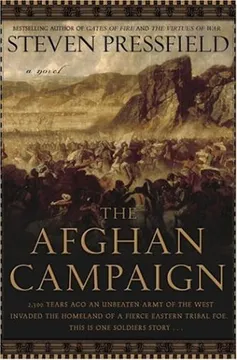
Other books by Steven Pressfield



Download PDF
Download EPUB
.epub digital book format is ideal for reading ebooks on phones, tablets, and e-readers.








