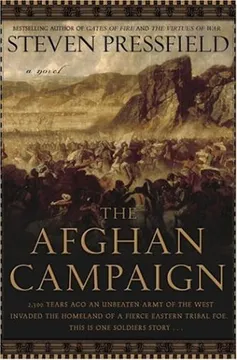


Plot Summary
Prologue
On the eve of Alexander's wedding to Roxane, Macedonian soldier Matthias prepares for his own ceremony with Shinar, an Afghan woman whose protection has made him answerable to her family. Fourteen hundred soldiers are to marry local women, but Matthias and his friends have a more dangerous appointment first: he must pay Shinar's brother and cousins to relinquish their claim to her.
Flag, his veteran mentor, arms for treachery and plans how to keep the three men from escaping. Matthias knows that custom forbids him to kill the family he is joining, yet he fears the meeting will end in blood. The celebration is meant to mark peace. He is not sure he will reach it.
The opening makes marriage feel less like a private promise than a military operation conducted under the pressure of kinship law. Matthias is caught between two codes: his army's hospitality toward a new family and the Afghan demand that a woman's male relatives answer for her honor. The weapons beneath Flag's formal clothes expose the violence hidden inside the ceremony. By placing the reader at the threshold of a wedding before explaining how Matthias got there, the frame creates suspense while establishing the novel's central question: whether a human bond can survive when every available language of duty turns it into a threat.
The Farmboy Goes East
At eighteen, Matthias leaves his family's farm in Macedon despite his mother's plea that he stay. His father died after serving in Alexander's army, and his two older brothers have already earned fame as cavalrymen.
Matthias wants the same glory, but his home district has no infantry regiment and the elite cavalry will not take him. He and his lifelong friend Lucas enlist instead as mercenary infantry, then reach the recruiting depot too inexperienced and poor to secure a place.
A sergeant recognizes their Apollonian riding skill and signs them as mounted infantry. In Asia, they join a chaotic replacement column, where pay and equipment cost money and survival depends on finding experienced soldiers to guide them. Flag teaches Matthias that battle will demand force, not ceremony.
Matthias's enlistment begins as an act of self-definition, but the army immediately turns that ideal into a question of usefulness. His family history supplies a ready-made standard of courage, while his actual status is that of a penniless novice who cannot even obtain a proper assignment. The contrast matters: he does not enter war with a settled moral identity, only with borrowed images of heroism from his father and brothers. Flag's brutal instruction replaces the imagined cavalry charge with practical violence. The transformation starts before Matthias reaches the enemy, as the institution teaches him to measure himself by obedience and function.
The First Afghan Trap
The long march east strips Matthias and Lucas of the comforts they expected: their pay disappears into fees, their gear is incomplete, and the heat makes each day's miles feel punishing. During a supply escort, veteran troops chase riders away and leave the inexperienced men guarding the train.
More bandits appear, outnumber the guards, and take the cargo while Matthias's party retreats rather than risk being killed. The failure teaches him how fear can empty a soldier's judgment. When the column reaches Artacoana, dispatch riders bring worse news: Spitamenes, the Afghan commander known as the Desert Wolf, has destroyed a Macedonian detachment.
Matthias and Lucas are assigned to the punitive force. They set out expecting to avenge their countrymen, without knowing what the army will demand of them once they reach the village sheltering the fugitives.
The first failure is not a simple test of bravery. The recruits have been placed in a position they are not equipped to hold, and they survive by recognizing the imbalance rather than pretending it does not exist. Yet military shame makes that sound judgment feel like cowardice. This conflict between bodily fear and institutional expectation becomes the mechanism by which the army will train them: the men are made to distrust their own responses before they understand the enemy. Spitamenes's attack turns that uncertainty into a mandate for revenge, narrowing the recruits' moral choices before they have learned what retaliation will look like.
The Village of Fire
At dawn, Macedonian soldiers storm the village where the fugitives have taken refuge. Matthias and Lucas are assigned to corral women and children for enslavement, while veterans kill the men fleeing through the lanes.
When a captive woman stabs their corporal, the soldiers kill the women in the pen. Matthias cannot bring himself to strike a prisoner; a sergeant forces a gutting sword into his hand, and Matthias wounds the captive badly without killing him. Flag finishes the execution.
Later, alone in a canyon, Matthias meets an Afghan fighter who attacks him. He smashes the man's skull with a stone, then joins the pursuit and helps kill another captive combatant. His first experience of killing brings both relief and exhilaration, followed by shame he cannot yet face.
The village collapses the distinction between combat and punishment. Matthias enters believing the assignment has boundaries, then discovers that the army treats the presence of a weapon as permission to erase those boundaries. His refusal does not preserve innocence: it transfers the violence to someone else and leaves him exposed to punishment from his own side. The canyon fight gives him a different route into killing, one driven by immediate survival rather than command. The resulting exhilaration is psychologically plausible and morally unsettling. He experiences competence as relief from terror, which helps explain how later atrocities can become routine without ever becoming emotionally clean.
Shinar on the Mountain Road
After Alexander tells the new recruits that Afghanistan requires a harsher kind of war, Matthias marches toward Kandahar and the Hindu Kush. The army hires local women as porters because their lives are considered cheaper than mules.
One is Shinar, a quiet young woman whom the muleteer Ash beats when she resists his orders. Matthias intervenes, then spends the gold from a false Bronze Lion award to buy her release. The rescue does not make her free in any simple sense.
By Afghan custom, a woman requires a male guardian, and Matthias's protection humiliates the absent brother who should have defended her. Ash declares that Matthias has effectively become her husband. The veterans warn that her family may seek blood for the insult, but Matthias cannot abandon her to the road.
Matthias's intervention is compassionate by his own standards and invasive by the society he has entered. The novel refuses the comforting assumption that good intentions automatically liberate another person: rescuing Shinar gives him authority over her while also placing her in greater danger. Her vulnerability is shaped not only by Ash's cruelty but by the kinship system that makes protection inseparable from male control. Matthias recognizes the first harm more readily than the second. His action therefore begins as an ethical refusal and becomes a new obligation whose meaning neither he nor Shinar can safely dictate alone.
The Khawak Pass
Alexander drives the army across the Hindu Kush before winter has fully broken, and storms, hunger, and confusion scatter its columns. When veteran sergeant Tollo falls from an icy ridge, Flag turns back to find him.
Matthias follows down the face and helps haul Tollo upward, but Tollo dies before they reach shelter. Matthias and Flag survive the night with Shinar's help, using the dead man's clothing to keep warm. The descent costs the army many more lives, yet Alexander walks back from the head of the column to share the soldiers' hardship.
On the Bactrian plain, Matthias refuses hospitalization and returns to duty. Flag gives him Tollo's cap and promotes him to corporal. The boy who once failed under pressure now has men relying on him.
The pass makes command tangible as shared exposure. Alexander's authority gains force not from a speech but from his willingness to return to the starving soldiers, while Matthias's new standing comes from choosing danger beside Flag rather than from a formal achievement alone. Tollo's death leaves a practical and emotional vacancy: his cap becomes a burden of memory, not a trophy. The ordeal also alters Matthias's understanding of strength. Survival does not mean mastery; it means accepting dependence, including help from Shinar, whose steadiness exceeds the soldiers' expectations.
The Many Blessings Ambush
After Alexander's army crosses into Bactria, Matthias and his comrades help gather horses and begin treating Shinar as part of their company. The apparent end of the war vanishes when Spitamenes crosses the Jaxartes at night and massacres the garrisons of the Seven Forts.
Later, a relief column pursuing him is drawn into a carefully prepared ambush beside the Many Blessings river. The Macedonians are strung out, denied water, and attacked from the river and bluffs by mounted archers.
Matthias is shot through the shoulder, knocked into the current, and nearly drowned beneath horses and bodies. Lucas, wounded and nearly blind, drags him into hiding under a bank. By dawn, the river is choked with their dead, and the two friends are discovered and taken prisoner.
The ambush reverses the empire's usual picture of military control. Macedonian discipline cannot compensate for a commander who chooses the ground, the hour, and the conditions of contact. Spitamenes understands that the invaders' confidence in formation can become a trap when their line is stretched beyond mutual support. The river also makes the cost intimate: Matthias survives only because Lucas, himself gravely injured, refuses to leave him. Their bond shifts from shared childhood to bodily dependence, while the massacre exposes how little heroic language can protect soldiers once the tactical structure collapses.
The King's River Crossing
Spitamenes's allies carry Matthias and Lucas north, where Massagetae captors question and torment them. They see the tribes' harsh code at close range, including a father killing his daughter for secretly helping the prisoners. The captives are then brought to a high ridge overlooking Alexander's massed army.
When the king launches a crossing of the Jaxartes, the Scythians gather at the shore to stop him. Hidden Macedonian catapults and fire-throwers erupt from the bank and from the assault craft, scattering the densely packed defenders.
In the sudden disorder, Matthias and the other prisoners rush their guards and escape. After recovery, Matthias learns the army has lost more than seventeen hundred men. Alexander holds a silent funeral, then sends his troops to devastate the surrounding region in retaliation.
Captivity makes the enemy legible without making him harmless. Matthias sees that the same code that disciplines tribal loyalty can authorize terrifying violence within a family. Alexander's crossing, meanwhile, demonstrates the empire's capacity to turn technological preparation into psychological shock. The prisoners escape not through their own strength but because a larger system abruptly changes the balance around them. The funeral's silence gives grief a public form, but the punitive campaign that follows converts mourning into policy. The novel asks whether naming a loss can restrain revenge, or whether ritual simply prepares the next act of violence.
A Winter of Reckoning
At Bactra City, Alexander accepts responsibility for underestimating the Afghan resistance and reorganizes the army to pursue rather than merely chase its fighters. He recruits local horsemen, reforms supply and scouting, and introduces household pay that recognizes soldiers' foreign partners.
The changes provoke resentment among Macedonian veterans, but they also make Shinar's place in camp more secure. Matthias and Lucas struggle with what the war has made them; Lucas still relives his first killing, while Matthias cannot keep Shinar from feeling ashamed of their relationship.
When Shinar secretly ends a pregnancy and nearly bleeds to death, Matthias understands that she fears being discarded. He asks her to let him help, and she accepts treatment. The intimacy between them deepens, but it remains shaped by danger, grief, and unequal power.
Alexander's confession is a rare admission that imperial force has learned less from victory than its enemy has from resistance. His reforms are both tactical and social: incorporating local fighters and household partners is a way to make the army harder to isolate, but also a deliberate attempt to loosen tribal ties. Matthias's private life mirrors that political strategy in a more human register. Shinar's crisis reveals that protection without trust can reproduce abandonment. His request to help matters because it offers care without assuming that he already understands what she needs.
The Big Push
In spring, Alexander sends five columns north to sweep Afghanistan toward the steppe and force Spitamenes into battle. Matthias's unit probes the desert, where scouts disappear and the army's brutality fails to break the tribes' resistance.
During the advance, a letter reports that Matthias's older brother Elias has died after his Afghan partner Daria poisoned him. Matthias refuses the chance to escort the ashes home because he will not leave his comrades. Before Elias's death, he had warned Matthias that sympathy for the Afghans could not make the Macedonian mission right, but that the army still had to survive it.
Matthias carries that contradiction into the campaign. He also learns that Lucas and Ghilla have a son, while his own letters from Shinar begin to reveal how deeply she has attached herself to him.
The campaign's strategic widening coincides with Matthias's shrinking sense of home. Elias's death removes the brother whose experience might have pulled him back to Macedon, while the refusal to escort the ashes shows how unit loyalty has displaced family duty. Elias's counsel is not an endorsement of conquest; it is a survival ethic built around moral clarity without moral purity. Matthias must hold both truths at once: the Afghan cause is defensible, and his own men are trapped inside an army that must win. The bonds with Shinar and Lucas's new family offer forms of belonging that complicate any simple return.
The Wolf's Son
As Alexander's campaign narrows Spitamenes's room to move, Matthias's unit attacks a winter camp and captures Derdas, the fourteen-year-old son of the Afghan commander. The boy is a valuable prisoner, but rival soldiers quarrel over his dagger and the reward his capture might bring.
Intelligence captain Agathocles insists on taking Derdas to headquarters immediately. Stephanos argues that a small escort will be vulnerable on the open steppe, but Agathocles rides out anyway. Lucas volunteers to accompany him, and Matthias gives his friend food and his overcloak.
The rest of the company follows more slowly with the wounded and other captives. Matthias expects Lucas to reach the main force safely. The boy's capture, however, has already exposed the escort to the very reprisal the veterans feared.
Derdas is a person and a strategic instrument at once, and the soldiers' scramble over his possessions shows how quickly the language of military value can obscure the child inside it. Agathocles's insistence on speed converts an intelligence opportunity into a risk taken for prestige. Lucas's decision to go is an act of loyalty, but it also repeats the novel's central pattern: individuals are sent into danger by institutions whose goals are larger than their capacity to protect them. Matthias's gift of food and clothing gives the separation a domestic tenderness that the military mission cannot preserve.
The Cost of a Lie
At the final winter battle, Alexander's forces break Spitamenes's mounted attack and recover Matthias's lost mare, Snow. Lucas is absent. Matthias learns that Lucas, Agathocles, and the chronicler Costas were captured and tortured to death after leaving with Derdas.
Headquarters asks him to sign a fabricated report claiming the three died heroically in battle, because the truth could obstruct peace with the Bactrians and Sogdians. Matthias refuses, even when officers offer promotion, money, and release from debt.
Alexander visits him personally, withdraws the pressure, and leaves the decision to his conscience. Ten days later, Massagetae envoys offer Spitamenes's head in return for peace. Matthias has defended Lucas's truth, though the war's settlement will still be built through political compromise.
The battlefield victory does not resolve the deepest conflict; the report does. Matthias is asked to exchange an accurate account of Lucas's death for a peace that could save other lives. His refusal is not strategically pure, since it risks prolonging the war, but it protects the dead friend from being recruited into a false public story. Alexander's response recognizes the moral cost of command: political necessity cannot simply erase the subordinate's conscience. Yet the subsequent offer of Spitamenes's head shows that history continues through bargains, not moral closure. Truth is preserved locally, not made victorious.
Roxane's Mountain Wedding
With Spitamenes gone, Alexander turns against the remaining Afghan strongholds. At the Sogdian Rock, his engineers build new mountain siege equipment, while a night assault scales a sheer cliff and persuades Oxyartes to negotiate.
Alexander chooses Oxyartes's daughter Roxane as his bride, offering the warlord rank and influence in exchange for bringing other chiefs into a settlement. Matthias and Shinar have reached winter quarters at Nautaca, where she is pregnant and he hopes to take her home.
She resists marriage because Afghan custom has cast her outside her kin, and she fears that marrying the invader will deepen that shame. Their future depends on more than private affection: a safe life for their child requires Shinar to trust a home she has never seen.
The siege turns geography into political theater. Alexander's soldiers make a route where the defenders believe none exists, then convert that feat into a marriage alliance that lets Oxyartes present accommodation as elevation rather than surrender. Matthias and Shinar face a smaller but related negotiation: neither affection nor protection can erase the social meaning of her exclusion. The child makes their private uncertainty consequential, but it does not magically cure it. Shinar's reluctance preserves her agency against the assumption that Matthias's love entitles him to define her future.
The Price of Forgiveness
Shinar gives birth to a son, Elias, and the child's arrival changes her view of marriage. After a women's festival, she asks Matthias to put their names on the wedding list. Before the ceremony, Matthias and Flag seek a settlement with Shinar's brother, Baz, whose honor code makes her rescue an unforgivable insult.
During the Ten Days of Forgiveness, Ash arranges a tribal council. Matthias apologizes and offers several years of pay plus Snow, his prized mare. The elders accept the bargain, and Baz's obligation to avenge his family's shame appears settled.
Matthias returns to the city believing the most dangerous obstacle has been removed. The agreement depends on Baz personally accepting the horse and payment, while the wedding crowds leave Shinar and her infant exposed.
The council translates honor into a transaction without making the underlying injury disappear. Matthias learns that a settlement must be legible to the community, not merely sincere between two individuals; the horse carries more symbolic weight than cash because it represents a recognized prize. Yet the terms remain fragile, dependent on a visible transfer that has not happened. Shinar's decision to marry follows motherhood and a change in communal belonging, not simple submission to Matthias's wishes. The scene's optimism is therefore structurally precarious: ritual and public agreement can contain danger, but they cannot guarantee private safety.
The Wedding-Day Betrayal
On the wedding day, Matthias cannot secure the promised payment from the quartermaster, so Flag lends him the money. When Matthias and his friends reach the Pactyan camp, Baz and the cousins are missing. Ash realizes the meeting has drawn them away from the women.
Matthias races back through the crowded city, but the guards at his tent have failed to stop an attack. Baz and the two cousins lie dead outside; inside, Shinar has been killed and newborn Elias is lifeless in a soldier's arms.
Matthias takes the child and climbs toward the citadel beneath his shield, unable to stop acting as if he can still protect them. The wedding celebration begins nearby as white doves rise over the city. The war is formally ending while his own family is destroyed.
The betrayal is not simply a reversal of the council's agreement; it exposes how little a public settlement can control people still governed by fear, shame, and revenge. Matthias's frantic return makes his earlier confidence in procedure feel painfully inadequate. His attempt to shield the dead infant is a trauma response, an action that preserves the role of protector after its object can no longer be saved. The ceremony's doves do not sanctify peace so much as sharpen the contrast between imperial spectacle and private catastrophe. The ending refuses to make political success emotionally redemptive.
The Soldier Who Remains
After Shinar and Elias are dead, Matthias keeps her battered shoes and the letter she sent through a scribe. He takes Ghilla and her son, Lucas, under his protection, then reenlists instead of returning to Macedon. Flag goes home, while Matthias inherits his mentor's rank and begins training raw recruits. He keeps Lucas's death and Shinar's fate in his mind even as the army prepares to march toward India.
The choice does not mean he has recovered or believes the campaign just. He remains because the corps is the only home he can imagine, and because Ghilla's child needs an adult who will not abandon him. The boy may become a soldier despite Matthias's hopes, but for now he is someone Matthias can keep alive.
Matthias's decision to remain is neither a conventional victory nor a simple surrender to the army. War has made his sense of home inseparable from the unit, even as the unit has taken nearly everyone he loves. Taking responsibility for Ghilla's son transfers care from the dead to the living, but it also risks reproducing the same military inheritance that shaped Matthias. His instruction of new recruits suggests hard-earned competence, not moral conversion. He has become a soldier in a way he never intended, carrying grief as knowledge rather than pretending it can be left behind.
Epilogue
As the army forms for its march toward India, Matthias sees Ash again and recognizes that the muleteer was right: the Macedonians will leave, but Afghanistan will remain beyond their command. Matthias no longer mocks the remote god Ash worships, a deity who offers no comfort yet sustains people who survive the country's stone and distance.
He carries Tollo's cap, protects Ghilla and little Lucas, and takes his place among the troops. His mother still hopes he will come home. Matthias cannot explain that the war has changed what home means. The column moves, and he goes with it, neither innocent nor at peace, but responsible for the young soldiers behind him.
The final movement refuses the expected return to family and farm. Matthias has the means to leave, yet he remains because the army has become both his community and the place where his losses make sense. That choice is costly, not triumphant: he acknowledges the possibility that war has narrowed his ability to imagine another life. Ash's god provides no consoling explanation for suffering, but the image of endurance offers Matthias a way to understand the people he once dismissed as fatalistic. By putting him in the role of trainer, the ending makes memory practical. He cannot undo what the army has done, but he can teach the next recruits how to survive it.
Analysis
The Afghan Campaign is structured around a collision between two kinds of power: the Macedonian army's capacity to organize force at scale, and the Afghan resistance's ability to make the land, kinship, and time work against that force. Alexander can take cities, build roads, and move siege engines into mountains, but none of these victories guarantees political obedience. Spitamenes understands that survival itself can be a strategy. By refusing the enemy's preferred form of battle, he turns a disciplined army's need for decisive action into repeated exposure and exhaustion.
Matthias's development gives that military problem a personal shape. He begins by wanting to inherit a heroic identity from his family, then discovers that competence in war can require acts he cannot reconcile with honor. His early refusal to kill is not a stable moral solution, just as his later participation in killing does not erase his capacity for shame. The novel's strongest psychological insight is that adaptation can preserve a soldier while deforming the self he hoped to preserve. Comradeship offers real care, but it also binds men to the institution that exposes them to danger.
Shinar's story complicates the familiar rescue narrative. Matthias believes protection is a straightforward good; the Afghan codes around guardianship reveal that intervention can humiliate a family and place the protected person in greater danger. Shinar's choices are not reducible to either tradition or romance. Her changing willingness to trust Matthias emerges from her own experience, including the need to imagine a future for their child.
The book is also suspicious of the language that turns violence into policy. A report can make a massacre useful, a poem can make it glorious, and a wedding can make conquest sound like reconciliation. Matthias's refusal to falsify Lucas's death preserves one stubborn truth, but does not stop the war from continuing. The ending denies both heroic closure and a clean return home. What remains is the difficult work of remembering honestly, protecting the living, and teaching others without pretending that survival has made the violence meaningful.
Review Summary
The Afghan Campaign receives mixed reviews, with praise for its vivid portrayal of ancient warfare and parallels to modern conflicts in Afghanistan. Readers appreciate Pressfield's ability to depict the brutality of war and the psychological toll on soldiers. Some criticize the use of modern language and slang, while others find the characters underdeveloped. The novel's exploration of Afghan culture and the challenges faced by invading forces resonates with many readers, drawing comparisons to contemporary military campaigns in the region.
Characters
Matthias
The questioning new soldierThe youngest son of a Macedonian farming family, Matthias joins Alexander's army because he wants to match the military fame of his father and older brothers. His friendship with Lucas gives him an equal to measure himself against, while veterans such as Flag teach him the skills his youthful ideals omit. Matthias is observant and argumentative, often trying to make moral sense of customs and violence before he has the experience to judge either. His impulse to protect vulnerable people can be generous, but it can also ignore the social meanings they must live with. He is driven by a need to belong and to prove himself, even as war forces him to ask what kind of person that belonging requires him to become.
Shinar
The Afghan porter and partnerShinar is a young Afghan woman whose village and family protections have been disrupted by war. She is physically resilient, observant, and far less passive than Matthias first assumes, but the honor code surrounding women makes every choice carry consequences beyond her own wishes. Her relationship with Matthias develops amid dependence, attraction, shame, and the danger of being treated as an object of rescue. She learns to navigate the Macedonian camp and gradually gains language and work that give her more room to act. Shinar's guardedness is not a lack of feeling; it reflects the risks of trusting someone whose culture and power are foreign to her.
Lucas
Matthias's closest friendLucas grew up with Matthias in Apollonia and shares his youthful hunger for military distinction. More confident and socially capable at first, he often speaks for the pair and helps them find their footing in the army. The brutality of Afghanistan forces him to confront what obedience and killing demand from him, and his friendship with Ghilla gives him a kind of intimacy he cannot maintain with his distant life back home. Lucas is loyal, frank, and emotionally perceptive, though he sometimes tries to hide fear behind action. His developing sense of responsibility makes him an important counterweight to Matthias's impulse to keep questioning.
Flag
The veteran who trains MatthiasFlag is a senior Macedonian sergeant whose real name has disappeared beneath his rank. Hard, controlled, and exceptionally competent, he trains rookies by forcing them to confront the physical realities of combat. His care is rarely sentimental: he teaches through demonstration, shares danger, and notices when a young soldier is close to breaking. Flag believes survival requires looking directly at what war does, even when the truth is ugly. His authority comes from experience rather than display, and his bond with Matthias grows as the younger man becomes capable of bearing responsibility. He embodies both the protection and the moral cost of military mentorship.
Alexander
The conquering kingAlexander commands the Macedonian expedition with personal charisma, unusual attention to individual soldiers, and an appetite for ambitious action. His presence can transform exhausted troops into willing participants, but his political and military goals demand sacrifice on a vast scale. Unlike a distant ruler, he trains beside his men and accepts responsibility when his assumptions fail. He adapts by reorganizing the army, recruiting local forces, and using marriage and economic policy alongside weapons. Alexander's leadership is psychologically complex: he can show genuine regard for subordinates while also treating whole populations as pieces in a campaign whose direction he determines.
Spitamenes
The Afghan resistance commanderKnown to the Macedonians as the Desert Wolf, Spitamenes leads resistance through mobility, intelligence, and a deep knowledge of the country. He avoids the kind of set battle in which Alexander's army is strongest, instead using terrain, false trails, sudden attacks, and local support. The Macedonian narrator sees him as cultivated as well as formidable, a commander whose strategic imagination rivals the king's. Spitamenes fights for a coalition of peoples with different motives, so his authority depends on understanding what keeps them together. He is not merely a villain in Matthias's eyes; he represents a political and military intelligence the invaders repeatedly underestimate.
Philip
Matthias's protective elder brotherPhilip is Matthias's eldest brother, a decorated cavalry officer who has spent much of his life in military service. He is experienced, practical, and protective, often trying to use his influence to keep Matthias out of danger. His affection is intense but difficult to express without turning into command. Philip understands both the prestige and the damage of army life, and he fears that Matthias is mistaking endurance for a meaningful future. His relationship with his youngest brother carries the weight of their family's losses and the knowledge that love cannot simply order someone home.
Elias
The celebrated wounded brotherElias is Matthias's middle brother, an accomplished Companion cavalryman and officer in Forward Operations. He is charismatic, daring, and hardened by years of campaigning, with injuries that testify to the cost of his skill. Elias has learned to make himself useful in diplomacy as well as combat, and his influence gives Matthias a glimpse of the elite army he once wanted to join. Beneath his convivial manner lies a soldier's dependence on the corps and a wary understanding of what prolonged war can do. He wants Matthias safe, though he knows that advice alone cannot overcome the younger man's attachment to his comrades.
Stephanos
The poet-sergeantStephanos is a celebrated war poet who prefers the authority of a line sergeant to the distance of higher rank. He combines literary attention with practical military judgment, and he notices the emotional condition of recruits as closely as he studies terrain. He is not sentimental about violence, but he resists pointless cruelty and increasingly recognizes the contributions of Afghan women attached to the army. His curiosity and restraint make him a mentor to Matthias in ways different from Flag's. Stephanos suggests that observation and military service need not be opposites, even when the truth he sees offers little comfort.
Tollo
The blunt veteran sergeantTollo is a senior sergeant who knows the routines of campaigning and treats the young recruits with rough humor. He helps Matthias and Lucas understand the unglamorous machinery of the army, from pay and food to the fear that precedes combat. Beneath his coarse manner is a capacity for comradeship, especially when he recognizes another soldier struggling with the burden of a first kill. Tollo's practical wisdom is shaped by long service, and his presence gives the rookies a direct link to the older generation of Macedonian soldiers.
Ash
The shrewd Afghan muleteerAsh is an Afghan contractor who hires animals and women to carry the army's loads. He can be cruel and mercenary, especially toward the porters under his control, yet he is also perceptive, funny, and skilled at reading the customs that govern his country. His relationship with Matthias shifts from exploitation and conflict into a wary familiarity. Ash understands that an act of kindness can create social danger when it disregards family obligations, and he tries to explain this without surrendering his own self-interest. He represents neither a simple enemy nor an uncomplicated guide.
Ghilla
Lucas's Afghan companionGhilla is a strong young Afghan woman who travels with the army and becomes Lucas's partner. She is practical, resilient, and more willing than many of her peers to challenge the restrictions placed on women. Her relationship with Lucas is marked by affection and a shared willingness to build a life despite cultural and military danger. Ghilla also becomes a friend and support to Shinar. Through her, the novel shows how women who accompany armies are not merely background to male combat; they carry, heal, nurture, and make choices that can put them at risk.
Baz
Shinar's honor-bound brotherBaz is Shinar's brother, a young Afghan horseman responsible for a large extended family. His conduct is shaped by the code of honor that governs women's guardianship and family reputation. Matthias initially sees him as a threat, then recognizes that Baz is also constrained by duties and poverty that the Macedonian cannot readily understand. Baz's anger is directed both at the personal disruption surrounding his sister and at the foreign army that has transformed his country. He provides a human face to the conflict between private feeling and inherited obligation.
Costas
The army's restless chroniclerCostas is a correspondent who follows Alexander's army in search of material for a future career. Soldiers distrust him because he can observe combat without bearing the same responsibilities, yet he shares their roads and hardships. He is curious, bold, and not entirely deaf to criticism. His presence raises questions about what stories survive a campaign and what language conceals from people safely at home. Costas is a useful witness to the distance between military events and the narratives later made from them.
Oxyartes
The powerful Afghan warlordOxyartes is a leading Afghan warlord whose stronghold and political influence make him one of Alexander's most consequential opponents. He commands loyalty through tribal authority and must weigh any agreement against the risk of appearing defeated before his own people. His family is part of the diplomacy that finally offers a path out of the campaign. Oxyartes's position shows why military victory alone cannot settle Afghanistan: a durable outcome requires local leaders to present peace as compatible with their own authority.
Roxane
The Afghan princessRoxane is Oxyartes's youngest daughter, a proud Afghan princess whose marriage becomes central to the political settlement. Her presence gives Alexander a way to turn a formidable opponent into an ally without demanding that the warlord publicly accept simple humiliation. Roxane stands at the intersection of dynastic politics and personal choice, where a woman's marriage can alter the balance between armies and clans. The text presents her as a person of consequence within a negotiation largely conducted by powerful men.
Daria
Elias's Afghan partnerDaria is Elias's Afghan partner, a striking woman who lives within the Macedonian military world despite the hostility such a bond attracts. She is tender toward Elias and capable of navigating the camp, but her position remains precarious between his army and her own society. Her presence complicates Matthias's assumptions about foreign women and the loyalties formed during war.
Danae
Matthias's distant betrothedDanae is Matthias's betrothed in Macedon, connected to the ordinary future he imagines before the war. Her letters carry news of home and the economic hopes he once planned around a farm. She is not a villain for continuing her life while he is absent; her choices expose the distance that military service creates between a soldier and the people waiting for him.
Plot Devices
Nangwali and A'shaara
Kinship made dangerousThe Afghan codes of honor and family obligation shape the consequences of Matthias's relationship with Shinar. A woman is expected to remain under a male relative's guardianship, and a perceived insult may demand revenge or compensation. These rules make Matthias's rescue both protective and socially disruptive. They also explain why an agreement between two people is not enough to settle a conflict witnessed by a family or tribe. The code is not treated as a decorative custom: it drives decisions, creates danger, and forces Matthias to confront the limits of his own moral assumptions.
The Oikos System
Pay tied to householdsAlexander changes military compensation so soldiers can receive pay and allowances for foreign partners and their children. The policy makes the camp a more durable social world, encourages soldiers to form households, and gives local women a new economic route into the army's orbit. It is also a strategy for weakening the clan structures that sustain resistance. The system connects intimate relationships to imperial governance, showing how the state can reward affection while using it to reshape loyalty and political belonging.
Mobile Afghan Warfare
Terrain defeats formationSpitamenes avoids the conventional battle that would favor the Macedonian phalanx and cavalry. He uses scouts, false retreats, hidden routes, water sources, night movement, and attacks timed to exploit distance between units. Each ambush reveals how the enemy turns the army's confidence in order into a weakness. Alexander's responses evolve from pursuit and punishment toward autonomous divisions, stronger intelligence, local recruitment, and coordinated blocking forces. The device gives the campaign its military logic and makes the land an active participant in the conflict.
Letters and the Notebook
Home meets the battlefieldLetters from Danae, Matthias's family, and his comrades' relatives continually test the soldiers' imagined connection to home. They arrive late, omit what cannot be explained, or demand choices that the campaign makes difficult. Lucas's private notebook pushes the problem further by recording the daily killing that official accounts reduce to clean phrases. Together, these written forms expose the distance between lived experience and the stories civilians can understand. They also give Matthias a concrete reason to defend an accurate account of his friend's fate.
Marriage as Diplomacy
Kinship ends the campaignAlexander's marriage to Roxane offers Oxyartes a way to join the Macedonian order without presenting himself as a defeated captive. The wedding carries public promises of status, alliance, and departure, while the parallel mass ceremony links thousands of soldiers to local households. At the same time, the customs surrounding Shinar's family show how a marriage can trigger rather than resolve conflict. The device makes private unions part of the military settlement and leaves open the question of whether political ceremony can control older obligations.
About the Author
Other books by Steven Pressfield








Download PDF
Download EPUB
.epub digital book format is ideal for reading ebooks on phones, tablets, and e-readers.








