

Key Takeaways
Study old failures before the next crisis makes tuition lethal.
Borrow experience early. Mattis traces his preparation from a reckless young man, nearly killed in a fall on an icy slope, to a Marine officer who spent decades studying battles and leaders. His point is not that books supply ready-made answers. They give leaders patterns, warnings, and options before pressure narrows their thinking. The Marines expanded required reading with rank, and Mattis studied selected battles deeply rather than treating history as a list of facts.
Preparation meets chance. In 2001, he was able to plan a Marine landing in landlocked Afghanistan partly because earlier generations had built the ships, aircraft, and refueling capability that made it possible. A rare opportunity becomes useful only when someone is ready to recognize and exploit it.
The strongest case for historical study is not that the past repeats, but that it enlarges the set of possibilities a leader can imagine. That matters when time is short and the first plausible response may be wrong. Mattis also treats errors as tuition, a useful counter to cultures that punish every mistake and thereby conceal learning. Still, experience and analogy can mislead: an old campaign may resemble a new crisis while differing in decisive ways. Study works best as preparation for asking better questions, not as permission to force current events into a familiar historical pattern.
Select for character, then build skill without lowering the standard.
Start with the raw material. Mattis describes the Marine approach as choosing recruits for their attitude and teaching them the technical skills they need. Recruiters looked for people drawn to service, challenge, and demanding physical standards. During his second recruiting command, he gave 38 recruiters a shared target of four recruits per month who would graduate from boot camp, then spent much of his time coaching them. The station rose from near the bottom to the top of its western district for 39 months.
Standards need judgment. Mattis held the team to a common standard, but he also argued for a waiver for a recruit whose recruiter saw character beyond a single past drug offense. The recruit became a Marine. By contrast, a recruiter who refused the job’s demands was removed. The distinction is between a correctable mistake and a settled refusal to contribute.
This approach separates potential from polish. That is valuable in organizations where résumés and credentials can crowd out evidence of persistence, judgment, or willingness to learn. The recruiting story also shows that standards are meaningful only when leaders apply them consistently and explain what they protect. Yet attitude is difficult to measure and can become a cover for choosing people who resemble the existing culture. The best version of Mattis’s principle therefore pairs demanding selection with fair chances to demonstrate growth, rather than treating early impressions as permanent verdicts.
Earn trust through competence, personal care, and visible conviction.
Three foundations of command. Mattis’s early leadership lessons form a triad: professional competence, genuine concern for the people being led, and firm commitment to clear standards. Competence means mastering basic tasks instead of relying on rank or confidence. Care means learning what matters to each person and giving criticism without humiliating them. Conviction means making expectations predictable and holding to them, while tempering intensity with humility.
Care is practical. As a young lieutenant, Mattis learned from experienced noncommissioned officers that troops judge leaders by performance under the same hard conditions they face. He also learned to understand individual goals, whether promotion, education, or physical improvement. Such knowledge makes direct feedback more credible. The leader is not a buddy, in this account, but a coach whose investment in people makes demanding standards easier to trust.
The triad avoids two common distortions: competence without humanity becomes intimidation, while care without standards becomes favoritism. Conviction helps make the relationship legible, because people know what will be rewarded and what will not. The model is particularly persuasive in high-stakes teams, where trust depends on both capability and concern. Its harder question is how to distinguish principled toughness from a leader’s preferred style. A team can value candor without accepting needless harshness. Care is demonstrated not only by knowing people, but also by making standards fair and correcting one’s own failures.
Give your team clarity, so its initiative creates chaos for opponents.
Explain the purpose. Mattis rejects leadership by detailed instructions that attempt to dictate every move. Instead, a commander states the mission’s purpose, the essential constraints, and the desired outcome, then leaves trained subordinates room to choose how to act. This is the book’s specialized idea of a commander’s intent: a concise explanation that lets people make aligned decisions when circumstances change or communication fails.
Decentralize with feedback. Mattis calls his approach command and feedback. Leaders set direction, give capable people authority, and use reliable information to spot problems and help. During a 1995 exercise, he removed boundaries between battalions. Commanders coordinated their own movements, found opportunities, and increased the pace without waiting for approval. The aim is not disorder inside the team. Shared purpose and trust let independent actions combine into pressure the opponent struggles to answer.
This is a theory of coordination built for environments where the center cannot see everything quickly enough. Clear purpose substitutes for constant supervision, while feedback keeps autonomy connected to reality. The same logic applies to distributed teams, emergency response, and organizations working across time zones. But decentralization is not automatically empowering. Without training, shared priorities, and access to relevant information, it can produce fragmentation or merely transfer risk downward. Mattis’s model is strongest when leaders spend time preparing people before granting discretion and accept responsibility when subordinates make reasonable decisions that fail.
Rehearse uncertainty until teams can improvise without waiting for orders.
Practice the surprises. Before the 1991 Gulf War, Mattis’s battalion repeatedly rehearsed its assault on Iraqi defensive belts. Their fastest training breach had taken 21 minutes; in combat, the first breach took 11. Rehearsals covered contingencies such as lost vehicles, casualties, broken communications, and chemical attack. Mattis also asked troops to imagine what battle would sound and feel like, so that confusion would not be entirely unfamiliar.
Build judgment, not scripts. Later, he helped create the Infantry Immersion Simulator, a mock town filled with noise, smoke, actors, and ethical dilemmas, and Combat Hunter, which trained Marines to notice patterns and suspicious details. These exercises aimed to strengthen rapid recognition, not just physical technique. The goal was to let people respond intelligently when the real situation differed from the plan.
The useful distinction is between rehearsal that teaches a script and rehearsal that develops adaptable judgment. The first can make teams brittle when reality departs from the expected sequence. The second gives people practice interpreting signals, communicating under stress, and recovering from mistakes. Mattis’s examples make training tangible by exposing people to sensory and moral pressure, not merely reviewing procedures in a quiet room. Still, simulations always simplify. Their value depends on varying scenarios and asking what cues people noticed, what assumptions they made, and how they corrected course.
Cut process that consumes attention without improving combat capability.
Judge structure by output. Mattis used skip-echelon to reduce duplicate staff work: instead of recreating at each level functions already handled by subordinate units, his Afghanistan task force relied on existing expertise. His staff had 32 members rather than the more than 200 a standard deployed brigade might use. A smaller headquarters could focus on decisions only it was positioned to make and avoid burying field teams in demands for information.
Question the machinery. At Joint Forces Command, Mattis concluded that some elaborate planning language promised more certainty than war could deliver. He rejected the broad use of effects-based operations, a model he believed encouraged centralized control and false confidence in predicting enemy behavior. After reviewing the command’s work, he recommended disbanding it, arguing that useful functions could be carried elsewhere and that the organization’s cost was not justified by its output.
The principle is not that small staffs or fewer procedures are always better. It is that every layer should justify the attention it takes from the work it claims to support. Mattis’s critique of overconfident planning is especially relevant when dashboards and metrics tempt leaders to mistake visibility for control. Yet efficiency can also remove useful redundancy, expertise, or checks on error. Before cutting a process, leaders need to identify both its intended contribution and the risks its removal creates. A lean organization is valuable only if it remains capable, not merely smaller.
Protect civilians because legitimacy is operational strength, not decoration.
Restraint shapes the fight. In Iraq, Mattis told Marines to use force against threats while avoiding harm to civilians. He shifted his troops from the fast, forceful tactics of the invasion toward patient presence, local relationships, and precise action in Anbar. His reasoning was practical as well as moral: civilian casualties and disrespect could drive people toward insurgents, while trustworthy conduct could help local communities share information and resist them.
Accountability protects trust. Mattis’s account of the Haditha killings distinguishes tragic errors made under pressure from failures of discipline or leadership. He supported court-martial recommendations for some Marines and administrative consequences for senior officers who failed to respond adequately. In his view, a military’s ethical standards are not a public-relations accessory. They shape troop discipline, the confidence of local partners, and the credibility needed to sustain a campaign.
This argument treats restraint as a capability that must be trained and defended, not as a soft alternative to force. It also recognizes that legitimacy is built through repeated encounters: a single act can outweigh many speeches. The tension is real. Restraint can be undermined by vague restrictions that prevent troops from defending themselves, while excessive force can turn tactical success into political damage. The answer is neither permissiveness nor paralysis, but rules that are clear, lawful, and usable under pressure, with commanders accountable for both civilian protection and mission performance.
Do not confuse battlefield victory with a durable political outcome.
Winning the fight is not enough. Mattis’s division reached Baghdad in 2003, but planning for what followed had been inadequate. He recalls General Michael Hagee warning that removing Saddam would create the next war, because someone still had to provide security and essential services. Mattis prepared limited support for postwar administration, but the larger plan did not match the scale of the problem. The subsequent decision to disband the Iraqi Army and exclude many former Baath Party members, in his account, removed people and institutions that might have supported order.
Policy shifts can undo gains. In Fallujah, Mattis opposed an assault he believed would inflame the population, then carried it out when ordered. The attack was halted near its apparent success, followed by a political arrangement he judged unworkable. His account shows how unclear objectives, reversals, and poor alignment between military action and political purpose can squander battlefield advantage.
This is the book’s hardest leadership lesson because it shifts attention from the competence of execution to the quality of the desired outcome. A campaign can succeed on its immediate measure while making the next political problem worse. Mattis’s narrative also reveals the limits of a commander’s perspective: decisions above the field may reflect political constraints not visible to troops, while senior policymakers may lack local context. The necessary discipline is shared planning among civilian and military leaders, with explicit assumptions, likely consequences, and a credible account of what follows the initial victory.
Build alliances as working capabilities, not ceremonial support.
Trust changes what forces can do. In 2001, Admiral Willy Moore backed Mattis’s plan to move Marines from ships into southern Afghanistan, while the Army, Navy, Air Force, Special Operations forces, diplomats, and Pakistanis each supplied something necessary. The plan took 28 days from conception to execution. At Rhino, the Marines established a forward position from which allied forces could operate. The episode depended on speed, but also on personal trust and leaders willing to work across service boundaries.
Respect partners’ limits. At CENTCOM, Mattis managed a coalition whose national contingents came with restrictions on where and how they could fight. Rather than treat those limits as a reason to dismiss allies, he urged commanders to identify useful missions they could perform. His NATO work likewise emphasized shared threat assessment and interoperability. Allies contribute military capacity, political support, and local knowledge, but only when treated as participants rather than props.
Coalitions enlarge a leader’s options, but they also complicate authority. Mattis’s approach replaces the fantasy of perfect command with persuasion, trust, and practical task design. That is a valuable lesson for any cross-organizational partnership: participants are more useful when their constraints are understood rather than resented. The challenge is that trust cannot substitute for agreement on aims, and a coalition may move slowly or act inconsistently when members value different outcomes. Durable cooperation therefore requires honest negotiation about both shared interests and limits, not just warm relationships.
Never promise outcomes your strategy and resources cannot support.
Match ends to means. As CENTCOM commander, Mattis urged retaining a substantial U.S. force in Iraq after 2011, warning that a full withdrawal could leave a vacuum. He also argued that Afghanistan’s goals and withdrawal timetable pulled in opposite directions: degrading the Taliban and building Afghan forces required time, while a fixed departure date signaled an end regardless of conditions. For Mattis, strategy connects a political objective to the methods and resources needed to achieve it.
Advice is not command. He pressed his judgments on civilian leaders, then carried out lawful decisions he opposed. He presents candid military advice as a duty, not a claim to rule. His account also argues for keeping alternative plans ready, since events can invalidate assumptions. A leader cannot guarantee success, but can state the goal, the commitment it requires, and the risks of choosing less.
The connection between political ends and available means is a basic test of strategic seriousness. When leaders announce incompatible goals or public deadlines, they can weaken both execution and the confidence of partners. Mattis’s insistence on candid advice is important, especially in institutions where deference can mute expertise. His account, however, is a participant’s argument about decisions whose causes and consequences remain politically contested. The more general lesson is to make assumptions visible, invite dissent before commitment, and distinguish what leaders hope will happen from what their resources make plausible.
Analysis
Call Sign Chaos is a military memoir organized around a widening circle of responsibility. Mattis begins with direct leadership, where a commander can know individuals and assess morale face to face. He then moves to executive leadership, where intent must travel through layers of command, and finally to strategic leadership, where military action depends on political objectives, alliances, and national commitment. The recurring mechanism is adaptation: prepare through study and practice, establish trust, communicate purpose, and allow capable people to respond when plans meet friction.
The book’s most distinctive contribution is its insistence that decentralization is not a shortcut around leadership. It requires more preparation, clearer standards, better subordinates, and a greater willingness by senior leaders to own the consequences of delegated decisions. Its stories of Desert Storm and the Afghanistan landing make this logic vivid. Its failures are equally important. Tora Bora illustrates the need to persuade upward, while Iraq and Fallujah show that tactical skill cannot compensate for strategic incoherence.
The memoir is also an argument about moral authority. Civilian protection, discipline, and respect for allies are presented as sources of practical strength, not restraints imposed from outside military effectiveness. Yet the account is necessarily partial. Mattis writes from the perspective of a commander who often believed that better policy, clearer orders, or more time could have prevented later costs. Readers should therefore distinguish his firsthand observations from his judgments about decisions made elsewhere. The value lies not in treating those judgments as final history, but in using them to ask sharper questions: Was the objective clear? Were the resources sufficient? Did leaders hear dissent? Were local consequences considered?
Across its three leadership levels, the book offers one coherent test: can an organization learn, align, and act faster than the problem changes, without losing its ethics or its purpose?
Review Summary
Call Sign Chaos receives largely positive reviews for its insights on leadership and military strategy. Readers praise Mattis's emphasis on reading, learning from history, and developing competent, caring leaders. Many appreciate his candid accounts of military campaigns and decision-making processes. Some criticize the book for being dry at times or lacking personal details. While a few reviewers expected more commentary on recent politics, most found value in Mattis's leadership philosophy and military experiences. The book is recommended for those interested in leadership, military history, and Mattis's career.
People Also Read








Glossary
Three Cs
Core leadership qualitiesMattis’s practical framework for direct leadership: competence, caring, and conviction. Competence means mastering the work; caring means investing in people as individuals; conviction means holding to clear standards and values. Together, the qualities are meant to build trust and commitment without confusing a leader’s responsibility with friendship or popularity.
commander's intent
Purpose and desired outcomeA concise statement of why a mission matters, what result it must achieve, and the essential boundaries for action. It gives subordinate leaders enough shared understanding to adapt their methods when conditions change, without waiting for detailed new orders. In Mattis’s account, clear intent is the basis for aligned initiative.
command and feedback
Direction with initiativeMattis’s alternative to tightly controlling each subordinate’s actions. A leader explains the mission and intent, delegates decisions to capable people, and uses timely feedback to identify obstacles or changing conditions. The approach depends on trust, clear goals, and useful information, while keeping the senior leader responsible for helping the team succeed.
focused telescopes
Independent field reportingMattis’s term for trusted officers who move among dispersed units and report directly to the commander. They provide concise, impartial observations about matters such as morale, fatigue, and enemy activity that busy subordinate commanders may not be able to report. Their role is to widen the commander’s view, not to spy on or undermine unit leaders.
OODA loop
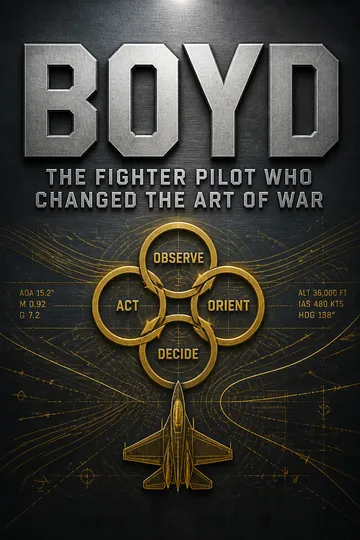
Observe, orient, decide, actA decision cycle associated in the book with Air Force officer John Boyd. A person or organization observes events, interprets them, chooses a response, and acts, then repeats the cycle. Mattis emphasizes moving through this sequence faster than an opponent, while recognizing that sound interpretation and adaptation matter as much as speed.
skip-echelon
Remove duplicate staff layersA staffing technique Mattis used to avoid reproducing the same functions at multiple command levels. Rather than build a large headquarters that duplicates work already done by subordinate units or a higher headquarters, he kept the top staff focused on tasks only it could perform. The method requires confidence in existing teams and clear responsibility.
Infantry Immersion Simulator
Stressful tactical practiceA training environment designed to expose infantry squads to realistic sensory and decision-making pressure. Mattis describes a converted building arranged as a mock Middle Eastern town, using noise, smoke, actors, simulated casualties, and unexpected events. The purpose was to develop judgment, communication, and rapid recognition, including the ability to avoid harming civilians.
Combat Hunter
Train tactical observationA Marine training program described by Mattis that drew on expertise from policing, hunting, coaching, tracking, and military sniping. It taught small-unit leaders to notice details and patterns that might signal danger or unusual activity. Exercises included briefly observing a setting and then recalling what was present or out of place.
FAQ
What's Call Sign Chaos: Learning to Lead about?
- Leadership Journey: The book chronicles Jim Mattis's evolution from a carefree youth to a disciplined leader in the Marine Corps, highlighting his experiences and lessons learned.
- Three Leadership Levels: It is structured into three parts: Direct Leadership, Executive Leadership, and Strategic Leadership, each focusing on different military leadership aspects.
- Real-World Applications: Mattis shares insights on applying military leadership principles in civilian life, emphasizing adaptability, initiative, and team dynamics.
Why should I read Call Sign Chaos: Learning to Lead?
- Unique Perspective: Jim Mattis offers a rare insider's view of military leadership, providing lessons applicable beyond the battlefield to various civilian leadership roles.
- Rich Anecdotes: The book is filled with personal stories and historical references that illustrate key leadership principles, making it both informative and engaging.
- Timeless Lessons: Readers can gain insights into the importance of competence, caring, and conviction in leadership, essential qualities in any field.
What are the key takeaways of Call Sign Chaos: Learning to Lead?
- Competence is Crucial: Mastering the basics of your profession is essential for effective leadership, with continuous improvement in skills and knowledge emphasized.
- Caring for Your Team: Demonstrating genuine concern for team members fosters loyalty and commitment, as Mattis states, “Nobody cares how much you know, until they know how much you care.”
- Decentralized Decision-Making: Empowering subordinates to make decisions fosters initiative and agility, vital in both military and civilian contexts.
What are the best quotes from Call Sign Chaos: Learning to Lead and what do they mean?
- “Politics ends at the water’s edge.”: This underscores the importance of unity and non-partisanship in national defense, suggesting military leaders serve the country regardless of political affiliations.
- “You don’t get to choose when you die, but you do choose how you meet death.”: Reflects the mindset of facing challenges head-on and embracing leadership and combat realities.
- “No better friend, no worse enemy.”: Encapsulates the dual nature of military engagement, emphasizing ethical conduct while being resolute against adversaries.
How does Jim Mattis define effective leadership in Call Sign Chaos: Learning to Lead?
- Competence, Caring, and Conviction: Mattis identifies these qualities as essential for effective leadership, with leaders needing to be skilled, show genuine concern, and have a strong moral compass.
- Adaptability: Effective leaders must adjust strategies based on the situation, crucial in both military operations and civilian leadership.
- Team Selection: Emphasizes selecting team members based on initiative and aggressiveness, contributing to organizational success.
What leadership styles does Jim Mattis discuss in Call Sign Chaos: Learning to Lead?
- Direct Leadership: Involves close engagement with teams, fostering personal relationships and direct communication, as seen in Mattis's early years leading Marines.
- Executive Leadership: Managing larger organizations requires adapting communication and leadership styles to ensure intent is understood across command layers.
- Strategic Leadership: Navigating complex interactions between military and political spheres, balancing operational realities with broader strategic goals.
How does Call Sign Chaos: Learning to Lead address the concept of adaptability?
- Adapting to Change: Mattis discusses how the Marine Corps teaches leaders to adapt, improvise, and overcome challenges, crucial in dynamic environments.
- Learning from Mistakes: Mistakes are viewed as learning opportunities, encouraging leaders to take calculated risks and innovate.
- Historical Context: Historical examples illustrate how adaptability has been key to successful military campaigns, reinforcing the need for strategic pivots.
What role does teamwork play in Call Sign Chaos: Learning to Lead?
- Building Trust: Effective teamwork is built on trust and mutual respect, with leaders fostering an environment where everyone feels valued and empowered.
- Shared Goals: Aligning the team around a common mission ensures everyone understands their role in achieving that mission.
- Collective Responsibility: Successful teams operate with a sense of collective responsibility, where each member is accountable for their contributions to success.
How does Jim Mattis view the relationship between military and civilian leadership in Call Sign Chaos: Learning to Lead?
- Shared Values: Both military and civilian leaders should uphold core values of integrity, service, and commitment to the nation, crucial for effective governance.
- Collaboration: Emphasizes collaboration between military and civilian leaders, particularly in crises, with effective communication and mutual respect essential.
- Political Neutrality: Advocates for a non-partisan approach to military service, emphasizing service to the nation regardless of political affiliations.
What challenges did Mattis face during his military career as described in Call Sign Chaos: Learning to Lead?
- Complex Warfare Environments: Navigated irregular warfare complexities in Iraq and Afghanistan, adapting to rapidly changing conditions and insurgent tactics.
- Political Constraints: Encountered political constraints limiting military options, balancing aggressive strategies with political approval and public support.
- Maintaining Morale: Focused on maintaining troop morale amid prolonged conflict, emphasizing leadership and camaraderie to keep the fighting spirit alive.
How does Call Sign Chaos: Learning to Lead reflect on the importance of history in military leadership?
- Learning from the Past: Highlights the value of studying history to inform current military strategies, providing insights into effective leadership and decision-making.
- Avoiding Past Mistakes: Serves as a cautionary tale about the consequences of ignoring historical lessons, with repeated mistakes leading to strategic failures.
- Contextualizing Current Conflicts: By placing contemporary conflicts within a historical framework, Mattis provides a deeper understanding of complexities involved.
What role do allies play in the strategies discussed in Call Sign Chaos: Learning to Lead?
- Strengthening Coalitions: Strong alliances are essential for successful military operations, with collaborative efforts enhancing operational effectiveness.
- Shared Burden: Discusses the importance of sharing military operations' burden with allies, pooling resources and capabilities for enhanced combat effectiveness.
- Building Trust and Cooperation: Stresses the need for trust and cooperation among allied forces, crucial for achieving common objectives and maintaining stability.
Download PDF
Download EPUB
.epub digital book format is ideal for reading ebooks on phones, tablets, and e-readers.








