

Key Takeaways
Treat genius as a learning practice, not a store of facts
Start as a learner. The book recasts a genius not as someone who already knows everything, but as someone willing to keep learning. That begins with curiosity, confidence, and the willingness to ask for an explanation when something does not make sense. Not understanding on the first attempt is ordinary, not proof of limited ability. Knowledge can be shared: one person may know a skill another has yet to learn.
Ask without shame. The practical shift is to stop treating help as evidence of weakness. Try different approaches, notice which ones help a topic make sense, and stay open to changing methods. The book calls this a “genius mindset,” meaning an orientation toward learning rather than a claim of innate brilliance.
What's valuable here is the separation of identity from current knowledge. A learner who can say “I do not understand this yet” is more likely to seek feedback than one who must protect an image of being naturally smart. That resembles a growth-oriented view of ability, where effort and strategies can improve performance. The book's support for asking questions is especially practical: confusion becomes information about what to clarify. Its language about each person having a personal learning style needs care, however. Different strategies may suit different tasks, but fixed categories of learner are not a reliable substitute for testing what actually improves understanding.
Read faster only when your comprehension keeps pace
Measure before speeding up. The book treats reading as a route into learning because it can support focused attention. Its proposed speed-reading practice starts by estimating a baseline: read several pages, calculate their approximate word count, and divide by the minutes spent. Then follow the line with a finger or pen, gradually increasing pace. It also suggests beginning and ending the pointer a little inside each line to make use of peripheral vision.
Test what stayed. Faster eyes do not automatically mean more learning. The author recommends checking retention with questions about the section, and stresses identifying its main points rather than collecting every detail. The book presents a 300 percent speed increase as an imaginable target, not a result guaranteed by the exercise. The useful measure is therefore speed paired with accurate recall.
The strongest part of this advice is the insistence on measurement and comprehension checks. Those turn reading from a performance display into a feedback loop: speed rises only if the reader can still explain the material. The pointer may help some readers maintain their place, particularly when attention wanders. But peripheral vision is not a magic channel for absorbing whole phrases, and pushing pace can encourage skimming where careful reasoning is needed. Reading a dense argument, a manual, and a familiar article are different tasks. A good reader adjusts speed to the job rather than treating one high words-per-minute score as expertise.
Give new information a personal hook so it has somewhere to stick
Connect it to something memorable. The book argues that information is easier to keep when a learner finds a distinctive feature that makes it meaningful. Its everyday illustration is remembering a new person's name by connecting it to something noticeable about that person. The same idea can be used with a topic: identify a vivid feature, a practical use, or a connection that makes the material stand apart from routine facts.
Choose a workable method. Some learners may take notes, read aloud, read again, or learn by doing. The author recommends trying approaches that fit the subject and the learner rather than assuming one method works everywhere. If a passage is unclear, rereading it is reasonable. The goal is understanding and usable recall, not finishing pages at any cost.
The personal hook is a useful bridge between new material and existing knowledge. Memory is not simply a warehouse; retrieval improves when a learner has meaningful associations to follow. A concrete connection can also reveal whether the idea has been understood or merely recognized on the page. The book is right to allow more than one study tactic, but its “learning style” framing can be misleading if taken to mean that people have fixed visual, auditory, or hands-on identities. A sharper test is task-based: choose the method that makes this particular idea easier to explain, remember, or apply.
Train attention by removing noise and taking deliberate notes
Clear the learning space. The book separates distractions outside the learner, such as television or internet interruptions, from distractions inside the mind, such as wandering thoughts. It suggests setting aside a quiet place, turning off devices, and taking a few breaths before beginning. The aim is not a perfect classroom. It is a setting in which attention has fewer competing demands.
Make attention active. When reading alone does not hold focus, write down the main points. Notes give the learner a task beyond looking at words, and they make it easier to notice gaps in understanding. The book also recommends clearing unfinished concerns from the mind before practice, so the allotted session is not spent repeatedly returning to other tasks.
This advice recognizes that attention is partly shaped by surroundings, not merely by willpower. Removing a phone or closing unrelated tabs reduces the number of decisions competing for control, while note-taking can force active selection of important ideas. That makes the learning space an instrument, not decoration. Still, a quiet room is not always available, and trying to suppress every thought can backfire by making it more salient. A more flexible interpretation is to notice distraction, record urgent tasks for later, and return to the material. The aim is recoverable attention, not a mind that never wanders.
Break a broad ambition into the few component skills it requires
Turn goals into parts. “Learn a sport,” “write a book,” or “cook well” names an outcome, not one indivisible ability. The book asks learners to identify the smaller capacities underneath it. A sport, for instance, can involve running, catching, aiming, and understanding how movement works. Naming the goal precisely helps distinguish useful study from interesting but irrelevant information.
Research to begin practicing. The author suggests skimming several focused books or other resources and looking for skills that recur across them. In the pastry-chef example, targeted pastry resources make more sense than broad cooking material. The point is to spend enough time finding the main components, then move from reading about a skill to practicing it. The book's five-part process moves from defining the goal through skill analysis and research to preparing a practice setting and committing time.
This is a compact form of task analysis, the process of decomposing a complex performance into teachable parts. It helps prevent a common novice trap: consuming broad information without discovering what competent performance actually requires. Looking for repeated themes across sources can be an efficient first map, though it is not proof that the list is complete. Some abilities depend on context, sequencing, or judgment that a book cannot reveal. Feedback from someone who performs the skill, or from trying the skill directly, can expose missing components that resource-skimming overlooks.
Use twenty hours to test commitment, not promise mastery
Separate competence from world-class performance. The book challenges readers who hear that mastery takes thousands of hours and conclude that learning is out of reach. It distinguishes aiming to become the best in the world from learning enough to use and enjoy a skill. Its proposed “20 hour commitment” is a planned block of practice that tests whether the learner is serious and creates a defined starting period.
Expect improvement, not magic. The book says that twenty hours can make a person substantially better than at the beginning, while acknowledging that this will not make everyone an expert. It uses the 10,000-hour rule as a contrast for high-level achievement, not as a requirement for every useful skill. The practical takeaway is to set a limited commitment and assess progress before deciding whether to continue.
A bounded commitment lowers the psychological cost of beginning. It replaces the vague demand to become good with a measurable question: is this skill worth a set amount of focused effort? That can be more motivating than comparing a beginner with elite performers. The important qualification is that hours alone do not determine competence. Twenty hours of repetition without feedback may produce less progress than a shorter period of targeted practice. The book's threshold is best treated as a motivational experiment, not a universal learning law or guarantee. Decide in advance what observable improvement would make the investment worthwhile.
Protect a small, repeatable practice block from distractions
Fit learning into real life. The book argues that learners do not need an empty calendar before they can start. Ten focused minutes can be used if that is what the day allows; an hour can be used if it is available. In its twenty-hour plan, forty minutes a day for about a month is one possible schedule, while shorter sessions can be combined when a single block is impractical.
Make practice easy to begin. Choose a place with fewer distractions and keep the materials needed for the skill within reach. A learner who wants to draw, for example, should not make every session begin with searching for tools. The author cautions against multitasking during the early stages, when the basic steps are still demanding. A repeatable time and ready workspace reduce the effort required to start.
The practical insight is that consistency can be designed. A regular time, an obvious workspace, and prepared materials reduce friction before motivation has to do any work. Short sessions can also fit the rhythms of adult life better than waiting for a mythical free afternoon. Yet session length should match the task: a complicated activity may need enough uninterrupted time to reach meaningful practice, while brief reviews may suit other goals. The book's main benefit is permission to start with available time, paired with a reminder that focused practice is different from merely having the materials nearby.
Practice near bedtime when it fits, especially for physical skills
Use sleep as a possible ally. The book says motor skills, meaning abilities carried out through physical movement, may be retained better when practiced within roughly two hours of sleep. It suggests trying a new physical action in the evening and returning to it in the morning to notice any change. The example can be simple, such as practicing a drawing movement or a typing pattern.
Keep the claim in proportion. The author also suggests that mental learning can benefit from practice near sleep, while acknowledging that schedules differ and daytime practice is still useful. The practical advice is to experiment with timing when convenient, not to postpone learning until bedtime. The book's exact two-hour window and its promise of a noticeable difference are stronger than the evidence described in the text, which does not identify a specific study.
The general connection between sleep and memory consolidation makes this a reasonable practice to test, particularly for movements that improve through repetition. Sleep can support the stabilization of newly learned material, so an evening session followed by rest has a plausible rationale. The precise two-hour window is a different claim, and the book offers no named study or details that would justify treating it as a guarantee. People also vary in schedules and sleep quality. A useful experiment is to compare performance after practice and rest with the learner's own usual progress, without interpreting one good morning as proof of a fixed rule.
Keep a practice log so improvement becomes visible
Record time and progress. The book's “Learning Hour” turns a practice session into something concrete: prepare the space, clear distractions, set a timer, and keep a notebook. The notebook records how much time was spent and what the learner managed to do. That record counters the feeling that a skill has been taking “days” when the actual practice time may be much smaller.
Compare the beginning with the present. At the end of a month, the author recommends revisiting the first entry and comparing it with current ability. That contrast can reveal progress that is hard to notice from one day to the next. The record is also useful when frustration arrives: it shows whether practice is happening, what has improved, and where the next effort might go.
A log does more than encourage persistence. It separates perceived effort from actual practice and gives learners evidence with which to adjust their plan. This is a basic form of self-monitoring, useful because memory for gradual change is poor: yesterday's difficulty can feel much like today's. The record becomes more informative when it captures performance, not just minutes. For a physical skill, that could mean noting accuracy or consistency; for a mental skill, it might be explaining a concept without notes. Time is an input, while observable performance is closer to the outcome the learner cares about.
Analysis
This book is best understood as a practical beginner's manual, not a scientific account of learning. Its central move is to replace the image of genius as innate possession with a sequence of learnable behaviors: identify a goal, find its component skills, arrange a focused setting, practice, and review progress. That sequence gives the reader more value than the title's promise of becoming an expert. It converts an intimidating ambition into a first experiment.
The book is most persuasive when it makes learning concrete. A pointer under a line, a notebook beside a timer, a prepared workspace, and a limited practice commitment are small interventions that make attention and effort observable. The emphasis on asking for help also challenges the shame that can prevent learners from discovering what they do not understand. Together, these ideas make the book's implicit model less about genius than about reducing the distance between intention and practice.
Its weakest moments arise when motivational advice sounds like settled evidence. Speed reading is presented with ambitious gains, the idea of individual learning styles is treated broadly, and sleep timing is given a precise window without identifying supporting studies. The text also invokes the 10,000-hour rule and a twenty-hour commitment as if each provides a clean benchmark, though neither amount alone describes the quality of practice, feedback, or the skill itself. Readers should treat these numbers as prompts for planning, not laws.
A stronger application keeps the book's structure and adds evaluation. Define what being able to do the skill would look like, practice a component, and check whether performance improves. If it does not, change the method, seek feedback, or reconsider the component being trained. That approach preserves the book's most useful promise: learning is not reserved for people who arrive already brilliant. It is a process that can be made visible, adjusted, and repeated.
Review Summary
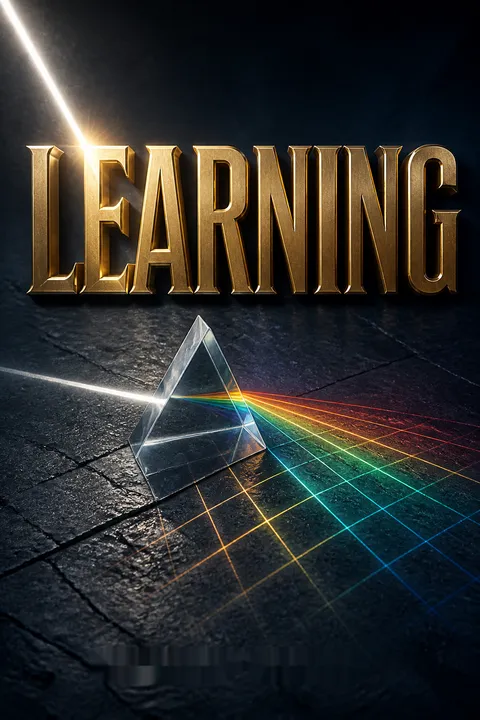
Learning receives mixed reviews, with an average rating of 3.01/5. Some praise its concise format and motivational aspects, while others criticize its lack of depth and new information. Positive reviewers find the speed reading techniques and learning strategies helpful. Critics argue the book is too basic, repetitive, and lacks expert advice. Several reviewers note the book's brevity, with some appreciating its quick read and others feeling it's too short to provide substantial value. Overall, opinions vary widely on the book's usefulness for improving learning skills.
People Also Read








Glossary
genius mindset
A learner's orientationThe book's term for approaching ability as the capacity to learn rather than as a fixed store of existing knowledge. It involves confidence, willingness to experiment with learning methods, persistence when something is unclear, and asking others for explanations without treating help as evidence of low intelligence.
The 5 Steps for Success
A skill-learning sequenceThe book's process for turning a learning goal into practice. It asks the learner to define a goal, break it into component skills, research which skills matter, prepare a suitable practice environment, and commit a defined amount of time. Its purpose is to move from a broad wish toward focused, practical work.
20 hour commitment
A bounded practice pledgeThe book's proposed commitment to spend twenty hours practicing a chosen skill before judging the effort. The time limit is meant to make the goal feel manageable and test whether the learner is serious. The book presents it as a route to noticeable improvement, not a promise of expertise.
10,000 hour rule
A benchmark for elite performanceThe book uses this familiar phrase to describe the thousands of hours it associates with reaching exceptional or champion-level performance. It argues that such a benchmark should not deter someone who only wants to acquire a useful skill. The text does not provide a named study or detailed evidence for the figure.
The Learning Hour
A structured practice sessionThe book's model for organizing a learning session. It involves preparing a dedicated area, removing distractions, setting a timer, recording practice and progress in a notebook, and reviewing the change over time. Despite the name, the session does not have to last exactly one hour.
About the Author
Other books by Harvey Segler
Download PDF
Download EPUB
.epub digital book format is ideal for reading ebooks on phones, tablets, and e-readers.








