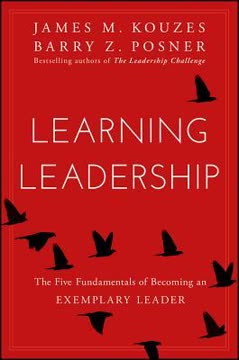
Key Takeaways
1. Leaders are Made, Not Born: Debunking Myths
Leadership is not some mystical quality that only a few people have and everyone else doesn't.
Dispelling myths. Many misconceptions about leadership prevent individuals from realizing their full potential. The idea that leaders are "born" with special talents, positions, or innate strengths is a pervasive myth that discourages many from even trying to lead. This perspective creates invisible barriers, suggesting leadership is reserved for a select few.
Leadership is learnable. Extensive research over decades consistently shows that leadership is not a gene or a trait, but an observable, learnable set of skills and abilities. It's distributed across all demographics and professions. The more productive question isn't "Are leaders born or made?" but "Can you become a better leader than you are today?" The answer is a resounding yes.
Overcoming limiting beliefs. To become an exemplary leader, you must first overcome these five common myths:
- The Talent Myth: Talent is overrated; leadership is a skill, not an innate gift.
- The Position Myth: Leadership is about action, not a title or rank.
- The Strengths Myth: Growth requires addressing weaknesses, not just building on strengths.
- The Self-Reliance Myth: No one achieves extraordinary things alone; leadership is a team sport.
- The It-Comes-Naturally Myth: Effortless performance comes from deliberate, hard work, not natural ease.
2. Leadership Makes a Measurable Difference
The best leaders bring out more than three times the amount of talent, energy, and motivation from their people compared with their counterparts at the other end of the spectrum.
Profound impact. Leadership profoundly impacts individual engagement and organizational productivity. Studies reveal that people utilize significantly more of their talents (an average of 95%) when working with their best leaders, compared to a mere 31% with their worst. This stark contrast highlights the tangible difference leadership quality makes.
Engagement driver. A leader's behavior is the single most significant factor influencing employee engagement. Nearly 37% of the variance in engagement levels is explained by how frequently leaders demonstrate exemplary leadership practices, far outweighing demographic factors like age, gender, or industry. This impact is consistent across diverse cultures and countries.
Universal principles. While leaders themselves are unique individuals, the core behaviors that define exemplary leadership are remarkably consistent globally. Regardless of personal style or cultural background, effective leaders consistently engage in a universal set of practices that foster commitment, satisfaction, and high performance in their constituents.
3. You Already Lead, Just Not Frequently Enough
The inescapable fact is not that people aren't leading (or capable of leadership) but that people are not leading frequently enough!
Everyone has a story. Our research, based on thousands of "Personal-Best Leadership Experiences" from diverse individuals worldwide, reveals two crucial insights: everyone has a story of leading and making extraordinary things happen, and the actions taken in these stories are remarkably similar. This underscores that leadership potential is widespread.
The Five Practices of Exemplary Leadership®: These common patterns of action are grouped into a universal framework:
- Model the Way: Clarify values and set the example.
- Inspire a Shared Vision: Envision the future and enlist others.
- Challenge the Process: Search for opportunities and experiment.
- Enable Others to Act: Foster collaboration and strengthen others.
- Encourage the Heart: Recognize contributions and celebrate victories.
Frequency matters. While nearly 100% of people demonstrate some leadership behaviors, the key differentiator for effectiveness is frequency. Leaders who are perceived as most effective engage in these practices significantly more often than their less effective counterparts. The challenge isn't acquiring new capabilities, but consistently applying the ones you already possess.
4. Believe in Yourself: The Foundation of Leadership
The best education is about bringing out, sometimes even liberating, what is already there.
Inner conviction. Before you can learn to lead, you must genuinely believe in your capacity to do so. This self-belief is the essential first step, influencing your motivation, effort, and persistence. Like the Cherokee parable of two wolves, the one you feed—belief or doubt—determines who you become.
The mirror test. When you look in the mirror, do you see a leader, someone with the potential to improve? Limiting beliefs, often narratives we create about ourselves, can act as invisible barriers. Recognizing and challenging these self-imposed limitations, as Jane Blake did, is crucial for unlocking your leadership potential.
Self-efficacy. Research by Albert Bandura demonstrates that self-efficacy—the belief in one's capacity to perform specific actions—directly impacts performance. Individuals who believe decision-making is a learnable skill set higher goals and perform better than those who believe it's a fixed aptitude. Don't let anyone tell you that you can't lead; your belief in your ability is paramount.
5. Learning is the Master Skill for Exemplary Leaders
The best leaders are the best learners.
Continuous improvement. Just as no one masters a new game on the first day, leadership requires continuous learning. Exemplary leaders are perpetual students, constantly pushing themselves beyond their comfort zones to acquire new skills and refine existing ones. If you're not falling, you're not learning.
Learning styles. While there's no single "best" learning style, what truly matters is the extent to which individuals engage in their preferred learning tactics. Leaders who are more actively involved in their learning—whether through action, reflection, reading, or seeking others' input—demonstrate more frequent exemplary leadership behaviors.
Growth mindset. Cultivating a "growth mindset," as defined by Carol Dweck, is fundamental. This belief that your basic qualities can be developed through effort contrasts with a "fixed mindset," which assumes abilities are static. A growth mindset fosters a willingness to embrace challenges, persist through setbacks, and view feedback as an opportunity for improvement.
6. Authentic Leadership Emerges from Within
Authentic leadership flows from the inside out.
The self as instrument. The primary instrument for leaders is the self. Mastery of leadership stems from self-mastery, making leadership development fundamentally self-development. People want to know "Who are you?" before they willingly choose to follow, seeking to understand your genuine self, values, and what truly compels you.
Three periods of self-development:
- Looking Out: Initially, leaders learn by observing and imitating others, absorbing external knowledge and techniques. This is essential for mastering fundamentals.
- Looking In: A period of introspection follows, where leaders question if borrowed styles truly fit. This internal search uncovers personal motivations, values, and unique strengths.
- Finding Your True Voice: The culmination is merging external lessons with internal discoveries, expressing leadership authentically. This is when your leadership becomes truly your own, not an act.
Liberating potential. You cannot lead effectively from someone else's experience or voice. The quest to become a leader is an inner search to liberate the capacity already within you. This self-examination provides the awareness needed to lead yourself and others with credibility and conviction.
7. Clarify Your Values and Aspire to Excel
To become an exemplary leader, you have to discover what is important to you, what you care about, and what you value.
Inner compass. Exemplary leaders possess unwavering commitment to a clear set of values and principles. Clarifying these core beliefs provides an inner compass, guiding decisions and actions, especially during challenging times. Without this clarity, leaders are perceived as inconsistent and unreliable.
Increased engagement. People who are clear about their personal values exhibit higher levels of commitment, willingness to work hard, and reduced work-related stress. This clarity not only boosts a leader's own engagement but also significantly impacts team members' spirit, pride, and commitment to organizational success.
Intrinsic motivation. Values-based leadership is intrinsically motivated, focusing on making a difference and serving a mission rather than external rewards like promotions or money. Studies show that leaders driven by internal motives outperform those with instrumental rationales, highlighting that why you lead profoundly influences how well you lead.
8. Envision a Shared Future Beyond Yourself
Leadership is fundamentally a relationship between those who aspire to lead and those who would choose to follow, and if no one is following you, then there's no relationship there.
Forward-looking imperative. People consistently rank "forward-looking" as a top admired leadership quality, second only to honesty. Leaders must think beyond immediate deadlines, envisioning what the future will be like in 5, 10, or 20 years. This proactive, rather than reactive, mindset is crucial for driving progress and finding meaning.
Mindfulness in the present. To effectively envision the future, leaders must first be mindful in the present. This means stopping distractions, paying attention to what's happening now, and observing the familiar in novel ways. Innovation often stems from keen observation of the human condition and a restless dissatisfaction with the status quo.
Shared aspirations. Leadership is not solely about your vision; it's about a shared vision. To enlist others, you must understand their hopes, dreams, needs, and interests, finding common ground between your aspirations and theirs. People follow when they see themselves in the future you paint, recognizing a larger purpose that transcends individual goals.
9. Challenge is Your Crucible for Growth
Challenge is the crucible for greatness.
Stepping out of comfort. To develop as a leader, you must step outside your comfort zone and embrace challenges. Every personal-best leadership experience involves change, adversity, and venturing into uncharted territory. These moments of stretching your limits are not just the context for leadership, but also for profound personal learning and growth.
Curiosity and experimentation. Exemplary leaders are inherently curious, asking questions and taking initiative to try new things. Like Don Bennett starting the Amputee Soccer League, they "kick the ball around," experimenting with novel ideas. This iterative process of "try, fail, learn, repeat" is essential, as mistakes are invaluable learning opportunities.
Grit and hardiness. Growth demands persistence. "Grit"—passion and perseverance for long-term goals—and "hardiness"—a positive attitude toward stress—are crucial for navigating inevitable setbacks. Resilient leaders "bounce forward," learning from failures and maintaining an optimistic outlook, transforming adversity into opportunities for renewal.
10. Engage Support and Build Trusting Connections
The best performers in all fields know that they can't make extraordinary things happen alone.
Interdependence for excellence. No one achieves greatness alone. From elite athletes to successful executives, top performers rely on a network of support, advice, and coaching. Organizational leaders, too, need to openly acknowledge and seek help to learn, grow, and excel, setting a vital example for aspiring leaders.
Ask for help and advice. Leaders must proactively ask for help and advice, not just to get tasks done, but to learn. People often underestimate others' willingness to assist, yet seeking advice actually increases perceptions of competence. Building a "personal board of directors" with diverse expertise can provide invaluable counsel and support.
Quality connections and empathy. Strong, high-quality social connections are vital for learning, well-being, and effectiveness. Empathy—the ability to understand and share others' feelings—is essential for building these meaningful relationships, especially in diverse environments. Leaders must be the first to reach out, listen attentively, and foster trust.
11. Deliberate Practice Makes Leadership Second Nature
Not all practice makes perfect. You need a particular kind of practice—deliberate practice—to develop expertise.
Beyond casual effort. Becoming an exemplary leader requires more than just showing up; it demands deliberate practice. This isn't merely repeating an activity, but engaging in specifically designed, intentional efforts to improve performance, often with a coach, intense concentration, and immediate feedback.
Key elements of deliberate practice:
- Purposeful Stretch Goals: Aim to improve specific skills, pushing beyond current capabilities.
- Repetition with Focus: Practice consistently, paying close attention to methodology, not just the outcome.
- Immediate Feedback: Seek constructive input from coaches or peers to identify areas for improvement.
- Intense Concentration: Practice sessions are mentally demanding, requiring full focus.
- Time Commitment: Mastery takes years of consistent effort, not quick fixes.
Address weaknesses. While building on strengths is important, true expertise requires addressing weaknesses. Leaders like Michael Jordan actively worked on their less developed skills to become truly exceptional. Deliberate practice allows you to turn your workplace into a "practice field," integrating skill development into your daily routines.
12. Make Learning Leadership a Daily Habit
Greatness is a habit, not a birthright.
Lifelong commitment. Exemplary leaders understand that learning leadership is a continuous, lifelong endeavor. It's not a one-time event but a daily habit, integrated into their routine like any other essential priority. This consistent commitment to growth is what differentiates the best.
The power of habits. Habits are the invisible architecture of our lives, shaping 40% of our daily behavior. To become a better leader, you must intentionally cultivate positive learning habits. This involves a three-step loop: a cue (trigger), a routine (the action), and a reward (the learning/progress).
Active questioning for progress. Executive coach Marshall Goldsmith advocates for "active questions" as a powerful daily habit. Instead of passive questions like "How happy were you today?", active questions like "Did I do my best to be happy today?" prompt reflection on personal effort and commitment. This daily self-assessment, even in small steps, fuels motivation and sustained progress.
Last updated:
Review Summary
Learning Leadership receives positive reviews with a 3.94 rating. Readers appreciate its clear breakdown of leadership concepts and practical approach. The book helps readers recognize their leadership abilities while providing guidance for improvement. Each chapter includes useful summaries and reflection questions supporting personal growth. Reviewers found the straightforward lessons, clear examples, and end-of-chapter tasks valuable for developing leadership skills. It's recommended as an essential primer for aspiring leaders.