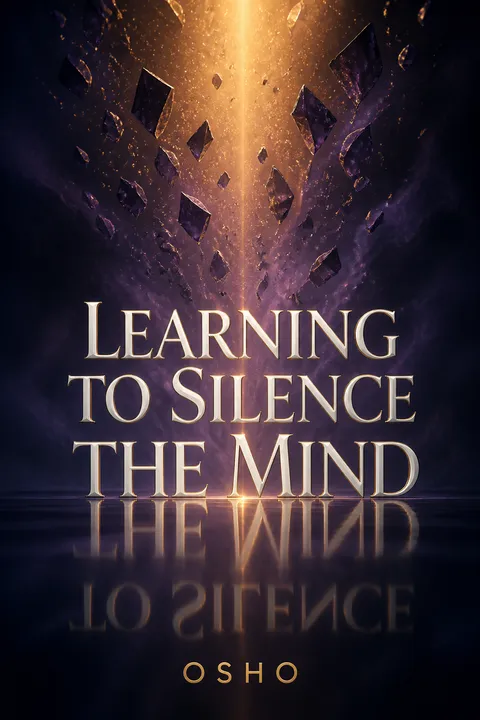


Key Takeaways
Stop aiming attention at an object; notice the one who notices
Attention has different modes. Concentration fixes the mind on one object, while contemplation moves among ideas about a subject. Osho uses dhyana for something different: awareness that does not aim at an object, but recognizes the experiencing self. A story about a king who endured surgery while absorbed in a religious text illustrates the distinction. Osho calls this concentration, not meditation, because attention was narrowed rather than opened.
Focus is not the whole. Concentration can be useful for solving problems, but it is not the same as noticing thoughts, sensations, and attention itself. Meditation, in this account, is not another mental task to perform. It is a shift from what is being noticed to the one who notices.
The distinction is useful because intense focus can look like awareness while excluding everything beyond its target. It gives readers a practical question: is attention becoming narrower, or is there awareness of the broader field? The surgery story makes the contrast memorable, but it cannot establish that concentration reliably prevents pain or that the king’s experience was meditation. Its value is illustrative, not clinical. The deeper point is about different modes of attention, not a contest between focused work and contemplative practice.
Let thought settle by itself; meditation begins when effort stops
Stop stirring the water. Osho describes meditation as resting in alert stillness, not suppressing thought or forcing the mind to become blank. When a stream turns muddy, jumping in to clear it only stirs it further. Sitting nearby and waiting allows the sediment to settle. He applies the image to thoughts: notice them without trying to correct, chase, or remove them.
Stillness can travel. The Japanese term zazen means sitting meditation, but the book stresses that meditation is not limited to a formal posture or room. The first task is to discover quiet being; the next is to remain centered while doing ordinary things. Work can continue, he argues, without awareness being swallowed by it.
The stream image offers a precise alternative to treating every thought as a problem requiring intervention. It also captures a subtle skill: allowing mental activity without either obeying it or fighting it. This can be useful even for readers who reject the book’s spiritual claims. Still, quietness should not become a new standard against which a person judges every restless session. The method points toward less struggle, not guaranteed calm on demand.
Use the gaps between thoughts as doorways, not battles to win
Notice the background. Osho describes the mind as continuous inner speech, but says silence is present in the intervals between words and thoughts. Attention usually follows the words, as the eye follows a figure and ignores its background. His suggested shift is simple: sit easily and notice the pauses without straining to make them longer.
A mantra has a limit. Repeating a sound can make it familiar enough to lose its pull, creating an opportunity to notice silence. But repetition can also become a lullaby. Osho warns that if the practice makes someone drowsy, the result may be sleep rather than alertness; walking or changing posture can help restore wakefulness. The aim is not a perfectly silent mind, but awareness that does not get lost in chatter.
The figure-and-background idea makes attention itself an object of practice: what changes when silence, rather than words, becomes prominent? That is a more workable inquiry than trying to eliminate thought. The warning about drowsiness is equally valuable because quiet and awareness are not identical. The book’s description of mantras as a route through boredom is one possible interpretation, not the only reason people chant. The practical test remains whether repetition deepens alertness or simply lulls the practitioner.
Treat the mind as learned chatter, not as your deepest self
The mind has a history. Osho presents it as a storehouse of language, habits, and social expectations gathered from family, school, and culture. Because those patterns often feel familiar, they can be mistaken for the self. He encourages noticing repeated reactions and trying unfamiliar responses, even when the old routine seems more efficient.
Ambition can keep postponing life. In a story, Alexander tells the mystic Diogenes that he plans to conquer the world and rest afterward. Diogenes points out that he could rest now. The exchange exposes a pattern: the mind makes present life a staging ground for a future achievement. Osho’s advice is to examine the motive beneath a familiar urge, rather than automatically treating it as a command.
This account turns self-observation toward the origins of habit: a reaction may be learned and useful without being a complete description of the person. The Diogenes story sharply reveals how achievement can become an endless postponement of satisfaction. Yet novelty is not automatically wiser than routine, and efficiency is not inherently an enemy of awareness. The more durable lesson is to notice when a familiar script is operating, then decide whether it still serves the situation.
Use movement to clear the way, then practice stillness
Some people need an active beginning. Osho argues that modern life leaves many people physically inactive but mentally overstimulated, making immediate silent sitting difficult. His answer is catharsis: expressive movement intended to release accumulated tension before a quieter period of watching. Dynamic Meditation and Kundalini Meditation are named examples of these active methods.
Preparation is not the destination. The techniques are presented as ways to reduce obstacles, not as meditation itself. The book describes a broad sequence: first move or express energy, then become still and observe. Osho contrasts this with older methods built around sitting, which he believes suit a different temperament and social context. The practical idea is to choose an entry point that helps a person become more alert, rather than treating one posture as universally suitable.
This is a flexible account of practice: stillness need not be the first step for everyone, and movement can provide a transition into attention. It also separates a technique from the state it is meant to prepare for, reducing the temptation to confuse exertion with insight. The book’s broad claims about modern people and accumulated energy should be treated as its rationale, not as a diagnosis of every restless person. Active methods may appeal to some, while others may find them overwhelming or unnecessary.
Meet bodily needs without shame before asking silence to take root
Do not turn denial into spirituality. Osho argues that rejected needs can keep demanding attention, even during meditation. In a question about intense sexual energy, he interprets the struggle as connected to shame and repression, and recommends accepting natural desire rather than declaring the body an enemy. He also links food and affection, suggesting that unmet emotional needs may shape eating habits.
The body belongs in the picture. This follows his larger claim that body and inner life are connected, not rival forces. The book’s practical warning is against using fasting, celibacy, or other forms of restraint to mistake dullness for awareness. Its advice is to notice what is actually happening in the body and respond honestly, rather than forcing a spiritual ideal onto an unmet need.
The section’s strongest contribution is its refusal to equate repression with self-mastery. That can help readers ask whether a practice is creating openness or merely disguising conflict. The explanation of sexual energy and eating, however, is a particular interpretation, not a universal account of desire or appetite. Bodily signals deserve attention, but they do not always explain themselves. A careful reader can retain the anti-shame principle without assuming that every intense feeling points to one unmet need.
Choose lasting inner fulfillment over the brief highs of pleasure and status
Three experiences are distinguished. Osho separates physical pleasure, such as sexual pleasure, from happiness tied to ego rewards like wealth, fame, or office. Both can be real, he says, yet temporary. He calls bliss a different condition: a sense of unity that appears when the separate, striving self loosens its grip.
Success may reveal what it cannot provide. The book argues that achieving a long-sought goal can expose disappointment rather than settle it. Buddha and Mahavira are presented as examples of people who left privileged lives to seek something inward. Osho’s point is not that pleasure or material success is evil, but that neither should be mistaken for a final answer to the question of fulfillment.
The distinction helps explain why an achievement can satisfy a desire without resolving the deeper hunger that organized it. It also prevents a common confusion: a pleasurable or triumphant moment is not necessarily the same as a settled sense of well-being. The argument becomes less convincing when it treats pleasure as shallow by nature or assumes that renunciation proves a person has seen through success. The useful question is not whether pleasure is inferior, but whether it is being asked to do more than it can.
Practice awareness without making other people’s opinions your identity
Self-consciousness can mean two things. Osho distinguishes awareness from anxious preoccupation with how others judge the self. In the second state, praise props up identity and criticism threatens it. In awareness, attention stays with what is happening, while other people’s approval or disapproval is not treated as a verdict on one’s existence.
Notice the pull of approval. The book uses the contrast between a politician who depends on votes and a meditator who does not need an audience to confirm a sense of self. Its recommendation is not to become indifferent to every person, but to observe how quickly identity can shift with social feedback. Awareness, in this account, offers steadiness across both praise and blame.
This distinction gives a useful name to two very different experiences that everyday language often collapses: being aware of oneself and being preoccupied with how one appears. The second can turn social life into a constant referendum. Still, other people’s responses sometimes contain important information, and not all dependence is pathological. The more balanced application is to listen to feedback without letting it become the sole measure of personal worth.
Unite worldly vitality and inner stillness instead of choosing sides
Body and spirit are not enemies. Osho rejects the idea that material life must be abandoned for spiritual life. He argues that inner steadiness can improve how a person works and relates, while material well-being need not prevent inward inquiry. He imagines a whole person able to enjoy ordinary life and remain inwardly attentive.
Work need not be renounced. Kabir, a weaver in the book’s account, continues weaving after becoming a mystic, treating the work as meaningful rather than as an obstacle. Osho also tells of a hermit whose simple life expands into caring for a cat, then a cow, a farm, and a family. The point is that changing location does not automatically change the mind. Meditation belongs in life, not only outside it.
The integration is more compelling than either pole alone: inward practice need not require contempt for comfort, work, or the body. The story of the expanding hermit’s responsibilities is a comic reminder that withdrawal can accumulate its own attachments. Osho’s East-West account sometimes simplifies large, varied societies into opposing types, but the practical proposal is broader and more useful: material competence and inward reflection can support each other rather than compete.
Let unusual experiences pass without mistaking them for meditation
A vivid experience is not proof. Osho describes a meditator who felt a stick strike his head although no one was present. He interprets it as imagination, warning that inner images and sensations can feel convincing without confirming an external event. His instruction is to notice the experience without building a story around it or treating it as a spiritual achievement.
Do not chase the quiet. The book also answers a reader whose earlier peaceful states have given way to racing thoughts. Osho says that wanting a previous experience back can create strain. Instead, allow thoughts to continue and watch them without clinging to calm when it appears. Meditation is the witnessing, not the particular sensation, image, or mood that may accompany it.
This counsel protects against turning intensity into authority: an experience can be meaningful to the person having it without proving the interpretation attached to it. It also addresses a subtle trap in contemplative practice, where the memory of calm becomes a demand that blocks attention to the present. The claim that unusual sensations are imagination should not be used to dismiss persistent or distressing symptoms. The sounder principle is to distinguish observation from explanation.
Analysis
This book is best read as an experiential philosophy assembled from talks and question-and-answer sessions, not as a systematic manual or a scientific account of meditation. Its central move is a change in identity: thoughts, ambitions, and sensations are events to notice, while awareness is the capacity that notices them. From that premise follow its recurring instructions: do not force silence, do not confuse focus with meditation, and do not assume that escaping ordinary life will quiet the mind.
The most coherent practical thread is the balance between preparation and non-striving. The book says meditation itself cannot be manufactured, yet techniques may help remove obstacles. Active movement can precede sitting; attention can observe rather than suppress thought; ordinary activity can continue without defining the whole self. This yields a useful distinction between practice as support and practice as achievement. The distinction also guards against turning a peaceful state into a trophy to pursue.
The text’s confidence exceeds its evidence when it treats spiritual interpretations as settled explanations. Its anecdotes illustrate ideas vividly but do not establish claims about surgery, physiology, psychological treatment, or the effects of poverty and affluence. Its portraits of East and West are especially sweeping, and its descriptions of the mind as merely mechanical sit uneasily beside its claims for human awareness. Readers can preserve the experiential invitation without accepting every historical or biological generalization.
A grounded reading therefore treats meditation as a discipline of noticing, not a promise of permanent bliss or a substitute for addressing practical difficulties. The book is strongest when it asks whether a person is observing experience or being driven by it, and weakest when it turns that distinction into a universal theory of society, health, or consciousness. Its memorable contribution is a way to approach inner life with less force and more curiosity.
Review Summary
Readers generally praise Learning to Silence the Mind for its thought-provoking insights on meditation and mindfulness. Many find Osho's unconventional approach refreshing and enlightening, appreciating his emphasis on self-awareness and inner peace. The book is lauded for its clear explanations and practical advice. However, some critics find the content repetitive or disagree with Osho's views on religion and society. Overall, most readers recommend the book as a valuable resource for those seeking spiritual growth and mental clarity.
People Also Read





Glossary
dhyana
objectless meditative awarenessA Sanskrit term that Osho uses for meditation understood not as concentrating on or contemplating an object, but as being in a state of awareness. He distinguishes it from ordinary English uses of meditation that imply thinking about something. In his account, dhyana is recognized rather than achieved through effort.
zazen
just-sitting meditationA Japanese term for sitting meditation, described in the book as sitting without deliberately doing anything with the body or mind. Osho uses it to illustrate allowing thoughts to settle without interference. He also argues that meditation is not restricted to a posture or formal sitting period.
no-mind
awareness beyond thoughtOsho’s term for a condition in which a person is not caught in the mind’s continual verbal thought. It does not mean dullness, forced blankness, or unconsciousness. He describes it as alert silence, accessible when thoughts are observed without being suppressed or followed.
witnessing
observing without identificationThe practice of noticing thoughts, feelings, bodily activity, or external events without treating them as the whole self or immediately reacting to them. Osho presents witnessing as the central movement of meditation. It is meant to remain alert and open, rather than becoming detached through repression or indifference.
catharsis
expressive release before stillnessIn Osho’s meditation approach, catharsis means releasing accumulated energy or emotional tension through active expression before sitting quietly. He presents movement-based methods as preparation for stillness, especially for people who find immediate silent sitting difficult. Catharsis is a preparatory process, not meditation itself.
OSHO Active Meditations
movement-led meditation methodsA group of meditation methods associated with Osho that combine active stages, often involving movement or expression, with periods of silence and observation. The book names Dynamic Meditation and Kundalini Meditation as examples. Their stated purpose is to prepare practitioners for stillness, not to replace awareness with activity.
Zorba the Buddha
worldly joy with inner stillnessOsho’s image of a person who combines engagement with ordinary, material life and the inward quiet associated with meditation. Zorba represents enjoyment of earthly life, while Buddha represents contemplative awareness. The phrase expresses his rejection of a strict choice between material vitality and spiritual practice.
Osho Nadabrahma Meditation
humming and witnessing practiceA one-hour meditation described in the appendix, organized into humming, slow hand movements, and a final period of stillness. The instructions invite the practitioner to feel the vibration of humming, then observe rather than become absorbed in it. Osho cautions that chanting without awareness can become soothing or sleep-inducing rather than meditative.
materialspiritual
matter and spirit as oneOsho’s combined word for his view that material and spiritual life are not separate or antagonistic realities. He describes them as visible and invisible dimensions of one existence, comparable to body and inner life. The term expresses a holistic position that rejects both materialism that dismisses consciousness and spirituality that dismisses the body.
FAQ
What's "Learning to Silence the Mind: Wellness Through Meditation" about?
- Exploration of Meditation: The book delves into the nature of meditation, emphasizing it as a state of clarity and awareness beyond the mind.
- Mind and Meditation: It contrasts the mind's constant chatter with the silence of meditation, suggesting that meditation is a natural state of being.
- Techniques and Practices: Osho introduces various meditation techniques, including dynamic and active meditations, to help modern individuals achieve inner silence.
- Integration of East and West: The book aims to bridge Eastern spiritual practices with Western psychological understanding, offering a holistic approach to wellness.
Why should I read "Learning to Silence the Mind: Wellness Through Meditation"?
- Understanding Meditation: It provides a deep understanding of what meditation truly is and how it differs from common misconceptions.
- Practical Techniques: The book offers practical meditation techniques suitable for modern life, helping readers manage stress and find inner peace.
- Holistic Approach: Osho combines spiritual insights with psychological understanding, making it relevant for both Eastern and Western audiences.
- Personal Growth: Reading this book can lead to personal transformation by encouraging self-awareness and a deeper connection with one's inner self.
What are the key takeaways of "Learning to Silence the Mind: Wellness Through Meditation"?
- Meditation as Natural State: Meditation is not an activity but a natural state of being that can be realized by silencing the mind.
- Role of Techniques: Techniques are tools to remove obstacles to meditation, not meditation itself.
- Mind's Chatter: The mind is a constant chatterbox, and meditation helps transcend this noise to achieve clarity.
- Integration of Body and Soul: Healing the split between body and soul is essential for achieving true wellness and meditation.
What is Osho's definition of meditation in "Learning to Silence the Mind"?
- State of Clarity: Meditation is described as a state of absolute clarity and awareness, beyond the mind's confusion.
- Not a Technique: It is not something that can be achieved through techniques; rather, it is a natural state of being.
- Silence and Awareness: Meditation involves silence and awareness, where one becomes a witness to their thoughts without interference.
- Beyond Mind: It begins where the mind ends, allowing one to experience their true nature.
How does Osho suggest overcoming the mind's chatter in "Learning to Silence the Mind"?
- Witnessing Thoughts: Osho suggests becoming a witness to your thoughts, observing them without interference or judgment.
- Dynamic Meditations: He introduces active meditation techniques that involve physical activity to release pent-up energy and quiet the mind.
- Relaxed Awareness: Emphasizes relaxed awareness, where one is alert but not actively trying to control or suppress thoughts.
- Patience and Practice: Encourages patience and consistent practice, as the mind's chatter will gradually diminish with regular meditation.
What are Osho's Active Meditations, and how do they help in "Learning to Silence the Mind"?
- Dynamic Techniques: Osho's Active Meditations involve physical activity and catharsis to release accumulated stress and energy.
- Modern Adaptation: These techniques are designed for the modern individual who may find traditional meditation methods challenging.
- Stages of Meditation: They typically include stages of intense activity followed by silence and stillness, helping to quiet the mind.
- Preparation for Silence: By engaging the body and mind actively, these meditations prepare individuals for deeper states of silence and awareness.
What is the role of awareness in meditation according to "Learning to Silence the Mind"?
- Core of Meditation: Awareness is the essence of meditation, where one becomes fully present and conscious of their thoughts and actions.
- Non-judgmental Observation: It involves observing thoughts and emotions without judgment, allowing them to pass without attachment.
- Transcending the Mind: Awareness helps transcend the mind's chatter, leading to a state of inner silence and clarity.
- Natural State: Osho emphasizes that awareness is a natural state that can be cultivated through meditation practices.
How does "Learning to Silence the Mind" address the integration of body and soul?
- Holistic Approach: Osho advocates for healing the split between body and soul, viewing them as interconnected aspects of existence.
- Material and Spiritual Unity: The book suggests that matter and spirit are two sides of the same reality, and true wellness involves their integration.
- Mind-Body Connection: Emphasizes the importance of understanding the mind-body connection to achieve a balanced and harmonious life.
- Meditation as a Bridge: Meditation is presented as a means to bridge the gap between the physical and spiritual, leading to holistic well-being.
What are the best quotes from "Learning to Silence the Mind" and what do they mean?
- "Meditation is clarity, absolute clarity of vision." This quote highlights meditation as a state of pure awareness, free from the mind's confusion.
- "Mind is a chatterbox." It emphasizes the mind's constant activity and the need to transcend it to achieve inner peace.
- "Meditation is life, not livelihood." Suggests that meditation is an intrinsic part of living, not just a practice or technique.
- "Bliss is the goal, meditation is the means." Indicates that meditation is the path to achieving true bliss and fulfillment in life.
How does "Learning to Silence the Mind" differentiate between self-awareness and self-consciousness?
- Self-Awareness: Emphasized as a state of being conscious and present, without attachment to the ego or self-image.
- Self-Consciousness: Described as a disease where the focus is on the ego, leading to anxiety and insecurity.
- Focus on Awareness: The book encourages shifting focus from the self to awareness, leading to true understanding and peace.
- Ego vs. Consciousness: Differentiates between the ego-driven self-consciousness and the liberating state of self-awareness.
What is the significance of the psychology of the Buddhas in "Learning to Silence the Mind"?
- Transcendence of Mind: The psychology of the Buddhas involves transcending the mind to achieve a state of pure awareness.
- Beyond Analysis: It goes beyond psychoanalysis and synthesis, focusing on meditation as a means to transcend mental limitations.
- Witnessing Self: Emphasizes the importance of becoming a witness to one's thoughts and emotions, leading to spiritual awakening.
- Inner Transformation: The psychology of the Buddhas is about inner transformation and realizing one's true nature beyond the mind.
How does "Learning to Silence the Mind" address the challenges of modern life in meditation?
- Dynamic Techniques: Introduces active meditation techniques to suit the fast-paced, stressful nature of modern life.
- Integration of East and West: Combines Eastern spiritual practices with Western psychological insights for a comprehensive approach.
- Addressing Repression: Acknowledges the repressive nature of modern society and offers meditation as a means to release pent-up emotions.
- Practical Application: Provides practical advice and techniques to incorporate meditation into daily life, making it accessible to everyone.
About the Author
Other books by Osho









Download PDF
Download EPUB
.epub digital book format is ideal for reading ebooks on phones, tablets, and e-readers.








