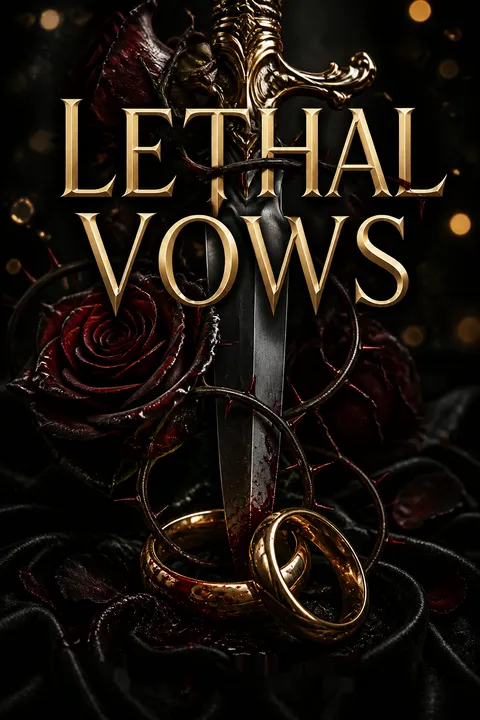


Plot Summary
Rome's One-Way Ticket
At sixteen, Rya Ricci walks Rome with her younger half-sister, Honey, and the bodyguard who keeps watch over them. Her father’s influence reaches everywhere, and Rya is tired of being guarded, monitored, and treated as a future political asset. She is leaving for New York to live with her mother, though the departure means abandoning the sister she has helped raise.
Before her flight, Rya meets Crue Monti, the nineteen-year-old heir to another powerful family, and learns that their fathers arranged their marriage. Crue accepts the duty as inevitable. Rya refuses it, but his certainty unsettles her: he says he will find her when he is thirty-four, whether she has chosen him or not.
Rya’s departure is both an act of self-preservation and a painful severing of her bond with Honey. Her desire for freedom is not abstract: it means escaping the guards, surveillance, and marriage agreement that make her life feel pre-owned. Crue interprets inherited obligation as stability, while Rya sees it as a threat to personhood. Their first meeting establishes the central conflict in miniature. He treats a family contract as a promise already fulfilled; she treats consent as the condition that makes any promise meaningful.
A Birthday Gunshot
At thirty, Rya has built a life in New York as a successful criminal defense lawyer. She celebrates her birthday with colleagues and her friend Monica, hoping for one unguarded night. Crue arrives without warning, now the feared head of the Monti family. He shoots Rya’s boss, Brian, in front of the party guests, then leaves as casually as he came.
Rya finds Brian’s body beneath a tablecloth and watches the police treat the killing as a closed matter. Later, Crue enters her apartment and announces that he expects to marry her by thirty-four. His arrival turns the safety Rya worked for into an illusion: the violence she escaped has found her, and it knows her address.
The birthday shooting collapses the distance Rya has tried to establish between her professional identity and her family’s criminal world. She can defend dangerous clients and command a courtroom, but she cannot control what happens when power enters her private life with a gun. Crue’s murder of Brian functions as both violence and communication, making his return impossible to mistake for a romantic reunion. Rya’s alarm is sharpened by the police response, which suggests that wealth and influence can decide which crimes receive consequences. Her career gives her expertise, but not immunity.
Paid Friendship Exposed
At dinner, Crue tells Rya that her father has kept her under surveillance and paid Monica to stay close to her. Rya calls her father and gets confirmation: he arranged the friendships as protection, believing Crue’s return made her vulnerable. The discovery turns years of companionship into evidence of control.
When Monica later admits that she accepted the money, Rya cuts her off and has her removed from the building’s guest list. Crue continues sending emails and appearing at Rya’s home, while she insists that neither her father nor Crue can choose her husband. She still goes on a planned date with Andrew, partly to reclaim the ordinary choices both men keep trying to take from her.
The revelation attacks Rya’s deepest measure of freedom: the belief that the life she built belongs to her. Her father’s motive may be protection, but secrecy makes protection indistinguishable from management. Monica’s paid friendship matters because affection and surveillance have occupied the same relationship without Rya’s knowledge. Rya responds by enforcing a boundary rather than negotiating over whether the deception was well-intended. Her decision to date Andrew is similarly less about romance than agency. She wants to prove that Crue’s return does not give him veto power over her ordinary choices.
Andrew's Last Date
Rya brings Andrew, a man she has chosen for a casual night, into her apartment. Crue arrives, attacks him, and leaves Andrew dead before Rya can stop the violence. His men remove the body, while Crue insists that Rya belongs to him and should not see other men.
The murder changes the stakes of her resistance: Crue is not merely repeating an old marriage demand but enforcing it with lethal force. Rya threatens him over her family, yet her body responds to the same man she fears, a contradiction that makes escape emotionally harder. She cannot accept his claim as consent, even as their charged attraction begins to pull her toward him.
Andrew’s death makes Crue’s possessiveness materially dangerous. The scene distinguishes desire from consent: Rya’s attraction does not undo the fact that Crue has imposed himself and used violence to control her choices. Her bodily response intensifies the conflict rather than resolving it, because physical desire cannot settle the moral question of who has authority over her. The book places erotic tension beside coercion, asking the reader to hold both facts at once. For Rya, the danger is not simply that she might want Crue, but that wanting him could be mistaken for surrendering her right to refuse him.
The Bargain Between Them
Crue keeps pressing the marriage arrangement, explaining that powerful families use marriages to secure business and preserve alliances. He also tells Rya that his father trained him for leadership through cruelty, and that he killed his father after learning he planned to eliminate his sons. Rya challenges Crue’s certainty that marriage is only a contract.
Later, he proposes a wager: if he can give her pleasure, she will marry him; if he fails, he will leave her alone. Rya rejects the terms but eventually agrees to sex on the condition that he stop asking for marriage. Crue accepts, and their first encounter makes their attraction impossible for either to dismiss.
The bargain exposes the unequal meanings each character attaches to marriage. For Crue, the arrangement is a political necessity he can make personally pleasurable; for Rya, it threatens to convert desire into obligation. His history explains his distrust of affection without excusing the control he exercises. Rya’s conditional agreement is an effort to separate sex from ownership, even as she recognizes how strongly she wants him. The negotiation is revealing because both characters use contracts to manage vulnerability: Crue relies on inherited terms, while Rya tries to write her own limits into an encounter he wants to define.
Brian's Hidden Cameras
Crue eventually takes Rya to a private gathering and shows her photographs Brian secretly made of her in the law firm’s women’s bathroom and other private moments. The evidence explains why Crue targeted Brian, though it does not erase Rya’s anger that he killed him without warning. Their personal connection deepens through another encounter, while Crue displays Rya to his criminal associates as a valuable lawyer and future wife.
Rya refuses to accept the title. She also continues working the high-profile case of Matteo Torrisi, despite pressure from the Torrisi family and concern from the firm’s board. The photographs leave her with a new question: whether Crue protected her, exploited the evidence, or did both.
The images complicate the meaning of Brian’s murder without turning Crue into a simple protector. Brian’s abuse of professional access confirms that Rya was vulnerable inside the institution she had mastered; Crue’s intervention exposes that vulnerability while also deciding, unilaterally, what justice should look like. The distinction matters because rescue can reproduce control when the rescued person has no choice in the method. Rya’s legal work offers her a framework for weighing evidence, but the intimate evidence is inseparable from her own violation. She is forced to evaluate not only what happened, but who gets to define its consequences.
A Bullet at the Club
Outside the private club, a gunman raises his weapon at Crue while Rya stands nearby. Crue’s bodyguard shoots the attacker before Rya can process what is happening, and Crue orders another guard to take her home. She later learns that the gunman was sent by someone within the Torrisi organization.
Crue captures and interrogates a man connected to the hit, then kills him after extracting the name. His brother Dominic warns that retaliation could ignite further conflict, but Crue sees Rya’s presence at the attack as proof that the threat is personal. Rya, meanwhile, resists the bodyguards and protection that now follow her, even as the danger around Crue becomes harder to ignore.
The attack turns Rya from an observer of Crue’s world into someone physically exposed to its rivalries. Crue’s response is protective in intention and coercive in practice: he decides where she goes, who guards her, and how threats are answered. Dominic’s caution shows that Crue’s methods carry political costs, not only personal ones. Rya’s refusal of security is therefore more than stubbornness. It is an attempt to preserve agency in a world where protection can become another form of captivity. The shooting makes clear that her association with Crue has consequences beyond their private attraction.
The Torrisi Price
As Rya prepares Matteo Torrisi’s defense, Crue uses an invitation-only auction to approach Francesca Torrisi, who wants influence within her family. He offers her a path to power if she helps him enter the Torrisis’ birthday gathering. There, Crue tells Andreas Torrisi that someone in the family ordered the attack and demands the responsible person’s death, a majority share of the family’s whisky profits, and a share of its drug business.
Rya wins Matteo’s case, while Crue arranges for her to receive a large bonus from the Torrisis. His maneuver gives him financial leverage and turns a family dispute into a struggle for control. Rya sees the money arrive, but does not yet know the price behind it.
Crue treats political violence as a system of exchange: an attack creates a debt, a debt creates leverage, and leverage can be converted into ownership. Rya’s courtroom victory belongs to a different logic, one based on evidence and argument, yet her success becomes entangled with Crue’s coercive strategy. The bonus blurs the line between professional reward and blood money, threatening the independence she has built through her work. Francesca’s ambition also reveals that Crue does not create every conflict he exploits. He identifies desires already present in the family and turns them into instruments.
The Chapel Revolt
Crue takes Rya to a chapel and brings a priest, Dominic, Angel, and his mother, hoping to marry her without another negotiation. Rya refuses, argues that sex never constituted consent to marriage, and shoots Crue in the leg when he tries to hold her there. She escapes, then learns that the Torrisi mansion has burned and Francesca’s severed head has been delivered to Crue.
His scheme has broken the family’s power and secured its business assets, but it has not secured Rya. After Rya receives a large payment connected to the Torrisis, Crue leaves New York for Italy. The chapel scene ends their pursuit as a contest of force: Rya has made her refusal impossible to ignore, at least for now.
The chapel is the sharpest collision between inherited obligation and personal consent. Crue has mistaken persistence for inevitability; Rya’s gunshot makes her refusal physically consequential and reverses their usual balance of power. The attack on the Torrisis shows that Crue can consolidate authority elsewhere, but domination cannot manufacture intimacy. His material victory sits beside an emotional defeat, a contrast the novel keeps deliberately visible. Rya’s escape is not a clean liberation, since her life remains entangled with the criminal world and Crue’s money. Still, she has drawn a boundary in the language both understand.
Honey Wears the Ring
Four weeks later, Rya travels to Italy with her mother and discovers Crue sitting beside Honey, who wears an engagement ring. Crue says he will marry a Ricci, and the dinner turns into a public argument in which Rya accuses him of using her sister after she refused him. She leaves rather than stay for the engagement celebrations.
At Angel and Dominic’s home, Rya learns that Crue had promised to wait until she was thirty before pursuing her, and that he believed he had given her time to choose. Honey, meanwhile, makes clear that she will decide for herself whether to marry Crue. Rya must face the possibility that her resistance affects her sister as well as herself.
Honey’s engagement transforms Rya’s private struggle into a family crisis. The ring forces her to confront a consequence she cannot dismiss as Crue’s problem: the alternative bride is the sister she left behind. Rya’s anger is partly protective, but Honey resists being treated as a substitute child who must be rescued from her own decisions. The revelation that Crue waited changes the meaning of his return without erasing his coercion. His patience was still organized around an assumed right to claim Rya. Meanwhile, Honey’s insistence on agency mirrors the very freedom Rya has been defending.
The Bride's Last Run
At the Ricci engagement party, Rya sees Crue beside Honey and feels the cost of their arrangement more keenly than she expected. She speaks with Honey, who says she will not be anyone’s second choice but also refuses to abandon a marriage she may genuinely want. Later, Rya confronts Crue in the library, where he admits he still wants her, and she leaves in tears.
She drives to the family’s lake house, determined to return to New York. Crue follows and tells her he and Honey have called off the engagement. Honey sent him after Rya, unwilling to marry a man whose heart belongs elsewhere. Rya finally acknowledges her feelings and chooses to stop fleeing, but insists their future must be negotiated.
The confrontation with Honey dismantles Rya’s familiar escape route. She cannot cast herself as the only woman whose freedom matters, because Honey has desires and judgments of her own. Crue’s engagement made that tension visible, while the library encounter strips away his usual performance of control and leaves Rya facing her own grief. The lake house becomes a pause in which she can choose rather than react. Her decision to return to Crue is not presented as proof that his behavior was harmless; it begins a new negotiation in which love must coexist with limits.
Vows on Rya's Terms
At the lake house, Rya and Crue reunite and acknowledge that their attraction has become love. Crue proposes again, and Rya answers by drafting a contract of her own. She agrees to marry him and take his name, but reserves the right to keep her New York home, remain a lawyer, decide whether she wants children, and leave if Crue violates their agreement.
Crue objects to parts of the document but accepts its terms because he wants Rya more than an unqualified victory. They sign, and the final scene brings them to their wedding, with Honey beside Rya as maid of honor. Rya enters the marriage not as the girl promised in Rome, but as a woman who has written conditions into her own future.
The ending returns to the marriage contract that began the story, but changes who has authority to define it. Rya does not simply accept Crue’s inherited arrangement; she rewrites it around work, home, bodily autonomy, and the possibility of leaving. Crue’s acceptance matters because it marks a shift from treating her consent as a formality to treating it as part of the bargain. The resolution remains deliberately uneasy: their love grows inside a violent world, not outside it. Yet Rya’s authorship of the terms distinguishes chosen commitment from the obligation imposed on her at sixteen.
Analysis
Lethal Vows builds its romance around a contradiction it never entirely resolves: Rya’s attraction to Crue is real, and so is the coercion that repeatedly surrounds it. The story’s strongest emotional movement comes from Rya learning to distinguish desire from surrender. Her body may answer Crue before her judgment does, but she continues to name the difference between wanting him and consenting to a life he has chosen for her. That insistence gives her final decision meaning beyond romantic inevitability.
The family contract is the novel’s central political metaphor, but also a literal mechanism. Marriage transfers influence, access, and wealth between criminal dynasties. Rya’s refusal therefore threatens more than Crue’s feelings; it disrupts a system that treats daughters as strategic links. Yet the book gives Honey a separate will, preventing Rya’s resistance from becoming an uncomplicated claim to moral superiority. Honey’s choices force Rya to recognize that protecting another woman can become another form of speaking for her.
Crue’s character is shaped by an upbringing that equates safety with command. His violence is effective in consolidating power, but it repeatedly fails to produce the intimacy he wants. The plot distinguishes control over a business from control over a person: Crue can seize the Torrisi assets, intimidate rivals, and alter the balance of a city, yet none of those victories can make Rya choose him. His eventual acceptance of her contract is the clearest evidence of change, because it requires him to accept terms he did not dictate.
Rya’s profession sharpens these themes. In court, she works by testing claims and controlling the interpretation of evidence; in her private life, she has to decide which facts count as freedom, protection, and love. Her ending does not escape the violent world that formed both families. Instead, it makes commitment conditional on negotiation. The novel’s answer is imperfect but specific: love becomes possible not when power disappears, but when the person who has most power agrees that the other person’s refusal must matter.
Review Summary
Lethal Vows receives mixed reviews, with an average rating of 3.74 out of 5. Some readers praise the dark romance and chemistry between the main characters, Crue and Rya. Others criticize the writing style, character development, and perceived sexist themes. Many find Crue's obsessive behavior and misogynistic attitudes problematic. Some readers enjoy the mafia romance tropes, while others find the plot cliché and lacking depth. The book's spicy scenes are generally well-received, but the overall story and character interactions garner divided opinions.
Characters
Rya Ricci
The defiant defense lawyerRya is a brilliant New York defense lawyer and the daughter of a powerful Italian crime figure. She prizes competence because work gives her a life she has earned herself, separate from the family agreements that shaped her adolescence. Sharp, controlled, and difficult to intimidate, she often handles emotion by turning it into a problem to solve or a boundary to enforce. Her loyalty to Honey survives years of distance, while her complicated attraction to Crue tests the independence she has built. Rya’s central psychological tension is not whether she can love, but whether love can exist without becoming another claim on her freedom.
Crue Monti
The ruthless family heirCrue leads the Monti criminal family with discipline, violence, and an instinct for strategic advantage. Raised to inherit power, he treats loyalty and marriage as structures that keep families and businesses intact; affection is less familiar to him than control. His fixation on Rya began when they met as teenagers, and her refusal unsettles the obedience he expects from everyone else. Crue is capable of tenderness, but he often expresses it through protection that disregards the other person’s wishes. His central conflict lies in wanting Rya as a partner while using the methods of a man accustomed to possession.
Honey Ricci
Rya's younger sisterHoney is Rya’s younger half-sister, raised in the same wealthy and closely guarded household. Warm, romantic, and more comfortable with family tradition than Rya, she has her own ambitions and should not be mistaken for a passive extension of her sister. Their closeness was forged when Rya helped care for her, then strained by Rya’s departure for New York. Honey wants affection and family without giving up her right to decide what those things mean for her.
Angel
Rya's oldest friendAngel is Rya’s childhood friend and Dominic’s wife. Blunt, affectionate, and unafraid of powerful men, she often tells Rya what she would rather avoid hearing. Her loyalty is shaped by the complicated rules of the families around her, but her friendship with Rya remains emotionally genuine. As she builds a life with Dominic, Angel offers Rya a close-up view of commitment that is not merely political.
Dominic Monti
Crue's loyal brotherDominic is Crue’s younger brother, Angel’s husband, and a steady presence in the Monti family. He is loyal to Crue but more willing to question the cost of his decisions, especially when violence threatens to provoke a wider conflict. His marriage and impending fatherhood give him a domestic perspective that contrasts with Crue’s hard-edged leadership. Dominic often serves as a practical counterweight, though his loyalty limits how far he will oppose his brother.
Mr. Ricci
Rya's powerful fatherRya and Honey’s father is a formidable Italian crime figure accustomed to arranging protection, alliances, and family obligations. He cares for his daughters, but his protective instincts lead him to make decisions for them and conceal the methods behind those decisions. Rya’s relationship with him holds both affection and anger: he gave her opportunities, yet never fully accepted that she might choose a life beyond his reach.
Monica
Rya's New York friendMonica is Rya’s lively friend in New York, generous with affection and comfortable in her own skin. Her cheerfulness makes her an easy companion for Rya, who prefers keeping personal matters guarded. Monica’s connection to Rya is complicated by the family’s influence over their friendship, but she does not regard their bond as merely transactional. Her presence forces Rya to ask whether genuine feeling can survive a relationship that began with a concealed arrangement.
Rya's mother
The absent-minded parentRya’s mother is independent, socially skilled, and candid about having valued money and status over the demands of motherhood. She has lived apart from Rya for years and is more comfortable with adult frankness than maternal warmth. Their relationship carries the residue of an old bargain with Mr. Ricci, yet she can offer Rya unvarnished advice when it matters.
Sharon
Honey's devoted motherSharon is Honey’s mother and Mr. Ricci’s wife. She is present within the Ricci household and helps prepare the family’s gatherings. Her concern for her daughter and awareness of the family’s traditions give her a quieter role in the sisters’ story.
Dawson
Crue's polished allyDawson is a well-connected businessman and Crue’s associate, known for his composed manner and social ease. His polished presentation lets him move through elite criminal circles without advertising the danger beneath them. He becomes a useful observer of Rya and Crue’s relationship, occasionally offering Rya a perspective Crue is too proud to provide.
Andreas Torrisi
A wary crime patriarchAndreas heads the Torrisi family and is Matteo’s uncle. He is shrewd, status-conscious, and alert to the costs of provoking more powerful rivals. His dealings with Rya are professional, though he also tests what she knows about Crue. Andreas’s priorities are family survival and influence, even when younger relatives complicate both.
Matteo Torrisi
Rya's reckless clientMatteo is a young member of the Torrisi family facing a serious criminal case. Impulsive and overconfident in Rya’s legal skill, he struggles to understand that his actions can damage the defense she is building. His grief and anger contribute to his recklessness, while his uncle tries to contain the fallout.
Francesca Torrisi
An ambitious family insiderFrancesca is a member of the Torrisi family with her own appetite for influence. Her position gives her access to the family’s internal politics, and she knows that power can shift when old arrangements weaken. She is poised and calculating, with ambitions that make her more than a bystander in Crue’s negotiations.
Brian
Rya's former law bossBrian leads the law firm where Rya built her career and recognizes her exceptional skill. His authority shapes her professional opportunities, but his private conduct is not as respectable as his public position suggests. Rya’s complicated view of him reflects how dependence and trust can coexist with betrayal.
Mr. Luca
A watchful board memberMr. Luca is a young member of Rya’s firm’s board who becomes more visible after Brian’s death. He monitors the firm’s reputation and Rya’s professional decisions, sometimes presenting pressure as concern. His presence reminds Rya that institutional power can be exercised through insinuation as well as direct orders.
Andrew
Rya's casual dateAndrew is a man Rya has been messaging and plans to see casually. He represents the ordinary romantic choice Rya wants to make without family contracts or criminal politics deciding for her.
Toni
Rya's old childhood friendToni is a childhood acquaintance Rya meets again in Italy. Their brief reunion recalls the ordinary friendships and youthful possibilities that existed before distance and family expectations shaped her adult life.
Plot Devices
The marriage contract
Family alliance by marriageThe Ricci and Monti families treat marriage as a way to bind powerful households, preserve business ties, and secure the next generation. The arrangement made when Rya was young gives Crue a claim he considers legitimate, while Rya sees it as an attempt to decide her future without her consent. The device drives the central conflict from their first meeting to the final negotiations. Its meaning changes when Rya drafts terms of her own, turning a family instrument of control into a framework she can accept or reject.
Crue's emails
A private pursuit in writingCrue uses formal, recurring emails to pursue Rya, provoke her, and maintain contact even when she refuses to answer. Their stiff sign-offs contrast with the intimate promises and threats inside, revealing how he turns communication into another exercise of control. For Rya, the messages are both unwelcome pressure and a persistent reminder that Crue is thinking about her. The correspondence tracks their changing distance, from unwanted contact to a private language shaped by desire and defiance.
The hidden recordings
Surveillance becomes evidenceSecret images made inside Rya’s workplace expose the misuse of professional access and the vulnerability concealed beneath her confident public role. Crue’s possession of the photographs explains part of his motive for killing Brian, but it also places Rya inside a violation she did not choose. The evidence therefore serves two purposes: it reveals Brian’s misconduct and tests whether Crue’s intervention counts as protection when he has already decided the consequences for her.
The Ricci-Monti alliance
Power traded through kinshipThe families’ political arrangements make personal relationships carry financial and criminal consequences. Crue’s need for a wife is linked to obligations among powerful families, while Rya’s legal career and family name make her valuable in more than one arena. The device explains why Crue treats marriage as necessary, why Rya fears losing independence, and why Honey’s engagement changes the conflict from a private pursuit into a family crisis.
Rya's legal practice
A parallel arena of powerRya’s work as a criminal defense lawyer provides a second world in which she can shape outcomes through expertise rather than inherited status. Her cases bring her into contact with families that also operate in Crue’s criminal sphere, so professional success repeatedly collides with personal danger. The courtroom becomes a measure of Rya’s independence, but the Torrisi case and Brian’s misconduct show how legal institutions can be penetrated by the same power networks she hoped to outrun.
FAQ
Synopsis & Basic Details
What is Lethal Vows about?
- A runaway bride's past catches up: Rya Ricci fled her powerful Italian family and an arranged marriage at sixteen, building an independent life as a criminal lawyer in New York, only for the man she was promised to, the dangerous Crue Monti, to find her on her thirtieth birthday.
- A relentless pursuit of a contracted bride: Crue Monti, a ruthless figure in the organized crime world, is determined to claim Rya as his wife to fulfill a long-standing family contract, pursuing her across continents with a mix of charm, menace, and undeniable power.
- A battle of wills and unexpected attraction: Their story unfolds as a high-stakes game of push-and-pull, where Rya fiercely resists Crue's control and the life she escaped, while grappling with a potent, forbidden love that complicates her fight for freedom and independence.
Why should I read Lethal Vows?
- Intense power dynamics and dark romance: The novel offers a gripping exploration of control, defiance, and obsession within a dark romance framework, featuring a dominant hero and a fiercely independent heroine locked in a compelling battle of wills.
- Subversion of arranged marriage tropes: It takes the traditional arranged marriage plot and injects it with modern sensibilities, exploring themes of female agency, consent, and redefining tradition on one's own terms amidst a dangerous criminal underworld.
- Psychological depth and high-stakes conflict: Beyond the romance, the story delves into the characters' complex pasts and motivations, set against a backdrop of mafia politics, violence, and unexpected twists that keep the reader engaged.
What is the background of Lethal Vows?
- Rooted in Italian organized crime tradition: The core conflict stems from a long-standing arranged marriage contract between two powerful Italian families, the Ricci and the Monti, highlighting the weight of tradition, alliances, and duty within this world.
- Contrast between Old World duty and New World freedom: The narrative is geographically split between the restrictive, tradition-bound environment of Rome/Italy, which Rya escaped, and the perceived freedom and independence of New York City, where she built her life.
- Modern professional life clashes with inherited obligations: Rya's successful career as a criminal defense lawyer in contemporary New York stands in stark contrast to the predetermined role expected of her by her family and Crue, creating thematic tension around self-made identity versus inherited legacy.
What are the most memorable quotes in Lethal Vows?
- "Tell me, darling, does your significant other know about me yet?": This opening line, presented as a "Sincerely, Your Book Boyfriend" note, immediately establishes Crue's possessive nature and the disruptive intrusion he represents in Rya's life, setting a tone of dark anticipation.
- "If I'm not married by thirty-four, I will come find you, princess.": Crue's declaration to sixteen-year-old Rya foreshadows his relentless pursuit and the specific deadline driving his actions, highlighting his long-held intention and the predetermined nature of their connection.
- "You are mine! In every sense of the word.": Crue's assertion after killing Andrew encapsulates his absolute possessiveness and belief in his claim over Rya, demonstrating the extreme lengths he will go to enforce his ownership and eliminate perceived rivals.
What writing style, narrative choices, and literary techniques does T.L. Smith use?
- Alternating First-Person POV: The story is told through the alternating perspectives of Rya and Crue, allowing readers direct access to their contrasting thoughts, motivations, and emotional states, intensifying the push-and-pull dynamic.
- Direct and often blunt dialogue: Characters, particularly Crue and Rya, engage in sharp, confrontational dialogue that reflects their strong wills and the power struggle between them, often laced with double meanings and veiled threats.
- Focus on internal monologue and physical reactions: The narrative frequently delves into the characters' internal thoughts and physical responses (e.g., Rya's trembling, Crue's hardening), emphasizing the psychological and emotional turmoil beneath the surface of their interactions and dialogue.
Hidden Details & Subtle Connections
What are some minor details that add significant meaning?
- Rya's childhood bodyguard, Marco: Marco's presence and subtle reactions (shaking his head but smirking at Honey, glaring at the wine) in the opening scene hint at the constant surveillance and controlled environment Rya grew up in, foreshadowing her later discovery that she was always being watched.
- The specific age deadline of thirty-four: Crue mentioning he must be married by thirty-four isn't just a random number; it's a crucial detail tied to the family contract and power transfer, explaining the urgency and timing of his sudden reappearance in Rya's life after years of absence.
- Mr. Luca's seemingly innocent concern: Mr. Luca's increased presence and pointed questions after Brian's death, coupled with his knowledge of Rya's personal life and association with Crue, subtly suggest a deeper level of surveillance or concern from the firm's board, potentially linked to the wider criminal world they operate within.
What are some subtle foreshadowing and callbacks?
- Crue's early observation of Rya's defiance: At sixteen, Crue notes Rya's attitude and her desire for freedom ("You a princess or something?"), foreshadowing the core conflict of their adult relationship where her defiance becomes both a challenge and an attraction for him.
- The recurring motif of Rya's "running": From her initial escape to New York to her fleeing the chapel and later the restaurant, Rya's physical act of running is a consistent callback to her fundamental desire to escape control and predetermined paths, highlighting her struggle for autonomy.
- Crue's comment about Rya's "poisonous lips": After Rya's angry outburst in her office, Crue's comment ("How I've missed those poisonous lips") is a callback to her sharp tongue and defiant attitude, framing her verbal aggression as something he finds desirable rather than off-putting.
What are some unexpected character connections?
- Monica's paid friendship: The revelation that Rya's best friend, Monica, was paid by Rya's father to watch over her is a significant and unexpected connection that shatters Rya's perception of her independent life and highlights the pervasive nature of her father's control.
- Dawson's role as Crue's confidant and business partner: Dawson, initially introduced as an escort and later revealed to own lingerie chains, serves as Crue's friend and provides surprising insights into Crue's character and motivations, showing a different facet of the ruthless boss.
- Rya's mother's unexpected visit and bluntness: Rya's mother's sudden appearance and surprisingly candid conversation about her own life choices and Rya's relationship with Crue offer an unexpected moment of connection and insight into Rya's upbringing and her mother's complex character.
Who are the most significant supporting characters?
- Angel: Rya's best friend and later Crue's sister-in-law, Angel serves as a crucial link between Rya's past and present, offering emotional support, revealing hidden truths (Monica, Brian's dirt), and providing a contrasting perspective on life within the criminal world.
- Dawson: Crue's friend and business associate, Dawson offers an external perspective on Crue's obsession with Rya, provides moments of levity, and acts as a catalyst in certain plot points (the auction, the engagement party), highlighting the complexities of loyalty and observation in their world.
- Dominic: Crue's brother and Angel's husband, Dominic represents Crue's closest familial tie and often serves as a voice of caution or concern regarding Crue's ruthless methods and his pursuit of Rya, showcasing the internal dynamics within the Monti family.
Psychological, Emotional, & Relational Analysis
What are some unspoken motivations of the characters?
- Crue's need for control stems from trauma: While Crue explicitly states his need for power and obedience, his backstory reveals a deeper, unspoken motivation: a desire for absolute control as a reaction to his father's cruelty and betrayal, ensuring he is never vulnerable or undermined as his father was.
- Rya's defiance masks a fear of vulnerability: Rya's fierce independence and refusal to be controlled are overt motivations, but her consistent "running" and difficulty forming deep connections (even with Monica) hint at an unspoken fear of vulnerability and losing herself in a relationship, particularly with a dominant man like Crue.
- Honey's acceptance of the arranged marriage: Honey's seemingly sudden acceptance of marrying Crue, despite knowing Rya's history with him, is driven by unspoken motivations related to upholding family duty, seeking approval (especially from her father), and perhaps a desire for the power and status the marriage offers, as hinted in her conversation with Rya.
What psychological complexities do the characters exhibit?
- Crue's desensitization and capacity for cruelty: Crue exhibits psychological complexities stemming from his upbringing, including a chilling desensitization to violence (killing Brian, Andrew, the hitman) and a capacity for calculated cruelty (using Honey, threatening Rya's father), contrasted with moments of intense possessiveness and a twisted form of affection towards Rya.
- Rya's compartmentalization and adaptation: Rya demonstrates psychological complexity through her ability to compartmentalize her life – maintaining a highly successful, ruthless professional persona while grappling with personal chaos and a disturbing attraction to a killer, showing her adaptation to the violent world she tried to escape.
- The Monti family's normalization of violence and control: The Monti family members, including Dominic and Crue's mother, exhibit a psychological complexity where extreme violence and control are normalized aspects of their lives and business, influencing their expectations and reactions to Crue's actions and relationships.
What are the major emotional turning points?
- The birthday party shooting: Crue's violent act at Rya's party is a major emotional turning point, shattering Rya's sense of safety in New York and forcing her to confront the inescapable reality of Crue's world and his presence in her life.
- Andrew's death: Crue killing Andrew, Rya's date, is a brutal emotional turning point that highlights the deadly consequences of defying Crue and forces Rya to grapple with the terrifying extent of his possessiveness and the danger she brings to others.
- The chapel confrontation: Rya shooting Crue in the leg at the chapel is a pivotal emotional climax, representing her ultimate act of defiance against forced control and triggering a cascade of events that forces both characters to confront the depth of their feelings and the impossibility of their current dynamic.
How do relationship dynamics evolve?
- Rya and Crue: From avoidance to obsessive push-and-pull: Their dynamic evolves from Rya's initial escape and Crue's distant observation to a volatile, obsessive push-and-pull defined by power struggles, defiance, unexpected sexual chemistry, and moments of vulnerability that blur the lines between hate and desire.
- Rya and Angel: From distant friends to renewed confidantes: Their relationship evolves from a long-distance friendship maintained through superficial contact to a renewed, deeper connection where they share truths about their lives, families, and Crue, highlighting the enduring bond despite years apart and Angel's entanglement with the Montis.
- Crue and his family: Strained loyalty and defiance: Crue's relationships with Dominic, Angel, and his mother are marked by strained loyalty, particularly as his actions become increasingly focused on Rya and deviate from traditional expectations, revealing underlying tensions and moments of defiance even within his controlled family structure.
Interpretation & Debate
Which parts of the story remain ambiguous or open-ended?
- The full extent of Rya's father's knowledge and involvement: While it's revealed he had Rya watched and agreed to the contract, the depth of his current involvement in Crue's plans or his true feelings about Rya's defiance versus her safety remain somewhat ambiguous.
- The long-term implications of Rya's new contract: The ending establishes a new dynamic based on Rya's terms, but the practical, long-term implications of her maintaining her independence, career, and boundaries while married to a powerful, possessive mafia boss remain open-ended and ripe for future conflict.
- The true nature of Crue's "love": While Crue eventually uses the word "love," the narrative leaves room for debate on whether his intense feelings are truly love, a deep-seated obsession, or a complex mix of both, given his history and definition of relationships.
What are some debatable, controversial scenes or moments in Lethal Vows?
- Crue's killing of Andrew: The scene where Crue kills Andrew, Rya's date, is highly debatable due to its extreme violence and possessiveness, raising questions about consent, control, and whether Crue's actions are justifiable within the context of his character and the genre.
- The power dynamics during sexual encounters: The sexual scenes often feature intense power dynamics, including moments of non-consensual elements (e.g., Crue tying Rya up, forcing her to perform), which can be controversial and spark debate among readers regarding the portrayal of consent and dominance in romance.
- Crue's attempt to force the marriage at the chapel: Crue physically dragging Rya to a chapel to marry her against her will is a highly controversial moment that pushes the boundaries of the dark romance genre and highlights the extreme nature of his control and disregard for Rya's autonomy.
Lethal Vows Ending Explained: How It Ends & What It Means
- The arranged marriage is redefined, not avoided: Rya doesn't escape the arranged marriage entirely; instead, she redefines it on her own terms after Crue calls off the engagement to Honey, demonstrating that her fight for freedom culminates not in escape, but in establishing control within the predetermined structure.
- Rya dictates the terms of the union: The ending is marked by Rya drafting a new contract outlining her conditions for the marriage – including autonomy over her career, residence, and the decision regarding heirs – signifying a shift in power dynamics where she asserts her agency and Crue accepts her terms out of desire.
- Love emerges amidst the chaos: Despite the violence, manipulation, and conflict, the ending reveals that both Rya and Crue have developed genuine feelings for each other ("I love you, Miss Ricci," "I think I love you too"), suggesting that their "lethal vows" are ultimately bound by a complex, hard-won connection forged through their tumultuous journey.
About the Author





Download PDF
Download EPUB
.epub digital book format is ideal for reading ebooks on phones, tablets, and e-readers.








