

Plot Summary
A Life Without Permission
One night, an unnamed working woman becomes certain she is pregnant, though no doctor has confirmed it. Her fear is not of pain or judgment, but of choosing life for someone who cannot consent. She remembers that her own mother once tried to end a pregnancy, then changed course after feeling her daughter move.
Looking at a magazine photograph of a three-week embryo, she sees a developing heart and tiny organs, and her fear gives way to a decision: she will continue the pregnancy. She does not pretend the choice is easy or that she needs a child. Instead, she accepts responsibility for making a choice on behalf of a life that cannot yet answer her.
The opening makes uncertainty the narrator’s first form of intimacy with the child. Her decision is neither a simple celebration of motherhood nor a rejection of it. She tries to distinguish her desire from obligation, while recognizing that any choice will be imposed on someone unable to speak. The embryo photograph gives a visible shape to what had been an abstraction, but it does not settle the moral question. Her act is less an answer than an acceptance of responsibility without certainty, establishing the book’s central conflict between bodily autonomy and the consequences of choosing for another.
Everyone Wants Her to Reconsider
When the narrator tells the child’s father, he initially asks what it would cost to end the pregnancy. She refuses, and his arguments shift from concern for her career to warnings about responsibility and public judgment.
At her six-week examination, a male doctor officially confirms the pregnancy, emphasizes that she is unmarried, and reminds her that abortion is illegal. The narrator notices the staff’s disapproval, then encounters similar discomfort from the chemist and tailor.
Her employer calls her courageous but urges her to reconsider before pregnancy disrupts her career and a planned assignment. These reactions make her private decision a public dispute: nearly everyone around her treats motherhood as either a duty she has failed to meet or a choice she should reverse.
The narrator’s conflict quickly becomes institutional. The doctor, employer, and child’s father have different reasons for urging termination, but each frames her pregnancy in terms of someone else’s rules: law, career, reputation, or cost. Their pressure does not erase her agency, yet it exposes how conditional that agency is when her body becomes visible to others. The correction of her marital status and the employer’s concern about her availability show that social judgment arrives in ordinary transactions, not only in grand moral pronouncements. Her insistence on choosing for herself begins as a defense against this chorus.
The Bed Becomes a Debate
A married friend, who has had four abortions while raising two children and holding a job, argues that practical hardship can make ending a pregnancy necessary. Their disagreement turns on when a developing life becomes a person, and the narrator cannot quiet her doubts.
After abdominal pain, the doctor orders bed rest as a precaution. The friend who had challenged her now brings food and watches over her. The narrator’s parents, shocked but supportive, send a letter accepting her decision and a pair of tiny white shoes.
Their gestures comfort her, but confinement gives her more time to worry about whether keeping the child is right. She begins to understand that conviction does not prevent doubt; it only determines what she does while doubt remains.
The friend matters because she gives the argument for abortion a lived context rather than a villain’s motive. Her responsibilities are real, and the narrator’s inability to dismiss them keeps the debate from becoming easy. Bed rest then makes the conflict physical: the narrator must depend on others even as she insists on making her own choice. The friend’s practical care and the parents’ small gift complicate her suspicion that everyone wants to separate her from the child. Support does not settle the dilemma, but it creates a community in which disagreement and tenderness can coexist.
The Stories She Inherits
While confined to bed, the narrator tells the child stories drawn from her own past. As a girl, she saw a woman thrown from a terrace onto a magnolia tree, learning early that women often pay for another person’s violence.
She recalls losing access to chocolate when her family became poor, then watching a wealthy woman throw sweets to children who already had plenty. Her memories of wartime promises and occupation leave her suspicious of every promised better tomorrow. She fears these lessons will make the outside world seem impossible to endure.
After the bed rest, the child’s father visits with flowers, sees the embryo photograph, and breaks down. The narrator lets him stay, though his sudden claim on the pregnancy unsettles the bond she has built with the child.
The stories are not ornamental recollections. The narrator uses them to prepare the child for a world where gender, poverty, and political power shape who suffers and who receives comfort. Yet her warnings risk becoming a kind of inheritance of despair: she gives the child not only knowledge of injustice but her own expectation that injustice will prevail. The father’s arrival adds another complication. His grief makes him more human to her, but his presence challenges the private dyad she has imagined. The narrator’s intimacy is therefore already divided between a desire to protect the child and a fear that protection may become possession.
A Body Under Judgment
After examining her, the male doctor warns that her anxiety and anger may be worsening the pregnancy. The narrator rejects the demand that she become emotionally passive, insisting that she is a person, not merely a vessel. She returns to work, where her employer again pressures her to preserve the important trip rather than risk losing the assignment.
The child’s father later brings a blue rose, but she tells him to leave. Soon afterward, she notices a spot of blood and rushes to the doctor. He says the child may survive if she remains completely still, so he admits her to hospital. There, isolated and sedated, she begins to question why the child’s uncertain right to life seems to outweigh her own established life.
The doctor’s warning turns emotion into a medical risk, intensifying the narrator’s sense that pregnancy is claiming not only her body but her mind. Her resistance is not indifference to the child; it is resistance to being reduced to a reproductive function whose thoughts must be controlled. The employer’s pressure makes the choice materially costly, while the father’s flower cannot repair his earlier absence. In hospital, enforced stillness strips away work, conversation, and ordinary agency. The narrator’s question about whose life counts more emerges from this concrete asymmetry: the fetus is protected through restrictions imposed on the woman who carries it.
The First Kick, Then Departure
After a week in hospital, the narrator decides to leave and continue her work trip. The male doctor condemns her choice as a deliberate threat to the pregnancy and has her sign a form accepting responsibility. As she prepares to go, the child kicks for the first time. The movement brings the recognition she had been waiting for, but it does not change her decision to leave.
She travels by plane, then sees a woman doctor who finds no immediate reason for alarm and considers the earlier confinement excessive. Reassured, the narrator feels newly alive and begins to imagine a shared future. She buys a colorful cradle, clothes, and a musical toy, and tells herself that she and the child can face the world together.
The kick gives the narrator the sign she had longed for, but the scene refuses a simple conversion in which bodily movement resolves every conflict. She leaves anyway, preserving the tension between attachment and self-determination. The second doctor’s more permissive judgment briefly loosens the male doctor’s authority, and the narrator’s renewed hope appears in tangible purchases rather than abstract promises. Her optimism is real, but fragile: it depends on a temporary return to work and movement, not on certainty that the pregnancy is safe. The cradle marks a shift from imagining a possible child to preparing for a particular arrival.
The Road Turns Against Her
The narrator begins the planned drive, but the roads are rough and her cramps worsen. During the journey, she recalls a man who let her touch moon dust he had promised to give her, then refused to let her keep any. The memory sharpens her fear that the child, like that unreachable gift, is slipping away. She stops at a motel and sees blood, then returns to the woman doctor.
The examination reveals that the fetus stopped growing weeks earlier. The narrator first receives the news in stunned silence; seeing the cradle, clothes, and musical toy afterward breaks her composure. She collapses in grief, unable to make the word coherent explain the loss. Her hopes for a shared future have ended before the child could be born.
The road’s physical violence gives form to the narrator’s accumulating uncertainty, but the doctor’s finding does not establish that the journey caused the loss. The moon-dust memory captures a different wound: being allowed a glimpse of something precious without being able to possess or preserve it. That image links the child to both desire and helplessness. The nursery objects make the loss concrete, contradicting the narrator’s effort to treat it as an idea she can rationally accept. Her collapse reveals the limit of her intellectual defenses. She had tried to divide responsibility with the child; now she is left with grief that cannot be balanced by an argument.
The Child Takes the Stand
In a dream, the narrator stands accused before a jury made up of the people involved in her pregnancy. The male doctor calls her guilty for leaving hospital; the woman doctor argues that the narrator’s life also mattered. The child’s father votes against her, while her friend rebukes him for his earlier demand that she end the pregnancy. The narrator’s parents refuse to judge her.
Then the child speaks in the narrator’s imagined voice, explaining that it had absorbed her first faith in life, then her later descriptions of life as violence and confinement. The child presents its refusal to be born as a choice made after hearing both accounts. It forgives the narrator, but that imagined mercy cannot restore the future she had pictured.
The dream court turns the novel’s competing arguments into people who must answer for their judgments. No verdict can be clean because each witness sees a different part of the narrator’s conduct and circumstances. The unborn child’s testimony is especially unsettling: the narrator has treated the child as both a stranger and a confidant, and now imagines that her words shaped its decision. The dream gives her a way to acknowledge how hope and despair coexisted in her letters, but it is not proof of why the fetus stopped growing. Its emotional truth lies in the narrator’s self-accusation, not in a factual explanation of the loss.
Life Demands Her Return
After the dream, the narrator delays having the dead fetus removed, even though doctors warn that keeping it inside her could endanger her life. The child’s father writes that he will not offer easy comfort, but believes she will eventually answer life’s call.
Back home, the narrator begins clearing away the nursery and considers returning to work; then pain and fever force her to seek urgent care. Doctors remove the fetus, and she persuades them to let her see it in a glass container.
Weak and feverish, she imagines the child grown, guiding her to the magnolia tree and helping her climb. The vision fades before she can know whether she will survive. Around her, other children are being born, and life continues without resolving her grief.
The narrator’s delay is not simply a refusal of medical advice. The fetus is the last physical connection to the relationship she had imagined, and removal means accepting that the pregnancy cannot be resumed. Her father’s letter, the return home, and the sudden emergency move her from private mourning toward the necessity of living. The final vision revises her childhood magnolia memory: where the girl once watched a woman fall, the narrator imagines the child reaching the flower she could not pick. The vision offers no proof of reunion or survival. Its force lies in the narrator’s final insistence that life persists beyond any one person’s answer.
Analysis
Letter to a Child Never Born turns pregnancy into a test of how people reason when another life depends on them but cannot speak for itself. The narrator refuses the comfort of a single moral authority. Doctors disagree, the friend’s practical experience challenges the narrator’s principles, and the child’s father discovers his feelings only after first trying to avoid the pregnancy’s consequences. Each position carries partial truth, but none can take on the bodily cost borne by the narrator.
The book’s formal choice is crucial. Because the narrator addresses the child in letters, her arguments remain personal rather than becoming a detached debate. The child is at once a real developing body and an imagined listener onto whom she projects fears, hopes, and possible judgments. This form lets the novel examine a central ethical asymmetry: the narrator must choose, yet cannot know what the child would have chosen. Her shifting convictions do not make her dishonest. They show how difficult it is to make a decision whose consequences cannot be undone and whose meaning changes with new knowledge.
The childhood stories widen that dilemma. The fallen woman, the denied chocolate, and the broken promises of war teach the narrator to distrust the claim that tomorrow will automatically be better. But in telling these stories to the child, she risks turning realism into a sentence against life. Her grief finally reveals that acknowledging suffering does not erase attachment, just as choosing life cannot guarantee happiness. The novel offers no universal verdict about motherhood. It instead insists that maternity is a conscious decision made within unequal social conditions, and that respect for life must include the woman whose body sustains it. Its ending leaves the narrator’s survival uncertain, while other births continue around her, neither canceling her loss nor making it meaningless.
Review Summary
Letter to a Child Never Born is a deeply moving and controversial novel exploring pregnancy, abortion, and feminism. Readers praise Fallaci's poetic writing and fearless tackling of difficult topics, though some find her views extreme. The book's format as a letter from a pregnant woman to her unborn child resonates with many, sparking reflection on motherhood and women's rights. While some see it as pro-life, others view it as a nuanced exploration of complex issues. The novel's emotional intensity and philosophical depth leave a lasting impact on readers.
People Also Read
Characters
The narrator
A fiercely independent motherAn unnamed working woman who addresses her unborn child in a series of letters. She values intellectual independence and professional purpose, yet takes seriously the power her choices hold over a life that cannot answer her. Her fierce reasoning often turns into self-questioning: she can defend a decision and immediately imagine its opposite. Memories of poverty, war, and gendered violence shape her distrust of easy promises. Her voice is both intimate and argumentative, using the child as confidant while testing her own beliefs against an imagined listener.
The unborn child
Her silent correspondentThe child is the narrator’s imagined listener and the focus of her changing beliefs about life, responsibility, and motherhood. The narrator tracks its development through photographs and physical sensations, while inventing thoughts for a being that cannot yet speak. This imagined presence draws out her tenderness and her anger in equal measure. As a figure in the letters, the child allows the narrator to test arguments that would otherwise remain private, while also exposing how much of their apparent conversation comes from her own mind.
The child’s father
An uncertain partnerThe narrator’s former lover, living away from her when she tells him about the pregnancy. His initial response is shaped by fear and an urge to limit the consequences, but he later shows grief and a desire to be involved. He cannot share the physical burden of pregnancy, a difference that becomes central to the narrator’s view of parenthood. His appearances make her question whether intimacy is love, dependency, or a bond that persists after romance has faded.
The friend
A practical confidanteA married woman with two children, a job, and experience of abortion. She believes family resources and personal limits matter as much as ideals, so she challenges the narrator’s assumptions without ceasing to care for her. Her practical help during the narrator’s bed rest complicates their disagreement: she can oppose the narrator’s position and still feed and protect her. She serves as the story’s clearest example of how an argument about pregnancy grows from the conditions of everyday life.
The narrator’s mother
A tender source of supportThe narrator’s mother once faced an unwanted pregnancy herself. Her response to her daughter’s news is accepting, even though she is surprised and upset. The tiny shoes she sends embody affection without demanding that the narrator follow a prescribed model of family life. Her warmth offers a contrast to the coldness the narrator encounters from institutions and strangers.
The narrator’s father
A loving, fallible parentThe narrator’s father appears through her childhood memories and his response to her pregnancy. He has taught her to believe in a better future, though her wartime experiences complicate that lesson. His loyalty to his daughter rests less on certainty about her choices than on the relationship they share.
The male doctor
A strict medical authorityThe first doctor to oversee the pregnancy is cautious about its physical risks and expects the narrator to follow his instructions. His clinical concern becomes entangled with moral judgment, especially when he interprets her independence as evidence about her intentions. He represents the power medical expertise can hold over a patient whose body is already subject to public scrutiny.
The woman doctor
A more permissive physicianA later physician evaluates the pregnancy differently from her male colleague and is less willing to treat confinement as the only safe course. Her judgment gives the narrator a brief measure of confidence, though it cannot remove uncertainty. She provides a contrasting model of medical authority, one that considers the pregnant woman’s ordinary life as part of the decision.
The employer
A guardian of the career ladderThe narrator’s employer praises her courage while worrying about the work and assignments her pregnancy may interrupt. His support is conditional on business needs, showing how professional approval can coexist with pressure to keep pregnancy discreet.
The grandmother
A remembered family burdenThe narrator’s grandmother appears in a nightmare about repeated pregnancies and abortions. Her imagined plight connects personal suffering with poverty, religious shame, and the risks women face when they lack control over reproduction.
Plot Devices
The letters to the child
A private moral conversationThe narrator’s letters give structure to a story with little conventional external action. By addressing the unborn child directly, she can explain, revise, and contradict her own beliefs without pretending that the child can reply. The device makes philosophical argument intimate: each claim about freedom, love, work, or suffering is also something she is trying to justify to a dependent listener. As the letters change in tone, the reader can track her emotional movement from fear to hope, anger, grief, and the need to continue living.
The embryo photographs
Visible change, uncertain meaningPhotographs in a magazine let the narrator follow the embryo’s growth before she can perceive it directly. Each new image makes the child seem more particular to her, strengthening attachment while sharpening the question of when life becomes a person. The images do not settle that question; instead, they show how observation and imagination work together. The narrator sees a developing body, then gives it a history, personality, and possible future that the image itself cannot confirm.
The childhood stories
A history of threatened hopeThe narrator recounts memories of a woman falling onto a magnolia tree, a poor child watching chocolate given to the rich, and wartime promises that failed to deliver justice. These stories bring gendered violence, class inequality, and political disappointment into her private pregnancy. She tells them to prepare the child for the world, but their bleakness also deepens her uncertainty about bringing it into that world. The stories become a test of whether honesty about suffering can coexist with an invitation to live.
The imagined trial
Competing judgments made visibleAfter the loss, the narrator dreams that the people around her form a jury and put her on trial. Their opposing verdicts dramatize the arguments already present in the story: the child’s claim to life, the woman’s claim to bodily autonomy, the father’s grief, and the friend’s anger at male privilege. The child’s imagined testimony then turns the narrator’s own letters back on her. The scene is not an objective account of causation; it is a theatrical form for her guilt and her recognition that no single judgment can contain the whole experience.
FAQ
Synopsis & Basic Details
What is Letter to a Child Never Born about?
- A Woman's Existential Journey: Letter to a Child Never Born is an intimate, philosophical monologue from an unnamed, independent woman to her unborn child, chronicling her nine-month pregnancy. It delves into her profound doubts, fears, and the societal pressures she faces as an unmarried, working woman contemplating motherhood.
- The Dilemma of Existence: The narrative explores the fundamental question of whether it is right to bring a child into a world rife with suffering, injustice, and violence. The mother grapples with the "arrogance of life" – the act of imposing existence on another without their consent – and the preference of suffering over nothingness.
- A Feminist Exploration of Choice: Beyond the personal, the book is a powerful feminist statement on a woman's autonomy over her body and life. It critiques patriarchal societal norms, the medical establishment, and traditional views of love and family, positioning motherhood as a conscious choice rather than a duty.
Why should I read Letter to a Child Never Born?
- Profound Philosophical Inquiry: Readers seeking deep introspection on life, death, freedom, and the human condition will find Fallaci's raw, unflinching exploration compelling. The novel challenges conventional wisdom and forces readers to confront uncomfortable truths about existence.
- Powerful Feminist Voice: For those interested in feminist literature and the complexities of women's experiences, this book offers a searing critique of gender roles, societal expectations, and the struggle for autonomy. It resonates with contemporary debates on reproductive rights and female agency.
- Unforgettable Emotional Intensity: The narrator's journey is marked by extreme emotional swings, from fierce independence and intellectual rigor to vulnerability, despair, and ultimately, a hard-won acceptance. The book's emotional honesty leaves a lasting impact, making it a truly memorable read.
What is the background of Letter to a Child Never Born?
- Author's Personal Context: Oriana Fallaci, a renowned Italian journalist and war correspondent, was known for her fierce independence and controversial views. While the book is fiction, it is widely believed to be inspired by her own experiences with pregnancy and miscarriage, lending it a profound sense of authenticity and urgency.
- 1970s Feminist Movement: Published in 1975, the novel emerged during a pivotal era for women's rights, particularly regarding reproductive freedom. It reflects the intense societal debates surrounding abortion, women's roles in the workplace, and the redefinition of family structures, making it a significant work in feminist literature.
- Existentialist Philosophical Roots: The book is deeply rooted in existentialist thought, questioning the inherent meaning of life and emphasizing individual responsibility for creating meaning. Fallaci's exploration of choice, suffering, and the "absurdity" of existence aligns with the philosophical currents of the mid-20th century.
What are the most memorable quotes in Letter to a Child Never Born?
- "Nothing is worse than nothingness.": This foundational quote, appearing early in the narrative, encapsulates the narrator's initial, albeit wavering, conviction that existence, even with its pain, is preferable to oblivion. It defines her core struggle in Letter to a Child Never Born analysis.
- "To fight is much better than to win, to travel much more beautiful than to arrive: once you've won or arrived, all you feel is a great emptiness.": This insight reveals the narrator's philosophy of life as a continuous struggle and journey, rather than a pursuit of definitive outcomes, highlighting a key theme in Letter to a Child Never Born themes.
- "Maternity is not a moral duty. It's not even a biological fact. It's a conscious choice.": Uttered by the female doctor in the imagined trial, this quote powerfully articulates the novel's central feminist argument, challenging traditional views of motherhood and emphasizing female autonomy.
What writing style, narrative choices, and literary techniques does Oriana Fallaci use?
- Raw, Unfiltered Epistolary Monologue: The entire novel is a direct, intimate letter from the narrator to her unborn child, creating an immediate, confessional tone. This Oriana Fallaci writing style allows for an unfiltered stream of consciousness, blending personal emotion with philosophical inquiry, making the reader a direct confidant.
- Philosophical Dialogue and Internal Debate: Fallaci employs extensive internal dialogue and imagined conversations, particularly with the child, to externalize the narrator's complex psychological state and moral dilemmas. This technique, central to Letter to a Child Never Born analysis, allows for a multi-faceted exploration of themes like freedom, suffering, and the meaning of life without external plot drivers.
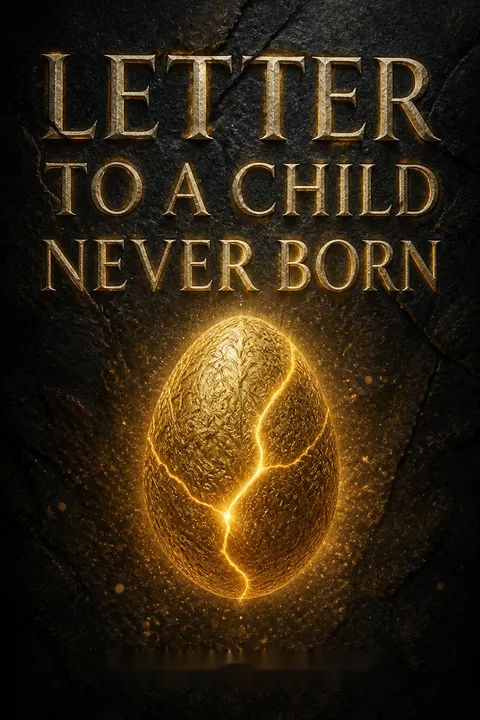
- Symbolism: The narrative is rich with symbolic imagery, such as the "egg" representing both the womb and the universe, the "magnolia tree" symbolizing beauty and violence, and "moon dust" as an unattainable dream. These symbols, crucial to symbolism in Letter to a Child Never Born, deepen the thematic layers and provide metaphorical weight to the narrator's experiences.
Hidden Details & Subtle Connections
What are some minor details that add significant meaning?
- The Male Doctor's "Imagination" Comment: The male doctor's initial dismissal of the narrator's intuition, suggesting the child might be "a product of my imagination," subtly foreshadows his later scientific detachment and the societal tendency to invalidate women's bodily knowledge. This detail highlights the conflict between intuition and patriarchal medical authority, a key aspect of Letter to a Child Never Born analysis.
- The Tailor's Blushing Reaction: When the narrator tells the tailor she is pregnant, he blushes violently and drops his pins. This seemingly minor detail underscores the pervasive societal discomfort and judgment surrounding an unmarried pregnant woman, even in casual interactions, revealing the subtle ways society's judgment manifests.
- The "Tadpoles" in the Nightmare: The narrator's dream of her father systematically killing tadpoles in her garden pool, mirroring her friend's earlier casual remark about eliminating unwanted life, connects her subconscious anxieties about abortion with her own mother's attempt to abort her. This detail subtly links generational trauma and the moral ambiguity of choice, deepening the psychological depth Letter to a Child Never Born explores.
What are some subtle foreshadowing and callbacks?
- The Mother's Kick Callback: The narrator's memory of her own fetal "kick" that saved her from her mother's abortion attempt is a powerful callback when her own child delivers its first kick. This moment, "Your first kick… like the kick I gave my mother," creates a profound, almost mystical, intergenerational connection and foreshadows the child's eventual "choice" not to be born, central to Letter to a Child Never Born ending explained.
- The "Ant Heap" Metaphor: The narrator's repeated use of the "ant heap" metaphor to describe society's oppressive, conformist nature ("to be part of the ant heap, the treadmill") subtly foreshadows her eventual feeling of being trapped and her desire to escape societal expectations, even at the cost of her pregnancy. This motif reinforces the themes in Letter to a Child Never Born regarding individual freedom versus collective conformity.
- The "Flowers on Deathbeds" Superstition: When the child's father brings yellow flowers, the narrator immediately moves them, stating, "flowers on the bed bring bad luck, you put flowers on deathbeds." This seemingly superstitious remark subtly foreshadows the tragic outcome of the pregnancy and the child's death, adding a layer of dramatic irony to the narrative.
What are some unexpected character connections?
- The Narrator's Father and the Moon Astronaut: The narrator draws a parallel between her own father's unwavering, almost blind, faith in "tomorrow" despite repeated betrayals, and the "stupid men" who went to the moon but failed to grasp its poetic significance. Both figures, in their own ways, represent a certain kind of masculine pragmatism or idealism that ultimately falls short of true understanding or emotional depth, offering a unique perspective on male motivations in Letter to a Child Never Born.
- The Male Doctor and the Boss: Both characters, despite their different professions, embody a similar patriarchal, results-oriented mindset that prioritizes external achievements (career, scientific "cult of life") over the woman's emotional and physical well-being. Their shared condemnation of the narrator in the dream trial highlights their collective role as enforcers of societal expectations, revealing a subtle power dynamic analysis.
- The Narrator's Friend and the Narrator's Mother: While seemingly opposite (one advocating for abortion, the other for birth), both women ultimately offer the narrator a form of unconditional support and understanding that transcends their differing views. The friend's later anxiety for the narrator's health and the mother's simple acceptance ("If you've decided on it, that means it's right") reveal a deeper, shared female solidarity that contrasts with the male characters' conditional support.
Who are the most significant supporting characters?
- The Narrator's Mother: More than just a traditional figure, she represents a lineage of women who have faced similar dilemmas, offering both a cautionary tale (her own abortion attempt) and a source of profound, unconditional love and acceptance. Her simple wisdom, "Only those who have cried a lot can appreciate life," provides a counterpoint to the narrator's intellectual struggles, enriching the mother-child relationship analysis.
- The Female Doctor: In stark contrast to her male colleague, she embodies a compassionate, rational, and feminist perspective within the medical establishment. Her defense of the narrator in the dream trial, arguing for a woman's right to her own body and challenging the "cult of life," is a pivotal moment, highlighting the feminist themes Letter to a Child Never Born explores.
- The Child's Father: Though largely absent, his presence is a constant catalyst for the narrator's reflections on love, freedom, and male responsibility. His initial demand for abortion, followed by his later, tearful claim of paternity, exposes the gendered asymmetry of pregnancy and the complexities of male emotional engagement, crucial for understanding the child's father motivation.
Psychological, Emotional, & Relational Analysis
What are some unspoken motivations of the characters?
- Narrator's Fear of Losing Herself: Beyond the stated fears of suffering and societal judgment, the narrator's deepest unspoken motivation is the fear of losing her independent identity and intellectual life to motherhood. Her rebellion against the doctor's demand for "placidity" and her insistence on her "mind" and "reactions" reveals a profound need to preserve her selfhood, a key aspect of Narrator motivations Letter to a Child Never Born.
- The Father's Desire for Control/Absolution: His initial offer of money for an abortion and later, his tearful claim of paternity, suggest a motivation rooted in a desire to control the situation and then to seek absolution or validation. He wants to be seen as a "good" father without fully engaging with the physical and emotional burdens, highlighting the child's father motivation.
- The Male Doctor's Professional Pride: His rigid adherence to the "cult of life" and his condemnation of the narrator, even accusing her of "premeditated homicide," is subtly driven by professional pride and a need to assert his authority. His anger at her non-compliance stems from a challenge to his medical expertise and patriarchal worldview, revealing a deeper psychological complexity in his character.
What psychological complexities do the characters exhibit?
- The Narrator's Identity Fragmentation: The narrator experiences a profound fragmentation of identity, oscillating between being a fiercely independent "person" and a mere "container" for the child. This internal conflict is evident in her struggle to reconcile her intellectual life with the biological demands of pregnancy, leading to moments of intense self-loathing and rebellion, a core element of psychological depth Letter to a Child Never Born.
- The Child's Father's Emotional Immaturity: Despite being an adult, the father exhibits emotional immaturity, characterized by his inability to confront difficult situations directly (phone calls instead of face-to-face), his shifting stances, and his reliance on melodramatic displays of emotion. His "flickering pupils, devoid of secrets" contrast sharply with the child's "steady, mysterious pupils," symbolizing his lack of inner resolve.
- The Friend's Pragmatic Guilt: The friend, who has had multiple abortions, displays a complex mix of pragmatism and underlying guilt. Her initial arguments for abortion are rationalized by practical concerns, but her later anxiety for the narrator's pregnancy and her passionate defense in the trial suggest a deep-seated emotional residue from her own choices, adding nuance to the abortion debate in literature.
What are the major emotional turning points?
- The First Kick and Renewed Hope: After weeks of immobility and doubt, the child's first kick is a powerful emotional turning point, mirroring the narrator's own birth story and briefly rekindling her "rediscovered faith" in life. This moment signifies a shift from intellectual debate to visceral connection, a crucial part of the mother-child relationship analysis.
- The Narrator's Uncontrolled Tears: During the father's visit, the narrator, who prides herself on her stoicism, unexpectedly breaks down in tears. This moment of vulnerability, "something inside me had broken," marks a significant emotional release and a temporary surrender of her fierce independence, revealing the profound impact of her internal struggle.
- The Scream of Loss: Upon seeing the cradle and baby clothes after the miscarriage, the narrator's "great cry, which cracked the stone, breaking it into a thousand pieces," is the ultimate emotional climax. It shatters her intellectual coherence and stone-like resignation, signifying the raw, unbearable pain of loss and the collapse of her carefully constructed defenses.
How do relationship dynamics evolve?
- Narrator and Child: From Adversary to Intimate Bond: Initially, the narrator views the child as an intruder and "persecutor," a threat to her freedom. However, through her internal monologue and the child's development, their relationship evolves into a deeply intimate, albeit tragic, bond, culminating in the child's imagined voice and forgiveness, a central aspect of mother-child relationship analysis.
- Narrator and Father: From Disappointment to Nuanced Understanding: The relationship with the child's father shifts from initial admiration and desire to profound disappointment and resentment due to his cowardice and detachment. By the end, however, the narrator achieves a more nuanced understanding of his own weaknesses and the "season" of love, moving beyond simple hatred to a form of detached acceptance.
- Narrator and Society: From Alienation to Selective Engagement: The narrator initially feels alienated and judged by society (doctors, boss, strangers) for her unconventional pregnancy. While she never fully embraces societal norms, her eventual decision to rejoin the "ant heap" and pursue her career signifies a pragmatic, albeit weary, re-engagement with the world, choosing life on her own terms.
Interpretation & Debate
Which parts of the story remain ambiguous or open-ended?
- The Reality of the Child's Voice: The most significant ambiguity is whether the child's "voice" in the dream trial is a literal communication, a manifestation of the narrator's subconscious, or a literary device to externalize her deepest guilt and self-judgment. This leaves the reader to ponder the nature of consciousness and the boundaries of the self, central to Letter to a Child Never Born analysis.
- The Nature of "Love": Despite extensive philosophical inquiry, the narrator never definitively clarifies the "mystery they call love." She dismisses romantic love as a "hoax" and a "season" but hints at a different, profound love for her child. The novel leaves open whether this maternal love is truly distinct or merely another form of human attachment, inviting debate on themes in Letter to a Child Never Born.
- The Child's "Suicide": The child's claim, "I was already committing suicide," and "I allowed myself my first and last choice: that of refusing to be born," remains open to interpretation. Was it a conscious act of will, or the narrator's way of rationalizing the miscarriage and absolving herself of guilt? This ambiguity challenges the reader to consider the agency of the unborn and the limits of human understanding.
What are some debatable, controversial scenes or moments in Letter to a Child Never Born?
- The Narrator's Decision to Travel Despite Medical Warnings: The narrator's choice to leave the hospital and undertake a demanding trip by plane and car, directly against medical advice and knowing it could harm the fetus, is highly controversial. This act, which the male doctor labels "premeditated homicide," forces readers to confront the tension between a woman's autonomy and the perceived rights of the unborn, a core aspect of the abortion debate in literature.
- The Male Doctor's "Thought That Kills" Accusation: The doctor's assertion that the narrator's "worries, anxieties, shocks" could cause a miscarriage, and his implication of "a thought that kills," is a contentious moment. It places the blame for the miscarriage squarely on the woman's psychological state, raising questions about medical paternalism, victim-blaming, and the scientific understanding of psychosomatic effects on pregnancy.
- The Friend's Misandrist Rant in the Trial: The friend's passionate, almost vitriolic, condemnation of men ("Everlasting children," "We're tired of being mothers to you") is a highly debatable moment. While it articulates a powerful feminist rage against patriarchal exploitation, its sweeping generalizations can be seen as controversial, sparking discussions on the nature of gender conflict and the limits of solidarity.
Letter to a Child Never Born Ending Explained: How It Ends & What It Means
- The Physical Reality of Loss: The novel concludes with the narrator in the hospital, having miscarried. The child, far from the developed being she imagined, is a "grey egg floating in pink alcohol," a "little fish" that "never arrived at having nails and skin." This stark, scientific reality shatters her elaborate internal world and the rich imagination she had bestowed upon the child, providing a definitive Letter to a Child Never Born ending explained.
- Acceptance of Life's Persistence, Not Triumph: Despite the profound grief and humiliation, the narrator ultimately chooses life for herself. She rejects self-pity, resolves to continue her career, and affirms that "life doesn't die," even if individual lives do. This ending is not a triumphant overcoming of sorrow but a hard-won, weary acceptance of existence's relentless forward motion, emphasizing the themes in Letter to a Child Never Born about resilience.
- Enduring Questions and Self-Forgiveness: The final moments see the narrator grappling with the lingering questions of purpose, suffering, and the meaning of her experience. She acknowledges her own contradictions and the impossibility of definitive answers, but finds a form of self-forgiveness by embracing her own life. The image of her carrying the imagined "man" child, then realizing it's just an egg, encapsulates the enduring
Download PDF
Download EPUB
.epub digital book format is ideal for reading ebooks on phones, tablets, and e-readers.








