

Plot Summary
The Hole in the Wall
The narrator,1 an isolated pen-case painter who drinks and smokes opium, begins writing because he fears dying before he can understand himself. His only audience is the shadow cast on his wall.
For years his hand has repeated one design: a bent old man, a cypress, and a young woman offering a morning-glory flower. During Nouruz, while reaching for a bottle of wine in a closet, he glimpses that exact scene through a small opening, and the woman’s enormous dark eyes seize his attention.
The old man5 resembles the figure in his paintings and laughs without changing expression. Three days later the opening has vanished beneath solid plaster. The narrator1 searches the surrounding ruins for the woman, but finds only refuse, stones, and empty ground.
The opening makes art both evidence and trap. The narrator’s repeated image appears to predict the vision, yet he cannot tell whether he has remembered a real encounter, painted an unconscious memory, or generated the scene himself. His decision to write for his shadow narrows communication to a self divided into observer and observed. The woman’s unreturned gaze gives him a sense of revelation while denying him any actual relationship. When the opening disappears, the physical world offers no confirmation, so his need to interpret the image intensifies rather than resolves.
A Guest from the Mist
After two months of searching, the narrator1 finds a black-clad woman sitting outside his door on a rainy night. He recognizes her eyes and lets her enter. She lies on his bed without speaking, and he discovers that she is dead. He tries to warm her body, then stays beside it through the night, attempting to paint the face he has idealized.
When her eyes briefly open, he captures their expression on paper; the body remains unmistakably dead. Afraid that anyone else might see her, he cuts the corpse apart and packs it into a suitcase. A scarfed hearse driver5 takes him through a strange landscape to a secluded burial place. The narrator1 buries the case beneath morning-glory vines, then walks away carrying the weight of what he has done.
The narrator turns possession into a substitute for intimacy. The woman never recognizes him while alive, but he interprets her silent, dead body as a surrender meant for him. Painting her eyes gives him a controllable image, while dismantling and hiding the corpse protects that control from other people’s gaze. His careful acts of preservation and concealment coexist with grotesque violence, exposing how devotion has become inseparable from domination. The hearse driver’s practical assistance makes the nightmare feel almost ordinary, as if the narrator’s private horror can pass unnoticed through the machinery of daily life.
The Vase Remembers
After the burial, the narrator1 encounters the hearse driver5 again in a cemetery. The old man5 gives him a glazed vase he claims to have found while digging. Back in his room, the narrator1 discovers a woman’s portrait painted on the vase, with eyes identical to those he has just recorded on paper.
He places the two images together and imagines that a long-dead painter suffered the same fixation. The resemblance briefly comforts him: his anguish may belong to a repeating human history rather than to him alone.
He smokes all the opium he has, hoping it will explain the connection. His thoughts dissolve into visions, childhood memories, and a fall through darkness. He awakens in a familiar but altered room, feverish, bloodstained, and compelled to write another account.
The vase converts private obsession into a problem of inheritance. The matching portraits suggest that the narrator’s experience may have happened before, but the artifact cannot establish whether he has discovered a historical pattern or projected his own image onto the past. His momentary comfort comes from imagining a predecessor who shared his loneliness. Opium does not solve the mystery; it moves him into a new version of the same world. The shift prepares the reader to treat resemblance and repetition not as proof, but as the unstable rules governing his experience.
A Marriage Built on Shame
In his new account, the narrator1 describes growing up beside the girl who becomes his wife.2 Nanny3 suckled them both, and he says he married her partly because she resembled the aunt6 he loved as a mother.
A kiss beside the aunt’s6 body, witnessed by the girl’s father, leaves him feeling compelled to marry her. His wife2 refuses him in their marriage bed, and he later hears that she has other lovers. Nanny3 also recounts the narrator’s1 family legend: his father and uncle7 were identical twins who both desired Bugam Dasi,4 an Indian temple dancer.
She made them face a cobra together; one emerged alive, but the ordeal erased his memory, leaving his identity uncertain. The narrator1 links this story to the inherited bottle of wine he keeps in his room.
The narrator’s account makes family history less a stable origin than a machine for producing uncertainty. Twin brothers blur the distinction between father and uncle; the cobra trial leaves the survivor alive but unable to confirm who he is. In the present, the narrator repeats that confusion by describing kinship, marriage, and desire through resemblance rather than secure knowledge. He interprets his marriage as something imposed by shame, while his wife’s refusal unsettles his belief that marriage grants him access to her. The inherited wine carries this history as a physical object, joining intimacy, danger, and family memory.
The City Repeats Itself
The narrator1 retreats to his room as illness, fever, and opium deepen his sense that he is already partly dead. Nanny3 tends him and tells stories from his childhood, but her care also reminds him that his wife2 shares the same early history. When he slips out of the house, he walks to the Suran River, where he remembers playing there as a child and secretly seeing his future wife2 after she fell into the water.
A little girl in black appears near the cypress, then vanishes. Back in the city, he gives cakes to his wife’s younger brother8 and sees the scarfed old man5 laughing nearby. The narrator1 returns home with a headless shadow on the wall, bleeds from the nose, and sinks into feverish visions.
The walk makes the narrator’s present fixation overlap with childhood, so that desire appears less like a new attachment than a memory continually rewritten. The little girl’s appearance offers no independent confirmation; she may be a remembered child, a dream image, or another version of the woman he seeks. The brother’s resemblance to his sister extends that uncertainty across the family. Even the narrator’s body begins to behave like a story he cannot control, with bleeding and a headless shadow turning inner disintegration into visible signs. His return home does not restore the boundary between past and present.
His Wife Loses Her Halo
As the narrator1 lies ill, Nanny3 reports that she has seen the old peddler,5 a scarfed man5 with a collection of discarded objects, visiting his wife.2 The narrator1 buys a jar from the peddler5 and hears the familiar laugh, which strengthens his suspicion. When his wife2 enters his room, he sees her as a grown woman rather than the frail, dreamlike girl he has treasured in memory.
He compares her to meat in the butcher’s9 shop and accuses her of caring nothing for him. She leaves, then returns to find him kissing her clothing and weeping at her feet. The narrator1 cannot reconcile his contempt with his dependence on her. After she goes, he covers his face with soot and studies a reflection he no longer recognizes.
The wife’s visit destabilizes the narrator’s preferred version of her. He has treated her childhood image as proof of an eternal bond, but her adult presence exposes how little he knows about her independent life. His response swings between dehumanizing her and begging for forgiveness, revealing that both contempt and idealization serve the same purpose: keeping her inside his private story. The old peddler’s suspected affair further turns desire into a contest over access and humiliation. When the narrator confronts his own altered reflection, he begins to perceive that the figures he condemns may also be forms of himself.
The Knife Comes Back
The narrator1 decides to kill his wife,2 imagining that he can cut up her body as the butcher9 does and punish the men he believes have used her. He enters her dark room with a bone-handled knife, but a sneeze and the scarfed man’s5 mocking laugh stop him. He flees with his wife’s2 nightdress, which still carries her warmth and scent, and sleeps with it beside him.
The next morning Nanny3 returns the knife, explaining that she bought it from the old peddler.5 She also tells him that his wife2 has miscarried after a long pregnancy. The narrator1 links the lost child to the peddler,5 though he cannot know who the father was. His wife’s younger brother8 later brings news of the household’s hostility toward him.
The aborted attack shows how the narrator’s violence depends on a fantasy of certainty. He prepares to punish his wife and her imagined lovers, but the sound outside the room breaks his resolve before he can test his suspicions. Instead, he takes a garment that lets him possess a trace of her without confronting her as a person. The miscarriage gives his jealousy a new object, the child, while offering no reliable answer about its parentage. Nanny’s return of the knife makes the instrument re-enter his hands through ordinary domestic care, tightening the link between intimacy, suspicion, and violence.
The Eye in His Hand
Later, the narrator1 hears his wife2 apparently inviting someone into her room and enters wearing the scarf and cloak associated with the old man.5 She seems to take him for another lover. He climbs into bed, overcome by the warmth he has long wanted, while still gripping the knife. Their embrace becomes a struggle; when he jerks his hand, the blade enters her body.
She dies, and he finds one of her eyes in his palm. In the mirror, his hair and beard have turned white, and his face resembles the old peddler’s.5 The narrator1 understands this not as escape from his earlier self but as the arrival of another identity within him. His laughter now sounds like the old man’s.5
The climax joins the narrator’s longing and aggression without allowing either to remain separate. He finally receives the physical closeness he has imagined, but the knife he carries converts that contact into death. The eye in his hand recalls the gaze that first enthralled him, now reduced to a bodily fragment he can hold. His changed reflection suggests that he has not defeated the old man or escaped his own violence; he has become entangled with the figure he feared and imitated. Because the encounter is filtered through fever and shifting identity, the murder is concrete while its explanation remains unstable.
The Old Man Takes the Vase
The narrator’s1 agitation gives way to another awakening in his room. The vase is gone. By the doorway stands a bent old man5 carrying a bundle wrapped in a dirty cloth. The narrator1 tries to follow him, but the figure runs into the mist and disappears. Left alone, the narrator1 sees that his clothes are torn and stained with clotted blood; flies circle him, and maggots cling to the fabric.
He feels the weight of a woman’s dead body pressing against his chest. The account ends without clarifying whether the old man5 stole the vase, whether the narrator1 has awakened from a vision, or where the body now lies. His written confession has not separated him from the violence it records.
The ending refuses the ordinary work of a conclusion. The missing vase removes the one object that seemed to connect the narrator’s private vision to an older history, while the old man carries away the possibility of verifying it. Blood and decomposition remain as physical traces, but they do not settle the narrator’s account into a single explanation. Writing has given him a way to address his shadow, not a way to master what happened. The final bodily weight returns the story to its central condition: the narrator is left bearing an intimacy he cannot interpret and a past he cannot put down.
Analysis
The Blind Owl builds its story from repetitions that behave like evidence but never become proof. A painted scene returns as a vision, an ancient image, a childhood memory, and a pattern of family resemblance. Each recurrence seems to promise recognition, yet the narrator’s1 account makes recognition less reliable: father and uncle7 are indistinguishable, wife2 and remembered girl overlap, and the old man5 appears in changing roles. This structure places the reader inside the narrator’s1 central problem. He cannot separate what happened from what he fears, desires, or remembers, and the narrative offers no neutral viewpoint to settle the difference.
The narrator’s1 treatment of women exposes a more concrete conflict beneath the mystery. He idealizes the young woman when she cannot answer him, then resents his wife2 for refusing the intimacy he believes he deserves. He interprets her independent desires as humiliation and tries to turn closeness into possession. The final embrace therefore does not redeem his longing. It culminates in violence because he enters it carrying the instrument of the attack he had already imagined. His fixation cannot tolerate a loved person who remains separate from him.
Objects give these psychological conflicts material weight. The bottle carries a family legend, the vase seems to preserve an earlier artist’s grief, and the painting lets the narrator1 hold an image that eludes him in life. Yet none provides a stable cure or explanation. Even writing only creates a channel between the narrator1 and his shadow, not a route back to ordinary human contact. The novel’s bleakness comes not simply from death or madness, but from the narrator’s1 repeated attempt to make another person or object answer the question of who he is. Each apparent answer returns as another uncertainty.
Review Summary
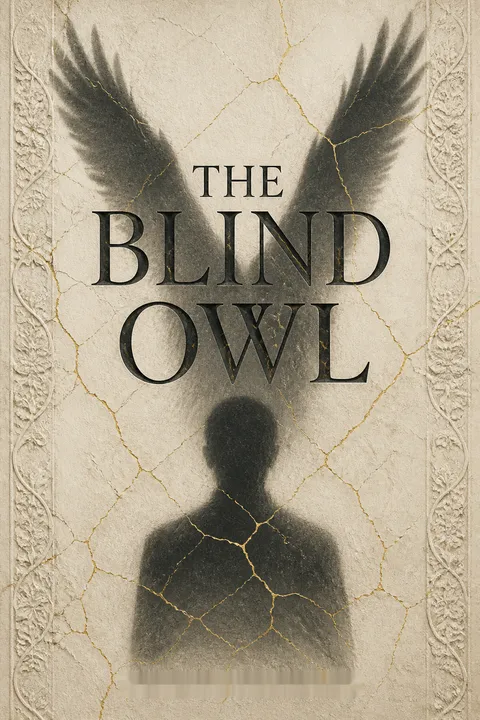
The Blind Owl is a surrealist masterpiece by Iranian author Sadegh Hedayat. Readers describe it as a dark, haunting, and complex exploration of the human psyche, blending dreams, reality, and symbolism. The novel's unique structure and vivid imagery create a nightmarish atmosphere that deeply affects readers. While some find it challenging or disturbing, many consider it a profound work of art that demands multiple readings to fully appreciate its depth and meaning. The book's reputation for being psychologically intense has led to warnings about its potential impact on vulnerable readers.
People Also Read
Characters
The narrator
Painter in isolationAn unnamed pen-case painter who lives in a room apart from the city and turns repeatedly to opium, wine, and solitary observation. He is intensely imaginative, but his interpretations of other people are governed by fixation, shame, and fear of being excluded. He wants to understand himself, yet the act of remembering makes his identity less stable: figures from his past, his surroundings, and his own art seem to exchange faces. His writing addresses the shadow on his wall because he distrusts ordinary human understanding. The reader encounters him through his own feverish account, so his pain is vivid even when his explanations remain uncertain.
The wife
Unwilling object of desireThe narrator’s1 foster sister and wife, described almost entirely through his hostile and adoring perceptions. She refuses the closeness he expects from marriage and pursues a life that he cannot control or reliably understand. Her resistance exposes the gap between his imagined childhood bond and the adult woman before him. The narrator1 reduces her to insults when he feels rejected, then idealizes her when he fears losing her. That contradiction makes her central to the story’s struggle over desire and agency, while her own motives remain largely inaccessible because the narrator1 never gives her a voice independent of his account.
Nanny
Keeper of family memoriesThe older nurse who raised both the narrator1 and his wife2, and later cares for the narrator1 during his illness. Nanny offers practical help, remedies, gossip, and family stories, making her the narrator’s1 closest link to daily life. He depends on her attention while also resenting her ordinary beliefs and familiar questions. Her memories supply much of the family history that shapes his understanding of himself, but she cannot confirm the fantastic meanings he attaches to those stories.
Bugam Dasi
Dancer in the family legendThe narrator’s1 mother, an Indian temple dancer whose past reaches him through Nanny’s3 account. Her beauty and ritual dance become bound to the story of two identical men7 competing for her and to the cobra trial she demands. The narrator1 imagines her as a figure of sensual power and inherited mystery, but he knows her only through a tale assembled from other people’s memories.
The scarfed old man
Laughing figure of recurrenceA bent, scarf-wearing figure who appears in several roles within the narrator’s1 account, including peddler and hearse driver. His hollow laughter and resemblance to the narrator’s painted old man make him feel at once familiar and threatening. The narrator1 associates him with death, discarded objects, and his wife’s2 private life. Whether these appearances belong to one person, several lookalikes, or the narrator’s1 shifting perception is never made secure.
The aunt
Lost maternal idealThe narrator’s1 aunt, who raises him after his parents leave him in her family’s care. He loves her as a mother, and her resemblance to her daughter2 helps explain his attachment to the woman he later marries2. Her death becomes the setting for a consequential moment between the young couple, linking the narrator’s1 longing to grief and shame.
The father and uncle
Uncertain twin ancestorsIdentical twins in Nanny’s3 account, both merchants and both in love with Bugam Dasi4. Their likeness makes it difficult to distinguish them, and the cobra trial leaves the survivor unable to identify himself. The narrator1 treats their story as a possible explanation for his own divided sense of identity, though the family legend cannot establish what truly happened.
The younger brother
The wife’s lookalike siblingThe wife’s2 younger brother, whose resemblance to her unsettles the narrator1. He appears in the narrator’s1 memories and visions as another link between childhood, family likeness, and his troubled sense of desire.
The butcher
Witness to daily violenceA local butcher whom the narrator1 watches from his window as he cuts and sells meat. His work becomes a model for the narrator’s1 fantasies of violence, turning an ordinary shop into a screen for the narrator’s1 violent thoughts.
The doctor
Ineffectual family physicianA family doctor who prescribes traditional remedies and opium for the narrator’s1 failing health. His treatments offer no clear answer to the narrator’s1 physical or mental suffering.
Plot Devices
The repeated pen-case image
Art as unstable evidenceThe narrator1 repeatedly paints a bent old man, a cypress tree, a stream, and a young woman offering a flower. The same arrangement appears in his vision through the wall and later seems to echo in an ancient vase portrait. The image gives the narrative a recognizable pattern, but each repetition makes the source harder to identify. It may be memory, prophecy, inherited design, or invention. Its function is not to solve the mystery but to make the narrator1 and reader test how much confidence an image can bear.
The shadow audience
Confession without witnessThe narrator1 writes for the shadow on his wall, treating it as the only listener capable of understanding him. This private audience frames his account and gives him a reason to record events, but it also reflects his division from himself. Because he trusts the shadow more than other people, the reader receives a confession shaped by isolation and self-suspicion rather than by external confirmation.
The inherited wine
Family memory made toxicA bottle left by the narrator’s mother4 is said to contain cobra venom. It first appears as a keepsake and later becomes linked to the narrator’s1 thoughts of oblivion. The family story behind it also connects his present life to Bugam Dasi4 and the trial that blurred the identities of his father and uncle7. The wine gathers inheritance, desire, and danger into one object, without establishing whether the family legend is literal or partly imagined.
The Rhages vase
A relic that mirrors obsessionThe ancient glazed vase bears a portrait whose eyes match the narrator’s1 painting of the dead woman. It briefly gives his fixation a history beyond his own life and offers him the comfort of an imagined predecessor. When the vase disappears near the end, the apparent link to the past is removed, leaving the narrator1 with physical traces of blood and no reliable explanation.
The laughing old man
A face that keeps returningThe scarfed old man’s5 laugh recurs around moments of fear, shame, and violence. He appears as a painted figure, a peddler5, and a hearse driver5, while his face becomes entangled with the narrator’s1 family story and self-image. The repeated laugh signals a return of earlier material, but it does not identify a single supernatural cause. It keeps the narrator’s1 world suspended between coincidence, memory, and psychological collapse.
FAQ
Synopsis & Basic Details
What is The Blind Owl about?
- A descent into madness: The Blind Owl follows a nameless narrator's spiraling descent into madness, fueled by isolation, opium use, and an obsessive fixation on a mysterious woman.
- Dreamlike, surreal narrative: The story unfolds through a fragmented, dreamlike narrative, blurring the lines between reality and hallucination, past and present.
- Exploration of inner turmoil: It delves into the narrator's psychological landscape, exploring themes of alienation, obsession, and the search for meaning in a seemingly meaningless world.
Why should I read The Blind Owl?
- Unique literary experience: The Blind Owl offers a unique and challenging reading experience due to its experimental structure, surreal imagery, and psychological depth.
- Exploration of dark themes: It provides a profound exploration of dark themes such as isolation, obsession, madness, and the nature of reality, resonating with readers interested in existential questions.
- Masterful prose and symbolism: Hedayat's masterful prose and rich symbolism create a haunting and unforgettable atmosphere, making it a compelling work of modernist literature.
What is the background of The Blind Owl?
- Persian modernist literature: The Blind Owl is considered a seminal work of Persian modernist literature, breaking away from traditional narrative structures and exploring complex psychological themes.
- Hedayat's personal struggles: The novel reflects Hedayat's own struggles with depression, alienation, and a sense of cultural displacement, adding a layer of biographical depth to the story.
- Cultural and historical context: It was written during a period of rapid modernization and cultural change in Iran, reflecting the tensions between tradition and modernity, East and West.
What are the most memorable quotes in The Blind Owl?
- "I am writing only for my shadow...": This quote encapsulates the narrator's profound isolation and his desire to connect with his inner self, highlighting the theme of alienation.
- "I thought to myself: if it's true that every person has a star in the sky, mine must be distant, dim, and absurd. Perhaps I never had a star.": This quote reveals the narrator's deep-seated pessimism and his sense of being fundamentally disconnected from the world.
- "Only death does not lie.": This quote underscores the narrator's disillusionment with life and his belief that only death offers a true escape from the deceptions and suffering of existence.
What writing style, narrative choices, and literary techniques does Sadegh Hedayat use?
- Stream-of-consciousness: Hedayat employs a stream-of-consciousness narrative style, allowing readers direct access to the narrator's fragmented thoughts, emotions, and perceptions.
- Surreal and dreamlike imagery: The novel is characterized by its use of surreal and dreamlike imagery, blurring the lines between reality and hallucination, creating a disorienting and unsettling atmosphere.
- Repetition and mirroring: Hedayat uses repetition of images, scenes, and characters, creating a sense of cyclical time and highlighting the narrator's obsessive and trapped state of mind.
Hidden Details & Subtle Connections
What are some minor details that add significant meaning?
- The recurring motif of the harelip: The harelip, present in the uncle, the old man, and even the narrator's distorted reflection, suggests a shared lineage or a symbolic link to a flawed, perhaps cursed, existence.
- The color black: The pervasive use of black, particularly in the woman's dress and the descriptions of the environment, symbolizes death, mourning, and the narrator's descent into darkness.
- The mention of specific locations: The references to places like Benares and Rey connect the narrator's personal experiences to broader cultural and historical contexts, hinting at a cyclical nature of suffering.
What are some subtle foreshadowing and callbacks?
- The bottle of wine: The bottle of wine, mentioned early on as a family heirloom, foreshadows the narrator's eventual use of it as a means of escape, both literally and symbolically.
- The old man's laughter: The old man's hollow, grating laughter, first heard outside the ventilation hole, recurs throughout the novel, foreshadowing the narrator's own descent into madness and his identification with the old man.
- The pen case painting: The recurring image of the pen case painting, with the cypress tree, old man, and young woman, foreshadows the narrator's obsessive fixation and the cyclical nature of his experiences.
What are some unexpected character connections?
- The narrator and the old man: The narrator's gradual identification with the old man, culminating in his transformation into the old man, reveals a disturbing connection between his conscious self and his repressed, darker impulses.
- The narrator and his uncle/father: The blurring of the lines between the narrator's father and uncle, and the shared trauma of the "trial by cobra," suggests a hereditary pattern of suffering and madness.
- The narrator and the vase painter: The narrator's recognition of the vase painting as identical to his own work suggests a connection across time, implying a shared experience of obsession and despair.
Who are the most significant supporting characters?
- The old man: The old man, a recurring figure, acts as a symbol of the narrator's inner turmoil and his eventual descent into madness, embodying the darker aspects of his psyche.
- The nurse: The nurse, a maternal figure, provides a grounding presence in the narrator's chaotic life, highlighting the themes of dependency and the human need for connection.
- The wife: The wife, a source of both desire and torment for the narrator, represents the unattainable and the destructive nature of obsession, driving him further into isolation.
Psychological, Emotional, & Relational Analysis
What are some unspoken motivations of the characters?
- The narrator's self-destruction: The narrator's actions suggest a subconscious desire for self-destruction, driven by his inability to cope with his isolation and the meaninglessness he perceives in life.
- The wife's cruelty: The wife's cruelty towards the narrator may stem from her own sense of entrapment and her desire to assert her independence, even if it means inflicting pain.
- The old man's mocking laughter: The old man's laughter may be a manifestation of his own suffering and a cynical commentary on the narrator's futile attempts to find meaning.
What psychological complexities do the characters exhibit?
- The narrator's fragmented psyche: The narrator's fragmented thoughts, hallucinations, and shifting identities reveal a deeply troubled psyche, struggling to maintain a coherent sense of self.
- The wife's duality: The wife's portrayal as both a desirable and a repulsive figure highlights the complex and often contradictory nature of human desire and relationships.
- The old man's symbolic ambiguity: The old man's ambiguous nature, as both a real character and a symbolic representation of the narrator's inner demons, adds a layer of psychological complexity to the story.
What are the major emotional turning points?
- The first glimpse of the woman: The narrator's first glimpse of the woman through the ventilation hole marks a turning point, igniting his obsession and setting him on a path of self-destruction.
- The discovery of the vase: The discovery of the vase with the woman's image intensifies the narrator's madness, blurring the lines between reality and illusion and leading to a deeper sense of despair.
- The final encounter with the wife: The final encounter with the wife, culminating in her death, represents the tragic culmination of the narrator's obsession and his complete descent into madness.
How do relationship dynamics evolve?
- The narrator and his shadow: The narrator's relationship with his shadow evolves from a form of self-reflection to a desperate attempt to connect with his inner self, highlighting his profound isolation.
- The narrator and his wife: The relationship between the narrator and his wife deteriorates from a strained marriage to a destructive cycle of desire and hatred, reflecting the corrosive effects of obsession.
- The narrator and the nurse: The narrator's relationship with the nurse, initially a source of comfort, becomes a reminder of his own dependency and his inability to escape his suffering.
Interpretation & Debate
Which parts of the story remain ambiguous or open-ended?
- The nature of the woman: The true nature of the woman, whether she is a real person, a hallucination, or a symbolic representation of the narrator's psyche, remains ambiguous, inviting multiple interpretations.
- The meaning of the old man: The old man's role, as both a separate character and a reflection of the narrator, is open to interpretation, leaving the reader to ponder the nature of identity and madness.
- The ending's implications: The ending, with the narrator's transformation into the old man, leaves the reader to question whether he has truly escaped his suffering or has simply become another manifestation of it.
What are some debatable, controversial scenes or moments in The Blind Owl?
- The narrator's violence towards the wife: The narrator's violent act against his wife is a controversial moment, raising questions about the nature of his madness and the extent of his culpability.
- The narrator's sexual obsession: The narrator's obsessive and often disturbing sexual thoughts and desires are a source of debate, challenging readers to confront the darker aspects of human nature.
- The blurring of reality and hallucination: The constant blurring of reality and hallucination throughout the novel is a source of debate, leaving readers to question the reliability of the narrator and the nature of truth itself.
The Blind Owl Ending Explained: How It Ends & What It Means
- Transformation into the old man: The ending sees the narrator transform into the old man, suggesting a complete loss of self and a merging with the darker aspects of his psyche.
- Cyclical nature of suffering: The cyclical nature of the narrative, with the narrator repeating patterns of behavior and thought, suggests that he is trapped in a cycle of suffering from which there is no escape.
- Ambiguity and despair: The ending's ambiguity and sense of despair leave the reader with a haunting and unsettling feeling, highlighting the novel's exploration of the human condition and the limits of understanding.
Download PDF
Download EPUB
.epub digital book format is ideal for reading ebooks on phones, tablets, and e-readers.








