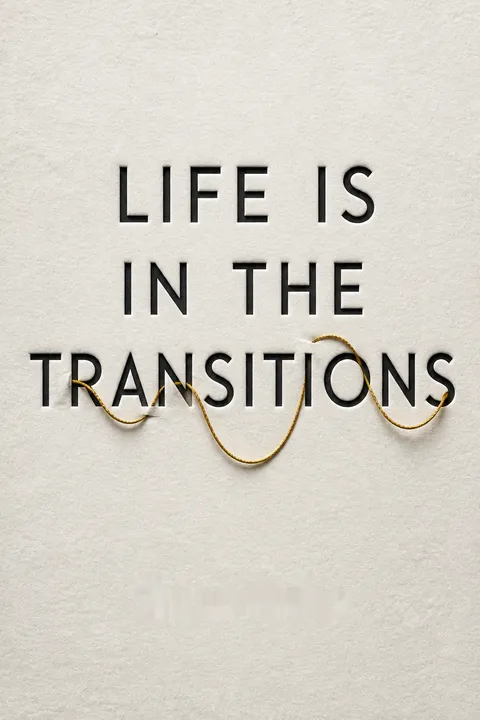


Key Takeaways
Use questions to recover a story when crisis erases your sense of self.
A story can restart. When Bruce Feiler’s father developed Parkinson’s and repeatedly tried to end his life, the family could not restore his former independence or find a reason for him to keep going. Feiler began sending him one question each week, starting with childhood toys. His father, unable to type, dictated answers, then added photographs and letters. Over four years, the questions became an autobiography by a man who had rarely written more than a memo.
Questions create connection. The project gave Feiler’s father something to do and gave the family new ways to talk about the past. It did not erase his illness, but it helped him see his life as more than the crisis he was living through. The book grows from this experiment: telling a life story can help people make meaning when their old plot no longer fits.
What's striking is the modesty of the intervention. A question about toys does not pretend to solve Parkinson’s or suicidal despair; it invites a person back into a larger identity. That distinction matters. Narrative practices can support connection and self-understanding, but they are not substitutes for medical or mental-health care. The method also makes storytelling reciprocal: the questioner listens, the storyteller chooses what to reveal, and the shared account becomes a relationship rather than a performance.
Drop the midlife timetable: turning points arrive at every age.
The old schedule misleads. Feiler traces how Western ideas of life shifted from natural cycles to industrial-era expectations of steady progress through fixed stages. Those models made a predictable sequence seem normal: education, career, marriage, children, retirement. But people’s lives often ignore the schedule. Christy Moore became a mother as a teenager, left high school, then returned to education and earned a doctorate. She did not experience her path as a failed version of the expected one.
Crisis has no birthday. A large American study of 7,000 adults found little evidence for a universal midlife crisis; about a quarter reported difficulties in that period, and linked them to events rather than a shared age-based crisis. Feiler’s interviews likewise place turning points across the life span. The useful shift is to stop treating an unconventional timeline as evidence that something has gone wrong.
The idea challenges a powerful social comparison: people measure themselves against milestones that once seemed universal but are now increasingly optional and unevenly timed. That can reduce needless shame. Still, rejecting a timetable should not mean pretending every path is equally unconstrained. Money, caregiving, health, discrimination, and geography shape which choices are available. A flexible life model is most helpful when it expands people’s sense of possibility without turning structural obstacles into personal failures.
Prepare for dozens of disruptions, but only a few will remake your life.
Not every jolt is a quake. Feiler calls an interruption to everyday life a disruptor. A lifequake is a forceful change that alters a person’s sense of purpose, direction, or identity, and begins a longer period of upheaval and renewal. A disrupted plan may be manageable on its own; several setbacks arriving together can become far more destabilizing.
Expect more than you expect. Combining public statistics with his 225 interviews, Feiler estimates that adults face roughly 30 to 40 disruptors, about one every 12 to 18 months. Around one in ten becomes a lifequake, with people experiencing three to five in adulthood. His estimates put the average lifequake transition at about five years. Timing and pileups matter: a single event can land during a vulnerable period, or join a string of troubles that together force a major reassessment.
The distinction is useful because it separates ordinary adjustment from a genuine change in life direction. It can also stop people from expecting every setback to become a grand personal transformation. The numbers, however, are estimates drawn partly from retrospective interviews, not a population forecast. Their best use is as a reminder that change is common and uneven, not as a calendar predicting how many crises any one person must endure.
Balance agency, belonging, and purpose as your sources of meaning shift.
Meaning has three supports. Feiler’s ABCs of meaning are agency, the sense that one can influence events; belonging, connection to family, friends, or community; and cause, commitment to something beyond oneself. He links these to three recurring life stories: the individual’s story, the shared story, and the story of service or belief. People may favor one, but they draw on all three.
Shapes reveal emphasis. In Feiler’s interviews, people often chose a line to represent movement and achievement, an enclosed shape such as a house or bowl to represent relationships, or a symbolic object such as a cross to represent a guiding commitment. These were clues to current priorities, not fixed personality types. A health crisis, new responsibility, or career change can shift which source of meaning needs attention.
The framework brings together ideas often discussed separately: autonomy, social connection, and purpose. It offers a practical diagnostic question: which support has become thin, and which one is consuming everything else? The balance is not necessarily equal. A new parent, a caregiver, and a person rebuilding after job loss may reasonably prioritize different needs. The framework works best as a flexible lens, not a scorecard for judging whether someone has achieved a perfectly balanced life.
Expect transitions to zigzag and last years, not follow a tidy sequence.
Change has no clean order. Feiler describes three broad parts of a transition: saying goodbye to what has ended, navigating an unsettled middle, and beginning a different life. People may move through these in different orders, revisit an earlier part, or remain in one for a long time. Grief can persist after a new relationship begins; a new job can arrive before someone feels ready to leave the old identity behind.
Long does not mean failed. In Feiler’s interviews, 47 percent named the unsettled middle as the hardest part, 39 percent found goodbye hardest, and 14 percent struggled most with beginning again. Four to five years was the most common reported transition length. Knowing this can temper the expectation that a major change should resolve in a few weeks or months.
This model usefully replaces a rigid emotional checklist with permission to move back and forth. Such flexibility fits the way people adapt to overlapping demands: a person can be grieving, planning, and experimenting in the same week. The figures describe people’s retrospective accounts, however, and should not become a new deadline. A transition’s duration depends on its conditions, available support, and the person’s own needs. A long process is not automatically pathology.
Name the hard feelings before demanding that they disappear.
Acceptance begins with accuracy. The first move is to acknowledge the reality of the change and identify the emotions attached to it. In Feiler’s interviews, fear was the most frequently named struggle at 27 percent, followed by sadness at 19 percent and shame at 15 percent. These feelings do not prove that someone is handling change badly. They can reveal what has been lost, what feels threatened, or what needs attention.
Accepting is not approving. Charles Gosset, a father and city forester whose drinking had damaged his marriage, began recovery when he recognized that alcohol was part of the problem rather than its solution. Acceptance meant facing the facts and taking responsibility for his next steps. Feiler also describes practical ways people faced fear, including writing down worries, comparing fear of an unknown future with the cost of staying put, and taking a concrete action despite uncertainty.
Emotional labeling can turn a vague sense of overwhelm into information that can be acted on. The distinction between accepting a fact and endorsing it is essential: a person can acknowledge an illness, abusive situation, or injustice while still seeking treatment, protection, or change. The book’s emphasis on personal agency is empowering, but it has limits where circumstances are not individually controllable. Sometimes the most effective next step is not private resolve, but practical help from other people or institutions.
Give change a physical marker, especially when loss has no public ritual.
Ritual gives change edges. Feiler uses ritual to mean a symbolic act, gesture, or ceremony that gives meaning to a transition. In his interviews, 78 percent said they marked a change in some way, and 85 percent kept a meaningful object connected to their past. These markers ranged from tattoos and name changes to gatherings, personal anniversaries, and small keepsakes.
Mourning needs somewhere to go. Rabbi Larry Moldo studied Jewish responses to stillbirth after he and his wife lost a baby and found few comforting practices available to them. They named the child, lit a candle on the anniversary, and spoke openly about the loss. A ritual cannot reverse what happened, but it can give private grief a form and let other people recognize it. Feiler stresses that mourning can concern a lost future, role, or dream, not only a death.
Rituals work partly because they make an invisible change socially legible. A ceremony, keepsake, or recurring observance can give a person and their community a shared signal that something consequential has happened. The form need not be religious or elaborate. At the same time, a ritual is not automatically healing, and one person’s meaningful marker may feel alien to another. The point is not to perform grief correctly, but to find a form that makes it easier to acknowledge.
Use the unsettled middle to shed old roles and test new ways of being.
Make room for a different self. During the disorienting middle of change, people often let go of routines, beliefs, identities, or habits that no longer fit. They also experiment with new activities. Mark Lakeman, an architect who left a firm after discovering unethical conduct, spent years traveling and reconsidering his priorities. He later returned to Portland and helped create neighborhood gathering places. The period of wandering helped him move from a career organized around professional success toward community work.
Creation can be small. Zachary Herrick, an Army infantryman whose face was badly injured in Afghanistan, began cooking, writing, and painting during recovery. These activities gave him ways to express himself beyond his former role. Feiler’s practical implication is to try something new, recover a neglected interest, or change a physical routine. The point is not to discover a masterpiece. It is to make experimentation possible while the old identity is loosening.
The pairing of shedding and experimentation is stronger than a simple instruction to reinvent oneself. Removing an old role creates space, while small creative acts provide evidence that other ways of being are possible. This resembles learning through prototypes: a low-stakes trial can reveal preferences before a person commits to a major decision. But crisis does not reliably produce creativity, and an activity should not be turned into another performance demand. Rest and stability can be necessary parts of the middle, too.
Ask for the support you need, from comfort to a blunt reality check.
Different listeners do different jobs. Feiler’s interviews surfaced several kinds of helpful support: comforters who reassure, nudgers who offer a gentle push, slappers who confront self-deception, and modelers whose example shows what may be possible. Naysayers, though discouraging, sometimes became motivation. No one kind of response works for everyone or in every moment.
Say what would help. Rockie Lynne Rash, an orphaned boy from a poor family, found an important mentor in musician Mike Shane, who coached him and helped him get started in Nashville. Later, Rash used his success to support children of military families. Sharing a struggle can also reduce isolation and help people see their own situation differently. A practical approach is to tell a trusted person whether listening, encouragement, advice, or frank challenge would be most useful.
The taxonomy clarifies a common social mismatch: someone asks for understanding and gets advice, or wants a push and receives soothing agreement. Naming the desired response can make support more effective without requiring the listener to guess. There is a caveat: bluntness is not inherently wise, and pressure from a trusted person can become coercive. The value of a mentor or critic depends on the relationship, the timing, and whether the feedback respects the person’s judgment and safety.
Make one ordinary task your first proof that life is moving again.
Small acts can reopen the day. Feiler noticed that some people recovering from major upheaval celebrated ordinary tasks: paying a bill, taking a trip, or getting back to a routine. For Seth Mnookin, who had endured years of heroin addiction, paying bills after finding work became a sign that his life was functioning again. These moments are not trivial to the person who has had to rebuild basic confidence.
Build from the first win. People also started personal projects, from learning a skill to helping family or serving a cause. Feiler found that 61 percent of interviewees mentioned some kind of move during a transition, often to create a new setting for life. A practical lesson is to choose a manageable task or project that fits present capacity. Completing it can provide structure and a concrete foothold without demanding a full plan for the future.
This insight makes recovery less dependent on a dramatic breakthrough. Ordinary competence is a form of evidence: the person has done one thing, and that experience can support the next. Behavioral approaches often rely on this logic, using achievable actions to interrupt paralysis and restore a sense of efficacy. The caution is that small wins should not be mistaken for proof that serious distress has ended. They are footholds, not a verdict that everything is fine.
Rewrite the story with distance, honesty, and an ending that leaves room.
A story can absorb change. A transition often becomes an occasion to reconsider who a person is and how past events connect. Feiler suggests that distance matters: an experience that is still unfolding may be too raw to interpret, while the past tense can make it easier to place within a larger life. He also describes people changing their account of an event as they discover what it means to them.
Hope need not erase pain. Chris Waddell, a Paralympian who attempted to climb Mount Kilimanjaro using an arm-powered vehicle, had to stop short of the summit. He later understood the experience through the help of the team that made the climb possible, rather than as a simple tale of individual triumph. The aim is not to claim that suffering was secretly good. It is to tell an account that includes what happened and leaves room for what the person chooses to do with it.
The strongest version of this idea treats narrative as revision, not spin. A useful account can preserve loss, uncertainty, and responsibility while still giving the person a future-facing role. That is different from insisting every tragedy yields a lesson or a happy ending. Stories can also become too neat, forcing experience into a moral that was not there. The safeguard is to let the interpretation change over time and to keep the facts, including unresolved pain, in view.
Analysis
The book’s central achievement is to move the discussion of change away from a calendar of expected stages and toward a practical question: how do people make meaning when a life no longer follows its old plan? Its strongest contribution is the combination of a broad cultural claim, that lives are increasingly nonlinear, with a humane account of individual adaptation. The distinction between ordinary disruptors and lifequakes helps readers recognize that not every complication deserves a total identity overhaul. The three sources of meaning and the transition practices then offer a usable vocabulary for deciding what might help.
The narrative evidence is vivid, but its reach should be interpreted carefully. Feiler’s 225 interviewees are not a representative sample, and many of the numerical estimates combine those interviews with public statistics that measure different things. The estimates are illuminating prompts, not precise forecasts for any individual. Retrospective life stories also change as people retell them, which is both the book’s subject and a methodological complication: the account of a transition reflects the teller’s present understanding, not an untouched record of the past. There is a deeper tension between agency and circumstance. The invitation to choose one’s response can restore dignity, especially when events themselves were involuntary. Yet not all people have equal access to safety, time, therapy, supportive relationships, or financial options. A transition framework should complement material help, not make hardship look like a test of character. Likewise, a redemptive story can be sustaining, but imposed positivity can silence grief or excuse preventable harm.
Used with those limits in mind, the book offers a valuable alternative to both rigid stage theories and empty calls to bounce back. Its practical method is not a prescribed route but a set of questions: what must be faced, what deserves marking, what can be released, what can be tried, who can help, and what account of the past remains honest while making room for a future? That is the book’s durable insight: meaning is not found by forcing life back into order, but by learning to interpret and reshape a life that has already changed.
Review Summary
Life Is in the Transitions explores how modern life has become less predictable and linear, with frequent disruptions and major life changes. Feiler interviewed 225 people to analyze how they navigate transitions, identifying common stages and coping strategies. Many readers found the book insightful and helpful for understanding life changes, though some criticized its length and lack of scientific rigor. The personal stories and emphasis on storytelling resonated with many, while others felt the conclusions were obvious or repetitive. Overall, most reviewers appreciated the book's perspective on embracing change and finding meaning in life's transitions.
People Also Read








Glossary
Disruptor
life-interrupting eventAn event or experience that interrupts the everyday flow of life. The term is value-neutral: starting a job, adopting a child, losing a loved one, and being fired can all be disruptors. Most are manageable individually, though several arriving together or at a vulnerable time may contribute to a much larger change.
Lifequake
major identity-changing disruptionA forceful burst of change that begins a period of upheaval, transition, and renewal. A lifequake changes a person’s sense of meaning, purpose, or direction, and may divide their account of life into a before and after. The event alone does not define it; the person’s recognition of its significance also matters.
ABCs of meaning
three sources of meaningFeiler’s shorthand for agency, belonging, and cause. Agency is the sense of being able to influence one’s circumstances; belonging comes from relationships and community; cause is commitment to a purpose beyond oneself. People draw on all three, but often emphasize one more strongly at a particular time in life.
Shape-shifting
rebalancing sources of meaningThe process of changing the relative importance given to agency, belonging, and cause in response to life events. A person whose identity has centered on achievement may turn toward relationships or service after a major disruption. The change need not restore the person’s former balance or return them to an earlier identity.
Autobiographical occasion
prompt to rethink identityA moment when a person is encouraged or required to reconsider who they are and how their life fits together. A major disruption can make an existing self-description inadequate, prompting someone to revise their account of the past and their understanding of what comes next.
Meaning vacuum
temporary loss of directionA period after a major disruption when familiar sources of meaning no longer provide direction or reassurance. The person may feel disoriented because the old balance among agency, belonging, and cause has been disturbed. Feiler treats this as part of adaptation, not as proof that a person has permanently lost their identity.
Transition tool kit
practices for navigating changeFeiler’s collection of seven broad practices for working through major change: acknowledge emotions, mark the change, release old habits or assumptions, experiment with new activities, seek help from others, make the emerging identity visible, and revise the personal story. The practices are options, not a required sequence, and people use them in different combinations.
Life Story Interview
guided personal-history conversationA structured interview that asks a person to recount their life, describe important high points, low points, and turning points, and reflect on transitions, emotions, sources of meaning, and future hopes. Feiler adapted an existing narrative psychology approach to study how people interpret disruption and change.
FAQ
What's Life Is in the Transitions about?
- Focus on Life Changes: The book explores the significance of life transitions and disruptions, arguing that these moments are as crucial as celebrated milestones. Bruce Feiler emphasizes mastering these transitions for personal growth.
- Nonlinear Life Concept: Feiler introduces the idea of a nonlinear life, where events don't follow a predictable path. Life is characterized by unexpected changes, or "lifequakes," reshaping identities and narratives.
- Practical Guidance: The book offers a toolkit for navigating transitions, including methods for accepting change and reshaping personal narratives. Feiler uses interviews and research to provide insights into finding meaning in experiences.
Why should I read Life Is in the Transitions?
- Relevance to Everyone: The book is relevant to anyone experiencing change, such as career shifts or personal crises. Feiler's insights resonate with the universal human experience of navigating life's unpredictability.
- Empowerment Through Understanding: Readers gain tools to understand their life transitions, empowering them to control their narratives. The book encourages embracing change, fostering resilience and adaptability.
- Engaging Stories: Feiler shares compelling personal stories and interviews, making the book informative and relatable. These narratives illustrate the principles discussed, providing real-world context.
What are the key takeaways of Life Is in the Transitions?
- Lifequakes and Disruptors: Introduces "lifequakes," significant events disrupting normal routines, forcing reevaluation of lives. Feiler identifies over fifty types of disruptors leading to these lifequakes.
- The ABCs of Meaning: Outlines three components of a meaningful life: Agency (control), Belonging (connections), and Cause (purpose). Balancing these elements is essential for navigating transitions.
- Shape-Shifting: Introduces shape-shifting, where individuals adjust priorities and identities in response to changes. This flexibility allows for personal growth during challenging times.
What are the best quotes from Life Is in the Transitions and what do they mean?
- "Life is in the transitions.": Emphasizes that moments of change are where we find meaning and growth. Suggests transitions are opportunities for transformation, not just obstacles.
- "The linear life is dead.": Argues the traditional view of life as a straight path is outdated. Highlights recognizing the nonlinear nature of experiences and frequent disruptions.
- "You do not have to suffer to learn...": Reflects the idea that suffering can lead to valuable lessons and growth. Encourages finding meaning in struggles rather than viewing them negatively.
What is a "lifequake" as defined in Life Is in the Transitions?
- Definition of Lifequake: Described as significant, often unexpected events disrupting life's normal flow. These events can lead to profound changes in identity, purpose, and direction.
- Types of Lifequakes: Categorized into personal (e.g., health crises) and collective (e.g., societal events like 9/11). Understanding these helps navigate their aftermath effectively.
- Impact on Personal Narrative: Lifequakes force reassessment of life stories, leading to reflection and transformation. They serve as pivotal moments redefining one's sense of self and future direction.
How does Life Is in the Transitions suggest we navigate life transitions?
- Transition Toolkit: Presents a toolkit of seven tools for navigating transitions, including accepting emotions, marking changes with rituals, and creating new experiences.
- Emotional Acceptance: First step is accepting and identifying emotions. Acknowledging feelings of fear, sadness, or shame is crucial for moving forward.
- Rituals for Change: Emphasizes creating rituals to mark significant life changes. Rituals provide structure and meaning during chaotic times, helping process experiences.
What is the significance of rituals in Life Is in the Transitions?
- Creating Structure: Rituals provide order and meaning during upheaval. They serve as anchors grounding individuals amidst life's chaos.
- Marking Changes: Rituals help acknowledge and honor significant life changes. This recognition is essential for emotional healing and moving forward.
- Personalization of Rituals: Encourages creating personalized rituals resonating with experiences. Personalization makes rituals more meaningful and effective in facilitating transitions.
What does Feiler mean by "shape-shifting" in Life Is in the Transitions?
- Definition of Shape-Shifting: Refers to adjusting identity and priorities in response to life changes. Involves rebalancing agency, belonging, and cause in one's life.
- Nonlinear Adaptation: Shape-shifting is a nonlinear process, moving back and forth between identity aspects. Flexibility is crucial for navigating life transitions.
- Empowerment Through Change: Empowers individuals to embrace multifaceted identities. Encourages exploring new roles and perspectives as they adapt to changing circumstances.
How does Life Is in the Transitions address the emotional challenges of transitions?
- Common Emotions: Identifies fear, sadness, and shame as prevalent emotions during transitions. Understanding these is key to navigating challenges.
- Coping Strategies: Shares strategies like comparing down, writing down fears, and facing them head-on. These help regain a sense of control.
- Emotional Growth: Emotional challenges can lead to personal growth and resilience. Confronting and processing feelings can result in stronger self-awareness.
What are the "ABCs of meaning" in Life Is in the Transitions?
- Agency: Refers to control and autonomy over one's life. Emphasizes taking charge of one's narrative and decisions.
- Belonging: Highlights the significance of relationships and community for support and connection. Underscores the need for social ties during change.
- Cause: Relates to having a purpose or mission beyond oneself. Provides direction and fulfillment in life.
How can I apply the concepts from Life Is in the Transitions to my own life?
- Reflect on Your Life Shape: Consider what shape represents your life and how it aligns with current experiences. Helps identify areas for shifting focus or priorities.
- Utilize the Transition Toolkit: Apply the seven tools to navigate transitions. Start by accepting emotions and creating rituals for significant changes.
- Embrace Nonlinearity: Recognize life is nonlinear and transitions may not follow a predictable path. Be open to shape-shifting and adapting identity with new challenges.
About the Author

Download PDF
Download EPUB
.epub digital book format is ideal for reading ebooks on phones, tablets, and e-readers.








