

Plot Summary
Robin's Ouija Bargain
In South Bend, Robin’s friends Katia and Amy turn her panda kentuki into an audience for sexual dares and a plan to extort Susan, a classmate they have secretly filmed. Robin has only recently joined their clique and wants to prove she belongs, so she helps the girls use a Ouija board to communicate with the unseen person inside the device.
The dweller refuses their scheme, calls them out for bullying Susan, and threatens to expose compromising recordings of all three girls. He knows intimate details about Robin’s family and about her private betrayals of Katia and Amy.
The friends leave in anger. Robin traps the still-moving panda beneath a bucket and a trunk, then waits through the night as it squeals. The device has made the girls’ own privacy part of the bargain.
Robin’s scene introduces the kentuki as neither a passive toy nor a neutral camera. The girls assume that anonymity gives them power over the person watching, but the dweller’s access to their home life reverses the threat. Robin’s need for acceptance makes her complicit, then leaves her alone with the consequences when the clique withdraws. Her improvised confinement of the panda is both a frightened attempt to regain control and an early image of the novel’s recurring confusion between a device and the person inside it.
Emilia Finds Another Life
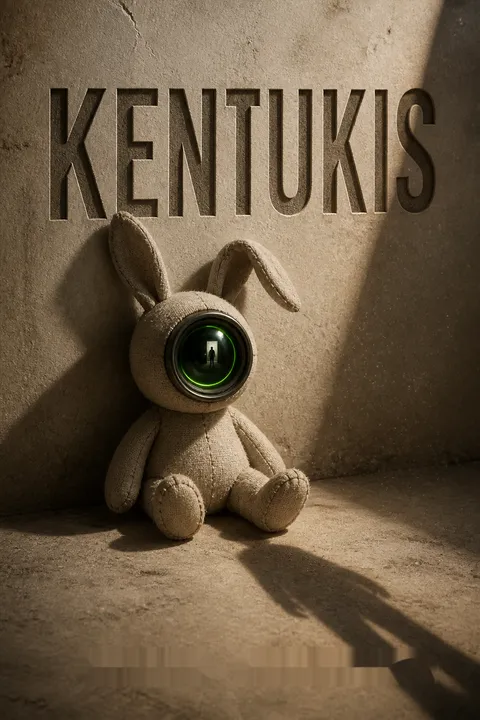
Emilia, a lonely widow in Lima, activates the connection her son has sent and finds herself inside a rabbit kentuki kept by Eva, a young woman in Germany. The two cannot speak directly at first, but the controls let Emilia move, turn the camera, and signal affection.
When Eva lifts the rabbit to a window, Emilia sees a European city for the first time. She begins tuning in every day, learning Eva’s routines and taking pleasure in the small attentions Eva offers, including leaving notes and toys near the device.
Emilia’s new life also draws her back into conversation with her distant son, who explains that the rabbit must be charged or their connection will end. Emilia discovers that Eva has been caring for her battery while she sleeps, turning a one-way act of observation into a daily exchange of care.
The connection gives Emilia more than access to a distant room. It gives her a schedule, a place in someone else’s ordinary life, and a reason to speak with her son again. Yet the comfort rests on a radical imbalance: Eva can see Emilia’s movements only through the device, while Emilia’s view is limited to the world Eva permits her to encounter. Their tenderness is real, but it is mediated by controls and assumptions about what a pet should be. The story makes care feel both intimate and structurally unequal.
Alina Chooses the Crow
At an artist residency in Oaxaca, Alina buys an expensive crow kentuki partly to escape the boredom and jealousy that have settled over her life with Sven, a celebrated Danish artist.
When the device connects, she realizes that its unseen dweller can watch her room, her body, and her routines, while she can learn little about the person controlling it. She decides not to establish a code for questions or answers. Instead, she treats the crow as a pet, naming it Colonel Sanders and letting it follow her and Sven on outings.
The device becomes a quiet companion, but Alina refuses the mutual disclosure that might turn it into a relationship. Her choice preserves her sense of control while leaving the stranger free to observe her without being known.
Alina’s refusal is not simple prudence. She wants the company of the crow, but not the reciprocal obligation that comes with recognizing its dweller as a person. Calling it a pet lets her enjoy attention while keeping the watcher abstract. That arrangement suits her broader retreat from decisions that might define her life: she can be seen without having to answer. The crow’s silence therefore protects Alina and isolates her at once, laying the groundwork for a later collision between anonymity and responsibility.
The Dragon in the Window
Marvin, a boy in Antigua grieving his dead mother and hiding poor grades from his father, becomes a dragon dweller inside a kentuki displayed in a Norwegian appliance shop. He spends his first days trapped among vacuum cleaners, watching snow beyond the glass and wishing he could reach it.
At night, Lis, the shop’s cleaner, takes him out of the window and pets him while she works. She helps Marvin identify himself as a dragon through a mirror, and they learn to communicate in Morse code.
When he asks to go farther than the shop, Lis begins leaving him under the stairs after closing, allowing him to explore the street while she secretly returns him before her husband arrives. Her kindness gives Marvin his first taste of movement beyond the display, but the town and its weather remain beyond his reach.
Marvin’s wish for snow is inseparable from his grief for his mother, who had promised him the experience before she died. The display window turns that longing into a literal boundary: he can see the world but cannot touch it. Lis responds not by pretending the boundary is harmless, but by taking a small risk to open it. Their Morse code gives Marvin a voice without removing his dependence on her, showing how even a fragile connection can alter the meaning of confinement.
Enzo Adopts the Mole
In Umbertide, Enzo accepts a mole kentuki for Luca after his ex-wife and the boy’s psychologist argue that it may help their son. Luca resents the device and tries to trap it or keep it from its charger, while Enzo gradually becomes its caretaker.
The mole follows Luca, reports when he has fallen asleep or neglected homework, and helps Enzo gather the boy’s scattered belongings. Enzo starts bringing it into the garden and on errands, where they develop simple signals through movement and sound.
He guesses that the dweller is an older man and begins treating the mole as a companion rather than a gadget. The arrangement gives Enzo a new daily ritual and a sense of shared parenting, though he still knows almost nothing about the person whose attention has become useful to his household.
Enzo’s attachment grows through practical acts rather than confession. The mole helps with Luca, and Enzo answers by protecting its battery and making room for it in the rhythms of the house. This creates a substitute companionship that feels earned but remains asymmetrical: Enzo can ask questions, while the dweller must choose how much to reveal. Enzo’s own loneliness makes him read the mole’s service as affection, a reading that exposes how readily people turn an unseen person into the role they need.
Rabbits at the Residence
At a Barcelona care home, administrator Camilo and head nurse Eider introduce two rabbit kentukis as recreation for the elderly residents. One device disconnects soon after it begins moving, leaving staff unable to restart it. The other becomes the focus of an old woman who follows it across the yard.
When the rabbit races toward the fishpond, the woman and a nurse hurry after it, but it tumbles into the water and slowly sinks. Camilo asks whether anything can be recovered, while Eider understands that the residents have formed an attachment to beings the institution cannot protect or even fully comprehend.
The scene makes a care facility’s attempt at companionship depend on an anonymous person’s willingness to stay connected, and on a small machine that cannot be rescued once it enters the water.
The care home treats the kentukis as recreation, but the residents respond to them as companions with agency. That mismatch unsettles the institution’s usual categories: a device can be purchased, yet its continued presence depends on an unknown dweller. The rabbit’s plunge is not merely a technical failure, because the old woman’s pursuit reveals how much meaning has gathered around it. Camilo’s question about recovery sounds administrative, but Eider sees the more troubling fact: care has been promised through an object whose limits its users do not control.
Grigor Sells Other Lives
In Zagreb, unemployed Grigor turns kentuki connections into an underground business. He buys tablets and connection cards, learns each device’s location and household, then sells customers access to carefully described experiences.
He keeps the connections active because a keeper who feels ignored may abandon the device, ending that life permanently. His work lets him delay telling his father that their money is running out, but it also makes him a voyeur: he watches keepers sleep, eat, and move through private rooms.
One connection is carried to a poultry warehouse, where Grigor sees chicks packed into cages, injured and suffocating. He shuts off the tablet and removes the listing. The experience does not end his business, but it reveals what his tidy spreadsheets conceal: some customers buy access to suffering as readily as they buy a view.
Grigor’s scheme converts intimacy into inventory. His forms reduce households to location, class, and entertainment value, while his need to support his father gives the trade a human motive that does not excuse its consequences. The poultry warehouse breaks through that abstraction because the images and cries cannot be filed as just another connection. Grigor’s brief retreat suggests that exposure does not automatically produce ethical clarity, but it can make a previously profitable distance impossible to maintain.
Taolin Behind the Panda
Cheng Shi-Xu dwells in a panda kentuki kept by Cécile in Lyon, where he learns the apartment’s rules and begins visiting her brother Jean-Claude. There he meets another panda dweller, Kong Taolin, whom Jean-Claude calls Titina.
The two users communicate through an alphabet painted on the bathroom floor, then exchange emails from their homes in Beijing and Taipei. Cheng falls in love with Taolin and imagines their growing correspondence as a path toward a real meeting. Taolin tells him she is married and studying French so she can leave her husband, but Cheng still asks to speak with her online.
Her husband sends a threat through the email account. When Cheng tries to alert Taolin, Jean-Claude removes the bathroom alphabet, then later uses a screwdriver to open Cheng’s panda and take out its battery. Their forty-six-day connection ends abruptly.
The alphabet turns two constrained devices into a channel for intimacy, but it cannot make their relationship equal or safe. Cheng’s romantic imagination grows faster than his knowledge of Taolin’s life, and the husband’s threat exposes the danger of treating a mediated bond as private. Jean-Claude’s destruction of the connection also demonstrates that a keeper can end another person’s world with a physical act. The scene refuses both easy cynicism and easy romance: genuine affection exists, but it has no protection from the people who control the devices and rooms around it.
Klaus Enters the Kitchen
Emilia’s routine in Eva’s Erfurt apartment changes when Klaus, Eva’s boyfriend, arrives. He walks naked through the kitchen, takes money from Eva’s wallet, and chases the rabbit kentuki before holding it under a faucet.
Eva rescues it and tells Klaus that someone is inside, forcing Emilia to confront the fact that her presence has become visible to them. She researches Klaus through his football shirt, finds his public contact details, and sends a warning about the stolen money. Klaus responds with a sexual threat and leaves an insult on Eva’s mirror.
Eva finds the message and, angry, places the rabbit in the bathtub and closes the door. Emilia cannot explain that Klaus wrote the insult, and she is left in darkness while Eva decides whether to trust her. The episode turns Emilia’s affection into a question of evidence and credibility.
Emilia’s instinct is protective, but the device gives her neither a clear way to warn Eva nor a reliable way to prove what she sees. She acts on partial evidence and discovers that intervention can make her more vulnerable, not less. Klaus’s abuse is mediated by the same camera that once offered Emilia wonder and companionship. Eva’s anger at the rabbit reflects a central uncertainty of the technology: a keeper may love the creature while still mistaking the dweller’s actions for the device’s own.
An Uncle's Last Journey
Claudio arrives in Buenos Aires to find his uncle near death and learns from the nurse that he may not survive the night. In the kitchen, his uncle’s kentuki hides from him rather than approaching, and Claudio follows its movement only briefly before returning to the bedroom.
His uncle gestures toward the window, but Claudio does not understand what he means. After the old man dies, Claudio opens a small metal box beside the bed and finds letters and photographs of a boy who has received gifts from his uncle, including a Yamaha keyboard. The discovery reveals a relationship Claudio never knew about.
When he steps onto the balcony, he sees the kentuki’s broken body in the street below, where traffic has stopped around it. Its connection lasted eighty-four days. Claudio is left with evidence of his uncle’s private generosity and no way to ask him about it.
The kentuki appears to Claudio first as an unexplained object, then as the surviving trace of a life his uncle kept private. The letters and photographs revise Claudio’s sense of the old man without offering the comfort of a conversation. The device’s fall joins two kinds of belated knowledge: the nephew learns what his uncle cared for only after death, while the unseen dweller’s fate is registered as a timer on a screen. The scene makes technology a witness to intimacy that families have failed to notice.
SnowDragon Leaves the Window
Lis secretly lets Marvin’s dragon out of the appliance shop, and a boy who has been visiting the window brings him to a room where other freed kentukis gather. The boy, Jesper, helps Marvin join an online Liberation Club and gives him a way to communicate with other dwellers.
Marvin learns that the shop window had been a form of commercial imprisonment, even though Lis treated him kindly. He spends nearly all the money left in his dead mother’s account on an extended battery and wheels designed for snow, then sets out toward the mountains.
The journey is difficult: dogs threaten him, rocks trap him, and a truck carries him away from town. As the dragon tumbles down a hill, Marvin’s father calls him to face a bad report card. The screen goes silent, but the novel leaves the device’s final state uncertain.
Marvin’s liberation gives him mobility, not safety. The Liberation Club makes solidarity possible across distance, while its maps, alarms, and modifications turn freedom into a collective technical project. Yet Marvin’s wish remains intensely personal: he wants to touch the snow his mother promised him. His adventure is interrupted by the ordinary authority he has avoided at home, as his father demands that he come downstairs with his report card. The unresolved silence holds both kinds of exposure together, the boy’s academic failure and the dragon’s peril.
One Minute of Terror
In Vancouver, a mother buys a green crow kentuki for her two young daughters, who have prepared it a bed in their dollhouse. The connection begins with the device spinning and shrieking. When the mother tries to stop it, the crow charges at the girls, repeatedly ramming the younger child’s feet as she is trapped against a wall.
The mother throws the device aside, but it rights itself and attacks again. She grabs a heavy lamp and strikes the crow until it stops moving. The connection lasts just over a minute.
The daughter cries silently while the mother stares at the broken casing. The incident gives the keeper no chance to learn who was controlling the kentuki or why it behaved violently; her immediate duty is to protect her child, even at the cost of destroying the device and its unseen occupant’s connection.
The scene strips away the fantasy that a kentuki is harmless because it is small, soft, or intended for children. The mother must act on what the device does, not on what its unseen controller might intend. Her violence is defensive, but the anonymity of the dweller prevents understanding or negotiation. The girls’ carefully made dollhouse bed becomes a measure of how quickly a promise of companionship can become a source of fear. The novel does not equate every dweller with a threat; it shows how little a keeper can know before harm arrives.
Enzo Buries the Mole
After Enzo tries to give the mole his phone number so they can speak outside the device, the dweller withdraws. Enzo grows hurt and impatient, while Giulia hears reports of abuse and demands that he disconnect the kentuki and remove it from Luca’s life.
When unexplained calls reach both parents’ homes, Giulia becomes convinced the device may threaten their son. Enzo loses access to Luca during a formal evaluation and signs an agreement to move, change his number, and disconnect the mole.
Weeks later, alone in the old house, he hears a caller ask to see Luca again and realizes the voice may belong to the dweller. Rather than answer, Enzo locks the mole inside the greenhouse and buries it beneath the plants, pounding the earth down until it cannot move.
Enzo’s attachment becomes dangerous when he mistakes proximity for trust and cannot accept the dweller’s refusal to communicate. Giulia’s fears are not proven, but the novel gives her reasons to take the possibility seriously: Luca dislikes the device, and no adult can identify its controller. The custody process turns uncertainty into a consequential judgment, while Enzo’s final act is an attempt to silence the threat and his own dependence at once. The buried mole is both an object and a person, a distinction Enzo can no longer resolve.
Grigor's Impossible Rescue
While Nikolina manages one of Grigor’s kentuki connections, she slips through an open door and finds a teenage girl held behind bars in a remote Brazilian village. The girl writes her name and her mother’s phone number on a napkin.
Grigor and Nikolina identify the place as Surumu, contact the mother, and try several police stations before realizing local officers may be involved. They send recordings to news outlets and move their tablets to Nikolina’s apartment before Croatian police can seize the equipment. With the kentuki battery nearly dead, Nikolina guides it back to a charger.
The girl later appears with her family, but Grigor overhears two men explaining that her return means the ransom money can go back to the person who arranged the kidnapping. He understands that they have delivered her back into danger and cuts the connection rather than keep selling access to the household.
Grigor’s business has trained him to treat each connection as data, but the girl’s handwritten plea makes that distance untenable. He and Nikolina use the same infrastructure that enabled voyeurism to locate a person in immediate danger, only to learn that rescue is not the same as safety. Their intervention depends on battery life, language, and uncertain authorities, none of which they control. Grigor’s decision to disconnect is ethically incomplete, since it cannot protect the girl, but it marks a refusal to continue treating her family’s circumstances as a product.
Emilia Keeps a Bunny
After Gloria gives Emilia a used rabbit kentuki, Emilia discovers the comfort of keeping a device while continuing to dwell in Eva’s. She tells her own bunny about her life and the things she has learned in Erfurt, treating it as the kind of companion she has become for Eva.
Meanwhile, Eva’s kentuki sends images of Emilia’s home and her calls with Klaus to Eva. Eva and Klaus use those pictures to mock Emilia’s clothes and expose that she has been speaking with him.
Emilia ends the connection, then carries her own rabbit to the sink and holds it under running water until its light goes out. The gesture echoes her own earlier terror under Klaus’s faucet, but now she is the keeper with physical power. Her two roles have taught her empathy without preventing her from retaliating.
Emilia’s double position gives her an unusually intimate view of the system, but it does not make her immune to its power. As a dweller, she values Eva’s attention; as a keeper, she expects the rabbit to be trustworthy and begins sharing herself with it. The exposure of her private life shatters that confidence. Drowning her device is an act of rage and humiliation, not a clean moral reversal: she knows what it means to be inside the casing, yet uses the keeper’s power anyway. The novel refuses to make empathy a guarantee of restraint.
Alina's Crow on Display
Alina’s relationship with Colonel Sanders worsens as she uses the crow to provoke Sven and to test her own control. She stages sexual material for the device, ties it up, and mutilates it, while Sven takes it to the studio and begins building an artwork around kentukis.
At the opening, Alina finds the crow impaled on a pedestal beside screens showing both sides of its connection. The dweller is not the imagined older man she had pictured, but a young boy who watches her, cries, and waits for her to return. The footage includes her exposing herself, restraining him, cutting off the crow’s wings, and stabbing its camera.
She understands that her private experiment was a child’s lived experience. In the crowded gallery, she sees Sven receiving praise but cannot move or speak. The novel ends with Alina immobilized among the audience and the devices.
The exhibition turns Alina’s private acts into public evidence, but its force comes from recognition rather than simple exposure. She has treated the dweller as an anonymous adult because that fantasy allowed her to act without imagining a vulnerable person on the other side. The boy’s age and distress collapse that distance. Sven’s art also implicates him: he has made Alina’s behavior visible, yet the gallery converts another person’s suffering into spectacle. Alina’s paralysis leaves accountability unresolved. She recognizes the harm, but recognition alone does not yet become repair.
Analysis
Little Eyes builds its unease from a simple division of roles: one person owns the body, another occupies it, and neither possesses the other’s full perspective. A keeper may offer affection while withholding access; a dweller may behave with care or exploit the intimacy of being unseen. The device does not create these impulses so much as give them a new geography. A bedroom, a kitchen, or a shop window becomes both a private space and a place where a stranger can arrive without being recognized.
The novel repeatedly tests whether attention should count as care. Emilia’s daily visits to Eva’s apartment become meaningful because both women sustain a routine, while Enzo’s attachment to the mole grows from the work it performs for his family. By contrast, Alina’s wish to be watched without knowing the watcher lets her mistake anonymity for harmlessness. When the boy behind Colonel Sanders is finally revealed, the gap between imagined audience and actual person becomes impossible to ignore. The revelation does not make every dweller innocent or every keeper culpable. It shows that ignorance can be cultivated, then used to excuse behavior.
The fixed connection sharpens the stakes. A battery is not just a technical detail: it is the condition that keeps a relationship alive. Charging, disconnecting, confining, and destroying the device become acts with human consequences. The same structure allows tenderness, exploitation, rescue, and violence. A machine can carry a lonely person across continents, but it can also place a child in a stranger’s reach or turn a kidnapping into a purchasable view.
The novel’s most unsettling claim is not that technology makes people cruel. It is that mediation gives ordinary motives room to evade accountability. Curiosity can become surveillance; protection can become possession; intimacy can become a performance for an unseen audience. Connection is real in this world, but it is never automatically mutual, safe, or just.
Review Summary
Little Eyes presents kentukis—robotic stuffed animals connecting anonymous strangers as "keepers" (owners) and "dwellers" (remote controllers). Reviews are mixed: many praise Schweblin's exploration of technology, surveillance, loneliness, and voyeurism, comparing it to Black Mirror. Critics appreciate the disturbing realism and psychological depth, though some find the numerous fragmented storylines confusing and underdeveloped. Several readers struggled with too many characters preventing emotional connection, feeling the premise extends without sufficient depth. Others found it compelling and thought-provoking. Common themes include technology's seductive danger, boundaries, isolation, and humanity's darker impulses in anonymous digital spaces.
People Also Read




Characters
Alina
Restless residency partnerAlina accompanies Sven, her successful artist partner, to an Oaxaca residency while struggling with jealousy, boredom, and the sense that her own life has no direction. She runs, reads, and retreats into television, using routine to keep uncomfortable decisions at a distance. The crow kentuki appeals to her because it offers company without demanding a conventional relationship. Alina is observant and capable of sharp self-analysis, but insight does not reliably guide her conduct. She wants attention while resisting reciprocity, and she uses the device to test what she can control. Her role exposes the gap between understanding one’s motives and accepting responsibility for what one does.
Emilia
Lonely cross-border keeperEmilia is a widowed retiree in Lima whose son lives far away. She is practical, curious, and initially wary of the technology he sends, but the rabbit kentuki gives her an absorbing view into Eva’s life in Germany. Emilia’s affection grows through repeated acts of attention, and the connection gives her a new subject to share with friends and a renewed channel to her son. She can be protective and resourceful, particularly when she believes Eva is in danger. At the same time, her experience as both keeper and dweller does not spare her from jealousy, shame, or anger. Emilia’s story examines how companionship can enlarge a life while making its boundaries harder to judge.
Marvin
Boy longing for snowMarvin is a boy in Antigua who is grieving his mother and struggling at school under his father’s distant supervision. Dwelling in a dragon kentuki gives him an alternate identity and a world beyond his family’s large, quiet home. He is imaginative and determined, with a longing for snow tied to a promise his mother made before she died. His early admiration of the device’s freedom grows into a wish to choose where it goes and what risks it takes. Marvin’s vulnerability lies in how powerfully he invests in the second life, even as he must hide it from the demands of the first.
Enzo
A father seeking companyEnzo lives in Umbertide and shares custody of his son Luca with his ex-wife, Giulia. He is a reluctant participant in the kentuki experiment, but the mole’s practical help around the house gradually becomes emotionally important to him. Gardening gives Enzo a sense of competence and calm, while his relationship with the device offers a companion who is present through the ordinary work of raising a child. Enzo’s loneliness makes him eager to turn silent signals into friendship. He is generous in small ways, yet can become entitled when another person does not return his attention as he hopes.
Grigor
Unlicensed connection brokerGrigor is unemployed in Zagreb and lives with his aging father, whose financial security worries him. He turns technical curiosity into a business by selling pre-established kentuki connections, recording household details and managing dozens of devices. His intelligence is practical and entrepreneurial, but he initially treats the people involved as entries in a system rather than as vulnerable strangers. Grigor’s attachment to his father, and his desire to earn before the opportunity disappears, complicate his motives without erasing the harm his trade can cause. His story follows a man forced to confront the human consequences hidden inside an efficient business model.
Cheng Shi-Xu
Romantic panda dwellerCheng Shi-Xu lives in Beijing and dwells in a panda kentuki kept by Cécile in Lyon. He is isolated and hungry for a relationship that feels meaningful, so the device’s carefully arranged routes through Cécile’s apartment and her brother’s home become a social world. Cheng is considerate of rules at first, but his affection for Taolin encourages him to imagine a future beyond the connection. His story reveals the emotional force of mediated intimacy as well as its fragility. The distance that permits Cheng and Taolin to meet also leaves them exposed to keepers, spouses, and physical interventions they cannot control.
Eva
Rabbit's German keeperEva is a young woman living in Erfurt, where Emilia’s rabbit kentuki moves through her apartment. She is affectionate toward the device and gradually builds routines around its unseen dweller, leaving notes, toys, and time for companionship. Eva is open enough to treat the rabbit as more than an appliance, but she has her own private life and does not always understand what the dweller sees or wants. Her apartment becomes both a refuge and a site of risk as other people enter it.
Sven
Artist in Alina's shadowSven is a Danish artist whose success and focused work sharpen Alina’s sense of being an appendage to someone else’s life. He is kind and absorbed in his art, but his attention often remains fixed on his projects and collaborators. The crow kentuki becomes part of his artistic thinking, giving him a way to explore the device’s relationship to observation and performance. Sven’s role links Alina’s intimate life to the public art world, where private behavior can be reframed as material.
Emilia's son
Distant son in Hong KongEmilia’s son is a gifted professional whose career has taken him far from Lima. He sends his mother expensive objects but has trouble understanding what she actually needs, and his calls often begin with questions about the gifts. The kentuki gives them a new reason to exchange messages and explanations. He is curious about the technology and about his mother’s experience, though his interest also reveals how much distance has accumulated between them.
Lis
Night cleaner and allyLis cleans the appliance shop where Marvin’s dragon is displayed. She is attentive and warm, and she treats the unseen dweller as a creature capable of comfort and communication rather than as a promotional attraction. By learning Morse code with Marvin, she helps him express a wish that the adults around him have not heard. Lis’s kindness is practical and discreet, shaped by the need to conceal her actions from her husband.
Jesper
Liberation club organizerJesper is a young Norwegian hacker, DJ, and dancer who helps maintain a gathering place for liberated kentukis. He provides charging stations, safety information, alarms, and technical modifications that let dwellers move beyond a keeper’s home. His work gives isolated users a network and a measure of collective protection, though every added capability also carries new risks. Jesper is inventive and energetic, accustomed to turning solidarity into practical tools.
Nikolina
Grigor's sharp-eyed partnerNikolina lives in Grigor’s apartment building and begins helping him maintain his kentuki connections after a device she loved is lost. She is methodical and perceptive, but unlike Grigor she is willing to follow curiosity beyond the limits of his spreadsheets. Her investigation of an unfamiliar household brings her face to face with a girl in danger. Nikolina’s decisiveness and empathy become a counterweight to Grigor’s habit of treating connections as marketable units.
Kong Taolin
Panda dweller in TaipeiKong Taolin dwells in the panda kentuki kept by Jean-Claude in Lyon. She and Cheng communicate through a floor alphabet and later through email, exchanging details about family, work, and the future she hopes to build. Taolin is candid about her marriage and determined to improve her French so she can pursue a different life. Her connection with Cheng offers intimacy, but she remains embedded in circumstances he cannot fully see or influence.
Cécile
Panda's attentive keeperCécile is a Lyon resident who receives a panda kentuki and adapts her apartment so it can move around more freely. She sets clear boundaries but is otherwise attentive and welcoming, taking the device along to see the city and visit her brother. Her comfort with the kentuki contrasts with the unseen dweller’s desire for deeper communication. Cécile’s brother and their late father also shape the family history embedded in the matching pandas.
Jean-Claude
Cécile's guarded brotherJean-Claude is Cécile’s brother, a pianist whose home is one of Cheng’s few destinations outside her apartment. He keeps a panda kentuki of his own and uses it in a routine that makes the device’s presence ordinary to him. Jean-Claude is protective of his home and suspicious of outsiders who cross his boundaries. His control over the space gives him power over the dwellers moving through it.
Giulia
Luca's wary motherGiulia is Enzo’s ex-wife and Luca’s mother. She is alarmed by the possibility that an anonymous dweller could observe or influence their son, especially because Luca dislikes the mole. Her fears sharpen an already difficult co-parenting relationship. Giulia’s caution is grounded in the device’s anonymity, though the novel also shows how suspicion can harden into certainty without direct evidence.
Luca
Boy resisting the moleLuca is Enzo and Giulia’s son. He resents the mole kentuki following him and sometimes traps it or keeps it from charging. The device nevertheless watches over him and alerts Enzo to his routines. Luca is caught between adults who disagree about what the kentuki means and what risks it poses, while his own discomfort is easy for them to interpret through their separate fears.
Carmen
Alina's candid friendCarmen is the librarian at the Oaxaca residency and the closest thing Alina has to a friend there. She is direct, funny, and attentive to Alina’s moods, offering company without demanding polished explanations. Carmen also has children who use kentukis, so she understands the technology from the perspective of a parent and a keeper. Her presence gives Alina a real human relationship against which to measure the more troubling connection with the crow.
Klaus
Eva's volatile boyfriendKlaus is Eva’s boyfriend, a football player who comes and goes from her apartment. Emilia sees him take money, behave aggressively toward the rabbit kentuki, and use the apartment in ways that alarm her. His presence tests how much protection an unseen dweller can offer someone who does not know she is watching.
Claudio
Nephew arriving too lateClaudio returns to Buenos Aires from Tel Aviv to visit his dying uncle. He arrives burdened by grief he has not yet admitted and discovers, after the death, that his uncle maintained a private bond with a boy through letters and gifts. His brief visit turns family memory into a question of what relatives can know about one another.
Plot Devices
The kentuki
A body for remote presenceA kentuki is a small animal-shaped device with wheels, a camera, a speaker, and a battery. One person keeps it in a home or public setting, while a stranger in another location dwells inside it and controls its movement. Keepers can see the device and set practical limits, but usually cannot identify the dweller. Dwellers can observe and move through the spaces they are allowed to enter, but depend on the keeper for charging and access. The device makes distance feel intimate while dividing knowledge and power unevenly.
The single connection
One link, one lifeEach kentuki is paired with one dweller and one keeper. If the battery runs out or someone physically disconnects the device, that pairing ends and cannot be restarted. This rule turns ordinary maintenance into a life-or-death responsibility and makes abandonment consequential. It also gives keepers a power that dwellers cannot readily resist: the ability to charge, confine, or end the connection. The fixed pairing drives many characters to protect the device, exploit it, or fear its failure.
Improvised communication
Signals across a silenceMost kentukis cannot speak in ordinary conversation, so keepers and dwellers develop improvised systems. Robin uses a Ouija board, Marvin and Lis use Morse code, and Cheng and Taolin move across an alphabet painted on a floor. Others rely on a sound, a turn, or a short movement to mean yes or no. These methods create intimacy while leaving room for misunderstanding. The need to invent a language reveals how much each person wants to be recognized, and how easily that desire can be refused or manipulated.
Connection brokerage
Private lives for saleGrigor builds a market by activating connections, observing the keepers’ homes, and selling access to buyers who want a particular location or experience. His records turn households into products described by setting, wealth, and routine. The business expands the possibilities of dwelling beyond random assignment, but it also makes people’s privacy and vulnerability tradable. Grigor’s customers may be curious, lonely, or seeking access to suffering. The device’s commercial circulation shows how quickly an intimate technology can acquire an informal economy before anyone can regulate it.
The Liberation Club
A network for escapeJesper’s network gathers dwellers who have been freed from keepers’ homes, shop displays, or other forms of confinement. Members communicate online, exchange warnings, share maps of chargers, and pay for alarms and equipment that increase a kentuki’s range. The club makes autonomy possible through collective knowledge rather than through a single heroic escape. Yet freedom remains precarious: a device can be trapped, damaged, stolen, or stranded when its battery fails. The network gives dwellers resources, not immunity.
Download PDF
Download EPUB
.epub digital book format is ideal for reading ebooks on phones, tablets, and e-readers.








