

Plot Summary
The Road Out of Buenos Aires
Juan Peterson2 leaves Buenos Aires with six-year-old Gaspar,1 three months after Rosario’s3 death. His failing heart, oxygen tank, pills, and fear of military checkpoints turn an ordinary drive north into a careful escape. At a roadside café, a stranger’s questions about Gaspar’s1 mother3 make the boy1 falter; Juan2 answers with anger, then restrains the supernatural force he could use to punish her.
The journey exposes their uneven grief: Gaspar1 misses the mother3 who cared for him, while Juan2 tries to perform fatherhood through meals, clean clothes, and sheer vigilance. He is taking Gaspar1 toward the family estate in Misiones, where the Order expects him to attend its ceremony, though he has not told the boy1 what awaits there.
The opening makes care inseparable from danger. Juan’s practical preparations are not the gestures of a secure parent but the procedures of a sick man who expects his body to fail at any moment. His outburst at the café shows how grief sharpens his protective instincts into aggression, while Gaspar’s silence reveals the cost of adults making his mother’s death public property. Their journey begins as both a family obligation and an attempt to control who can claim the child. The road is already a threshold: Juan can manage appearances, but he cannot make the forces waiting at the destination ordinary.
A Ghost at Room 201
At a provincial hotel, Juan’s2 arrhythmia worsens until he warns Gaspar1 how to summon his uncle8 if he fails to wake. After recovering, he discovers that Gaspar1 has been drawn toward a dead woman repeating her own tragedy in the hallway. Juan2 recognizes the apparition as an echo, not a living threat, and teaches his son1 to shut it out by concentrating on the space between his stomach and spine.
Gaspar1 makes the presence disappear. The lesson is also a revelation: Rosario3 was right that the boy1 would inherit Juan’s2 abilities. That night Juan2 repeats a ritual with Rosario’s3 hair and ashes, cuts his palm, and receives no answer. He can see the dead, but still cannot reach his wife.3
The first supernatural encounter is also a lesson in inheritance. Juan has spent years mastering a way to survive perceptions that other people cannot share; teaching it to Gaspar turns a private defense into a parental duty. The child learns quickly, which relieves him in the moment and terrifies him afterward. Juan’s failed ritual makes the contrast painful: Gaspar can dismiss a ghost, while Juan cannot contact the person whose absence governs his life. The scene frames inherited power not as a gift freely chosen but as a skill passed down under pressure, with protection and transmission already tangled together.
Tali’s Saint of Patience
Juan2 and Gaspar1 reach Tali’s4 home in Corrientes, where Rosario’s half-sister4 welcomes them despite their sudden arrival and Juan’s2 alarming frailty. Tali4 sees that he is still failing to reach Rosario3 and listens as he explains his fear for Gaspar:1 the Order wants the boy1 as a future medium and possible vessel for Juan’s2 consciousness. She agrees to help conceal Gaspar’s1 ability.
Before they leave, she protects her temple with a seal Juan2 draws in his own blood, then implants a small San La Muerte carving beneath his skin to buy him time. Juan2 gives her Rosario’s3 lock of hair for safekeeping. Their intimacy is real, but it cannot displace Rosario,3 and Tali4 knows that loving Juan2 also means helping him protect the child.1
Tali’s care is practical, devotional, and politically risky. She does not ask Juan to stop loving Rosario or pretend their relationship is simple; instead, she makes her sanctuary useful by hiding Gaspar’s potential and placing a protective figure beneath Juan’s skin. The relic of Rosario remains central, but it is now entrusted to another woman who must guard both the object and its meaning. The scene shows how rituals function as forms of kinship: Tali’s faith gives her a language for care, while Juan’s blood seals make clear that every act of protection exacts a bodily price.
The Fifth Spirit Answers
On the road north, Gaspar1 describes dismissing another dead figure, this time a bloated man near a riverside gathering. Juan2 is impressed by how naturally his son1 can perceive and repel the dead, but hides his alarm. In Corrientes, he uses the energy of a sexual encounter with photographer Andrés18 to prepare a stronger invocation, then takes Gaspar1 into the cemetery at night.
Juan2 draws a seal in the earth, summons the Fifth Spirit, and asks where Rosario3 is. The entity answers that she belongs to those who speak to Juan.2 Exhausted and grieving, he decides this means she has entered the Darkness. Gaspar1 remains beside him until dawn, having seen the spirit and witnessed the ritual, but Juan2 later insists it was only a dream.
Juan’s need for certainty makes him vulnerable to an answer that is technically truthful but contextually misleading. The spirit gives him a phrase rather than an explanation, and grief supplies the interpretation he most fears. Gaspar’s presence changes the ritual from private divination into a shared trauma: the child becomes both witness and anchor while his father collapses. Juan’s later denial is not simple deception. It is an attempt to restore a boundary that the ceremony has already crossed. The episode marks the moment when his efforts to protect Gaspar begin to involve him directly in the danger.
The Ceremony Eats
At Puerto Reyes, the lavish estate of Gaspar’s1 maternal family, Juan2 leaves his son1 with trusted housekeeper Marcelina and prepares for the Order’s annual ceremony. He summons the Darkness in the Place of Power, transforming his hands into black claws with golden nails.
Initiates approach in ecstasy, while blindfolded captives are offered to the hungry presence; the Darkness consumes several people and maims others. Juan2 then heals some wounds and marks a young woman, acts the Order treats as signs of favor.
Gaspar1 is secretly tested by his grandmother Florence6 and other leaders. Tali4 and Stephen5 help him fail the tests, concealing the gift his father2 has already witnessed. When Juan2 wakes from the ceremony, the Order has seen its god, but Gaspar1 has survived its scrutiny.
The ceremony turns spiritual authority into a spectacle of controlled violence. The Order interprets mutilation as election and death as an honorable offering, a vocabulary that lets its wealthy members disguise exploitation as devotion. Juan’s role is more complicated than simple victimhood: he is compelled, yet he also exercises power by healing, marking, and choosing how the force moves. Gaspar’s false failure depends on collaboration, showing that resistance is possible only through the same hidden techniques the Order uses to dominate. The scene makes belief materially consequential: bodies become evidence, currency, and instruments of hierarchy.
The Order Holds Rosario
After the ceremony, Juan2 confronts Florence,6 Mercedes,7 and Anne about the spell preventing him from reaching Rosario.3 They admit that they trapped her spirit in an unknown place of death so Juan2 would keep summoning the Darkness and eventually perform the transfer of his consciousness into Gaspar.1
They deny killing Rosario,3 though Juan2 remains convinced that Mercedes7 arranged the bus accident that killed her. The threat becomes unmistakable when Mercedes7 claims Gaspar1 as her own future recipient. Juan2 refuses, then enters the abandoned tunnel where Mercedes7 keeps tortured children in cages.
He mutilates her and locks her among them, but does not free the prisoners, believing they are beyond rescue. He takes Rosario’s3 hidden Hand of Glory and leaves the estate with Gaspar,1 now openly at war with the family that claims them.
The Order’s leverage is intimate by design: it weaponizes Juan’s grief and his love for Gaspar, converting both into instruments of continued service. The elders speak of immortality, but their practice depends on confinement, stolen bodies, and the deliberate weakening of anyone who might resist. Juan’s attack on Mercedes is a rupture in the hierarchy, not a clean moral victory: he punishes the architect of cruelty but leaves the caged children behind. His power can wound the system without yet freeing him from its logic. The Hand of Glory becomes a fragment of hope, carried away from a household built on captivity.
The Surgeon Finds a Medium
Years earlier, five-year-old Juan2 arrives at the hospital with a severe congenital heart defect. Cardiologist Jorge Bradford13 operates, and during the boy’s2 cardiac arrest a black presence appears above his open chest. It restores Juan’s2 heartbeat and leaves a hand-shaped mark on his arm.
Jorge13 recognizes the sign from the Order and persuades his wealthy relatives to take Juan2 from his impoverished parents, presenting the purchase as medical rescue. When Juan2 later sees ghosts in the hospital, Jorge13 teaches him how to shut them out and realizes he has found the medium the Order seeks.
He raises the boy2 among its books, rituals, and privileges, while Juan’s brother Luis8 remains a source of ordinary affection. Years later, Jorge13 narrates his own death during a ceremony, as the Darkness consumes the surgeon13 who once believed he had saved Juan.2
Jorge’s rescue exposes the moral ambiguity hidden inside benevolence. He genuinely saves Juan’s life, but his medical authority also makes a child available to a wealthy institution that can educate, possess, and use him. The episode’s two forms of healing, surgery and magic, are not opposites: both place Juan’s body under another person’s control. Luis offers a contrasting bond because his affection is not built on the boy’s usefulness. Jorge’s final perspective returns the novel to the cost of being near power: even the man who discovered and preserved the medium is eventually consumed by the force he helped bring into the Order.
A Neighborhood Goes Searching
In Buenos Aires, Gaspar1 grows up in his mother’s3 near-empty mansion with Juan,2 whose illness makes him loving one day and frightening the next. He finds steadier company in Vicky,11 Pablo,12 and Adela,10 a sharp-witted girl who tells stories about her missing arm.
When Vicky’s11 elderly dog Diana disappears, the children search the park; Gaspar1 later finds the dog dead and helps Vicky11 face the news. He also discovers that phantom-limb sensations are real, then builds Adela10 a mirror box that lets her feel her absent arm being touched.
His father’s2 lessons and absences remain difficult to interpret. After Juan2 wounds Gaspar’s1 arm and makes him swallow his blood as part of a protective seal, Gaspar1 is left with a scar, a cover story, and an unease he cannot explain.
The friendships give Gaspar forms of care that his household cannot reliably provide. His mirror box is a precise act of attention: rather than dismissing Adela’s pain, he uses a scientific illusion to let her feel what others deny. Yet the children’s ordinary experiments with grief and empathy sit beside Juan’s occult protection, which is far more coercive. The unexplained arm wound fuses these worlds. Gaspar is both a boy who helps a friend and a body being prepared for a conflict he cannot name. His childhood grows around gaps, and those gaps become part of how he understands himself.
The Door Takes Adela
The children hear of an abandoned house on Calle Villarreal, where Vicky11 senses a disturbing buzz and Adela10 hopes to find clues about her absent father. Gaspar1 leads the group inside. Though the small exterior contains a vast, impossible interior, the others see little beyond shelves of human remains and dark corridors. Adela10 runs through a door that none of them can reopen.
Gaspar1 guides Vicky11 and Pablo12 out, but cannot bring Adela10 with them. Police later dismiss the children’s accounts, finding a ruined, much smaller building. Gaspar’s1 guilt deepens when Juan2 falls into a coma and dies. At the hospital, he begs his father2 for help finding Adela,10 then leaves with Luis,8 carrying the belief that he failed both his friend10 and his father.2
The house converts childhood curiosity into an irreversible loss. Each child enters with a different motive: Adela seeks a family history, Vicky wants to test her fear, and Gaspar believes he can manage the danger. His ability to open the first door makes him a guide, but it cannot overcome the threshold that takes Adela. The police response compounds the injury by reducing an impossible experience to unreliable testimony. Gaspar’s guilt is therefore both personal and socially reinforced. He has lost his friend, then his father, while the adults around him insist that the events he remembers cannot be trusted.
Rosario’s Inherited War
Rosario’s3 account traces the Order’s history through her childhood in the Bradford family, where her mother Mercedes7 beats her and treats other people as disposable. She befriends Juan2 when he is a sick boy in her uncle Jorge’s13 care, then witnesses his first transformation into the medium.
Their attachment grows into love, but Rosario3 leaves for England to study and build a life beyond the role the Order assigns her. There she joins Stephen5 and the one-eyed Laura, whose occult knowledge and doubts challenge the sacred Book.
The history of earlier mediums, including a Scottish boy and Olanna, shows a pattern of discovery followed by exploitation. Rosario3 returns to Juan2 and becomes his partner, but she continues to fear that their family will be absorbed into the Order’s machinery.
Rosario’s retrospective shifts the novel’s center from Juan’s bodily ordeal to the women who interpret, resist, and sometimes reproduce the Order’s violence. Her education gives her tools to analyze power, yet her family position makes escape difficult and her love for Juan repeatedly draws her back. The history of prior mediums prevents the reader from treating Juan as an isolated miracle: the Order has learned to turn rare people into institutional resources across generations. Rosario’s ambivalence is crucial. She is neither a pure opponent nor a passive accomplice; she understands the system intimately while remaining emotionally entangled in it.
London’s Doorway Opens
In London, Juan2 recovers from heart surgery at Florence’s6 house and begins sensing a doorway that opens onto a silent landscape of bones. Rosario3 and Laura help him explore it, discovering a forest decorated with bones, severed hands, and human torsos.
Juan2 believes the place can offer power unknown to the Order, and he bargains for the ability to keep secrets. Soon Eddie,14 Florence’s6 damaged younger son, escapes confinement and attacks the household. Juan2 drives Eddie14 through the doorway, kills him, and hangs his body among the dead in the Other Place, receiving a preserved hand for Rosario.3
The massacre leaves Juan,2 Rosario,3 and Stephen5 alive, but the doorway closes after its sacrifice. The lovers return to Argentina, carrying a private knowledge that sets them against the Order.
The Other Place begins as a counterweight to the Order’s monopoly on ritual, but its geography is not liberating in any simple sense. Its bone ornaments resemble writing, suggesting that the landscape can communicate, yet its hunger remains unreadable. Juan’s secrecy protects him from surveillance while also isolating him from allies. Eddie’s death is both a rescue from further exploitation and a killing performed according to the realm’s demands. The scene’s moral uncertainty matters: even when the Order’s violence is exposed, resistance can reproduce its sacrificial logic. The hand gifted to Rosario is a relic of survival, but also of the cost paid.
Olga Finds the Missing Mother
In 1993, journalist Olga Gallardo15 travels to Misiones to report on a mass grave from the military’s Operation Itatí. There she meets the gaunt Beatriz Bradford,9 who says her nom de guerre was Liliana Falco and that her daughter Adela10 vanished after the operation.
Beatriz9 claims Juan2 exchanged Adela10 for Gaspar1 and that the Bradfords had plans for the girl;10 her account is fragmentary, and Olga15 cannot verify the supernatural explanation she offers.
Back in Buenos Aires, Olga15 investigates the old disappearance and finds that police records describe a house too small to match the children’s testimony. When she tries to reach Gaspar1 in Villa Elisa, a strange force keeps her from finding his address, and a one-armed man warns her away before she nearly falls beneath a train.
Olga’s investigation makes private trauma part of a public record, but the record cannot settle what happened. The mass grave gives physical evidence of state violence, while Adela’s disappearance remains entangled with stories that courts and journalism cannot verify. Beatriz’s testimony is valuable and unstable at once: she identifies herself and her daughter, yet speaks through guilt, grief, and a supernatural vocabulary. Olga’s inability to reach Gaspar turns the protective mark into a barrier against ordinary inquiry. The novel asks what journalism can establish when testimony is true to lived experience but exceeds the available evidence.
The Mark Outlasts the Father
Under his uncle Luis’s8 care, Gaspar1 slowly emerges from grief and psychiatric treatment. His childhood friends return to his life, and he resumes swimming, running, and school, though episodes of paralysis, visions, and guilt still interrupt him.
He grows close to Marita,16 a politically engaged young woman at the Princesa cultural center, and begins filming parties and community events. The scar on his arm still burns near certain places, while doors occasionally open onto landscapes he cannot explain.
When Pablo,12 Vicky,11 and Gaspar1 reconstruct the impossible house from memory, they realize their experiences remain connected. Their reunion offers companionship, but Gaspar’s1 perceptions are intensifying, and the old mystery is not finished with him.
Recovery here is not a return to a former self. Gaspar gains routines and relationships, but his symptoms and memories remain active, shaping his sense of what spaces are safe. The scar works as both physical consequence and warning system: it brings the past into the body without making it fully intelligible. His friendships matter because they let the three survivors compare memories rather than accept the authorities’ dismissal. At the same time, Gaspar’s growing adult life does not erase the old house. The novel treats healing as the ability to live beside unresolved knowledge, not as proof that the knowledge was imaginary.
The Arm in Luis’s Chest
As Gaspar1 prepares to leave Luis’s8 home, Marita16 discovers a photograph of him as a child with Juan2 and a journalist’s15 account linking his family to the Zañartú grave. Before Gaspar1 can understand what the revelation means, Luis8 is abducted and returned to a hospital with a child’s severed arm lodged inside his opened chest. The arm recalls Adela’s10 missing limb and the Order’s ritual language.
Vicky11 recognizes the attack as a message directed at Gaspar,1 while Julieta’s grief confirms that Luis8 is dying. Gaspar1 refuses to see his uncle8 and leaves for Misiones. The article and the mutilation bring together the family secret, Adela’s10 disappearance, and the powerful relatives his father2 spent years keeping at a distance.
The attack on Luis turns history into an immediate threat. The child’s arm is not merely a grotesque clue; it binds Adela’s loss to the present and demonstrates that someone can reach Gaspar through the people he loves. His refusal to see Luis protects him from one unbearable image, but it also repeats his father’s habit of retreating from intimate pain. The article and the body together make secrecy impossible to sustain. Gaspar can no longer treat his family’s history as a collection of strange stories. It has become an active force capable of killing the person who raised him.
Puerto Reyes Takes Him
Gaspar1 reaches Puerto Reyes and confronts his maternal grandparents, who explain that the Order wants him as a medium and a recipient for Juan’s2 consciousness. His grandmother7 admits she ordered Luis’s8 death and reveals that Gaspar’s1 earlier car accident was staged to conceal an attempted transfer. The memory returns: Juan2 fought the Order’s members from inside Gaspar’s1 body, then withdrew rather than occupy his son.1
Gaspar1 now understands that his father’s2 violence, the scar on his arm, and years of strange protection were parts of a desperate effort to keep him free. His grandmother’s7 revelation turns grief into rage. Gaspar1 attacks her, then recognizes that the Order intends to force from him the power Juan2 spent his life resisting.
The recovered memory reinterprets Gaspar’s childhood without making its harm disappear. Juan did protect him, but he also inflicted injury and withheld the truth, leaving his son to mistake rescue for betrayal. The revelation complicates the easy division between loving parent and violent father: Juan’s actions were shaped by a coercive system, yet Gaspar still bears their physical and psychological cost. The Order’s language of inheritance turns a child into a future container. Gaspar’s anger is therefore not only personal revenge; it is the first clear refusal to let the family define his body as property.
The Other Place Collects
Gaspar1 finds the hidden door in the guesthouse and uses it to lead Florence,6 Mercedes,7 and the gathered Order through the Other Place. They cross the swamp, where hands drag some Initiates under, then reach a forest and valley filled with severed limbs, torsos, and hanged bodies. Florence6 finds Eddie’s14 preserved corpse and embraces it, while the others become too exhausted to move.
Gaspar1 and Stephen5 retreat through the doorway before the landscape fully wakes. Back at Puerto Reyes, Gaspar1 closes the door, leaving the Order on the far side with the hungry place they sought to command. His grandmother’s7 power and the family’s demands vanish from his immediate world, but the cost is another silence built around the dead.
Gaspar reverses the Order’s familiar arrangement: instead of presenting other people to the Darkness, he guides its leaders into the territory they have treated as an instrument. The Other Place does not distinguish between righteous and corrupt visitors; its hunger is older than their justifications. Florence’s reunion with Eddie shows how love can persist inside the same system that destroyed him. Gaspar’s escape is a victory of agency, but not a clean restoration. He survives by leaving others behind and by closing a door on a landscape whose rules remain uncertain. The ending of the confrontation is therefore liberation purchased through another disappearance.
The Door Remains Open
After the confrontation, Gaspar1 stays at Puerto Reyes with Stephen,5 who confirms that the Order’s people have not returned. Vicky11 and Pablo12 keep trying to reach him, but Gaspar1 refuses their calls because he fears drawing them into further danger. He has seen Adela10 in fragments during his journeys through the Other Place and now believes she may still be there.
Each night he approaches the door, calls her name, and leaves without entering. He does not yet feel brave enough to search, and the house remains both inheritance and prison. His final promise is to return. The story closes not with Adela10 rescued or the past resolved, but with Gaspar1 preparing to face the place that has shaped his family for generations.
The ending refuses the clean reward of rescue. Gaspar has broken the Order’s immediate control, but the person whose disappearance first bound his friends together remains beyond reach. His choice to wait is not simple cowardice: he is measuring the risk to himself and to the people he loves, while recognizing that avoidance has also prolonged his guilt. The door functions as a future decision rather than a solved mystery. By ending with a promise to return, the novel leaves Gaspar with agency but not certainty, a meaningful shift from the child who followed others into danger without understanding what waited inside.
Analysis
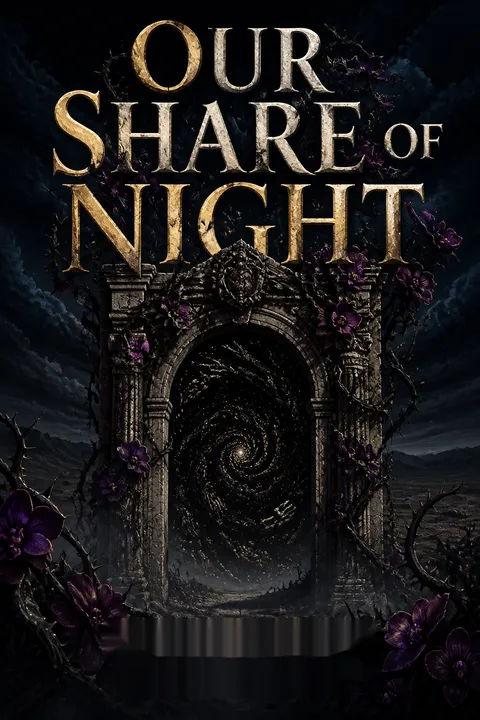
Our Share of Night makes inheritance feel less like a gift passed down than a claim made on the body. The Order’s language of blood, family, and immortality turns children into future instruments, while Juan’s2 love for Gaspar1 is genuine yet damaged by the secrecy and violence he uses to resist that system. His protection cannot be separated from the harm it causes. Gaspar1 inherits not only supernatural perception but also the burden of deciding what to believe about the people who raised him.
The novel also places occult violence beside the documented violence of Argentina’s dictatorship. The mass grave in Zañartú is political history made physical; the Order’s rituals exploit the same conditions of impunity, class hierarchy, and disposability. Olga’s15 reporting cannot resolve Adela’s10 disappearance, and the police cannot accommodate what the children experienced. This is not a claim that supernatural events replace historical explanation. Rather, the novel makes the occult another language through which characters encounter violence that official institutions have hidden or excused.
Its most important ambiguity concerns belief. The Darkness may communicate, but its messages are partial, and the Order’s interpretations often serve the leaders’ ambitions. Juan2 doubts those interpretations even while surrendering to the power that makes them possible. Gaspar’s1 later visions can be read through medical diagnoses, yet neither diagnosis nor skepticism explains away the shared events. The novel refuses to make the supernatural a comforting answer. It offers no clean boundary between illness, trauma, magic, and memory, and it insists that uncertainty does not cancel responsibility. Gaspar’s1 final choice to seek Adela10 matters precisely because rescue is not guaranteed. He must decide what to do with an inheritance that is both power and wound.
Review Summary
Our Share of Night has received largely positive reviews, praised for its ambitious scope, dark themes, and intricate plot. Readers appreciate Enríquez's ability to blend horror with Argentina's political history and explore complex family relationships. The novel's length and pacing are divisive, with some finding it engrossing and others feeling it could be shorter. Many reviewers note the graphic violence and disturbing content, particularly involving children. Overall, the book is seen as a unique and powerful work of horror fiction, though not for the faint of heart.
People Also Read



Characters
Gaspar
The reluctant heirGaspar is the son of Juan2 and Rosario3, raised among wealth, illness, and an occult family whose expectations he cannot yet understand. Quiet, observant, and unusually self-possessed, he reads early, studies people closely, and often understands more than adults assume. His father’s2 severe heart condition makes Gaspar both dependent on him and fearful of his unpredictable moods. He is drawn to friends and ordinary routines, especially swimming, stories, and helping people whose pain others dismiss. Beneath his composure lies a strong capacity for anger and an instinctive sensitivity to death and hidden spaces. His central struggle is learning which parts of his inheritance he can refuse without losing the people he loves.
Juan
The failing mediumJuan is Gaspar’s1 father, a striking, physically imposing man whose congenital heart disease has required repeated operations. He was taken into the Bradford family as a child and trained to serve as the Order’s medium, able to summon a force called the Darkness. His illness makes every exertion dangerous, yet his power can be devastating. Juan is fiercely protective of Gaspar1, but his protection can become secrecy, control, or violence. He is also a widower unable to accept that he cannot reach Rosario3. Beneath his arrogance and volatility is a man shaped by exploitation who understands that his own body has been made useful to others. His deepest aim is to give his son1 a life beyond that pattern.
Rosario
The scholar and partnerRosario is Juan’s2 wife and Gaspar’s1 mother, an accomplished anthropologist whose work focuses on religion and Guaraní culture. Raised in the Bradford family, she knows the Order from the inside and recognizes how wealth and ritual can excuse cruelty. Her intelligence makes her an interpreter of both folklore and power, while her love for Juan2 draws her into a life she sometimes wants to escape. She is brave, ambitious, and protective of her son1, but she is not free of the family’s assumptions or the compromises required to survive among its leaders. Rosario’s voice gives the novel a historical and analytical dimension, showing how scholarship can expose inherited violence without necessarily freeing its author from it.
Tali
The river-temple healerTali is Rosario’s half-sister3, a healer and guardian of a rural temple devoted to San La Muerte. She prefers Corrientes to Buenos Aires and trusts local practices that the Bradford family treats as peripheral. Tali loves Rosario3 and Juan2, though her relationship with Juan2 is emotionally complicated by his marriage and grief. She expresses care through action: shelter, protective rituals, food, and help concealing Gaspar’s1 abilities. Her independence does not make her fearless; she understands the Order’s reach and knows that open resistance could endanger the people she protects. Tali’s spiritual life offers an alternative to the Order’s hierarchy, rooted in local belief, practical mercy, and a willingness to accept ambiguity.
Stephen
The marked confidantStephen is Florence’s elder son6 and Juan’s2 closest companion, bound to him by a mark received during a ceremony. Raised between English privilege and Argentine family life, he is an insider who understands the Order’s customs but does not simply accept its authority. He and Juan2 share a long intimacy that is both affectionate and strategic; Stephen can challenge Juan2 when his recklessness threatens Gaspar1. He is educated, observant, and capable of acting decisively, though loyalty has kept him entangled in the very institution he distrusts. His devotion is tested by family ties, old grief, and the knowledge that protecting Gaspar1 may require betrayal of the Order.
Florence
The Order’s English leaderFlorence leads the international Order and believes the Darkness can teach its members to preserve consciousness beyond ordinary death. Educated and politically astute, she can speak warmly while making ruthless decisions. Her authority rests on both inherited status and an ability to frame suffering as necessary sacrifice. She has experienced the cost of trying to make a medium from within her own family, yet she continues to defend the institution’s purpose. Florence is not a simple zealot: she can negotiate, adapt, and recognize when restraint is strategically useful. Her defining tension is between genuine affection for some people and a belief that the Order’s promised future justifies using them.
Mercedes
The brutal matriarchMercedes is Rosario’s mother3, a senior Bradford and one of the Order’s most committed practitioners. She treats authority as a natural right and cruelty as a tool for obtaining power. Her appearance and manner are severe, but her deeper drive is fear of losing influence and the family’s place within the Order. She is willing to exploit prisoners and children in the search for another medium, and she views descendants as resources the family must preserve. Mercedes’s relationship with Rosario3 is marked by hostility, while her interest in Gaspar1 reflects the same possessive logic. She embodies the family’s belief that blood creates obligation, even when the person whose blood is claimed has never consented.
Luis
The steadfast brotherLuis is Juan’s older brother2, an architect and political activist who has spent years trying to remain loyal to him despite separation, exile, and the Bradford family’s interference. He represents a form of family grounded in practical affection rather than occult inheritance. His patience and humor contrast with Juan’s2 volatility, and he tends to respond to crisis by organizing food, work, shelter, and care. Luis is not a trained healer, but he is willing to learn what a frightened child needs and to keep showing up when recovery is slow. His bond with Gaspar1 grows through ordinary acts of guardianship, giving the boy a model of adulthood that is neither magical nor indifferent.
Betty
The returning cousinBetty is Rosario’s cousin3 and a politically committed woman who has spent years estranged from the Bradford family. She is intelligent, independent, and capable of practical courage, but her convictions do not make her immune to fear or confusion. Her close relationship with Rosario3 shapes her sense of the family, while her care for her child10 gives her a stake in the dangers she once tried to leave behind. Betty distrusts the Order’s authority and its language of destiny, even as circumstances draw her back toward the family she rejected.
Adela
The fearless missing girlAdela is one of Gaspar’s1 closest childhood friends, known for her imagination, blunt humor, and refusal to hide her missing arm. She tells elaborate stories about how she lost it, and she becomes furious when people treat her phantom sensations as a lie. Gaspar1 understands that her pain is real and gives her a mirror box that helps her feel the absent limb. Adela is drawn to mysteries and to questions about her unknown father, sometimes pushing beyond what her friends consider safe. Her vividness, vulnerability, and stubborn independence make her a child who insists on being seen on her own terms.
Victoria Peirano
The searching friendVictoria, usually called Vicky, is a close friend of Gaspar1 and Adela10. She is observant, decisive, and intensely loyal, though fear can make her hesitate when she senses something wrong. She remembers the supernatural house through sound, darkness, and the loss of her friend10, and later her unusual diagnostic intuition leads her toward medical work. Vicky tries to use reason to contain what she cannot explain, but her perceptions repeatedly exceed ordinary evidence. Her friendship with Gaspar1 is direct and demanding: she expects honesty from him and refuses to treat his suffering as something he should manage alone.
Pablo
The watchful friendPablo is Gaspar’s1 childhood friend, a sensitive observer who notices social details and emotional shifts others overlook. He is drawn to art and eventually develops as a photographer and visual artist. His attraction to men is difficult to reconcile with the expectations of his family and neighborhood, but he gradually finds community and a language for himself. Pablo is less physically confident than Gaspar1, yet he acts decisively in emergencies and remains loyal when others pull away. His eye for images becomes a way of preserving what his friends have seen, even when official accounts erase or dismiss it.
Jorge Bradford
The surgeon who adopts JuanJorge is a celebrated cardiologist and Mercedes’s brother7. He is ambitious, clinically brilliant, and drawn to the boundary between medicine and the occult. His first operation on Juan2 changes his understanding of both the boy and the Order. Jorge’s decision to take Juan2 from his birth family combines genuine concern with professional ambition and the interests of his relatives. His relationship with Juan2 therefore begins in rescue but contains an imbalance that never fully disappears. He remains a doctor who tries to manage what the body can endure, even when the Order asks for more than medicine can repair.
Eddie
The ruined younger sonEddie is Florence’s younger son6, trained by the Order in a failed attempt to create a medium. The training leaves him deeply damaged and difficult to understand, but his silence does not mean he lacks awareness. He is perceptive, volatile, and preoccupied with pain, hands, and the people he believes have displaced him. Stephen’s5 protectiveness toward him is mixed with fear and shame, while Florence’s6 love cannot undo what the Order has done. Eddie’s presence reveals the danger of treating extraordinary ability as something adults can manufacture through coercion.
Olga Gallardo
The relentless reporterOlga is a journalist sent to Misiones to report on the excavation of a mass grave. She is independent, persistent, and attentive to the people whose stories fall outside the official narrative. Her reporting brings together political violence, family history, and the disappearance of a child, but she is also honest about what she cannot verify. Olga’s professional confidence meets its limit when events resist documentation and her attempts to reach Gaspar1 are thwarted. She represents the work of bearing witness, including the danger of believing that every truth can be made public.
Marita
The activist and loverMarita is a politically engaged young woman connected to the Princesa cultural center. She is intelligent, energetic, and committed to documenting people whom public life ignores. Her relationship with Gaspar1 is affectionate but strained by his silences and fear of drawing her into danger. She wants an active life shaped by journalism and political work, not merely by another person’s crisis. Marita is willing to challenge Gaspar1 when he retreats into secrecy, and her warmth offers him a glimpse of intimacy not governed by the Order’s demands.
Isabel
Gaspar’s psychiatristIsabel is the psychiatrist who treats Gaspar1 after his father’s2 death and Adela’s10 disappearance. Patient and attentive, she avoids forcing him to recount experiences before he is ready. She helps Luis8 build routines around food, school, exercise, and medication, while recognizing that a diagnosis cannot automatically explain every detail Gaspar1 reports. Isabel’s approach treats his memories as important without endorsing every interpretation. She becomes a stable adult presence whose care is structured but not coercive, giving Gaspar1 room to speak in his own time.
Andrés Sigal
The photographer at the roadAndrés is a young photographer Gaspar1 and Juan2 meet during their journey through Corrientes. He is curious, attracted to Juan2, and interested in ordinary people, regional buildings, and roadside shrines. His photographs inadvertently preserve a family image that later reconnects Gaspar1 to his father’s2 past. Andrés is not an initiate in the Order, but his work brushes against its hidden world, and his memory becomes a small, human archive where official history has left gaps.
Plot Devices
The Darkness
The hungry divine forceThe Darkness is a black presence that Juan2 can summon during ceremonies. It speaks through a medium in a form the Order records and interprets, but its meaning is often obscure and its appetite unmistakable. It can consume people, mutilate others, transform Juan’s2 hands, and sometimes heal or mark those who survive contact. The Order treats it as a god and seeks knowledge from it, especially a means of preserving consciousness. Juan2 regards its communications with suspicion, knowing that the leaders may confuse their desires with divine instruction. The Darkness is not a moral judge. Its manifestations expose the violence already present in the people who approach it.
The Ceremonial
A ritual of power and sacrificeThe Ceremonial is the Order’s central gathering, where Juan2 opens the way to the Darkness while scribes record what they believe it communicates. Initiates attend in elaborate preparations, and human sacrifices are offered to the force. Its effects include physical transformations, mutilations, healing, and the marking of selected members. The leaders use ceremonies both to pursue supernatural knowledge and to reinforce their authority over Juan2. The rituals are staged as religious events, but their structure also resembles an institution extracting labor from a captive specialist. The ceremony’s grandeur does not soften its violence; it gives the violence ceremony, witnesses, and a language of supposed necessity.
The Other Place
A passage beyond ordinary spaceThe Other Place is reached through certain doors that open onto a silent, airless landscape rather than the room expected beyond them. Its paths run beside rivers and forests decorated with bones, severed hands, torsos, and hanging bodies. Time and physical effort behave differently there, and the landscape appears to respond to offerings and visitors. Juan2 discovers that he can find passages and bargain with the place, while Gaspar1 later learns that he can open doors and lead others through them. The Other Place is not simply an afterlife or a refuge. It is a landscape with its own appetite and rules, one that can shelter secrets while threatening anyone who mistakes access for mastery.
The Protective Mark
A wound that hides GasparJuan’s2 bloody work on Gaspar’s1 arm creates a mark intended to keep the Order from locating or claiming his son1. The scar is also a persistent physical reminder of the violence used to protect him. It burns near certain dangerous places and makes it difficult for outsiders to reach Gaspar1, as Olga15 later discovers when she tries to find his home. The mark’s protection is imperfect: it can isolate Gaspar1 from allies and does not spare the people around him from harm. Its double function captures Juan’s2 dilemma. A parent can keep a child safe through an act that the child experiences as injury and betrayal.
The Rite of Transfer
A promised stolen immortalityThe Order believes the Darkness has provided a method for carrying consciousness from one body into another. Its leaders intend Juan2 to occupy Gaspar’s1 body when the boy reaches the required age, preserving the medium and eventually extending that possibility to themselves. The Rite turns the language of family continuity into a claim of ownership: the child is treated as a recipient rather than a person. Juan2 refuses to complete it, and the attempted transfer leaves Gaspar1 with missing memories and injuries that are concealed as an accident. The Rite’s promised immortality remains uncertain and incomplete, but its threat shapes the family’s decisions for years.
Download PDF
Download EPUB
.epub digital book format is ideal for reading ebooks on phones, tablets, and e-readers.








