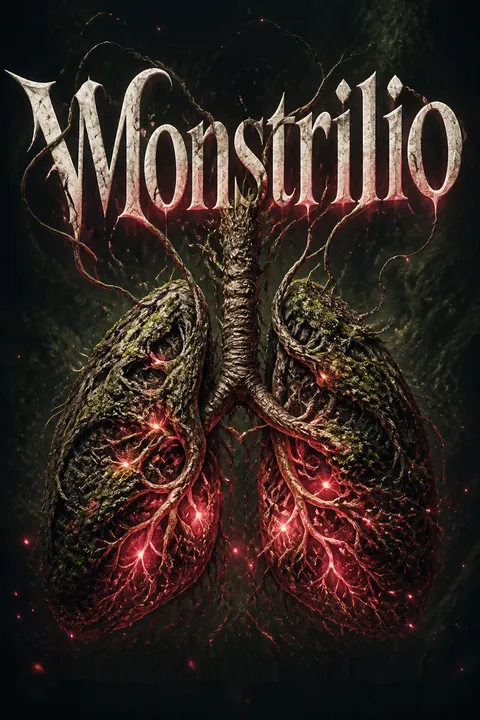


Plot Summary
A Piece of Santiago
At Firgesan, an isolated house in upstate New York, Magos lies beside her husband, Joseph, and their eleven-year-old son, Santiago, who has died after years of living with one fragile lung. She expected grief to make her collapse, but instead she feels numb and impatient with the rituals that will follow.
Wanting to keep the part of Santiago most bound to his struggle to breathe, she takes a kitchen knife and opens his body. She removes only a small piece of lung, places it in the jam jar he used for pencils, and cleans and covers him again. Joseph finds the bed and their son’s body altered. He recoils at what she has done, while Magos insists to herself that nothing living remained to harm.
Magos’s action is an attempt to turn helplessness into custody. She cannot restore Santiago’s breath, but she can refuse the finality of handing his body over untouched. Her numbness is not an absence of attachment; it is attachment stripped of the social gestures that would make it legible to others. Joseph sees desecration where Magos sees a last act of intimacy, exposing how grief can divide even people who loved the same child. The lung matters because Santiago’s illness made breathing a shared labor: his mother repeatedly helped him through attacks. Taking a piece of it is both an impossible continuation of care and the first step toward a new danger.
Ash Beneath the Dogwood
Joseph brings Santiago’s cremated remains home, and he and Magos scatter the ashes beneath the dogwood beside the pond, a tree their son had loved while drawing monsters nearby.
Magos imagines one flower might be Santiago returned, then destroys it because she cannot bear to watch him become something delicate that will die again. In the months that follow, Joseph withdraws into silence and neglect, while Magos follows him through the house, studying his grief without knowing how to share it.
When she breaks an heirloom vase to provoke him, Joseph quietly gathers the pieces instead of fighting. Magos realizes she still has a life to spend and leaves for Mexico City, carrying the jar with Santiago’s lung fragment and leaving Joseph alone at Firgesan.
The dogwood gives grief a calendar, but not a cure. Its seasonal return contrasts with Magos’s refusal to accept that biological recurrence can restore a person. Her destruction of the first blossom is not simply anger at a false hope; she is resisting the sentimental demand that loss become beautiful and bearable. Joseph and Magos also reveal two incompatible survival strategies. He collapses inward, while she watches, provokes, and eventually escapes. Neither can make the other’s grief usable. Her departure preserves her capacity to act, but it also deepens the division between the surviving parents and leaves the lung fragment as a private, unresolved bond.
Broth in the Jar
Back in her mother Lucía’s Mexico City home, Magos hides the lung fragment in a drawer. The housekeeper, Jackie, notices it and tells a family story about a woman who fed a stolen heart until it became a man. Jackie warns Magos that this is only flesh, not Santiago, but the story gives Magos a reason to try feeding it. Late one night, she pours chicken broth into the jar.
By morning, the liquid and its food scraps have vanished, and the fragment has grown firmer. Magos remembers a childhood earthquake, when Santiago’s lung seized and she pressed her fist to his mouth so he could breathe into it. That hard-won knowledge of keeping him alive makes the jar’s new appetite feel less like a miracle than another duty.
Jackie’s folktale does not persuade Magos that Santiago can return. It gives her permission to act without needing certainty, a distinction that makes the supernatural feel psychologically credible. Magos knows the fragment is not her son, yet she feeds it because care has become a habit with no living recipient. The earthquake memory sharpens that habit: she once helped Santiago breathe through coordinated pressure and attention, so feeding an organ feels like extending a familiar form of rescue. The jar transforms mourning into routine. That routine offers purpose, but it also disguises the risk of treating an unknown creature as a child simply because its origin is her child’s body.
The Lung Learns Hunger
The lung grows into a furry, fanged creature that Magos hides in her bedroom and feeds scraps of meat. Lena, a surgeon and Magos’s longtime friend, recognizes that it is no ordinary animal but urges Magos to destroy it. The creature escapes and bites the family dog, Almendra, before Magos and Jackie pry it loose. Magos still refuses to give it up.
Later, it slips into Lucía’s bed and clamps onto her thigh. Lena and Joseph struggle to free Lucía as Magos tries to protect the creature; Joseph finally brings a hammer down, and its body goes limp. Magos, unable to breathe through the shock, forces air into her fist as she once did for Santiago, then runs into the night carrying the apparently dead animal.
The creature’s hunger turns private mourning into a danger other people must bear. Magos’s refusal to acknowledge that danger echoes her earlier certainty that the dead body could no longer be harmed: she confuses the limits of Santiago’s suffering with the limits of what the lung can do. The attack on Lucía forces the family to choose between protecting Magos’s attachment and protecting a living person. Joseph’s blow repeats the violence of loss while trying to prevent further harm. Magos’s breathing crisis then reveals how tightly her own body remains linked to Santiago’s respiratory emergencies. Her flight is not just grief-driven denial; it is a rejection of the family’s authority to decide what she must relinquish.
A Monster Returns
After Lena takes Magos to her apartment, Magos begins to recover enough to cook and shower. Jackie reports seeing the creature alive, hanging from a tree near Lucía’s house. She leads Magos and Lena through the streets by following its droppings until they reach a ravine, where a group of onlookers has found freshly killed cats below it.
Lena slips down the muddy slope while trying to catch the animal; Jackie and the bystanders help pull her back. Magos reaches the creature first and cradles it, insisting that it is hers to protect. She takes it to Lena’s spare room. When Joseph returns and hears it call him Papi, his grief breaks open into tears, and the creature receives a name: Monstrilio.
The search turns Magos’s possession of the creature into a shared, physical risk. Lena falls because she is trying to control an organism none of them understands, while Magos’s tenderness succeeds in drawing it close. Naming it Monstrilio is a small but consequential separation from Santiago: the name recognizes that the creature has a presence of its own without making it human. Joseph’s response shows how easily sound can reopen attachment. A single word resembling the title Santiago used for his father does not prove identity, but it makes emotional refusal much harder. The creature’s violence toward cats also establishes that affection cannot erase its predatory nature.
A Boy in the Scan
Joseph and Magos bring Monstrilio into their home, where Joseph builds him a climbing structure and begins to care for him as family. Monstrilio speaks a few words, grows limbs, and plays with Joseph, but his appetite remains dangerous. After Lena forgets to feed him, he escapes and kills neighborhood pets, forcing Joseph and Lena to clean the bloodied patio.
Magos proposes removing his unusual arm-tail, believing it keeps him wild. Lena objects, then agrees to an MRI to learn what the operation would risk. The scan reveals that one side of Monstrilio has no recognizable organs or skeleton, while the other contains the anatomy of a young boy, including a brain, heart, and single lung. Magos and Joseph decide the tail must be removed.
Monstrilio’s body makes the family’s central question material: is he an animal to contain, a child to raise, or a being whose form cannot be reduced to either category? The MRI appears to offer evidence, but it does not deliver a moral answer. A child’s organs inside an unstructured half intensify the temptation to interpret transformation as destiny, while the dead pets demonstrate the immediate costs of waiting. Magos’s intuition becomes medically plausible enough to persuade Lena, yet the proposed operation is still an attempt to shape Monstrilio into a form the family can recognize. Their care begins to merge with normalization, and the scan gives that impulse the authority of science.
The Cost of Becoming Human
Lena performs the operation at Magos and Joseph’s house, cutting away Monstrilio’s arm-tail, which the scan showed was separate from his emerging human anatomy. The wound heals, but Monstrilio loses the tool he used to climb, swing, hunt, and play. He grows still, speaks less, and seems increasingly distressed. Joseph hand-feeds him while Magos believes he is changing into something better.
When Joseph decides Monstrilio is suffering too much and asks Lena to help end his life, Magos catches them with the sedative and throws them out. Lena refuses to continue serving as the family’s surgeon and moves to New York. Monstrilio survives, but the operation has damaged the trust between all three adults and left his future uncertain.
The surgery exposes the difference between physical healing and well-being. Monstrilio’s wound closes cleanly, but the body part that enabled his agency is gone, and the family reads his resulting withdrawal in opposing ways. Magos calls it transformation; Joseph sees despair. Lena’s complicity makes her refusal especially significant: she recognizes that technical competence cannot resolve the ethical question of who gets to define another being’s proper form. The conflict also repeats the novel’s pattern of love becoming intervention. The adults want to spare Monstrilio suffering, but their competing efforts make him an object of decision rather than a participant in his own life.
A Life Built Elsewhere
Years pass. Monstrilio gradually becomes more human in appearance and is called Santiago by Magos, while Joseph keeps the name Monstrilio and later calls him M, refusing to erase the boy who died. Magos and M move to Berlin, where she builds a career as a performance artist and finds him work at a gallery.
Joseph, now living in Brooklyn, begins a relationship with Peter, who proposes marriage. Joseph accepts but hides the history of M from him. Lena, also in New York, remains close to Joseph and still carries her complicated love for Magos.
M struggles with his body and isolation, but he forms a bond with Thomas, his gallery supervisor. The family’s separate lives seem stable until Magos invites them to Berlin for a performance about her dead son.
The years-long shift from Monstrilio to M does not settle the question of identity; it distributes it among the people who love him. Magos uses Santiago’s name to claim continuity, while Joseph preserves a boundary that protects both the dead child’s memory and M’s right to become someone new. Joseph’s engagement to Peter represents a life organized around ordinary disclosure, yet his secrecy shows how much of his past he still treats as unshareable. M’s gallery job and intimacy with Thomas offer forms of belonging that do not depend on his parents’ grief. Their fragile equilibrium rests on keeping these worlds apart.
The Son Performance
At Magos’s Berlin performance, she kneels beneath harsh lights and holds Santiago’s dinosaur pajamas as though they contain his body. Her open grief moves the audience, but M leaves the room before the performance ends. Joseph finds him later in neighbor Elias’s apartment, curled naked and covered in blood. Lena discovers Elias badly injured and arranges emergency care.
M remains fixated on the wounded man and admits that he tasted good. Joseph gets him out before the police can question him, and the two flee through Berlin to their hotel. Peter is left with no explanation. Joseph decides M must leave Germany with him, choosing immediate protection over telling his fiancé the truth.
Magos’s performance gives the grief she once suppressed an audience, but its public honesty has a private consequence: M watches his mother mourn a child whose name and place he has partly inherited. His disappearance links the spectacle to a crisis the family cannot interpret in time. The bloodied apartment makes the danger unmistakable, while Joseph’s decision to flee shows how care can become concealment. He protects M from arrest and from abandonment, but he also excludes Peter from a reality that will shape their marriage. The scene turns the family’s old fear of losing a child into a new fear of what the surviving child might do.
The Hunger Comes to Brooklyn
In New York, Joseph takes M to live with his uncle Luke, whose silent companionship helps him settle. M finds work at a used bookstore through Luke and his coworker Romy, begins reading, and experiments with dating. He can manage consensual biting until appetite overwhelms restraint. In Berlin, Elias later dies from his injuries, and M’s history becomes more dangerous than Joseph has admitted to Peter.
M phones Thomas after they have sex and confesses to biting him; Thomas survives, but Joseph warns M to be careful. When Joseph leaves him alone with Luke, M continues trying to understand hunger, intimacy, and the limits other people set. His progress is real, but it cannot guarantee safety for either him or the people he desires.
M’s New York life offers ordinary structures, employment, books, dates, family meals, but none can simply domesticate his appetite. The bookstore matters because its endless work gives him a place where incompletion is acceptable; dating gives him a more precarious chance to negotiate desire. His call to Thomas shows that he can seek connection after crossing a boundary, though remorse does not erase risk. Joseph’s protection remains double-edged: he supports M while withholding the facts from Peter and trying to manage danger through private rules. M is not merely a threat to others; he is a person learning that good intentions do not control what his body wants.
Bones and Evidence
M meets Sam, a man who knowingly invites him to bite. M takes a small amount of flesh, but when Sam urges him to continue, hunger overwhelms M’s restraint and he consumes him. He carries Sam’s phone, a drinking glass, and a bloodied sheet back to Luke’s house. At a family dinner, Peter mentions a Brooklyn murder in which a body was reduced to bones, and M realizes the report is about Sam.
Magos, Joseph, Lena, and Luke discover the evidence in M’s room and destroy the phone, cut up and bleach the sheet, and divide the remains between garbage bags. M tells them Sam wanted to be eaten, but leaves out that he later begged him to stop. The family chooses concealment over exposure.
Sam’s consent begins the encounter but cannot make its ending ethically simple. M accepts the invitation as permission to feed, then discovers that appetite can outlast the agreement that made the act seem manageable. His omission of Sam’s pleas protects him from judgment, yet it also isolates the moment when his agency failed. The family’s response repeats a generational pattern: love becomes a conspiracy designed to prevent another loss, this time through destroyed evidence rather than bodily care. Their actions shield M from immediate consequences, but they cannot restore Sam or establish a safe boundary. The family’s solidarity is therefore both an act of devotion and a further refusal to face what happened.
Firgesan Without a Wedding
As Joseph and Peter prepare to marry, Magos returns from a planned art festival and the family gathers at Firgesan, the house where Santiago died. Police testing finds the hair from Sam’s apartment nonhuman, leaving investigators without a human suspect. M’s amputated arm-tail begins to return as claws emerge from his stump.
He tells Lena he is leaving and rejects Joseph’s offer to solve his hunger for him. Before the wedding, M says goodbye to Magos, Joseph, Lena, and Luke. At dawn he strips off his clothes beside the dogwood, where Santiago’s ashes were scattered, then walks into the woods as fur returns and his jaw opens. The wedding has not yet happened. M chooses an unknown life over remaining an object of family rescue.
The ending refuses the comfort of a completed cure. The nonhuman test result closes a line of forensic pursuit, but it does not make M harmless or answer what he should become. His returning claws suggest that the body Magos and Lena tried to reshape has its own direction; M’s departure is a decision to meet that direction without asking his family to manage it. Firgesan gathers the novel’s central images in one place: the dogwood, ashes, woods, and the parents who once tried to keep their son alive. M leaves not because affection has failed, but because affection has become inseparable from fear and control. The wedding remains ahead, while his future opens beyond the family’s sight.
Analysis
Monstrilio treats grief not as a feeling that progresses toward closure, but as a force that changes what people do with bodies. Magos’s first response to Santiago’s death is physical: she opens his body to keep a piece of the organ around which their life had been organized. That act grows into Monstrilio, whose existence makes the family’s metaphorical inability to let go literal. Yet the novel resists the comforting idea that love can restore what has been lost. Monstrilio carries a fragment of Santiago, but he has appetites, capacities, and desires that belong to himself. The adults repeatedly confuse care with authorship: Magos names and feeds him, Lena operates on him, Joseph tries to protect him, and each action risks defining him before he can define himself. Their conflict is not simply whether he is human. It is whether belonging should depend on becoming legible to the people who love him. The shifting narrators deepen that problem. Magos experiences care as action, Lena as competent intervention, Joseph as preservation, and M as an effort to understand sensation and choice. Their perspectives make none of these approaches wholly sufficient. The book’s horror comes from bodily danger, but its moral unease comes from ordinary forms of protection that become control. Its ending refuses both a cure and a rejection: M leaves his family while they remain present, loving him without knowing where his body will lead. The result is an uneasy but generous claim that kinship may require loving someone whose future cannot be managed, and whose difference cannot be made harmless simply by giving it a name.
Review Summary
Monstrilio received mixed reviews, with many praising its unique approach to grief and horror. Readers appreciated the queer representation and complex characters. Some found the prose beautiful and the story emotionally impactful, while others felt disconnected from the characters. The book's explicit sexual content and kink themes surprised some readers. Many noted the novel's literary style and its exploration of family dynamics, identity, and acceptance. Overall, it was seen as an ambitious and unconventional debut that divided opinions.
People Also Read









Characters
Magos de la Mora
The grieving creatorMagos is Santiago’s mother, Joseph’s wife and later former partner, and Lena’s closest friend. She is observant, theatrical, and accustomed to directing the shape of family life, often using humor or provocation where other people expect solemnity. Santiago’s illness made care a constant practice, so after his death she struggles to accept that there is no longer anyone she can save through attention. Her instinct to act can be tender and imaginative, but it can also override the independence of the person she means to protect. As an artist, she turns private experience into public performance, while her complicated relationships with Joseph and Lena reveal how difficult it is for her to distinguish being loved from being understood.
Joseph
The tender illustratorJoseph is Magos’s husband and Santiago’s father, a gentle illustrator whose affection tends to appear through practical care, patient work, and close attention to the people around him. He is emotionally open but can be overwhelmed by grief, retreating from the world when loss becomes unbearable. His love for Santiago gives him a powerful wish to preserve the boy’s memory, which shapes his reluctance to treat another being as a replacement. Joseph wants to protect M, yet his instinct to shield him can become secrecy and avoidance. His relationship with Peter offers the possibility of a new life, but he remains pulled between the family he lost, the family he has made, and the truths he is afraid to reveal.
Santiago
The remembered sonSantiago is Magos and Joseph’s only child, a small, imaginative boy with a congenital condition that leaves him with one underdeveloped lung. He loves monsters, drawing, strange explanations for the world, and the rituals his parents make around his life. His illness shapes the family’s daily rhythms, but it does not define the vivid curiosity they remember: he invents theories, makes art, and seeks reassurance from the people closest to him. Santiago is present throughout the novel as a person remembered by his parents and as the standard against which they measure what comes after. The challenge is not only to mourn him, but to keep his individuality from being absorbed by that grief.
M (Monstrilio)
The changing sonM is a strange, evolving being raised within Magos and Joseph’s family and later known by the names Monstrilio and Santiago. His body and appetites do not fit ordinary categories, and he must learn social rules that other people take for granted. He is curious, direct, and attentive to sensations, often approaching food, sex, and relationships without the usual human filters. M’s desire to belong is genuine, but so is the hunger that makes others afraid of him. His development raises difficult questions about autonomy: whether love means guiding someone toward familiar behavior or making room for a self that may remain unfamiliar. He is neither simply the dead child returned nor merely a monster.
Lena Álvarez
The surgeon and witnessLena is a surgeon, Magos’s longtime friend, Joseph’s close friend, and a steady presence in the family’s crises. Her medical training makes her practical and decisive, while her private life reveals a need for tenderness she often manages through routines of care. Lena has loved Magos for years, though that love is not straightforwardly returned, and her friendship with Joseph is another source of deep attachment. She can compartmentalize at work but finds the family’s emergencies harder to contain. Her position between professional judgment and personal loyalty makes her both a useful protector and a participant in decisions she later questions.
Jackie
The household keeperJackie has worked for Lucía for many years and treats the house as a home she helps sustain, not merely a workplace. Her practical loyalty sits alongside a rich inheritance of village stories, including a tale that gives Magos a way to imagine the impossible. Jackie can be warm without being sentimental, and she is willing to challenge Magos when care threatens someone else’s safety. Her bond with Lucía is intimate and dependable, while her concern for Magos remains affectionate even when they disagree. Jackie understands that a story can be both unbelievable and powerful.
Lucía
Magos’s formidable motherLucía is Magos’s elegant, forceful mother, attached to her house and to the rituals that make family life visible. She wants to help Magos mourn Santiago, even when Magos resists the forms of consolation she offers. Lucía is proud and exacting, yet her loyalty to Jackie and her concern for her daughter give her a quieter tenderness. Her attachment to the family home reflects a belief that memory is held not only by people but by the rooms and objects that have witnessed a life.
Peter
Joseph’s hopeful partnerPeter is Joseph’s loving partner in New York, an attentive and enthusiastic man who approaches people and experiences with open pleasure. He wants to be included in Joseph’s family life and assumes that marriage should involve mutual trust. His warmth makes Joseph’s omissions more consequential, even though Peter is not equipped to understand the history he has been kept from. He represents the possibility of a future that is not organized around Santiago’s illness or death, but he cannot build that future alone.
Uncle Luke
M’s quiet allyJoseph’s uncle, Luke, is physically bent and communicates largely through grunts and written notes. He offers M a calm, nonjudgmental home in Brooklyn and shares food, books, and quiet companionship with him. Luke does not demand that M explain himself in conventional terms. His care is direct and unshowy, providing a rare space where difference is not immediately treated as a problem to solve.
Thomas
M’s gallery mentorThomas supervises M at a Berlin art gallery and helps him navigate both the work and the city. Broad, sociable, and physically affectionate, he offers M an experience of attraction and intimacy that is more accepting than M expects. Thomas treats M as a young person with interests and potential, not only as a family mystery. Their relationship tests the line between trust, desire, and the unusual risks of M’s appetite.
Romy
M’s blunt bookstore friendRomy works with M at a used bookstore and is a literature student with strong opinions about what he should read. She is candid, funny, and comfortable pushing him into social situations. Her friendship gives M ordinary companionship outside his family and helps him explore dating, even when neither of them fully understands the consequences of his hunger.
Elias
The Berlin neighborElias is M’s neighbor in Berlin and the owner of a cat that often visits M and Magos. His quiet interactions with M create a small, tentative connection between them. Elias is part of the ordinary neighborhood life that M is trying to enter.
Sam
The willing dateSam meets M through a dating app and approaches their encounter with an unusual willingness to explore biting. His interest gives M a chance to test a boundary that has already proved difficult to manage. Sam’s role exposes the gap between consent to an act and the ability to control its consequences.
Carmina
Lena’s first caretakerCarmina is a sex worker Lena hires to bathe her. She recognizes that Lena needs deliberate, maternal tenderness more than conventional sexual performance and offers care without requiring Lena to explain herself. Her disappearance leaves Lena searching for a form of comfort she cannot easily replace.
Almendra
Lucía’s beloved dogAlmendra is Lucía’s reddish-brown Labrador and a familiar source of affection in the household. Her vulnerability forces Magos to confront the harm Monstrilio can cause, while her closeness with Jackie shows the practical tenderness that holds the house together.
Plot Devices
The Lung Fragment
Grief made bodilyMagos removes a small piece of Santiago’s lung after his death and keeps it in a jar. Feeding it begins an impossible transformation, but the fragment never functions as a simple resurrection. It carries the family’s history of respiratory emergencies, Magos’s caregiving habits, and the question of whether a body part can inherit a person’s identity. As it grows into Monstrilio, it turns grief into a living responsibility with appetites and needs of its own.
Jackie’s Folktale
Permission for the impossibleJackie recounts a village story in which a woman feeds a stolen heart until it becomes a man. The story gives Magos a precedent for feeding Santiago’s lung without promising that the result will be Santiago. Its function is not to explain the supernatural scientifically, but to make belief and disbelief coexist. The tale also warns that taking a dead person’s body part can have consequences for everyone involved.
The Dogwood
A living memorialThe dogwood at Firgesan receives Santiago’s ashes and becomes the family’s recurring image of memory, seasonal change, and failed reincarnation. Magos once mistakes its first bloom for her son returned, then destroys it rather than accept another fragile life in his place. The tree later stands beside M’s departure, joining the child who died to the being who must choose his own future. It memorializes Santiago without resolving what his memory should mean to the survivors.
The MRI Scan
Anatomy without answersLena arranges an MRI to assess whether Monstrilio can survive removal of his arm-tail. The images show one side of his body without ordinary structure and the other with the organs and skeleton of a young child. The scan establishes that Monstrilio is undergoing a profound physical transformation, but it cannot decide whether that change should be encouraged or what identity it implies. Scientific evidence intensifies the family’s debate without resolving its ethical stakes.
The Returning Claw
A body’s refusalAfter M’s arm-tail is surgically removed, its stump later aches and begins to produce claws. The returning growth suggests that the operation did not erase Monstrilio’s earlier form or hunger. It makes M’s final choice concrete: he can keep trying to fit the life his family has arranged, or follow the bodily transformation he cannot fully control. The claw is both evidence of continuity and an uncertain invitation to become something else.
Download PDF
Download EPUB
.epub digital book format is ideal for reading ebooks on phones, tablets, and e-readers.








