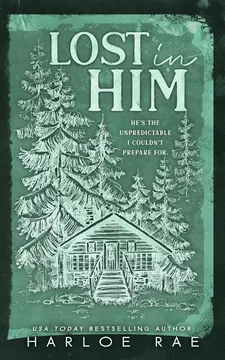


Plot Summary
Prologue
At a formal family dinner, nearly twenty-two-year-old Penny tells her controlling parents she is leaving Florida for a rented cabin in Minnesota. They had already tried to arrange her marriage to Nathaniel Hollingsworth, a wealthy prospect whose criminal dealings were exposed after Penny fled; the engagement collapsed, but her parents soon resumed treating her future as theirs to manage.
After earlier hospital visits and counsel from Dr. Larsen Belle, Penny has begun to see how thoroughly she has mistaken obedience for safety. She negotiates permission to go, rejects a bodyguard, and promises only to answer her mother’s calls. With savings and an inheritance to fall back on, she chooses a life beyond the family’s reach.
Penny’s departure begins not as a romantic escape but as a test of whether she can make an ordinary decision without submitting it for approval. Her parents’ wealth has furnished comfort while denying her practice in self-direction, so even choosing a cabin and a modest budget becomes psychologically consequential. The failed engagement matters because it briefly exposes the machinery behind her parents’ polished authority: Penny was treated as leverage, not as a person with preferences. Yet the prologue does not make her instantly fearless. She still bargains, reassures, and conceals parts of her history. Her independence starts as an imperfect action, which makes the later question of what she chooses to build feel earned.
Penny’s New Name
The secluded cabin beside Timbered Lake gives Penny the quiet, modest life she has never been allowed to try. She begins using Penny Blaire, leaving her family name and polished surroundings behind, then delights in the small rooms and the lake view. Her first night, music carries through the trees while she dances alone; Nash Hudson, the reclusive owner of the lodges, sees her through a window and retreats rather than approach.
The next morning she finds his formal warning about late noise. When a wandering dog named Rune appears, Penny befriends him before Nash arrives to retrieve him. Nash barely acknowledges her, so she gives the silent, striking stranger the nickname Thorn.
The new name is less a disguise than a rehearsal: Penny is trying out an identity formed by choice rather than family position. Her pleasure in the cabin’s plainness shows how little she needs luxury once she is free to decide what counts as comfort. Nash’s first response to her is also revealing. He watches from the margins, then meets her through Rune, whose easy affection supplies the warmth Nash cannot yet offer. Their awkward introduction establishes the book’s central tension in concrete terms: Penny reaches toward people, while Nash treats contact as a risk to the solitude he has built.
The Complaint and the Dog
Penny heads into Hacken to explore and meets Lydia, a blunt local who quickly becomes her guide to the town’s gossip and scarce entertainment. Lydia identifies the surly lodge owner as Nash, giving Penny a name for the man who left her warning. Their email exchange begins as a dispute about a supposed stranger in the woods.
Nash admits the stranger is himself, then reluctantly sends Penny his phone number. When she asks for help navigating the trails, he lends her Rune instead. Nash follows them from a distance, and Penny catches him spying before confronting him. His refusal to join them irritates her, but his decision to stay close betrays concern he will not yet acknowledge.
The exchange of messages creates a safer channel for two people who experience direct contact differently. Penny uses humor and persistent questions to turn Nash’s rules into an opening; Nash answers while insisting that answering does not mean he is becoming available. Rune becomes both a practical guide and a social intermediary, allowing Nash to protect Penny without having to name his attachment. His covert following is not simply evidence of romance. It shows how care, for him, has been reorganized as surveillance because closeness feels too exposing. Penny’s confrontation challenges that arrangement by insisting that protection without honest contact is still a form of distance.
Storm Shelter, Open Workshop
A violent storm cuts power to both cabins, and Penny crosses the muddy trail to ask Nash for shelter. He lets her in despite their unresolved friction, lends her dry clothes, and keeps Rune nearby while the fire warms her. His cabin reveals a man prepared for isolation, with a generator, supplies, and a working hearth.
When Nash tries to withdraw to his shop, Penny follows and discovers the furniture he has built by hand, including pieces that furnish her rental. She studies the work with genuine admiration, and Nash allows her to touch the polished wood. Their hands meet; the intimacy unsettles him, and he pulls away, telling her to leave him alone for the night.
The storm makes dependence unavoidable, but the more important exposure is Nash’s workshop. His furniture gives material form to a life he has kept private: he can create beauty and livelihood while remaining socially hidden. Penny responds to the objects with attention rather than pity, which lets Nash feel seen without having to narrate his past. Yet that recognition also frightens him. The instant their hands touch, he retreats, showing that intimacy is not difficult because he feels nothing, but because feeling threatens the defenses that have made isolation manageable. The forced shelter therefore opens a door and immediately shows why he is afraid to keep it open.
The Hug After the Fight
When Nash rebukes Penny on the beach, she takes his sharpness as another sign that she is a burden and tells him she will stop trying to reach him. He leaves, but her tears draw him back. Nash gathers her into an awkward, careful embrace, admitting through his actions that he cannot bear to hear her cry.
Penny returns the hug, and they agree to treat each other as friends while respecting the parts of their histories they are not ready to share. She explains that this trip is her first real attempt to build a life for herself. Nash does not press her for more, but admits he cannot easily trust people. Their bond becomes something chosen rather than merely imposed by neighboring cabins.
The embrace changes the emotional grammar between them. Until now, Nash has treated proximity as something to control, while Penny has tried to earn access through cheerfulness and persistence. Her decision to stop pursuing him makes the cost of that imbalance visible; his return shows that withdrawal is not the same as indifference. Their agreement to be friends is modest, but psychologically precise. Neither is ready to exchange full histories, so they establish trust through a bounded promise instead. The scene also complicates Penny’s sunny demeanor: she is not simply rescuing a brooding man, but trying to escape a life in which her own needs were repeatedly dismissed.
Penny Claims the Kiss
After a painful call with her mother, Penny runs through the woods to clear her head. Nash appears, having heard enough of the call to recognize that she is upset, and asks what happened. He offers to help her feel better, then teases her with a near kiss and pulls away. Penny, tired of being left to guess what she is allowed to want, grabs his shirt and kisses him herself.
Nash freezes for a beat, then responds with unmistakable tenderness and desire. The kiss is Penny’s first that she has genuinely wanted, and Nash tells her his interest is real. They part with a new certainty: their attraction is mutual, even if neither yet knows what to do with it.
Penny’s initiative matters because the scene reverses the familiar pattern of her life. Her parents made decisions about her body and future; here, she acts on desire without waiting for permission from a man who is deliberately withholding clarity. Nash’s initial stillness briefly unsettles her, exposing how easily past coercion can contaminate present uncertainty. His reciprocal response repairs the moment, but the scene does not erase that vulnerability. Instead, it establishes consent and agency as active practices: Penny must choose, Nash must answer, and both must remain attentive to the other’s signals. The kiss becomes more than romantic confirmation. It is Penny’s first experience of wanting something and being met rather than managed.
Truth Beneath the Water
As Penny and Nash grow more comfortable, she joins him in the lake and proposes a game of truth or dare. The questions and playful challenges let them explore attraction without pretending they are already ready for everything. They kiss, touch, and test each other’s boundaries, while Nash admits he wants Penny but does not want to rush her into sex.
Penny is frustrated by his caution, yet understands that his restraint is not rejection. Their teasing gives way to a quieter negotiation: they can keep moving closer while deciding together what comes next. By the end, the game has made their desire plain, but also established that Nash’s fear of hurting her will shape their first time.
The game supplies structure for a relationship that otherwise risks becoming a contest of inference. Penny can ask and challenge; Nash can answer without delivering a full account of his damage. Their playful rules keep disclosure voluntary, a meaningful contrast with the coercive arrangements that shaped Penny’s earlier life. Nash’s refusal to hurry her is emotionally double-edged: it expresses care, but also lets him keep control of the distance between them. Penny’s willingness to continue negotiating shows growing confidence without making her a fearless caricature. Their intimacy develops through repeated calibration, where desire is real but does not cancel the need for consent, timing, or trust.
Timbered Falls
Nash takes Penny to Timbered Falls, carrying her over the rough trail because her sandals are unsuited to the path. On the drive, he finally explains that his parents died in a car crash after his father’s business and judgment collapsed. He has spent years avoiding conversation, convinced that words can be turned against a person. Penny listens without demanding the rest of the story.
At the falls, they admit how strongly they want each other, and Nash stops pretending the attraction is temporary. They have sex in the woods. Penny is a virgin, which Nash learns only after entering her, and he immediately slows down to care for her. The experience is imperfect and painful at first, but they stay close and make it theirs.
Nash’s disclosure links his isolation to more than grief: after losing his parents, he has made silence into protection against the social consequences of speech. Penny listens without treating disclosure as a debt that must be repaid, modeling a form of intimacy that does not demand equal exposure on schedule. Their first sexual encounter complicates the romance’s fantasy of effortless compatibility. Nash misjudges what Penny needs because he does not know her experience, and the scene forces him to adjust rather than defend his confidence. Their closeness grows not from flawless performance, but from responding to pain, admitting uncertainty, and remaining present after the idealized moment becomes physically real.
A Bath Made by Hand
Back at Nash’s cabin, he prepares a candlelit bath with music, flowers, and supplies he bought specifically for Penny. The gesture makes his tenderness visible in a way his words rarely do. He helps her wash, then invites her to sleep in his bed rather than return to the cabin alone.
Nash continues caring for her through the night, and for once he sleeps beside someone instead of pacing through the dark. In the morning, their closeness continues as Penny explores how to pleasure him. Their easy teasing and shared bed mark a new kind of intimacy: Nash is no longer only sheltering her from storms, but letting her into the private rhythms of his home.
The bath is a practical act of repair, but its specificity gives it emotional force. Nash has observed what Penny might enjoy, researched what he does not know, and accepted the awkwardness of entering a world of flowers and scented products for her sake. Care becomes something learned through attention rather than a fixed masculine role. His sleep is a crucial consequence: the body that has remained alert and solitary can finally rest in another person’s presence. Penny’s return of affection also prevents the scene from casting her as a passive recipient of rescue. Their domestic closeness begins as mutual experimentation, not as a promise that one partner will heal the other alone.
The Canoe Toward Home
Nash takes Penny onto the lake in a canoe he built himself, and their conversation moves from carpentry to the lives each left behind. He tells her he grew up in South Carolina before moving to Florida; Penny recognizes the shared state but does not mistake that coincidence for a complete understanding of him. When she suggests that she might stay, Nash resists imagining a future because he expects her to leave.
A sudden rainstorm interrupts their paddle, recalling the earlier outage that brought them together. Their growing ease continues in private moments: Penny shares the romance novels she loves, while Nash listens and lets her show him what she finds exciting. Each ordinary pleasure makes their temporary summer feel less temporary.
The canoe turns the lake into a space where the couple must cooperate physically as well as emotionally. Nash teaches Penny to paddle, giving her skill rather than simply carrying her, while she challenges his habit of treating her departure as inevitable. Their shared Florida history offers recognition but not instant equivalence; the book resists reducing two different forms of privilege and grief to one neat parallel. Rain recurs as a plot hinge, but it also marks how their relationship has changed: the weather that once forced Penny to seek refuge now finds them together by choice. The future remains unsettled, yet their routines are already making a life imaginable.
Two Lives, One Con
After a trip into town, Penny tells Nash that her parents tried to arrange her marriage to Nathaniel Hollingsworth. Nash recognizes the name as the man who deceived his father, bankrupted the family business, and helped set the tragedy that preceded his parents’ deaths. Penny had no idea the connection reached Nash so personally.
He then realizes she is Penelope Winchester, the daughter of the influential family whose world his mother once hoped to enter. Instead of asking what Penny herself chose, Nash assumes she came to toy with his pain. He accuses her of treating his life as a novelty and tells her she has brought his demons back. Penny leaves, devastated, declaring that his suspicions have destroyed what they had built.
The revelation makes a public scandal intimate: Nathaniel is not merely the disgraced suitor Penny escaped, but the person Nash associates with the destruction of his family. That connection explains the force of his reaction without excusing it. Nash collapses distinctions between Penny and the institutions around her, repeating the very logic that denied her personhood at home. Penny’s identity as Penelope Winchester becomes a test of whether he can see a self separate from inherited wealth and family reputation. His accusation also exposes how grief can turn uncertainty into a false certainty. By leaving rather than accepting his version of her motives, Penny protects the agency she came to Minnesota to reclaim.
An Apology with Splinters
After nearly a week apart, Nash finally asks Penny to meet him. He apologizes without demanding forgiveness and gives her a carved wooden image of the tree where they first had sex. The gift recognizes both the tenderness and the clumsy harm of their beginning. Nash admits he loves her, but insists she must leave when her rental ends because staying might cost her the future she deserves.
Penny hears the care beneath the fear, but refuses to accept his decision as noble simply because it is painful. She is not ready to forgive him, and she will not promise to go. Nash leaves still believing that protecting Penny means choosing for her, while she keeps the carved reminder and her right to decide.
Nash’s apology is more credible because he does not treat remorse as a shortcut to absolution. The carved tree is an unusually precise object: it recalls the moment he fears he mishandled and the intimacy he cannot dismiss. Yet his confession of love arrives attached to another attempt at control. By deciding that Penny must leave, he recreates the structure he resents in her parents, even though his motive is self-sacrifice rather than status. Penny’s refusal to settle the matter immediately protects her from being recruited into his redemption story. Love here is not proved by suffering on someone else’s behalf. It must include respect for that person’s choice.
Elouise Arrives in Hacken
Elouise, Penny’s fashionable best friend, arrives unexpectedly and finds Nash watching the cabin from the trees. Penny tells her she may want to stay in Hacken, a possibility Elouise questions but does not dismiss. Nash soon appears, admits he cannot stay away, and says he is still afraid Penny will sacrifice her ambitions for him.
Penny answers that she loves him and wants to build a life with him, but that the decision belongs to her. Later, she takes Elouise to the Timbered Tavern, where Lydia joins them and Nash remains nearby rather than retreating home. He sends Penny a flamboyant drink with a teasing note, offering a small, public gesture of affection without forcing the conversation to a premature conclusion.
Elouise’s arrival gives Penny a witness from her former life, making her possible choice of Hacken more than a private romantic impulse. Her friend’s skepticism lets Penny articulate what she wants rather than merely defend Nash. The distinction matters: Penny is not replacing one authority with another, even a loving partner. Nash’s fear that she will regret staying sounds protective, but it still assumes he can forecast her future better than she can. The tavern scene offers a lighter counterpoint to their conflict. By remaining in the room and reaching out through the drink, Nash practices connection without demanding immediate reassurance, while Penny retains the power to decide how close he may come.
Firelight and a New Name
When another storm cuts the power, Nash checks on Penny and finds her cabin equipped with candles, a lantern, music, and backup heat. She has adapted since her first blackout, though she still has never lit a fire. Nash teaches her to lay kindling and light the logs, turning a survival lesson into a chance to discuss sharing his home.
Penny accepts the possibility without hesitation. As they sit beside the new fire, Nash tells her his birth name is Tristan Hudson Carnash and explains that he cannot return to the world it represents. Penny does not ask him to become someone else. She tells him she loves him and chooses their life together; Nash finally stops treating her choice as a threat to be prevented.
The second outage deliberately echoes the first, but the changed circumstances show what the relationship has accomplished. Penny is no longer helpless in the dark: she has prepared, and Nash arrives as a companion rather than her sole means of survival. Teaching her to build a fire extends that shift, transferring knowledge instead of creating dependence. Nash’s birth name reveals another boundary between his present self and the world he abandoned, while Penny’s response respects the boundary without denying its importance. The scene resolves their central conflict through a concrete choice: she chooses a shared home, and he must accept that love does not require him to overrule her future.
A Ring in the Lake
Once Penny and Nash have chosen to build a life together, Nash asks her to marry him while they float on the lake. His proposal ring is made of wood and carved with clouds, lightning, a rainbow, and sunlight, a small object shaped by his craft and their history. Penny accepts, delighted that he made the ring himself rather than choosing a conventional jewel.
The proposal answers the question that has shadowed her departure from Florida: she has not traded one family’s plan for another person’s command. She has found a future she actively wants. Their shared landscape, once a temporary refuge for two isolated people, becomes the setting for a promise they have chosen together.
The handmade ring gathers the novel’s material and emotional motifs into one object. Nash’s woodworking, once a private means of surviving grief, now becomes a language for making a shared future. Its storm imagery does not erase hardship; it places lightning beside the rainbow and sunlight, insisting that the relationship includes weather rather than promising permanent calm. Penny’s acceptance also completes the arc begun at the dinner table. The important contrast is not between Florida and Minnesota, wealth and simplicity, or solitude and romance. It is between a future assigned to her and a future she can consent to. The ring matters because it is offered, crafted, and freely accepted.
Epilogue
A few summers later, Nash drives his all-terrain vehicle to Chase Your Storm, the bookstore he built for Penny. Rune rushes inside ahead of him, where Penny is closing up after a day of arranging books and greeting customers. She is seven months pregnant with their daughter, and Nash greets the baby through her belly before teasing Penny about how long he was away.
Their marriage has not made either of them less themselves: Penny still jokes, Nash still watches over her, and they still negotiate how much protection is care and how much is too much. They talk about raising their daughter, perhaps having more children, and building a bigger house. Their once temporary summer has become a shared life.
The epilogue measures the romance by what the couple has built, not simply by the permanence of their marriage. Penny owns and runs a bookstore named for the storms that first brought her and Nash together, giving her a vocation shaped by her own interests rather than her family’s social ambitions. Nash contributes his skill without turning her into a dependent guest; his labor makes room for her work. Pregnancy introduces a new form of vulnerability, and Nash’s protectiveness remains part of their dynamic, but Penny still jokes, challenges, and corrects him. The final domestic picture therefore extends the novel’s central negotiation: closeness can become a home when care supports another person’s choices instead of replacing them.
Analysis
Lost in Him makes romance a problem of agency before it makes it a promise of permanence. Penny has been materially protected and emotionally managed by a family that treats her as an asset. Her arrival in Hacken is therefore not a simple rejection of wealth; it is an experiment in choosing ordinary things for herself, from a small cabin to a job and a possible home. Nash’s isolation is a different response to lost agency. After his parents’ ruin and deaths, he controls exposure by limiting speech, movement, and trust. Both characters mistake control for safety, though in opposite directions: Penny has learned to obey, while Nash has learned to refuse access.
Their attraction does not instantly cure either pattern. Nash repeatedly mistakes protection for authority, most painfully when he decides Penny must leave to preserve her future. Penny’s refusal to accept that decision is central to the resolution. She does not prove her love by surrendering her ambitions; she makes a choice and requires Nash to respect it. Likewise, his growth is not measured by becoming sociable or cheerful. He remains private and difficult, but learns that silence can injure as surely as speech, and that care without listening can reproduce the control he despises.
The recurring objects make these changes legible. Rune carries connection across the space Nash tries to maintain. Storms first force dependence, then reveal Penny’s increasing competence. Nash’s woodworking translates feeling into tangible form, but the carved gifts only matter when paired with apology and honest conversation. The wooden proposal ring finally joins craft, weather, and choice: it does not promise a life without hardship, only a future both people have actively chosen. The novel’s happily ever after rests less on rescue than on reciprocal self-determination.
Review Summary
Lost in Him is a grumpy/sunshine romance with mixed reviews. Many praise the slow burn, steamy scenes, and character development, particularly enjoying Nash's brooding personality and Penny's determination. The book is lauded for its emotional depth and witty banter. However, some readers found it too slow-paced or cliché, with criticism of overused tropes and unrealistic dialogue. Despite divided opinions, fans of the author and the genre generally recommend it as an enjoyable, swoon-worthy read.
People Also Read



Characters
Penny Blaire
Heiress in reinventionPenny leaves a wealthy, controlling family to discover what she wants when no one else is arranging her life. At first she is inexperienced in ordinary independence, but her curiosity, humor, and persistence help her learn quickly. She uses warmth to approach people, yet her friendliness is not passivity: when she feels diminished, she can set a boundary and walk away. Her attraction to Nash grows alongside her effort to understand herself, so the romance is not simply an escape into a man’s life. Penny wants affection, work, adventure, and the right to choose among them. Her central strength is her ability to remain generous without surrendering her judgment.
Nash Hudson
Reclusive woodworkerNash owns the Timbered Forest lodges and works as a skilled carpenter, building much of his isolated home and livelihood himself. He has made silence and distance into defenses, believing that emotional exposure gives other people power over him. His gruffness can wound those he cares for, especially when fear disguises itself as certainty or protection. Beneath it, he is attentive: he notices what Penny needs, creates things for her, and offers practical care before he can express tenderness plainly. His conflict is not whether he can love, but whether he can accept that love requires listening and trust rather than deciding what is best for someone else.
Rune
Four-legged peacemakerRune is Nash’s loyal, affectionate dog, a wandering companion who quickly takes to Penny. He repeatedly crosses between the neighboring cabins, giving the two humans practical reasons to meet when neither is ready to ask for company directly. His friendliness exposes Nash’s possessiveness and Penny’s instinctive tenderness, while his uncomplicated presence softens tense encounters. Rune is more than a convenient pet: he is the one relationship Nash has maintained throughout his isolation, and his ease with Penny helps Nash imagine that his small world might safely expand.
Elouise
Penny’s faraway best friendElouise is Penny’s longtime friend, a fashion model whose glamorous tastes differ sharply from Penny’s new, rural surroundings. Her teasing and skepticism reflect their shared privileged upbringing, but she is not indifferent to Penny’s wellbeing. By visiting Hacken, she proves that their friendship can survive physical distance and changing priorities. Elouise offers Penny a familiar point of comparison, allowing her to recognize how far she has moved from her old life without pretending that the past never mattered.
Lydia
Hacken’s candid guideLydia is a blunt, funny local who befriends Penny at the Timbered Tavern. She knows the town’s people and rhythms, and her frankness gives Penny an informal introduction to Hacken’s social world. Lydia jokes freely about sex and romance, but she also notices Penny’s inexperience and encourages her without treating it as a defect. Her role is to make the town feel inhabited rather than idyllic: she brings gossip, appetite, and companionship into Penny’s new life.
Nathaniel Hollingsworth
A polished social threatNathaniel is the wealthy man Penny’s parents select as a prospective husband, representing the transactional world she is trying to leave. He has connections and status, qualities that make him attractive to her family but do not make him a suitable partner. His presence hangs over the story before he appears directly, shaping Penny’s caution around control and Nash’s painful associations with elite society.
Alastair Winchester
Penny’s controlling fatherAlastair is Penny’s exacting father, a wealthy patriarch who expects obedience and views his daughter’s future through family interests. His composure and formal authority make resistance difficult, particularly because he presents control as responsibility. Penny’s struggle to leave his household begins the story.
Cordelia Winchester
Penny’s image-conscious motherCordelia is Penny’s mother, a socially polished woman who reinforces the family’s expectations and monitors Penny’s choices. Her approval is conditional, and her calls can leave Penny doubting herself even after she has left home. She represents the quieter, persistent pressure of a family system that prizes appearances.
Dr. Larsen Belle
Penny’s encouraging physicianDr. Larsen Belle meets Penny during her hospital visits and encourages her to consider a life directed by her own decisions. Though she appears briefly, her counsel helps Penny recognize that escape begins with action.
Greg
The tavern’s flirtatious bartenderGreg tends bar at the Timbered Tavern and trades sexual banter with Lydia. His easy familiarity with Hacken’s social scene contrasts with Nash’s avoidance of town life and gives Penny a comic introduction to local gossip and romantic options.
Plot Devices
The Monroe lodge
Proximity without escapePenny’s rental cabin sits beside Nash’s home on the same wooded property. The arrangement creates repeated, credible encounters without requiring either character to seek the other out openly: noise carries between cabins, Rune wanders across the clearing, and Nash manages the rental himself. The cabin is also a sharp contrast to Penny’s former life. Its small rooms and ordinary upkeep force her to learn practical skills, while its lake and woods offer solitude she can choose rather than confinement imposed by her family. The rental begins as a summer refuge, then becomes the physical setting where her idea of home changes.
Rune
A bridge to trustNash’s dog provides an uncomplicated reason for Penny and Nash to interact. Penny befriends Rune before she knows his owner, and Nash later lends him to her as a trail guide rather than agreeing to accompany her himself. Rune’s attachment to Penny repeatedly brings Nash near her, even when he intends to keep his distance. His presence also reveals a softer side of Nash: he cares for the dog openly and has maintained that bond through years of isolation. Rune is not a substitute for the couple’s choices, but he makes their first steps toward connection less threatening.
Storms and blackouts
Weather forces intimacyThe storms create practical crises that bring Penny and Nash across the boundary between their cabins. The first power failure sends Penny to Nash for warmth and shelter, where she discovers his prepared home and private workshop. A later storm finds her better equipped and gives Nash a chance to teach her how to light a fire. Weather therefore tracks a change in their relationship: at first it makes Penny dependent on Nash’s resources; later it reveals her growing competence and lets them choose closeness more freely. The recurring rain also connects the start of their relationship with their eventual decision to share a home.
Woodworking and carved gifts
Craft made intimateNash’s carpentry is both his livelihood and his private language. He has built the cabins, much of his furniture, a canoe, and objects he later makes for Penny. When she admires his work, she is engaging with something he treats as an extension of himself, which makes their early touch in the workshop unusually intimate. Later, a carved tree and a wooden ring turn that craft into a way of acknowledging their shared history. The objects matter because Nash often struggles to speak directly; his workmanship lets him express attention and affection, though it cannot replace the conversations he must learn to have.
Names and nicknames
Identity negotiated aloudPenny adopts the name Penny Blaire as she separates her chosen life from the identity her wealthy family has defined for her. She also gives Nash the nickname Thorn, turning his hostility into a private joke and a sign of their growing familiarity. Their names shift the emotional ground between them: the nickname becomes affectionate even when they argue, while the name Penny asserts her independence. Nash’s own history with his name raises the question of whether a person can leave an old social world without denying what shaped them. Names in the story are not mere decoration; they mark who gets to define each character.
Download PDF
Download EPUB
.epub digital book format is ideal for reading ebooks on phones, tablets, and e-readers.








