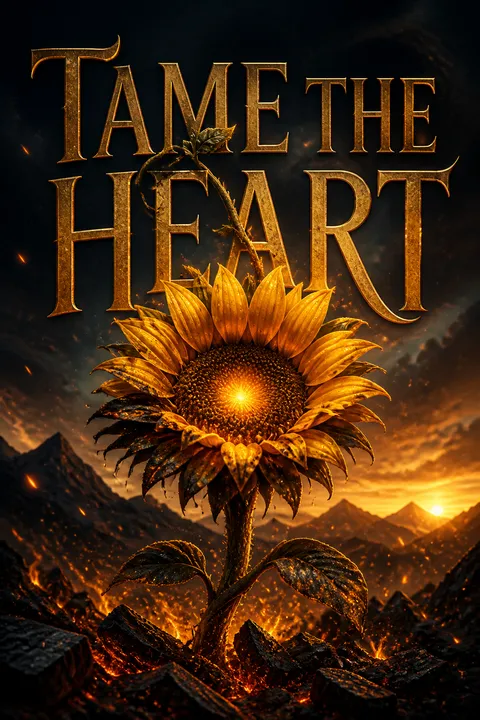


Plot Summary
Prologue
On her twenty-sixth birthday, Ruby Bloom swerves her car to avoid a squirrel and crashes into a telephone pole outside her family’s flower shop. Her father and brother rush to her, assuming her heart condition caused the wreck; Ruby insists she is unharmed, but the accident leaves her staring at the life she has been allowed to live: safe, supervised, and almost entirely untested.
She realizes that other people fear her death more than she does, and that their fear has kept her from living. Lying in the rain, she decides she will no longer let caution make her choices for her.
The crash turns a familiar family ritual into an existential interruption. Ruby’s father and brother respond to danger by tightening their protection, while Ruby experiences the same event as evidence that protection has become a kind of confinement. Her choice is not simple denial of her illness. She knows her heart is vulnerable, but she rejects the assumption that vulnerability should dictate the scale of her life. The squirrel’s ordinary companionship sharpens her loneliness: even a small creature seems to have a fuller existence than she does. The opening therefore makes risk personal and practical. Ruby begins moving because she cannot bear to arrive at the end of life without having chosen it.
Ruby Points West
A month after the crash, Ruby has left Indiana and traveled through the South and Southwest, checking off firsts while keeping her whereabouts from her worried brother, Max. At a gas station in Arizona, she spins a bottle on a map and takes its accidental direction as a reason to head north.
In Resurrection, Montana, she enters the rowdy bar Nowhere with a help-wanted sign and meets Charlie Montgomery, a ranch owner already irritated by the town’s trouble. When a bar fight breaks out, Charlie pulls Ruby through the crowd and carries her outside. The exhilaration gives way to a brief heart flutter, which she hides. Charlie warns her off the town, but Ruby takes his advice about a hotel and decides to stay.
Ruby’s road trip is a form of self-authorship, but it begins with a deliberately playful choice rather than a grand plan. The bottle gives her permission to move without requiring her to justify every destination to the family that has managed her risks. Charlie’s first response is protective and exclusionary: he saves Ruby from a fight, then assumes he can decide where she belongs. Her refusal to leave establishes the central conflict between care and control. The concealed flutter adds a second tension beneath her new freedom. Ruby is not free of danger; she is testing whether danger can coexist with agency.
A Ranch Needs Ruby
Charlie’s Runaway Ranch is a working property staffed by his brothers and local employees, but the season begins badly. A guest’s video shows Ford Montgomery laughing after a rider falls, and the online backlash brings cancellations before the ranch has earned enough to feel secure.
Charlie also learns from Stede McGraw, the influential local rancher who sold him the land, that developer Declan Valiante is pressuring Resurrection property owners to sell.
When Ruby returns to town for medical refills, she finds Charlie at the clinic and offers to use her social-media experience to repair the ranch’s reputation. Charlie accepts a three-month arrangement, provides her a cottage near his home, and gives her room to work. Ruby sees a business problem; Charlie sees another reason to worry.
The ranch’s financial crisis makes Ruby’s skill materially useful rather than a decorative talent attached to the romance. The viral video also exposes the gap between the Montgomerys’ local credibility and their vulnerability to public judgment: a single clip can threaten jobs across the town. Valiante’s interest gives that vulnerability a larger political and economic frame. Charlie’s instinct is to solve danger through vigilance, while Ruby understands that visibility can be shaped rather than merely endured. Their work agreement puts them in proximity under a practical pretext, but it also begins a negotiation over whose judgment counts. Help becomes the first form of intimacy they can both accept.
The Demon Horse
While Ruby follows Charlie through the ranch, she asks to help with chores and tries to approach a wild horse without understanding the danger. She falls into its round pen as the animal thrashes around her.
Charlie rushes in, putting himself between Ruby and the horse, and the sight briefly pulls him back into the memory of Maggie, his former fiancée, dying in a riding accident. Ruby escapes without serious injury, but Charlie’s anger hurts her more than the fall.
He recognizes that he failed to explain the ranch’s hazards, apologizes, and returns the bracelet she lost in the pen. On a later hike, he shows her Crybaby Falls and explains why the land keeps him alive. Ruby promises to help save the ranch, and Charlie agrees to let her do the work.
The pen scene makes Charlie’s protectiveness legible as trauma, not merely temperament. Ruby’s untrained curiosity resembles the kind of danger he associates with irreversible loss, so his response is disproportionate to her immediate injury but psychologically coherent. The important change comes when he accepts responsibility for withholding information. His apology replaces authority with accountability, allowing Ruby to remain a collaborator rather than a ward. Their hike then gives the land emotional meaning beyond property value: Charlie’s attachment is a way of rebuilding purpose after grief. Ruby recognizes that purpose and offers her labor, creating a reciprocal bond that neither can reduce to rescue.
One Night Becomes Summer
As Ruby learns the ranch’s routines, she and Charlie grow close over work, meals, and conversations about their families. During a late laundry run at Charlie’s cabin, they kiss and agree that their connection will be only one night because Ruby plans to leave and Charlie insists he cannot fall in love again.
Their first sexual encounter gives Ruby the pleasure and agency she has never experienced, but she returns to her cottage rather than stay. Charlie later finds her handwritten list of experiences she wants to pursue, including riding a horse and watching a sunrise.
He offers to help her complete it, framing their arrangement as summer-only. Ruby accepts. The list makes their attraction sound manageable, even as Charlie begins wanting more than the terms allow.
The list turns desire into a sequence of achievable tasks, which suits Ruby’s attempt to reclaim a life previously organized around prohibition. Sex is not simply a romantic milestone; it is an experience she chooses and directs, with Charlie responding to her stated boundaries. Their summer agreement is an emotional defense disguised as logistics. Ruby believes she can enjoy intimacy without surrendering her future, while Charlie treats temporary attachment as safer than renewed grief. Both are partly right about the danger and wrong about their control over it. The checklist lets them approach vulnerability through action before either is willing to name what the actions mean.
A Dance, a Photograph
Ruby’s ranch posts begin attracting attention, and Charlie starts to see that her work can bring in guests without turning the property into a spectacle. He takes her out to the Neon Grizzly, where she learns to two-step with him and is briefly cornered by an intoxicated tourist. Charlie intervenes, then stays close as they return to the dance floor.
Outside, Ruby follows Fallon McGraw, Stede’s daughter and a rodeo competitor, into an alley. The two women watch a couple on the balcony of the old brothel and photograph the man before he slips away. Ruby does not yet know that he is Declan Valiante. The image sits quietly among the summer’s memories, an accidental record that will later give the ranch leverage.
This outing widens Ruby’s world in two directions. The dance lets her experience pleasure without having to manage the ranch, while the encounter with the tourist shows that independence does not mean she is never vulnerable. Charlie’s protection is welcome here because Ruby has chosen closeness rather than had it imposed. Fallon offers a different model of female autonomy: bold, competitive, and difficult to intimidate. Their impulsive photograph matters because it converts ordinary curiosity into evidence. The scene’s tonal lightness conceals a political instrument in plain sight. Ruby’s habit of noticing and recording details, initially a professional skill, begins to intersect with the danger surrounding the town.
Bones in the Water
Ruby’s online work reveals a persistent account attacking the ranch, the same username attached to the guest video that damaged Ford’s reputation. Soon afterward, she discovers bones in a horse’s water tank.
The Montgomerys first suspect a prank by the Wolfington brothers, longtime rivals, but the bones are real, and the stunt frightens Ruby badly. Charlie comforts her and gives her potted sunflowers as an apology for not checking on her sooner. She compares the anonymous account’s profile image with the posts and saves it for further investigation.
Meanwhile, vendors begin demanding early payment, putting fresh pressure on the ranch’s finances. The online abuse, the bones, and the business squeeze no longer look like unrelated annoyances. Someone is trying to make Runaway Ranch fail.
The bones change the meaning of the ranch’s ordinary disorder. In a community accustomed to pranks and rough humor, the first assumption is that the threat belongs to familiar local rivalry. The discovery that the remains are real punctures that explanation and makes uncertainty itself dangerous. Ruby responds by gathering evidence rather than simply accepting fear, using the same digital literacy that helped the ranch attract guests. Charlie’s flowers show care expressed through repair, but the larger danger exceeds the couple’s private solutions. The campaign attacks both material stability and the ranch’s sense of safety, turning reputation, vendors, and physical space into connected pressure points.
The Cottage Intruder
The threat becomes physical when Wyatt is found injured after someone runs him off the road and beats him. A few days later, a masked man breaks into Ruby’s cottage and tries to restrain her, warning her to leave.
Ruby fights back, but terror and exertion trigger a severe flutter and she loses consciousness. Charlie breaks through the door and finds her on the floor. He carries her to his cabin while Davis and Ford search the wrecked cottage; their security cameras failed to cover it.
A medic checks Ruby and says she needs rest, but Charlie refuses to let her return alone. He tells her about the time he nearly killed a man who hurt his sister, revealing how far his protective instincts can go. Ruby remains silent about her own heart condition.
The intruder’s warning exposes the moral cost of the romance’s secrecy. Ruby’s hidden condition makes the attack more dangerous, while Charlie’s unspoken fear of losing people turns her vulnerability into a threat to his stability. His confession about defending his sister is both an act of intimacy and a warning about the force he can unleash when family is harmed. Yet his insistence on keeping Ruby close risks repeating the overprotection she fled. The scene does not resolve that contradiction. Instead, it raises the stakes: she needs his care, but she has not yet trusted him with the knowledge that would let him care for her accurately.
The Wrong Brothers
Charlie and his brothers confront Lionel and Clyde Wolfington, expecting answers about Wyatt’s beating and Ruby’s attack. The Wolfingtons deny harming either of them and explain that Sheena, their relative, cut her own hair after Wyatt left her alone, then blamed him.
They also admit that their family took Wyatt’s prized horse and sold it when money was tight. The brothers’ feud loses some of its certainty, and Charlie negotiates a truce rather than escalate it. Lionel then warns that DVL Equities has been harassing other ranches, damaging property, and pressuring local vendors.
The attacks fit a wider effort to make landowners desperate enough to sell. The Montgomerys leave without recovering Wyatt’s horse, but with a clearer enemy and a reason to cooperate with their former rivals.
The Wolfington encounter complicates the convenient story that local antagonism explains every injury. The brothers have behaved badly, and their theft of Wyatt’s horse is real, but they are not behind the escalating violence. Their admission about selling the horse reveals the economic desperation beneath their rivalry, giving the feud a human scale without excusing it. The truce is a shift from pride to strategic interdependence. DVL’s tactics exploit precisely the divisions that keep landowners isolated. By distinguishing petty conflict from organized coercion, the narrative asks its characters to revise their judgments before they can defend the community together.
Colton’s Belt Buckle
Ruby compares the online troll’s profile picture with a photograph she took of Colton, a young ranch hand, and recognizes the same distinctive belt buckle. She confronts him in the barn while carrying a bat for protection.
Colton admits he was the masked intruder and says he meant to frighten her, not make her faint. He reveals that the woman behind the damaging video is his mother and that Declan Valiante is his father. Valiante promised to pay for Colton’s college if he helped sabotage Runaway Ranch from within.
Charlie arrives with his brothers, punches Colton, then stops when Ruby insists they hear the full account. He fires Colton and orders him off the property. The scheme is no longer an anonymous threat: it has a family behind it and a political motive.
Ruby’s discovery demonstrates that the traits others might call naïve have become investigative strengths. She remembers a visual detail, tests it against a pattern, and confronts the person who harmed her instead of waiting for Charlie to solve the mystery. Colton is culpable, but his fear of his father and his desire to escape complicate the easy image of a loyal employee turned villain. Charlie’s first response is violence; Ruby interrupts it so that information can survive the confrontation. Her intervention does not excuse Colton. It asserts that justice requires more than punishing the nearest body, especially when the larger machinery of coercion remains intact.
Valiante’s Double Life
After Declan Valiante visits Charlie’s property and threatens him over the ranch, Ruby reveals the photograph she took with Fallon outside the brothel. It shows Valiante in a compromising encounter, and its visible family crest links him to the belt buckle Colton identified. Charlie and his brothers recognize that the picture could expose the developer’s hypocrisy and distract him from targeting Resurrection’s ranches.
They decide to give it to a journalist rather than continue answering threats with fists. The choice turns Ruby’s casual snapshot into evidence with public force. Charlie’s anger remains sharp, but the family now has a way to resist Valiante without simply walking into the violence he wants them to provoke.
The photograph reverses the power dynamic of surveillance. Valiante’s operation relies on watching vulnerable landowners, documenting their weaknesses, and manipulating public perception. Ruby’s image captures the powerful man in a private contradiction that his own campaign cannot easily absorb. Its value lies not in sexual scandal alone but in connecting his public authority to private hypocrisy and a documented effort to acquire land. The brothers’ decision to use journalism rather than retaliation marks a strategic maturation. Their physical capacity remains part of their identity, but the best defense is now an account of events that can travel farther than a punch.
Why the Ranch Runs
After finding a photograph of Maggie in Charlie’s kitchen, Ruby learns from Ford that Maggie was Charlie’s former fiancée and that her loss shaped his move to Montana. Afraid of becoming another heartbreak, Ruby packs her car and tries to leave without saying goodbye.
Charlie stops her and finally explains that he named the ranch for his own escape from grief. He tells her that she is the first person in years he has wanted to move toward rather than run from, and admits he loves her. Ruby, already in love with him, says she will stay.
Charlie later tells her how Maggie died in a riding accident and how his brothers followed him to rebuild the ranch. Ruby listens without asking him to bury the past, and their relationship becomes a chosen future rather than a summer bargain.
The photograph makes visible what Charlie has concealed: his guardedness is not indifference but a life organized around a loss he has never integrated. Ruby’s attempt to leave is generous in intention and self-protective in effect. She assumes that loving her will injure Charlie, so she tries to decide for him before he can choose. His confession counters that pattern by making his history available without treating it as a claim on her. Their mutual declarations do not erase grief or illness. They change the terms of intimacy: each can be loved without being reduced to the worst thing that happened to them.
A Ranch Made Permanent
As the season ends, Ruby’s campaign has rebuilt the ranch’s audience and filled its remaining bookings. Stede uses his connections with Fish and Wildlife to secure Runaway Ranch as a protected habitat, making it harder for developers to seize or redevelop the land.
At the farewell gathering on Meadow Mountain, he tells Charlie and Davis that he wants them to look after his daughters, Fallon and Dakota. Wyatt and Fallon share a private tenderness beneath their familiar rivalry, while Ruby watches the family gather around its future.
Charlie asks Ruby to marry him, and she accepts. The proposal answers her fear of being temporary with a commitment rooted in the place she helped save. The ranch is no longer only Charlie’s refuge; it is becoming their shared home.
The land’s protected status gives the romance a material future. Charlie’s earlier purchase was a private refuge from grief, but Ruby’s work and Stede’s intervention turn it into a community asset that cannot be treated as disposable property. The proposal therefore arrives alongside a new kind of permanence, not as a substitute for practical security. Stede’s request concerning his daughters also expands family beyond blood and romance into reciprocal responsibility. Meanwhile, Wyatt and Fallon’s guarded closeness echoes the main couple’s movement from rivalry and defense toward trust. The scene links chosen love to stewardship: belonging means protecting a place and the people who make it livable.
The Heart Tells All
Ruby’s flutters grow more frequent, but she continues working and riding because she fears that Charlie will treat her as fragile. After a fainting spell, a doctor tells her to return to her cardiologist; Max urges her to enter a Stanford study.
Ruby delays the truth, then saddles Charlie’s horse, Arrow, for one last ride. Her heart races, she faints, and her wrist catches in the reins. Charlie and his brothers restrain the horses while Wyatt cuts the leather and frees her.
From bed, Ruby finally explains that she has supraventricular tachycardia, that medication is no longer controlling it, and that her heart could stop. She offers to leave rather than make Charlie watch her decline. Charlie refuses to abandon her, though the fear and anger of her long silence remain between them.
Ruby’s confession arrives only after her body makes secrecy impossible. Her silence has been driven by more than embarrassment: she equates being known as ill with losing the right to make choices. Charlie’s response must therefore hold two truths at once. He is frightened and hurt that she concealed a life-threatening condition, but he cannot turn those feelings into a demand that she disappear. The horse accident makes their shared vulnerability literal: her wrist is trapped by the same reins that signify the freedom she has pursued. Rescue comes through coordinated action, not control, and opens the possibility of care based on truthful knowledge.
Fire and Second Breath
A fire breaks out in the barn, its doors nailed shut and the horses trapped inside. Charlie and his brothers smash openings while Ruby leads the animals already loose toward safety.
When she hears Winslow inside, she takes an axe and tears a gap in the burning wall, getting the colt out before smoke and exertion overwhelm her heart. Charlie finds Ruby collapsed in the rain and cannot detect a pulse or breath. Remembering how she once urged him to kiss her, he performs CPR until she begins breathing again; the effort cracks one of her ribs.
At the hospital, Ruby remains unconscious for nine days. Charlie stays beside her, while the family carries the fight against Valiante beyond the ranch. Ruby finally wakes and finds her cowboy still holding her hand.
The fire tests the difference between agency and self-erasure. Ruby acts from loyalty to the horses and the ranch, but her refusal to stop when her body is failing exposes the danger of defining courage as limitless exertion. Charlie’s CPR turns a private memory of their first intimacy into an act of survival, yet it cannot promise a happy outcome; he must work without knowing whether she will return. The broken rib preserves the bodily cost of rescue rather than making it miraculous and painless. Ruby’s awakening completes the emotional crisis, but not the medical one. Love becomes commitment to uncertainty, not a cure for it.
Epilogue
After Ruby wakes, Charlie and his brothers help expose Valiante through the photograph, while Stede’s protected-habitat designation shields the ranch from redevelopment. Ruby recovers and marries Charlie; together they travel to California for a clinical trial that includes catheter ablation.
A few years later, the trial has greatly reduced her episodes, and Ruby opens Bloom’s Blooms on Resurrection’s Main Street. Charlie helps arrange sunflowers for the shop’s opening, surrounded by both families and the ranch hands who have become her own.
The couple is expecting a daughter through a surrogate, and Ruby begins another shared list of things they want to do. Her life is no longer measured by what she might lose, but by the choices she and Charlie keep making together.
The ending does not convert Ruby’s heart condition into a problem solved by romance. Medical treatment improves her symptoms, but her body remains part of the future they must negotiate. Charlie’s love matters because it supports her choices rather than replacing clinical care or erasing uncertainty. The flower shop completes a practical loop: Ruby’s family business once symbolized the safe life she left, and its new incarnation becomes work she chooses in the town she has chosen. The surrogate pregnancy likewise shows the couple adapting their hopes without treating conventional biology as the measure of family. Their new list preserves the story’s central ethic: a meaningful life is made through repeated, shared decisions.
Analysis
Tame the Heart organizes romance around a question more consequential than whether two people desire one another: who gets to define a life lived under medical risk? Ruby has been protected through restriction, and her road trip is an attempt to recover authorship by choosing experiences for herself. The book does not make that choice cost-free. Her worsening SVT shows that freedom is not the same as invulnerability, while her concealment of the condition reveals how easily resistance to paternalism can harden into isolation. Charlie faces a parallel problem. After Maggie’s death, he has mistaken routine and emotional withdrawal for safety, then confused protecting Ruby with managing her. Their relationship becomes credible when both disclose what fear has made them hide and learn to offer care without claiming ownership of the other’s choices.
The ranch plot gives those intimate conflicts a public dimension. Runaway Ranch is not merely a scenic backdrop or a symbol of Charlie’s recovery. It employs local people, depends on a fragile seasonal business, and occupies land targeted by a developer who treats community ties as obstacles to acquisition. Ruby’s social-media campaign restores bookings by making the ranch visible on its own terms. Her photograph of Valiante extends that same principle into the suspense plot: documentation can challenge a powerful man’s manufactured story. Stede’s protected-habitat designation then turns affection for the land into durable civic action. The resolution is not simply that good people defeat a villain; it is that a community becomes harder to divide and buy when its members share information and accept mutual responsibility.
The recurring flowers and the sunflower game keep the novel’s language of hope grounded in daily practice. A sunflower is not proof that hardship has vanished; it is a reason to attend to what remains possible today. Ruby’s final future combines medicine, work, family, and love rather than allowing any one of them to stand in for the others. The story’s strongest claim is therefore not that optimism conquers mortality. It is that uncertainty need not be granted the authority to make every decision in advance. Ruby and Charlie cannot secure a life without loss, but they can make a life shaped by chosen risks, honest knowledge, and care that strengthens rather than confines.
Review Summary
People Also Read


Characters
Ruby Bloom
The fearless sunflowerRuby is a marketing professional from Indiana who has spent her life under the watchful care of her father and older brother because of her heart condition. Curious, warm, and quick to notice overlooked details, she brings both practical skill and a hunger for experience to Runaway Ranch. Her optimism is not ignorance; it is a deliberate answer to a future she cannot fully control. Ruby wants to make choices without being treated as breakable, yet her instinct to help others can push her past her own limits. Flowers, travel, and her handwritten list of firsts give shape to her desire to live as an active participant in her own life.
Charlie Montgomery
The grieving rancherCharlie owns Runaway Ranch and carries the daily work of keeping its land, staff, and animals running. A former rodeo competitor, he is capable, stubborn, and more comfortable repairing a fence than discussing what hurts. The loss of his fiancée has made routine feel safer than attachment, while his loyalty to his brothers keeps him tied to a life he sometimes believes he imposed on them. Ruby challenges his belief that protection requires distance or control. His affection shows itself through practical care, from giving her a place to stay to learning what her heart needs, but he must learn that love cannot remove every risk.
Max Bloom
Ruby’s vigilant brotherMax is Ruby’s older brother and a co-owner of the family flower shop. He loves her fiercely and has spent years translating concern into rules, reminders, and pressure to come home. His fear is understandable given Ruby’s condition and their family history, but it can make his care feel like a verdict on what she is capable of. Max’s calls keep Ruby connected to Indiana even as she tries to build a life beyond it.
Ted Bloom
Ruby’s protective fatherTed runs Bloom’s Blooms with his son Max and is deeply shaped by the loss of his wife and concern for Ruby’s health. His instinct is to keep his daughter safe, and that instinct has often narrowed the life she was allowed to try. He is not indifferent to her independence; he is frightened by what might happen if he loosens his grip. His bond with Ruby gives her a loving home to leave and, ultimately, a family she can remain connected to from afar.
Charlie’s former fiancée
The absent first loveCharlie’s childhood friend and former fiancée remains an important presence in his memory. Her shared history with him belongs to his earlier life in Georgia and rodeo, before he built a new existence in Montana. The photograph Charlie keeps hints at the depth of their bond, while his guardedness shows how difficult it is for him to speak about the past. She is not a rival to Ruby so much as a measure of the grief Charlie has never fully faced.
Davis Montgomery
The security-minded brotherDavis is Charlie’s older brother, a former Marine, co-owner of Runaway Ranch, and head of security. He is disciplined, observant, and inclined to turn uncertainty into a plan. His service injury and private reserve make him difficult to read, but his loyalty is unmistakable in the way he protects the ranch and keeps his brothers from acting recklessly. Davis often supplies the practical judgment the family needs, even when his own feelings remain unspoken.
Wyatt Montgomery
The reckless rodeo brotherWyatt is Charlie’s younger brother, a champion saddle bronc rider who trains cowboys when he is not on the rodeo circuit. He is daring, funny, and quick to turn rivalry into a prank or a fight, especially where the Wolfingtons are concerned. Beneath the bravado, he is deeply loyal and will move quickly when one of his family is in danger. His competitive relationship with Fallon carries an attraction neither is eager to admit plainly.
Ford Montgomery
The restless fixerFord is Davis’s twin and a retired professional baseball pitcher who now manages activities and repairs at the ranch. An adrenaline seeker with an easy grin, he can charm guests, fix machinery, and needle his brothers in the same afternoon. His poor judgment in handling one guest becomes the source of the ranch’s viral crisis, but he is not careless about the people he loves. Ford often notices emotional truths before Charlie is ready to say them.
Grady Montgomery
The absent musicianGrady is the youngest Montgomery brother and is pursuing a music career in Nashville. His success with social media helps Charlie’s family recognize that online attention can be useful rather than merely intrusive. Though he is away from the ranch, he remains part of the close-knit sibling network.
Emmy Lou Montgomery
The youngest sisterEmmy Lou is Charlie’s youngest sister, a mother of twins whose expanding family gives the Montgomery brothers a reason to celebrate beyond the ranch. She is loved and protected by her siblings, though their concern can sometimes become overbearing. Her life with her husband Jace and their daughters represents the family future Charlie values and Ruby hopes to share.
Stede McGraw
The town’s old handStede is a retired bull rider, rancher, and respected figure in Resurrection. He gave Charlie a chance to begin again by selling him the land that became Runaway Ranch, and he treats the Montgomery brothers like sons. Though ill, he remains blunt, generous, and politically connected enough to help protect the community’s land. His affection for his daughters, Fallon and Dakota, is fierce, even when he struggles to admit how much they need one another.
Fallon McGraw
The untamed cowgirlFallon is Stede’s younger daughter, a rodeo competitor and co-owner of The Corner Store. Tattooed, sharp-tongued, and intensely independent, she refuses to soften herself for other people’s comfort. Her rivalry with Wyatt is full of sparks, but her loyalty to her father and town runs deeper than her bravado suggests. Ruby finds in Fallon a companion who understands the appeal of choosing a life that feels dangerous and fully one’s own.
Colton
The young ranch handColton arrives at Runaway Ranch looking for seasonal work and brings youthful energy to its chores. He is eager to fit in and prove himself, though he is caught between his own uncertain future and the demands of his family. His place among the ranch hands makes him part of the community Ruby is trying to understand. He is a reminder that a person’s choices can be pressured by forces larger than the immediate workplace.
Declan Valiante
The land-hungry developerDeclan is a wealthy property developer and political candidate whose company is buying land across Montana. He presents himself as a businessman offering opportunity, but his approach to local owners is aggressive and coercive. Valiante views the ranch and surrounding properties chiefly as assets to be acquired and reshaped. His confidence comes from money, influence, and the assumption that smaller communities can be pressured into surrendering what they own.
Sheena Wolfington
The town’s sharp stylistSheena is a hairstylist connected to the Wolfington family and has a history of flirtation and friction with the Montgomery brothers. She is assertive and comfortable using attention to her advantage, which makes her presence a source of gossip in a small town. Her entanglements with Wyatt and Fallon complicate their already volatile rivalry.
Lionel and Clyde Wolfington
The rival ranch brothersLionel and Clyde are brothers whose resentment of the Montgomerys began when Charlie bought land they wanted. They are quarrelsome, prone to pranks, and often seem more interested in provoking Wyatt than resolving their disputes. Their rivalry reflects the town’s old grudges and economic strain. Beneath the bluster, their family has its own hardships, which makes their hostility less simple than the Montgomerys first assume.
Tina
The lodge managerTina manages guest services at Runaway Ranch, coordinating reservations and welcoming visitors. Her work gives the Montgomerys a clear view of cancellations and bookings, making her an important source of information about the ranch’s business.
Silas Craig
The ranch’s chefSilas is Runaway Ranch’s chef, responsible for the communal meals that give guests and workers a shared daily rhythm. He is practical, irreverent, and part of the staff Charlie trusts to keep the operation running.
Keena
Davis’s rescue dogKeena is Davis’s Belgian Malinois rescue dog and a frequent presence around the ranch. Her loyalty and alertness fit naturally into Davis’s security work, while her mischievous energy gives the business office a less disciplined streak.
Plot Devices
Ruby’s to-do list
A map of chosen risksRuby’s handwritten list records experiences she wants to claim after a lifetime of restrictions. It begins with personal milestones such as getting a tattoo, having satisfying sex, riding a horse, seeing a California sunset, and swimming in the Pacific. As Charlie learns about it, the list gives their temporary arrangement a practical structure and allows Ruby to ask for specific experiences without initially naming her deeper desires. Its importance changes as she completes items and begins imagining a future with Charlie. The list ultimately measures not a race against death, but Ruby’s growing ability to choose what a full life means to her.
The sunflower game
A daily emotional compassRuby and Max have long named a day’s happy moment its sunflower and its disappointment its thorn. The ritual gives Ruby a way to direct attention toward pleasure without pretending that pain is absent. She eventually shares the practice with Charlie, who begins using it to recognize what is good in his own life. Flowers recur as gifts, garden plans, and symbols of persistence, but the game remains concrete: it asks each character to notice a particular event from that day. It helps the couple communicate before they are ready to discuss their deepest fears.
Ruby’s SVT
The body’s hidden deadlineRuby’s supraventricular tachycardia causes episodes of dangerously rapid heartbeat and fainting, managed initially with medication and techniques that can sometimes restore a normal rhythm. She conceals the condition from Charlie because she expects him to treat her as fragile and believes their relationship is temporary. The condition shapes her choices, limits what she has been allowed to do, and makes ordinary excitement or stress consequential. As episodes intensify, her secrecy becomes a relationship crisis as well as a medical risk. The story distinguishes living fully from ignoring the body: Ruby’s eventual treatment requires both agency and accepting help.
The ranch’s online presence
Reputation turned into leverageRuby’s social-media expertise first gives Runaway Ranch a way to answer a damaging viral video, show its staff and landscape, and attract new guests. The same platforms also carry anonymous attacks and reveal patterns in the sabotage. A distinctive belt buckle in an account image helps Ruby connect the online campaign to someone working at the ranch, while her photographs preserve evidence that the developers would prefer to keep private. Social media is therefore neither a simple villain nor a simple solution. Its value depends on who controls the story, what they document, and whether the public can be shown more than a single misleading clip.
The brothel photograph
A private act becomes evidenceDuring a night out with Fallon, Ruby photographs a man and woman on the balcony of Resurrection’s former brothel. At the time, the picture is an impulsive record of a strange scene and Ruby does not know the man’s identity. Later, its details connect Declan Valiante to the same family crest that appears in the sabotage investigation. The image gives the Montgomerys a public countermeasure against a developer who has used threats and reputation damage to pressure local landowners. Its power depends on timing: an ordinary moment of curiosity becomes consequential only after Ruby recognizes what the photograph shows.
Runaway Ranch Series
Download PDF
Download EPUB
.epub digital book format is ideal for reading ebooks on phones, tablets, and e-readers.








