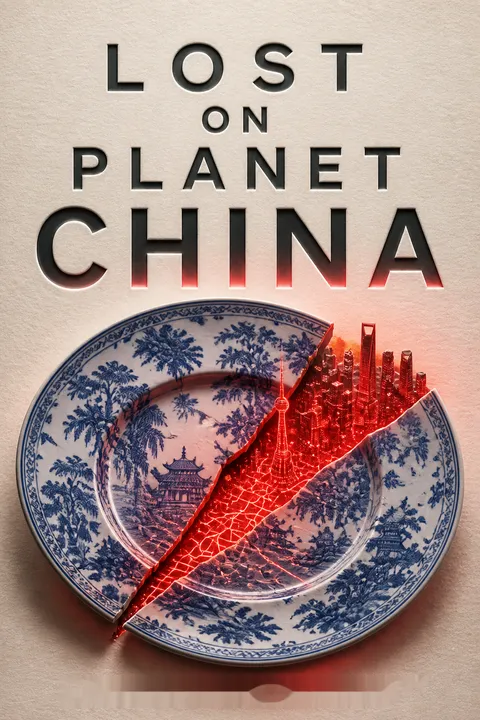


Key Takeaways
Enter China expecting contradictions, not a single national character.
A traveler’s starting point. Troost arrives without fluency in Chinese or scholarly expertise, after years living on remote Pacific islands. He sets out to understand a country that has become an economic giant while remaining governed by the Communist Party. His method is not to claim authority, but to record the confusion of a visitor who keeps discovering that his assumptions are wrong. A city can launch people into space while some residents live in caves; luxury malls and political censorship can occupy the same block.
Contradiction is the subject. From Beijing to Tibet, the journey reveals no tidy portrait of China, but a fast-changing place where prosperity, repression, ingenuity, and hardship coexist. The memoir’s title captures the traveler’s disorientation, not a claim that China itself is unknowable.
What's striking is that uncertainty becomes a useful reporting tool. A visitor who admits what he cannot understand is less likely to mistake a first impression for a complete explanation. This resembles a basic principle of ethnography: observations are shaped by the observer’s position, language, and access. Troost’s candor helps readers see those limits. It also sets a boundary around the book’s authority. A comic travel memoir can illuminate contradictions and provoke better questions, but it cannot stand in for the experiences of a country of more than a billion people.
Learn enough language to notice where your ignorance begins.
Words change the journey. Troost studies Mandarin before arriving, but its tones, characters, and regional varieties quickly overwhelm his beginner’s confidence. A phrase he learned to ask whether a dish was chicken fails when he needs it. He misreads a menu and ends up with sheep’s brain, having assumed the English translation came first. In a country where signs and menus are often written only in Chinese, not being able to read is more than inconvenient: it narrows what a traveler can do alone.
Humility is practical. Troost repeatedly depends on friends, strangers, and translators to find a hotel, buy a ticket, or understand a conversation. The language barrier also makes it harder to know whether a person is joking, helping, selling something, or asking for money. His mistakes are funny, but they reveal how quickly confidence can become helplessness.
Language learning here is less about collecting phrases than about recognizing the shape of one’s blind spots. That is a valuable distinction for anyone entering an unfamiliar setting. A translation app or memorized greeting can ease transactions, but it cannot automatically supply context, tone, or trust. The book also makes clear that linguistic difficulty is not unique to China: outsiders often treat their own language as the default and local speech as an obstacle. The more useful response is curiosity, paired with caution about what a partial translation can establish.
Read prosperity from the skyline, then check who remains below.
Two economies share a street. In Shanghai, Troost stays in a luxury hotel high above the Huangpu River, surrounded by executives, expensive restaurants, and glittering towers. Across town, migrant workers crowd train stations and labor on construction sites, often in makeshift housing. The contrast is not an exception to the boom. It is part of what the boom looks like. Troost cites roughly 200 million people who had left rural areas for city work and about 300 million who could be considered middle class or wealthy at the time.
Growth is unevenly felt. A Ferrari showroom, a crowded market, and a beggar’s bowl can appear within a short walk. The book presents consumer abundance as real, but not as proof that the benefits reach everyone. Many workers who help build the new China remain far from its most visible rewards.
The skyline is a powerful image of growth, but it is a poor measure of how widely prosperity is shared. Development economics distinguishes aggregate output from distribution, and Troost’s repeated shifts between towers and street-level hardship make that distinction vivid. His account also resists the comforting idea that poverty is simply an old condition being swept away by modernization. Still, the contrast is not a complete economic analysis. A traveler's encounters cannot establish how representative any one worker or neighborhood may be. They can, however, make distribution impossible to ignore.
Do not mistake new consumer choices for political freedom.
Markets can open selectively. Beijing’s malls offer Western brands, coffee chains, nightclubs, and a growing class of shoppers with money to spend. Yet Troost’s conversations reveal how limited political discussion can remain. A young woman studying English says politics is mainly a concern for poor people. When asked about the 1989 crackdown on student protesters, she has not heard of it. The scene takes place near the commercial center of a city where the government still controls public memory and punishes dissent.
Private life changes faster. China has moved far from Mao-era uniforms and revolutionary slogans, but the ruling party has not surrendered its authority. Troost sees a society gaining choices about products, entertainment, and careers while lacking comparable freedom to challenge political power. The distinction matters because visible modernization can make political liberalization seem more complete than it is.
The distinction between market choice and civic rights is analytically useful well beyond China. A consumer may select among brands while having little influence over the rules that govern public life. Political scientists describe such arrangements as forms of authoritarian adaptation: economic activity expands without requiring equal expansion of political participation. The book’s mall conversation gives that abstraction a human scale. At the same time, one student’s unfamiliarity with a censored event cannot represent every Chinese person’s knowledge or views. The anecdote illustrates information control, not a uniform national mindset.
Count the environmental bill alongside every celebrated construction boom.
The boom has a physical cost. On the train from Beijing, Troost watches coal plants, slag heaps, and polluted waterways pass through the countryside. In the capital, dust storms from the nearby Gobi add to the industrial haze. He cites a World Bank estimate that air pollution killed about 700,000 people a year in China at the time, while noting that official information about pollution was limited. In his account, environmental damage is not an abstract future risk: it shapes daily breathing, water quality, and public health.
Development is not cost-free. China’s demand for power drives an immense expansion of coal-fired generation. Troost sees the smoke as a companion to new factories, highways, and high-rises, not a separate problem. He also observes how people justify dirty air as the price of progress, even as it crosses borders and affects places far from China.
The book’s environmental thread anticipates a central question in ecological economics: who receives the benefits of growth, and who bears its costs? Pollution can be treated as an externality, a harm excluded from the price of a product or the measure of economic output. Troost’s scenes make that hidden accounting visible. His 2008 figures should be read as period-specific claims, not current statistics, and the memoir cannot isolate China’s environmental causes from global consumption. Its sharper point is that cheap goods and rapid construction do not make ecological costs disappear.
Ask whose history a national story protects, and whose it erases.
The past remains politically useful. Troost visits Mao’s mausoleum and finds visitors treating the embalmed leader with reverence, despite the violence associated with his rule. The official account accepts some errors while preserving Mao’s stature. Troost cites an estimate of roughly 70 million deaths under Mao, including more than 30 million during the famine following the Great Leap Forward. He contrasts this legacy with the continued presence of Mao’s portrait on currency and in public spaces.
Memory shapes present loyalties. In Nanjing, schoolchildren visit a memorial to civilians killed during the Japanese occupation. The museum’s photographs and exhibits help explain why hostility toward Japan remains powerful, especially when Japanese officials and textbooks appear to minimize wartime crimes. The book shows how public history can both preserve victims’ experiences and channel national anger.
Collective memory is not merely a record of past events; it helps define who belongs, who is blamed, and what a government asks citizens to remember. The pairing of Mao’s public reverence with the Nanjing memorial exposes two different uses of history: protecting the legitimacy of a ruling system and keeping atrocity in view. That distinction is valuable, though the book’s sharp moral judgments sometimes compress complex historical disputes into a traveler’s account. Readers should separate the broad lesson about contested memory from any single statistic or interpretation, especially when the underlying record is politically sensitive.
Notice when infrastructure connects a region by displacing its people.
A project can serve several purposes. The Three Gorges Dam changes the Yangtze from a river of rapids into a deep shipping route, while flooding homes, villages, temples, and graves. Residents are relocated, and the dam’s contribution to China’s energy supply is limited compared with the scale of its disruption. Farther west, the railway to Lhasa makes travel into Tibet faster and easier, but also helps bring more Han Chinese settlers and visitors into a region where Tibetans have long faced political and religious restrictions.
Connection is not neutral. Troost sees dams and railways as engineering achievements and instruments of state power. They redistribute access to land, resources, and people. The question is not only whether a project works, but who chose it, who benefits, and whose home or culture is altered in the process.
Infrastructure is often described as a technical solution, yet its routes and consequences are political. A dam decides which communities are flooded; a railway changes who can enter, leave, trade, or settle in a region. This is a useful corrective to narratives that treat connectivity as an automatic public good. The book captures the human scale of displacement, though it does not provide a full accounting of compensation, energy alternatives, or local opinion. Its lasting question is procedural as much as environmental: who gets to make decisions about a landscape shared by many?
Let encounters complicate your judgments, but do not mistake them for proof.
People disrupt easy categories. Troost meets Cinderella, a factory worker who helps him navigate a train journey, and Meow Meow, an English student who translates and introduces him to karaoke. He never fully resolves what either woman’s work or intentions might be. In Yunnan, villagers welcome him with tomatoes, and Tibetan monks remain warm despite political hardship. Elsewhere, he is cheated, shoved, or left baffled by strangers’ behavior. The journey refuses to provide one stable verdict on Chinese hospitality or character.
The traveler is part of the story. Troost’s humor often turns his own confusion into the joke, but his reactions also reveal what he expects from other people. His experiences can make a foreign place feel vivid; they cannot establish how an entire population behaves. A stranger’s kindness or cruelty is a human encounter, not a national diagnosis.
The memoir’s best encounters resist the temptation to turn individuals into symbols. Cinderella does not become a neat lesson about romance, and the Tibetan villagers are not reduced to political victims. That openness resembles a core practice in qualitative research: preserving ambiguity when evidence cannot settle a person’s motives. The book’s comic voice makes this uncertainty approachable. Yet the same voice sometimes generalizes from a narrow sample, particularly when frustration becomes cultural judgment. Readers can enjoy the sharp observations while asking whether the conclusion fits the evidence or chiefly reflects the visitor’s mood.
Treat national futures as choices, not cultural destinies.
One river separates different paths. In Dandong, Troost looks across the Yalu River from a brightly lit Chinese city toward Sinuiju in North Korea, dark and apparently short of electricity. The two countries had once been Communist allies, but their daily realities have diverged. China’s side shows commerce, construction, and public life; the other side appears isolated. When Troost’s boat engine fails near the North Korean shore, his comic panic makes the border feel suddenly real.
The comparison is a warning against inevitability. China’s economic transformation is neither proof that political control has vanished nor evidence that every society must follow the same course. The view across the water makes national outcomes seem contingent: policies, institutions, and decisions shape what becomes possible. The memoir ends with China still changing, and its destination uncertain.
The border scene gives the book’s large-scale argument a compact image: two neighboring societies can emerge from related histories and organize daily life very differently. That is a strong antidote to claims that national character determines political destiny. Still, the contrast cannot be explained by a single policy choice. Geography, international relations, institutions, and historical contingencies all matter. The book is most persuasive when the river prompts questions rather than answers. Its ending leaves readers with a more disciplined view of development: outcomes are made, but never by one cause alone.
Analysis
Lost on Planet China is a travel memoir built around a productive mismatch: the traveler expects a country that can be summarized, then repeatedly encounters evidence that defeats summary. Its narrative moves from the global rise of China into street-level episodes, then outward again to Mao’s legacy, environmental costs, ethnic autonomy, and the contrast with North Korea. The recurring movement between grand scale and small mishap gives the book its structure. A sheep’s brain ordered by mistake sits beside the machinery of political memory; a costly hotel room overlooks a city divided by wealth. The absurdity does not erase the seriousness. It makes the contradictions easier to see.
The central insight is not that China is uniquely contradictory, but that rapid change can coexist with durable political control and severe inequality. Consumer culture, infrastructure, and private ambition expand without necessarily producing democratic participation or environmental restraint. Troost’s attention to pollution, displacement, and the treatment of minorities prevents the economic boom from becoming a simple success story. His account also shows how a country’s treatment of its past shapes present nationalism and legitimacy.
The memoir’s limitation is also part of its method. Troost often admits that he cannot speak the language, interpret a scene, or know a stranger’s motives. That candor invites trust, but his comic observations sometimes harden into claims about what Chinese people are like. Travel offers sharp encounters, not a representative sample. The statistics and political details belong to the book’s 2008 moment and should not be mistaken for a current country profile. Read it instead as an account of how an outsider learns to hold competing truths at once: a society can become materially dynamic while remaining politically restrictive; growth can create opportunity and damage; and a visitor’s bewilderment can be revealing without being definitive. Its strongest legacy is not a final verdict on China, but a habit of looking twice, first at the spectacle, then at its costs and absences.
Review Summary
Lost on Planet China receives mixed reviews. Many praise Troost's humor and insights into Chinese culture, while others criticize his negative tone and perceived bias. Readers appreciate his observations on pollution, crowds, and cultural differences, but some feel he exaggerates or lacks depth. The book is seen as entertaining for those seeking a humorous travelogue, but not a comprehensive guide to China. Some reviewers found it offensive, while others enjoyed Troost's candid perspective. Overall, opinions vary widely on the book's merits and accuracy in portraying China.
People Also Read



Glossary
guanxi
relationship-based connectionsA network of family ties, friendships, and personal contacts that helps people get things done in China. Troost presents guanxi as a practical force operating across political and economic systems, including when formal rules are weak or inconsistently applied. It is not simply friendship: obligations and access within the network can shape business, favors, and everyday opportunities.
laowai
foreign outsiderA common Chinese term for a foreigner, used throughout the memoir to describe Troost and other visitors. Its meaning depends on context and tone: it can be a neutral label, an expression of curiosity, or a reminder that the person addressed is an outsider. Troost uses the term while describing how language barriers and unfamiliar customs leave him dependent on others.
1-2-4 problem
family elder-care imbalanceTroost’s shorthand for the pressure facing a married couple under the effects of China’s One Child policy. One couple may become responsible for four living parents, while having only one child of their own. The term links demographic change to family obligations, including the pressure parents place on their adult child’s choice of spouse and future care.
azhu system
Naxi partner choiceA relationship custom Troost describes among the Naxi people of Yunnan. Women may choose and end sexual relationships, while a child is understood primarily as belonging to the mother rather than being defined by a father’s household. The memoir compares this arrangement to casual partnerships, but the term refers to a specific Naxi social practice, not a universal model of the community.
Golden Week
weeklong public holidayA nationally scheduled holiday period in China when many workers and students travel, often returning to their home regions or visiting major attractions. Troost encounters the resulting crowds at sites such as the Forbidden City and describes heavy pressure on trains and bus stations. The term matters in the memoir because travel dates can radically affect the experience of moving through China.
mass incidents
officially recognized protestsA Chinese government category used in the book for collective public disturbances or protests. Troost cites official counts from the mid-2000s and describes grievances involving pollution, corruption, and land seizures. The label is politically significant because it frames public dissent as an administrative problem, while the reported numbers offer only the state’s accounting of such events.
Socialism with Chinese Characteristics
China’s official system labelThe political phrase used to describe China’s system as it incorporates markets and private wealth under Communist Party rule. Troost notes the contrast between earlier revolutionary language and the new emphasis on getting rich, while the Party remains in power. The term does not resolve whether the system is socialist or capitalist; it signals the government’s own framing of its distinct path.
FAQ
What's Lost on Planet China about?
- Personal Journey: The book is a travel memoir by J. Maarten Troost, detailing his experiences as he explores various regions of China.
- Cultural Exploration: Troost provides insights into Chinese culture, history, and social dynamics, highlighting the contrasts between urban and rural life.
- Humorous Narrative: The narrative is infused with humor, making it an engaging read as Troost navigates the challenges and absurdities of traveling in China.
Why should I read Lost on Planet China?
- Engaging Storytelling: Troost's witty and accessible writing style makes complex cultural observations entertaining and thought-provoking.
- Unique Perspective: As a foreigner with limited knowledge of China, Troost offers a fresh and honest perspective on the country.
- Cultural Education: The book provides valuable insights into contemporary China, its history, and its people, making it a must-read for those interested in the nation.
What are the key takeaways of Lost on Planet China?
- Understanding Modern China: Troost emphasizes the importance of understanding China's rapid economic growth and cultural shifts.
- Cultural Contrasts: The book highlights the stark contrasts within Chinese society, from urban opulence to rural struggles.
- Humor in Travel: Troost demonstrates that humor can be a powerful tool in navigating cultural differences and travel challenges.
What are the best quotes from Lost on Planet China and what do they mean?
- "There will be no...": This sets the tone for Troost's honest narrative, free from romanticized clichés.
- "China is today’s Wild West.": Reflects the chaotic and rapidly changing nature of modern China.
- "You see how difficult...": Expresses the challenges of learning the Chinese language and navigating cultural differences.
How does J. Maarten Troost describe his experiences with the Chinese language in Lost on Planet China?
- Language Barrier Challenges: Troost humorously reflects on the difficulties of navigating Mandarin with its complex characters and tones.
- Cultural Misunderstandings: His lack of fluency leads to amusing misunderstandings, highlighting the importance of language in cultural exchange.
- Learning Process: Despite challenges, Troost remains determined to learn, viewing language learning as a journey filled with frustration and humor.
What insights does Lost on Planet China provide about Chinese culture?
- Diverse Social Dynamics: Troost explores the complexities of Chinese society, from Confucian values to rapid modernization.
- Tradition vs. Modernity: The book illustrates the tension between traditional practices and modern influences, especially in urban areas.
- Public Behavior: Troost comments on unique social behaviors, providing a glimpse into cultural norms that may seem strange to outsiders.
How does Troost address the topic of pollution in Lost on Planet China?
- Air Quality Concerns: Troost vividly describes the pollution in Chinese cities, emphasizing health risks and daily life impacts.
- Environmental Awareness: The book raises awareness about China's environmental challenges amid industrialization.
- Personal Experience: Troost shares his own experiences with pollution, humanizing statistics and underscoring the urgency of addressing these issues.
What role does humor play in Lost on Planet China?
- Coping Mechanism: Troost uses humor to cope with travel challenges and cultural differences, making his experiences relatable.
- Engaging Narrative: Humor keeps readers entertained, making complex topics more accessible.
- Cultural Commentary: Through humor, Troost offers insightful commentary on Chinese society and its quirks.
How does Troost compare his experiences in China to other countries he has visited?
- Contrast with the South Pacific: Troost notes stark differences in culture, lifestyle, and social dynamics between China and the South Pacific.
- Reflections on Western Perceptions: He critiques Western stereotypes of China, encouraging an open-minded approach.
- Universal Themes: Despite differences, Troost finds commonalities in human experiences, such as the desire for connection.
What does Troost say about the future of China in Lost on Planet China?
- Rapid Change: Troost notes China's constant flux, with economic growth reshaping the landscape.
- Global Influence: He suggests China is poised to become a major global player, with significant implications for international affairs.
- Cultural Resilience: Troost expresses hope for Chinese culture's resilience and adaptability amid change.
What challenges does Troost face while traveling in China?
- Language Barrier: Troost struggles with Mandarin, leading to humorous misunderstandings and communication issues.
- Cultural Differences: He encounters cultural differences that challenge his expectations, requiring adaptation and learning.
- Logistical Issues: Troost faces transportation difficulties and the vastness of the country, adding to his travel adventure.
How does Troost portray the Chinese government in Lost on Planet China?
- Critical Perspective: Troost critiques the government, discussing censorship, social unrest, and environmental issues.
- Humorous Critique: He uses humor to critique government policies, making observations entertaining and thought-provoking.
- Complexity of Governance: Troost acknowledges the challenges faced by the government in managing a diverse and vast country.
Download PDF
Download EPUB
.epub digital book format is ideal for reading ebooks on phones, tablets, and e-readers.








