

Key Takeaways
Treat your body as a source of knowledge, not a problem to hide.
A crisis became a summons. Lisa Lister describes years of severe menstrual pain, heavy bleeding, painful sex, and diagnoses of endometriosis and polycystic ovary syndrome. A doctor suggested removing her reproductive organs, and the experience forced her to recognize how little attention she had paid to her own body. She began exploring her symptoms, needs, and relationship with her pelvic health. Lister calls this turning point “The Call”: a personal reason to reconnect with the body, whether it begins with illness, low desire, grief, or disconnection.
Listen, but investigate. The book treats bodily sensations as reasons to pay attention, not as evidence that a person has failed or is broken. Its central invitation is to approach the body with curiosity and seek appropriate professional care when symptoms need assessment.
What's compelling is the shift from body-as-object to body-as-partner in inquiry. Health psychology calls attention to internal sensations interoception, and noticing patterns can help people describe symptoms more clearly and advocate for themselves. But a sensation is not a diagnosis, and spiritual meaning should not replace clinical evaluation. The strongest version of Lister's message is not “the body always knows the cause,” but “the body deserves to be heard, and its signals deserve competent investigation.” That distinction protects both personal agency and medical safety.
Track your cycle to discover your pattern, not to obey a template.
A month has phases. Lister presents the menstrual cycle as more than the days of bleeding. Her model divides it into pre-ovulation, ovulation, pre-menstruation, and menstruation, linking each phase to a season, a lunar phase, and an archetype. She associates the first half with outward energy and the second half with more inward reflection. In her account, ovulation may coincide with sociability, while premenstruation can sharpen awareness of frustrations and menstruation can prompt rest.
Make it personal. She recommends recording cycle days alongside mood, energy, desire, and daily circumstances. The aim is to notice an individual's patterns and plan flexibly, not to assume that everyone has a 28-day cycle or experiences identical phases. People who do not menstruate can use lunar phases as a reflective structure, though it is not a substitute for a biological cycle.
The practical strength here is longitudinal self-observation: a journal can reveal whether energy, pain, or mood reliably changes for a particular person. That resembles symptom tracking used in clinical care, where repeated observations are more useful than a single impression. The caution is that the four archetypes are an interpretive map, not a universal biological timetable. Menstrual cycles vary, and research does not establish that every phase produces the same predictable talents or moods. A flexible log is more empowering than turning the model into another standard a person can fail.
Use difficult feelings as prompts for reflection, not as proof something is wrong.
Notice before numbing. Lister describes using food, alcohol, and distraction to avoid feelings she did not know how to handle. She encourages readers to pause, locate what they are feeling in the body, and explore it through journaling, movement, or a compassionate conversation with themselves. Her “womb talk” exercise asks a person to check in with the pelvic area, ask what feels unsettled, and consider one caring action.
Make room for support. The book connects shame, anger, grief, and early experiences with patterns of self-abandonment. It invites readers to approach painful memories gently, and explicitly suggests working with a therapist or practitioner when that feels safer. Its spiritual language sometimes treats feelings as messages from a deeper feminine source; readers can use the reflection without accepting that interpretation as fact.
This approach has a useful overlap with emotion-focused therapies, which treat feelings as information to be understood rather than commands that must be obeyed. Naming an emotion and noticing its physical effects can make a vague distress easier to discuss or address. The necessary boundary is that emotions are real experiences, but their interpretation is uncertain. Pain or anxiety does not prove a particular childhood cause, ancestral wound, or spiritual message. Curiosity is most helpful when it opens possibilities rather than forcing a single explanation.
Know your anatomy, and take disruptive pain seriously.
Replace mystery with knowledge. Lister distinguishes the vulva, the external genital area, from the vagina, the internal canal. She describes the clitoris as an organ devoted to pleasure and emphasizes that labia vary widely in shape and visibility. She also explains the basic roles of the uterus, ovaries, and fallopian tubes. Looking with a mirror, if comfortable, is offered as one way to become familiar with an individual's normal appearance.
Know when to seek care. The book urges readers not to dismiss severe menstrual pain, heavy or prolonged bleeding, bleeding between periods, persistent changes in discharge, or new lumps. It discusses conditions including endometriosis, fibroids, and PCOS, and recommends consulting a medical practitioner about concerning symptoms. Self-observation can support care, but it cannot diagnose these conditions or replace screening and treatment.
Anatomical literacy is a form of practical autonomy: people who can name what hurts and where may be better equipped to ask focused questions and challenge dismissive care. The book's celebration of normal genital variation also counters the narrow appearance standards reinforced by pornography and cosmetic marketing. Its most important safeguard is taking disabling symptoms seriously. Reframing pain as a meaningful signal should never become pressure to endure it or to search for a spiritual cause before pursuing medical evaluation.
Explore pleasure yourself before making a partner responsible for it.
Pleasure belongs to the person experiencing it. Lister recalls hearing girls and women describe giving sexual pleasure in hopes of earning affection or validation. She argues that sexual agency begins with discovering what feels good, what does not, and what boundaries matter. The book suggests self-touch, body awareness, and honest conversation with a partner as ways to build that knowledge. It also challenges the idea that sex must follow a fixed script or end in orgasm to count as pleasurable.
Safety comes first. Lister recognizes that trauma, stress, medication, relationship dynamics, and other factors can affect desire. She presents sexual exploration as an invitation, not an obligation, and emphasizes respect in relationships. Pain, distress, or a sudden change in sexual function may deserve professional advice; self-exploration is not a substitute for that care.
The central idea aligns with sexual-health education that prioritizes consent, communication, and knowledge of one's own preferences. It also challenges a familiar imbalance: treating one partner's pleasure as the measure of a successful encounter. Self-exploration can help make requests more specific, but it should never be framed as a duty or cure. Desire is shaped by health, context, identity, and relationship quality, so low desire is not automatically a defect that needs fixing.
Choose movement and rest that fit your body, not the pose.
Adapt the practice. Lister developed SHE Flow after finding conventional yoga poses uncomfortable and feeling pressure to perform them anyway. The approach combines gentle movement, breath, hip-focused stretching, dance, and rest, with the body's comfort taking priority over a precise shape. Lister also recommends simple check-ins, such as breathing with a hand on the abdomen or pelvic area, as ways to bring attention out of the head and into bodily experience.
Rest is part of care. She presents Yoga Nidra, a guided relaxation practice, as a way to settle and rest after movement. Her broader point is to make room for recovery rather than treating constant productivity as the only valuable state. These practices can be adapted or skipped; pain, pregnancy, surgery, and medical conditions may require individualized guidance.
The value of this approach is its rejection of performance as the measure of embodiment. In movement science, perceived safety and comfort matter for sustained participation; adapting a practice can make it more accessible than insisting that every body reach the same pose. Rest also counters the tendency to treat recovery as laziness. Still, movement and relaxation practices are supportive tools, not treatments for gynecological disease. Their success should be judged by whether they help a person feel more comfortable and present, not by promised healing claims.
Untangle inherited shame without reducing your mother to a villain.
Family stories shape self-image. Lister links her own struggles with self-worth to a painful relationship with her mother, who left home when Lister was thirteen. She describes using food and emotional defenses to cope, and later revisiting her first-period experience to understand what messages she had absorbed about being a woman. Her “mother wound” language refers to painful patterns and unmet needs that can pass through family relationships and influence self-perception.
Understanding is not excusing. Lister argues that mothers are shaped by their own circumstances and should not be treated as the sole cause of a daughter's struggles. She suggests journaling, therapy, and symbolic ceremonies as possible ways to revisit difficult memories and offer care to one's younger self. The aim is to recognize inherited patterns while taking responsibility for what can be changed in the present.
This section is strongest when read through attachment and social learning: children absorb beliefs about bodies, emotions, and self-worth from caregivers, often without anyone explicitly teaching them. Naming those patterns can create room for different choices. The phrase “mother wound,” however, risks making complex distress sound as though it has one origin. Family influence is real, but temperament, peers, culture, health, and later experiences matter too. Compassion for a parent and honest recognition of harm can coexist.
Keep pelvic identity bigger than menstruation, fertility, or an intact uterus.
The body can change without erasing identity. Lister insists that a meaningful connection to the pelvic area can remain after menopause, infertility, or hysterectomy. A moving example comes from Diane Evans, who faced surgery for ovarian cancer that would remove her womb and ovaries. Evans describes using meditation and a personal ceremony to grieve, express gratitude, and prepare emotionally for the loss. Her story shows how ritual can give shape to a major bodily transition.
Meaning is not medical treatment. The book's “womb space” is both a physical reference and a spiritual symbol for creativity, memory, and self-connection. That symbolism can matter to people with very different reproductive histories. It should not imply that every woman has a uterus, menstruates, wants children, or experiences womanhood in the same way.
Evans's account makes visible an often-neglected part of medical care: patients may need space to mourn what surgery changes, even when surgery is necessary. Ritual can offer structure to grief without claiming to reverse physical loss. The inclusive implication is valuable: reproductive organs do not determine a person's worth or identity. At the same time, spiritual language should remain personally chosen. Some people may find the womb metaphor sustaining, while others may prefer a different vocabulary for their bodies and lives.
Analysis
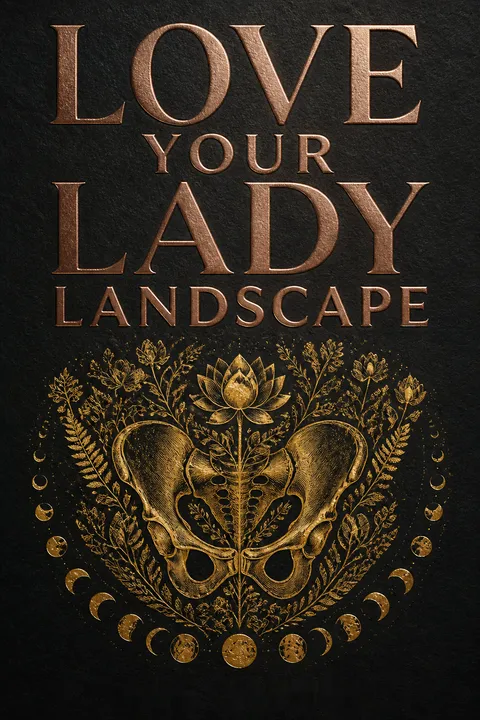
Love Your Lady Landscape blends memoir, feminist argument, spiritual practice, and introductory reproductive-health education. Its narrative engine is Lister's movement from disconnection and severe symptoms toward a more attentive relationship with her body. That story gives emotional force to the book's central proposal: bodily experience deserves respect, and women should have language, knowledge, and room to describe it.
The book's most durable contributions are practical and cultural. It encourages anatomical literacy, observation of personal cycle patterns, sexual self-knowledge, rest, and candid conversation. Its insistence that vulvas vary and that pleasure is not owed to a partner addresses shame at the level of everyday behavior, not just abstract politics. The personal stories, especially Evans's account of preparing for hysterectomy, also show why emotional care belongs alongside physical treatment.
Its limits arise when metaphor is presented too close to medical explanation. The idea that symptoms express suppressed emotion or inherited feminine injury may offer meaning to some readers, but it is not a reliable account of disease. Likewise, cycle phases can be useful prompts for tracking individual experience, but they do not supply a universal schedule of moods, abilities, or productivity. Claims about hormonal contraception, yoni eggs, steaming, massage, and other practices require particular care: effects and risks vary, and these approaches should not replace evidence-based medical advice.
The book is best approached as a permission-giving guide, not a clinical manual. Readers can adopt its curiosity, body respect, and attention to pleasure while testing spiritual interpretations against their own beliefs and seeking qualified care for symptoms. Its strongest invitation is neither to distrust medicine nor to treat intuition as infallible. It is to become an informed participant in one's own care, with personal experience treated as important evidence, but not the only evidence.
Review Summary
Love your lady landscape receives mixed reviews. Some readers praise its empowering message and practical advice for women to connect with their bodies and menstrual cycles. Others criticize it for promoting unscientific practices and being too extreme. Many appreciate the author's humor and writing style, but some find the content repetitive or unrealistic. The book's focus on feminine spirituality and self-exploration resonates with some readers, while others find it too "woo-woo" or disconnected from everyday life. Overall, it's a polarizing read that appeals to those seeking alternative perspectives on womanhood.
People Also Read








Glossary
SHE
divine feminine presenceLister's name for the Divine Feminine, goddess, source, or spiritual power as she understands it. SHE can also refer to intuition and a person's sense of inner guidance. The term is central to the book's spiritual framework, but readers can understand the practices without sharing that belief or using the same language.
SHE Flow
cycle-aware movement practiceLister's movement and self-care approach, developed from yoga, dance, breathwork, cycle awareness, and rest. It emphasizes adapting movement to bodily comfort and menstrual experience rather than holding standardized poses. The book also associates it with massage, ritual, and reflection. It is presented as an embodied wellness practice, not as a medical treatment.
Called Girl
woman answering an inner callLister's term for someone who responds to an inner sense of direction while remaining open to uncertainty. A Called Girl is described as attentive to bodily rhythms, willing to act without knowing the full outcome, and less dependent on external approval. The phrase belongs to the book's spiritual vocabulary, rather than naming a clinical or research-based category.
SHE-scape
personal cycle and body contextLister's shorthand for the changing internal and external conditions that shape a person's experience as a woman. It may include menstrual phase, life stage, mood, energy, season, and lunar phase. The concept encourages regular self-check-ins, but its components are reflective prompts rather than a validated system for predicting behavior.
medicine bowl
pelvic center of powerLister's spiritual and metaphorical name for the pelvic bowl as a center of bodily awareness, creativity, sexuality, and personal meaning. The phrase combines physical anatomy with energetic and emotional interpretations. It is not an anatomical term, and the book's symbolic uses should be distinguished from established medical descriptions of pelvic organs and function.
bitchcraft
truthful premenstrual reflectionLister's playful term for using the premenstrual phase to notice frustration, boundaries, and problems that may have been ignored. She does not define it as permission to lash out. Instead, the practice is to record what arises, reflect on it, and choose a considered response rather than treating irritation as a command.
Lady code
personal cycle patternLister's name for the individual knowledge gained by observing one's cycle, bodily sensations, moods, desires, and needs. She presents this information as a personal guide to self-care and daily decisions. The term emphasizes variation between people, though the book also connects cycle observations to a broader spiritual model that is not universal.
Radical Rest
guided deep relaxationLister's name for using Yoga Nidra, a guided relaxation practice, to create a period of stillness and rest. In the book, it follows movement or ceremony and may include attention to different body areas. The practice is presented as a way to relax and reflect, not as a substitute for treatment of sleep, mental-health, or medical conditions.
FAQ
1. What is "Love Your Lady Landscape" by Lisa Lister about?
- Empowering Women’s Connection: The book is a guide for women to reconnect with, understand, and love their bodies—especially their wombs, cycles, and feminine power.
- Reclaiming the Divine Feminine: Lisa Lister explores the concept of SHE power, encouraging women to reclaim the wisdom, intuition, and creativity inherent in their bodies.
- Practical and Spiritual Tools: It combines practical advice, rituals, movement practices (like SHE Flow), and personal stories to help women heal physical and emotional wounds.
- Challenging Patriarchal Narratives: The book critiques patriarchal systems that have suppressed feminine wisdom and offers a new, cyclical, body-led approach to womanhood.
2. Why should I read "Love Your Lady Landscape" by Lisa Lister?
- Holistic Self-Care: The book offers a unique blend of physical, emotional, and spiritual self-care practices tailored for women.
- Body Positivity and Healing: It helps women move from shame and disconnection to acceptance and celebration of their bodies, cycles, and sexuality.
- Empowerment and Community: Readers are invited to join a movement of women reclaiming their power, sharing stories, and supporting each other.
- Accessible Wisdom: Lisa Lister’s writing is relatable, humorous, and compassionate, making ancient and modern wisdom accessible for everyday life.
3. What are the key takeaways from "Love Your Lady Landscape"?
- Your Womb is Powerful: The womb is not just for reproduction; it’s a center of intuition, creativity, and spiritual connection.
- Cyclic Living is Natural: Embracing the menstrual cycle and its phases can unlock superpowers, self-understanding, and better health.
- Healing is Both Personal and Collective: By healing your own relationship with your body, you contribute to healing generational and societal wounds.
- Practical Rituals Matter: Daily practices like womb breathing, cycle charting, and self-massage are transformative tools for self-love and empowerment.
4. What is "SHE Power" in "Love Your Lady Landscape" by Lisa Lister?
- Definition of SHE Power: SHE Power refers to the divine feminine energy within every woman, encompassing intuition, creativity, sensuality, and cyclical wisdom.
- Source of Inner Guidance: It’s described as a voice or force in the womb and belly, guiding women to trust themselves and live authentically.
- Reclaiming Suppressed Wisdom: The book encourages women to reconnect with this power, which has been suppressed by patriarchal culture.
- Practical Access: Practices like SHE Flow movement, journaling, and ritual help women access and embody their SHE Power daily.
5. How does Lisa Lister define and use the concept of the "Lady Landscape"?
- Lady Landscape Defined: The "lady landscape" is a holistic term for a woman’s body, especially her reproductive organs, cycles, and sensuality.
- Invitation to Exploration: Lister invites women to get curious about their bodies, understand their anatomy, and develop a loving relationship with their "down there."
- Healing and Reclamation: By exploring the lady landscape, women can heal trauma, release shame, and reclaim pleasure and power.
- Personal and Collective Impact: Loving your lady landscape is presented as both a personal journey and a revolutionary act for all women.
6. What is "SHE Flow" and how is it practiced in "Love Your Lady Landscape"?
- SHE Flow Explained: SHE Flow is a women’s movement practice created by Lisa Lister, blending yoga, dance, breathwork, and menstrual awareness.
- Body-Led Movement: Unlike traditional yoga, SHE Flow encourages intuitive, cycle-led movement that honors the body’s needs and rhythms.
- Accessible and Fun: The practice is designed to be done in comfortable clothes, at home or in groups, and focuses on pleasure rather than perfection.
- Benefits: SHE Flow helps women reconnect with their bodies, release emotional energy, and cultivate self-love and empowerment.
7. How does "Love Your Lady Landscape" by Lisa Lister approach the menstrual cycle and cyclic living?
- Cycle as Superpower: The book reframes the menstrual cycle as a source of monthly superpowers, not a curse or inconvenience.
- Phases and Archetypes: Each phase (pre-ovulation, ovulation, pre-menstruation, menstruation) is linked to archetypes (maiden, mother, wild woman, crone) and unique strengths.
- Cycle Charting: Lister advocates for charting your cycle to understand mood, energy, and creativity patterns, and to optimize life accordingly.
- Living in Sync: The book encourages aligning work, relationships, and self-care with your cycle for greater well-being and fulfillment.
8. What are some of the key healing and self-care practices recommended in "Love Your Lady Landscape"?
- Womb Breaths and Root Breaths: Daily breathwork practices to connect with and energize the womb and pelvic area.
- Womb and Belly Massage: Self-massage techniques to promote healing, release tension, and foster a loving relationship with your body.
- Yoni Steams and Castor Oil Packs: Traditional practices for cleansing, nourishing, and healing the reproductive organs.
- Rituals and Ceremonies: The book includes opening/closing ceremonies, burning rituals, and altar creation for spiritual connection and healing.
9. How does "Love Your Lady Landscape" address trauma, shame, and the "female wound"?
- Naming and Feeling: Lister encourages women to acknowledge and feel their pain, rather than numbing or ignoring it, as a path to healing.
- Healing the Mother Line: The book explores how generational wounds, especially from the mother-daughter relationship, impact self-worth and body image.
- Collective Healing: By sharing stories and supporting each other, women can heal not just themselves but also contribute to healing the collective feminine wound.
- Practical Tools: Exercises like journaling, movement, and ritual are provided to process and release trauma and shame.
10. What is the role of pleasure, sensuality, and sexuality in "Love Your Lady Landscape"?
- Pleasure as Medicine: The book positions pleasure, touch, and sensuality as essential for women’s health and empowerment, not as luxuries.
- Self-Nourishment Practices: Lister provides exercises for self-touch, yoni massage, and using yoni eggs to reclaim sexual pleasure and body confidence.
- Challenging Shame: The book confronts cultural shame around female sexuality and encourages open, honest conversations about desire and orgasm.
- Receiving and Boundaries: Women are taught to value receiving pleasure, set boundaries, and communicate their needs in relationships.
11. How does "Love Your Lady Landscape" by Lisa Lister critique patriarchy and offer a new narrative for women?
- Patriarchy’s Impact: The book details how patriarchal systems have disconnected women from their bodies, cycles, and power through shame, control, and misinformation.
- Rewriting the Story: Lister calls for women to reclaim their stories, celebrate their bodies, and reject societal expectations of consistency, perfection, and self-denial.
- Community and Sisterhood: The book emphasizes the importance of women supporting each other, sharing experiences, and building new traditions.
- Activism Through Self-Love: Personal healing and self-love are presented as revolutionary acts that challenge and transform patriarchal culture.
12. What are the most powerful quotes from "Love Your Lady Landscape" and what do they mean?
- “The truth lies between your thighs.” – This quote encapsulates the book’s core message: a woman’s power, wisdom, and truth are found within her own body.
- “You’ve had the power all along, my dear…” – Quoting Glinda from The Wizard of Oz, Lister reminds women that everything they need is already within them.
- “When we heal ourselves, that gaping big gash of a bloody wound we’re all collectively walking around with slowly starts to heal – literally and metaphorically.” – Healing is both personal and collective; your self-work benefits all women.
- “Root to rise.” – By grounding in your body and feminine wisdom, you gain the strength to rise, lead, and live authentically.
- “Don’t go with the flow, you ARE the flow.” – Women are not passive recipients of life; they are the creators and leaders of their own experience, especially when living in tune with their cycles.
Download PDF
Download EPUB
.epub digital book format is ideal for reading ebooks on phones, tablets, and e-readers.








