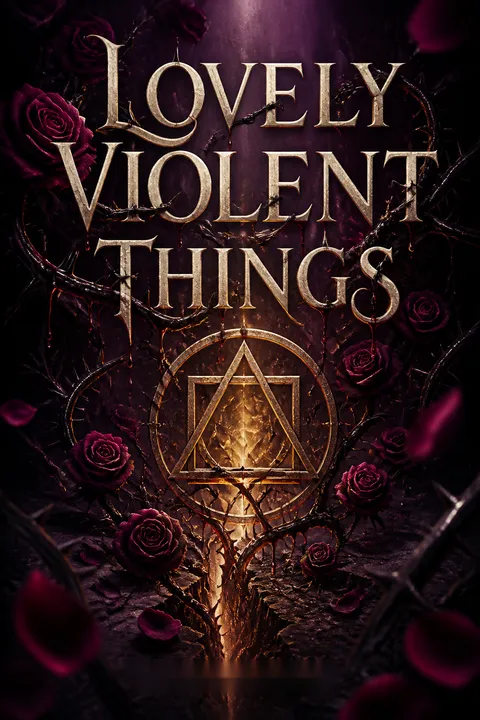


Plot Summary
Prologue
An anonymous killer warns that the Overman, a person seeking godlike enlightenment, threatens humanity rather than saving it. The writer claims to have identified this would-be ascendant and promises to destroy the people around him until he is forced to appear.
The letter frames the story as a contest between two killers, but it leaves open who the Overman is, who the Harbinger is, and whether either name describes the danger correctly.
The letter turns an abstract philosophical ideal into a threat with bodies attached. By casting the Overman as a danger to civilization, the writer borrows the language of moral warning while also announcing a private campaign of violence. That tension matters: the Harbinger presents himself as humanity’s protector, but his promise to kill in order to prevent killing already makes him part of the catastrophe he condemns. The letter also primes the reader to trust labels that the novel will repeatedly dismantle. Here, identity is a weapon, and the person who controls the story can make a killer look like a savior.
Wellington Challenges Locke
Two years before the Hollow’s Row investigation, Professor Kallum Locke lectures on self-deification and argues that creation is inseparable from destruction. Percy Wellington, a newly arrived professor, challenges him in front of the class, defending the possibility that inherited knowledge can guide humanity toward peace.
Kallum counters that power and creation are born through violence, and he recognizes a sadistic hunger beneath Wellington’s polished argument. The exchange leaves them enemies.
Kallum is already celebrated in academia, but success has made him numb; after research in Cairo, he has begun searching for an inspiration strong enough to make him want anything again. He imagines that his future muse will reach him through beautiful violence, a belief that later shapes how he interprets Halen.
This opening establishes that Kallum’s philosophy is not merely intellectual decoration. He uses it to turn dissatisfaction into permission: if creation requires destruction, then appetite and harm can be recast as necessary forces. Wellington’s challenge exposes a contradiction Kallum does not yet recognize in himself. He condemns egotistical power while believing that a sufficiently exceptional person might transcend ordinary limits. His hunger for a muse is therefore both an artistic longing and a search for something that can break his emotional deadness. The lecture sets up the novel’s central danger: ideas become most destructive when treated as authorization for private desire.
The Marsh Calls Him Back
In the present, federal agents are transporting Kallum back to Briar, a psychiatric hospital, when a news report announces a mutilated body in Hollow’s Row. The victim is one of thirty-three residents who vanished years earlier, and the report links the scene to the Harbinger killer. Kallum learns that Leroy Landry, the horned attacker from the ritual ground, is dead but was not the Overman.
Convinced that Halen is in danger, he pressures Dr. Torres into signing his release to the task force, using the doctor’s fear of him to force the paperwork through. Meanwhile, Halen, newly hired as a local consultant, finds a stray fiber at the marsh scene and gives it to the team. She has not found the carving knife from Kallum’s ritual.
The new murder collapses the distance between Kallum’s confinement and Halen’s investigation. His return is motivated less by law enforcement than by his certainty that danger will reach her before anyone else can interpret it. Halen, by contrast, tries to keep her work procedural, even as her personal history and involvement with Kallum contaminate her perspective. The missing knife and the unexplained fiber establish a material trail that can be manipulated, while Kallum’s coercion of Torres shows how readily he uses another person’s delusions as leverage. Both protagonists re-enter the case through compromised choices rather than clean professional authority.
Two Suspects, One Scene
At the marsh, Halen meets Kallum again beside the victim, whose face has been painted like a death’s-head hawkmoth and whose antlers have been implanted rather than strapped on. The staged body differs from the earlier Harbinger scenes, suggesting that another offender has entered the case.
Kallum interprets the signs through the Overman’s philosophy: the person behind the rituals may be seeking an opposite or counterpart to complete an imagined ascent.
Halen suspects Kallum himself, especially because he disappeared for hours after the ritual where Landry attacked them. Agent Alister brings Kallum back onto the task force and assigns Halen to oversee him in the field. She accepts, keeping him close enough to observe, but not close enough to trust.
The scene makes interpretation itself a contested space. Halen reads the body as evidence against Kallum, while Kallum reads it as a message from someone who shares his symbolic vocabulary. Neither approach is neutral: her suspicion is sharpened by attraction and fear, and his analysis is inseparable from his desire to remain near her. Alister’s decision to put Halen in charge of Kallum gives their relationship an official structure that cannot contain its private volatility. The unusual antlers matter because they mark a change in method, warning that the Harbinger’s work and the Overman’s rituals may now be entangled.
The Mansion Has Two Minds
Halen and Kallum search Landry’s decaying mansion, where clutter fills the rooms but a private library remains meticulously ordered. Kallum notices that its books and maps suggest someone besides the hoarding recluse used the house as a place to study.
They reason that Landry may have supported or sacrificed himself for the person behind the ritual scenes. Halen’s earlier fiber sample is then matched to the rope that bound her during Kallum’s ritual, implicating her in the crime scene and giving Alister grounds to question her.
Kallum insists that she is being framed, but she believes he planted the evidence to ruin her career and force her dependence on him. The unexplained absence of the carving knife makes the accusation harder to dismiss.
The mansion turns a suspect’s home into evidence of a divided identity. Its disorder belongs to Landry, while the library’s controlled arrangement suggests a second mind operating within his space. This distinction shifts the investigation from finding a lone monster to tracing a relationship of dependence and influence. At the same time, the fiber match exposes how easily physical evidence can become a story about Halen rather than a reliable account of what happened. Her professional instincts tell her to distrust contamination, but her emotional certainty about Kallum narrows her interpretation. The knife’s absence keeps both possibilities alive.
The Overman Wants Halen
As a storm breaks over Hollow’s Row, Halen decides to take herself in before Alister can send for her. Kallum follows and rejects her theory that he planted the rope to frame her. He argues that the evidence was arranged to make her believe he committed the marsh murder, thereby separating her from him.
He points out that someone else was present when Landry attacked them and that the Harbinger’s letter may be aimed at the Overman, not at Kallum. Halen sees the possibility that the Overman wants her as a replacement for the missing people. Kallum offers protection, but she cannot tell whether his devotion is care or control. When Devyn arrives, Halen leaves with her instead of accepting Kallum’s plea to stay.
This exchange changes the case from a question of Kallum’s guilt into a question of Halen’s vulnerability. His interpretation may be correct, but it comes from the person she most distrusts and most wants to believe. That makes his warning psychologically difficult to use: accepting it means acknowledging that someone else has targeted her, while rejecting it preserves the simpler story in which Kallum is the only danger. Her choice to leave with Devyn is not yet a conscious rejection of Kallum so much as an attempt to retain agency. The storm externalizes the instability of that choice without resolving it.
A Ravine of Stags
After the storm, investigators discover that the hemlock grove has been stripped and find a ravine filled with deer carcasses, some decomposed for years. The animals have been skinned and their antlers removed; fresh human bite marks connect the remains to a stag already found at a ritual site.
Halen and Kallum identify a carved philosopher’s-stone symbol and infer that the ravine was the offender’s original place of practice. Halen suggests that some missing residents may have joined willingly, but Devyn reveals that her twin brother, Colter, vanished and would never have abandoned her without contact. Detective Emmons, grieving his missing brother, arrives drunk and injures himself in the ravine, making the victims’ absence painfully personal.
The ravine converts esoteric theory into a long history of physical practice. The layers of animal remains show that the offender’s rituals were not improvised after the disappearances; they were rehearsed over time. Halen’s speculation that the missing might have consented is an attempt to make the evidence coherent, but Devyn and Emmons force the human cost back into view. Their grief exposes a limit in abstract profiling: a theory can be logically elegant and still erase the people whose lives it describes. The carved symbol gives the investigation a concrete starting point, while the victims’ families prevent that clue from becoming only another piece in Kallum’s philosophical puzzle.
The Door Stays Open
Alone at the hotel, Halen replays the recording of her first encounter with Kallum and hears how he studied her from the start. She receives a message about a buried report concerning his violent father and the damage to his eyes, but deletes it without opening the full file. She would rather remain uncertain than learn something that might change how she feels about him.
Later, she removes the chair she had wedged beneath the connecting door and lets Kallum stand in the doorway. He keeps his promise not to cross the threshold, while they use desire and distance to test the control each has over the other. Halen’s surrender is real, but so is her boundary; afterward, she is more afraid of her attachment than of the evidence against him.
The doorway makes consent visible as a spatial decision rather than a general declaration. Halen permits intimacy while preserving a limit, and Kallum’s restraint matters precisely because he has repeatedly treated her resistance as something to overcome. Her deleted message performs a different kind of boundary: she chooses not to know, protecting the bond from facts she cannot yet metabolize. That decision is not simple denial, since she recognizes what she is avoiding. It is a temporary defense against emotional overload. The scene shows intimacy becoming both a source of agency and a route through which Kallum can deepen his influence.
The Knife Appears
At a crowded press conference, reporters press Halen about her dismissal from CrimeTech and the investigation’s failures. She refuses to reveal case details, while Alister keeps information from the consultants.
Kallum bargains with Agent Hernandez for access to what the task force is withholding, then pulls Halen into an interrogation room, where their attraction overrules their caution. A short time later, Hernandez reports that the carving knife has been found among the deer remains, along with the antlers taken from the marsh victim.
Halen recognizes the discovery as too convenient: the knife disappeared from her belongings and has now surfaced where it can implicate Kallum. She returns to the room for her phone, unaware that Alister has been watching footage of their encounter.
The press conference shifts the investigation from a closed professional process into a public performance, where every withheld fact becomes an invitation to speculation. Halen’s refusal to feed the reporters protects the investigation but worsens her conflict with Alister, who treats control of information as control of the case. The recovered knife seems to settle the question of guilt, yet its convenient placement instead makes the evidence suspect. Halen’s intimacy with Kallum complicates her judgment at precisely the moment she needs it most. Their private encounter also gives Alister leverage, converting surveillance into a tool of coercion.
Alister Crosses the Line
Alister corners Halen in his office, shows her the interrogation-room footage, and uses it to threaten and assault her. Kallum bursts in and beats the agent until officers restrain him. Before leaving the department, Halen steals the recovered knife from the lab and deletes the surveillance records that would support her account of Alister’s attack.
She hides the weapon in Hernandez’s vehicle and tells him that nothing happened, protecting Kallum from further charges even as she conceals evidence. Kallum is locked up for assault. Halen contacts his lawyer, Charles Crosby, and gathers what proof she can of her injuries, but she cannot yet bring herself to report a federal agent whose word may carry more weight than hers.
The assault exposes the moral weakness of institutional authority: Alister’s badge does not restrain his abuse, and the department’s recording system becomes a means of blackmail. Halen responds by violating procedure, not because she has stopped caring about evidence, but because she no longer trusts the institution to preserve it honestly. Her concealment of the attack protects Kallum while also protecting herself from the likely disbelief of officials. Kallum’s violence is both rescue and danger; he acts against a real abuser, but his response nearly becomes lethal. The scene forces Halen to confront how easily justice and retaliation can occupy the same act.
Devyn Drops the Mask
While Halen waits at the diner for Crosby to return her call, she recognizes the fine stitching on a hair tie as Devyn’s work. Devyn appears beside a car holding Halen’s missing equipment and admits that she has been trying to make a connection with her all along. Halen realizes that Devyn had access to crime scenes, evidence, and the forensic lab, and may have planted the rope fiber and stolen the knife.
Devyn denies killing the missing residents, claiming that Landry offered himself and that Emmons’s brother was already dead. She says the ritual is meant to free Halen from grief. Though Devyn has drugged Halen’s coffee, Halen drinks it and chooses to go with her, hoping the abducted residents are nearby.
The betrayal lands because Devyn has not been a distant suspect but a trusted colleague whose practical kindness made the case bearable. Her access to evidence grows out of the same qualities that made her useful: competence, local familiarity, and the ability to move without attracting suspicion. Her claim that the captives chose their fate reframes coercion as spiritual liberation, an argument Halen recognizes as dangerous even while she remains emotionally attached to its speaker. Choosing to go with Devyn is an act of courage and a repetition of Halen’s self-endangering habit. She hopes that proximity will let her rescue the victims or reach her friend.
The Priestess Claims Her
Halen wakes in an underground chamber surrounded by fire, drumming, and the missing residents, whose eyes have been sewn shut and whose bodies bear the damage of Devyn’s rituals. Devyn crowns Halen with the bone circlet from Kallum’s ceremony and presents her as the vessel needed to complete an ascent.
Halen recognizes the captives as people she studied from case files, not willing participants in a harmless cult. She tries to reach Devyn through the grief of her missing twin, Colter, but the question only briefly breaks through Devyn’s drugged certainty.
When Halen resists, she is bitten and dragged back by the followers. Elsewhere, Kallum provokes Alister into a fight after Hernandez reports Halen missing, then escapes custody to search for her.
The chamber makes the cost of Devyn’s theology impossible to abstract. The missing residents are not symbols or ritual ingredients; Halen recognizes their faces and must reconcile those identities with the mutilation in front of her. Devyn’s insistence that she is offering liberation reveals a psychological defense that converts control into care and violence into transcendence. Halen’s appeal to Colter is an attempt to restore Devyn’s relational self, but the ritual has made that self difficult to reach. In parallel, Kallum’s escape repeats the novel’s central ethical ambiguity: he violates law to protect Halen, but his willingness to use violence remains frighteningly real.
The Harbinger Enters
Kallum reaches the underground chamber painted in blood as the death’s-head moth and uses a recorded shriek to make the followers believe the Harbinger has arrived. The frightened group scatters, leaving Devyn to hold Halen at knifepoint with a sharpened antler. Kallum answers her distorted reading of Nietzsche with the idea that transcendence requires giving oneself up, not sacrificing others.
Devyn falters, then attacks him; he nearly drives the antler into her, but Halen begs him to stop. Kallum releases Devyn, who escapes into the mine tunnels, and carries Halen out. The supposed cave proves to be an abandoned mine beneath the mansion, a hidden route the task force had not mapped.
Kallum’s disguise works because Devyn has already built the Harbinger into her private cosmology. He turns her own belief system against her, using spectacle and sound rather than a direct argument to disrupt the ritual. Yet his restraint at the decisive moment depends on Halen’s plea, not on a sudden conversion to mercy. She can stop him, but only by placing her trust in the influence she has over him. Devyn’s escape preserves an unresolved danger, while the mine’s existence explains how the captives could be hidden so close to the town. Rescue does not restore order; it reveals how much remains concealed.
Secrets Beneath the Stitches
Kallum takes Halen to Landry’s mansion, cleans and stitches the wound on her arm, and explains how he found the old mine on a map. He admits that he prolonged parts of the investigation to remain with her, and tells her about his father’s abuse and the act that damaged his father’s eyes when Kallum was a teenager.
Halen reveals that she stole the carving knife to keep it from being used against him. Their intimacy deepens, but she also recognizes that Kallum is not the Harbinger killer. Before dawn, he leaves to return to custody, carrying the secrets of the night with him. Halen is left with Devyn still at large and a growing suspicion that her own missing memories matter more than either man’s confession.
Care becomes the setting for disclosure, but the disclosures do not erase harm. Kallum admits that he manipulated the pace of the case for personal reasons, while Halen’s theft of the knife shows that she has crossed the procedural line on his behalf. Their mutual honesty is partial and carefully staged: each reveals enough to alter the other’s understanding while still withholding the most consequential truth. Kallum’s history with his father gives context to his violence without excusing it. Halen’s recognition that he is not the Harbinger marks a real shift in judgment, though it does not yet restore confidence in her own memory.
The Cufflink Breaks Memory
By morning, Alister’s body has been staged in a new Harbinger scene, with his face flayed into a moth-like skull and the philosopher’s-stone symbol cut into his forehead. Halen finds a gold cufflink at the scene and feels the memories she has suppressed return. She realizes the original Harbinger was Percy Wellington, dead since the night he attacked her in Cambridge six months earlier.
Halen killed Wellington with the tire iron he used against her, then lost the memory of the killing. Kallum had protected her and sealed the event away. The new scene is Kallum’s retaliation against Alister, staged to resemble the dead killer’s work. Halen reunites with Kallum, accepts their shared darkness, and decides they must find Devyn.
The cufflink is a small object with disproportionate psychological force: it does not simply identify a suspect but reconnects Halen to the self she had been unable to remember. The reveal changes the moral arrangement of the novel. Kallum is not the original serial killer, yet he has committed a new murder and concealed Halen’s earlier act to protect her. Halen, in turn, is not merely a profiler watching violence from the outside. Her recovery of memory does not make her innocent or guilty in a simple sense; it restores agency by giving her access to the event that shaped her fear. Choosing Kallum means choosing to face that truth with him.
Epilogue
Six months earlier, Halen finds a gold cufflink at a Harbinger crime scene and traces its initials to a professor at a nearby university. Exhausted and grieving, she follows him to a lecture rather than waiting for official approval.
When she confronts him in the parking lot, Percy Wellington accuses her of pursuing him and advances with a tire iron. He seizes her by the throat, and her vision goes dark before the reader sees what happens next. The memory’s abrupt ending mirrors the gap Halen has carried throughout the present investigation.
The epilogue supplies the missing origin of Halen and Kallum’s bond without resolving the violence on the page. Halen’s decision to follow Wellington grows out of professional obsession, but the narration also links that pursuit to grief and a need to keep moving. Her confrontation is not an accidental encounter; she chooses risk before she knows how much danger she is in. Ending at the moment of blackout makes the reader share her discontinuity. The episode also gives the cufflink a double function: first a clue that draws Halen toward Wellington, later the object that returns her to the memory she lost.
Analysis
Lovely Violent Things makes crime solving a struggle over who gets to name an act. Kallum and Devyn both borrow philosophy to make violence appear purposeful: one speaks of balance and creation, the other of ritual ascent and release from grief. Their sophistication does not protect them from self-deception. Instead, theory gives each a language for turning desire into necessity. Halen’s work as a profiler is built on interpretation, but her investigation becomes compromised when she tries to force evidence into a story about Kallum. Her eventual recovery of memory does not simply correct a mistaken theory; it reveals that her own mind has protected her by making her a stranger to her past. The novel also distinguishes between authority and ethics. Alister’s position gives him control over evidence and access, yet he abuses that power. Halen and Kallum break rules for different reasons, sometimes to protect someone and sometimes to satisfy vengeance. The book refuses to let motive settle the moral question. Kallum’s devotion may be sincere, but it remains possessive; Halen’s loyalty may be loving, but it enables concealment. Even Devyn’s language of consent cannot make the captives’ mutilation voluntary.
The recurring symbols, the moth, the ravine, the missing knife, the cufflink, make evidence feel less like a stable record than a set of objects competing to tell the story. The most consequential clue is not the most elaborate one. It is the small object that reactivates Halen’s memory and returns her to the moment she had survived by forgetting. Her final choice does not restore innocence or resolve the town’s remaining danger. It gives her a way to face what happened without surrendering her capacity to judge it. The book’s dark romance therefore depends on a difficult distinction: understanding another person’s violence is not the same as being absolved of it.
Review Summary
Lovely Violent Things received mixed reviews, with an average rating of 4.03 out of 5. Many readers praised the intense psychological thriller elements, complex characters, and philosophical depth. Some found the plot confusing and overly dense with philosophical concepts. Fans appreciated the dark romance between Kallum and Halen, while others felt the relationship was too intense. The book's twists and cliffhanger ending left readers eager for the final installment, though some felt overwhelmed by the intricate plot and heavy themes.
People Also Read





Characters
Halen St. James
The grief-driven profilerHalen is a criminologist and forensic profiler whose disciplined attention to behavior helps her see patterns other investigators overlook. She approaches emotion as something to study and contain, a strategy shaped by the deaths and losses that have left her wary of attachment. Her professionalism is real, but it does not make her immune to obsession: once Kallum enters her work and her private life, she struggles to distinguish evidence from fear and desire. Halen is most compelling when her procedural mind and buried vulnerability collide. She wants explanations that can be tested, yet she is drawn toward experiences that unsettle her certainty. Her development centers on recovering agency without pretending that reason alone can erase grief.
Kallum Locke
The dangerous philosopherKallum is a celebrated philosophy professor, an occult practitioner, and a man whose charisma makes intimidation look like conversation. Years of achievement have left him emotionally numb, so he hungers for an inspiration powerful enough to restore his appetite for life. He interprets desire through philosophical systems, often using theory to explain or excuse his possessiveness. His intelligence does not make him reliably wise: he can read other people with precision while evading the moral meaning of his own actions. With Halen, he is drawn to both her rational discipline and her capacity for pain. His devotion is intense, but the novel keeps its tenderness inseparable from his appetite for control and violence.
Devyn Childs
Halen’s trusted colleagueDevyn is a forensic analyst with deep roots in Hollow’s Row and a close working relationship with Halen. Her practical competence and warm humor make her an important source of support during the investigation. She is also shaped by the disappearance of her twin brother, Colter, and by the way a small community can turn private loss into a permanent public wound. Devyn is observant, disciplined, and good at presenting herself as dependable. Her beliefs about suffering and transformation give her a language for understanding the town’s horrors, though that language can obscure the people affected by them. She represents the danger of treating grief as a problem to conquer rather than a reality to endure.
Percy Wellington
The academic challengerWellington is a professor who enters Kallum’s professional world with a polished manner and a willingness to challenge his arguments in public. He defends the value of inherited knowledge and imagines that intellectual study can help prevent future violence. His disputes with Kallum are more than academic sparring: each man sees the other as a rival whose convictions conceal a weakness. Wellington’s role connects university philosophy to the crimes in Hollow’s Row, showing how scholarly ideas can become dangerous when ambition and power shape their use.
Wren Alister
The controlling federal agentAlister leads the federal task force and values order, jurisdiction, and command. His impatience with Halen’s independent methods makes him a persistent obstacle to collaboration, especially when the investigation refuses to follow a neat chain of evidence. He is accustomed to using authority to control people and information. The contrast between his public role and private conduct is central to the book’s examination of institutional power: a badge may grant access and credibility, but it cannot guarantee ethical behavior.
Gael Hernandez
The guarded federal agentHernandez initially serves as Kallum’s escort and the task force’s practical link to Halen. He is cautious around Kallum, but he pays attention to what Halen needs and gradually makes choices that put her safety ahead of rigid procedure. His quiet reliability contrasts with Alister’s need for control. Hernandez is not a detective with all the answers; his importance comes from noticing when the official story does not fit and offering help without demanding emotional access in return.
Dr. Laurence Torres
Kallum’s unstable psychiatristTorres is the psychiatrist responsible for evaluating Kallum at Briar. His ambition to turn Kallum’s case into professional insight makes him curious about the patient he fears. He believes Kallum has helped drive him toward a breakdown, and his reactions show how professional distance can fail when a clinician becomes personally entangled in a patient’s mythology. Torres’s fixation gives Kallum an opening to manipulate him, making the doctor a reminder that expertise does not automatically protect someone from delusion.
Detective Riddick
The capable local detectiveRiddick steps into leadership on the local case while Detective Emmons is away. He is practical under pressure and reveals a former paramedic’s ability to treat an injury in the field. His dry manner and attention to Halen offer a calmer contrast to the task force’s disputes. Riddick’s role is modest but useful: he shows that competence in Hollow’s Row is not limited to the federal investigators, even when the town’s grief and secrets complicate the work.
Detective Emmons
The grieving detectiveEmmons is a local detective whose younger brother is among the missing residents. Grief and alcohol make him unsteady, but his attachment to the case comes from the same personal wound that drives the families waiting for answers. His injury at the ravine briefly interrupts the investigation and exposes how the search has invaded the lives of those assigned to conduct it. Emmons embodies the cost of a case that has remained unresolved for years.
Jackson
Halen’s lost fiancéJackson is Halen’s fiancé, whose death and the loss of their expected child shape her grief and her instinct to keep memory sealed away. He belongs to a life Halen remembers as safe and loving, even though she has difficulty returning to it without pain. His absence is not a separate mystery so much as a force that shapes Halen’s risk-taking, guilt, and fear of emotional surrender.
Colter Childs
Devyn’s missing twinColter is Devyn’s twin brother, one of the Hollow’s Row residents who vanished. Devyn describes their bond as unusually close and refuses to believe he simply chose to leave without contacting her. His disappearance gives her personal stakes in the case and makes the debate over whether the missing residents were victims or willing participants impossible to keep abstract.
Leroy Landry
The horned ritualistLandry is a reclusive resident who owns the decaying mansion and is associated with the horned figure who attacks Halen and Kallum. His cluttered home and carefully arranged library offer investigators two different pictures of the people who used the property. Landry’s connection to the missing residents and the ritual sites makes him a crucial early suspect, even as the investigation reveals that the crimes extend beyond him.
Charles Crosby
Kallum’s sharp lawyerCrosby is Kallum’s lawyer, experienced enough to understand the risks of his client’s impulsive behavior. Halen contacts him after Kallum is detained, and he helps her consider legal action against Alister. His presence brings a practical legal perspective to a story in which the characters repeatedly bypass official procedures.
Tabitha
The diner waitressTabitha serves Halen and Hernandez at the diner. Her restrained manner makes her easy to overlook amid the larger investigation, but Halen later realizes that the coffee she received there was drugged. Her brief role points to the possibility that Devyn has help beyond the people already under suspicion.
Plot Devices
The Harbinger Letter
A threat disguised as warningThe anonymous letter announces that the Harbinger will target the Overman and destroy the people surrounding him. It gives the task force a framework for reading the killings as part of a philosophical conflict, but its claims cannot be taken at face value. The letter’s language later helps Devyn incorporate the Harbinger into her ritual beliefs, while the investigation shows that a message can be both a threat and a means of misdirection. Its function is to make the town interpret violence as a deliberate argument before the actual identities and motives are known.
The Death’s-Head Moth
A signature that misleadsThe moth image appears in the Harbinger’s staged scenes, where bodies are arranged and marked to resemble the death’s-head hawkmoth. Halen reads variations in the staging as evidence of changes in method, while Kallum uses the moth’s cry to disrupt Devyn’s ritual. The image gives the killer a recognizable signature, but it also allows another person to imitate that signature and redirect suspicion. Its repeated use links scenes across the investigation while warning that resemblance is not proof of a single perpetrator.
The Philosopher’s Stone
A map of false ascensionThe alchemical symbol of a circle, triangle, and larger circle appears at the ravine and later on Alister’s staged body. Halen and Kallum interpret it as a sign of the Overman’s pursuit of transformation and as a marker for the offender’s original ritual site. Its meaning is deliberately unstable: it can point to Devyn’s ideology, Kallum’s occult practices, or an attempt to make one person’s crime resemble another’s. The symbol concentrates the novel’s conflict between transformation as genuine self-knowledge and transformation used to excuse harm.
The Missing Carving Knife
Evidence turned into leverageKallum uses the carving knife during his ritual with Halen, after which the weapon disappears from the evidence she gathers. Its absence unsettles Halen because it could connect him to the later killings, but the knife eventually appears among the deer remains with the antlers from the marsh victim. The convenient discovery makes the evidence look like a frame rather than a solution. Halen steals the knife to keep it from being used against Kallum, a choice that moves her beyond professional neutrality and makes the weapon an index of her changing loyalties.
The Cufflink and Memory Seal
A clue reopens a buried nightA gold cufflink bearing initials leads Halen toward Percy Wellington before the main story, then reappears at the staged scene involving Alister. Its return triggers the memories Halen has been unable to access, revealing that Wellington attacked her in Cambridge and that she killed him. Kallum’s earlier ritual and the sigil he places on her are connected to his attempt to seal away the traumatic event. The device links physical evidence to unreliable memory, making Halen’s recovery not a sudden intuition but the consequence of an object she has encountered twice.
Hollow's Row Series
About the Author
Other books by Trisha Wolfe



Download PDF
Download EPUB
.epub digital book format is ideal for reading ebooks on phones, tablets, and e-readers.








