

Plot Summary
Prologue
Three anonymous letters accompany three Harbinger crime scenes: a casino in Maine, a recovery center in Connecticut, and a university in Massachusetts. Each counts its dead in riddling terms and warns of a coming catastrophe.
The messages turn the killings into a sequence rather than isolated murders, but their meaning remains obscure. By the time the story reaches the third scene, the letters have already promised that someone is being led toward a reckoning.
The letters give the novel a murder mystery’s first organizing pattern while withholding the person at its center. Their numbered structure makes violence feel deliberate, almost ceremonial, and the threatened catastrophe encourages investigators to search for a larger design. Yet their obscurity also reflects the danger of interpretation: a clue can be accurate and still be misunderstood when its reader assumes it concerns only the killer. The prologue’s strongest function is retrospective. Once the Harbinger’s purpose is revealed, the letters change from public warnings into intimate messages, and their menace becomes inseparable from the person they were meant to keep alive.
A Muse Meets Blood
Six months before the investigation in Hollow’s Row, criminologist Halen St. James is attacked by Professor Percy Wellington in a university parking lot. She gouges his eyes and strikes him with a lug wrench, first to escape, then again when he crawls away. Professor Kallum Locke, who has followed her, arrives as she shakes beside Wellington’s body.
He knows the professor and helps Halen move him into a lecture hall, where she directs the staging. Together they conceal evidence, and Kallum removes the weapon and later burns her bloodied clothes. When Halen says she cannot live with what she has done, Kallum performs a blood-marking ritual meant to erase the memory. By morning, she has disappeared, leaving him with the token she lost.
The killing begins as self-defense but becomes a choice Halen cannot yet remember making. Her shock leaves room for Kallum to turn rescue into complicity: he protects her from immediate consequences while also shaping the story she will later be able to tell herself. His attraction is not separate from his violence; it gives that violence direction. The scene establishes the novel’s central imbalance. Halen experiences the murder as a fractured moment, while Kallum treats it as the beginning of a bond he can preserve through ritual, concealment, and control. Their intimacy is born not after the crime but inside its cover-up.
The Box Reopens
In the present, Halen works the Harbinger investigation in Hollow’s Row, where the disappearance of thirty-three locals has led to a series of ritual crime scenes. A cufflink recovered near a stream triggers memories she had buried.
In a rented storage unit, she opens the box containing her case notes and the sweatshirt Kallum gave her after Wellington’s death. Its bloodstain and the preserved clothing bring back the attack, the killing, and Kallum’s part in hiding it.
Halen accepts that the Harbinger case remains open, despite Wellington’s death, and wants to identify the killer’s victims for their families. She also admits to herself that she let Devyn Childs escape. A message from Agent Hernandez summons her to the precinct, where the waitress Tabitha is being questioned.
Halen’s recovery of memory is not a clean return to an intact past. Physical objects give her evidence, but they also force her to confront how much of her own account was built around a missing night. Her wish to bring closure to the Harbinger’s victims sits beside her decision to let Devyn go, exposing the tension between professional duty and personal identification. Rather than treating memory as a reliable archive, the novel makes it an active battleground: evidence can restore events, but Halen still has to decide what those events mean and what obligations follow from them.
Antlers Under Oath
At the Hollow’s Row police station, Halen joins FBI lead Agent Rana, local detectives, and Kallum for Tabitha’s interrogation. Tabitha refuses to answer questions, but Halen notices that her knitted headband is a practiced source of comfort.
When she persuades Tabitha to remove it, the agents discover small antler implants beneath her hair, matching modifications seen among Devyn’s followers. Tabitha asks for a lawyer, and Detective Riddick ends the interview rather than force her to continue.
Rana then assigns Halen and Kallum to watch the Lipton family’s annual meteor party, hoping their guests will reveal who else belongs to the group. Halen objects to being treated as bait, but accepts the assignment because it may offer a way to find Devyn and learn how deeply the town is involved.
The headband turns an apparently trivial habit into a clue about coercion and belonging. Tabitha’s implants show that the group is not limited to the visibly transformed figures at ritual sites; it has ranks and discreet participants embedded in ordinary town life. Halen’s intervention is important because she reads behavior rather than simply extracting statements. Her approach earns a clue but also makes her an increasingly active participant in the investigation, despite her status as a recent victim. The scene also complicates authority: Rana needs results, Riddick protects a local’s right to counsel, and Halen sees that both procedural power and community loyalty can conceal as well as expose.
The Basement Below
At the Liptons’ party, Halen questions Mrs. Lipton about Devyn’s family and the missing locals, but the woman ends the conversation by invoking her lawyer. The FBI later searches the house and finds a concealed passage connecting its basement to an old mine shaft.
Mrs. Lipton admits that her brother Vince had been hiding there. Beyond the passage, investigators uncover chains, a cage, jars of human organs, and blood-marked symbols. Kallum identifies the markings as a mixture of alchemical and demonic traditions, suggesting that someone has borrowed occult methods without mastering them.
Halen reasons that the perpetrator must hold a position of trust and power, since victims would have to feel safe enough to follow them. She plans to leave town, worried that staying close to Kallum will draw him deeper into violence.
The chamber makes the investigation’s earlier images materially worse: ritual symbols are no longer only theatrical signs but part of a place built for captivity and bodily harm. Its hidden entrance also literalizes the town’s double life, with respectable houses concealing routes into a secret underworld. Halen and Kallum interpret the room differently but productively: he identifies borrowed systems, while she asks what kind of social access would make the crimes possible. Her decision to leave reflects a growing belief that she is responsible for Kallum’s behavior. The case therefore advances through evidence and through her increasingly troubled attempt to manage the person she loves.
Bethany’s Marsh Shrine
A new body is found in the marsh, dressed in deer hide and arranged among woven strands. Halen recognizes Bethany Elsen as one of Devyn’s followers, but the scene feels less like a sacrifice than a memorial. She believes Devyn cared for Bethany and did not kill her in the manner of the other ritual victims.
Kallum agrees that the display imitates a Greek tragedy and expresses grief rather than a standard rite. Halen has planned to leave, yet Kallum tells her he will be transferred to another institution within hours.
When she shows him a medical journal taken from the mansion library, they realize Devyn has Huntington’s disease. The diagnosis makes her apparent pursuit of transcendence look like an attempt to outrun a terminal illness, and Halen abandons the idea that the case is already over.
Bethany’s arrangement changes the meaning of the crime scenes by making care visible within a culture of violence. Halen’s reading is partly forensic and partly relational: she sees that Devyn’s methods have changed because the victim mattered to her. The diagnosis supplies a motive without making the killings harmless or inevitable. It also sharpens Halen’s conflict, since she wants to help Devyn even as the disease places limits on what help can accomplish. Kallum’s imminent transfer presses the romance into the investigation’s urgency. The approaching separation makes every choice feel both ethically consequential and personally final.
The Alchemist’s Emails
Dr. Torres, Kallum’s former clinician at Briar, contacts Halen and claims Kallum had been communicating with the Hollow’s Row suspect before she was assigned the case. Torres offers evidence in exchange for help getting released from the hospital.
Meanwhile, the medical examiner confirms that Bethany died from hemlock poisoning, not the illness Halen had assumed. Records also show that several missing people were already dead before their organs were removed, and that Devyn’s father carried the inherited disease.
Halen then receives Torres’s files and finds messages signed by the Alchemist, along with a line she recognizes from Kallum’s earlier approach to her. The evidence strongly suggests he knew Devyn and had manipulated the investigation. Before Halen can confront him, the SUV carrying her, Kallum, Hernandez, and Dr. Keller is rammed off the road.
The evidence does not simply challenge Halen’s trust in Kallum; it reveals that his expertise may have been a means of directing her rather than assisting her. Her professional habit of requiring proof now collides with her personal dependence on him. The hemlock finding and the medical records also complicate her interpretation of Devyn’s actions: some victims were ill, but they were not all willing participants. The crash arrives before Halen can resolve what she knows, converting intellectual doubt into immediate physical danger. This abrupt shift makes the central question sharper: can she distinguish Kallum’s protection from the manipulation that has repeatedly placed her in danger?
The Roadside Ambush
The impact leaves the SUV balanced on an embankment, and a second strike sends it rolling down the slope. Kallum gets Halen out and helps free Hernandez before the vehicle is hit again. Two men in stag skull masks attack them; one injects Hernandez while the other moves toward Halen. Kallum knocks that attacker down, and Halen recognizes him as a local officer who had been near her before.
She asks Kallum to spare him because the man may have answers, but he later kills him after the captive signals that someone wants Halen. At the same time, the other attacker falls on Hernandez, and Halen intervenes. Kallum breaks free of his ankle monitor and, furious at her refusal to stay safe, begins pursuing her through the marsh.
The attack turns suspicion into a test of loyalties. Halen’s choice to preserve the attacker for questioning is not merely procedural; it is an attempt to keep Kallum from becoming the person she fears he is. Kallum’s response makes clear that his protective instinct can overrule her stated wishes. Yet Halen also risks herself to help Hernandez, refusing the passive role Kallum wants for her. The broken monitor marks Kallum’s rejection of institutional restraint, while his pursuit of Halen transfers the danger from masked attackers to their relationship. The scene leaves both characters exposed: she sees his capacity for lethal force, and he sees how little she will let fear dictate her actions.
The Chase Through Reeds
As Kallum hunts Halen through the marsh, she confronts him with the messages and the Harbinger clues that point back to him. He admits that he contacted Devyn while confined at Briar, nudged her rituals, and arranged for Halen to receive the case.
He insists he acted from fear that Halen would destroy herself, but his explanation does not erase the betrayal. After he catches her near the water, Halen tells him she is heartbroken rather than simply angry and refuses to help him kill again.
Their argument turns toward her buried wish for vengeance against the person who killed her parents. Halen admits a prison sentence would never have satisfied her. They acknowledge the violence they share, and, still unable to separate desire from conflict, reunite physically before the cult’s followers capture them.
This confrontation makes Kallum’s central contradiction explicit: he believes he knows what Halen needs, and that belief lets him convert love into manipulation. Halen’s heartbreak is a more difficult response than hatred because it preserves attachment while naming the damage. Her confession about her parents also reframes her violence as more than a sudden loss of control; it is connected to grief that has lacked an object and an ending. Their reunion does not settle the ethical disagreement. Instead, it shows how desire can intensify intimacy while leaving the underlying power imbalance unresolved, a tension the coming ritual will exploit.
The Bone Fire
The masked group drags Halen and Kallum to a clearing where a mutilated body lies within a ritual design. Devyn appears wearing a corset made from human bones and explains that the remains belong to her twin brother, Colter.
She treats Halen as someone close enough to understand her grief, while keeping Kallum restrained and chalking symbols on his face. The followers gather around the fire, and familiar faces emerge from their stag masks, including Mrs. Lipton and the officer who attacked Halen.
Detective Riddick confronts Kallum, while Detective Dean Emmons arrives as the gathering’s commanding figure. Halen realizes the group includes relatives of the missing locals and that the ritual is about to demand another sacrifice. Kallum, bound beside her, tells her to watch him rather than the crowd.
The clearing gathers the novel’s private and public conflicts into one space. Devyn’s bone garment makes grief inseparable from the body she has lost, while the familiar faces beneath the masks show that the town’s secret society is sustained by ordinary relationships, not anonymous outsiders. Halen’s connection to Devyn is real, but so is the coercion surrounding the ritual. Kallum’s attempt to anchor Halen through his attention is both intimate and strategic: he knows her fear can overwhelm her, yet the scene also shows how little control either of them has. The ritual turns belonging into a dangerous demand for obedience.
The Poisoned Circle
When Emmons orders the gathering to drink from the ritual cups, several followers collapse in convulsions. Devyn has turned the ceremony against the group and urges those who remain conscious to flee. Emmons stands betrayed, while Riddick attacks Kallum.
During the fight, Kallum uses Riddick as a shield against Emmons’s sharpened antlers, impaling him, then leaves him bleeding on the ground. Halen understands that the ritual is collapsing but cannot make herself leave Kallum.
Devyn pulls her away, and the two escape through the marsh as Emmons and the surviving followers remain behind. Halen now knows that the society’s internal divisions are as dangerous as its rites, and that Devyn’s attempt to stop Emmons has placed the whole town at risk.
The poisoning is a reversal of ritual authority: the ceremony meant to enforce unity instead exposes how fragile the group has become. Devyn acts against Emmons, but the collapse is not a clean liberation; people are already dying, and Kallum’s violence answers violence with further injury. Halen’s refusal to abandon him shows how deeply their bond has taken hold, even when she fears what he can do. Devyn’s decision to take Halen with her creates a temporary alliance between two women whose aims overlap but are not identical. The story now shifts from interpreting a secret society to preventing the consequences of its leaders’ desperation.
Poison in the Reservoir
Devyn leads Halen to the water-treatment facility, explaining that Emmons contaminated the town’s backup supply with hemlock and disabled the warning sensors. On the way, she reveals that Emmons killed his own brother, Jake, despite knowing a treatment might have been available.
At the control panel, Devyn reactivates the main distribution pipes, interrupting Emmons’s plan to poison the town. Halen calls the FBI to report the contaminated water. Devyn then disappears onto the dam, and Halen lets her go rather than alert the authorities to her route.
She gives investigators the impression that Devyn went over the edge. Emmons arrives moments later demanding to know where Devyn is, leaving Halen alone with a man whose grief and obsession have turned into a threat to everyone around him.
The water system makes Emmons’s private desperation a public danger. His attempt to control loss has become a plan to erase the town, while Devyn’s knowledge of the facility gives Halen a practical way to save lives. The revelation about Jake also recasts Emmons’s apparent devotion: his sacrifice was not the selfless act Devyn had tried to believe it was. Halen’s decision to let Devyn disappear is morally uneasy, but it grants a dying woman some agency over her final days. By calling the FBI and concealing Devyn’s escape, Halen divides her loyalties once again, choosing both public safety and personal mercy.
The Dam’s Last Step
Emmons confronts Halen on the dam and demands Devyn’s location. Halen tells him she has gone over, then uses the broken antler hidden in her pocket to stab beneath his chin when he grabs her throat. She and Emmons fall from the dam together. Kallum reaches Halen in midair and catches her, keeping her from plunging into the water below.
The immediate threat ends with Emmons dead and Halen alive, though Devyn remains missing and is presumed dead by the authorities. Kallum has once again saved Halen through a violent crisis, but the fall also exposes the fear beneath his possessiveness: he believes losing her would destroy him, and she has nearly made that fear literal.
The climax gives Halen the decisive action rather than making her a prize in the conflict between men. She uses the antler as both evidence of the cult and a weapon, drawing on the danger that has surrounded her throughout the investigation. Her fall is not a triumph over fear so much as a willingness to act while fear remains. Kallum’s catch fulfills his repeated promise to keep her from falling, but it does not resolve the risks of their relationship. Survival becomes a shared achievement, while the unresolved fate of Devyn preserves grief and uncertainty beyond the immediate rescue.
A Town’s False Ending
The FBI prevents the poisoned water from reaching the town and presents a simplified account of the case to the press, attributing the crisis partly to hallucinogens. Investigators uncover the missing locals’ medical histories and the families’ involvement in the society.
Emmons is named as a suspect and presumed dead; Devyn is also presumed dead, though no body is found. Kallum signs a revised agreement ending his work with the FBI and returns to psychiatric treatment.
At a gathering in Pal’s Tavern, Halen arrives after leaving hospital care and says she will wait three months for him. He does not follow her to the airport. Instead, he accepts the separation, trusting her to return when his sentence is over. Their reunion is now a promise with a date attached.
The public resolution is deliberately incomplete. The FBI’s explanation restores a manageable story for the town, but it cannot account for every act or settle every question of responsibility. Halen and Kallum’s private resolution is similarly provisional: she does not erase his manipulation, and he does not demand immediate forgiveness. Her promise to wait creates a form of accountability through time, while his choice not to pursue her is a rare restraint. Their romance moves from crisis-driven closeness toward a relationship that must survive distance, treatment, and the consequences of what they have done.
The Cufflink’s Truth
Ninety days later, Halen visits Kallum at the Graystone Institute and brings the evidence she has assembled about the Harbinger killings. She handcuffs him to a wood rack at his mountain home while she reconstructs the case.
The cufflink planted to implicate Wellington, Kallum’s presence in a crime-scene photograph, and the letters’ wording reveal that Kallum designed the Harbinger trail to draw her into a hunt. He admits that he recognized damage to Wellington’s car as evidence of the hit-and-run that killed Halen’s parents.
Under Kallum’s pressure, Halen recovers the memory of Wellington attacking her and understands why she wanted him dead. She accepts that the Harbinger was Kallum’s making, then chooses their relationship. He gives her a matching ring, joining the evidence of his deception to a promise of shared commitment.
The revelation completes the novel’s most disturbing causal loop: Kallum’s crimes were intended to keep Halen alive by giving her a target, while his knowledge of her parents’ killer let him shape that target around her buried grief. His plan is not vindicated by its outcome. It saves Halen from one form of self-destruction through deception, and makes her complicit in another. Halen’s choice to remain with him therefore carries genuine moral weight; it is not a discovery that he was harmless, but an acceptance of what she knows about him and herself. The rings transform evidence of manipulation into a deliberately chosen bond.
A Blanket in the Ravine
Two years later, Halen and Kallum work cases together while developing a book about Kallum’s research into occult philosophy. On a return visit to Hollow’s Row, Halen goes to the ravine where Devyn once buried Colter.
She finds her missing case notebook beneath the flowers, along with a small baby blanket stitched in the pattern Devyn used. A passage about moving from grief toward life has been marked in the notebook, though Halen did not mark it.
The discovery gives her a fragile reason to wonder whether Devyn survived, and whether the blanket signals hope for Halen’s own family. Before she can settle on an explanation, Hernandez reports that a fourth victim has been found in the Acolyte case. Halen and Kallum turn back toward the hunt together.
The ravine offers no proof that Devyn is alive, and the blanket’s meaning remains deliberately unresolved. Its power comes from that uncertainty: it gives Halen something other than forensic certainty to carry, while touching both her grief for Devyn and her private sorrow over a pregnancy she lost. The marked passage acts less like a supernatural answer than an invitation to keep living with what cannot be verified. The new Acolyte case then interrupts any temptation to treat recovery as an ending. Halen’s professional identity and her relationship with Kallum are not escapes from darkness; they are the means by which she chooses to enter it again.
Epilogue
In a counterfactual coda, Kallum meets Halen a year before the night she kills Wellington. She is still with her parents and wears an engagement ring, but he approaches her instead of watching from a distance.
He charms her family with a tour of the campus, learns that she investigates violent crimes, and recognizes the pull between them. When Halen leaves, Kallum asks her name and promises to find her. The imagined meeting offers a version of their story in which he acts before grief and violence alter both their lives.
The epilogue does not revise the events that have occurred; it stages the possibility the novel has repeatedly made its characters mourn. In this version, Kallum acts on his first attraction before Halen’s parents die and before he turns violence into a way of reaching her. The scene is tender, but not innocent: his possessive imagination is already present, and Halen is still engaged to someone else. The counterfactual therefore offers emotional relief without pretending that a single conversation could guarantee a safe future. It lets the reader glimpse the ordinary romance they might have had, then leaves the actual story’s costly choices intact.
Analysis
Lovely Wicked Things builds its romance and its crime plot around the same question: when does protection become control? Kallum’s devotion is sincere, but sincerity does not make his choices harmless. He manufactures a murder trail, manipulates Devyn, and draws Halen toward a case because he believes pursuit will keep her alive. The novel makes that belief emotionally legible while still showing its cost. Halen must decide whether to trust him without pretending that his love cancels his deceptions.
The investigation’s symbols are not decorative shorthand for evil. Antler implants disclose a social structure, the hidden mine passage reveals how respectability shelters abuse, and alchemical imagery gives several characters a language for changing suffering into purpose. That language can console, but it can also excuse cruelty. Devyn’s pursuit of transcendence and Emmons’s attempt to control loss both transform grief into systems that consume other people. Halen’s work requires her to interpret those systems while recognizing her own attraction to vengeance.
Memory is the novel’s most important investigative evidence and its most unstable one. Halen’s body recalls what her conscious mind cannot, yet the truth arrives through objects, sensory shocks, and Kallum’s coercive prompts. Recovery therefore does not restore an innocent self; it makes her accountable for choices she had been unable to face. The ending resists a simple cure. Halen and Kallum choose each other, but their bond depends on continued vigilance, and the Acolyte case shows that their shared appetite for danger remains active. Their hope is not a clean escape from darkness. It is the deliberate choice to face it together, knowing that love can steady destructive impulses without making them safe.
Review Summary
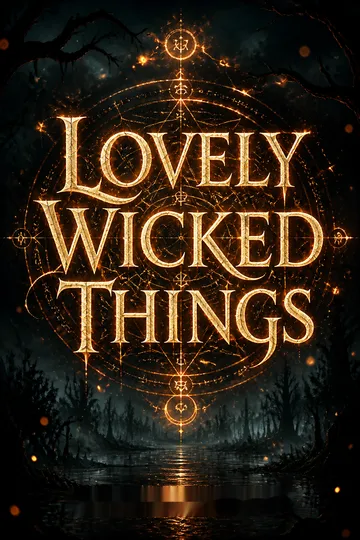
Lovely Wicked Things concludes the Hollow's Row trilogy with mixed reviews. Many praise the intricate plot, philosophical depth, and intense romance between Kallum and Halen. Readers appreciate the dark themes, plot twists, and character development. Some find the philosophical content overwhelming or confusing. The book's complexity and dark elements divide readers, with some loving the intense, twisted narrative and others finding it difficult to follow. Overall, fans of dark academia and psychological thrillers seem most satisfied with the series' conclusion.
People Also Read



Characters
Halen St. James
The haunted criminologistHalen is a skilled crime-scene analyst who studies violent offenders by entering their patterns of thought. Her work gives her a disciplined way to approach brutality, but personal grief can break through that professional distance. She is observant, skeptical, and more willing to question her own conclusions than to accept an easy explanation. Her compassion for people such as Devyn can conflict with the demands of law enforcement, while her attraction to Kallum draws her toward the very loss of control she fears. Halen’s defining struggle is not simply whether she has a dark side, but whether she can acknowledge it without letting it dictate her choices.
Kallum Locke
The dangerous philosophy professorKallum is an occult philosophy scholar whose intelligence, charm, and appetite for provocation make him both a useful consultant and a destabilizing presence. He interprets events through alchemy, mythology, and theories of human duality, often using those ideas to test or influence the people around him. His attraction to Halen is intense and possessive; he sees her as the person who gives direction to a life he had experienced as empty. Beneath his theatrical confidence is a man who fears separation and responds to that fear with extreme control. Kallum’s central psychological tension lies between the tenderness he feels and the harm he can rationalize in its name.
Devyn Childs
The town’s elusive ritualistDevyn is a former local officer whose intelligence, artistry, and command of ritual make her difficult to understand from the outside. She is closely bound to her twin brother and to the people who gather around her, and her sense of purpose grows from a refusal to accept helplessness in the face of suffering. Her beliefs can become absolute, but she is not reducible to them: tenderness, grief, and strategic thought remain visible beneath her priestess-like authority. Halen recognizes in Devyn a fellow investigator of pain, though their methods and aims differ. Devyn’s presence forces Halen to ask when compassion becomes permission and when a belief in transcendence turns into danger.
Dean Emmons
The wounded local detectiveDean Emmons is a Hollow’s Row detective who has deep roots in the town and a personal connection to the missing-persons case. He is disciplined and guarded, with grief that makes his calm manner difficult to read. His loyalty to the community shapes how he responds to outside investigators, while his relationship with his brother gives the investigation a private emotional cost. Emmons represents the entanglement of public duty and local belonging in a town where nearly every family has been touched by the disappearances.
Riddick
The watchful local detectiveRiddick is a Hollow’s Row detective who is protective of the department and wary of federal interference. He is blunt, physically confident, and attentive to the people around him, especially Halen. His concern can read as support or intrusion, which makes him a source of friction with Kallum. Riddick’s loyalty to local colleagues places him inside the investigation’s community tensions, where trust is difficult to separate from personal history.
Gael Hernandez
Halen’s federal allyHernandez is an FBI agent who works closely with Halen in Hollow’s Row. He is practical, observant, and willing to bend around bureaucratic limits when he believes the investigation requires it. His dry humor gives Halen a moment of steadiness amid the case’s escalating violence. He also serves as a careful reader of Kallum, balancing professional suspicion with a growing respect for the complicated loyalties around him.
Agent Rana
The pressured task-force leadRana leads the FBI task force investigating the missing residents and ritual crimes. She is controlled and exacting, conscious of the pressure coming from her superiors as well as the need to secure reliable evidence. Unlike officials who dismiss the town’s occult details outright, she is prepared to listen when Halen or Kallum offers a useful interpretation. Her leadership is shaped by an uneasy balance between procedural caution, public accountability, and the urgency of a widening crisis.
Tabitha Yarrow
The guarded diner waitressTabitha works at the local diner and appears reserved when Halen first encounters her. She avoids attention and uses a knitted headband as a familiar comfort. Her quiet manner makes her easy to underestimate, but Halen notices how deliberately she manages her responses. Tabitha’s position in the town places her near the investigation’s hidden social network, even though she is not one of its visible leaders.
Regina Lipton
The influential town hostessRegina Lipton belongs to one of Hollow’s Row’s prominent families and maintains the social rituals that help the town present itself as stable. She is polished, protective of her family, and accustomed to using status to manage difficult conversations. Her annual gathering continues even while the investigation unsettles the community. Regina illustrates how civic influence can provide both a sense of sanctuary and a means of keeping outsiders at a distance.
Colter Childs
Devyn’s twin and confidantColter is Devyn’s twin brother, and their closeness forms one of the most important emotional bonds in her life. His history with her helps explain the intensity of her beliefs and the private meaning she gives to their shared experiences. Though he is absent from much of the present-day investigation, his influence shapes how Devyn understands illness, loyalty, and the possibility of escape.
Jake Emmons
The missing detective’s brotherJake is Dean Emmons’s brother and one of the people at the center of Hollow’s Row’s long-running disappearances. His absence weighs heavily on Dean and connects the town’s public investigation to the private grief of its families. Jake’s history also matters to Devyn’s community, making him a point where loyalty, sacrifice, and the search for relief intersect.
Percy Wellington
The combative philosophy professorWellington is a philosophy professor at the university and a professional rival of Kallum’s. He is abrasive, status-conscious, and confident that his reputation will protect him from challenges. His lectures and public manner make him a recognizable presence in Kallum’s academic world. Wellington’s role connects campus rivalries to the wider criminal investigation, while his polished professional standing contrasts with the distrust Halen brings to authority figures.
Charles Crosby
Kallum’s strategic lawyerCrosby is Kallum’s lawyer, a practiced negotiator who understands how to move through institutions and protect a difficult client. He is sardonic about the work and rarely sentimental, but his loyalty to Kallum is clear. Crosby’s legal skill gives Kallum room to participate in the investigation under restrictive conditions, while his presence reminds the reader that every act of apparent freedom has a contractual and institutional cost.
Dr. Torres
The unstable former clinicianTorres is a clinician at Briar who has treated Kallum and studied his behavior. He is intelligent and persistent, but his own judgment becomes difficult to trust as he pursues Halen with claims about Kallum. His insistence that he has evidence creates a new line of suspicion at a crucial point in the case. Torres embodies the danger of believing that professional access to a person means complete understanding of them.
Dr. Keller
Kallum’s assigned monitorKeller is brought in to supervise Kallum after Rana questions whether Halen should continue working with him. She follows clinical and institutional procedure, often putting her at odds with Halen’s direct involvement in the case. Her watchfulness is practical rather than personal, though she has to navigate a situation in which the patient, consultant, and investigator refuse to stay within their assigned roles.
Dr. Markus
The Bureau’s occult historianMarkus is a historian recruited by the FBI to interpret the symbols and historical references found at crime scenes. He brings academic expertise and a cautious, evidence-minded approach. His disagreements with Kallum expose the limits of treating complicated ritual practice as a single coherent system.
Agent Alister
The compromised federal agentAlister is an FBI agent whose conduct becomes a source of danger and suspicion during the Hollow’s Row investigation. His official authority gives him access to Halen and to the case’s evidence. The gap between his professional position and the trust he deserves becomes important to how Halen evaluates law enforcement.
Leroy Landry
The violent local suspectLandry is a physically imposing figure connected to one of the ritual sites Halen investigates. His violence leaves a lasting mark on Halen and Kallum, and his presence helps establish that the town’s danger is not only symbolic or psychological. He serves as an early example of how quickly the investigation can become personal and physical.
Silvia St. James
Halen’s loving motherSilvia is Halen’s mother and one half of the close family life Halen remembers before grief altered it. Her white streak of hair is a visible family trait that Halen shares. Silvia’s warmth and connection to her husband form part of the emotional world Halen struggles to recover.
Darrin St. James
Halen’s devoted fatherDarrin is Halen’s father and Silvia’s husband. His shared history with Silvia is tied to the university they revisit on their anniversary. In Halen’s memories, he belongs to a secure family life that stands in sharp contrast to the isolation she experiences after loss.
Jackson
Halen’s former fiancéJackson is Halen’s fiancé before the events that fracture her life. Their disagreements about her crime-scene work reveal the strain between her vocation and the ordinary future he wants. He represents a life Halen once considered, but one that cannot contain the demands of her work or the darkness she has learned to face.
Plot Devices
The Harbinger letters
A coded murder sequenceThree cryptic notes accompany murders at a casino, a recovery center, and a university. Their numbered structure encourages investigators to read the crimes as stages in a larger pattern and makes a threatened catastrophe seem imminent. The letters initially appear to describe a serial killer’s public philosophy. Their personal purpose is revealed much later, when Halen understands that they were designed around her fear and future. They let the novel hide emotional intention inside the conventions of a serial-killer puzzle.
Sigils and memory
Ritualized concealmentKallum uses a blood-drawn sigil in an attempt to help Halen forget the night she killed Wellington. The mark links memory, physical sensation, and the couple’s intimacy, then returns as a recurring image on their bodies. It also gives the story a way to make forgetting an action with consequences rather than a simple absence. Halen’s memories return through evidence and sensory triggers, demonstrating that the ritual can obscure the past without resolving it.
Antler implants
A visible social hierarchySmall antler implants mark membership among people connected to Devyn’s movement. Their size and visibility suggest ranks within the group, while the headband Tabitha wears hides her own modification. The implants turn an occult symbol into a practical investigative clue: Halen can recognize participants beyond the masked figures at ritual scenes. They also reveal that the society extends through ordinary community relationships, not only the people who appear at its ceremonies.
The double ouroboros
A map of linked oppositesThe image of two serpents consuming one another appears among the symbols associated with the ritual spaces. Halen and Kallum interpret it as a joining of opposing forces, and it becomes a framework for thinking about their relationship, Devyn’s alchemical ambitions, and the repeated return of violence. The symbol also connects the town’s occult displays to the novel’s circular construction, where the final revelations lead back to the first crimes and the first meeting.
Cufflinks and rings
Evidence turned into commitmentA cufflink helps unlock Halen’s buried memory, while the matching piece becomes the physical clue that exposes Kallum’s role in staging the Harbinger investigation. Kallum also transforms the paired objects into rings, making the evidence part of the couple’s shared symbolism. Their shifting use tracks the novel’s movement from concealment to recognition: the same object can function as a planted clue, a recovered memory, and a chosen token of commitment.
Hollow's Row Series
About the Author
Other books by Trisha Wolfe




Download PDF
Download EPUB
.epub digital book format is ideal for reading ebooks on phones, tablets, and e-readers.








