

Plot Summary
Prologue
Luca Vitiello believes cruelty is his inheritance. His father has trained him to become a feared Mafia leader, and Luca has learned to treat tenderness as a liability. Then he is promised Aria Scuderi, a young woman whose gentleness unsettles the instincts he trusts.
He expects to possess her, perhaps even to break her, as his father broke the women around him. Instead, he begins to fear what loving Aria might cost him in a world where enemies look for any weakness they can exploit.
The prologue frames Luca’s conflict as a struggle over inheritance, not a simple choice between good and evil. He sees violence as something biologically and socially fixed, a legacy reinforced by his father’s rule. Aria matters because she does not erase his capacity for cruelty; she gives him a reason to restrain it. That distinction makes the romance psychologically specific. Luca’s fear is not merely that he will fail to love her, but that protecting her will expose the very attachment his world has taught him to conceal.
Blood on White Marble
Luca goes upstairs when his mother misses dinner and finds her body in the bathtub, her wrists cut with a knife belonging to his younger brother, Matteo. Their father, Salvatore, strikes Luca for crying, then forces both boys to see the body and calls their mother weak. When Luca refuses to fetch Matteo, a bodyguard beats him until the child appears.
Luca later washes the blood from Matteo’s knife and tells his brother that they still have each other. Salvatore’s response leaves Luca with a rule more durable than grief: never show pain where his father can see it. The boys leave the bathroom alive, but their mother’s death becomes the first lesson in how their household turns sorrow into shame.
The scene makes Luca’s later brutality legible without treating it as inevitable. He begins as a frightened child who tries to protect Matteo, but Salvatore punishes the visible signs of care and grief. Luca’s resolve to suppress tears is therefore both an act of survival and the first surrender of his emotional vocabulary. The knife also binds family violence to family memory: Matteo’s possession becomes the instrument associated with their mother’s death. Luca can clean it, but he cannot undo what it represents. His childhood begins to divide feeling from action, leaving protection possible while tenderness becomes forbidden.
Grief Becomes a Crime
After the funeral, Luca trains under Cesare and watches Matteo remain fixed on their mother’s death. When Matteo asks why they were kept from the funeral, Luca silences him and repeats the lesson that their mother’s suicide makes her unworthy of mourning.
Their caretaker Marianna urges Luca not to become like Salvatore, echoing a warning from their dying grandmother, Marcella. Luca cannot accept comfort without feeling exposed, so he threatens Cesare into keeping Marianna’s criticism quiet.
He means to shield Matteo from their father’s punishment, but he does it by enforcing Salvatore’s rules himself. In the household, Luca gains authority as the heir; between the brothers, that authority begins to resemble the cruelty it was meant to resist.
Luca’s protection of Matteo is real, but it takes the form available to him: control. He tries to keep his brother safe by teaching him that grief invites punishment, making the family’s private violence reproduce itself through the child most determined to stop it. Marianna and Marcella offer an alternative moral language, yet Luca hears it as danger because his survival depends on Salvatore’s approval and fear. This is the story’s first portrait of protection becoming indistinguishable from domination. Luca is not simply imitating his father; he is using his father’s methods against the very vulnerability he wants to defend.
The Heir Draws Blood
At eleven, Luca wakes to gunfire and finds an armed intruder at his bedroom door. Matteo leaps onto the attacker, deflecting the shot meant for Luca; wounded, Luca grabs his own gun and kills the man. He then locks Matteo in a closet, goes downstairs, and shoots another attacker to protect Salvatore.
Instead of taking Luca for medical care, his father makes him watch a captured enemy being tortured until Luca collapses. Once the family survives the attack, Salvatore presents Luca to the Famiglia as its youngest initiate. Luca cuts his palm for the oath, then uses his mother’s knife to kill a captive. His first acts of protection and obedience become inseparable from the violence that earns him rank.
The attack turns childhood training into a public identity. Luca acts to save Matteo and later his father, but the family recognizes him not for courage or loyalty but for his usefulness as a killer. Salvatore converts a traumatic night into an initiation ceremony, making the murder of a captive the official proof of belonging. The knife once tied to private grief is repurposed as a badge of Mafia membership. Luca’s survival instincts are rewarded with status, so he learns that violence can secure both safety and paternal approval, even when the approval arrives from the source of his fear.
A Lesson in Manhood
At thirteen, Luca has already been inducted into the Famiglia, but Salvatore decides that killing alone does not make his son a man. He takes Luca to the family-owned Foxy and orders him to choose two women from the brothel. Luca is nervous and inexperienced, yet he complies because refusal would mark him as weak in front of his father and the workers.
The encounter is arranged as a lesson, not a choice Luca has made for himself. Salvatore’s demand teaches him to treat sex as another performance of rank, a skill to acquire under pressure and display without embarrassment. Luca grows into the role expected of him, but the lesson leaves little room to imagine intimacy as mutual trust.
This episode extends Salvatore’s training from violence into sexuality. Luca is still a child, yet his father treats his body as an instrument of political and masculine performance. The encounter is not framed as a private awakening so much as a command to erase inexperience before it can be mocked. Luca’s later sexual confidence grows from this coercive education, helping explain why he initially mistakes desire for entitlement and experience for understanding. The episode also establishes a sharp contrast with Aria: she has been protected from sexual experience, while Luca has been pushed into it before he can choose what it means.
The Vise Is Named
At seventeen, Luca attends a birthday party hosted by his cousin Gottardo Junior, despite Cesare’s suspicion that the family is too ambitious. Once the guests are drunk, Junior’s men attack. Luca has set aside his weapons as family custom requires, so he fights Junior with his hands and crushes his cousin’s throat.
Matteo kills another attacker, while Romero is wounded and Cesare survives with a cut. When Salvatore arrives, he recognizes the brutality of Luca’s act and gives him the nickname the Vise. Luca learns the attack was likely part of his uncle Gottardo’s attempt to clear the path to the Capo position. Family ties, which once seemed to offer protection, now mark the easiest route to betrayal.
Junior’s betrayal confirms Luca’s growing belief that trust is a tactical mistake. The family setting matters: Luca is attacked precisely because he has obeyed a custom that assumes kinship creates safety. His response is not simply defensive. He experiences the killing as intimate and exhilarating, then accepts the reputation it creates while rejecting the emotional dependence on Salvatore’s approval. The nickname reduces a complicated history to a single image of force. It makes Luca easier for the Famiglia to fear and harder for him to understand himself as anything beyond the violence that secured his survival.
The Bratva's Kiss
After Junior’s attack, Luca and Matteo enter the Sphere expecting a night out, then accept attention from women who appear to be easy conquests. Luca realizes too late that his companion carries the Bratva’s mark and has tried to inject him with a syringe. He kills her, then races outside and finds Matteo in the same trap. When Matteo’s attacker raises her syringe, Luca shoots her before she can use it.
The brothers discover that the women were part of a Russian attempt to kill them, and their casual pleasure has made them vulnerable. Luca orders Cesare to help dispose of the bodies, but the episode changes more than the evening’s plans: he and Matteo reaffirm that, in their world, each other is the only person they can trust.
The ambush turns Luca’s sexual habits into a security weakness. He has been trained to read danger in weapons and political alliances, yet he lets desire disguise an enemy at close range. The Bratva attack does not make him repentant about killing; it makes him angry at himself for losing control of the situation. Matteo’s near capture sharpens that anger into a more personal fear. Their loyalty is one of the few relationships Luca experiences as reciprocal, but even that bond is expressed through vigilance, rescue, and a shared refusal to trust anyone else.
A Bride Chosen at Fifteen
At twenty, Luca learns that his father has arranged his marriage to Aria Scuderi, the fifteen-year-old daughter of Chicago Outfit adviser Rocco Scuderi. Luca objects to marrying a child, and the wedding is postponed until she is eighteen. At the Scuderi mansion, he meets Aria when she collides with him while chasing her siblings. Her fear surprises him, as does her gentleness with them.
Later, he sees her father present her in a revealing dress and bristles at the men’s attention. When Aria’s cousin Raffaele threatens her, Luca cuts off one of the man’s fingers and warns him away. He chooses trusted soldier Romero to guard her during the years before the wedding, turning a political arrangement into a possessive promise of protection.
Luca’s objection to the marriage is ethically meaningful but limited: he rejects the immediate sexual exploitation of Aria, while still accepting the institution that transfers her from her father’s authority to his. His first response to her fear is not romantic tenderness but protective ownership. That impulse offers Aria security from Raffaele, yet it reproduces the language of possession that structures their world. Luca’s unease at her father’s choices suggests an emerging moral distinction between what he can do and what he should allow, though he has not yet learned how to make that distinction without threats or force.
Three Years of Distance
Three years after their engagement, Luca sees Aria’s photograph in a newspaper announcing their forthcoming marriage. Her beauty renews his desire, but the six months before the wedding leave him restless. When he visits her suite, Aria is now eighteen, yet she remains wary of his size and reputation.
Luca notices that her guard, Umberto, is absent and orders Romero to stay close until the wedding. He asks whether she is taking birth control, then gives her the Famiglia doctor’s prescription, exposing how little he understands her need for choice.
Aria calls the expected wedding-night sex rape if she cannot refuse it. Her bluntness unsettles him, though he leaves without offering the reassurance she needs. The marriage is approaching, but fear still shapes their first private conversations.
The three-year interval changes Aria’s age, not the power imbalance between them. Luca sees the waiting period primarily as a barrier to desire, while Aria experiences the impending marriage as a loss of bodily autonomy. His practical focus on contraception and security is not equivalent to listening. Her use of the word rape forces a moral description into a culture that calls marital access a husband’s right. Luca is disturbed, yet he continues to assume the marriage will proceed on his terms. The scene establishes the central test of his character: whether he can recognize consent as more than a concession he controls.
Wedding Without Consent
At the wedding, Aria trembles through the ceremony, while Luca hears Salvatore describe terror as a husband’s privilege. Grace Parker, Luca’s former sexual partner, privately humiliates Aria by suggesting Luca will hurt her. That night, Aria refuses sex and tells Luca her body belongs to her. He is angry, but when he sees her crying and flinching, he stops.
To satisfy the Famiglia’s demand for proof, he cuts his own arm and puts diluted blood on the sheets. In the morning, he asks Aria to help maintain the lie, since discovery could make him look weak to rivals. She agrees, and when the women inspect the stain, the family accepts it as evidence that the marriage has been consummated.
The wedding night is Luca’s first clear break with the model of manhood Salvatore has imposed. He still invokes ownership and threatens Aria, but he cannot make himself take her while she is terrified. His substitute blood preserves the public ritual without inflicting the injury the ritual presumes. The deception is strategically useful, yet it also creates a private pact between the spouses: Aria’s safety depends on protecting Luca’s reputation, and Luca’s authority now rests partly on her silence. The scene does not resolve the power imbalance. It shows that restraint can exist inside it, while leaving both characters to negotiate what that restraint means.
A Home She Didn't Choose
After the public sheet ritual, Luca refuses Salvatore’s offer to move into the family mansion and takes Aria to his New York penthouse instead. She leaves her siblings behind in Chicago, grieving the separation, while Luca treats the departure as a necessary change of address.
Before a business meeting, he takes her to a Korean restaurant, where she tries unfamiliar food and learns that he can enjoy something outside Mafia business. Their dinner briefly relaxes her, and Luca kisses her with more care than he expects from himself.
That night, however, Aria rejects his attempt to move further, and he leaves to sleep with Grace. Luca returns feeling the encounter was wrong, but he has not yet understood that his wife’s distance comes from fear and inexperience, not indifference.
The move to New York makes the arranged marriage concrete in Aria’s daily life: she loses familiar family and gains a home chosen by Luca, with protection that also limits her independence. The restaurant date offers a glimpse of companionship because Luca attends to her preferences rather than treating her as a political asset. Yet his response to her hesitation shows how quickly he reverts to the habits he knows. He interprets her refusal as rejection and seeks sex elsewhere instead of asking what would make closeness possible. The chapter’s emotional movement is therefore uneven: curiosity opens a door, but entitlement keeps Luca from walking through it.
Grace Leaves a Wound
Aria follows a letter and key left among her belongings to an apartment where she finds Luca having sex with Grace. She leaves in shock, then returns home alone after walking through the city.
Luca panics while searching for her, but when he finds her, she condemns his infidelity and explains that she wanted time to know him before sex. He apologizes and agrees to end his other relationships. Their marriage shifts from coercive expectation toward negotiation: Aria asks for honesty and fidelity, while Luca begins spending time with her rather than disappearing into work.
Matteo also confesses that he wants to marry Gianna, Aria’s sharp-tongued sister, and Luca agrees to help him approach their fathers, complicating the alliance with a second arranged match.
Aria’s discovery forces Luca to confront the difference between a marriage that exists on paper and a relationship both people inhabit. His initial defense relies on the looseness of their bond, but her explanation reframes her hesitation as a request for emotional safety, not rejection. His promise of fidelity is the first agreement that meaningfully limits his own freedom. The subplot with Matteo and Gianna mirrors the central romance while exposing a different problem: desire can become another form of control when one partner decides the future for both. Luca is learning to listen, but he still tends to treat promises as solutions before trust has had time to grow.
A Wife Learns to Fight
Aria asks Luca to teach her self-defense after he warns that the Bratva will not spare women. In the Famiglia gym, she cannot beat him with a knife, but she bites his arm to escape his hold, making him laugh despite his soldiers watching.
Their physical practice lets her challenge him without the pressure of sex. As Russian attacks escalate, Luca orders a bloody retaliation against a Bratva drug lab, then returns home still carrying the violence of the operation. Aria’s presence helps him stop himself from acting on a darker impulse.
They become intimate without intercourse, and Luca admits more about the violence surrounding his childhood, including his mother’s death. Her attention offers him a kind of closeness he has never learned to request.
Self-defense gives Aria agency without pretending she can become equal to Luca in strength or power. Her bite is small, comic, and consequential: she refuses to remain a passive object in his training exercise. Luca’s response, amusement rather than punishment, marks a change in how he receives resistance. The contrast between the gym and his retaliation against the Bratva is equally important. Violence still exhilarates him, but Aria’s presence creates a competing route back from it. Her questions about his mother invite him to describe his past instead of merely reenacting it, though his attachment to her is already becoming a vulnerability he does not know how to manage.
The Drink Was Drugged
During Gianna’s visit, Aria and her sister go to the Sphere despite Luca’s order that they stay away. A dealer named Rick drugs Aria’s drink, but Romero and Cesare stop him before he can remove her. Luca carries his dazed wife to safety, then tortures Rick until he admits a blond woman paid him to target her.
Aria later tells Luca that Grace had warned her he would brutalize her, confirming Grace’s role in the campaign against their marriage. Luca confronts their cousin Cosima, who admits Grace proposed the earlier deception that led Aria to his affair. Drugged and half-conscious, Aria tells Luca she loves him and wishes he could love her in return. Luca dismisses her words as the drug speaking, but they remain with him.
The attack brings the private marriage into contact with the predatory logic of the criminal world. Aria disobeys Luca’s restrictions because protection has begun to feel like imprisonment, and the danger she encounters proves his fears justified without making his control ethically neutral. Luca’s torture of Rick restores his preferred sense of command, while Grace’s manipulation exposes how easily his sexual history can be weaponized against Aria. The most destabilizing revelation is not the plot itself but Aria’s confession. Luca can dismiss it as drug-induced because accepting it would require him to acknowledge both her vulnerability and his own emotional dependence.
A Capo's Inheritance
Luca and Matteo begin planning to poison Salvatore, who continues abusing Nina and undermining Luca’s authority. Before they act, Bratva gunmen shoot Salvatore at a restaurant. Luca and Matteo refuse his request for a hospital, remove the transfusion line, and let him die; Luca makes sure their father understands that his sons had planned his death.
Luca takes command, appoints Matteo as his adviser, and gives Nina the family house, guards, and money instead of abandoning her. At his father’s funeral, Luca formally becomes Capo while watching for the uncles and soldiers who may challenge him.
In the first hours of his rule, he returns home enraged and has rough sex with Aria, then wakes horrified that he may have repeated Salvatore’s abuse. Aria tells him she wanted it, but his fear remains.
Salvatore’s death removes the source of Luca’s childhood terror but does not free him from its moral inheritance. Luca chooses not to save his father, then assumes the authority his father wielded, so succession is both liberation and contamination. His decisions about Nina suggest that he can use power to protect rather than humiliate, yet his violent night with Aria reveals how fragile that distinction remains when grief and rage overwhelm him. Aria’s reassurance matters, but it cannot simply erase his fear of becoming Salvatore. The new Capo has gained command of the Famiglia while facing a more intimate question: whether self-restraint can survive when no one is strong enough to compel it.
A Bullet for Luca
While Luca, Matteo, and the Outfit leadership meet, Bratva gunmen attack the Scuderi mansion where Aria and her siblings are staying. Luca rushes there by helicopter and finds the Russian leader Vitali holding Aria at knifepoint. He gives up his weapons rather than risk her throat, and Aria uses a concealed knife to stab Vitali, giving Luca the opening to kill him.
She then grabs a gun and helps fight the remaining attackers, but jumps in front of Luca when one aims at him and takes a bullet in the shoulder. Luca panics, gives her his blood when the Mafia doctor treats the wound, and stays beside her. The attack costs them trusted soldiers, including Cesare and Umberto, but Aria survives.
The siege reverses the usual structure of protection. Luca has spent the marriage deciding where Aria may go and who may guard her, but survival depends on her independent action: she finds a weapon, wounds Vitali, and chooses to shield Luca. His surrender of his guns shows that he values her life above the public appearance of invulnerability he has defended for years. The bullet makes that attachment visible to the entire Famiglia, even before he names it. The losses among his men also prevent the rescue from feeling like a clean triumph. He saves his wife, but the role of Capo demands that he reckon with the human cost of the world surrounding her.
The Monster Says Love
After Aria wakes, Luca tells her how close he came to losing her and admits that she matters more to him than the rules he swore to uphold. Aria says she loves him and acknowledges that she killed Vitali without regret to protect him. Luca finally returns her confession, recognizing that the attachment he feared is already stronger than his old belief that a Capo must put the Famiglia first in every circumstance.
He promises to protect her and accepts that their marriage has become more than a political alliance. Aria is healing from her wound, Luca is leading a Famiglia still threatened by the Bratva and internal rivals, and neither has escaped their violent world. Their resolution is a mutual choice to face it together.
The ending does not redeem Luca by removing his violence or dissolving the Mafia system that formed him. Instead, it changes the hierarchy of his loyalties: he admits that Aria has become his first choice, even though that attachment can be exploited by enemies. Aria’s own admission that she has killed without remorse complicates any simple division between his darkness and her innocence. Their intimacy is built not on her transforming him into a good man, but on both of them recognizing what they have become and what they are willing to protect. Love is still dangerous here, but Luca stops treating danger as proof that it must be denied.
Analysis
The novel’s central tension is not whether a violent man can be made harmless, but whether he can distinguish authority from entitlement. Luca begins with a model of power inherited from Salvatore: fear secures obedience, women are possessions, and emotion gives enemies a target. Aria does not dismantle that system. She lives inside it, constrained by a marriage arranged before she could consent, and must bargain for ordinary forms of agency such as time, fidelity, safety, and the right to refuse. Their relationship develops through those negotiations, not through a sudden moral conversion.
The repeated language of blood makes the contradiction visible. Luca’s oath and the wedding sheets both turn bodies into evidence of belonging. Yet he repurposes blood first to spare Aria and later gives his own in a transfusion to keep her alive. The material symbol remains the same while its purpose shifts from institutional proof to personal care. Likewise, his reputation as the Vise can protect Aria from predators, but it also sustains a hierarchy in which Luca believes he alone should decide what safety means.
The book’s most important psychological inheritance is Salvatore’s abuse. Luca’s childhood teaches him to suppress grief and to confuse control with protection. His terror after waking beside bruised Aria shows how deeply he fears repeating his father’s conduct, even when Aria tells him she wanted the rough encounter. The fear does not erase the danger of his behavior; it marks his awareness that good intentions cannot substitute for consent. His development lies in learning to attend to Aria’s stated boundaries rather than relying on his own self-image as her protector.
The ending offers a deliberately compromised form of hope. Luca remains a killer and becomes the leader of a criminal organization; Aria admits that she too can kill for someone she loves. Their love does not purify their world. It gives them a chosen bond within it, one that may be a vulnerability but also makes Luca question the creed that trained him to place the Famiglia above every human connection.
Review Summary
Characters
Luca Vitiello
Heir forged for powerLuca is the eldest son of Salvatore, the New York Famiglia’s Capo, and has been raised to inherit command. He is disciplined, suspicious, and frighteningly capable of violence; his reputation rests on the belief that fear is more reliable than affection. His mother’s death and his father’s cruelty shape his conviction that tenderness is dangerous, while his loyalty to his brother Matteo gives him one rare, reciprocal bond. Luca’s marriage to Aria forces him to confront the difference between possessing someone and protecting them. He does not become gentle by nature, but he begins to treat restraint as a form of strength rather than surrender.
Aria Scuderi
The protected brideAria is the eldest daughter of Chicago Outfit adviser Rocco Scuderi and is promised in marriage to Luca as part of a political alliance. Sheltered from much of the violence around her, she is compassionate, observant, and close to her siblings, especially Gianna. Her fear of Luca is grounded in the world’s real power imbalance, not simple timidity. She asks questions, sets boundaries, and gradually finds ways to act within a life she did not choose. Aria’s kindness is not passivity: she can challenge Luca, insist on honesty, and make difficult choices when people she loves are threatened.
Matteo Vitiello
Luca's loyal brotherMatteo is Luca’s younger brother, closest ally, and constant counterweight. He is impulsive, theatrical, and openly fond of women, but beneath the jokes is fierce loyalty to Luca and a clear memory of their shared childhood. Their father expects the brothers to compete for power, yet Matteo’s bond with Luca is built on mutual protection rather than rivalry. His attraction to Gianna draws him toward marriage and family life, even as his instincts remain shaped by the Famiglia’s violent rules. Matteo often says what Luca avoids admitting, making him both a source of comic relief and a witness to Luca’s changing priorities.
Gianna Scuderi
The defiant sisterGianna is Aria’s redheaded younger sister, quick-tempered, irreverent, and resistant to the obedience expected of women in the Outfit. She protects Aria with unusual boldness, even when doing so risks angering powerful men. Her sharp tongue makes her a natural foil for Matteo, whose confidence she refuses to indulge. Gianna’s independence is not merely provocation; it is a defense against a world where fathers and future husbands make decisions for her. She values her sisters and brother intensely, and her loyalty can make her both a source of trouble and one of Aria’s strongest supports.
Salvatore Vitiello
The brutal family patriarchSalvatore is Luca and Matteo’s father and the Capo of the New York Famiglia. He treats authority as permission to intimidate, punish, and control, demanding that his sons suppress fear while teaching them to wield it against others. He sees family members as instruments of power and expects Luca to inherit his methods as well as his position. His treatment of women, especially within his own household, shapes Luca’s understanding of marriage and masculinity. Salvatore’s presence looms over the family even when he is not in the room, because his sons have learned to anticipate punishment before he gives an order.
Nina Vitiello
The battered stepmotherNina is Salvatore’s wife and Luca and Matteo’s stepmother. She survives by reading his moods and performing the obedience he expects, but her self-protection can make her sharp and unsympathetic toward others. Luxury and security matter to her, complicating any simple picture of her as either a willing participant or a helpless victim. Luca recognizes the fear beneath her practiced composure because he has watched her live under his father’s control. Her presence gives the brothers a daily example of the marriage their father considers normal.
Romero
The trusted bodyguardRomero is a loyal Famiglia soldier and one of Luca’s most dependable men. He has known Luca and Matteo since childhood and understands both the practical dangers of their world and the emotional codes they rarely discuss. Luca trusts him to guard Aria because Romero takes his duty seriously and does not confuse proximity with permission. His quiet competence contrasts with Matteo’s showmanship and Luca’s volatility. He is also attentive to the treatment of women, which gives him a moral presence within an organization that rarely rewards such attention.
Cesare
Luca's longtime lieutenantCesare trains Luca from childhood and becomes one of his trusted soldiers. He is observant, steady, and cautious enough to recognize threats before Luca wants to hear about them. His loyalty is practical rather than sentimental, grounded in years of working beside the Vitiello brothers. Cesare helps maintain the boundary between Luca’s personal life and the machinery of the Famiglia, though those worlds increasingly collide. His presence gives Luca a reliable partner in both violence and security.
Rocco Scuderi
Aria's political fatherRocco is Aria’s father and a senior adviser in the Chicago Outfit. He treats his daughter’s marriage as a political arrangement and shows little interest in how frightening the match is for her. His willingness to hand Aria into Luca’s household contrasts with Luca’s growing instinct to protect her from the men who should have protected her first. Rocco’s authority is substantial, but his priorities are shaped by alliance and status more than emotional care.
Ludevica Scuderi
Aria's anxious motherLudevica is Aria’s mother, a quiet woman who has learned to lower her gaze around powerful men. She recognizes the danger her daughter faces but has limited authority to intervene in the marriage arrangement. Her brief attempts to protect Aria reveal both maternal concern and the constraints placed on women in the Outfit. Aria’s gentleness resembles hers, though Aria is more willing to voice questions and resist expectations.
Dante Cavallaro
The calculating Outfit heirDante is Fiore Cavallaro’s son and a rising authority in the Chicago Outfit. Reserved and watchful, he approaches the New York alliance with caution rather than trust. He is not easily drawn into the Vitiello family’s performances of dominance, and his presence reminds Luca that the marriage is part of a fragile political settlement. Dante’s restrained manner conceals a serious investment in the future of his organization.
Grace Parker
The ambitious former loverGrace is the daughter of a powerful senator and has been one of Luca’s casual sexual partners. She is accustomed to using beauty, confidence, and social access to get attention, and she treats danger as an exciting game when it does not threaten her directly. Luca’s marriage frustrates her expectations, while her privileged position gives her ways to interfere in his private life. Grace’s shallow understanding of the Mafia world contrasts with Aria’s awareness of the lasting consequences its rules impose.
Fiore Cavallaro
The Chicago Outfit bossFiore is the official head of the Chicago Outfit and a principal negotiator in the marriage alliance. He values stability between the Outfit and the Famiglia, but his son Dante’s growing authority creates tension within his own family. Fiore is a political realist who treats marriage as a tool of peace and influence. His decisions help shape Aria’s future without giving her much say in it.
Fabiano Scuderi
Aria's fiercely loyal brotherFabiano is Aria’s younger brother, small but fearless when he believes she is in danger. He challenges Luca during their first meeting and remains protective of his sister even when he cannot change the marriage arrangement. His loyalty is direct and unpolished, a contrast to the careful bargains made by the adult men around him.
Liliana Scuderi
The youngest Scuderi sisterLiliana is Aria’s youngest sister, spirited and eager to seem older than she is. She shares a close bond with Aria and is strongly affected by the violence of the families around them. Her crush on Romero adds a lighter note to the household while showing how quickly young girls in this world begin to encounter its adult power dynamics.
Marianna
The boys' caring caretakerMarianna cares for Luca and Matteo while they are growing up. She offers them a kindness rarely found in Salvatore’s house and warns Luca against becoming like his father. Luca resists her comfort because he has learned to associate tenderness with danger, but her presence provides one of his few models of care without domination.
Marcella
Luca's dying grandmotherMarcella is Luca’s grandmother, frail near the end of her life but clear-eyed about the cruelty passed through the family. She urges Luca to become something other than the men who raised him, giving him a moral warning he cannot yet act upon.
Umberto
Aria's longtime protectorUmberto is one of Aria’s Chicago bodyguards and has known her since childhood. He is experienced, protective, and faithful to his own family, qualities that make Luca regard him as a safer guardian than Aria’s more opportunistic relatives. His steady presence represents the protection Aria has known before moving to New York.
Raffaele
The predatory cousinRaffaele is Aria’s cousin and a soldier in the Outfit. He exploits his family position to behave as though he can threaten Aria without consequence. His conduct reveals the danger she faces from men who treat kinship as cover for entitlement.
Gottardo Junior
The ambitious cousinGottardo Junior is Luca’s cousin, whose family questions Luca’s path to leadership. His ambition places him inside the Vitiello family’s succession struggle and exposes how little protection kinship offers when power is at stake.
Bardoni
Salvatore's political adviserBardoni is Salvatore’s Consigliere, a skilled adviser closely tied to the old Capo’s authority. He represents the established political machinery Luca must manage as he prepares to lead the Famiglia.
Rick
The club drug dealerRick is a dealer at the Sphere whose work places him near Luca’s business and social world. He is willing to use drugs to exploit women, making him an example of the predation Luca claims to control.
Vitali
The Bratva attackerVitali is a Russian operative who leads an assault on the Scuderi mansion. He treats people as leverage in the conflict with the Famiglia and turns Aria into a target because of her connection to Luca.
Plot Devices
The arranged marriage
A political bond with teethThe marriage between Luca, heir to the New York Famiglia, and Aria, daughter of a Chicago Outfit adviser, is designed to reinforce peace between rival organizations. It determines where Aria lives, who guards her, and the public expectations placed on both spouses. The arrangement gives Luca a wife and a political connection, but it does not create trust or consent by itself. Its dramatic function is to put two people with unequal power into an intimate household and force them to decide what, if anything, they can choose within a life decided by others.
The blood oath
Violence as membership proofThe Famiglia’s blood oath ties Luca’s identity to lifelong service and violence. As a boy, he cuts his palm and kills a captive to prove that he belongs. The ritual makes loyalty physical and public, binding private identity to the organization’s demands. Luca later invokes that same oath to make a promise to Aria, adapting a symbol of obedience to the purpose of restraint. The device tracks his conflict between the Famiglia’s claim on him and the personal promises he begins to make.
The bloody sheets
A lie that shields AriaThe family expects a bloodstained sheet after Luca and Aria’s wedding night, treating it as public proof of virginity and male authority. When Luca refuses to have sex with Aria while she is frightened, he cuts his own arm and uses diluted blood to satisfy the watching families. The staged evidence protects Aria from immediate violence and preserves Luca’s reputation, but it also requires her to conceal the truth. The ritual exposes how the Mafia turns a couple’s private intimacy into a public test of obedience.
The Vise reputation
Fear made into authorityAfter Luca kills Gottardo Junior by crushing his throat, Salvatore gives him the nickname the Vise. The name compresses Luca’s reputation into a single image of bodily force, helping him command respect among soldiers and frighten opponents. It also traps him inside a public identity: others expect the heir to be merciless, and any sign of restraint can be read as weakness. Luca uses that fear to protect his position, even as his marriage gives him reasons to behave differently in private.
The Bratva conflict
External pressure on the marriageThe Russian Bratva challenges the Famiglia through assassins, attacks on businesses, and violence against its soldiers. Each escalation forces Luca to divide his attention between ruling New York and keeping Aria safe. The conflict makes his possessive instincts strategically useful while also exposing the danger of treating protection as confinement. It culminates in an assault on the mansion, where Aria becomes direct leverage against him. The Bratva plot supplies the external pressure that tests whether Luca’s attachment will remain private or reshape the choices he makes as a leader.
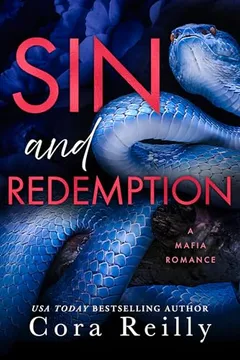
Born in Blood Mafia Chronicles Series


About the Author




Download PDF
Download EPUB
.epub digital book format is ideal for reading ebooks on phones, tablets, and e-readers.








