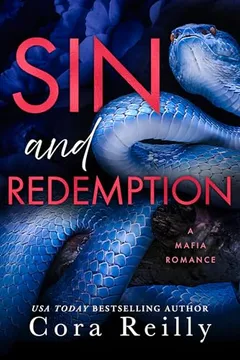


Plot Summary
Campus Pickup
Sara Cancio, a Barnard student and eldest daughter of a Famiglia family, expects her brother Flavio to collect her after class. When his car breaks down, her father sends Maximus Trevisan, a tattooed enforcer she barely knows.
The two share an awkward, quiet drive through Manhattan, each privately registering the other's presence. Then Maximus spots three cars following them. One slams into the pickup, and Sara's head strikes the window. She wakes much later in a bloodied cage, with Maximus beside her and an injured man nearby.
The warehouse holds drugged, trafficked wild animals. Maximus recognizes their captors as members of the Bratva, the Russian criminal organization hostile to his Famiglia, and understands that Sara has become collateral in a feud meant for him.
The ambush makes ordinary family protection suddenly unreliable: Flavio's absence sends Sara into a vehicle with a near-stranger, and the ride intended to keep her safe becomes the route into captivity. That reversal establishes the book's central problem as more than attraction under pressure. Maximus is trained to control danger by inflicting it, while Sara has built a life around dependable routines and family care. The cage strips both of those strategies away. Even before the captors make their intentions clear, the contraband animals and wounded prisoner show that human beings are being handled as commodities, foreshadowing the assaultive bargain that will define the couple's shared past.
The Cage's Bargain
Jabba, a vicious Bratva soldier, recognizes Maximus and turns the captivity into a weapon against both families. He threatens to let his men assault Sara, kill her, and send the recording to her father unless Maximus has sex with her first.
Maximus resists, but when the threat becomes immediate, Sara gives him a frightened, constrained assent, hoping his actions will keep the others from touching her. He goes through with it under the camera, then tries to break the cage and reach their captors.
Famiglia soldiers arrive before the Russians can carry out further violence; Jabba escapes, while one guard is captured. Romero finds Sara injured and Maximus half dressed. The video reaches senior Famiglia members, making the violation both a private trauma and a public source of shame.
Jabba's scheme is designed to turn survival into moral injury. By forcing Maximus to harm the woman he had been assigned to protect, he tries to make the Famiglia's own loyalties carry the damage inward. The scene cannot be reduced to a heroic rescue or a clean act of consent: Sara and Maximus both face choices constrained by threats, and the physical act leaves consequences neither can simply reason away. The recording compounds that coercion by converting a private event into potential evidence for gossip and political humiliation. Maximus's immediate self-condemnation and Sara's shock are therefore not separate reactions but two forms of being trapped inside the same imposed act.
A Future Unmade
At home, Sara's mother, Liliana, stays close while Sara tries to restore ordinary habits around her younger sisters. Her cousin Isabella, who has survived a separate kidnapping, gives her room to discuss fear and the prospect of being judged.
A week later, Sara's fiancé Paolo visits but cannot face her; she ends their engagement before he has to say he no longer wants the marriage. Soon, two pregnancy tests confirm that Maximus is the father.
Sara has always imagined marriage and children, but now the prospect of motherhood is bound to the assault, public gossip, and a future she did not choose. Rather than let others decide what happens next, she concludes that marrying Maximus is the only way to protect the child and preserve her family's standing.
Sara's response reveals the unequal social burden attached to the assault. Paolo's withdrawal does not make him a villain so much as expose how quickly a woman's victimization can be treated as a problem for a prospective husband to avoid. Sara's pregnancy turns that social judgment into a concrete decision about marriage and motherhood. Her choice is not uncomplicated empowerment: she is taking control within rules she cannot realistically change, and her wish for a family competes with her need to escape reminders of captivity. Isabella's conversation matters because it offers recognition without demanding recovery on a schedule. Sara can name her fear, even as the next decision remains constrained.
A Marriage by Necessity
When Romero's family tells Maximus that Sara is pregnant, he offers to support the child and marry her, despite believing she may never want him near her. Sara agrees because she wants the baby born within a recognized family, not because she feels ready for a husband.
They keep the wedding date already arranged for Paolo, replacing the groom and accepting that their hurried union will attract gossip. Maximus buys a restrained engagement ring with help from his mother Cara and Isabella, then finds an apartment on Sara's parents' street after his friend Amo lends him money toward the purchase.
Sara chooses proximity to her family as a condition of feeling safe. The practical preparations give them a shared future on paper, but neither knows how to make it feel like home.
Their engagement begins as an ethical and social arrangement, not a romantic solution. Maximus offers material responsibility because action is the language he knows, while Sara accepts the structure of marriage to protect a hoped-for child and her family's honor. Neither mistakes the bargain for intimacy. The ring and apartment nonetheless matter because they create visible commitments that can outlast their initial motives. Maximus's decision to borrow from Amo rather than choose a more distant, easier home also shows that he is beginning to treat Sara's sense of safety as a real need rather than a detail to manage. The domestic plans are small acts of accountability, but they cannot erase the trauma that made them necessary.
The Borrowed Wedding
Sara wears the wedding dress she chose for Paolo and marries Maximus before a smaller crowd than originally planned. Their kiss is brief, and the guests watch them for signs that the marriage is a cover for an affair.
When two men from Paolo's circle call Sara unfaithful in a corridor, Maximus punches them and orders them to stop spreading lies. His protection comforts her, but his violence also makes her wonder what daily life with an enforcer will mean. At their new apartment, he gives Sara the larger bedroom and sleeps in the guest room.
He leaves her space rather than claiming a wedding night, and she accepts his offer to attend her next medical scan. Their first marriage milestone is therefore not intimacy but the cautious agreement to face the pregnancy together.
The wedding makes private coercion legible to a community that prefers scandal to ambiguity. Sara is judged not by what she endured but by the appearance of the video and the speed of the marriage. Maximus can silence two accusers through force, yet that act only demonstrates how familiar violence is as a form of protection in their world. At home, his choice to give Sara the private bedroom and avoid touching her is a quieter, more consequential use of restraint. The contrast complicates his role: he remains dangerous, but he is trying to make safety depend on Sara's boundaries rather than his authority. Their agreement to attend the scan together offers a first shared task beyond appearances.
The Silent Ultrasound
At Sara's first scan with Maximus beside her, the doctors cannot find the baby's heartbeat. They explain that the pregnancy stopped developing about a week earlier, likely because of an unrecognized defect, and that Sara could not have known. Still, she blames herself for having struggled to welcome a child conceived in trauma.
Maximus calls Liliana, then steps away while Sara grieves with her mother. When the miscarriage begins at home, Sara cannot bear to flush away the remains. Maximus wraps them in a small ivory box, and the family gathers before dawn at an oak behind his parents' house. Sara lowers the box into the grave; Maximus fills it with earth. The marriage now carries a loss neither spouse knows how to discuss.
The missed miscarriage turns uncertainty into a particularly cruel form of hindsight: Sara learns that the pregnancy ended before she knew anything was wrong, then searches her own earlier ambivalence for a cause. The doctors' explanation cannot immediately dislodge that self-accusation because grief is not a courtroom in which evidence automatically clears the bereaved. Maximus's practical care, from calling Liliana to preparing a place for burial, gives sorrow a physical container when language fails. The oak becomes a shared landmark, though its meaning differs for each of them: for Sara it allows mourning to be witnessed, while for Maximus it becomes another reminder of what he believes he has damaged.
The Unused Potter's Wheel
In the weeks after the burial, Sara returns to her parents' home and helps Liliana sort childhood belongings, including toys she had imagined giving her baby. She eventually goes back to the apartment, but she and Maximus remain careful roommates, sharing Christmas with her family without pretending the loss has passed.
Maximus gives Sara a private pottery lesson with her favorite artist, hoping to return her to a pleasure she abandoned after the kidnapping. Sara thanks him but cannot yet use the gift.
The couple also visits Maximus's parents, where Sara learns more about the family's dog shelter and the fearsome history behind some of its animals. Over the following year they maintain the marriage but rarely seek each other's company. Their silence leaves both grief and guilt intact.
The pottery gift is an attempt to restore Sara's identity beyond victim, wife, and bereaved mother. Its failure to bring her back to the wheel is not ingratitude; it shows how trauma has altered the conditions under which solitude once felt restorative. Maximus can recognize what she loved, but he cannot make her feel safe enough to return to it. The visits to his family and shelter create peripheral contact without demanding emotional disclosure. Meanwhile, their separate routines protect them from painful encounters at the cost of intimacy. The year of distance is not empty time: it reveals that mere survival, even under one roof, cannot substitute for the repeated acts of recognition needed to become a couple.
Jabba's Long Reckoning
On their first wedding anniversary, Maddox finally traces Jabba and Yevgeny to a Newark warehouse. Maximus rushes toward the lead, but Romero and the other Famiglia men make him scout carefully rather than charge in alone.
They find Jabba, Yevgeny, and another Bratva man high on drugs, then capture them and take them to the Trevisan dog sanctuary. Maximus and Romero torture the prisoners through the night; Jabba dies, while the others are left alive after the ordeal.
Maximus believes the revenge will give Sara a chance to move forward. Instead, when he returns, she explains that their deaths do not make her happy. She wanted them unable to hurt anyone again, not a spectacle of punishment. His violence has answered his own guilt more than her needs.
Revenge gives Maximus a task with clear procedures and a visible endpoint, unlike grief or marital repair. He can track, capture, and punish; he cannot force Sara's past to loosen its hold. The careful operation also exposes his conflict between discipline and vengeance: he accepts Romero's caution, but his sense of purpose remains tied to personally hurting the men who made him hurt Sara. Her response punctures the fantasy that retaliation can restore what was taken. She distinguishes safety from satisfaction, refusing to let Maximus define her healing through his preferred language of violence. Their anniversary becomes an ironic measure of a marriage that has survived a year without learning what the other actually needs.
A Child on Terms
At Amo and Greta's wedding, Sara watches their open affection and realizes how deeply she still wants a child. She asks Maximus to help her conceive naturally, timing intimacy around ovulation, and asks him not to sleep with anyone else.
Maximus agrees but fears that sex will repeat the coercion they endured in the cage. Their first attempt is painful and hurried because Sara wants conception, not kissing or preparation. When the pregnancy test is negative, both are left raw.
Isa urges Sara to consider building trust before trying again, while Sara recognizes that she has treated Maximus's feelings as irrelevant. Maximus, meanwhile, admits that he cannot keep acting like a stranger in his own marriage. He proposes spending time together without making sex the immediate goal.
Sara's wish for a child is sincere, but it also carries the dangerous hope that pregnancy might fill the loss left by the first miscarriage. Her decision to make sex a timed task protects her from emotional exposure, yet it recreates the instrumental conditions that made intimacy painful for both of them. Maximus's compliance is not indifference; it is guilt expressed as self-erasure. Isa's advice reframes healing as a practice of building new bodily associations, while Maximus's request for ordinary time recognizes that consent alone cannot produce closeness. This turning point makes their central misreading explicit: Sara assumes he wants no intimacy, and he assumes she can only tolerate him for reproduction.
Learning Each Other's Touch
Sara and Maximus begin with movie nights, meals, and honest conversations about the interests each had kept separate. He orders her a pottery wheel and makes space for it beside his exercise equipment; she starts visiting the shelter and cautiously befriends his dog Bacon.
Before the next fertile window, Maximus asks that they kiss and prepare slowly rather than repeat their earlier rushed attempts. Sara discovers that his touch can bring pleasure without summoning the cage, and they begin sharing a bed. Nightmares remain, but they learn to wake and comfort one another.
They continue having sex for their own enjoyment as well as to conceive. After six months, Sara gets a positive test and tells Maximus over dinner. He embraces her, shares her hope, and reassures her that she is not carrying the pregnancy alone.
Recovery here is neither a sudden cure nor a moral reward for patience. It develops through ordinary, repeatable experiences: watching a film, making space for pottery, learning Bacon's temperament, and asking before touching. Those practices give Sara more control over the conditions of intimacy and give Maximus a way to replace self-punishment with attentiveness. Their first pleasurable sex matters because it is chosen for its own sake, not merely because it might produce a child. The remaining nightmares prevent the narrative from treating desire as proof that trauma has vanished. Instead, the couple's progress lies in responding to distress together. The positive test then belongs to a relationship that has begun to include mutual care, not only duty.
The Woods Turn Hostile
When Maximus spots someone watching their home, he kills the man in the struggle but cannot learn who sent him. He increases Sara's protection without telling her why. Later, while Sara visits the old oak at night, Bratva attackers enter the Trevisan property.
Bacon runs toward the intruders and is wounded; Maximus and his father Growl take cover as gunfire and a grenade wreck a truck. Maximus sends Sara toward safety while Cara releases the shelter dogs. The animals attack the invaders, but Growl is badly injured and later loses his leg below the knee.
The attackers are killed, including Adrik, Jabba's father, whom Maximus had been hunting. Maximus is furious that the target died before he could interrogate him; Sara sees the cost of his revenge reaching their family.
The attack makes the consequences of Maximus's secretive protection concrete. His caution is understandable, but withholding the threat leaves Sara unaware of the danger until she is already in the woods, near the place most charged with their shared grief. The dogs, whom Sara once feared and later learned to approach, become a literal defense system, turning her gradual participation in the Trevisan family into part of the action. Growl's injury also resists the fantasy that violence can be contained to enemies: the family survives, but not without permanent bodily cost. Maximus's frustration at losing Adrik as a target shows how revenge narrows his attention even after the danger has ended.
Birth Beneath the Oak
As Sara reaches her due date, she persuades Maximus to visit his parents' property so she can see the oak once more. There, labor advances too quickly for them to reach medical help. Maximus stays beside her as she delivers their daughter on his jacket, while Bacon and Cara arrive after hearing the commotion. Sara names the baby Ambra, and the newborn nurses against her chest as the family brings them back to the house.
Later, Maximus tells Sara that he loves her and their daughter, and Sara returns the confession. The oak that once held the remains of their first pregnancy now stands beside Ambra's birth. Maximus still carries responsibility for the past, but Sara's trust and their shared family give him a life beyond punishment.
The birth at the oak does not erase the first grave; it places new life beside it, allowing the same landscape to hold loss and continuation without declaring one a compensation for the other. Sara's labor also reverses the earlier powerlessness of the cage in a precise way: her body is under strain, but she directs what she needs, and Maximus follows her lead rather than taking control. Naming Ambra and hearing her feed make parenthood immediate rather than abstract. Their declarations of love arrive only after months of practical repair, so they feel earned through shared work. Maximus does not claim absolution; he begins to understand that responsibility can mean protecting and cherishing what they have built.
Epilogue
After Ambra's birth, Sara and Maximus settle into parenthood, with Maximus taking night shifts so Sara can rest. They leave the city for a house on his parents' land, where their daughter can grow up near the woods and Bacon. Their marriage has become affectionate and secure, though the past remains part of their history.
Later, when Sara is pregnant again, she goes into labor at a family gathering and delivers a second daughter, Alessia, in Maximus's truck before they reach the hospital. This time Maximus can meet the emergency with less panic and more trust in Sara's instincts. Their family life is not the future either expected, but it is one they have made together.
The epilogue measures healing in routines rather than declarations: Maximus rocks Ambra while Sara sleeps, the couple moves to a home suited to their family, and each makes room for the other's needs. The second birth in the truck echoes Ambra's unplanned arrival in the woods, but the repetition now carries a different emotional charge. Maximus is still protective, yet Sara's judgment is no longer something he must override in the name of safety. Their family does not make the original trauma disappear; instead, it gives them experiences that are not organized around it. The ending's sense of happiness rests on adaptability and shared labor, not on a claim that pain has been undone.
Analysis
The novel's central psychological conflict is the difference between responsibility and self-punishment. Maximus believes that because he physically carried out the coerced act in the cage, he must live as its sole perpetrator. Sara's recovery requires him to acknowledge that he was also threatened, but she does not thereby deny the injury she experienced. Their shared account develops slowly, through consent in ordinary situations and through the gradual return of chosen intimacy. The novel makes repair behavioral: Maximus gives Sara space, attends her medical appointments, changes the apartment around her needs, and learns to receive care rather than only offer it.
Sara's desire for motherhood is equally complicated. It is a long-standing hope, a response to the loss of her first pregnancy, and at times an attempt to find a future that can outshine the past. The story does not present a child as a cure. The first miscarriage intensifies grief and guilt, and the couple only begins to build a marriage when they stop treating conception as their sole shared purpose. Their eventual pregnancy becomes meaningful because it occurs within an expanding relationship, not because it erases what came before.
The mafia setting makes private trauma inseparable from reputation, family alliances, and retaliation. Jabba exploits that system by turning the recording into a weapon; Maximus answers through revenge, which protects the family yet perpetuates the cycle Sara wants to escape. The dog shelter and the oak tree offer counter-images to this violence: one models patient care for living creatures, while the other holds a loss that cannot be avenged away. By the ending, Maximus still belongs to a violent world, but his sense of purpose is no longer exhausted by vengeance. The book locates redemption not in innocence recovered, but in sustained choices that make safety, pleasure, and family possible.
Review Summary
Reviews for Sin and Redemption are mixed, averaging 3.69/5. Many readers praise Maximus as one of Cora's best male characters—patient, faithful, and compassionate—while criticizing Sara as selfish and underdeveloped. A recurring complaint is that Maximus's trauma was minimized by those around him, despite being equally victimized. Critics cite poor pacing, disjointed writing, repetitive plot tropes, and unrealistic scenes. Supporters appreciated the emotional depth, slow-burn healing arc, and strong secondary characters like Cara and Isabella.
Characters
Sara Cancio
The guarded eldest daughterSara is a thoughtful art history student and the eldest child in a close Famiglia family. She has spent years helping raise her younger sisters, which makes steadiness and caretaking feel more natural to her than asking for help. Her hopes are conventionally domestic, but she is not passive: she tries to make choices within a world that sharply limits women's freedom and punishes them for circumstances beyond their control. Sara is observant, private, and drawn to pottery, books, and the comfort of familiar rituals. Her reserve can look like composure even when she is frightened or grieving. What drives her is the desire to preserve family connection and build a future she can recognize as her own.
Maximus Trevisan
The remorseful enforcerMaximus is a Famiglia enforcer whose work depends on physical force, endurance, and emotional compartmentalization. He is imposing, heavily tattooed, and more comfortable acting than explaining himself. Loyalty to his family is his strongest organizing principle, but his capacity for violence makes him suspicious of his own moral worth. He often tries to repair harm through protection, money, or retaliation, even when the person he wants to help needs something less dramatic. With Sara, his restraint becomes as important as his strength: he must learn to ask, listen, and tolerate uncertainty rather than treating guilt as a debt that violence can settle. His stubbornness is both a source of danger and the means by which he persists.
Romero Cancio
A father who weighs honorRomero is Sara's father, a respected Made Man who balances loyalty to the Famiglia with fierce concern for his children. He tends to contain his anger rather than display it, especially when his family is suffering. His instinct is to protect Sara, but he also recognizes that she must have a voice in decisions about her own future. He expects accountability from Maximus without reducing him to a convenient target for vengeance.
Liliana Cancio
Sara's steady shelterLiliana is Sara's mother and the emotional center of the Cancio household. She responds to crisis with practical care, staying beside Sara through medical uncertainty and grief without insisting that her daughter recover on anyone else's timetable. Her warmth is paired with a clear-eyed understanding of family obligations and the costs they impose. She supports Sara's decisions even when they frighten her.
Flavio Cancio
A brother turned soldierFlavio is Sara's younger brother, a teenage Made Man whose criminal duties have made him grow up quickly. He is protective, loyal, and prone to turning fear into anger, particularly when he believes someone has failed his sister. His hostility toward Maximus grows from that protectiveness rather than from simple rivalry. Flavio's place between childhood and adult responsibility mirrors the family world that claims its young.
Amo Vitiello
Maximus's candid best friendAmo is Maximus's closest friend and a powerful Famiglia figure. He is blunt where Maximus is guarded, and his willingness to challenge his friend helps expose the limits of Maximus's self-punishing logic. Amo offers loyalty without pretending that every choice is wise. His own complicated romantic history gives him a personal understanding of how duty and desire can pull in opposite directions.
Isabella
A survivor who writesIsabella, usually called Isa, is Sara's cousin and a young writer who has survived captivity of her own. She uses dark humor and fiction to process what happened, though she remains guarded about the details. Her friendship with Sara grows through candid, practical advice rather than forced intimacy. Isa recognizes that a survivor may need to build new experiences instead of waiting for memory to disappear.
Cara Trevisan
The enforcer's compassionate motherCara is Maximus's mother, a gym regular and a devoted caretaker of her family and the dogs at their shelter. Her warmth is direct, but she is not timid; she will defend her son while still recognizing that Sara has been hurt. Cara's own life has taught her that people can carry both tenderness and violence. She offers Sara a place in the Trevisan family without demanding that closeness arrive instantly.
Ryan Trevisan
The scarred patriarchKnown in the Famiglia as Growl, Ryan is Maximus's father and a senior enforcer whose damaged voice gives him his nickname. He is stoic, physically capable, and deeply attached to Cara and his sons. His past as a dangerous man does not prevent him from showing patience or tenderness, especially around the family dog shelter. He believes that a difficult beginning does not automatically decide what a relationship can become.
Luca Vitiello
The Famiglia's calculating CapoLuca is the head of the Famiglia and a father who must weigh personal outrage against the survival of his organization. He authorizes a response to the Bratva while trying to keep the many conflicts around his territory from consuming every resource. His authority can restrain gossip and direct retaliation, but it cannot remove the social rules that make women bear much of the cost of mafia conflict.
Primo Trevisan
Maximus's watchful brotherPrimo is Maximus's brother and a Famiglia operative with a specialty in explosives. He is protective without being sentimental, often offering practical backup when Maximus's judgment is clouded by anger. Their bond is close, though Maximus sometimes turns first to Amo when he needs emotional support. Primo's dry humor keeps the Trevisan household from becoming as solemn as its work.
Maddox
The former biker trackerMaddox is a former motorcycle-club member who now works with the Famiglia and is married to Luca's daughter Marcella. His past makes him useful at finding people who do not want to be found, but it also leaves him familiar with how easily violence can define a person's reputation. He offers Sara blunt reassurance from the perspective of someone who has made damaging choices and lived with their consequences.
Jabba
The Bratva's cruel opportunistJabba is a Russian Bratva soldier operating in Famiglia territory. He is crude, ruthless, and skilled at exploiting political tensions for personal leverage. His fixation on humiliation makes him more dangerous than his blustering manner suggests. He understands that a recorded act can wound a family long after its immediate violence has ended.
Yevgeny
Jabba's brutal lieutenantYevgeny is one of Jabba's men, a physically capable participant in the captivity and a willing instrument of intimidation. His presence reinforces that Jabba's threats are backed by a group, not just one man's cruelty.
Paolo
The arranged fiancéPaolo is the man Sara is expected to marry before the kidnapping changes her life. Their engagement rests more on family arrangements than deep affection. He is uncomfortable confronting the consequences of the assault, revealing how social approval can fail precisely when a person most needs it.
Matteo
The Famiglia's adviserMatteo is the Famiglia's Consigliere and a relative of Sara. He helps the leadership gather facts after the kidnapping and cautions against turning an impossible situation into a simple moral verdict. His role is to impose order on crises, even when no available decision can undo the harm.
Adrik
The Bratva's avenging fatherAdrik is Jabba's father, a Bratva figure whose pursuit of retaliation threatens the Trevisan family. His arrival reflects how mafia vendettas pass between generations and turn private loss into further violence.
Plot Devices
The Captivity Video
Turns assault into leverageJabba records Maximus and Sara in the cage so the Bratva can weaponize what happened against the Cancio family and the Famiglia. The recording extends the captivity beyond the warehouse: it fuels shame, suspicion, and gossip even after Sara is physically safe. Its most important effect is psychological. Maximus treats the footage as proof of his guilt, while Sara fears how other people will interpret an act forced on both of them. The video makes the novel's central conflict public without making it understandable to outsiders. It is not merely evidence of violence, but a tool designed to distort the meaning of survival.
The Oak Tree
Marks grief and renewalThe oak behind the Trevisan property becomes a place where the couple's emotional history is made physical. Maximus buries the remains of their first pregnancy there in a carved ivory box and later adds a wooden cross. Sara returns to the grave when she needs to face her grief rather than avoid it. The same location becomes the setting for Ambra's birth, joining mourning and new family life without making one cancel the other. The tree also exposes Maximus's impulse to turn guilt into a memorial. Over time, Sara's presence there helps shift the place from a private monument to a shared landmark.
The Arranged Marriage
Makes duty domesticSara and Maximus marry after her engagement to Paolo collapses and Sara discovers she is pregnant. The marriage protects the child's place within their social world and answers the expectations of their mafia families, but it does not create immediate affection. Their shared apartment, ring, and public vows give them the structure of a couple before they possess the trust of one. This gap drives much of the relationship's tension: Maximus assumes provision and protection are enough, while Sara initially treats intimacy as a means to motherhood. The marriage therefore functions both as shelter from social consequences and as a daily test of whether obligation can develop into mutual care.
Pottery and the Wheel
Restores chosen attentionPottery represents a part of Sara's life that once offered quiet concentration and pleasure. After the kidnapping, being alone with her thoughts becomes frightening, so Maximus's gift of a private lesson and later a pottery wheel cannot immediately restore her old practice. Its eventual return happens through shared space: Maximus makes room for the wheel near his exercise equipment and watches Sara work. The device links recovery to agency rather than performance. Sara can choose when to touch the clay, how much to share, and whether to let Maximus participate. It also gives the couple a domestic activity that is neither revenge nor reproduction.
The Dog Shelter
Turns care into defenseThe Trevisan shelter shows the family practicing care toward dogs damaged by neglect and violence. It also introduces Bacon, Maximus's gentle dog, and the more dangerous animals housed on the property. Sara's initial wariness gradually gives way to contact, particularly when Bacon approaches her and later stays close during danger. During the Bratva attack, Cara releases the shelter dogs, and their aggression helps repel the invaders. The shelter therefore connects the book's domestic and criminal worlds: rehabilitation is possible, but danger cannot always be trained away. For Sara, learning to approach the dogs becomes one concrete step toward joining Maximus's family on her own terms.
About the Author







Download PDF
Download EPUB
.epub digital book format is ideal for reading ebooks on phones, tablets, and e-readers.








