Plot Summary
Arrival at Caldonbrae Hall
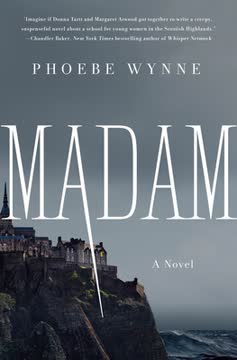
Rose Christie, a young Classics teacher, arrives at the remote and prestigious Caldonbrae Hall, a girls' boarding school perched on a Scottish peninsula. She is both excited and anxious, aware of the school's grandeur and her own outsider status. The school's traditions, architecture, and isolation are immediately overwhelming. Rose's relationship with her ailing, demanding mother adds to her sense of responsibility and displacement. As she settles into her new flat and prepares for her first term, she is struck by the school's insular atmosphere and the weight of its history. The staff and students are tightly bound by unspoken rules, and Rose senses that beneath the surface, something is deeply amiss.
The School's Unsettling Traditions
Rose's first days are marked by confusion and discomfort as she encounters Caldonbrae's strict codes of conduct and elaborate rituals. The girls' uniforms are Victorian, the staff are addressed only as "Madam" or "Sir," and the school's values—confidence, courteousness, charm, and courage—are enforced with an iron hand. Rose's attempts to connect with her students are met with resistance and mockery. She learns that the curriculum is less about academic excellence and more about grooming the girls for a specific, secretive future. The staff are complicit in maintaining the status quo, and Rose's questions are met with evasion or hostility. The school's isolation, both physical and social, becomes increasingly oppressive.
The Girls' Resistance
Rose's classes are a battleground. The girls, especially the Fourths and the Sixth Form, are sharp, rebellious, and quick to test boundaries. They undermine her lessons, question her credentials, and compare her unfavorably to her predecessor, Jane. Some, like Freddie, Daisy, and Nessa, show flashes of curiosity and vulnerability, but most are wary or openly antagonistic. Rose's efforts to teach them about classical heroines and critical thinking are met with skepticism. The girls' behavior reflects the school's toxic hierarchy, where power is wielded through subtle cruelty and alliances. Rose begins to realize that the girls are as much victims of the system as they are its enforcers.
Shadows of the Past
The shadow of Jane, the previous Classics teacher, looms large. Rose discovers Jane's belongings, cryptic notes, and the lingering trauma she left behind. Bethany, a troubled Sixth Form girl, fixates on Rose, following her and making disturbing accusations. The staff are tight-lipped about Jane's departure, hinting at scandal and mental breakdown. Rose's attempts to uncover the truth are stonewalled, and she is warned not to get too close to the students. The school's secrets are guarded fiercely, and Rose feels increasingly isolated. The past is not dead at Caldonbrae—it is a living force, shaping the present and threatening to consume the unwary.
The Allegation
Bethany accuses Rose of physical and emotional abuse, triggering a formal investigation. The school's response is swift and public: Rose's name is posted on the staff noticeboard, and she is shunned by colleagues and students alike. The process is humiliating and Kafkaesque, with Rose denied the chance to defend herself. The staff's loyalty to the institution outweighs any sense of justice. Rose's sense of self unravels as she is gaslit and ostracized. The girls' gossip intensifies, and Rose is forced to confront the precariousness of her position. The allegation becomes a tool of control, reinforcing the school's power over both staff and students.
The System Revealed
Through a series of revelations—conversations with colleagues, overheard meetings, and confessions from students—Rose learns the school's dark secret: Caldonbrae is not an academic institution, but a finishing school designed to prepare girls for arranged marriages with Britain's elite. The curriculum, discipline, and "Value" system are all geared toward making the girls desirable wives, with their futures negotiated by governors and suitors. Those who fail to meet expectations are punished, demoted, or consigned to "Compassion" Pathway—destined for lesser matches or to become staff themselves. The school's reach extends into families, finances, and even the care of dependents, ensuring total compliance.
Bonds and Betrayals
Rose forges tentative bonds with some students—especially Freddie, Daisy, and Nessa—and with Frances, a faculty member who becomes both confidante and betrayer. Frances, herself a product of Caldonbrae, is revealed to be the author of threatening letters meant to keep Rose compliant. The staff's complicity is exposed: some, like Emma and Anthony, rationalize their roles; others, like Vivien, enforce the system with zeal. Rose's attempts to resist are met with surveillance, blackmail, and emotional manipulation. The girls, too, are divided—some internalize the school's values, while others, like Bethany, are destroyed by them. The cost of survival is silence or complicity.
Ancient Women, Modern Chains
Rose's teaching of classical myths—Antigone, Dido, Lucretia, Medea, Medusa—becomes a subversive act. She draws parallels between the ancient women's struggles and the girls' own lack of agency. The stories of rebellion, sacrifice, and resistance resonate with Freddie, Daisy, and Nessa, who begin to question their destinies. Rose's lessons offer a glimmer of hope, but also highlight the enduring nature of patriarchal control. The school's rituals and punishments echo the violence and silencing of women throughout history. The girls' growing awareness is both empowering and dangerous, as the system punishes dissent with increasing severity.
The Price of Obedience
As Rose's resistance grows, so does the school's retaliation. Nessa is demoted and subjected to the humiliating punishment of having her head shaved. Bethany, after a series of breakdowns and betrayals, dies by suicide—her fate a warning to others. Jane, discovered in a drugged, broken state in the sanatorium, is a living ghost of what happens to those who defy the system. Rose is placed under constant surveillance, her movements and communications restricted. The threat to her mother's care and her own reputation is used to keep her in line. The cost of rebellion is made brutally clear.
The Fire Within
The mounting pressure leads to a desperate act. Inspired by Rose's lessons and their own suffering, Freddie, Daisy, and Nessa set fire to the Headmaster's office, intending to destroy the dossiers and evidence of the school's crimes. The fire quickly spreads, engulfing Caldonbrae Hall. Rose, torn between escape and responsibility, helps the girls and younger students flee through a secret tunnel. The blaze consumes the school, killing many staff, students, and guests gathered for the Summer Ball. The fire is both a literal and symbolic act of liberation and destruction, ending Caldonbrae's reign but leaving deep scars.
The Ball and the Blaze
The Summer Ball, the pinnacle of Caldonbrae's social calendar, becomes a scene of horror as the fire rages. The school's elite—governors, parents, suitors—are trapped and perish. The girls' carefully constructed futures go up in smoke, along with the building itself. Rose, wounded and traumatized, ensures the survival of her three closest students before disappearing into exile. The fire is reported as a tragic accident, but rumors of arson and institutional abuse swirl. The survivors are scattered, their lives forever altered. The system that bound them is destroyed, but the cost is immense.
Aftermath and Exile
In the aftermath, Rose flees to Rome, living under an assumed identity. She maintains contact with Freddie and Daisy, who struggle to build new lives in the shadow of their past. Nessa disappears, her fate uncertain. The truth about Caldonbrae is buried by the authorities, and the school's legacy is mythologized rather than condemned. Rose is haunted by guilt, loss, and the knowledge that the fight is not over. The girls' letters reveal ongoing struggles with identity, autonomy, and the lingering effects of their education. The world moves on, but the wounds remain.
The Legacy Endures
A decade later, Rose learns that Josie, one of the school's most ruthless students, plans to rebuild Caldonbrae and revive its traditions. The system, though burned, is not dead. Freddie urges Rose to join her in resisting the resurgence of the old order. The novel ends with Rose, older and wiser, preparing to fight again—this time with the knowledge that the struggle for women's freedom is ongoing, and that every generation must choose whether to submit or resist. The legacy of Caldonbrae, like that of the ancient heroines, is both a warning and a call to action.
Characters
Rose Christie
Rose is a young, passionate Classics teacher who arrives at Caldonbrae Hall seeking professional advancement and escape from her burdensome family ties. Intelligent, empathetic, and principled, she is quickly alienated by the school's archaic, oppressive culture. Rose's outsider status makes her both a target and a catalyst for change. Her relationships with students and colleagues are fraught with mistrust, but she forms deep bonds with a few girls and with Frances. Rose's psychological journey is one of disillusionment, resistance, and trauma. She is forced to confront her own powerlessness and complicity, ultimately choosing exile over submission. Her arc is a meditation on the cost of integrity in a corrupt system.
Frances Manders
Frances is the head of Languages and Rose's closest ally among the staff. A former Caldonbrae student herself, Frances is both a victim and an enforcer of the system. She is intelligent, witty, and deeply damaged, struggling with her sexuality and her sense of self-worth. Frances's affection for Rose is genuine but complicated by jealousy and fear. Her betrayal—writing threatening letters to keep Rose compliant—reveals the depth of her internalized oppression. Frances embodies the psychological toll of institutional abuse: loyalty, self-loathing, and the desperate need for connection. Her arc is tragic, as she cannot break free from the only world she knows.
Freddie List
Freddie is a sharp, charismatic Fourth Form student who becomes one of Rose's most trusted pupils. She is fiercely intelligent, questioning, and protective of her friends Daisy and Nessa. Freddie's journey mirrors Rose's: she moves from skepticism to resistance, ultimately taking bold action to destroy the school's records. Her courage is tempered by the knowledge of the risks, and she is haunted by the consequences. Freddie's relationship with Rose is one of mutual respect and inspiration. She represents the potential for change within the next generation, but also the dangers of awakening in a hostile environment.
Daisy Ayrton
Daisy is another of Rose's Fourths, notable for her intelligence, empathy, and loyalty. She is less confrontational than Freddie but equally perceptive. Daisy's family background is less privileged, making her more vulnerable to the school's hierarchies. She suffers a breakdown after the fire, illustrating the long-term psychological impact of institutional abuse. Daisy's arc is one of survival and tentative hope, as she seeks to rebuild her life and identity outside Caldonbrae's shadow. Her friendship with Freddie and Nessa, and her bond with Rose, are sources of resilience.
Nessa Saville-Vye
Nessa is the most fragile of the trio, marked by her demotion to House Clemency and the brutal punishment of having her head shaved. She is sweet, eager to please, and desperate for approval, making her an easy target for the school's cruelty. Nessa's fate—disappearance and silence after the fire—underscores the novel's themes of loss and the limits of rescue. Her relationship with Rose is poignant, as both are outsiders struggling to survive. Nessa embodies the cost of nonconformity in a system designed to crush difference.
Bethany deVere
Bethany is a troubled Sixth Form student whose obsession with Rose and previous attachment to Jane drive much of the novel's tension. She is isolated, mentally unstable, and ultimately destroyed by the school's punitive culture. Bethany's false allegation against Rose is both a cry for help and a weapon wielded by the institution. Her suicide is a turning point, exposing the system's brutality and the futility of resistance without solidarity. Bethany's arc is a warning about the dangers of unchecked power and the vulnerability of the marginalized.
Jane Farrier
Jane is the former Classics teacher whose mysterious departure and subsequent breakdown haunt Rose's tenure. She is a Compassion Pathway casualty, punished for forming an inappropriate bond with Bethany. Jane's fate—drugged and broken in the sanatorium—serves as a grim reminder of what happens to those who defy Caldonbrae's rules. Her presence is felt through her belongings, rumors, and the living testimony of Bethany and Frances. Jane's story is a meditation on institutional erasure and the silencing of dissent.
Vivien Johns
Vivien is the deputy head and chief architect of Caldonbrae's disciplinary regime. She is elegant, ruthless, and utterly loyal to the school's mission. Vivien's relationship with Rose is adversarial, marked by surveillance, gaslighting, and psychological warfare. She is the aunt of Josie, further entrenching her power. Vivien embodies the internalized misogyny and classism that sustain the institution. Her arc is one of unrepentant authority, ultimately destroyed in the fire she helped ignite.
Anthony Rees
Anthony is the head of History and initially a source of support for Rose. He is affable, respected, and seemingly progressive, but is ultimately revealed to be complicit in the school's abuses—including an affair with a student that results in scandal. Anthony's arc is a study in the seductions of power and the ease with which good intentions are corrupted. His downfall is both personal and symbolic, illustrating the dangers of moral compromise.
Josie Harrington
Josie is a cunning, ruthless student who manipulates both peers and staff to her advantage. She is Vivien's niece and inherits her aunt's zeal for control. In the epilogue, Josie emerges as the driving force behind the attempt to rebuild Caldonbrae, ensuring the cycle of abuse continues. Josie's arc is a chilling reminder that systems of oppression are perpetuated by those who benefit from them, and that the fight for justice is never truly over.
Plot Devices
Gothic Setting and Isolation
Caldonbrae Hall's physical isolation on a windswept Scottish peninsula is a classic gothic device, amplifying the sense of entrapment and foreboding. The school's labyrinthine architecture, secret tunnels, and storm-battered cliffs create a claustrophobic atmosphere where escape is nearly impossible. This setting is both literal and symbolic, reflecting the psychological imprisonment of the characters. The isolation also enables the school's abuses to go unchecked, as outside scrutiny is minimal and the community is self-policing.
Classical Allusion and Parallelism
Rose's teaching of classical heroines—Antigone, Dido, Lucretia, Medea, Medusa—serves as both a narrative device and a thematic lens. The girls' lives and fates are paralleled with those of the ancient women, highlighting the persistence of patriarchal violence and the cyclical nature of female resistance and suffering. These allusions provide both inspiration and warning, deepening the emotional resonance of the girls' struggles and Rose's own journey.
Unreliable Authority and Gaslighting
The school's leadership employs gaslighting, surveillance, and bureaucratic obfuscation to maintain power. Allegations are weaponized, records are falsified, and dissenters are silenced or institutionalized. The narrative structure reflects this instability, with Rose's perspective often undermined by contradictory accounts and shifting alliances. The use of dossiers, secret contracts, and public shaming reinforces the sense of paranoia and helplessness.
Foreshadowing and Symbolism
From the prologue's description of a fire to the recurring imagery of locked doors, broken objects, and storms, the novel is rich in foreshadowing. The gradual revelation of the school's true purpose is mirrored by the slow accumulation of symbolic details—Jane's handkerchief, the ceramic owl, the ring of keys. The fire that ultimately destroys Caldonbrae is both a literal and metaphorical cleansing, anticipated by the mounting tension and acts of rebellion throughout the narrative.
Epistolary Elements and Multiple Perspectives
The use of letters—threatening, confessional, or supportive—serves to connect characters across distances and time. These documents provide insight into hidden motives, secret alliances, and the broader impact of Caldonbrae's legacy. The epilogue's shift to a future perspective underscores the persistence of the struggle and the unfinished nature of the fight for justice.
Analysis
Madam is a chilling, modern gothic novel that interrogates the enduring power of patriarchal institutions and the ways in which tradition, privilege, and complicity conspire to oppress women. Through the lens of a remote, elite boarding school, Phoebe Wynne exposes the mechanisms by which girls are groomed, silenced, and sacrificed for the maintenance of social order. The novel's use of classical allusion is both homage and critique, drawing uncomfortable parallels between ancient and contemporary forms of female subjugation. Rose's journey from naïve idealist to traumatized exile is a powerful meditation on the costs of resistance and the limits of individual agency. The fire that consumes Caldonbrae is both cathartic and tragic, offering no easy resolution but rather a warning about the resilience of oppressive systems. The epilogue's suggestion that the cycle may begin anew is a call to vigilance and solidarity, reminding readers that the fight for women's autonomy and dignity is ongoing. Madam is ultimately a story about the necessity—and the peril—of speaking truth to power, and the enduring hope that even in the darkest places, rebellion can spark change.
Last updated:
Review Summary
Madam by Phoebe Wynne receives deeply polarizing reviews, with an average rating of 3.24/5. Set in a remote Scottish boarding school in the 1990s, the novel follows Rose Christie, a young Classics teacher who discovers the institution's sinister purpose: grooming girls to become wives for wealthy men. Reviewers praised the atmospheric Gothic setting and feminist themes but criticized the slow pacing, predictable plot, weak protagonist, problematic representation of Japanese students, and gratuitous shocking content. Many found Rose frustratingly passive despite opportunities for action. While some readers loved the dark academia atmosphere and mythology integration, others felt the execution fell flat.