

Plot Summary
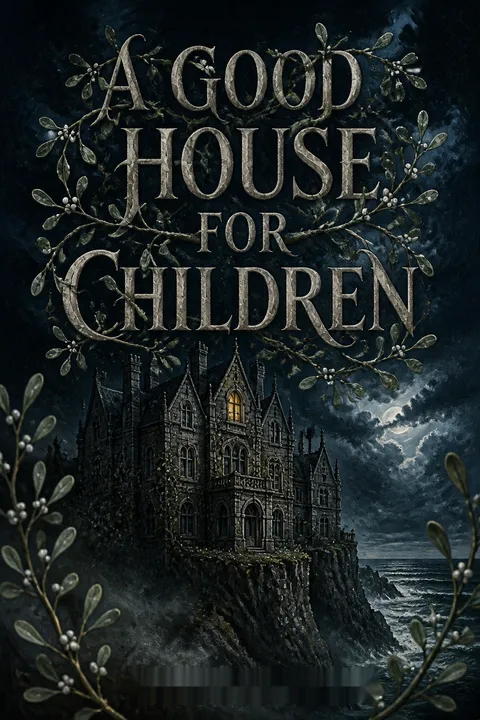
The House on the Cliff
Sam McGrath, nearly four, has stopped speaking, and his mother, Orla, worries that her husband Nick sees their son as a problem to solve. Nick proposes moving from Bristol to the Dorset coast, near his parents, believing a new environment may help. Orla agrees, though she recognizes how often Nick’s certainty has shaped her choices and how little room remains for her painting.
The Reeve, a vast Regency house perched above the sea, seems beautiful and full of promise. Yet Nick plans to work in Bristol during the week, leaving Orla with Sam, baby Bridie, and a house that needs extensive repairs. She accepts the arrangement before she has decided whether she truly wants it.
The move begins as a proposed remedy for Sam, but it also exposes the family’s unequal distribution of agency. Nick turns a complex developmental difference into a problem that a new setting might correct; Orla recognizes his assumption without quite opposing it. Her consent is real, but it has been shaped by years of adapting to his confidence. The Reeve therefore arrives already entangled with marriage: its isolation will intensify not only supernatural uncertainty but also the ordinary loneliness Orla has agreed to inhabit.
A House That Answers
Inside The Reeve, Orla finds cold rooms, unreliable light, and a nursery door that will not open from the passage connecting it to her bedroom. A dead bird breaks through an attic window; later, she hears scratching behind the boarded nursery fireplace and glimpses a small, upright shape in the garden.
At a village café, gallery owner Claude welcomes her and offers to show her paintings, but warns that residents rarely feel at ease in the house. Orla tries to preserve Sam in photographs and begins sketching him, only for the Polaroids to look unnaturally old. Sam draws children around a blue circle in the garden and insists, by gesture, that they live there. Orla cannot explain how he knows about the buried pond.
The house first unsettles Orla through ordinary failures of perception: warped glass, bad light, strange sounds, and an inaccessible door. That ambiguity matters because it lets her doubt herself before she can name a threat. Sam’s drawings then make the uncertainty harder to dismiss. His silence, previously treated as a family concern, becomes a form of knowledge that adults cannot access. The Reeve does not simply frighten its residents; it makes them question which of them can see the place accurately.
Lydia’s Summer Vigil
In 1976, Lydia, a young live-in caregiver from London, helps Sara raise four children at The Reeve after Sara’s husband, Doug, dies. Sara keeps the children out of school for a year and retreats into work, leaving Lydia to manage the twins, Tabitha and Clover, sensitive Philip, and baby Owen.
Lydia notices the twins whispering in a private language, hears footsteps in the attic, and finds a clean dead bird in a chimney. The twins sing an unfamiliar rhyme, while Philip confides that they play with a boy who lives in the garden. Lydia later sees a child’s hand reach toward the twins in a tree. The village men dismiss talk of ghosts, but describe an earlier girl who drowned in the garden pond.
Lydia’s practical care makes her the household’s most attentive witness, but not its most powerful adult. She sees the children’s distress and the house’s disturbances while Sara’s grief and work pull her away. This imbalance gives the haunting a social texture: the danger thrives where responsibility is present without authority. Philip’s report of an unseen playmate also echoes Sam’s drawings, linking the two periods through children who perceive a presence their caregivers are not prepared to acknowledge.
Relics Beneath the Garden
Toby Tradgett, the local gardener Nick hires, finds the outline of an old pond beneath the overgrown lawn. In its soil he uncovers a tiny gold christening bracelet, and nearby he spots a headless garden statue.
The discoveries disturb Orla because Sam has already drawn the pond and its accompanying children. When chimney sweeps remove the nursery’s boarded fireplace, a small, ancient child’s shoe falls out; they explain that hidden shoes were once used as household protection. Orla keeps both objects, though she dislikes touching them.
Claude eventually confirms that a child drowned in the pond early in the century and that another child died at The Reeve in the 1970s. He calls the stories old village gossip, but Orla can no longer treat the house as empty history.
The finds give physical weight to what had seemed like private unease. The bracelet connects a child’s body to the garden, while the shoe suggests that earlier occupants also feared what might enter a home. Their meanings remain uncertain, which is part of their force: protection and warning occupy the same object. The buried pond converts local folklore into a visible landscape, and Sam’s drawings become more than childhood invention. Orla is now caught between the comfort of rational explanations and evidence that refuses to stay buried.
The Windows Take Flight
As winter approaches, a flock of birds hurls itself against The Reeve’s tall windows, leaving the gravel carpeted with bodies. Toby gathers and disposes of them while Orla tries to comfort Sam, who seems increasingly absorbed by unseen companions.
One night she hears him sing part of an old rhyme about a broken bridge and falling into water, then he denies having spoken. Nick dismisses the episode and presses for Sam to start school. Orla returns to painting, but her seascapes darken beyond her intention, and a portrait of Sam becomes feverishly distorted.
At her gallery opening, she glimpses two small figures inside a landscape, tears into the canvas, and cuts her foot on broken glass. The paintings sell, but the opening ends in alarm and humiliation.
The birds make the house’s optical danger public: glass that looks like open sky becomes a lethal barrier. The episode also sharpens the difference between Orla and Nick. She reads Sam’s words and her altered paintings as connected warnings; Nick seeks an ordinary explanation and a developmental solution. Orla’s art becomes a medium through which the house seems to act, but that apparent insight costs her professional composure. Her work restores a neglected part of her identity even as it exposes how vulnerable she has become.
Philip Falls Ill
In 1976, Philip develops a high fever and Lydia stays beside him while Sara struggles to care for the rest of the family. Sara gathers what she mistakes for elderflower and makes Philip a drink; Dot recognizes the plant as poisonous hemlock before he consumes much.
Philip’s condition worsens anyway. The doctor diagnoses scarlet fever and takes him to hospital, where Lydia cannot accompany him. Sara later returns with the news that Philip has died from sepsis. Lydia is devastated, while Sara withdraws from her surviving children.
In the days that follow, Lydia hears a child moving through the house and sees a woman at Owen’s cot. The twins speak of a sad woman who appears in the garden, making Lydia’s private fears impossible to dismiss as a single trick of light.
Philip’s illness is devastating precisely because it is not supernatural: a real infection, medical uncertainty, and a preventable near-mistake converge without yielding a villain. Lydia’s vigilance cannot guarantee safety, and Sara’s attempt to nourish her son almost adds another danger. The episode dismantles the comforting idea that nature is inherently benevolent, a belief Sara brought with her from London. Grief then makes the house’s uncanny presence harder to separate from the family’s actual loss.
Sam Climbs Toward Them
In 2018, Orla finds Sam circling the garden trees as if playing hide-and-seek with someone she cannot see. When he climbs a monkey puzzle tree above the excavated pond, she glimpses pale children sitting among its branches. Sam falls into the pond’s soft earth and breaks his arm. Toby gets him to hospital, but Nick responds by blaming Orla for failing to watch their son closely enough.
Orla insists that Sam seemed to be following someone, yet she cannot prove it. Toby later explains that his grandmother made him promise not to enter the house because she believes The Reeve attracts dangerous spirits. Nick’s anger and refusal to move leave Orla feeling both blamed and trapped, while Sam’s silence deepens again.
Sam’s fall turns the supernatural dispute into a question of parental competence. Orla may have seen the children, but the injury is concrete, and Nick uses it to reinforce his claim that she is failing at the work he has left her to do. Toby’s family warning lends the village’s fear new credibility without resolving its cause. The scene also complicates Sam’s mutism: his silence is not simply absence, but a boundary around experiences his parents cannot share or interpret.
Lydia Loses the House
After Philip’s death, Lydia tells Sara about the apparitions, the unexplained sounds, and the twins’ invisible companion. Sara rejects her account, accusing Lydia of frightening the children.
Lydia has already tried to protect Owen by tying sewing scissors above his cot, following Dot’s mother’s local customs; Sara discovers them and throws them down the stairs. She then dismisses Lydia and says the twins will be sent to boarding school. Lydia leaves the children behind, though she fears Sara cannot care for them alone.
Before departing, she follows what she believes is Philip to the pond and finds only a strange boy watching her from across the water. Sara, meanwhile, begins to speak of hearing the house and seeing her dead son, a grief that has fused with the place.
Lydia’s dismissal is a betrayal disguised as discipline. Sara cannot bear Lydia’s testimony because accepting it would mean admitting both that the children may be endangered and that Sara herself is losing control. The scissors embody this conflict: Lydia’s improvised protection looks reckless to Sara, while Sara’s authority has already failed to keep the family emotionally intact. Lydia’s final vision of a boy resembling Philip suggests that grief and haunting can share the same image without becoming the same thing.
Orla’s Work Becomes a Wound
Orla’s sleep fractures, and she begins to move through the house at night without remembering it. She paints canvases by picking holes in them, trying to represent the way the past and present seem to press together. During a family trip to the beach, she falls asleep and wakes to find Sam far out in the water; she reaches him just before he drowns.
Rather than tell Nick how close they came to disaster, Orla lets Sam believe the blame is his. At home, the paintings and her isolation continue to worsen. When Toby sees two children sitting in Sam’s room, he falls from the window and is taken to hospital in a coma. Orla cannot leave the house until Nick returns, and guilt joins fear as another force binding her there.
Orla’s exhaustion is not merely atmospheric; it changes what she can notice and what she can remember. Her near-drowning of Sam exposes the cost of being left alone, while her choice to let him carry the blame protects her from Nick’s judgment at her son’s expense. The canvases make her an interpreter of temporal overlap, but they also register her unraveling. Toby’s fall confirms that Orla is not the only witness, yet it offers no reliable path from seeing the danger to stopping it.
Sara Enters the Pond
After Lydia has been forced from The Reeve, the twins escape to the village’s Midsummer gathering. Lydia goes back to retrieve them and finds the house overgrown with mistletoe, the rooms filthy, and Sara nowhere inside. Owen cries from an open bedroom window.
Following Sara’s discarded clothes through the garden, Lydia reaches the pond and finds Sara floating beside the cherub. A tall, veiled woman walks into the water and disappears beneath it. Lydia cannot tell whether she has witnessed a supernatural figure, a grieving mother’s final act, or both.
The children are left without either of the women who had cared for them, and Lydia’s private conviction that the house holds something real can no longer be separated from the losses it has witnessed.
Sara’s death closes the earlier timeline with an image that resists a single explanation. The pond is both a literal site of childhood danger and a container for the family’s grief, while the veiled woman may belong to local legend, shared perception, or Lydia’s traumatized mind. The overgrown house reflects a household abandoned by ordinary care. By leaving the supernatural unresolved, the scene refuses to turn loss into a tidy ghost story: the dead remain present, but their presence does not repair what the living have failed to protect.
The White Lady Returns
At the village Midsummer festival, Orla watches Claude take part in a procession of men dressed as stags. A veiled figure follows them, identified locally as the Maiden of the Water. Before Orla can make sense of the sight, Toby’s grandmother attacks her, blaming her for Toby’s fall. Nick and Toby’s father pull the elderly woman away.
Back at The Reeve, Orla finds Sam’s portrait altered: its bright child has become gaunt and shadowed, with pale fingers emerging behind him. The next day, she discovers Bridie wedged between the landing rails, suspended over the hall floor, while Sam tries to pull her free. Orla rescues the baby. Nick, convinced Orla cannot keep the children safe, takes Sam and Bridie to his parents’ house.
The procession turns village folklore into public ritual, but ritual offers no protection from ordinary violence: Toby’s grandmother converts her fear into an assault on Orla. At home, the transformed portrait makes the danger intimate, and Bridie’s near fall shows that the house’s threat is not confined to Sam. Nick’s decision to remove the children answers a genuine crisis while deepening Orla’s abandonment. The same event can therefore be read as rescue, marital rupture, and the house’s successful isolation of its remaining occupant.
Orla Walks Into Water
With Nick and the children gone, Orla stays at The Reeve and finishes a final series of canvases pierced with holes. Mistletoe spreads through the rooms, and she hears footsteps, children’s voices, and marbles on the stairs. She believes the house has allowed her to complete the work before claiming her in return. Orla leaves the front doors open and walks barefoot down to the shore.
She enters the sea, imagining she will return to the house as an unseen presence and remain close to her family. Someone calls from behind and reaches for her hair beneath the water. The book does not confirm whether Orla is pulled to safety or whether the house’s cycle has taken her; her last choice is clear, its outcome is not.
Orla’s final walk is at once an act of agency and a surrender shaped by isolation. She chooses the sea rather than a life she believes will require returning to Nick’s family without her children, yet her imagined afterlife preserves the very attachment she cannot release. The house’s apparent bargain with her art recasts creative recovery as extraction: her work flourishes while her ordinary bonds fail. The hand in the water prevents certainty, leaving the reader inside the same unstable boundary between rescue and haunting that has governed Orla’s experience.
The Reeve Starts Again
In 2023, Jenny and Paul move into The Reeve with their young daughter, Sadie, and another baby on the way. They have spent their savings and taken on a mortgage because they want their children to grow up with room and countryside around them. Jenny already feels an uncanny familiarity with the house. From the bedroom window, she spots what looks like a woman moving through the long grass near the unfinished pond.
Sadie interrupts her, and when Jenny looks again the figure has vanished. The family continues settling in. After they leave the room, the door to the nursery passage, once stubbornly shut for Orla, opens quietly and closes again. The house has acquired new occupants, but its old signs have not gone with the last family.
The new family’s arrival makes the ending cyclical rather than conclusive. Jenny and Paul repeat the hope that a spacious home can offer their children a better life, while Jenny’s glimpse and the moving nursery door suggest that The Reeve’s history survives each change of ownership. The scene does not explain the woman or identify the house’s next victim. Instead, it shows how easily ordinary longing can make a place feel like home before its past becomes visible.
Analysis
The Reeve’s deepest horror is not simply that it may be haunted. It is that its occupants cannot agree on what counts as evidence, and the people most responsible for children are often the least able to act together. Orla sees patterns in Sam’s drawings, altered paintings, and the house’s physical remains, but exhaustion and isolation make her perceptions easy for Nick to dismiss. Lydia sees the earlier family unravel and finds that her practical care gives her responsibility without authority. The two timelines therefore echo without becoming identical: each household brings its own grief and expectations, yet the children encounter signs that the adults cannot comfortably interpret.
The novel also challenges the fantasy that a move to the countryside automatically means safety. Sara imagines nature as restorative, Nick imagines space as a cure, and Orla initially imagines solitude as freedom. The Reeve exposes the costs hidden in each hope. A pond can be beautiful and dangerous; a garden can offer play while concealing a history of loss; a large home can shelter a family while isolating its caregiver. Natural hazards and supernatural possibilities sit side by side, refusing the easy distinction between a safe world and an uncanny one.
Orla’s return to painting is especially ambivalent. Art revives a self that marriage and motherhood have pushed aside, but the work becomes entangled with the house’s apparent demands. Creativity gives her a language for temporal connections, yet it does not restore her relationships or guarantee her children’s safety. The final image of a new family entering the house extends this tension beyond Orla’s story. People inherit places along with their hopes, but a fresh beginning does not erase the lives already folded into the walls. The book’s unease comes from that continuity: the past is not merely remembered; it may still be looking through the glass.
Review Summary
People Also Read



Characters
Orla McGrath
The isolated artistOrla is an Irish painter, Nick’s wife, and the mother of Sam and Bridie. Observant and imaginative, she has spent years adapting herself to other people’s expectations, including the evangelical rules of her childhood and Nick’s decisive plans for their family. Her work is not a hobby but a means of understanding and expressing experience, which makes its return emotionally vital. Orla is deeply attuned to her children, especially Sam, yet isolation, exhaustion, and self-doubt strain her confidence in her own perceptions. Her central tension is between accommodation and self-possession: she wants to care for those she loves without disappearing into the roles they need her to fill.
Nick McGrath
The certain providerNick is Orla’s husband and the father of Sam and Bridie, a successful entrepreneur who measures care through practical solutions. He wants Sam to thrive and believes the family’s move to Dorset will help, but he often decides what is best before asking what Orla wants. His absences for work leave her managing the children and the house, even as he sees himself as the provider making that life possible. Nick is affectionate and capable of generosity, yet uncomfortable with uncertainty and inclined to interpret distress as a problem to be corrected. His relationship with Orla reveals how love and unequal authority can coexist.
Sam McGrath
The silent observerSam is Orla and Nick’s young son, who stops speaking before the family moves to The Reeve. He communicates through gestures, drawings, touch, and a close attention to the people around him. His silence is not presented as a simple mystery for his parents to solve; it is part of how he navigates a world that often places demands on him. Sam adores his sister and forms a strong bond with Toby, while his parents differ over how much to encourage speech. His images of children and a pond make him a sensitive observer of the house’s hidden history.
Bridie McGrath
The youngest McGrathBridie is Orla and Nick’s baby daughter and Sam’s younger sister. Lively, physical, and dependent on adult care, she draws Orla into the everyday work of feeding, carrying, and soothing. Sam is tender with her from infancy, and their bond gives the family moments of warmth amid the pressure of The Reeve. Bridie’s vulnerability also makes the house’s unsafe spaces impossible to treat as abstract concerns.
Lydia
The devoted caregiverLydia is a young Londoner who lives and works at The Reeve as Sara’s caregiver and housekeeper. Practical, funny, and unused to asking for what she wants, she becomes especially close to Philip, whose sensitivity she understands better than his mother does. Lydia’s care is generous but not selfless in a simple way: she longs for companionship and recognition, and the family’s dependence gives her a place that her precarious life elsewhere cannot. As the house unsettles her, she must decide whether her own perceptions deserve trust, even when the people with authority dismiss them.
Sara Robinson
The grieving motherSara is Doug’s widow and mother to Philip, Tabitha, Clover, and Owen. Before grief overtakes her, she is a sociable, imaginative parent who values freedom and dislikes rigid rules. After Doug’s illness and death, she withdraws into work and tries to protect her family by moving them to the countryside. Her desire for a fresh start is genuine, but it can become a way to avoid the demands of parenting and the pain she cannot process. Sara’s dependence on Lydia and her changing responses to the children reveal a woman struggling to reconcile love, exhaustion, and control.
Philip Robinson
The overlooked eldestPhilip is Sara and Doug’s thoughtful eldest child. Careful, studious, and easily hurt by teasing, he misses school and longs for steady attention after his father’s death. Lydia recognizes his need for reassurance, while his mother often reads his sensitivity as fussiness. His observations about the twins’ play and the boy in the garden matter because he notices what adults overlook.
Tabitha Robinson
One half of the twinsTabitha is one of Sara’s lively, close-knit twins. She and Clover thrive outdoors and invent private games that leave their more cautious brother feeling excluded. Tabitha’s confidence and closeness to her sister make her difficult for adults to supervise, but her play also exposes how children build their own world when parental attention is scarce.
Clover Robinson
One half of the twinsClover is Tabitha’s twin and partner in adventure. More than once, the girls answer together, as if their shared language and habits form a small private society. They are not simply mischievous: their wildness grows in a household where grief has altered the rules and their mother is increasingly absent.
Dot
The blunt local allyDot is the Robinsons’ local housekeeper and cook, and Lydia’s closest friend in Dorset. Warm, irreverent, and knowledgeable about the practical dangers of rural life, she offers Lydia companionship and help without pretending that everything can be fixed. Her understanding of plants and local customs provides a grounded counterpoint to Sara’s idealized view of nature.
Toby Tradgett
The gardener and witnessToby is the local gardener hired by Nick to tame The Reeve’s overgrown grounds. Good-humoured and capable, he becomes a trusted adult presence for Sam and a reassuring companion for Orla. He is caught between his affection for the McGraths and his family’s long-standing fear of the house. Toby’s practical kindness never makes him dismiss Orla’s concerns, even when he cannot explain them.
Alice
The generous gallery ownerAlice runs the village gallery with her husband, Claude, and encourages Orla to return to exhibiting her work. Energetic and generous, she offers friendship as well as professional opportunity. Her gift of a hag stone reflects a local blend of affection and folk belief, though she does not share Orla’s certainty about the house.
Claude
The wary art dealerClaude owns the village café and gallery with Alice. He welcomes Orla and recognizes her work, giving her a path back into public life as an artist. Though he dismisses much of the village’s superstition, he knows The Reeve’s reputation and offers fragments of its history.
Eva
Nick’s welcoming motherEva is Nick’s mother and a kind grandmother to Sam and Bridie. She gives Orla a sense of the affectionate family welcome she lacked in her own childhood, though she tends to support Nick’s view of how the household should function.
George
Nick’s affectionate fatherGeorge is Nick’s father and a warm, playful grandfather. His ease with Sam and the family’s Christmas gathering offers Orla a brief picture of domestic comfort and belonging.
Doug Robinson
The absent family patriarchDoug is Sara’s late husband and father to her four children. A firm, involved parent, he once balanced Sara’s permissiveness with clear expectations. His absence shapes the family’s move, Sara’s grief, and Lydia’s role as a source of stability.
Jenny
The hopeful new ownerJenny moves into The Reeve in 2023 with her husband, Paul, their daughter, and another baby on the way. Having grown up with little space, she feels fortunate to own the house and imagines a freer childhood for her children. Her eagerness makes her first glimpse of a woman in the garden especially unsettling.
Paul
Jenny’s practical husbandPaul is Jenny’s husband and Sadie’s father. He helps the family make the financial leap to The Reeve and approaches its renovation as a project to organize. His confidence in their new home mirrors the optimism with which other families have entered it.
Sadie
The sensitive new arrivalSadie is Jenny and Paul’s six-year-old daughter. She grieves the friends and bedroom she leaves behind, and her mother describes her as unusually tender toward small, easily overlooked things. Her move brings a child’s vulnerability back into The Reeve.
Toby’s grandmother
The village believerToby’s grandmother believes The Reeve attracts dangerous forces and makes him promise to stay out of the house. Her fears reflect the village’s long memory and its mixture of folklore, caution, and distrust.
Plot Devices
The Reeve
A house that remembersThe isolated house is both setting and active pressure on its occupants. Its height, vast rooms, distorted windows, hidden spaces, and buried pond make it difficult to see or navigate with confidence. Across decades, families arrive hoping for safety, freedom, or a fresh start, while the house appears to draw their private vulnerabilities into view. Its supernatural agency remains uncertain, but its physical features repeatedly shape danger and perception.
The buried pond
A threshold beneath the lawnThe garden pond links the house’s generations and its stories of children lost in water. It is filled in before Orla’s family arrives, yet its outline remains beneath the soil and Sam draws it without being told it exists. Excavation reveals objects associated with a child, while the old waterline persists in dreams, memories, and local ritual. The pond turns the garden from a safe place to play into a boundary between what the living can see and what they cannot.
The children’s rhyme
A warning passed alongThe twins sing a rhyme about a broken bridge and falling into water; decades later, Orla hears Sam sing part of it. The song passes between children who do not share a household or a time, binding their play to the pond’s history. Its meaning is never fully explained, which keeps it from functioning as a simple clue. Instead, the rhyme makes children’s voices a channel through which the house’s past intrudes on the present.
Orla’s paintings
Art as unstable evidenceOrla’s paintings begin as a return to a neglected artistic life, then acquire details and moods she does not intend. Her portraits and landscapes seem to preserve or distort what she sees, and the canvases eventually become a way to explore connections between past, present, and future. The art is both evidence and interpretation: it may record the house’s influence, but it also reflects Orla’s exhaustion and fear. Its changing surface prevents either explanation from settling completely.
The protective objects
Warnings mistaken for charmsThe child’s shoe hidden in the chimney, the christening bracelet in the garden, and Alice’s hag stone carry ideas of protection across different lives. The shoe was concealed as a traditional safeguard; the bracelet ties a child to the pond’s soil; the hag stone is meant to help its owner see or ward off danger. None offers Orla dependable control. Together, the objects show how people turn fear into something they can hold, while leaving open whether a charm protects, records, or simply draws attention to what is already present.
Download PDF
Download EPUB
.epub digital book format is ideal for reading ebooks on phones, tablets, and e-readers.








