Plot Summary
Unwanted Bride, Unseen Debt
Orabella, a young Black woman, lives as a tolerated burden in her uncle's home, her presence a constant reminder of debts and obligations. She is overlooked by society, her prospects dimmed by both her race and her family's waning patience. When a mysterious, unkempt man named Elias Blakersby arrives, Orabella learns her uncle's debts have made her a commodity. The family's coldness and the transactional nature of her future are clear: her marriage is not for love, but for the settling of accounts. Orabella's sense of self-worth is battered, her agency limited to small acts of resistance—like dressing plainly to discourage suitors. Yet, even in her resignation, a flicker of hope and curiosity persists, setting the stage for the strange bargain to come.
A Stranger's Proposal
Elias, rough in appearance but oddly gentle, proposes marriage to Orabella, bypassing her uncle's authority and speaking directly to her. He reveals he has seen her before, watched her from afar, and now, with her uncle's debt in hand, he can finally claim her. The proposal is abrupt, the timeline rushed—he wants to marry her the next morning and leave the city at once. Orabella, caught between the threat of worse fates and the strange allure of Elias's attention, agrees. The transaction is sealed with a kiss, and Orabella is left reeling, uncertain whether she is being rescued or sold. The emotional weight of her decision is heavy, but the alternative—remaining unwanted, or being bartered again—seems worse.
Bargain Sealed in Shadows
The wedding is a perfunctory affair, attended only by Orabella's aunt and uncle, a registrar, and Elias. Orabella is given a plain gold ring and told to pack lightly—her new life will be provided for. The ceremony is transactional, her uncle's relief palpable as he receives payment and washes his hands of her. Orabella's emotions are a tangle of fear, resignation, and a strange, budding hope. As she leaves her childhood home, she is both liberated and exiled, her identity now tied to a man she barely knows. The journey to Korringhill, Elias's ancestral home, begins with a sense of finality and the faintest glimmer of possibility.
Journey to Korringhill
Orabella's journey is marked by discomfort and uncertainty. The countryside is alien, the carriage ride long and silent. Elias oscillates between charm and distance, revealing little of himself. Orabella's attempts at conversation are met with evasions, and her questions about her new home go largely unanswered. The landscape grows wilder, the sense of isolation deepens. When they finally arrive at Korringhill, the manor is imposing and decayed, its grandeur faded. Orabella is struck by the strangeness of her new world—a place where the rules are different, and where she is both guest and prisoner.
The House of Ruin
Korringhill is a labyrinth of dust, rot, and forgotten splendor. Orabella is introduced to Mrs. Locke, the housekeeper, and shown to a room that is curiously well-appointed compared to the rest of the manor. The rest of the house is a mausoleum of abandoned rooms and broken furniture. Orabella meets her new in-laws: Hastings, the patriarch, who seems more corpse than man, and Claresta, Elias's beautiful but eerily silent sister. The family's coldness is palpable, their interest in Orabella clinical. She is told she will be a companion for Claresta, but the true nature of her role remains shrouded in ambiguity. The house itself feels alive, watching, waiting.
Family of Ghosts
Orabella's first night at Korringhill is a fever dream of candlelight, strange food, and a family that seems more beast than human. The wedding feast is a grotesque parody, with laughter that bites and gifts that horrify—a dead fawn, presented as a token of welcome. Orabella is paraded before the family, her every move scrutinized. The boundaries between reality and nightmare blur as she is swept into their rituals. Elias's touch is both comfort and threat, his affection tinged with something darker. Orabella senses that she is not the first bride to be brought here, and that the house—and its family—are hungry for something she cannot name.
The Wedding Night's Feast
The aftermath of the feast leaves Orabella disoriented and ill. She wakes in her room, unsure of what transpired, her body marked by bruises she cannot explain. Elias is alternately tender and evasive, insisting nothing happened, yet the evidence of violence lingers. Orabella's sense of self begins to erode, her memories unreliable. The house's routines are imposed on her: locked doors at night, a personal maid, a schedule she must follow. The sense of being watched, of being prey, intensifies. Orabella clings to small acts of agency—writing letters, exploring the house—but the walls close in.
Locked Doors, Hidden Keys
Orabella discovers the house's secret passages, hidden doors that connect rooms and allow unseen movement. She learns that her letters are not being sent, her communications with the outside world intercepted. The staff are complicit, their loyalty to the family absolute. Orabella's only friend is Sloane, her maid, who tries to warn her of dangers she cannot name. The sense of conspiracy grows, as does Orabella's paranoia. She glimpses Claresta wandering the halls at night, her behavior increasingly erratic. The house is a trap, and Orabella is its latest captive.
Sister in the Window
A violent episode shatters the fragile peace: Orabella witnesses Claresta in the throes of madness, bloodied and howling, her body marked by inexplicable wounds. The family's response is clinical, almost ritualistic—they sedate Claresta, clean the blood, and return to their routines. Orabella is both horrified and implicated, her own injuries mirroring Claresta's. The truth begins to emerge: madness runs in the family, and Orabella's role is to provide new blood, to break the cycle. The house's hunger is not just metaphorical—it is literal, and Orabella is both sacrifice and savior.
The Garden's Wild Heart
Orabella finds solace in the overgrown garden, a space of wild beauty and hidden danger. Her friendship with Sloane deepens, offering a brief respite from the house's oppression. Together, they create a fairy village from broken dishes, a small act of creation in a world of decay. But the garden is also a place of secrets—a graveyard for lost children, a site of past violence. Orabella's attempts to assert control are met with resistance from the staff and the family. The boundaries between inside and outside, safety and peril, blur further.
Friendship and Foxes
Sloane tries to help Orabella escape, enlisting the help of Cullen, a sympathetic servant. Their plan is discovered, and the consequences are brutal: Cullen is maimed, Sloane is later found dead, her body broken and discarded. Orabella is consumed by guilt and grief, her last connection to kindness severed. The family's true nature is revealed in their indifference to Sloane's death, their focus solely on Orabella's health and fertility. The house's appetite is insatiable, and Orabella is left utterly alone.
Dinner with Beasts
A second family gathering exposes the full horror of Orabella's situation. The family is a pack of predators, their civility a thin veneer over animal hunger. Orabella is inspected, fed, and paraded, her body and mind invaded by their rituals. The women of the family are complicit, grooming her for her role as broodmare. The men are violent, their interest in her purely physical. Elias is both protector and jailer, his love a form of possession. Orabella's sense of self is nearly obliterated, her only hope the possibility of escape.
The Bride's Awakening
Orabella's resistance erupts in violence—she slaps Alice, one of the aunts, and is both punished and celebrated for her spirit. The family delights in her defiance, seeing it as proof of strong blood. Orabella realizes that her only value is as a vessel for their legacy, her individuality irrelevant. The house's rituals escalate, culminating in a night of terror where she is drugged, paraded, and nearly sacrificed. The boundaries between self and other, human and beast, dissolve entirely.
The House's Secret Passages
A final act of rebellion—Claresta sets the house on fire, her rage consuming the family and the manor alike. Orabella flees through the secret passages, pursued by Lovell, the true master of the house, and by the ghosts of all who came before. The house collapses around her, the flames devouring generations of rot and violence. Orabella escapes into the garden, the dawn breaking over the ruins. The family is destroyed, their legacy reduced to ash. Orabella is free, but forever changed.
Madness in the Blood
Orabella is found by neighbors and taken in by distant relations. She recovers slowly, her body and mind marked by trauma. The world outside Korringhill is indifferent, her story reduced to gossip and scandal. Orabella's pregnancy is both a curse and a hope—a chance to break the cycle, or to repeat it. She is haunted by nightmares, her sense of self fractured. The past cannot be escaped, but it can be survived.
The Master's Return
Elias, changed and chastened, finds Orabella in her new life. He begs forgiveness, promising honesty and a new beginning. Orabella is wary, her trust shattered, but the bond between them endures. They agree to build a new life together, free from the horrors of Korringhill. The scars remain, but so does the possibility of love. The cycle is not broken, but it is transformed.
Fire and Flight
The fire at Korringhill is both an ending and a beginning. The house, the family, and their monstrous legacy are consumed. Orabella's escape is hard-won, her survival a testament to resilience and luck. The world outside is no less dangerous, but it is at least her own. The story ends with Orabella poised between past and future, her identity forged in fire and blood.
Ashes and Aftermath
Orabella settles in a distant city, her child growing within her. The past lingers in scars and nightmares, but she is determined to create something new. Elias returns, and together they face the uncertain future. The lessons of Korringhill are never far away: love is dangerous, family is a curse and a blessing, and survival is its own kind of victory. Orabella's story is one of endurance, transformation, and the refusal to be consumed.
Characters
Orabella Mumthrope
Orabella is a young Black woman, orphaned and raised by relatives who see her as a burden. Marked by shyness and a longing for acceptance, she is both vulnerable and quietly defiant. Her journey is one of forced transformation: from unwanted niece to bartered bride, from passive observer to active survivor. Orabella's psychological arc is defined by her struggle to maintain a sense of self amid overwhelming forces—racism, misogyny, and the predatory appetites of her new family. Her relationships are fraught: she is both desired and despised, cherished and consumed. Orabella's development is a study in endurance, her ultimate victory not in triumph but in survival and the reclamation of her own story.
Elias Blakersby (Robinson)
Elias is a man of contradictions: outwardly rough, inwardly educated and sensitive, yet deeply complicit in the family's monstrous legacy. He is both Orabella's rescuer and her jailer, his love a form of possession. Elias's psychological complexity lies in his self-loathing and his desperate need for connection. He is shaped by a family that values blood above all, and his actions oscillate between tenderness and violence. His relationship with Orabella is fraught with power imbalances, secrets, and genuine affection. Elias's development is a slow reckoning with his own complicity and a final, desperate attempt at redemption.
Claresta Blakersby
Claresta is the beautiful, silent sister-in-law whose presence haunts Orabella from the start. She is both victim and perpetrator, her madness a symptom of the family's inbreeding and violence. Claresta's role is ambiguous: she is a warning of what Orabella could become, a rival for Elias's attention, and ultimately an agent of destruction. Her psychological state is fractured, her actions oscillating between passivity and rage. Claresta's development culminates in the fiery destruction of the house, her madness both curse and liberation.
Hastings Blakersby
Hastings is the dying head of the Blakersby family, a figure of both power and impotence. He is obsessed with bloodlines, tradition, and the maintenance of the family's legacy. Hastings's psychological state is one of denial and decay—he clings to rituals even as the house and family crumble around him. His relationship with Orabella is transactional, his interest in her purely genetic. Hastings's death marks the end of the old order, but his influence lingers in the family's rituals and violence.
Mrs. Locke
Mrs. Locke is the stern, omnipresent housekeeper who enforces the family's rules and routines. She is both jailer and caretaker, her loyalty to the Blakersbys absolute. Psychologically, Mrs. Locke is a study in repression and complicity—she maintains order at any cost, suppressing dissent and punishing deviation. Her relationship with Orabella is adversarial, yet tinged with a twisted form of care. Mrs. Locke's development is static; she is a pillar of the house's oppressive structure.
Sloane
Sloane is Orabella's personal maid and only true friend in Korringhill. She is kind, resourceful, and quietly rebellious, risking her own safety to help Orabella. Sloane's psychological state is one of resignation—she knows the house's dangers but hopes for escape. Her relationship with Orabella is genuine, marked by shared vulnerability and fleeting joy. Sloane's death is a turning point, shattering Orabella's last connection to kindness and underscoring the cost of resistance.
Lovell (The Master)
Lovell is the hidden master of Korringhill, a figure of mythic horror who emerges in the story's climax. He is the source of the family's violence, the architect of its rituals, and the ultimate predator. Psychologically, Lovell is pure appetite—his desires are unchecked, his power absolute. His relationship to Orabella is that of hunter to prey, his interest in her purely as a vessel for new blood. Lovell's development is static; he is the unchanging heart of darkness at the story's core.
Alice
Alice is one of the elder women of the family, a matriarch who delights in the rituals of control and humiliation. She is both nurturing and sadistic, her care for Orabella a form of grooming. Psychologically, Alice is a study in internalized violence—she perpetuates the family's horrors while convincing herself it is for the greater good. Her relationship with Orabella is manipulative, her affection conditional on obedience.
Charles and Elizabeth
Charles and Elizabeth are a tragic pair, their marriage hollowed by loss and madness. Elizabeth's grief over a lost child mirrors Orabella's own fears, while Charles's coldness is a warning of what Elias could become. Psychologically, they are broken by the house, their roles reduced to ritual and memory. Their presence in the story is a reminder of the cost of survival and the dangers of complicity.
Penny
Penny is the young maid who replaces Sloane, her innocence and vulnerability a stark contrast to the house's corruption. She is eager to please, unaware of the dangers that surround her. Psychologically, Penny represents the next generation of victims, her fate a warning to Orabella and the reader alike.
Plot Devices
Gothic Confinement and Decay
Korringhill Manor is more than a setting—it is a living, breathing entity that embodies the family's rot and violence. Its labyrinthine halls, locked doors, and secret passages create a sense of claustrophobia and surveillance. The decay of the house mirrors the decay of the family, their rituals, and their sanity. The house's hunger is both literal and metaphorical, consuming those who enter and erasing their identities. This device amplifies the themes of entrapment, inheritance, and the inescapability of the past.
Unreliable Perception and Memory
Orabella's perspective is increasingly unreliable as the story progresses. Drugged, gaslit, and traumatized, her memories become fragmented, her sense of time distorted. The line between dream and reality blurs, creating a hallucinatory atmosphere that heightens the horror. This device allows the narrative to explore the psychological effects of abuse and isolation, while also keeping the reader off-balance and complicit in Orabella's confusion.
Ritual and Repetition
The Blakersby family's rituals—meals, inspections, weddings, funerals—are both oppressive and seductive. They serve to indoctrinate newcomers, enforce conformity, and mask violence with civility. The repetition of these rituals creates a sense of inevitability, trapping Orabella in a cycle she cannot break. This device underscores the themes of inheritance, complicity, and the difficulty of escaping toxic legacies.
Foreshadowing and Symbolism
Animals—foxes, fawns, mice—appear throughout the narrative as symbols of innocence, predation, and transformation. The overgrown garden represents both lost potential and the possibility of renewal. Fairy tales and children's stories are invoked as both comfort and warning, their motifs twisted into instruments of horror. These symbols foreshadow the story's climactic violence and Orabella's ultimate transformation.
Feminine Agency and Resistance
Orabella's journey is marked by moments of resistance—befriending Sloane, exploring the house, refusing to be broken. The women of the family are both enforcers and victims, their complicity a survival strategy. The narrative structure allows for brief glimpses of hope and solidarity, even as the larger system grinds down individuality. This device highlights the difficulty and necessity of agency in oppressive environments.
Analysis
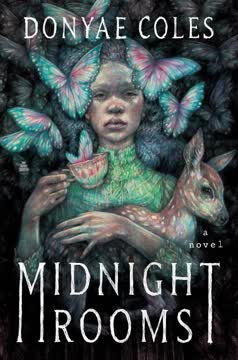
Midnight Rooms is a modern gothic novel that interrogates the legacy of inherited trauma, the violence of family, and the struggle for selfhood in a world designed to consume the vulnerable. Donyae Coles crafts a narrative that is both lushly atmospheric and psychologically acute, using the decaying manor as a metaphor for generational rot and the inescapability of the past. The story's horror lies not in supernatural monsters, but in the everyday cruelties of racism, misogyny, and familial obligation. Orabella's journey is one of survival rather than triumph—her victories are measured in endurance, small acts of resistance, and the refusal to be erased. The novel's use of unreliable narration, ritual, and symbolism creates a sense of disorientation that mirrors the protagonist's psychological state, inviting readers to question the boundaries between reality and nightmare. Ultimately, Midnight Rooms is a meditation on the cost of survival, the dangers of complicity, and the possibility—however faint—of transformation and renewal. It asks what it means to be family, to be loved, and to be free, and refuses easy answers, leaving the reader haunted long after the final page.
Last updated: