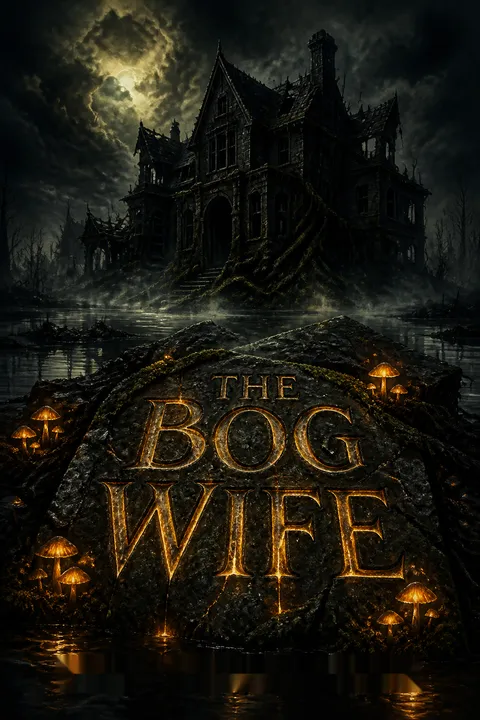


Plot Summary
Prologue
For generations, Charles Haddesley has taught his children that their family was bound to a West Virginia bog by an ancient bargain: the bog provides a wife to each eldest son, and the Haddesleys guard the land in return.
He insists their line must remain pure and unbranched. His children listen in a heap of blankets, warm with one another and certain the story explains their lives. None can remember where their mother was while he told it.
The opening makes family history feel less like knowledge than a household ritual, repeated until obedience resembles belonging. The children’s warmth and closeness lend their father’s account emotional authority before they can test its claims. Their absent mother is the first fracture in the story: the family’s origin myth takes up all the air, while the person most implicated in it is missing. That imbalance prepares the novel to ask who benefits when a tradition calls itself sacred.
Orange in the Swale
Nora, the youngest Haddesley daughter, spots unfamiliar orange mushrooms in the water channel Percy tends to keep their bog wet. She pulls them out before he sees, hoping to spare him another crisis, but Percy finds the damaged stems and fears the growth has spread underground. Before he can tell their father, Eda announces that the old man is dying.
He summons all the children, demands that their estranged sister Wenna return for the burial, and asks Nora to destroy a will leaving everything to Charlie, the eldest son. He has her write a replacement for the eldest living son, though he cannot finish signing it. He also entrusts Nora with the letter, believing Wenna will come for her.
The mushrooms make the bog’s deterioration visible, but the family’s first response is not collective investigation: Nora hides evidence to manage Percy’s anxiety, while Percy treats it as a personal custodial failure. Their father’s altered will similarly turns care into a question of succession. By choosing Nora to summon Wenna, he offers his least powerful child a rare sense of importance, yet also makes her responsible for restoring a system she cannot understand. Affection and obligation arrive in the same envelope.
The Heir's Poisoned Choice
Percy brings the strange stems to his father, who praises his nerve, then privately orders him to kill Charlie so he can inherit and marry the bog-wife. Percy cannot refuse outright, but the demand makes his loyalty feel like a weapon turned toward his brother. His father gives no useful answer about the mushrooms, only orders him to flood the swale.
Percy opens the river gate; when it sticks, the water overwhelms the channel and floods the bog’s mouth. He struggles to dam it with branches and earth, then burns the mushrooms, knowing neither act will undo the damage. Charlie offers belated help. Percy tells him he handled it, while briefly imagining that killing him might be easier than carrying his burden.
Percy’s terror of failing the land is inseparable from his hunger to be recognized as its rightful heir. His father exploits both: praise makes the murder demand harder to reject, while a careless order about the swale leaves Percy alone with its consequences. The flood is a practical disaster and a rehearsal for the family’s larger mistake. They call themselves custodians, yet obedience to inherited authority repeatedly produces the very damage they claim to prevent.
Wenna Crosses Back
Wenna, who escaped the property as a teenager, returns by bus after Nora’s plea reaches her. Charlie collects her in the family’s failing station wagon; the ruined manor, foul bog air, and cluttered kitchen make clear how much has collapsed during her absence. She learns that a hemlock tree fell through Charlie’s bedroom months earlier, injuring his pelvis and leaving him unable to manage stairs.
Her reunion with Nora is tender but uneasy, while Eda’s welcome is guarded and Percy avoids her. Their father asks to see her, then tries to make her promise to stay. Wenna refuses, demanding to know what happened to their mother, who vanished years earlier. He offers no answer, and she leaves the room carrying the question.
Wenna’s return forces the family’s private version of normality into view. What they have learned to tolerate, a house opened to weather, a disabled brother isolated in a study, a kitchen crowded with neglect, is shocking to someone who has lived elsewhere. Yet Wenna is not simply an outside judge: her reflex to appease her father and her inability to ask directly about her mother show how thoroughly the family’s rules still live in her. Distance has not erased her role; it has made its costs visible.
A Burial Without Certainty
When their father dies, Eda organizes the burial rite, preparing the moss garments and cowbane tincture while Nora retrieves the ceremonial plank. Charlie cannot climb the stairs unaided, so Wenna and Eda reject Eda’s insistence that all five must carry their father together. They bring him down without Charlie, who joins them outside.
The siblings lower their father into the bog’s mouth, where he remains visible instead of sinking as they expect. They wait for hours, unsure whether the rite is complete, before Eda insists they have done enough. Percy stays behind, furious and unconvinced. On the following morning, Charlie goes naked into the flooded bog with the dowsing stick, but it gives him no direction, and he returns alone.
The burial makes the family’s inherited order physically difficult to perform. Charlie’s injury disrupts the ritual’s ideal image of an eldest son carrying his father, and Eda responds by preserving the rite in whatever compromised form remains possible. The bog’s refusal to swallow the body leaves the family without the reassuring completion their traditions promise. Their uncertainty is not merely about whether they followed instructions; it is the first unmistakable sign that ritual may no longer command the landscape.
No Wife Answers
Charlie searches the bog for the wife his father promised, but the dowsing stick stays inert and his injured pelvis gives out before he finds anyone. Eda searches too and finds nothing.
At the kitchen table, the siblings consult the Borradh manuscript and discover that the burial and the next morning’s search should have produced a bride, though none can say what failed. Wenna hints that their mother’s disappearance may matter; Eda shuts the subject down. The family settles into a tense stalemate.
Charlie secretly seeks medical care in Charleston and learns that the untreated injury may have left him infertile. He returns and asks Percy to kill him. Percy refuses, saying the moment has passed. After Charlie overdoses on cough syrup, the siblings keep watch; Percy finds another ritual hidden in their father’s memoirs.
The failed exchange removes the future the Haddesleys have been trained to expect, but their first instinct is to repeat procedure rather than question its premises. Charlie’s medical visit introduces another kind of evidence, bodily fact, which contradicts the family’s mythic account of what his injury means. His despair is not only fear of infertility; it is the collapse of a self defined by an inheritance he never wanted. Percy’s discovery offers a way forward, though still in the language of the old system.
Peat Cut Into Wounds
Wenna stays after the burial, unable to choose a life beyond the family as readily as she once did. At peat-cutting, she sees that the bog has shrunk and that young trees and orange mushrooms are spreading where the family once harvested fuel. She remembers her mother secretly covering the cuts with leaves, an act of repair the others abandoned.
Percy insists they need the peat to heat their house. Wenna begins to imagine taking her siblings away, but the family has little money and no clear way to support itself. Meanwhile, Eda crosses the property line for the first time and visits a bar, hoping to conceive a child for the family. She sleeps with a stranger, then returns to try again with other men.
Peat-cutting binds necessity to harm: the family needs fuel, yet its customary labor also wounds an already diminishing ecosystem. Wenna’s memory of her mother repairing the cuts offers an alternative kind of inheritance, practical care rather than unquestioned extraction. Eda’s decision to conceive follows the same logic as the old compact, but shifts its cost onto her own body. Both sisters act out of care for the family, though one begins to imagine leaving its system and the other tries to preserve it.
The Recipe Beneath the Pages
After finding the recipe, Percy builds a human shape from sticks and soil, feeds it his blood, and buries it in the bog. He stays beside the grave, afraid any disturbance will ruin the work. As winter approaches, he begins to experience sensations that seem to come from the buried figure: hunger, fear, and a pull toward rain and earth.
He mistakes this intimacy for the promised marriage and lets it draw him deeper into the bog. Nora brings food and tries to understand why he has abandoned the house; he hides what he is doing from her. The voice grows into a multitude, and Percy’s own body begins answering it instinctively. When a storm separates him from the presence, he waits alone, unable to tell whether the hundred days have passed.
Percy’s ritual appears at first to give him the connection he has always wanted: a relationship in which he is not judged against Charlie or measured by his father’s standards. But the intimacy unsettles the boundary between desire and influence. Percy is not merely imagining a wife; he is allowing an alien presence to reorganize his appetites and movements. His vigil reveals how badly he wants to belong, and how readily a need for recognition can make a person mistake surrender for mutual love.
The House Meets Outsiders
Wenna visits a realtor to ask about selling the manor and learns that she needs Charlie’s deed and consent. She decides to make the house more habitable first, then hires contractors to remove the hemlock tree lodged in its roof. Their truck sinks into the bog, crushes young birches, and tears more of the roof away as they extract the trunk.
Charlie watches, disturbed by the damage and by the tree’s sudden absence. He retrieves the deed from the bank and notices that it dates only to 1897. At the library, he finds a newspaper account identifying the house as the Maturin folly, built by a wealthy coal magnate’s son. The Haddesley story of ancient settlement begins to look like a lie.
Wenna’s attempt to sell the house brings the outside world onto land the family has treated as exclusively theirs. The contractors’ damage is not incidental: it exposes the cost of believing the bog can be managed as private property. For Charlie, the deed’s date turns the house itself into evidence against his father’s lessons. The family’s history shifts from sacred continuity to deliberate construction, and that discovery offers no immediate escape, only a new understanding of the trap.
The Haddesley Name Unravels
Charlie follows the newspaper’s trail and learns that the family descended from Charles Maturin, a wealthy outsider who acquired the land and built the manor in the late nineteenth century. He tells Percy, then leaves the deed where Wenna can find it. At a dinner Eda has staged to announce her pregnancy, she declares that the family will have an heir.
Wenna challenges her choice, and Charlie reveals that there was no ancient Haddesley line or thousand-year compact: the family name and its origin story were manufactured. Eda rejects the revelation until she sees the evidence, then retches over her plate. Wenna’s plan to sell the house becomes an open conflict. Eda orders her out, while Nora watches the family’s shared purpose collapse.
The genealogy revelation does not simply disprove a legend; it deprives each sibling of a different defense. Eda’s pregnancy had promised continuity, Percy’s labor had promised a restored role, and Charlie’s obedience had been justified as inherited duty. Once the origin story falls away, those commitments become choices with human consequences. Eda’s physical reaction makes the truth visceral, while Nora’s silence shows the cost of losing even a false structure that had kept the family together.
Nora's Forged Marriage
For months, Nora has intercepted letters from Michael, Wenna’s estranged husband, and answered in Wenna’s handwriting. When Wenna prepares to leave after Eda rejects her, Nora admits what she has done and produces Michael’s letters.
Wenna sees that her sister has entered her private marriage without permission; Nora counters that Wenna has no right to sell their shared home. Their argument ends with Wenna sleeping apart from the family. A winter storm makes departure impossible.
When Percy cannot be found, Wenna and Eda search the snowbound bog together; Eda falls chest-deep into the mire, and Wenna pulls her out. The damaged manor then partially collapses under the storm. Nora’s animals are lost in the wreckage, and the siblings shelter by the hearth.
Nora’s forgery is an attempt to keep Wenna close by controlling the relationship that might draw her away. It repeats the family’s larger habit of confusing love with the right to govern another person. Wenna’s anger is justified, but Nora’s desperation has a history in a household where closeness was scarce and departures were final. The storm briefly makes their conflict physical: Wenna saves Eda, while the collapsing house destroys the fantasy that they can simply resume life as before.
The Bog Gives Back
After the storm, Percy finds the figure he buried, now lying near the bog’s mouth. It is not a new wife but his mother, alive after nearly eleven years beneath the peat. He calls Charlie to see her, then Charlie leaves them. Wenna, Eda, and Nora follow Percy’s tracks and help their mother drink water and move to softer ground.
She explains that the bog’s first compacts were ecological exchanges among moss, plants, and organisms, not a hereditary marriage contract. The Haddesleys damaged the bog by building on it and forcing it to remain unchanged. Their father buried her when she began changing with the land. She warns the children that neither the bog nor the family can survive without changing, and asks them to make new terms.
The mother’s return overturns the family’s story at its most intimate point. What the children understood as a sacred wife-making bargain was a human imposition on a living ecosystem, and their mother’s long absence was part of that violence. Her account replaces lineage with interdependence: the bog’s survival depends on continual change, not obedience to a fixed compact. Yet the truth does not heal the family automatically. Her return also forces the children to reckon with the mother they wanted and the person who was never fully theirs.
New Terms for Staying
Eda confronts her mother for years of absence, then later admits to Wenna how frightened she is of holding the family together alone. Wenna chooses to stay and help rebuild, though she refuses to merge her life with the bog.
Percy learns from his mother how to share the land’s underground communications, and Nora joins him, finding in the connection a closeness she has never found among people. Charlie tries the same and feels nothing. He leaves under the name Charles Maturin, taking books and the old family record with him.
As the siblings clear fallen branches, fill the destructive swale, plant a garden, and shelter in the goat shed, their mother slowly becomes part of the forest. Eda gives birth beneath the young trees to a daughter, whom they name after no one.
The ending refuses a single model of belonging. Percy and Nora choose a bodily, ecological intimacy; Charlie chooses distance; Wenna remains human and connected without surrendering her separateness. Eda’s daughter is not assigned an inherited name, loosening the family’s grip on dynastic repetition. Their new compact is enacted through repair and shared work rather than a bargain enforced by patriarchs. The future remains precarious, but the siblings can now respond to the land and one another without pretending that either exists to preserve an ancient hierarchy.
Analysis
The Bog Wife makes inherited tradition persuasive by showing the care it organizes before showing the violence it conceals. The Haddesley compact gives each sibling a role, a schedule, and a reason to stay together. Its rituals are not empty to them: they bury their father, tend animals, cut peat, and keep the bog wet because those acts structure daily life. The trouble is that their father’s story turns a living relationship into a fixed hierarchy. The bog is treated as a dependent possession, and women’s bodies are made the mechanism by which the family reproduces its claim.
The novel’s ecological reversal also unsettles a familiar Gothic division between human beings and a threatening landscape. The bog is neither a monster punishing the Haddesleys nor a passive resource. It is a changing community whose older exchanges have been disrupted by the family’s house, channels, and extraction. The orange mushrooms, the failed flooding, and the storm damage register that disruption materially. The mother’s account replaces the fantasy of eternal custodianship with ecological reciprocity: survival requires change, and no species can demand that its surroundings remain unchanged for its comfort.
The siblings’ emotional conflicts echo that ecological problem. Eda tries to preserve the household by controlling it; Nora tries to preserve closeness by impersonating Wenna; Percy mistakes surrender to the land for a role he can own; Charlie discovers that rejecting the family’s lie does not immediately free him from its consequences. Wenna’s choice is not a clean escape, either. She stays without accepting the old compact, and cares for her siblings without claiming the right to define their lives. The ending offers no restored dynasty. Instead, the family becomes less uniform: some members seek communion with the land, one leaves, and a child arrives without an inherited name. Their uncertain future begins when obligation becomes a choice rather than a command.
Review Summary
The Bog Wife is a divisive Appalachian gothic novel that blends folklore, horror, and magical realism. Readers praise its atmospheric writing, complex characters, and unique premise involving a family's pact with a sentient bog. Critics find it slow-paced and confusing, with unresolved plot threads. The story follows the Haddesley siblings as they grapple with their father's death and the failure of an ancient ritual. While some reviewers found it captivating and beautifully written, others struggled with its weirdness and lack of clear resolution.
People Also Read



Characters
Wenna
The reluctant returneeThe eldest daughter left the Haddesley property as a teenager and has spent years trying to build an ordinary life elsewhere. She is perceptive about the family’s damage, but her independence is not effortless: she struggles to speak up, to trust her judgments, and to imagine a future without relying on someone else. Her marriage outside the family has taught her both the possibility and difficulty of intimacy. Wenna often keeps people at a protective distance, yet she is deeply responsive to suffering, especially when she recognizes the costs of inherited rules. Her central tension is whether care requires her to remain entangled or whether she can love her siblings while choosing a life of her own.
Eda
The household's keeperEda, the eldest daughter still at home, has become the practical center of the household. She feeds, organizes, and manages her siblings, often treating control as the only reliable form of care. Years of responsibility have made her capable and commanding, but also resentful that no one else seems willing to carry the same weight. She is invested in ritual and family continuity because they give structure to a life with few choices. Beneath her forcefulness is a fear that if she stops managing everything, the family will fall apart and her own sacrifices will mean nothing. Eda’s care is real, even when it becomes coercive.
Charlie
The burdened eldest sonCharlie is the family’s firstborn son and supposed heir, though he is quiet, physically vulnerable, and uncertain of his ability to meet the role assigned to him. He avoids confrontation and often lets his sisters or Percy manage what tradition says should be his responsibility. This passivity is not simple indifference: Charlie has absorbed years of his father’s disappointment and expects failure before he begins. He longs to be seen as a person rather than an instrument of succession, but struggles to claim that desire directly. His cautious curiosity about the outside world offers a counterpoint to the family’s fear of it.
Percy
The anxious land-keeperPercy, younger than Charlie and trained to tend the bog, is vigilant about its plants, water levels, and trespassers. His precision can look like competence, but it is also a defense against the panic that comes whenever the land behaves unpredictably. He envies the authority given to his older brother while believing he could perform the work better. Percy’s desire to protect the bog is sincere, though his inherited ideas of duty make it difficult for him to distinguish care from control. He is most at ease when working with the soil, where attention gives him a temporary order that family life rarely does.
Nora
The tender youngest sisterNora is the youngest sibling, attentive to fragile animals and hungry for the closeness her family offers only unpredictably. She avoids conflict by smoothing over disagreements, but her gentleness can conceal possessiveness and a capacity for secrecy. She wants Wenna’s return to mean that the sisters can recover their childhood intimacy, even as Wenna has become a separate adult with a life Nora cannot know. Nora’s animals embody her instinct to shelter whatever is injured or unwanted. Her compassion is genuine, but it can become a way to avoid accepting that love cannot guarantee another person’s presence.
The mother
The elusive family centerThe siblings’ mother is a quiet, difficult-to-read presence whose long absences shaped each child differently. She is drawn to the bog and the rhythms of the land, and her relationship with the family is marked by both tenderness and distance. Wenna remembers moments of intimacy; Eda remembers being left to care for everyone; Nora searches for signs of affection; Charlie is unsure what she feels toward him. The mother’s withdrawn nature cannot be reduced to a single explanation, and the children often interpret her silence through their own needs. She represents a kind of life the family wants to possess but cannot fully understand.
Charles Haddesley the Eleventh
The dying patriarchThe father rules through family history, ritual, and the claim that the Haddesleys owe their lives to an ancient compact. His illness weakens his body without immediately loosening his authority. He favors Percy’s directness, burdens Charlie with succession, and relies on Eda’s labor while rarely recognizing its cost. His stories give the children a shared identity, but also teach them to treat obedience as sacred and doubt as betrayal. His children’s memories of him are complicated by both the force of his expectations and the care he sometimes shows.
Michael
Wenna's estranged husbandMichael is the husband Wenna leaves behind in Illinois. He wants to understand why their marriage failed and tries to reach her through letters, recalling their shared life with affection and regret. His wish for closeness is sincere, but he has sometimes mistaken his knowledge of Wenna for permission to interpret her choices. Because Wenna has kept her family life from him, he understands only part of the history that shaped her. His letters make visible the life she built beyond the bog, including the intimacy she fears she may not know how to sustain.
Alyson
Wenna's therapistAlyson gives Wenna practical strategies for managing panic and encourages her to see herself as separate from her family. Her advice offers Wenna a language for boundaries, though it cannot resolve the specific history and obligations she returns to face.
Buz Lukens
Nora's injured possumBuz is a three-footed possum Nora rescues and keeps in the house. His presence reflects her instinct to protect vulnerable creatures, while his freedom to roam makes him one of the household’s few sources of uncomplicated company.
Plot Devices
The Haddesley compact
A rule disguised as destinyThe family’s account of an ancient bargain says the bog provides a wife to each eldest son while the Haddesleys serve as its custodians. This belief governs marriage, inheritance, ritual, and the siblings’ sense of what futures are possible. Because the compact is taught as history rather than questioned as a family story, it gives the father authority and turns dissent into apparent danger to the whole line. The story’s changing understanding of the compact drives the central conflict.
The Borradh manuscript
A ritual instruction manualThe old illustrated manuscript records the family’s rites in a language only the sons have been taught to read. Its descriptions help the children assess the failed burial and exchange, and a separate instruction in their father’s memoirs offers Percy another way to seek a wife. The book appears to preserve ancient authority, but its incompleteness leaves room for misunderstanding and improvisation. It connects the family’s private practices to the question of who wrote their history and why.
The swale and mushrooms
Visible signs of ecological strainPercy channels water from the Cranberry River through a hand-operated gate to keep the bog’s mouth wet. Strange orange mushrooms appear in the swale and recur across the land, troubling his efforts to remove them. The channel, the flooding, and the spreading growth make the bog’s condition legible through physical events rather than family lore alone. They also show how the Haddesleys’ attempts to control the land can worsen the damage they mean to prevent.
The hemlock tree
Injury made into inheritanceA hemlock falls through Charlie’s bedroom and leaves him with a severe pelvic injury. His father interprets the accident through the family’s belief in the bog’s judgment, while Charlie struggles with its medical and personal consequences. Months later, removing the tree opens the house to further damage and prompts Charlie to question his father’s account of their history. The tree links physical harm, failed succession, and the family’s growing confrontation with the land.
Michael's letters
Intimacy intercepted and forgedLetters from Wenna’s estranged husband reveal a marriage and an outside life she has kept private from her siblings. Nora secretly reads and answers them in Wenna’s handwriting, first to control the possibility of Wenna leaving and later to inhabit an intimacy she envies. The correspondence makes Nora’s loneliness concrete, while exposing how the family’s hunger for closeness can become a violation of personal boundaries.
Download PDF
Download EPUB
.epub digital book format is ideal for reading ebooks on phones, tablets, and e-readers.








