

Plot Summary
Prologue
During a long, dangerous labor in a hidden cavern, Kate gives birth to Conlan while her husband, Curran, and her aunt Erra stand guard. Erra infuses the newborn with ancient power, and Kate recognizes that the child’s blood carries her family’s inheritance.
At once, Kate’s father Roland attacks the witches’ protective barrier. Kate draws strength from the land and breaks his spell, keeping him from reaching the baby. She and Curran name their son Conlan Dilmun Lennart, welcoming him into a family whose love already has to defend itself.
The birth scene makes family both the story’s deepest comfort and its first battlefield. Conlan arrives not into a protected domestic world but into a cavern under magical siege, so parenthood and political inheritance are inseparable from the beginning. Kate’s decision to draw on the land to stop Roland also anticipates the burden of protection she will carry throughout the novel. Yet the scene does not reduce the baby to a dynastic instrument: the naming and the child’s first cry restore a human scale to the ancient powers surrounding him. Love is not an escape from danger here; it is the reason to resist it.
The Empty Breakfast Tables
Thirteen months after Conlan’s birth, Kate’s quiet morning ends when Teddy Jo, the Greek death god Thanatos, arrives frantic and asks her to inspect a vanished settlement near Atlanta. Kate brings shapeshifter Derek as backup. Fifty houses stand open, meals rot on tables, and every dog has been killed by an arrow through the eye.
At an abandoned distribution center, they find a vast gelatinous mass containing human remains. Teddy Jo recognizes a missing young couple within it but cannot recover their bodies or guide their souls onward. Kate studies the substance and notices that it contains flesh but no bones. The scale of the crime, including families and children, turns a mysterious disappearance into a case of deliberate mass murder.
The untouched breakfasts make the crime intimate before its full horror becomes visible. These are not anonymous victims in a battlefield tally; their homes preserve the unfinished gestures of ordinary lives. Teddy Jo’s helplessness matters because his usual certainty about death fails when bodies have been rendered unrecognizable. Kate’s investigative attention, especially her notice of the missing bones, gives grief a practical direction. The scene establishes her characteristic response to atrocity: she does not mistake understanding for repair, but she insists that the perpetrators be found before another community is emptied.
A Grave Without Bones
Kate calls Luther, the wizard leading Biohazard, and keeps the contaminated grave secure until his team can examine it. Forensic work confirms that the victims’ bones were extracted, while Derek detects a human trail that abruptly stops at the edge of the settlement and resumes near the warehouse.
The attackers have left almost no evidence and appear to have moved everyone at once, leading Kate to suspect a pocket reality rather than ordinary teleportation. She warns Atlanta’s factions that the attack may be repeated, reasoning that a group this disciplined has likely practiced before.
Meanwhile, Raphael asks Kate to release Ascanio from Cutting Edge so the young bouda can pursue status and security within his clan. Kate agrees, accepting the loneliness of losing a protégé she has helped raise.
The investigation moves from horror toward a theory, but the theory enlarges the danger rather than containing it. A hidden realm offers a mechanism for disappearance while implying an enemy powerful enough to bend the boundaries of reality. Kate’s conclusion that the crime was practiced is a psychologically telling refusal of comforting explanations: she treats precision as evidence of repetition. Ascanio’s departure gives this section a quieter counterpoint. Kate can recognize that care sometimes means releasing someone, even while her work makes her increasingly responsible for people who cannot simply be protected by keeping them close.
The Ashen War Box
A plain wooden box left at Kate’s home contains ash, a long knife, and a dark red rose. Its strange scent frightens Conlan so badly that the thirteen-month-old shifts into a lion cub and hides beneath his parents’ bed. Kate and her friend Andrea coax him out with honey, discovering that their son’s shapeshifting is finally beginning.
Curran returns from a hunt and welcomes the change, while Kate worries that Conlan’s unusual strength and magic could make him vulnerable to the loup madness. Erra identifies the box as an old, wordless declaration of war, though its sender remains unknown. The gift’s timing makes clear that the Serenbe murders are not the only threat closing around Kate’s family.
Conlan’s transformation gives Kate the joy she had feared might never come, but it arrives through terror rather than a reassuring milestone. The child’s new form is adorable and dangerous at once, forcing Kate to revise her image of competent motherhood. The box mirrors that ambivalence: its rose might signify courtship or royalty, yet ash and a blade make it unmistakably threatening. Erra can interpret the ritual but not its author, leaving the family with knowledge that sharpens their fear without resolving it. Domestic life becomes the place where wonder and danger first share a room.
The Burning Delegation
A group of robed strangers appears outside Kate’s office, led by a young man whose chest burns from within. When the local apocalyptic preacher, Mr. Tucker, approaches to help, one of the figures kills him instantly. The others shed their robes to reveal brown, clawed creatures with the same corrupt presence Derek associates with loups.
Kate, Curran, Derek, and Julie fight them off, but a wave of magic breaks through the sky during the struggle. Kate flies to the impact site and finds Yu Fong, Julie’s classmate, alive in a crater of softened asphalt after falling from the clouds. His body begins to heal at an impossible rate. The attack leaves the neighborhood grieving and gives Kate a living mystery to protect.
The attack makes the threat local in the most brutal way: Mr. Tucker is not a combatant but a familiar neighbor whose harmless routine cannot shield him. The creatures’ resemblance to loups activates a deeply embodied alarm in Kate and Derek, suggesting corruption rather than merely unfamiliar biology. Yu Fong’s fall changes the investigation’s terms. Until now, the enemy has left only remains; now there is a survivor who may explain what crossed the sky. Kate’s instinct to rescue him, despite the danger of drawing attention, makes protection both her moral strength and a tactical vulnerability.
Poison in Biohazard
At Luther’s laboratory, Kate learns that the dead creature was probably once human and carries a magical corruption with no trace of the shapeshifter virus. A sahanu assassin then attacks through a cloud of mind-controlling spores, using Luther as a distraction while she tries to reach Kate and Conlan.
Kate fights without her usual weapons and kills the attacker with a microscope after Luther breaks the spores’ hold. The struggle leaves Kate wounded, but its more alarming discovery is that Conlan’s uncontrolled magic shines like a beacon to anyone who can sense it.
She carries him to the People’s Casino, where Ghastek and Rowena organize protection and strengthen their surveillance. Kate also learns that the sahanu have penetrated the city despite the People’s intelligence network.
The laboratory attack turns the family’s private fear into an operational weakness: Conlan’s power can be tracked. Kate’s violence is protective, but its cost is visible in her injuries and in the child’s exposure to a fight he cannot understand. The scene also challenges the assumption that scientific spaces are neutral refuges. Luther’s lab, built to contain magical hazards, becomes the setting for an ambush that exploits both trust and knowledge. Ghastek’s response offers security through organization, while also pulling Kate further into the public role of In-Shinar, a role she has never wanted to become her whole identity.
Fire at Ruby
Sheriff Beau Clayton calls Kate to another emptied settlement, Ruby, where dead dogs and deserted homes repeat the signs of Serenbe. A blue-armored warrior emerges and lights a pyre, revealing the golden-haired stranger Kate glimpsed during a failed attempt to contact Roland. The warrior defeats a crossbow attack with fire, then challenges Kate to single combat.
She uses her blood magic to cut through his armor and kills him, sending his head through the flames toward the stranger. The man identifies himself as Neig, an ancient conqueror, and offers Kate a crown beside him. He claims the world as his and threatens to burn it if she refuses. Kate rejects the offer, recognizing that the disappearances were acts of war.
Ruby converts a pattern of missing people into a confrontation with an enemy who wants recognition as much as territory. Kate’s duel is not simply self-defense; Beau understands that the village needs proof that Neig’s forces can be challenged. Her victory therefore has a public consequence even though it does not stop the invasion. Neig’s proposal reveals the logic of domination beneath his polished courtliness: he treats people as a resource and Kate as a prize who can legitimize his rule. Her refusal rests on kinship, not ownership, a distinction that will define her resistance.
Stones Name the Dragon
Roman helps Kate reach the hidden Druid camp, where Grand Druid Drest and his people recognize the war symbol on Neig’s box. Their Pictish records describe Neig, originally called Neimheadh, as a conqueror who enslaved people, bred monstrous troops, and retreated into a pocket realm when magic weakened.
The carvings identify his mark as shackles and reveal that Neig is not merely a powerful human: he is a dragon. His realm holds a vast army that can wait beyond ordinary time. Kate returns to Atlanta knowing that the enemy can attack without warning and that the Conclave will demand evidence. Meanwhile, she learns that the witches have stalled on their plan to use the White Warlock against Roland.
The stones function as an alternative archive, preserving a history that official records and familiar supernatural categories cannot contain. The reveal that Neig is a dragon is frightening because it breaks the city’s accepted rules about when ancient beings can manifest. Kate has information but not yet the public proof needed to make it actionable. Her dependence on Druid knowledge also exposes the politics of expertise: people may possess crucial evidence and still withhold it. The delayed witch ritual deepens the pressure, since Kate is being asked to prepare for two enemies while the coalition’s necessary tools remain uncertain.
Fourteen Sahanu Fall
While Kate confronts visiting Order knights who question her authority and her warning about dragons, Conlan escapes his caretakers in lion form and runs toward her. Kate follows his magical signal to a ruined building, where he has hidden from sahanu pursuing him. She places him with a vampire guard, then uses her power to drag fourteen assassins from their hiding places and traps them behind a blood ward.
Kate kills the entire group, including familiar figures from her father’s cult, while the Order knights witness the extent of her power. The victory prevents them from reaching Conlan, but it leaves Kate’s identity as In-Shinar impossible to hide. She then receives word that Rowena has disappeared.
Conlan’s escape is a child’s act of fear, but it forces Kate into a public demonstration of the power she has tried to keep bounded. The blood ward makes her territory a literal extension of her body, and the assassins’ entrapment turns protection into a scene of lethal exposure. The knights’ shock matters because they now see Kate not as a rumor or political problem but as a force capable of shaping a battlefield. That recognition carries a price: every ally may begin to relate to the office of In-Shinar rather than to Kate herself.
Kings Row Glass
Kate tracks Rowena’s vampire to Kings Row and finds the settlement reduced to ash. Neig has left Rowena alive inside a pillar of molten glass, bound by a spell that will kill her if the structure is broken carelessly. A gigantic boar god, Moccus, charges from the woods wearing Neig’s mark, while Curran reveals a colossal, winged lion form and attacks it.
Kate calls on Roland, who finally helps her claim the land, shatter the pillar safely, and return its stolen magic to the ground. Rowena survives. Curran consumes Moccus’s body, and the transformation reveals that he has been absorbing divine power during his hunts. Kate realizes that her husband may be changing into something no longer wholly human.
Kings Row makes rescue inseparable from territorial power. Kate cannot free Rowena by force alone; she must claim the scorched ground and understand the spell sustaining the glass. The solution demonstrates how her relationship to Atlanta has become practical and bodily rather than merely symbolic. Curran’s new form offers a parallel danger: power can save the people he loves while altering the person who wields it. The chapter’s emotional balance is deliberately unstable. Rowena’s survival brings relief, but Curran’s transformation converts that relief into a new fear about whether love can preserve the human being inside power.
The Conclave’s Dragon
Atlanta’s factions gather, but many dismiss Kate’s dragon warning as an impossible story. Rowena recounts Neig’s attack, yet the Order and Mage College still demand proof. Hugh d’Ambray arrives with armor, records, and a trained force of Iron Dogs, confirming that he has fought Neig’s troops in Kentucky.
He brings Elara, the White Warlock the witches had been trying to enlist, and offers military aid in exchange for practical support for his settlement. Kate struggles with Hugh’s return because he once served Roland and harmed people she loves.
Afterward, Christopher explains how Roland may have manipulated Hugh’s emotions through their blood bond, complicating blame without erasing Hugh’s responsibility. Kate decides to give him a chance to help, while refusing to call that forgiveness.
The Conclave dramatizes how a coalition can be endangered by its own standards of proof. Skepticism is not foolish in a world where magic produces false patterns, but it becomes dangerous when the demand for certainty delays preparation. Hugh’s arrival supplies evidence and manpower, yet it also reopens the ethical question of how manipulation affects culpability. Christopher’s account does not absolve Hugh; it makes responsibility more difficult to assign cleanly. Kate’s decision is similarly provisional. She accepts assistance because survival requires cooperation, not because past harm has vanished.
A Boy Held at Knife Point
Hugh heals Yu Fong by removing a fragment of Neig’s tooth lodged inside him, waking the dragon hybrid and giving the alliance a witness to Neig’s power. Soon after, Dali arrives with a potion Roland sent to the Pack, hoping it might cure her infertility; Hugh identifies it as a risky all-purpose remedy and offers a difficult surgical alternative.
Before the adults can settle the matter, Razer breaks into George’s house and holds Conlan at knifepoint. Kate, Curran, and their allies surround him, but Razer cuts the child. Conlan shifts, forms claws from his own blood, tears out Razer’s eye, and escapes to Kate. Curran kills the assassin. The attack confirms that Roland’s agents are hunting Conlan directly.
The kidnapping forces the adults’ competing strategies into a single immediate test: no political bargain matters if they cannot keep Conlan alive. The child’s blood claws transform inherited danger into an unexpected means of self-defense, but the moment is not uncomplicated triumph. Conlan has been cut and frightened, and his parents must frame violence as protection before he can make sense of it. Dali’s infertility and Roland’s tempting potion echo the same problem in another register: gifts from powerful people arrive carrying unknown costs. The family must learn to evaluate rescue as carefully as threat.
The Anchor and the Alliance
Yu Fong explains that a dragon’s pocket realm depends on a treasured anchor, and that stealing Neig’s anchor could prevent him from escaping into it. Julie volunteers to retrieve it while Yu Fong draws Neig’s attention.
The investigators also discover that bagpipe music drives the yeddimur into frenzied attacks, giving Atlanta a way to disrupt Neig’s transformed troops. Kate then learns Roland’s forces may be tied to the Pack through a secret visit and an unexplained gift.
With invasion imminent, she bargains directly with her father: he must commit his army against Neig and return Conlan after holding him. Roland swears, and Kate accepts the alliance despite distrusting him. She gives up pride and privacy because Atlanta cannot survive the coming battle alone.
This section turns scattered discoveries into a plan, but each useful resource comes with moral risk. Julie’s smallness becomes a tactical asset, Yu Fong accepts the role of bait, and bagpipes convert a historical symbol into a weapon. Kate’s bargain with Roland is the most intimate calculation: she uses the binding force of royal speech to secure military aid, yet must place her child in her father’s arms. The scene reframes queenship as the surrender of personal comfort for collective survival. Kate’s consent is real, but it is constrained by a city whose fate has become hers to carry.
Bagpipes Break the Horde
Atlanta’s factions assemble on the field beside Roland’s ruined castle, joined by soldiers, mercenaries, shapeshifters, mages, witches, pagans, the Order, and Hugh’s Iron Dogs. Neig’s army pours from its realm, followed by swarms of yeddimur.
The amplified bagpipes drive the creatures into attacking one another and Neig’s own ranks. Hidden trenches and the Druids’ magic then swallow advancing soldiers, while werebears and vampires strike the divided columns from the flanks. Neig takes dragon form and burns through his own forces to clear the battlefield.
Kate raises a magical shield to protect the defenders as the dragon repeatedly slams into it. The opening tactics buy time, but they cannot end the battle; the surviving army advances while Atlanta’s forces begin to break.
The coalition succeeds because no single faction can solve the problem alone. Bagpipes, trenches, magic, and ambushes work as a sequence, turning Neig’s numerical advantage into confusion before his dragon body overrides the plan. This is not a clean triumph of unity: the defenders are still outnumbered, and the shield leaves Kate isolated from the physical fight. The tactical success has a limit, which keeps the alliance from becoming a comforting moral abstraction. Cooperation matters precisely because it buys only the time needed for another, riskier possibility to emerge.
The Dragon’s Last Flight
As Atlanta’s defenders suffer heavy losses, Roland finally arrives with his army and drives through Neig’s troops. Yu Fong transforms and challenges the dragon, while Julie and Derek enter Neig’s realm through the tooth fragment.
Julie steals the ruby anchor and returns it to Kate, who restrains it while Curran and Roland pin Neig in the battle. Kate climbs onto the dragon and drives her blood blades into his eyes; Neig crashes to the ground and dies. Roland then turns on Kate and demands her surrender.
Knowing he will keep attacking, Kate stabs herself and lets the dying Roland absorb the anchor, which pulls him into Neig’s sealed realm. Curran uses the last of his divine power to resurrect Kate and Erra, sacrificing his godhood. Adora dies in the battle, and victory leaves the survivors wounded and grieving.
The climax gathers the novel’s central bargains into acts with irreversible consequences. Julie’s theft depends on trust and specialization, while Kate’s final move exploits Roland’s appetite for power against him. Her self-inflicted wound is not a sudden embrace of martyrdom; it is the last available way to remove both her father and the anchor from the battlefield. Curran’s intervention reverses death, but not without cost: divinity is spent rather than retained. The victory therefore refuses triumphalism. Neig and Roland are stopped, yet Adora’s death and the losses across the coalition remain the human measure of what stopping them required.
Peace With Teeth
Kate wakes after Curran spends his remaining divine power to bring her and Erra back from death. He is alive, but the godlike power that had begun to overtake him is gone. In the days after the battle, Atlanta buries its dead: Adora’s ashes are laid near Kate’s home, Christopher mourns a lost wing, and the Pack, witches, and mercenaries count their own losses.
Hugh and Elara return to Kentucky, while Dali postpones her decision about surgery. Kate also faces Julie’s anger because she used her blood bond to stop Julie from attacking Roland. Their relationship remains broken, and Kate accepts that she cannot undo the violation with an explanation. The immediate war is over, but its injuries persist in bodies, loyalties, and trust.
The aftermath distinguishes survival from restoration. Curran’s loss of godhood is welcome to Kate because it returns him from a power that threatened his personhood, but the battle has also removed lives and damaged relationships that cannot be recovered by victory. Julie’s anger is especially important: Kate’s desperate intervention saved the battle plan, yet it crossed a boundary she had promised to respect. The novel refuses to let good intentions erase coercion. Kate must live with the fact that protection can become control, a lesson that complicates her authority as both mother and leader.
A Castle Without a King
Kate discovers that she can enter Neig’s empty realm through her blood bond with Roland. She finds her father confined there as the realm’s new anchor, powerful within the castle but unable to leave. Kate tells him that she will bring Conlan to visit when he is older, then returns to Curran and their son.
Atlanta is no longer bound to Kate’s magical claim after her death and resurrection, leaving her free of the land’s constant pull. The family has time to grieve and rebuild, though Julie’s absence still hurts. Kate and Curran watch Conlan chase fireflies and speak about the possibility of another child, a small domestic future made possible by the peace they fought to secure.
Roland’s confinement is a resolution shaped less like punishment than forced retirement: the conqueror remains alive, but his reach has been severed from the world he wanted to control. Kate’s promise to let Conlan meet him later preserves a complicated filial bond without surrendering present safety. Her freedom from Atlanta’s claim is equally significant. The novel began with Kate drawing on the land to protect her newborn; it ends with her able to inhabit family life without being mystically conscripted by the city. The quiet scene with the fireflies does not erase grief, but gives it room beside hope.
Epilogue
Erra leaves Kate, Curran, and Conlan sleeping safely at home and rides out at dawn. Julie catches up with her, choosing to leave the city and make a life beyond the role Kate’s adopted daughter has occupied.
She explains that she does not want her anger over Kate’s use of the blood bond to become a permanent burden between them. Erra agrees to take her along, and they head toward Mishmar, where Erra has a promise to keep. For the first time, she imagines having a granddaughter she can teach.
The epilogue gives Julie’s departure an agency distinct from either rebellion or punishment. She leaves because she wants a future of her own, but also because she understands how guilt could freeze Kate into a permanent apology. Erra, who has spent much of the story protecting family through fierce control, chooses companionship without demanding that Julie remain in place. Her new sense of kinship softens the historical identity she has carried as a warrior and queen. The ending opens a path rather than sealing every relationship: distance becomes a way to preserve love while allowing change.
Analysis
Magic Triumphs treats power as a relationship that always changes the person who holds it. Kate’s blood, her claim over Atlanta, Curran’s growing divinity, and Roland’s ancient magic all offer extraordinary capacity, but each also narrows the holder’s freedom. Kate’s central conflict is therefore not whether she can become powerful enough to win. It is whether she can protect others without becoming the kind of ruler who confuses protection with ownership.
The novel makes family the arena where that question becomes concrete. Kate loves Roland, yet his affection cannot be separated from his appetite for control. She loves Curran, but his effort to save her by becoming divine threatens the human intimacy she wants to preserve. Her bond with Julie is similarly tested when Kate uses magical authority to stop her daughter. In each case, love motivates intervention but does not automatically justify it. The story’s emotional intelligence lies in allowing care to have consequences, including damaged trust that cannot be repaired by saying the motive was good.
The coalition against Neig offers a political alternative to domination. It works because different groups retain their own knowledge and methods: Druids preserve history, scientists test the creatures, shapeshifters and mercenaries fight, and the witches channel power. Their cooperation is imperfect and nearly fails under skepticism, rivalry, and fear, but it succeeds where a single overwhelming force cannot. Even the bagpipes matter because they turn cultural memory into practical resistance.
Victory remains costly. Adora and others are lost, Kate’s relationship with Julie is strained, and Curran gives up the godhood that might have made him invulnerable. Roland’s confinement ends his immediate threat without making him a simple monster or erasing Kate’s attachment to him. The final movement toward home and ordinary family life is not a return to innocence. It is a hard-won space in which the characters may choose their relationships rather than have them dictated by blood, power, or destiny.
Review Summary
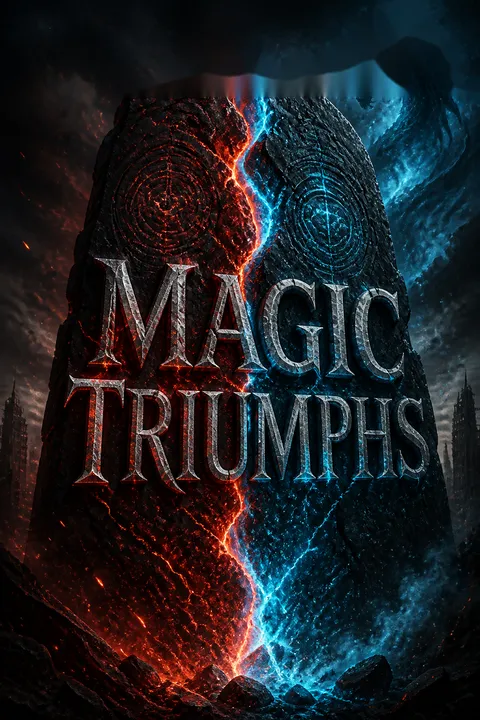
Magic Triumphs receives an overall rating of 4.55/5, with most readers praising it as a satisfying, triumphant conclusion to the beloved Kate Daniels series. Highlights include humor, epic battle scenes, and the adorable toddler Conlan. Many appreciated the return of beloved characters and the ingenious resolution to the Roland conflict. Common criticisms include a rushed ending, predictable final battle, and underwhelming treatment of certain characters like Saiman. Most agree it's a bittersweet farewell, with excitement remaining for potential spin-offs featuring Hugh, Julie, and Derek.
People Also Read



Characters
Kate Lennart
Reluctant city guardianKate is an exceptionally capable fighter, investigator, and wielder of blood magic, but she measures herself less by power than by whether the people around her are safe. She is the daughter of Roland, an ancient conqueror, and the wife of Curran, the former Beast Lord. Her fierce independence sits uneasily beside her responsibility for Atlanta and her devotion to her young son. Kate’s dry humor keeps fear from setting the terms of every conversation, though it cannot make her immune to grief or self-doubt. She distrusts authority that demands obedience, including the authority her own blood and magical inheritance place in her hands.
Curran Lennart
Lion-hearted partnerCurran is Kate’s husband, Conlan’s father, and a shapeshifter whose natural authority once held the Pack together as its Beast Lord. He is strategic, physically formidable, and more tender than his imposing presence suggests. Curran’s instinct is to stand between danger and his family, but he respects Kate’s competence even when her choices frighten him. His humor often punctures tension, while his capacity for sacrifice reflects how deeply he identifies love with action. He wants a future with Kate and Conlan, yet he does not assume that protecting them gives him the right to make their decisions for them.
Conlan Lennart
Unpredictable young heirConlan is the infant son of Kate and Curran, a bright, mischievous child whose rapid development keeps his parents permanently alert. He inherits traits from both sides of a family saturated with magic, and his unusual nature makes him a focus of affection, anxiety, and political interest. Conlan is curious, physically daring, and quick to recognize the people who care for him. His presence forces Kate and Curran to imagine a future beyond their own survival. He is not merely a symbol of inheritance; his needs, fears, and attachments remain those of a child.
Roland
Conquering ancient fatherRoland is Kate’s father, an immensely powerful ruler who combines genuine affection for his daughter with an overriding appetite for control. He has lived long enough to treat history as a field he can rearrange, and he prizes talent and potential wherever he finds them. His love is real but conditional in practice, shaped by his conviction that he knows what is best for those around him. This makes him both intimate and dangerous to Kate: he can speak to her as a father one moment and calculate her usefulness the next. Roland’s charm does not soften the consequences of his ambition.
Erra
Warrior aunt and mentorErra is Kate’s ancient aunt, a former queen whose ghostly presence carries the memory of a brutal family history. She is a formidable fighter, strategist, and source of hard-won knowledge about their lineage. Her sharp tongue and impatience conceal a deep attachment to Kate and Conlan, whom she regards as the family she has recovered after centuries of loss. Erra’s protective instincts can become forceful, and she often assumes that survival requires discipline rather than comfort. Yet the family she loves also calls her back toward tenderness and a life beyond war.
Derek
Watchful wolf allyDerek is a shapeshifter who has endured profound personal trauma and learned to rely on observation, restraint, and action. Once tied to the Pack, he now works independently alongside Kate, whose judgment and loyalty he trusts. His damaged appearance and dry manner can make him seem more remote than he is; beneath them remains a protective friend with a strong sense of justice. Derek reads scent and movement with exceptional skill, making him valuable in investigations and combat alike. He is still negotiating the distance between the person he was forced to become and the life he wants to choose.
Julie
Independent adopted daughterJulie is Kate’s adopted daughter, a skilled fighter and perceptive young woman with her own ambitions and moral convictions. Her bond with Kate is loving but complicated by the power and responsibility that come with their magical connection. Julie is brave enough to challenge Kate, and her loyalty does not mean she accepts every decision her mother makes. She has a talent for noticing patterns others miss, including visual traces of magic. Her desire to grow beyond the limits of her upbringing makes her both a trusted member of Kate’s circle and an increasingly independent person.
Hugh d’Ambray
Disgraced warlordHugh is a formidable fighter and former commander in Roland’s service, known for his charisma, cruelty, and capacity for survival. His history with Kate and her allies includes serious harm, so his attempts to act differently are met with justified suspicion. Hugh is loyal by temperament, but the question of whom he serves and what he chooses when no one commands him remains central to his identity. He often hides discomfort behind swagger and provocation. His changing relationship to his past is not a simple transformation into a good man; it is a struggle to take responsibility without surrendering the possibility of change.
Elara
White WarlockElara is a powerful magic user whose quiet manner masks a formidable will. The witches look to her as a possible focus for their collective power, while her own judgment and loyalties remain carefully guarded. She is perceptive about the people closest to her and willing to defend them without hesitation. Elara’s calmness contrasts with Hugh’s abrasive style, but she is not his conscience or handler; she makes her own choices and expects others to respect them. Her presence offers the coalition a rare source of specialized magic.
Yu Fong
Fire-bearing classmateYu Fong is a former classmate of Julie’s with an extraordinary supernatural inheritance and a reserve of power he rarely advertises. His reserve can make him seem like an ordinary young man until danger reveals the scale of what he can do. Yu Fong is knowledgeable about dragon realms and their customs, and he approaches difficult choices with a clear sense of where he belongs. He is not eager to make himself a weapon for others, but he is willing to risk his safety when the threat reaches the people around him.
Teddy Jo
Grieving death godTeddy Jo is Thanatos, a Greek god associated with death, and one of Kate’s long-standing allies. He can identify death and guide the dead, but those powers do not make him indifferent to the people he loses. His frantic appeal to Kate reveals how deeply he feels the obligations attached to his faith and his role. Teddy Jo can be theatrical and irritable, yet his loyalty is genuine. He is also willing to help with the practical work of protecting and moving the dead, even when grief makes every task harder.
Luther
Risk-taking Biohazard wizardLuther is a wizard and senior figure at Biohazard, where he studies magical contamination and threats to public safety. He is brilliant, eccentric, and willing to test ideas others would avoid, but his humor and experiments do not erase his seriousness about protecting people. Luther’s laboratory reflects his belief that research must coexist with practical defenses, including weapons and containment wards. He respects evidence and can admit uncertainty, qualities that make him useful to Kate despite their constant teasing and occasional clashes.
Ghastek
Strategic People commanderGhastek is a precise, ambitious Master of the Dead who manages the People’s operations in Atlanta. He values competence, planning, and clear responsibility, and he prefers systems that can withstand panic. His relationship with Kate has shifted from rivalry toward trust, though he still serves her with a formality that can make their personal connection feel political. Ghastek is an intellectual who studies vampires as carefully as he studies people. His loyalty is expressed through preparation, but the burden of leadership makes him quick to blame himself when his network fails.
Rowena
Maternal Master of the DeadRowena is a Master of the Dead and one of Kate’s distant relatives, with a talent linked to Kate’s maternal family. She is polished, perceptive, and deeply affectionate toward Conlan, whose presence awakens the maternal life she has not had herself. Beneath her composure is a strong sense of obligation to the People and to those she loves. Rowena’s gentleness does not make her passive; she understands the risks of her work and acts decisively when others are threatened.
Saiman
Unpredictable arcane scholarSaiman is a polymorph and a gifted magical researcher whose knowledge spans many subjects. He is wealthy, vain, and usually alert to the price of any favor, which makes his willingness to help Kate stand out. Past captivity has left him fearful of physical pain and wary of dependence, though he rarely admits vulnerability without a struggle. Saiman’s curiosity can overcome his self-preservation, and his expertise often supplies a practical bridge between strange magic and usable evidence.
Nick Feldman
Combative knight-protectorNick leads Atlanta’s Order chapter and distrusts Kate’s family, particularly her father. His bluntness and rigid standards often obstruct cooperation, but he is also a capable leader devoted to the knights under his care. Nick’s hostility is rooted in experience rather than mere professional rivalry, and he struggles to separate institutional duty from personal grievance. His chapter’s loyalty to him reflects the respect he has earned by giving troubled knights a place to be useful.
Dali
Pack’s sacred tigerDali is a shapeshifter and a sacred animal whose magical gifts set her apart within the Pack. Intelligent, blunt, and fiercely devoted to those she loves, she is accustomed to carrying responsibilities that others do not see. Her relationship with Jim is built on affection and mutual respect, but her private hopes do not always fit the Pack’s practical expectations. Dali’s vulnerability emerges most clearly when something matters deeply to her, though she is never reduced to that vulnerability.
Adora
Former sahanu fighterAdora is a highly skilled young fighter who is learning to live beyond the role she was trained to fill. She approaches mercenary work with intense seriousness and can be startlingly literal in ordinary conversation. Kate’s home and circle offer her a place to develop interests and choices that were once unavailable to her. Adora is independent, capable, and still discovering what she wants when survival is no longer her only assignment.
Andrea
Hyena alpha and archerAndrea is Kate’s close friend, a former Order knight, a skilled archer, and an alpha within Clan Bouda. She is direct, funny, and comfortable confronting Kate when maternal anxiety or stubbornness takes over. Andrea’s loyalty is practical: she appears when help is needed and offers expertise without pretending danger is simple. Her life with Raphael and their daughter gives her a family perspective that often steadies Kate’s fears about raising Conlan.
Christopher
Theophage seeking balanceChristopher is a powerful theophage who has survived captivity and the shattering of his own mind. He is calm and thoughtful in ordinary company, but becomes fiercely dangerous when the people he loves are threatened. His past as a leader of the Golden Legion gives him a precise understanding of Roland’s political methods. Christopher is reflective about guilt and forgiveness, and his relationship with Barabas is marked by affection complicated by concern over their unequal history.
Barabas
Sharp-minded Guild administratorBarabas is a former Pack lawyer who now manages the Guild’s administration. He is observant, exacting, and adept at turning tangled problems into workable plans. His sharpness can read as cynicism, but it is matched by a deep commitment to the Guild and to the people who depend on it. Barabas’s relationship with Christopher is loving and careful, shaped by his concern that past caretaking may have affected Christopher’s feelings.
Jim
Strategic Pack leaderJim is the Beast Lord and head of the Pack after Curran. He is a long-range planner whose first responsibility is the survival of his people. Jim’s caution can look like distance, particularly to those who expect immediate declarations of loyalty, but he weighs the political consequences of every decision. His marriage to Dali and his history with Curran give him personal stakes in Atlanta’s alliances as well as institutional ones.
Raphael
Bouda alpha and mentorRaphael is a polished, ambitious bouda alpha who understands how status and belonging shape young shapeshifters. He respects Kate for the care she has given Ascanio and takes responsibility for making sure the young man can pursue a future within the clan. Raphael’s charm can disguise a serious political intelligence, but he is not careless with the people he claims as family. He and Andrea have built a strong household and share the demands of leadership.
Ascanio
Ambitious young boudaAscanio is a clever, sharp-tongued young bouda whom Kate trained and employed when few others could manage him. Beneath his appetite for wealth and recognition is a need for security and a place where his abilities are respected. He is loyal to Kate, but his ambitions increasingly draw him toward the Pack and Clan Bouda. His development illustrates that belonging can require leaving the person who first offered shelter.
Martha
Protective werebear matriarchMartha is Curran’s adoptive mother and a leader within Clan Heavy. Warm, practical, and fiercely protective, she treats family as an obligation demonstrated through daily care rather than grand declarations. Her affection for Conlan is immediate, and her strength makes her a reassuring presence in Kate’s crowded circle of allies. Martha is not sheltered from danger, but she meets it with the steadiness of someone who has spent a lifetime looking after others.
Plot Devices
Magic and tech waves
A shifting supernatural climateIn this world, magic and technology alternately dominate, changing what powers can function and which beings can safely exist. A magic wave allows gods, enchanted weapons, and powerful spells to manifest, while a tech wave can interrupt them or make their presence unstable. The cycle creates tactical uncertainty throughout the story: Kate must act within brief windows of power, and Curran’s growing divinity becomes dangerous when technology returns. The waves are not just atmosphere; they determine timing, vulnerability, and the limits of every alliance and defense.
Kate’s claim over Atlanta
Land lends power and dutyKate’s magical claim connects her to the territory she protects. She can sense disturbances in its currents and draw on the land to defend people within its boundaries, but the power comes with a persistent pull toward responsibility and expansion. The claim makes her more than a private fighter: threats to Atlanta become personal obligations even when she would rather live as Kate rather than as In-Shinar. It also gives her practical tools in battle, from magical barriers to the ability to restore damaged ground. The device binds political authority to physical protection, then tests whether Kate can ever set the burden down.
The dragon’s anchor
A realm’s vulnerable keystoneA dragon’s pocket realm depends on an object of immense personal value, saturated with the dragon’s power. The anchor sustains the hidden domain and draws it back toward its owner, so destroying it risks collapsing the realm, while removing it can temporarily prevent the dragon from escaping. Yu Fong’s explanation gives the coalition a possible answer to Neig’s immortality and establishes Julie’s covert role in the final battle. The device ties the dragon’s psychology to his tactical vulnerability: his pride makes him leave the anchor in plain sight, believing no one can reach it.
Yeddimur venom and bagpipes
A monstrous army’s weaknessNeig’s yeddimur begin as human infants transformed by exposure to dragon venom. The process leaves them corrupted, obedient to subtle commands, and driven by hunger and rage. Kate’s allies discover that bagpipe music disrupts their behavior, making the instruments an unlikely countermeasure against the creatures’ role as Neig’s shock troops. The discovery connects Druidic history to modern laboratory work and lets Atlanta turn a cultural artifact into battlefield technology. It also underlines the atrocity behind Neig’s army: his strength is manufactured from human lives, not conjured without cost.
The Witch Oracle’s vision
A warning without instructionsThe Witch Oracle gives Kate a vivid vision of fire, a battlefield, human bones, and a huge presence with burning eyes. The images foreshadow the scale and violence of the coming conflict but do not identify the enemy or provide a usable plan. That ambiguity frustrates Kate, who needs certainty and practical answers, while the vision encourages her to notice later correspondences. Its function is not to solve the mystery but to make the future feel present before Kate can explain it. The Oracle’s prophecy preserves the tension between foreknowledge and agency: seeing danger does not tell Kate how to survive it.
World of Kate Daniels Series
About the Author
Other books by Ilona Andrews


Download PDF
Download EPUB
.epub digital book format is ideal for reading ebooks on phones, tablets, and e-readers.








