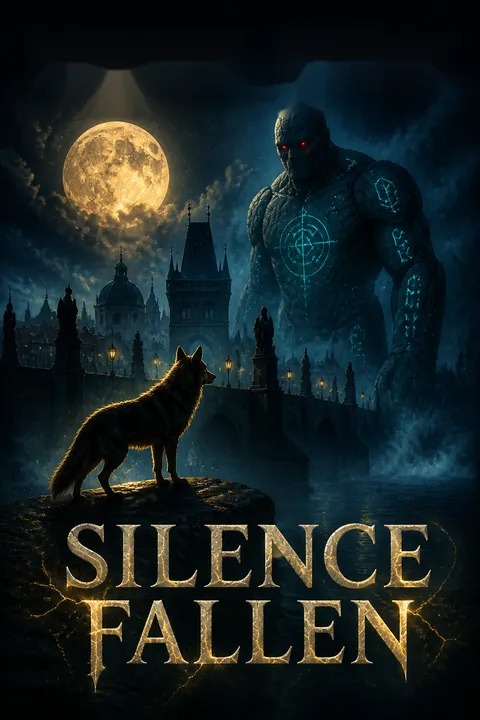


Plot Summary
Chocolate Chips and Blood
Mercy Thompson, a coyote shapeshifter and the mate of werewolf Alpha Adam Hauptman, is baking for her pack when she runs out of eggs and chocolate chips. At a nearby convenience store, the frightened new clerk recognizes her, though he cannot explain how.
Mercy leaves him the pack’s emergency number and drives home. A blacked-out semi slams into her SUV, and vampires pull her bleeding body from the wreck before Adam can reach her. She wakes inside a sealed, silver room with her jewelry gone and a witch-made cuff blocking her ties to Adam and the pack.
Her captor, Iacopo Bonarata, the Lord of Night, claims Wulfe identified her as the Tri-Cities’ greatest power. Mercy realizes he has mistaken her political connections for personal strength, and that his unlocked door may be a trap.
The opening turns domestic competence into exposure: Mercy’s baking sends her onto a road where her public identity has made her legible to predators. Her first defense is not strength but interpretation. She notices the cuff, reads the vampires’ staged good-cop routine, and understands that Bonarata’s error may keep her alive. The severed bond makes the abduction more than physical confinement; it removes the relational network through which Mercy usually measures safety. Her choice to plan rather than panic shows that she treats fear as information, even when her body is badly injured.
Adam Finds the Wreck
Adam feels Mercy’s pain through their mating bond, then a blank silence. He reaches the wreck to find her gone, her blood on the seat, and the scents of four unfamiliar vampires. His pack finds a helicopter had waited nearby, while Stefan, a vampire bound to Mercy by an older blood tie, confirms he cannot sense her either.
Adam nearly gives in to the wolf’s rage, but Stefan and second-in-command Darryl pull him back toward the work of finding her. Pack mistress Marsilia identifies the kidnapper as Bonarata, her former lover and Europe’s dominant vampire.
She agrees to help because Bonarata threatens both their communities. Adam accepts a meeting rather than launching a reckless assault, and prepares to fly to Italy with a small, carefully chosen delegation.
Adam’s first response exposes the cost of leadership under intimate threat. His wolf reads the wreck as a demand for immediate violence, while his human judgment knows that rage could destroy the very people he needs to protect. Stefan’s value lies in recognizing that distinction and bringing Adam back to action. Marsilia’s cooperation also complicates the usual alliance map: she dislikes Mercy, yet understands that Bonarata’s reach endangers her seethe. The rescue begins as a test of whether personal loyalty can coexist with political restraint.
The Unlocked Garden
Mercy strips off her bloodied clothes and steps through the unlocked door into a walled garden. The magic circle ends at the threshold, letting her feel Adam faintly again, but not well enough to ask for help. Bonarata has left Lenka, a half-starved and dangerously unstable werewolf, to guard her.
Mercy runs for the garden wall, scales it with a trick learned from martial-arts films, and shifts into coyote form as she drops to the road. Lenka pursues her through vineyards, where the narrow rows favor Mercy’s smaller body.
At a crossroads, Mercy darts in front of a bus; it hits Lenka and gives her time to escape. She hides aboard a coach, steals clothes and a little cash from luggage, and realizes from the passengers’ language that Bonarata has taken her to Italy.
Mercy’s escape is built from practical knowledge rather than a sudden increase in power. She uses her size, stamina, mechanic’s attention to physical details, and a remembered lesson about escaping early. The bus is not a heroic weapon so much as an opening she recognizes before Lenka does. Yet the journey also strips away comfortable assumptions: Mercy is naked, penniless, and far from her people. Her resourcefulness keeps her alive, but it does not erase the emotional shock of discovering how much home had come to mean Adam’s presence.
A Message From Prague
After a long ride north, Mercy recognizes Prague by the Charles Bridge and hides beside the Vltava. Wandering the old Jewish Quarter, she encounters a towering, ghostly presence: the Golem of Prague, a spirit she cannot explain and whose magic intensifies her ability to perceive the dead.
The next day, she reaches a café offering free Wi-Fi and uses a borrowed e-reader to send a coded message to her pack. Ben replies that Prague’s Alpha, Libor, may help, though he has a longstanding feud with Mercy’s foster father, Bran.
Mercy finds Libor’s centuries-old bakery and identifies herself as Adam’s mate. Libor’s pack feeds her while she waits, but the Alpha makes clear that he regards her arrival as a dangerous intrusion, not a simple request for shelter.
Prague first offers Mercy anonymity, then replaces it with a different kind of exposure. The city’s old streets invite her curiosity, but the golem’s attention makes the dead increasingly present. Her e-reader message is a tiny act of reconnection, relying on a stolen device and an improvised code rather than magic. Libor’s bakery gives the story a grounded counterpoint to vampire power: a community organized around feeding people. Yet his hostility shows that sanctuary is never purely private in this world. Accepting protection also means entering another Alpha’s political history.
The Baker’s Haunted Garden
Libor tests Mercy with threats and questions about whether she is truly powerful. She admits that her influence comes largely from the people who trust her, including Adam, Bran, and the fae. When Libor demands proof that she can see ghosts, Mercy identifies Danek, a dead wartime double agent buried beneath the bakery garden.
His betrayal helped bring the Nazi destruction of Lidice, and Libor’s pack killed him after the war. Mercy warns that giving the dead attention can strengthen them, but Libor insists on hearing more and grants her three days of sanctuary.
Libor’s dead wife also appears, resembling Zack, the submissive wolf in Mercy’s pack. Before Mercy can understand that connection, vampires surround the bakery, and Martin leads her through the kitchens and across the rooftops.
Mercy wins shelter by showing a power she considers dangerous, not impressive. Naming Danek gives Libor evidence, but it also makes the ghost more solid and brings the past into the present in a way neither Alpha can control. The scene exposes the ethical ambiguity of Mercy’s gift: attention can comfort the living, yet it can also anchor the dead. Libor’s bargain is similarly double-edged. He honors his word, but the protection he offers places Mercy inside a contested territory whose history, including the resemblance between his wife and Zack, has not yet been settled.
The Scythe at Midnight
Martin takes Mercy to Jitka, Libor’s formidable third-in-command, but vampires drop from the roof and attack them before they can talk. Mercy grabs a scythe from a garden plot and uses it to behead one attacker, then distracts another long enough for Martin to finish the fight.
Jitka dispatches the remaining vampires. The group identifies one attacker as belonging to Prague’s hidden second seethe, led by Mary, while another belongs to the established Master, Kocourek.
Rather than leave the city and abandon Libor’s pack to a fight already underway, Mercy offers to track the vampires because their magic often fails to affect her. She follows the scent of the vampire she killed to a car, where Martin finds a saved home location in its navigation system.
The scythe turns an old punishment into a tool, but Mercy’s contribution is not simply improvisational violence. She joins a fight already in progress because she refuses to let others bear the consequences of her presence alone. That instinct carries a risk: she becomes more involved in a local conflict she barely understands. The car’s navigation system gives the group a concrete lead where supernatural tracking has failed. The contrast matters. In this novel, ancient magic and ordinary technology coexist, and practical evidence can expose what centuries of political rivalry have kept hidden.
The Seethe Behind the Veil
Mercy follows the scent trail through Prague’s Jewish Quarter to a ruined apartment building hidden behind a spell that makes passersby overlook it. The magic also separates her from Martin and Jitka, and a vampire catches her with a pole and locks her in a silvered cage. Mary, leader of the hidden seethe, visits with human captives and a chained vampire whose mind has collapsed.
Her translator reveals that Mary uses witchcraft to create vampires in weeks rather than years, but the new creatures can suddenly become mindless. Mary’s own magic kills one failed subject and a human servant. The Golem appears to Mercy and asks her to feed him the ghosts gathered in the basement so he can regain a body and confront the vampires.
The hidden building makes the city’s neglect literal: a whole community can suffer in public view while a spell edits it out of collective attention. Mercy’s capture is partly caused by her unusual resistance to vampire magic, which has allowed her to see what the wolves cannot. Mary’s accelerated vampirism turns a familiar predator into a production system, raising the threat from individual feeding to mass exposure. The golem offers a solution with its own moral cost. Mercy must decide whether survival justifies using the dead as fuel, especially when she cannot know what their disappearance will mean.
Mercy Feeds the Golem
After Mary leaves, Mercy weighs the golem’s request against her fear that it may kill everyone in its territory. Kocourek’s captive vampire has explained the danger of Mary’s rapid breeding, and Mercy understands that news of the method could destabilize the supernatural world.
She calls the basement ghosts together, explains that the golem will absorb them and that she cannot promise what follows, then waits for their consent. The ghosts who can answer agree; one young woman, Galina, refuses, and Mercy protects her from being taken. The golem consumes the others and begins attacking Mary’s witchcraft. Mercy remains trapped, uncertain whether she has enabled a protector or released another monster.
Mercy’s decision is not a clean sacrifice, because she cannot verify what the ghosts consent to or what kind of existence awaits them afterward. She nonetheless insists on a boundary: Galina’s refusal matters even when the golem claims it needs every spirit. This is the moral difference Mercy draws between cooperation and ownership. That distinction also reflects her own fear of supernatural bonds that can override choice. The scene leaves her with a power she did not want and an obligation she cannot discharge by simply trusting that the golem knows best.
Honey Faces Lenka
While Mercy is trapped in Prague, Adam reaches Bonarata’s Milan villa with Marsilia, Stefan, Honey, witch Elizaveta, and goblin representative Larry. He negotiates while resisting the urge to attack the vampire who nearly killed his mate.
Bonarata presents Lenka, a werewolf he has kept under his control for centuries. When Lenka sees Bonarata’s interest in Honey, she attacks. Adam lets Honey defend herself under guesting law. Honey first fights to restrain Lenka, but Adam and Matt Smith recognize that the wolf has been broken beyond recovery.
Honey kills her, ending Lenka’s captivity. The fight exposes Bonarata’s addiction to werewolf blood and forces Marsilia to confront the choice that once ended their relationship: he valued control and power above her objections.
Honey’s fight is both a tactical test and a reckoning with what prolonged coercion can do to a person. She does not kill Lenka because she is a rival; she does so after seeing that the woman she once knew has been erased by Bonarata’s control. Adam’s restraint is equally consequential. He allows Honey the right to decide the fight, while accepting that mercy can mean ending a life rather than preserving a damaged body. Marsilia’s confrontation adds historical scale: Bonarata’s addiction is not a private flaw but a pattern of choosing power over the people closest to him.
The Lord’s Knife
Bonarata’s lieutenant Guccio secretly bites Adam and uses a vampire bond to cloud his memory, but Matt notices the punctures and helps Adam fight through the compulsion. At the next meeting, Guccio orders Adam to hold Bonarata, revealing an attempted coup.
Adam turns the command into an opening, shoves Bonarata toward Marsilia, and fights Guccio across a dining room. Guccio wounds him with a magically charged silver fork, but Adam uses porcelain plates to stagger him, then shoots him.
The company learns that Bonarata allowed the conflict to unfold because Guccio’s power threatened his rule. Bonarata’s healer repairs Adam, and the group leaves for Prague. There they discover Mercy is missing from Libor’s bakery and begin searching the spell-hidden Jewish Quarter.
The danger here is not brute force alone but the way control can masquerade as memory. Adam’s wolf senses that something is wrong, yet grief makes him misread its warning as another outburst. Matt’s intervention shows why a submissive wolf should not be mistaken for a powerless one: he can challenge an Alpha without turning the challenge into a dominance contest. Bonarata’s maneuvering is more disturbing than Guccio’s rebellion because he treats people as pieces in a board game, including Adam. Adam’s victory protects the alliance, but it does not make the host trustworthy.
The Golem Comes Apart
In the basement, the Golem tears through Mary’s hidden seethe and attacks the vampires sheltering their human households. Mercy realizes it will not stop with them; it considers the people of the Jewish Quarter outside its protection.
The spell-bound cage keeps her from intervening physically, so she reaches through her bond with Adam and draws on the authority he lends her. Using her power over the dead, she commands the golem’s stolen energy to separate from the ancient magic that binds it.
The clay body shatters, freeing the spirit rather than destroying it. The collapse breaks Mary’s concealment spell. Adam, Libor’s wolves, and Elizaveta find Mercy hours later; Elizaveta opens the cage while Adam waits at its bars, unable to touch her until the ward gives way.
The climax resolves the story’s central question of power as relationship rather than force. Mercy cannot overpower the golem or escape the cage, but Adam trusts her enough to lend the authority his pack has given him. She uses that borrowed strength to undo a binding, not to impose a new one. The wordless exchange through their bond contrasts sharply with the coercive Kiss and Mary’s control of her vampires. Mercy’s choice also completes her movement from reluctant observer of ghosts to someone accountable for how the dead are used.
Cookies After the Fire
Kocourek, Dagmar, Lars, and Vanja survive beneath the basement stairs with the human members of their households. Mercy and Adam take time in Prague to recover, settle matters with Libor, and visit the city as tourists.
Bran reveals that his feud with Libor began when he took Libor’s submissive son, Radim, now known as Zack, away from the Prague pack. Before leaving Europe, Mercy thanks Bran for risking himself to help her, and he admits she had always mattered to him as family.
Back in the Tri-Cities, the pack returns to find a fire-damaged garage after Aiden accidentally starts a blaze while doing homework. Mercy tells him she has destroyed more than a building herself, then suggests making chocolate-chip cookies. Home returns not as perfect safety, but as people choosing to stay and repair what they can.
The ending refuses to equate rescue with a return to innocence. Mercy carries grief for the dead and uncertainty about what her power has done, while her relationship with Bran gains a more honest language for affection and failure. The Radim revelation reframes Libor’s hostility as a family wound, not mere political spite. Finally, Aiden’s accident echoes Mercy’s opening baking: danger enters ordinary domestic life, but the pack answers with humor, responsibility, and repair. The cookies do not erase the damage. They mark the choice to resume a shared life after it.
Analysis
Silence Fallen makes safety feel less like a place than a system of relationships. Mercy’s home is secure because Adam’s pack, Marsilia’s seethe, local humans, goblins, witches, and fae have all accepted obligations to one another. Bonarata sees that structure as a threat because he assumes influence must flow downward from a single ruler. His kidnapping is meant to test whether Adam can protect his own, but it also demonstrates the weakness in Bonarata’s model: he mistakes Mercy’s network for a personal weapon and underestimates the agency of the person at its center.
The novel repeatedly distinguishes reciprocal bonds from coercive ones. Adam’s authority can reach Mercy because she trusts him, and at the climax he offers power without dictating what she must do with it. The vampire Kiss, Mary’s control over her followers, and the golem’s inherited command all make obedience possible without meaningful consent. Mercy’s decision to ask the ghosts before allowing the golem to absorb them marks a moral boundary even in a crisis. Her power is not defined by how many beings she can command, but by whether she recognizes their claim to refuse.
The parallel plots sharpen that question. Adam must restrain himself from turning grief into a war that would endanger his people. Honey must judge whether Lenka can be rescued or whether continued life only extends Bonarata’s ownership. Marsilia must decide whether old love obliges her to return to a man who repeatedly chooses power over her. These are not identical dilemmas, but each asks whether loyalty requires submission.
Mercy’s return home does not restore an untouched world. Prague’s dead remain part of her responsibility, Bran’s history with Zack becomes newly legible, and Aiden’s accidental fire waits at the end of the journey. The final cookies echo the opening, but their meaning has changed: domestic life is not a refuge from danger so much as the work people choose to resume together after danger has passed.
Review Summary
Silence Fallen receives mostly positive reviews, with readers praising the change in setting to Europe, the introduction of new characters, and the inclusion of Adam's perspective. Many consider it one of the best in the series, highlighting Briggs' ability to keep the storyline fresh. Readers appreciate Mercy's resourcefulness and the complex vampire politics. Some criticisms include a confusing timeline and less focus on familiar characters. The twist ending surprises many, and fans eagerly anticipate the next installment in this beloved urban fantasy series.
People Also Read









Characters
Mercy Thompson Hauptman
Coyote mechanic and mediatorMercy is a Volkswagen mechanic, coyote shapeshifter, and the emotional center of a supernatural community she never set out to govern. Raised among werewolves, she learned to survive stronger opponents through observation, timing, and an unshowy refusal to give up. Her humor protects her from fear without making her careless, and her work with cars reflects a deeper habit of seeing how separate parts affect one another. She is married to Adam, but does not mistake love for helplessness; she expects to make her own choices and accepts help only when it does not erase her agency. Her unusual ties to the dead and resistance to some magic complicate the practical, grounded identity she prefers.
Adam Hauptman
Alpha with a soldier’s disciplineAdam leads the Columbia Basin werewolf pack and runs a security business. A former soldier, he is trained to turn fear into plans, though threats to Mercy can bring his wolf dangerously close to the surface. His marriage to Mercy is an equal bond, even when his instinct is to shield her from every risk. He values responsibility more than status and measures leadership by whether his people remain safe, not by how completely they obey. Adam’s challenge is not learning to care less, but learning when restraint is the most effective form of protection.
Iacopo Bonarata
Europe’s Lord of NightBonarata is an ancient vampire ruler whose wealth, appetite for influence, and instinct for political survival have made him a formidable presence across Europe. He was once Marsilia’s lover and remains attached to the power she represents, though he is better at possession than intimacy. His cultivated charm sits beside a capacity for cruelty; he can treat an atrocity as an unfortunate cost of maintaining order. Bonarata believes stability depends on strong predators controlling weaker ones, a conviction that makes him both politically useful and profoundly dangerous to anyone he considers expendable.
Marsilia
Tri-Cities vampire mistressMarsilia rules the Tri-Cities vampire seethe and navigates politics with a composure earned through centuries of danger. Her history with Bonarata gives her intimate knowledge of his ambitions, but it does not make her his ally. She is pragmatic, proud, and capable of tenderness toward people she considers her own, though her relationship with Mercy remains strained. Marsilia understands that survival often requires alliances with people one dislikes. Her role is to translate old vampire customs into present choices while protecting her seethe from becoming another instrument of Bonarata’s authority.
Stefan Uccello
Mercy’s vampire allyStefan is an old vampire, former soldier, and trusted friend of Mercy. A blood tie connects them, but he treats that connection as a responsibility rather than a license to control her. He is measured under pressure and often helps Adam distinguish useful anger from destructive impulse. Stefan’s humor, affection for ordinary entertainments, and respect for human life make him an unusual companion among vampires, though he remains clear-eyed about what his kind must do to survive.
Libor
Prague’s baker AlphaLibor is the ancient Alpha of Prague’s Vltava Pack and the proprietor of a busy bakery. His great age has made him patient, formidable, and slow to involve himself in troubles beyond his pack, while his sharp mind sits behind an intimidating exterior. He values loyalty and remembers old injuries, especially those connected to Bran. Libor’s authority reaches into the emotional life of his wolves, a closeness that can support them but also press against their privacy. He is a man whose hospitality and threat can occupy the same room.
Honey Jorgenson
A fighter finding her rankHoney is a dominant werewolf in Adam’s pack and the widow of Peter Jorgenson. She is disciplined, observant, and less talkative than many of the wolves around her. The loss of Peter has not erased her strength or her place in the pack, though grief remains close beneath her practical manner. Adam trusts her judgment in situations where force and self-command must coexist. Honey’s commitment to other wolves is not sentimental softness; it is a durable loyalty shaped by knowing what a pack can give and what it can fail to prevent.
Elizaveta Arkadyevna
Powerful Russian witchElizaveta is an old and formidable witch who works with pain, ritual, and an exacting understanding of magical limits. Adam trusts her despite knowing how dangerous she can be, partly because her manner recalls his mother. She enjoys money, control, and making others underestimate her, but she is not careless with the power she wields. Elizaveta helps the pack when it suits her judgment and expects her skill to be respected. Her magic is practical and costly, never a simple escape from consequence.
Wulfe
Unpredictable vampire wizardWulfe is Marsilia’s magically gifted second, an old vampire whose eccentricity makes his motives difficult to read. He enjoys answering questions in ways that send listeners toward the wrong conclusion, yet his odd methods can conceal serious political judgment. His past is entangled with Bonarata, whose influence helped shape the person Wulfe became. Mercy and Adam regard him as dangerous precisely because he can be useful, loyal, and unnerving at the same time.
Lenka
A werewolf under controlLenka is a werewolf kept within Bonarata’s household and known to Honey through the history of their pack. Once strong and principled, she is now isolated from the life that might have sustained her. Her presence reveals the cost of treating a person as a source of power or a possession. Lenka’s condition is difficult for other wolves to witness because they can recognize the capacity and character that remain beneath her visible damage.
Mary
A hidden vampire mistressMary is an elusive vampire leader who has built her influence in Prague outside the notice of the city’s established authorities. She is calculating and possessive, using followers and dependents as extensions of her will. Her interest in power is joined to jealousy and an appetite for control, which makes her difficult to predict through ordinary political logic. Mary’s rule depends on keeping others from seeing the true shape of her operation.
The Golem of Prague
A guardian spirit in clayThe Golem is the legendary protector associated with Prague’s Jewish Quarter, a being shaped by old magic and bound to a duty of guarding its territory. Mercy encounters him not as a familiar fairy-tale creature but as a presence entangled with the dead and with the city’s long memory. He is powerful, lonely, and difficult to distinguish from the purpose imposed upon him. His nature raises questions about what it means to protect a community when the guardian’s idea of danger no longer matches the lives of the people there.
Matt Smith
A quiet, capable wolfMatt is a submissive werewolf who serves as a copilot on Adam’s flight to Europe. He is mild in manner, alert to emotional and physical changes, and more willing to speak up than his status might suggest. His calm presence helps keep a volatile situation from escalating. Matt’s knowledge of werewolf behavior allows him to recognize when another wolf needs support, even if that wolf is an Alpha.
Jitka
Prague pack’s fierce thirdJitka is a dominant werewolf in Libor’s pack, confident in her judgment and skilled in a fight. She has earned her authority in a culture that has not always made room for women to hold it. Her warmth can be as direct as her temper, and she is willing to challenge Libor when she believes his caution leaves people suffering. Jitka respects competence more than rank and recognizes it in Mercy even before they become allies.
Martin Zajíc
Libor’s motorcycle-riding secondMartin is Libor’s second and a practical, physically capable werewolf. He is less confrontational than Jitka but shares her concern for their pack and their city. Martin can move easily between humor and serious work, and he recognizes that Mercy’s unusual abilities may help solve a problem his pack has failed to uncover. He is a reliable guide through Prague’s streets and its werewolf politics.
Bran Cornick
Mercy’s formidable foster fatherBran is the Marrok, the Alpha who leads most North American werewolves, and one of Mercy’s foster fathers. His devotion to the survival of his people can make him appear cold when he makes painful political choices. He loves Mercy, but love does not prevent him from sending her into danger or keeping difficult truths from her. Bran is patient, strategic, and formidable enough that even old supernatural powers calculate the cost of offending him.
Charles Cornick
Bran’s shaman sonCharles is Bran’s son and a powerful born werewolf with shamanistic gifts. He is not comfortable presenting himself as a diplomat, but he reads people and danger with unusual precision. Mercy remembers him as a demanding teacher who taught her practical survival skills long before she understood their value. Charles tends to speak plainly and expects others to take responsibility for what they know.
Kocourek
Prague’s embattled vampire MasterKocourek is the established Master Vampire of Prague, old enough to remember the city’s wartime upheavals and the changing balance among its supernatural powers. He is cautious and observant, with a strong sense of what it means to be responsible for a household. His authority is constrained by the rigid hierarchy among European vampires, but he retains an independent judgment beneath that pressure.
Guccio de’ Medici
Bonarata’s ambitious lieutenantGuccio is an elegant, politically experienced vampire who manages much of Bonarata’s day-to-day affairs. His polish conceals a competitive nature and a confidence in his skill with both people and weapons. He understands old vampire customs and knows how to turn them to advantage. Guccio’s ambition makes him attentive to the hierarchy around him and alert to any chance to rise within it.
Aiden
A fire-touched ancient childAiden looks like a young boy but is centuries old and carries dangerous fire-related power. He has gradually become part of Adam and Mercy’s household, where Jesse treats him like a younger sibling. Aiden is earnest, sometimes uncertain about modern social conventions, and fiercely loyal once he feels accepted. His power is not always easy for him to manage, which makes patient companionship as important as supervision.
Jesse Hauptman
Adam’s sharp-witted daughterJesse is Adam’s human daughter and Mercy’s stepdaughter. She is intelligent, irreverent, and capable of steadying other people when she is frightened herself. Her closeness with Aiden gives the household a sibling-like center, while her humor lets her meet supernatural danger without pretending she is invulnerable. Jesse has a clear sense of who belongs to her family and is not shy about defending them.
Ben Shaw
Pack’s information-minded wolfBen is a British werewolf and an information technology specialist in Adam’s pack. He is quick with research and uses profane humor to release pressure. Mercy relies on his computer knowledge and his contacts when she needs a fast answer.
Danek
A ghost from wartime PragueDanek is a ghost whose presence is tied to Prague’s wartime past and to Libor’s memory of the resistance. He carries a persistent need to explain himself, making him more substantial and unsettling than the faint remnants Mercy usually encounters.
Galina
A young ghost near MercyGalina is a young ghost who stays close to Mercy in the hidden basement. She is frightened, grieving, and more present than most of the dead Mercy senses. Her quiet attachment makes Mercy’s choices about the other ghosts personal rather than abstract.
Zack
The pack’s watchful submissiveZack is the submissive wolf in Adam’s pack and lives with Warren and Warren’s human partner. He has spent much of his life moving between places, carrying a guarded history that makes it difficult for him to believe he has found a permanent home. His presence settles the pack’s internal tensions, though he does not seek attention or authority.
Plot Devices
The mate and pack bonds
Distance and shared powerMercy’s mating bond with Adam and her ties to his pack convey emotion and, at times, help locate one another. Bonarata’s witch-made cuff and the wards around his property block those connections, turning separation into a physical and psychological danger. Across Europe, the bonds weaken with distance, but they never vanish completely. At the climax, Adam’s willingness to share his authority gives Mercy the strength to confront the golem. The same idea of a bond therefore appears in two forms: mutual trust that preserves choice, and coercive vampire ties that attempt to replace it.
Mercy’s coyote form
Escape through smallnessMercy’s ability to shift instantly into a coyote gives her speed, access to tight spaces, and a way to travel unnoticed when people expect a human. She uses these advantages to evade Lenka in the vineyards, hide in bus luggage, and follow vampire scent trails in Prague. The form does not grant her the strength of a werewolf, so it makes her depend on terrain, stamina, and timing. Its limitations keep her survival concrete: she must find openings rather than overpower enemies.
The hidden Prague seethe
A city made to look awayA witch’s concealment spell keeps Mary’s vampire base from drawing attention, including from Libor’s werewolves. It does not simply hide the building; it interferes with the senses and thoughts of people who pass nearby. Mercy’s unusual resistance allows her to notice the site, but entering its area separates her from Martin and Jitka and leaves her vulnerable to capture. The spell makes secrecy a form of control over shared reality, and its eventual collapse exposes both the danger and the long history hidden inside the building.
The Golem’s stolen life
Protection becomes a choiceThe Golem of Prague is bound by ancient magic to guard the Jewish Quarter, though the body that once housed him is gone. Mercy’s encounter awakens his connection to the dead and lets him gather enough power to act again. He asks her to give him the ghosts in the basement, then becomes a threat when his definition of protection expands beyond the vampires. Mercy must decide who can consent to being used and how to separate the spirit from the imposed magic. The device links the novel’s questions about guardianship, ownership, and the cost of old promises.
Accelerated vampire making
A dangerous shortcut to powerMary uses witchcraft to create vampires far faster than the normal process allows. The experiment produces unstable creatures that can lose their minds without warning, while the promise of rapid growth threatens to tempt other vampires into copying it. Mercy learns that the method could endanger humans and upset the balance among supernatural groups if it spreads. Its importance is not only the immediate violence in Mary’s basement, but the political contagion of a technique that makes old limits seem optional.
Mercy Thompson World Series














About the Author
Other books by Patricia Briggs
Download PDF
Download EPUB
.epub digital book format is ideal for reading ebooks on phones, tablets, and e-readers.








