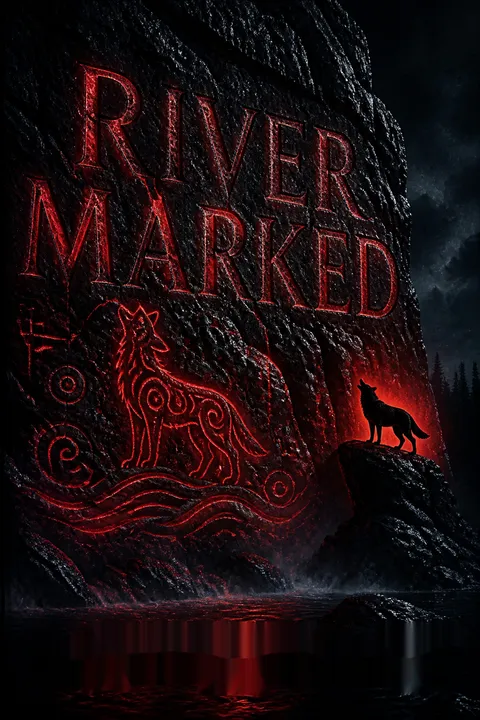


Plot Summary
Prologue
Two newspaper reports open on the Columbia Gorge: a father and son have vanished while fishing, and unusually few large salmon are passing the dams. Officials suspect a toxic spill, but testing finds no poison. The accounts leave the river itself as the unanswered question, setting a quiet, ominous frame before Mercy Thompson reaches its banks.
The clipped reports give the river a public face before Mercy encounters its supernatural one. Their cautious explanations, a possible spill and a boating accident, sound reasonable precisely because the real cause cannot yet be named. The missing fishermen and dwindling salmon also widen the danger beyond one household or one supernatural community. The river is already changing lives and ecosystems; the story begins by showing that ordinary institutions can observe the damage while remaining unable to interpret it.
Stefan's House Falls Silent
After months without hearing from Stefan, Mercy visits the vampire's neglected home and finds Rachel battered, depleted, and missing two fingers. Rachel says a newly turned vampire named Ford has been biting her, while Stefan remains shut away since his longtime household anchor, Naomi, died.
When Mercy calls for him, Ford attacks her, and Stefan intervenes with frightening force before recognizing his friend. Mercy gives Stefan blood, gets him cleaned up, and persuades him to join her, Warren, and Kyle for their movie night.
Laughter and company restore some of his old wit. Yet the four surviving members of his household remain hungry and frightened, and Mercy leaves knowing that Stefan's grief has endangered the people who depend on him.
Mercy treats Stefan's isolation as a failure of care, not a private sorrow he is entitled to indulge without consequence. Her blunt intervention works because she refuses to make him the sole injured party: Rachel and Ford's condition forces his attention outward. The scene also complicates the group's moral categories. Stefan is a vampire whose feeding sustains him through human vulnerability, yet he has tried to limit the harm. Mercy's help does not erase that contradiction; it makes responsibility, rather than innocence, the standard by which she judges a friend.
Blood Makes the Wedding
Adam returns from a business trip to find Mercy worried about Stefan and weary of her mother's elaborate wedding plans. Mercy proposes marrying immediately rather than risk a ceremony involving doves, balloons, and butterflies.
What she expects to be a small elopement becomes a surprise wedding, organized by Jesse, Marjorie, and the pack, with relatives, fae, and friends filling the church. Mercy is moved despite discovering that the wedding was partly the result of a family bet.
Adam then reveals that their borrowed honeymoon trailer came through fae connections, and Mercy fears the arrangement hides a trap. They argue over his decision to keep the concern to himself, then repair the hurt through honesty and a shared run. Their marriage begins not as escape from trouble, but as a promise to face it together.
The wedding's surprise reverses Mercy's attempt to control intimacy by shrinking its public footprint. Her family and pack make a ceremony around her, but their affection arrives tangled with teasing and withheld plans, the same ambiguity that unsettles her about Adam's protective instincts. Their first marital disagreement matters because it is small enough to expose a durable pattern: he anticipates her anger, she resists being managed, and both mistake prediction for trust. Their reconciliation turns the wedding from a symbolic finish into a practical beginning, grounded in renegotiation rather than perfect understanding.
A Father in the Sun
At the secluded Columbia Gorge campground, Mercy and Adam swim, rest, and enjoy a rare stretch without pack or business demands. While Adam runs, Mercy hears a dance and sees a man in old buckskin gradually take shape in the daylight.
She recognizes him from a photograph as Joe Old Coyote, the father she never met. He bows, changes into a coyote, and vanishes without tracks. The encounter unsettles Mercy more than she expects, especially because he never appeared during the crises of her childhood.
She tells Adam about an earlier vision quest: a gray wasteland, a ruined car, and a towering figure who called himself Coyote. Adam comforts her, but the vision's warning of unseen pursuers now feels less like an odd childhood dream than a door left ajar.
The visitation gives Mercy a form of recognition without the ordinary benefits of relationship. Joe appears too late to provide childhood care and too briefly to explain himself, so his presence intensifies rather than resolves her questions about belonging. Her vision quest supplies a second kind of inheritance, an image of herself confronted by Coyote and forced to name what she is. Adam's role is not to interpret the experience for her; his physical steadiness lets her tell it without being swallowed by it. Intimacy here means making room for an unresolved past.
The Boat Beneath the Trees
On a night run, Mercy and Adam find a bloodied fisherman, Benny Jamison, hiding in a boat near shore and repeating his fear of whatever attacked him. Mercy wades through the cold water and brings the boat out, but a submerged growth tears her calf before Adam and local Yakama men help carry Benny to an ambulance.
The man's right foot has been severed. At their campsite, elderly Gordon Seeker treats Mercy's wound with a salve and ritual, then identifies it as a river mark and directs her to Maryhill Museum and Horsethief Lake.
Adam calls fae contact Uncle Mike, who explains that seven otterkin once placed in the area have disappeared from their protected pool. A fae visionary arranged the honeymoon detour because she foresaw danger, though no one can say exactly what is coming.
The rescue makes Mercy's curiosity bodily consequential: she does not merely witness the river's violence, she enters it and carries a trace away. The mark turns an unexplained injury into a possible claim over her, while Gordon's instructions offer direction without clarity. Adam's call connects the local emergency to fae decisions made at a distance, exposing how supernatural power often operates through incomplete information. Mercy and Adam have been placed in danger by people who believe they are helping, a tension that makes their investigation feel less like a chosen adventure than an obligation imposed by overlapping communities.
Petroglyphs Name the Hunger
Mercy and Adam visit Maryhill Museum, where a Charlie Russell painting draws Mercy toward the history of the West and the basement's Native American collection. At Horsethief Lake, Calvin Seeker, Gordon's grandson and a medicine man's apprentice, guides them through ancient pictograms and carved stones.
A carving of a tentacled river creature resembles the figure in Mercy's antihistamine dream, which showed a teacher and her family being drawn to their deaths. Calvin recounts a Coyote story about a monster that swallowed the first people along the Columbia.
He also tells them Benny's sister, Faith, vanished during their fishing trip. The old legend may be more than a story, Mercy realizes, but the evidence remains fragmentary: a carving, a dream, a missing woman, and an injured survivor.
The museum and the lakeside trail place cultural memory beside physical evidence, without making either a simple key to the other. Mercy notices that the carved creature matches her dream, but the correspondence does not yet tell her whether the dream predicts, remembers, or warns. Calvin's story adds a communal record of danger, though its shifting versions resist use as a literal manual. The sequence asks Mercy to treat inherited narratives seriously without surrendering judgment to them. Her training as a historian and mechanic matters: she compares artifacts, observes damage, and waits for a causal explanation rather than mistaking resemblance for proof.
Faith Returns to the Fire
Back at camp, Mercy joins Calvin, his uncle Jim, and brothers Hank and Fred Owens, who helped search for Benny. Faith appears as a ghost and tells Mercy that the creature has tasted Benny and will come for him again. She also asks Mercy to pass a message to Benny.
Before Mercy can explain everything, Hank suddenly shoots Adam. Fred knocks the gun aside, and Mercy drops Hank with the ancient walking stick that has followed her for some time. Gordon removes the bullet from Adam's shoulder; the wound on Hank's back resembles Mercy's river mark.
Adam forbids calling the pack, fearing the creature could control a group of werewolves. The group now has proof that the river's influence can turn a rescuer into an attacker, and that Mercy may be unusually resistant to it.
Faith's appearance converts the investigation from a search for explanation into a race to prevent a second attack. Her warning carries emotional weight because it is specific to Benny, not a generalized prophecy. Hank's sudden violence demonstrates that the river mark can compromise agency, while Mercy's ability to resist it makes her both an asset and a target. Adam's decision to keep the pack away is tactical, but it also reveals the cost of leadership: he must refuse familiar help when its strength could become a liability. Trust now depends on recognizing when another person's actions are no longer their own.
Coyote's Borrowed Life
That night, the trickster Coyote meets Mercy beside the river and explains that Joe Old Coyote was a real man whose life he once shared, not simply a name or a ghost. Joe loved Mercy's mother and died after drawing vampires away from her; Coyote had not known Mercy existed until later.
He is not her father in the ordinary sense, but his older union with a human woman lies behind Mercy's unusual inheritance. Coyote then throws Mercy into the Columbia to test what hunts her.
A tentacle drags her under, and Adam and Coyote pull her free as the river devil rises, a vast, tooth-lined creature. Its magic resists steel, but Coyote's obsidian blade cuts its tentacle. Mercy now knows the enemy is real, enormous, and reachable only through ancient magic.
The revelation separates biological parenthood, spiritual ancestry, and lived care instead of collapsing them into one reassuring answer. Joe's love for Mercy's mother was real, but it does not make him a conventional father; Coyote's connection is older and more unsettling. Mercy's history becomes less a search for a missing parent than a negotiation with forces that shaped her before she could choose them. Coyote's reckless test makes that knowledge costly. His method produces actionable evidence, but it also exposes how easily he treats another person's danger as an acceptable instrument of discovery.
Otterkin Strike Back
The next day, Mercy shops for clothes while Adam buys food, trying to preserve the independence she demanded after their earlier argument. An otterkin woman drops through the changing-room ceiling and attacks her with a bronze knife, insisting that the river creature belongs to them.
Mercy disarms and injures the attacker, who escapes through the ceiling in otter form before store staff arrive. Adam had sensed fae nearby but lets Mercy handle the confrontation, then accepts that she defended herself.
The attack changes the stakes: the otterkin are not simply displaced creatures near the campground, but allies of the monster and willing to reclaim Mercy. Her river mark connects her to the creature, while the fae woman's claim suggests that killing it will provoke a second enemy.
The fight tests the difference between protection and control in a setting deliberately far removed from supernatural territory. Mercy has insisted that Adam leave her room to act, and her success gives that insistence evidence without pretending she is invulnerable. The otterkin's language of ownership mirrors the river devil's attempt to claim marked people, making the attack a political as well as physical threat. Adam's restraint is a meaningful adjustment: he recognizes danger but does not punish Mercy for surviving it. Their relationship develops through negotiated risk, not through the elimination of risk.
Stonehenge Calls the Old Ones
At midnight, Jim and Calvin use the power beneath Maryhill's Stonehenge replica to summon Coyote and other ancient animal spirits. In a vision, Coyote's sisters explain that the river devil feeds on human possibilities and becomes vulnerable while digesting an enormous meal.
Coyote plans to let the spirits be swallowed so Mercy can reach the creature's heart with obsidian knives. Only a stone blade can penetrate its magic. Meanwhile, Hawk removes the mark from Hank, and Wolf takes offense when Adam bites him while defending Mercy.
Adam is left trapped in wolf form. The plan asks the spirits to risk their lives and leaves Mercy as the one who must strike, while Adam's forced transformation threatens to separate him from the human judgment that usually restrains his wolf.
The strategy is built from a dangerous inversion: the enemy's appetite, previously the source of escalating harm, becomes the mechanism that may expose it. Mercy's task is not simply to fight harder but to exploit a narrow interval created by deliberate sacrifice. The sisters' explanation distinguishes a creature that consumes bodies from one that consumes futures, giving the violence a specific metaphysical logic. Adam's punishment complicates the plan at the level of intimate trust. Mercy must act without the partner who normally helps her interpret danger, while Adam must endure being physically present but unable to participate as himself.
A Child's Terrible Bargain
Before the battle, the river devil reaches Mercy through the mark and shows her eight-year-old MacKenzie walking into the water with her younger brother. It offers to spare the children and their parents if Mercy gives herself up.
Adam stands between Mercy and the river, but he cannot take her place because the creature wants her specifically. Coyote says she is essential to the plan and cannot promise to save a child whose location he does not know. Mercy refuses the bargain, throwing a stone into the water.
The river devil releases its hold long enough for MacKenzie's parents to follow the children in, then kills all four. Mercy has made the only choice she believes can stop a greater slaughter, but the deaths leave her carrying a preventable loss even as the battle approaches.
The bargain attacks Mercy at the precise point where her ethics are strongest: she cannot dismiss a child's life as an abstraction. Her refusal is not a clean heroic choice, because she has no evidence that the monster would honor its promise and no way to replace herself in Coyote's plan. The deaths make uncertainty morally expensive. Mercy must continue not because she feels absolved, but because stopping now would compound the loss. The scene refuses the fantasy that courage always preserves everyone; it shows a person accepting responsibility without confusing responsibility with omnipotence.
The River Devil's Heart
Mercy wades into the river as bait while the animal spirits wait along the shore. The river devil seizes her, but she braces against its teeth and cuts one tentacle with an obsidian knife. Thunderbird lifts her clear, and the spirits attack, drawing the monster toward shore.
It devours Wolf, leaving Adam unconscious, then consumes Coyote, Raven, Snake, Thunderbird, and the others as they keep it occupied. When the creature lies bloated and still, Mercy swims to its back and cuts through its hide with her dwindling knives.
The river devil wakes before she can sever its heart. With no blades left, Mercy summons the old walking stick. It changes into a spear, freezes the creature's heart, and breaks it. The monster dies, but Mercy is left broken and bleeding beside Adam.
The climax makes Mercy's victory depend on precision under physical and moral pressure, not on superior force. The spirits' sacrifice creates an opening, but their deaths do not make her task automatic; she must keep cutting after the creature wakes and her tools fail. The walking stick's transformation pays off its earlier presence as an unpredictable artifact, converting a desperate appeal into the final weapon. Adam's unconsciousness prevents romance from functioning as rescue. Their bond sustains Mercy emotionally, but her hands, judgment, and willingness to continue do the work that ends the threat.
The Stick Chooses Its Keeper
As Mercy lies injured, the otterkin emerge from hiding and accuse her of destroying the creature they had awakened and fed. Their leader attacks, but the walking stick kills him, and Adam wakes to kill the remaining attackers.
Mercy reaches the hospital with a broken leg and hand, deep cuts, and more than a hundred stitches; Benny survives and hears what Faith asked Mercy to tell him. Back home, Mercy's pride makes her reject help until Stefan explains that the pack cannot override her authority when she orders them away.
Six days later, Coyote visits, hears about the stick's new violence, and accepts it when Mercy offers it as a gift. Her recovery depends on accepting care, while the artifact leaves her hands before it can become another danger.
The aftermath refuses to treat survival as a return to the old normal. Mercy has killed the river devil, but the otterkin's grievance and the altered walking stick leave consequences that cannot be dismissed as victory's debris. Her physical dependence exposes a familiar defense: she equates needing help with losing autonomy. Stefan helps her see that the pack's obedience has turned her withdrawal into a command they cannot ignore. Giving the stick to Coyote is not an escape from responsibility but an act of stewardship, grounded in recognizing that some burdens are safer when shared.
Epilogue
In a letter prepared in case she does not return, Mercy tells Adam that she fought to reach him and that her love cannot be reduced to a neat explanation.
She asks him not to push Jesse away and urges him, eventually, to let himself be loved again without waiting years out of guilt or fear. The letter is both a farewell she hopes never to need and a record of what she wants Adam to remember if she is gone.
The letter makes private affection practical. Mercy does not ask Adam to preserve her as an ideal or to remain emotionally frozen; she asks him to keep parenting Jesse and, one day, to allow another relationship. That request reveals her awareness of Adam's protective isolation and her own inability to imagine him with someone else without pain. The document sits beside the resolution as a contingency rather than a prophecy. Its force comes from the fact that Mercy wrote it while preparing for danger, then survived to return home, leaving the letter as evidence of love shaped by mortality rather than certainty.
Analysis
The novel makes care a form of action rather than a soft alternative to violence. Mercy helps Stefan by forcing him to notice the people he has neglected, saves Benny by entering the water herself, and eventually confronts a monster whose appetite consumes not only bodies but possible futures. Each act of care has a cost, and the book refuses to pretend that good motives guarantee good outcomes. Mercy's refusal of the river devil's bargain leaves a family dead, a choice that remains painful even though it preserves the only plan that might stop further killings.
The Columbia is both landscape and contested political space. Dams have altered its course, older communities have lost access to places and histories, and fae have relocated the otterkin without fully understanding their needs. The river devil's hunger grows from supernatural imbalance, but human and institutional interventions have already changed the conditions in which the danger unfolds. The story does not equate an ancient creature with ecological justice: the otterkin's grievance is intelligible, yet their decision to feed people to a predator is not made harmless by that grievance. Mercy must distinguish the injury beneath violence from the violence itself.
Mercy's identity also moves beyond a simple search for biological origins. Joe Old Coyote was a real man, Coyote was a force that shared his life, and Mercy's inheritance connects her to a history larger than either one. None of this cancels the love of the people who raised her. Likewise, marriage does not erase the difference between Mercy and Adam; it asks them to revise their habits of protection and independence. The novel's answer to isolation is not that one person can make danger disappear. It is that trustworthy bonds let people share knowledge, grief, and practical burdens without taking away one another's agency.
Review Summary
River Marked receives mostly positive reviews, with readers praising the focus on Mercy and Adam's relationship, Native American mythology, and character development. Many appreciate learning more about Mercy's heritage and encountering new supernatural elements. Some readers found the pacing slower than previous books and missed familiar secondary characters. The majority enjoyed the blend of romance, action, and folklore, considering it a strong addition to the series. A few critics felt disconnected from the story or disliked the departure from the usual setting and cast.
People Also Read








Characters
Mercy Thompson
Coyote-born mechanicMercy is a Volkswagen mechanic, a coyote shapeshifter, and Adam's newly married mate. Raised among werewolves despite being different from them, she has learned to survive by reading bodies, repairing what breaks, and refusing to be managed. Her humor keeps fear from becoming paralysis, but it can also conceal how deeply she carries other people's pain. Mercy values practical proof and personal choice, yet her instinct to help repeatedly draws her into dangers she cannot fully control. In this story, family history and supernatural inheritance unsettle her sense of belonging, while her marriage asks her to practice trust without surrendering independence.
Adam Hauptman
Protective pack AlphaAdam is the Alpha of the Columbia Basin werewolf pack, a former soldier, security-business owner, and Mercy's husband. He is disciplined, perceptive, and accustomed to treating danger as a problem he can manage through preparation. His protectiveness comes from genuine responsibility, but it can become controlling when he assumes Mercy will react before she has a chance to decide. He is also capable of revising his approach, and their relationship gives him room to show fear without surrendering authority. The honeymoon reveals how much he needs rest and companionship beyond the demands of leadership.
Stefan Uccello
Vampire with a conscienceStefan is a vampire, Marsilia's former loyal soldier, and Mercy's friend. Unlike many vampires, he has tried to feed without killing and to treat the humans in his household as people rather than disposable food. His intelligence and theatrical humor can make him seem invulnerable, but grief can leave him unable to care for those who rely on him. Mercy's blunt friendship reaches him where sympathy alone cannot. He also provides a glimpse of the compromises and moral boundaries that define life among vampires.
Coyote
Unruly trickster spiritCoyote is an ancient, shapechanging trickster whose confidence, humor, and appetite for risk make him both useful and difficult to trust. He approaches danger as a puzzle and often accepts costs that others would hesitate to impose, especially when he believes the result could save more lives. His stories carry knowledge, but he rarely delivers it plainly; he prefers to provoke discovery, sometimes at Mercy's expense. Beneath his vanity is a genuine attachment to the living world and to the people caught in his schemes.
Jesse Hauptman
Adam's independent daughterJesse is Adam's teenage daughter and Mercy's close family member. She is quick-witted, socially observant, and more capable of organizing adults than they are of noticing her plans. Her relationship with Adam is affectionate but shaped by his instinct to guard her, while Mercy often gives Jesse room to express what she wants. Jesse's changing appearance and emerging independence are ordinary teenage concerns in a household where supernatural dangers are anything but ordinary.
Gordon Seeker
Elder with hidden knowledgeGordon Seeker is an elderly Indigenous man, Calvin's grandfather, and a source of knowledge about the Columbia's older powers. His red cowboy boots, dry humor, and unhurried manner make him difficult to read. Gordon offers Mercy treatment and directions, but he also withholds context, trusting that a person may learn more by following a question than by receiving a lecture. He carries the authority of age without presenting himself as a simple guide, and his presence complicates Mercy's assumptions about what kind of being can wield magic.
Jim Alvin
Medicine man and mentorJim Alvin is a Yakama and Wish-ram medicine man, Calvin's uncle, and a retired academic whose calm manner masks sharp judgment. He knows how to move between cultural explanation and practical action, organizing people when the river's danger becomes undeniable. Jim does not disclose everything at once, partly because the knowledge is difficult to explain and partly because he believes ceremony and experience matter. His cooperation with Adam and Mercy grows from a willingness to protect his community, not from easy trust.
Calvin Seeker
Reluctant apprentice guideCalvin is Gordon's grandson and Jim's apprentice. Young, curious, and not especially skilled at concealing what he knows, he guides Mercy and Adam through the pictographs and petroglyphs at Horsethief Lake. His local knowledge gives the investigation historical texture, while his uncertainty makes clear that younger generations inherit traditions with gaps in them. Calvin can be defensive about identity and knowledge, but he becomes more candid as the danger proves larger than his initial understanding.
Benny Jamison
Wounded fishermanBenny is a Yakama fisherman and Faith's brother. He and Faith fish together regularly, and his instinct to retrieve a snagged line helps bring them into contact with the river creature. Even while terrified and badly injured, Benny makes a practical choice that gives rescuers a chance to find him. His survival keeps the story's supernatural stakes connected to a family and community rather than reducing the victims to statistics.
Faith Jamison
Brother's watchful sisterFaith is Benny's sister, a capable, physically active woman who shares his love of fishing and has a strong bond with the Owens family. Her humor and attention to small details, including a shirt she made herself, give her individuality beyond her place in the mystery. Faith is loyal without being sentimental, and her concern for Benny shapes the urgency of the river investigation. Mercy encounters her through an unusual form of communication, but Faith remains a distinct person with her own judgments and requests.
Hank Owens
Rancher and hawk shifterHank is Fred's brother, a retired Marine, rancher, and shapeshifter who takes the form of a red-tailed hawk. He is cautious, physically capable, and accustomed to evaluating threats through practical experience. His suspicion of Adam and Mercy reflects a desire to protect his people, even as events make judgment more difficult. Hank's bond with his brother is evident in the way they coordinate under pressure, and his military background gives the group useful discipline.
Fred Owens
Hawk-shifting rancherFred is Hank's brother, a retired Marine and rancher who also shifts into a red-tailed hawk. He is direct, observant, and quick to intervene when danger turns personal. Fred's bond with Hank combines suspicion and affection; he challenges him when necessary and takes responsibility for him afterward. His knowledge of horses and his military training make him a practical ally, while his judgment keeps the group's fear from becoming indiscriminate violence.
Edythe
Fae seer in disguiseEdythe is a powerful fae who often appears as a little girl and is known to Mercy through an earlier encounter. She has rare premonitions and uses other people to position events where they need to be, though she rarely explains her reasoning in advance. Her harmless appearance conceals formidable influence. Edythe's intervention brings Mercy and Adam to the Columbia Gorge, making her a distant but consequential presence in the story.
Uncle Mike
Fae negotiator and contactUncle Mike is a fae ally who brokers information and practical arrangements for Mercy and Adam. He is helpful but careful with the truth, accustomed to explaining only what he believes others need to know. His connections bring the honeymoon trailer and the otterkin's history into the plot, while his manner reminds Mercy that a fae favor may carry consequences. He is not an enemy, but neither is he a source of uncomplicated reassurance.
Marjorie Thompson
Mercy's forceful motherMarjorie is Mercy's mother, a warm and formidable planner who can turn family affection into a campaign of logistics. She has a gift for steering people toward what she believes they need, often without telling them how much she has arranged. Her elaborate wedding schemes reveal both her competitive streak and her desire to celebrate Mercy's marriage. Mercy loves her while remaining wary of her ability to turn a simple plan into a spectacle.
Darryl
Pack second-in-commandDarryl is Adam's second in command, a dominant werewolf who takes responsibility for the pack and for Jesse when Adam is away. He is blunt, protective, and easily exasperated by Mercy's habit of walking into danger, though their friction is balanced by mutual loyalty. Darryl's authority is practical rather than showy, and his concern for Mercy grows from knowing how often she survives situations that should have killed her.
Warren
Mercy's steady wolf friendWarren is a werewolf in Adam's pack and one of Mercy's closest friends. His easy manner makes him approachable, but he is quietly formidable and knows when humor will ease a tense room. He shares a home with Kyle and helps keep the social bonds around Mercy and Adam intact. Warren also offers practical care without demanding that people explain every vulnerability before accepting it.
Rachel
Stefan's battered housemateRachel is one of the humans in Stefan's household. She is exhausted and injured when Mercy visits, yet her concern remains fixed on Stefan's wellbeing. Her loyalty shows how complicated dependence can become in a vampire's household, especially when affection and feeding are entangled.
Naomi
Stefan's household anchorNaomi is Stefan's longtime household manager and one of the people who helped keep his home functioning. Her role is defined by years of practical care and knowledge of Stefan's habits. Her absence leaves a profound gap in the household's daily order.
Ford
Dangerous vampire fledglingFord is a large, volatile man in the process of becoming a vampire. He is frightening when uncontrolled, but his behavior also reflects the instability of hunger and poor care. Mercy sees both his capacity for harm and his dependence on Stefan's authority.
Bran
Mercy's wolf guardianBran is the Marrock, the powerful leader of North American werewolves and one of Mercy's longtime guardians. He raised her within his Montana pack and treats her as one of his own. His authority is immense, but their relationship carries the familiarity of family, affection, and old disagreements.
Zee
Fae mentor and allyZee is Mercy's fae mentor and a trusted ally who can run her repair shop when she is away. His knowledge of fae customs makes him a valuable source of help, though Mercy knows that even friendship with the fae does not make every favor simple.
Kyle
Lawyer and Warren's partnerKyle is a successful human lawyer and Warren's partner. His intelligence, taste for comfort, and dry humor make him a grounded presence among people with supernatural lives. He understands enough about the hidden world to take part in Mercy's circle without mistaking familiarity for safety.
Marsilia
Tri-Cities vampire mistressMarsilia is the Mistress of the Tri-Cities vampires and Stefan's superior. She is politically powerful and willing to use other people to secure her position. Her decisions have lasting consequences for Stefan and his household, even when she believes those choices are necessary.
The animal spirits
Ancient spirit alliesThe spirits who answer Coyote include Wolf, Hawk, Raven, Thunderbird, Bear, Snake, and Bobcat. Each carries the nature and perspective of the animal whose name they bear, and they disagree about humanity's changes to the land. Some approach the present with grief or suspicion; others remain curious. Their willingness to join the effort reflects both loyalty to Coyote and a shared concern about what the river creature may do.
Plot Devices
The river mark
A supernatural claimThe river mark is a dark, sore wound left by contact with the Columbia creature's magic. It links a victim to the river devil, allowing the creature to influence behavior and communicate with Mercy. The mark appears on Mercy and Hank, but Mercy resists the creature's control, making her unusually useful and unusually vulnerable. It turns an otherwise ordinary injury into evidence, a threat, and eventually a means of drawing the monster close.
Stonehenge's power
A gateway for spiritsThe replica of Stonehenge at Maryhill sits over a concentration of earth magic that becomes accessible through Jim's ceremony and Calvin's drumming. The site permits Coyote to call ancient animal spirits and allows Mercy to receive counsel from his sisters. Its public location conceals a powerful spiritual function, while the ritual's rules shape the gathering: the fire must touch earth, and the participants must take their animal forms.
Obsidian blades
The monster's one weaknessThe river devil's body is protected by magic that turns steel aside, making ordinary weapons and modern force ineffective. Coyote provides Mercy with a set of obsidian knives because stone can cut the creature's flesh. Each blade dulls or breaks as she works toward its heart, forcing her to continue with dwindling tools. The blades turn the climax into a test of stamina and precision rather than a contest of strength.
Lugh's walking stick
An artifact turned weaponThe old oak-and-silver walking stick has followed Mercy since an earlier encounter with the fae. At first it seems an eccentric, potentially useful object, but its hidden power emerges when Mercy faces the river devil without another knife. It reshapes into a spear, freezes the creature's heart, and later acts with lethal force against an otterkin attacker. The stick's connection to ownership and intention makes its violence a continuing concern after the immediate battle ends.
Mercy's dream and ghosts
Warnings from the unseenMercy's ability to perceive ghosts and her occasional visions bring information from outside ordinary investigation. Her dream of a teacher's family drowning later corresponds to a real tragedy, while Faith's ghost conveys the river devil's interest in Benny. The apparitions do not provide a reliable map of what will happen; they offer fragments that Mercy must test against physical evidence, local stories, and other people's accounts.
Mercy Thompson World Series











About the Author
Other books by Patricia Briggs
Download PDF
Download EPUB
.epub digital book format is ideal for reading ebooks on phones, tablets, and e-readers.








