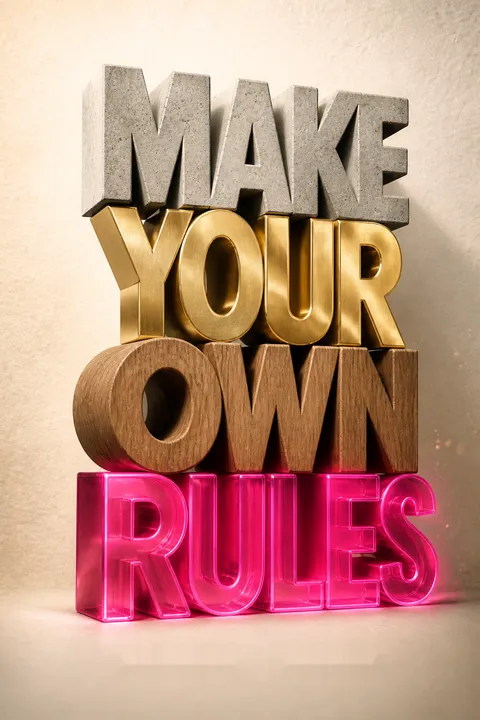


Key Takeaways
Start with the tools at hand; Andrew's boom box taught him to produce.
Begin before equipped. As a child, Huang discovered that his family's boom box could record sound. He layered songs by repeatedly copying one cassette onto another, accepting that each pass degraded the recording. The crude setup quietly taught him to plan, perform, arrange, and balance parts. Waiting for professional equipment would have postponed that education.
Make while learning. The same principle applies to a first song, video, or design. Available tools are not merely substitutes for ideal ones; their limits can teach choices and suggest new directions. Huang's later career included polished studio work, but its roots were in the habit of making things with what he had.
This is a useful correction to the fantasy that the right equipment unlocks creativity. Constraints can force decisions, and decisions create experience. In learning science, practice becomes more useful when feedback arrives during attempts, not only after preparation is complete. Still, scarcity should not be romanticized: inadequate tools, time, or access can be real barriers, not inspirational gifts. The practical lesson is to distinguish a genuine requirement from a perfectionist prerequisite. Start with what is available, while seeking better access where it materially changes the work.
Pair formal training with unsupervised play to learn the craft from both sides.
Use more than one classroom. Piano lessons gave Huang scales, notation, ear training, and the discipline of repeating difficult passages. But his production skills came largely from experimenting at home, learning online, and making music with other people. At university, composition assignments and grades did little to help him develop the work he cared about, while collaboration taught him how to record, perform, and respond to ideas in real time.
Move across boundaries. He recommends combining structured study with informal exploration, breadth with depth, and theory with practice. Studying diverse musical traditions later helped him make compelling music from everyday objects, because he could draw on a wide range of rhythmic ideas.
The strength of this approach is its refusal to make education a choice between rigor and freedom. Formal instruction can compress accumulated knowledge; open-ended practice reveals how that knowledge behaves in a living project. The pairing also resembles apprenticeship: novices gain tacit knowledge by working beside people with different strengths. Yet exploration alone can reinforce mistakes, while instruction alone can produce rule-following without judgment. A useful learning plan alternates both, with real projects exposing which knowledge is missing.
Experiment until you discover your taste, not just a new way to be strange.
Novelty needs a reason. As a young musician, Huang spent a period rejecting familiar musical conventions. He made abrasive, sprawling sound pieces from distorted instruments, garbage, and electronic glitches. The experiments were exciting to create, but he rarely wanted to hear them again. He eventually saw that treating every element as experimental had left the music without a clear purpose.
Return with new ears. The detour helped him identify what he genuinely valued: unusual sounds could work alongside recognizable patterns, much as music balances expectation with surprise. The goal was not to obey tradition, but to know what a tradition contributes before changing it. Experiments can reveal taste by showing what does not fit as clearly as what does.
A failed experiment can still be a successful diagnostic. It maps the edges of preference and makes implicit standards visible. This is close to the logic of scientific exploration: a test matters not only when it confirms a hypothesis, but when it rules out a possibility. The caution is that audience familiarity is not the same as artistic value. Work that is difficult or unfamiliar may still matter deeply. The more useful question is whether an unconventional choice serves the experience the creator intends, rather than whether it is simply new.
Practice finishing: a hundred imperfect projects teach what tutorials cannot.
Completion is a skill. Huang's custom-song business required him to deliver music to clients on a deadline. At its busiest, he produced as many as fifteen songs in a month, often with limited equipment and unfamiliar styles. The work forced him to solve problems, make decisions, and finish instead of endlessly exploring possibilities. He learned that writing and production improve through repetition, not information alone.
Choose a useful constraint. He suggests regular creation without judging every draft, timed projects, or a weekly finished piece. These practices build different abilities: generating ideas, moving quickly, and completing work for an audience. Planning a large project into concrete steps can also replace the vague instruction to keep improving it.
Finishing supplies a feedback loop that private preparation cannot: a complete work can be heard, evaluated, and compared with its maker's intentions. Repetition also lowers the emotional stakes of any single attempt, which makes experimentation easier. But quantity is not automatically progress. Repeated work without reflection can entrench weak technique or produce exhaustion. The strongest version pairs volume with review: make often, notice what changed, and adjust the next attempt. The target is not maximum output, but enough cycles to improve judgment.
Give audiences a clear hook into work that keeps changing.
Make the premise easy to grasp. A quirky song about fluffy unicorns reached a much larger audience after Reddit linked to it with a playful headline about Huang's eyebrows. The framing created curiosity, while the video delivered a strange, catchy song. The song's animated version later amassed about 60 million views. The point was not to trick viewers, but to make the invitation clear and then reward their attention.
Build a repeatable doorway. Huang's Song Challenge videos gave viewers a familiar premise even when each musical result differed. He favored projects that matched his interests and abilities, connected with audience interests or trends, and could support his business. A recognizable format can make eclectic work feel like a continuing conversation rather than unrelated posts.
A strong premise reduces the effort required to decide whether something is worth attention. That is valuable in crowded feeds, where even good work can remain invisible without a legible invitation. The ethical distinction is delivery: framing should clarify the experience, not promise one the work cannot provide. Repeatable formats also have a cost. They can turn a creative identity into a production template. The useful balance is a stable promise about the kind of experience, paired with enough variation to keep the work alive.
Make your quirks legible without turning yourself into a predictable character.
Identity can organize variety. Huang once hid his name and personal context, hoping listeners would judge only the music. Over time, he found that presenting himself as a curious, unconventional music maker helped audiences connect his varied projects. That identity did not require narrowing every interest; it gave viewers a way to understand why the interests belonged together.
Authenticity is not raw exposure. His six-month Spacetime series used elaborate fiction, visual effects, and staged social posts to examine online performance. Some viewers were confused or unimpressed, while others valued its ambition, especially after seeing the work behind it. The example complicates the idea that authenticity means showing an unedited self. Deliberate artifice can still express genuine values.
A public identity is a form of compression: it helps strangers make sense of a complex person quickly. The danger is that compression becomes confinement, rewarding the creator for repeating a simplified persona. Huang's account makes room for both clarity and multiplicity. It also raises a question of trust: fiction can be meaningful, but audiences need enough cues to understand the terms of the performance. The strongest personal brand is not a claim to reveal everything. It is a selective, coherent account that leaves room for change.
Know where your creative income comes from, then build more than one source.
Treat the money as information. Huang once received a check for more than $40,000 in satellite-radio royalties he had not known to claim. His story illustrates how creative income can be split across systems that are difficult to see from the outside. In different periods, he combined commissions, music sales, online video revenue, commercial work, licensing, products, and teaching.
Measure before committing. Touring seemed like a standard musician's path, but in one period it brought little income despite substantial travel and effort. Tracking revenue helped him see that other work was more valuable to his career. Diversifying does not guarantee stability, but it can reduce dependence on one platform, client, or format, while revealing which activities are worth the time they consume.
This is more than a financial tip. Measurement changes the story a creator tells about which work is essential. A familiar activity, such as touring, can carry cultural prestige while producing poor returns; an overlooked royalty category can quietly represent substantial value. Diversification also has limits: multiple small revenue streams can create administrative complexity and scatter attention. The goal is not to monetize everything. It is to understand the economic structure well enough to protect the work and make deliberate choices about where effort goes.
Choose collaborators and peers for shared work, not status alone.
Relationships teach the unscripted parts. Huang's university band, Analog Input, brought together his production and rap with two skilled saxophonists. Working with them taught him how to share ideas, run sessions, improvise, and hold an audience's attention. The lessons came from making things together, not from a syllabus.
Build sideways as well as upward. Huang describes career growth as a community effort: peers can exchange knowledge, collaborate, and recommend one another for opportunities. A brief boost from a much larger creator may attract attention, but durable support often comes from people at a similar stage. His approach to networking is to seek a real connection and contribute something useful, rather than treating every conversation as a transaction.
Peer networks spread practical knowledge that formal credentials often miss, including tacit skills and access to opportunities. They also create a healthier basis for ambition: progress becomes shared rather than a contest for scarce approval. This resembles the value of weak ties in social-network research, where relationships beyond one's immediate circle can carry new information. Still, community is not automatically equitable or supportive. Collaboration works best when roles, credit, payment, and ownership are discussed early, so goodwill does not become a substitute for fair terms.
A million subscribers cannot compensate for a life built around the next million.
Growth has a personal price. Huang's two-video-per-week schedule helped his channel gain one million subscribers in eighteen months. The same pace eventually consumed his time and health. He recognized eighteen of twenty-four burnout signs, and a $50,000 sponsorship offer felt like another demand he could no longer accept. Reaching one million subscribers had brought a celebration, but not lasting satisfaction; his attention had already shifted to the next milestone.
Count what the dashboard misses. Sleep, time with friends, enjoyable creative hours, and days spent on personal projects are also useful measures. A high-performing channel can be a success by platform metrics and a poor fit for the creator's life. The book's point is not to reject ambition, but to notice when its rewards no longer justify its costs.
This is a sharp example of metric substitution: a measurable proxy, subscriber growth, begins to stand in for less measurable aims such as connection, creative freedom, and satisfaction. Once a proxy becomes the target, it can distort the behavior it was meant to represent. The correction is not to ignore data, but to add counter-metrics that track health and meaning. The account also reflects unusual financial freedom; many creators cannot turn down large offers. Boundaries matter, but the available choices are shaped by economic security.
Write rules for who you are now, not the artist others expect.
Choose structure deliberately. Huang grew up with demanding academic expectations, but his parents also insisted that enjoyment mattered. That combination helped him explore music without following the conventional professional path. He argues that freedom does not mean having no rules: schedules, constraints, and commitments can support the life a person actually wants. The rules might guide a work session, protect rest, or prioritize creative exploration over wider reach.
Expect the rules to change. His working life shifted from intense channel growth to a slower pace centered on music and family. A method that once helped him could later become a source of strain. The practical task is to notice the season, identify what matters now, and revise the structure accordingly.
The central idea is adaptive self-governance: inherited norms can be examined, retained when useful, and replaced when they no longer fit. This connects with self-determination theory, which emphasizes autonomy, competence, and relatedness as conditions that support motivation. Structure can serve autonomy when it protects chosen priorities rather than imposing someone else's definition of success. The nuance is that personal choice never happens in a vacuum. Family duties, money, discrimination, and access constrain what rules can realistically be followed, so self-direction should not be confused with unlimited control.
Analysis
Make Your Own Rules is part memoir, part working manual for an independent creator, and part argument against treating a career template as a law of nature. Its narrative moves from a child making noise with a cassette recorder to an online musician building a business, confronting burnout, and redefining success. That progression makes the advice more persuasive than a checklist alone: methods are shown as experiments, including the ones that fail, become obsolete, or work only for a particular season.
The book's most distinctive idea is not simply openness. It is the combination of openness with chosen structure. Huang advocates exploration across genres, identities, and business models, but also deadlines, spreadsheets, regular practice, and deliberate limits. This resolves an apparent contradiction: rules can expand creative freedom when they are designed to protect attention, while inherited rules can shrink it when followed without examination. The strongest practical question becomes not whether a method is artistic or commercial, disciplined or spontaneous, but what it enables and what it costs.
The career story also reveals a tension in creator culture. Digital platforms reduce gatekeeping and let an individual reach a large audience directly, yet they make visibility dependent on shifting recommendation systems and frequent output. Huang's rise coincided with a platform change and unusual opportunities, including lucrative commercial work and a capable business partner. His openness about luck and privilege matters because it prevents the story from becoming a universal recipe. Hard work can improve readiness, but it cannot guarantee the algorithm, timing, audience, or financial runway that made his choices possible.
The book is most useful as a method for making decisions under uncertainty: create before feeling fully qualified, use projects to learn, examine the money, and define success in terms that include lived experience. Its limitation is that advice to say no or slow down is easier to follow with savings and support. Still, the broader lesson travels: ambition is a tool, not an obligation, and a career should be judged by the life it helps create, not only by the audience it accumulates.
Review Summary
Make Your Own Rules receives mostly positive reviews, with readers appreciating Huang's personal story, insights into the music industry, and advice for creatives. Many found it inspiring and thought-provoking, especially for aspiring musicians and content creators. Some praised the book's structure and writing style, while others felt it was repetitive or too autobiographical. Overall, reviewers valued Huang's authenticity, his journey as a self-made musician, and his perspective on creativity and branding in the digital age.
People Also Read








Glossary
Songs To Wear Pants To
Request-driven music websiteHuang's early website invited visitors to suggest unusual song ideas, which he turned into short, humorous musical pieces. The project began with suggestions from friends and grew to attract requests from strangers. It gave him a public outlet for experimentation, helped build an online audience, and led to paid commissions for personalized songs.
Song Challenge
Constraint-based video formatA recurring kind of video in which Huang frames music-making as a specific challenge, such as creating a song under an unusual limitation. The format gives viewers a clear question to follow while leaving the musical result open. It helped make otherwise varied projects feel connected and gave audiences a familiar reason to return.
First of October
One-day annual band projectA project in which Huang and musician Rob Scallon form a band for one day each year, writing and recording an album in that time. The deliberately compressed schedule encourages quick decisions and playful collaboration. Though begun as a joke, the videos and songs developed a devoted audience and became a notably successful part of their creative work.
Spacetime
Fictional online video seriesHuang's six-month multimedia project presented a scripted science-fiction story across videos and social media posts. It used costumes, sets, visual effects, and staged online moments to explore how audiences judge authenticity in digital spaces. Viewer reactions were mixed, but the project let Huang pursue an ambitious artistic vision beyond his usual formats.
FAQ
What’s Make Your Own Rules by Andrew Huang about?
- Personal journey and advice: The book blends Andrew Huang’s personal story as a creator with practical advice for thriving in the digital age, especially in music and content creation.
- Structure and themes: It’s divided into four parts, covering creative voice, audience building, monetization, and authenticity, with prompts and assignments for readers.
- Digital-first focus: Huang details how he leveraged online platforms like YouTube to build a sustainable creative career, offering insights for today’s digital creators.
- Mindset and openness: The book emphasizes flexibility, experimentation, and openness to all creative approaches, challenging traditional paths.
Why should I read Make Your Own Rules by Andrew Huang?
- Inspiration from adversity: Huang’s journey overcoming cultural barriers, hearing loss, and industry challenges offers hope and practical lessons for outsiders and aspiring creators.
- Holistic creative guidance: The book combines narrative with actionable advice on creativity, workflow, marketing, and finances, grounded in real-world experience.
- Unique perspective: Huang challenges common artistic dichotomies and encourages embracing contradictions to fuel creativity and success.
- Digital relevance: It’s especially valuable for creators navigating online platforms, with insights on audience building and adapting to digital trends.
What are the key takeaways from Make Your Own Rules by Andrew Huang?
- Embrace experimentation: Creativity thrives on openness, trying new things, and balancing tradition with innovation.
- Start with what you have: Don’t wait for perfect skills or tools—begin creating now and learn through doing.
- Multiple revenue streams: Building a sustainable career involves diversifying income and treating creative work as a business.
- Authenticity and resilience: Staying true to yourself and adapting to challenges are central to long-term creative fulfillment.
What are the most memorable quotes from Make Your Own Rules by Andrew Huang and what do they mean?
- “IT WILL NEVER BE GOOD ENOUGH”: A reminder to combat perfectionism and focus on progress and completion rather than unattainable standards.
- “DO EVERYTHING POSSIBLE—that’s the Andrew Huang way.” Encourages straddling creative contradictions and pushing boundaries without fear.
- “Create now.” Urges creators to start making art immediately, regardless of circumstances.
- “A band is a brand.” Highlights the importance of image, audience perception, and strategic planning in creative careers.
- “You can practice having ideas.” Suggests that idea generation is a skill that improves with daily, deliberate practice.
How does Andrew Huang define and approach creativity in Make Your Own Rules?
- Openness and flexibility: Huang advocates for a mindset of profound openness, encouraging experimentation and rejecting rigid methods.
- Balance of theory and practice: He combines formal training with informal exploration, valuing both breadth and depth in learning.
- Embracing imperfection: Early creative experiments taught him the value of pushing boundaries and learning from mistakes.
- Creativity as a daily habit: Regular, judgment-free creation builds creative flow and suspends inner criticism.
What practical advice does Andrew Huang give for building a creative career in the digital age in Make Your Own Rules?
- Leverage online platforms: Early adoption of digital sharing and YouTube helped Huang build an audience and sustain his career.
- Content strategy: Create shareable, engaging content by combining humor, novelty, and trending topics.
- Community and networking: Online platforms enable collaborations and mutual support, expanding creative opportunities.
- Consistent output: Regularly posting finished work, even if imperfect, helps develop skills and audience engagement.
How does Make Your Own Rules by Andrew Huang address branding and content strategy for creators?
- Intentional branding: Creators build a brand whether they intend to or not, so being deliberate helps communicate your identity clearly.
- Authenticity in branding: A brand should reflect your true self and allow for growth, not become a rigid persona.
- Content value: Content should consistently provide value—entertain, inform, or inspire—rather than just self-promote.
- Platform adaptation: Early adoption of new platform features and engaging content structures can boost visibility and audience retention.
What does Andrew Huang say about the relationship between art and business in Make Your Own Rules?
- Interconnectedness: Art and business are intertwined; ignoring business aspects can lead to lost income and exploitation.
- Valuing your work: Set fair rates, negotiate, and be ready to say no to projects that don’t align with your goals or pay adequately.
- Diversified income: Multiple revenue streams—commissions, YouTube, licensing, merchandise—are essential for sustainability.
- Business mindset: Treating creative work as a business supports creative freedom and long-term success.
How does Andrew Huang address authenticity and identity in Make Your Own Rules?
- Complex authenticity: Authenticity isn’t a single “real” self but a balance of multiple genuine facets, including openness about personal quirks and struggles.
- Selective self-presentation: All art involves some level of construction; authenticity lies in intent and alignment with deeper values.
- Self-reflection: Creators should examine their values and goals to ensure their work aligns with their true selves.
- Embracing identity: Huang’s journey includes embracing his name and background, using art to find connection and self-acceptance.
What strategies does Andrew Huang recommend for managing burnout and work/life balance in Make Your Own Rules?
- Recognize burnout: Be aware of signs like anxiety, fatigue, and loss of creativity, which can develop gradually.
- Set boundaries: Learn to say no to draining opportunities, prioritizing health and passion over relentless growth.
- Structured flexibility: Use a mix of disciplined scheduling and unstructured playtime to support mental health and creativity.
- Protect resources: Creators have finite energy and must protect their well-being to sustain their work.
How does Andrew Huang suggest creators handle feedback, criticism, and self-promotion in Make Your Own Rules?
- Promotion is essential: Good work rarely succeeds on its own; creative, audience-focused promotion is necessary.
- Strategic self-promotion: Plan timing and variety, make promotional content engaging, and be straightforward about asking for support.
- Handling criticism: Take comments with a grain of salt, focusing on constructive feedback from trusted sources rather than strangers.
- Live for yourself: Don’t let external validation or criticism dictate your creative choices; know your own values and purpose.
What advice does Andrew Huang give about turning weaknesses into strengths and collaborating in Make Your Own Rules?
- Embrace your quirks: Weaknesses can become strengths when leveraged properly; being unapologetically yourself deepens audience connection.
- Adapt and collaborate: Recognize limitations and seek partnerships or new workflows to amplify strengths.
- Value every contributor: Collaboration brings unique ideas and energy, making the whole greater than the sum of its parts.
- Project assessment: Use criteria like fun, money, or creative fulfillment to decide if a collaboration is worth pursuing, and balance solo work with teamwork.
Download PDF
Download EPUB
.epub digital book format is ideal for reading ebooks on phones, tablets, and e-readers.








