

Key Takeaways
Stop treating life-changing choices like math problems with hidden answer keys
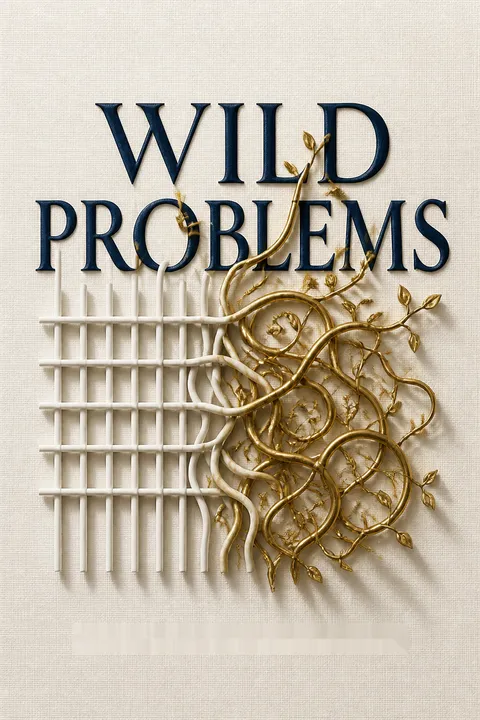
Two kinds of problems. A tame problem has a clear goal and methods that can be tested, such as finding a route or improving a phone battery. A wild problem is a consequential life choice whose goals are personal and whose outcomes cannot be reliably measured in advance. Whether to marry, have children, or change careers belongs in this second category. The trouble begins when people apply the tools of tame problems to choices that resist them. A spreadsheet may compare costs, but it cannot reveal the full experience of becoming a parent or the person that experience might create.
Beware bright measurements. The author compares this to searching for lost keys under a streetlight simply because the area is visible. Gathering data can clarify a decision, but it can also distract from values and consequences that are harder to quantify.
The distinction is useful because it asks whether a decision has a stable target before prescribing a tool. Measurement is powerful when outcomes are observable and repeatable; it is less trustworthy when a score stands in for a shifting human purpose. This resembles the problem of proxy measures in organizations: once a proxy becomes the target, what it leaves out can become decisive. Still, rejecting algorithms wholesale would be a mistake. Evidence can expose false beliefs and clarify constraints. The practical question is not whether to measure, but whether a measurement captures the thing the decision is actually about.
Your future self's values are unknowable from the life you have now
Experience can change the chooser. Charles Darwin listed marriage's likely advantages and burdens, worrying that family life would consume the time he needed for science. His list captured what a single man could imagine, but missed the inner experience of loving a spouse or raising children. The decision has what philosopher L. A. Paul calls a transformative-experience problem: the choice may expose someone to a life they cannot fully understand beforehand, and that life may change what they value.
A leap is not a forecast. The author recalls fearing a five-day silent meditation retreat, then finding it unexpectedly powerful and personally changing. A short silence could not have prepared him for the texture of prolonged silence. Some commitments are difficult to reverse, and even informed advice cannot provide the experience itself. That makes humility about prediction more rational than pretending a list contains the answer.
This argument connects to a basic limit in forecasting: people often project their current preferences onto unfamiliar futures, even when the future changes the conditions of choice. The vampire metaphor makes the puzzle vivid because the imagined future self may not share today's tastes. Yet transformation is not a guarantee of improvement. People can adapt to harmful circumstances, too, so later satisfaction alone cannot validate every commitment. The strongest implication is not to leap blindly, but to admit that testimony, research, and imagination are partial substitutes for lived experience.
Choose for flourishing, not just a better tally of pleasant days
A good life exceeds comfort. The author uses flourishing for a life shaped by purpose, integrity, meaning, dignity, and growth, not merely by a favorable balance of pleasure over pain. A parent may have many exhausting days and still experience parenthood as central to a life well lived. A person may vote despite knowing one vote is unlikely to decide an election because citizenship is part of the person they want to be.
Identity changes the calculation. The author accepted the presidency of Shalem College in Israel despite substantial practical costs, including leaving friends and home, because the role felt connected to his Jewish identity and educational commitments. Everyday comfort mattered, but it was not the decisive measure. The point is not that meaning always wins. It is that a list of anticipated feelings can omit the values that make a life feel like one's own.
Flourishing offers a needed counterweight to the idea that well-being is simply a sum of enjoyable moments. It is close to the distinction in moral philosophy between feeling good and living well, and it helps explain why people accept demanding commitments without regarding them as irrational. The challenge is that flourishing is plural and contested. One person's vocation may be another's imposed duty, and identity can be used to justify choices that harm others. The concept works best as a question for reflection, not as a universal score or permission to ignore practical costs.
Use a threshold, not an impossible search for the best
Penelope faces a search problem. In the Odyssey, Penelope delays choosing among 108 suitors. A mathematical version of her dilemma, the secretary problem, asks how to select the best candidate when rejected options cannot be recovered. Under ideal assumptions, interview about 37 percent of candidates, then choose the next one who surpasses the best seen so far. The strategy offers a 37 percent chance of selecting the absolute best, but it assumes candidates can be ranked clearly and arrive in random order.
Real life lacks that ranking. A partner, city, or career is not a single score. One person may be kinder, another more compatible, and another more exciting. Herbert Simon's idea of satisficing means choosing an option that meets a sufficient standard rather than pursuing an unknowable optimum. This is not careless settling. It is recognizing that the search for a perfect choice can prevent any choice at all.
The secretary problem is a sharp illustration of the difference between mathematical elegance and practical relevance. Its assumptions make the puzzle solvable; the intimate decisions people care about often violate those assumptions, especially because preferences emerge through the choice itself. A threshold can still help by distinguishing unacceptable options from plausible ones. But thresholds should not become rigid checklists that screen out qualities that only appear through shared experience. The deeper lesson is to use formal models as lenses, not as authorities over questions they were never designed to answer.
Build relationships as shared journeys, not personal transactions
Stop casting yourself as the star. People naturally narrate life from their own point of view, turning others into supporting characters. The author suggests imagining relationships as an ensemble: a conversation is not two prepared speeches, but a shared event whose direction is discovered together. That means listening without rehearsing the next line, making time for friends without calculating immediate returns, and remembering that others carry full lives of their own.
Commitment changes the frame. Rabbi Jonathan Sacks distinguishes a contract, where each side monitors its share, from a covenant, a promise that makes reliable commitment possible. The covenant perspective does not mean accepting abuse or pretending relationships are always reciprocal. It means approaching ordinary obligations as part of a shared life rather than a string of transactions. In the author's view, this can make friendship, marriage, and cooperation more meaningful.
The ensemble image captures a subtle social skill: attention can shift from managing one's impression to noticing what is happening between people. Research on active listening and responsive conversation supports the idea that feeling understood strengthens connection, although relationships also need boundaries and reciprocity. The contract-covenant contrast is memorable, but contracts are not inherently cold; clear agreements protect people where power is unequal or trust is not established. Shared commitment is most sustaining when generosity is paired with the ability to name unmet needs.
Make principles defaults before temptation starts bargaining
Teodora returned the diamond. At a lodge in the Grand Tetons, a housekeeper found an earring left behind in a guest room and placed it beside a note for its owner. No one had been watching, and keeping it might have been easy to justify. The author sees her action as an expression of identity: she acted as an honest person, not as someone weighing the earring's value against the pleasure of keeping it.
Rules block convenient excuses. A rule such as returning lost property or visiting a hospitalized friend can reduce repeated bargaining with oneself. The author uses his own choice to take the stairs rather than the elevator: deciding afresh each time would invite excuses. Rules are not right in every circumstance, and principles can conflict. But setting a clear default can protect important commitments from momentary convenience and self-serving rationalization.
This is a strong case for precommitment, a familiar idea in behavioral economics: people can shape present choices to protect goals they expect to lose sight of under pressure. A default reduces decision fatigue and makes conduct less dependent on mood. There is also a moral distinction worth preserving. Teodora's action matters not only because honesty is a useful habit, but because another person's property has a claim on her conduct. Rules need room for tragic conflicts, such as competing duties to a child, but exceptions should be examined rather than invented on demand.
Practice the person you hope to become
Aspirations can reshape desire. The author draws on Max Beerbohm's story of George Hell, a selfish man who wears a saintly mask to win a virtuous woman. By repeatedly acting with care and generosity, he becomes the kind of person the mask first only pretended to be. The story dramatizes aspiration: people can want not only particular outcomes, but also to develop different desires and character.
Actions help form identity. Documentary filmmaker Penny Lane donated a kidney to a stranger and said the experience changed how she saw herself: she now understood herself as generous. The author argues that repeated conduct can make a virtue feel more natural. This does not mean every performance transforms someone, or that moral growth is automatic. It means an imperfect beginning need not define the limit of who someone can become. Practicing honesty, patience, or generosity can help those qualities take root.
The idea resembles learning by doing: identity is not only a private belief but also a pattern reinforced by action. In psychology, self-perception theory proposes that people sometimes infer their attitudes from observing their own behavior, especially when inner preferences are unclear. That gives practice a plausible route to change. Yet outward performance can also become mere compliance, particularly under social pressure. The key distinction is whether repeated action is connected to reflection and freely chosen aspiration, rather than to an audience's demand for appearing good.
Buy options, test paths, and leave without calling every turn a mistake
Bill Belichick plans for uncertainty. The football coach gathers extensive information about draft prospects but does not assume the rankings can identify every future star. He often trades one early pick for multiple later picks, then uses training camp to learn which players fit the team. The author calls this optionality: preserving the freedom to try something without being locked into it. It also appears in internships, test-driving a car, or visiting a place before moving there.
A disappointing choice is not always an error. When an experiment can be ended at reasonable cost, trying it may teach more than further speculation. If it fails, stop; if it works, continue. This differs from treating every commitment as disposable. Some choices, including marriage, deserve sustained effort. The point is to consider reversibility, avoid being ruled by sunk costs, and not confuse persistence with virtue when experience shows a path is wrong.
Optionality is a practical response to uncertainty because it shifts effort from predicting perfectly to limiting the cost of learning. This resembles real-options thinking in finance, where keeping the ability to act later has value when information is incomplete. The approach is strongest for reversible choices and weaker when experimentation imposes serious costs on other people. It can also encourage endless sampling if every commitment is treated as provisional. The useful balance is to test where possible, then honor the responsibilities created by choices that cannot be casually undone.
Treat life as a draft: plan, notice, revise
Artists discover through making. Elizabeth Bishop's poem “One Art” took seventeen drafts. The author uses the example to show that creation does not always execute a finished plan; the work can reveal what it is becoming. Life can work similarly. People learn what they value by living through choices, then adjusting as new information appears. Planning still matters, but the plan should not become a prison when the person or circumstances change.
Leave room for discovery. The author recommends both saying no to commitments that crowd out what matters and saying yes to worthwhile opportunities that are hard to evaluate in advance. A conversation without a fixed agenda, or unplanned time in a new city, can open paths that a tightly controlled itinerary would miss. Attentiveness is not passivity. It means noticing what experience teaches and revising the next move accordingly.
The artistic analogy gives uncertainty a constructive role: not merely a gap in knowledge, but a space where preferences and projects can take shape. It also connects to iterative design, where prototypes expose needs that planning alone cannot reveal. Still, artistic revision is easier when materials and time are available; people facing financial precarity or caregiving duties may have little room for open-ended exploration. The idea should therefore encourage adaptive planning without romanticizing instability. A flexible draft still benefits from constraints, resources, and a sense of what deserves attention.
Analysis
The book's central move is to change the standard by which a decision is judged. Instead of treating life choices as optimization problems with imperfect data, it asks whether the desired outcome can be known and measured at all. Marriage, parenthood, vocation, faith, and friendship are not merely bundles of experiences. They can alter the chooser's identity, values, and understanding of what counts as a good life. In that sense, a cost-benefit analysis does not simply lack information. It may use the wrong unit of analysis.
The argument is strongest when it explains why familiar tools mislead without declaring them useless. Data can clarify risks and expose assumptions, but it cannot supply a universal ranking for meaning, loyalty, or belonging. Darwin's pre-marriage list is compelling because it records the visible burdens while leaving the interior value of shared life mostly inaccessible. The discussion of Penelope's suitors similarly shows how optimization depends on definitions and assumptions that real decisions rarely satisfy.
The book's counterproposal is not intuition alone. It combines humility about prediction with attention to flourishing, principles, relationships, and reversible experiments. Rules can prevent motivated reasoning; optionality can make learning cheaper; artistic revision can help people adapt as experience changes them. These are complements, not replacements, for practical judgment.
A tension remains: flourishing is richer than pleasure, but also harder to define without imposing a preferred ideal of the good life. The book partly handles this by refusing to dictate which path a reader should choose. Its approach is therefore best understood as a decision discipline, not a decision formula. It asks people to include identity and character in deliberation, recognize where knowledge ends, and accept that some answers arrive only through living. The result is neither irrational surrender nor perfect control, but thoughtful participation in a life whose meaning cannot be fully priced in advance.
Review Summary
Wild Problems receives mixed reviews, with many praising its philosophical approach to decision-making and focus on human flourishing. Readers appreciate Roberts' insights on tackling life's big challenges and his emphasis on principles over pure rationality. Some find the book's ideas familiar from Roberts' podcast, while others note its limited practical advice. The book's exploration of "wild problems" – major life decisions that defy simple cost-benefit analysis – resonates with many readers, though some desire more concrete guidance.
People Also Read









Glossary
Wild problem
Unmeasurable life decisionA consequential choice for which the right outcome is not objectively clear, the effects cannot be fully predicted, and the choice may shape who a person becomes. Examples include whether to marry, have children, change careers, or join a religion. Unlike a technical problem, a wild problem has no reliable algorithm that identifies the best answer for everyone.
Tame problem
Testable problem with clear goalsA problem with a relatively clear objective and methods whose results can be tested or replicated. Finding a route between cities or improving a phone battery are examples. Scientific measurement and algorithms can often make steady progress on tame problems because success is easier to define than it is in intimate, identity-shaping life decisions.
Flourishing
Living a meaningful, worthy lifeThe author uses flourishing for a life that develops human potential through purpose, meaning, integrity, virtue, dignity, and autonomy. It is related to the Greek idea of eudaimonia and is broader than momentary happiness or comfort. A person may accept difficulty or reduced pleasure in service of commitments that make life feel meaningful and whole.
Narrow utilitarianism
Adding up pleasure and painA way of evaluating choices by estimating the pleasure and pain they are expected to produce in daily experience. The author uses the term to distinguish this calculation from broader concerns such as identity, purpose, virtue, and flourishing. Such estimates can matter, but they may miss values that cannot be reduced to a stream of pleasant and unpleasant moments.
Vampire problem
Choosing without knowing changed preferencesA metaphor for decisions that transform the person making them. Before the change, someone cannot fully know what the new way of life feels like or how it will alter their preferences. Afterward, the person may value different things, but that future perspective is unavailable to the present self. Marriage, parenthood, and religious conversion can raise similar questions.
Satisficing
Choosing what is good enoughA decision strategy associated with Herbert Simon that seeks an option meeting an acceptable standard rather than the absolute best. It recognizes limits on information, time, and human ability to compare complex alternatives. In wild problems, a good partner or career cannot always be ranked on one scale, so an adequate, fitting choice may be more reasonable than endless searching.
Optionality
Freedom to try without obligationThe ability to explore an option while retaining the freedom to stop or change course at manageable cost. The author illustrates it with a coach selecting multiple players and evaluating them in practice, rather than betting everything on a single prediction. Internships, trial periods, and visiting a place before moving there can offer similar room to learn.
Moral or Prudential Algebra
Weighing pros against consBenjamin Franklin's proposed method for organizing a difficult decision. The decision-maker lists advantages and disadvantages, estimates their relative importance, and cancels out considerations judged roughly equal. Franklin acknowledged that these judgments cannot be measured with mathematical precision. The method can prevent a rash choice, but it remains limited when the relevant values resist comparison.
Secretary problem
Selecting from irreversible optionsA mathematical problem about choosing the best candidate from a sequence when each option must be accepted or rejected immediately, and rejected options cannot be revisited. Under restrictive assumptions, a strategy is to observe roughly 37 percent of candidates, then select the next one better than all those seen. The book uses it to show both the appeal and limits of formal optimization in human choices.
Chesterton's Fence
Understand before removing traditionA principle advising people not to discard an established practice before understanding why it exists. A fence that seems pointless may serve a purpose not immediately visible. The author applies the idea to traditions around marriage and shared values: tradition is not automatically right, but its persistence can signal reasons worth examining before rejecting it.
FAQ
What's "Wild Problems: A Guide to the Decisions That Define Us" about?
- Exploration of Decisions: The book explores the concept of "wild problems," which are significant life decisions that cannot be easily solved with data or rational analysis, such as whether to marry, have children, or choose a career.
- Beyond Rationality: It challenges the traditional economic view that decisions should be made based solely on rational calculations of costs and benefits, suggesting that flourishing and meaning are also crucial.
- Philosophical Insights: The author, Russ Roberts, draws on insights from philosophers, economists, and other thinkers to provide a framework for approaching these complex decisions.
- Personal Growth: The book emphasizes the importance of personal growth and self-discovery in making life-defining choices, encouraging readers to embrace uncertainty and explore their values.
Why should I read "Wild Problems: A Guide to the Decisions That Define Us"?
- Unique Perspective: The book offers a unique perspective on decision-making, challenging conventional wisdom and encouraging readers to consider the role of meaning and purpose in their choices.
- Practical Advice: It provides practical advice for navigating life's big decisions, drawing on a wide range of disciplines and real-life examples.
- Inspiration for Growth: Readers will find inspiration to grow personally and to think deeply about what truly matters to them in life.
- Engaging Writing: Russ Roberts' engaging writing style makes complex philosophical and economic concepts accessible and relatable.
What are the key takeaways of "Wild Problems: A Guide to the Decisions That Define Us"?
- Embrace Uncertainty: Life's big decisions often involve uncertainty, and it's important to embrace this rather than trying to eliminate it with data.
- Flourishing Over Utility: Decisions should be guided by a desire to flourish and find meaning, rather than just maximizing utility or happiness.
- Self-Discovery: Making decisions is a process of self-discovery, and it's important to be open to changing your desires and aspirations.
- Principles Matter: Privileging your principles and values over short-term gains can lead to a more fulfilling life.
How does Russ Roberts define "wild problems"?
- Complex Decisions: Wild problems are complex life decisions that cannot be easily solved with data or rational analysis.
- Life-Defining Choices: They include decisions like whether to marry, have children, or choose a career, which define who we are and who we might become.
- Beyond Measurement: These problems resist measurement and require consideration of subjective and hard-to-measure goals.
- Personal and Unique: What works for one person may not work for another, and what worked yesterday may not work tomorrow.
What is the difference between "wild problems" and "tame problems" according to Russ Roberts?
- Tame Problems: These are problems with clear goals and solutions that can be objectively assessed and solved using data and rational analysis.
- Examples of Tame Problems: Finding the best route from New York to Chicago or making an omelet are examples of tame problems.
- Wild Problems: In contrast, wild problems involve subjective goals that are hard to measure and lack a clear manual or algorithm for success.
- Examples of Wild Problems: Deciding whether to marry, choosing a career, or determining how to live a meaningful life are wild problems.
What advice does Russ Roberts give for approaching wild problems?
- Embrace Uncertainty: Accept that uncertainty is a natural part of life and that not all decisions can be made with complete information.
- Focus on Flourishing: Consider how decisions will impact your overall flourishing and sense of meaning, rather than just immediate happiness.
- Self-Reflection: Engage in self-reflection to understand your values and aspirations, and let these guide your decisions.
- Be Open to Change: Be open to changing your desires and aspirations as you grow and learn more about yourself.
How does Russ Roberts use Charles Darwin's marriage dilemma to illustrate wild problems?
- Darwin's List: Darwin made a list of pros and cons about marriage, which highlighted his uncertainty and inability to predict the future.
- Beyond Rationality: Despite his rational approach, Darwin ultimately made the decision based on a vision of a meaningful life with a partner.
- Flourishing Over Utility: Darwin's decision illustrates the importance of considering flourishing and personal growth over narrow utilitarian calculations.
- Unexpected Outcomes: The example shows that even great scientists like Darwin face wild problems and must navigate them without clear answers.
What role does flourishing play in decision-making according to "Wild Problems"?
- Beyond Happiness: Flourishing involves living a life of purpose, meaning, and integrity, beyond just seeking happiness or pleasure.
- Guiding Principle: It should be a guiding principle in decision-making, helping individuals focus on long-term fulfillment rather than short-term gains.
- Personal Growth: Flourishing is about personal growth and becoming the person you aspire to be, which can guide decisions in uncertain situations.
- Transcends Daily Life: It transcends daily experiences and provides a deeper sense of satisfaction and contentment.
What are some practical strategies for dealing with uncertainty in decision-making?
- Optionality: Embrace optionality by creating opportunities to change course if needed, similar to Bill Belichick's approach to the NFL draft.
- Experimentation: Try different experiences and learn from them, rather than trying to predict outcomes with certainty.
- Flexibility: Be flexible and open to adjusting your plans as new information and experiences arise.
- Focus on Principles: Prioritize your principles and values, which can provide a stable foundation in the face of uncertainty.
What are some of the best quotes from "Wild Problems" and what do they mean?
- "The only thing that makes life possible is permanent, intolerable uncertainty: not knowing what comes next." - Ursula K. Le Guin: This quote highlights the inevitability of uncertainty in life and the importance of embracing it.
- "Human beings are not born once and for all on the day their mothers give birth to them, but that life obliges them over and over again to give birth to themselves." - Gabriel García Márquez: This emphasizes the ongoing process of self-discovery and personal growth throughout life.
- "The need for certainty is the greatest disease the mind faces." - Robert Greene: This quote underscores the dangers of seeking certainty and the value of accepting uncertainty as a natural part of life.
- "Flourishing includes living and acting with integrity, virtue, purpose, meaning, dignity, and autonomy." - Russ Roberts: This encapsulates the book's central theme of prioritizing flourishing over narrow utilitarian goals.
How does Russ Roberts suggest we balance self-interest with ethical principles?
- Privilege Principles: Roberts suggests privileging your principles and values over short-term self-interest to maintain integrity and self-respect.
- Rules for Living: Establish rules for living that align with your principles, reducing the need for constant deliberation and potential self-deception.
- Practice Virtue: Practice virtues like honesty and generosity, which can become self-reinforcing habits over time.
- Aspire to Better: Aspire to be a better person by aligning your actions with your values, even when it requires sacrifice.
How can "Wild Problems" help readers in their personal and professional lives?
- Decision-Making Framework: The book provides a framework for approaching complex decisions with a focus on meaning and personal growth.
- Self-Discovery: It encourages self-discovery and reflection, helping readers understand their values and aspirations.
- Embracing Change: Readers learn to embrace change and uncertainty, which can lead to more fulfilling personal and professional lives.
- Inspiration and Insight: The book offers inspiration and insight from a wide range of disciplines, making it relevant to various aspects of life.
About the Author
Other books by Russell "Russ" Roberts
Download PDF
Download EPUB
.epub digital book format is ideal for reading ebooks on phones, tablets, and e-readers.








