Key Takeaways
1. The Culture War: A Battle Over Reality and Morality
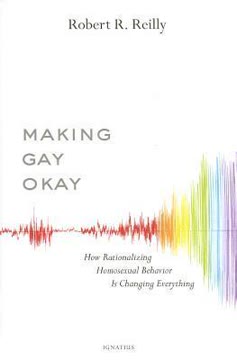
This book is also about how to live rightly in respect to our sexual Nature.
Beyond a small matter. The debate over homosexual "marriage" is not a minor issue affecting a tiny population; it is a capstone in a larger cultural war, built upon the foundation of contraception, that challenges the very nature of reality and objective morality. This progression, from contraception to same-sex marriage, is presented as logically inescapable, fundamentally altering societal norms. The author argues that denying the principle of noncontradiction—that a thing cannot both be and not be—leads to living a lie with profound societal consequences.
Two fundamental views. The core of this conflict lies in two opposing views of reality:
- Teleological Nature: Things possess an inherent nature with inbuilt purposes, leading to the primacy of reason. This view does not allow for sodomitical marriage.
- Non-teleological Nature: Things are what we make them to be according to our wills and desires, leading to the primacy of the will. This view allows for anything, including sodomitical marriage.
The author asserts that the meaning of our lives is dependent on the nature of reality, and thus, it hangs in the balance.
Public vindication sought. What began as a plea for privacy and tolerance has escalated into a demand for public vindication and recognition of homosexual behavior as normal and moral. Activist groups explicitly state their agenda to transform society's view of reality, insisting that homosexuality be regarded as healthy, natural, and normal. This shift from private choice to public affirmation reveals a deeper desire to redefine fundamental moral principles, making sodomy morally equivalent to the marital act.
2. Natural Law: Inherent Purpose and Order in the Universe
The essence, or Nature, of a thing is what makes it what it is and not something else.
Order in the universe. Greek philosophy, particularly Plato and Aristotle, discovered "Nature" by observing order and purpose in the universe, distinguishing it from changeable custom. This teleological view posits that everything has an intrinsic end (telos) towards which it is designed to move. For humans, this means an inbuilt purpose that guides what we "ought" to become, making reason normative for moral behavior.
- Aristotle: "Nature ever seeks an end."
- Plato: Man can know "what is" (ta onta) through reason.
Man's rational nature. Human beings, uniquely endowed with reason and free will, are ordered to an end—the Good, which Aristotle equates with happiness achieved through virtuous actions. Acting rationally means acting in accord with human nature, while acting irrationally is unnatural. Moral laws, derived from natural law, apply to man because he can choose to conform to his good or frustrate it.
- Moral laws: Not external impositions, but expressions of man's inner essence.
- Consequences: Defying moral law ultimately "breaks man."
Universal justice. Natural law provides a universal, immutable standard of justice, transcending cultural or political conventions. This is the foundation for the Declaration of Independence's assertion that "all men are created equal." Positive laws are legitimate only insofar as they align with natural law, which objectively distinguishes right from wrong.
- Cicero: True law is "reason, right and natural, commanding people to fulfill their obligation and prohibiting and deterring them from doing wrong."
- Socrates/Plato: Condemned homosexual acts as unnatural, viewing lust as irrational and destructive to human nature and the well-ordered polis.
3. Rousseau's Inversion: Primacy of Will Over Nature
There are no ends, only possibilities.
Nature as beginning, not end. Jean-Jacques Rousseau radically inverted Aristotle's concept of Nature, asserting it as a beginning rather than an end or telos. For Rousseau, man has no immutable nature; his essence is not fixed but malleable, defined by his desires and will. This non-teleological view denies inherent purposes in things, allowing man to assign purposes according to his desires, thus making everything, including himself, whatever he wishes.
- Rousseau: "We do not know what our nature permits us to be."
- John Dewey: "Human nature is not to have a nature."
Man's corrupted society. Rousseau posited man in a "state of nature" as isolated, self-sufficient, amoral, and prerational, where family was not natural. Society, formed by "fatal chance," corrupted man, alienating him from his true self. To remedy this, Rousseau proposed an all-powerful state that would abolish subsidiary social relationships, making individuals totally dependent on the state and independent of each other, thereby restoring a simulacrum of original well-being.
- Family as artificial: If the family is artificial, it can be rearranged by the state.
- Reason as slave to passions: Rousseau, like Hume, saw reason as a tool for satisfying desires, not for discerning the Good.
The philosophy of force. This philosophy, where virtue is whatever one chooses with the support of force, leads to a "modern natural right theory" based on will, not ontological reality. This allows the state to impose any content, including rewriting or eliminating natural law. The author argues that this is precisely what is unfolding in the same-sex marriage struggle, where a "right" is claimed based on will, not on the inherent nature of things.
- Callicles (Plato's Gorgias): "Luxury and licentiousness and liberty, if they have the support of force, are virtue and happiness."
- Cardinal Ratzinger: This approach is "a rebellion on man’s part against the limits that he has as a biological being. In the end, it is a revolt against our creatureliness."
4. The Power of Rationalization: Justifying Immoral Acts
For any individual, moral failure is hard to live with because of the rebuke of conscience.
Obliterating conscience. Habitual moral failure, or vice, can only be tolerated by creating a rationalization to justify it, presenting an evil act as good. This process replaces moral reality with a self-serving illusion, asserting that bad is good. When morally disordered acts become central to one's life, reason can be permanently perverted, leading to a complete inversion of morality and a prison from which one cannot escape.
- Aristotle: One must present an evil act as good to choose it.
- J. Budziszewski: "We seek not to become just, but to justify ourselves."
The spread of rationalization. Rationalizations, once established, become an engine for revolutionary change, requiring the assent of the community to the normative nature of the excused act. This dynamic is evident in the sexual revolution, where the acceptance of one variant of sexual misbehavior reinforces others. The author draws parallels to the rationalization of euthanasia and abortion, where killing innocent lives is reframed as "compassion" or a "positive good."
- Abortion: "If sex is only a form of amusement or self-realization... why should the generation of a child stand in the way of it?"
- AIDS: Rationalized by claiming "everyone is at risk," deflecting attention from specific behaviors.
Coercion and cultural conquest. The need for self-justification compels advocates to seek complicity from the entire culture, making holdouts intolerable. Those who do not accept the rationalization are labeled "homophobes" and become targets of hatred. Coercion, first cultural and then political, is used to enforce compliance, transforming institutions like the press, media, medical associations, education, and the military. The ultimate goal is the "sanctification of sodomy," making it normative and even hieratic.
- Jeffrey Levi: "We [homosexuals] are no longer seeking just a right to privacy... We have a right... to see government and society affirm our lives."
- Paula Ettelbrick: "Transforming the very fabric of society... radically reordering society’s view of reality."
5. Biological Realities: The Teleology of Sex and Health Consequences
Human generative organs are perfectly matched, the male for penetration, the female for reception.
Purpose of genitals. The author argues that, unlike other body parts whose functions are clear (e.g., eyes for seeing, lungs for breathing), the purpose of genitals is often selectively ignored or denied. From a natural law perspective, sexual organs have a natural purpose: to make "one flesh" through generative and unitive acts, which is only physically possible between a man and a woman.
- George Gilder: "Procreative genital intercourse stands at the crux of sexual differentiation."
- William May: Coital sex expresses intimate sharing and communicates life and love.
Sodomy as misuse. Sodomy, by contrast, is presented as a misuse of the body, particularly the anus, which is an excretory organ, not designed for reception. This misuse leads to significant physical harm and health consequences, which the author argues are often ignored or denied to maintain the rationalization of homosexual behavior.
- Anal cancer: Risk soars by 4,000% among those engaging in anal intercourse.
- Other risks: Rectal prolapse, chlamydia, giardiasis, herpes, gonorrhea, hepatitis, syphilis.
Reduced life expectancy. The cumulative health risks associated with homosexual behavior, particularly anal intercourse, have historically led to a substantially reduced life expectancy for active homosexuals, even apart from AIDS. While AIDS treatments have improved, the underlying risks of promiscuity and STDs remain disproportionately high within the homosexual community.
- Dr. John R. Diggs Jr.: Male homosexuals lost up to 20 years of life expectancy (1987-1992 data).
- CDC data: MSM account for 61% of new HIV infections in 2009, despite being 2% of the male population.
- Promiscuity: Studies show high rates of multiple partners among homosexual men, contrasting sharply with heterosexual monogamy.
6. Psychiatry's Political Shift: From Disorder to Normality
The sickness label was an albatross around the neck of our early gay rights groups—it infected all our work on other issues.
Political, not scientific, change. Until 1973, homosexuality was classified as a mental illness in the American Psychiatric Association's (APA) Diagnostic and Statistical Manual (DSM). This classification was a major obstacle for the "gay rights" movement, leading to a concerted political campaign, including disruptions of APA meetings, to remove the "sickness label." The author argues this change was not based on scientific discovery but on ideological demands and power plays.
- Franklin Kameny: "The entire homophile movement... is going to stand or fall upon the question of whether or not homosexuality is a sickness."
- Alix Spiegel: Grandfather, Dr. John P. Spiegel, a closeted homosexual, was instrumental in the change.
Inside and outside pressure. A small group of liberal psychiatrists, "young turks," worked from within the APA, sometimes coordinating with external homosexual agitators, to transform American psychiatry's approach to homosexuality. A pivotal moment involved a dramatic encounter at a GayPA party in Honolulu in 1973, leading to the drafting of a resolution to declassify homosexuality.
- Ronald Gold: Invited Dr. Robert Spitzer to a GayPA party, revealing many prominent gay psychiatrists.
- Outcome: The resolution passed, eventually leading to the complete removal of "homosexual" as a scientific category from the DSM by 1987.
Denial of mutability. The APA's shift was criticized by some, including Dr. Charles W. Socarides and Dr. Abram Kardiner, as a "psychiatric folly" that disregarded extensive research and reinforced social disintegration. The author highlights the political motivation behind the immutability theory—the idea that homosexuality is an unchangeable characteristic—to establish homosexuals as a "class" for legal and financial benefits, despite scientific evidence suggesting otherwise.
- Dr. Robert Spitzer: The very psychiatrist who led the declassification, later conducted a study showing change is possible, only to retract it under immense pressure.
- California SB 1172: Made it illegal for therapists to aid minors in sexual orientation change efforts, based on the premise that homosexuality is not a disorder.
7. Education's Indoctrination: Normalizing Homosexuality to Children
The whole purpose of the book was to get the subject [of same-sex-parent households] out into the minds and the awareness of children before they are old enough to have been convinced that there’s another way of looking at life.
Seizing the educational establishment. The normalization of homosexual behavior requires its integration into education, from colleges to elementary schools, becoming a mandatory part of the curriculum. This effort, often disguised under "school safety," "diversity," and "bullying" initiatives, aims to universalize the rationalization for homosexual behavior and demand conformity.
- LGBT Studies: Proliferate in higher education, offering majors, minors, and certificates.
- GLSEN: The Gay, Lesbian, and Straight Education Network, founded by Kevin Jennings, spearheads efforts in K-12 schools.
Framing the narrative. Kevin Jennings, GLSEN's founder, explicitly outlined a rhetorical strategy to frame homosexuality as a safety issue, making it difficult for opponents to argue against. This approach, exemplified by the report "Making Schools Safe for Gay and Lesbian Youth," allowed activists to set the terms of the debate and promote acceptance.
- Jennings' appointment: Served as Assistant Deputy Secretary for the Office of Safe and Drug-Free Schools in the Obama administration.
- GLSEN's reach: Registered 4,000 Gay-Straight Alliances (GSAs) and aims to distribute "Safe Space Kits" to every middle and high school.
Challenging parental authority. The introduction of pro-homosexual materials in elementary schools, such as books depicting same-sex parents, often occurs without parental notification or opt-out options, effectively usurping parental duties. This indoctrination aims to shape children's minds before they develop critical faculties, presenting homosexuality as normal and morally equivalent to heterosexuality.
- "It's Elementary" film: Promotes teachers discussing "gay and lesbian issues" with young students.
- Lexington, MA case: Parents arrested for protesting the inclusion of same-sex family books in kindergarten.
- "Gender Bender Day": An elementary school encouraged students to dress as the opposite sex.
8. Institutional Capture: Military and Boy Scouts
The military was the last public bastion within the government for these virtues; so it became the target.
Boy Scouts' resistance and capitulation. The Boy Scouts of America (BSA), representing an ethos contrary to the homosexual agenda, became a target. Despite a Supreme Court ruling upholding their right to exclude openly homosexual members based on their "morally straight" oath, the BSA faced relentless pressure from activists, corporations, and even President Obama. In May 2013, the BSA's national governing body voted to lift its ban on openly homosexual youth, a decision the author views as a capitulation.
- BSA v. Dale (2000): Supreme Court upheld BSA's right to exclude an openly homosexual assistant scoutmaster.
- Corporate pressure: Companies like Intel, Chase Manhattan, and Wells Fargo withdrew funding.
- Obama's stance: Advocated for "access and opportunity" for gays and lesbians in all institutions.
Military's "Don't Ask, Don't Tell" repeal. The US military, which historically prohibited sodomy and excluded homosexuals, adopted the "Don't Ask, Don't Tell" policy in 1993 as a compromise. This policy, however, was eventually repealed under President Obama, despite concerns from military leaders like General Peter Pace, who argued that homosexual acts are immoral and incompatible with military service.
- General Pace: Stated homosexual acts are immoral, comparing them to adultery, and that the military should not condone immorality.
- Admiral Mullen: Argued repeal was an "issue of integrity," claiming it forced troops to lie, despite the policy not requiring asking about orientation.
Consequences of normalization. The author argues that allowing openly homosexual individuals in the military, particularly in intimate living conditions, introduces sexual tension and undermines the masculine ethos crucial for combat effectiveness. He draws on personal experience in the arts to illustrate how an openly homosexual subculture can lead to discrimination against heterosexuals. The repeal is seen as a forced institutionalization of the rationalization for homosexual behavior, with potential negative impacts on military discipline, readiness, and the virtues it traditionally upheld.
- Masculinity: Combat requires discipline, self-sacrifice, and valor, which the author links to masculinity.
- Sexual assault rates: Rising in the military, raising concerns about the impact of new policies.
- Obama's justification: Used the military's supposed desire for same-sex marriage to justify his endorsement, a "shameless" and "sophistical argument."
9. The Erosion of Justice: Redefining Rights and Marriage
Justice is giving to things what is their due according to what they are.
Justice redefined. The classical understanding of justice—giving to things what is their due based on their inherent nature—is inverted by the campaign for same-sex marriage. This redefinition requires denying preexisting rational ends and asserting that freedom means defining one's own concept of existence and meaning, making justice whatever is willed or desired.
- Confucius: "If names be not correct, language is not in accordance with the truth of things. If language be not in accordance with the truth of things, affairs cannot be carried on to success."
- Planned Parenthood v. Casey (1992): Declared "at the heart of liberty is the right to define one’s own concept of existence, of meaning, of the universe, and of the mystery of human life."
Judicial activism and moral relativism. Supreme Court rulings, starting with Griswold v. Connecticut (1965) and culminating in Lawrence v. Texas (2003) and United States v. Windsor (2013), progressively severed sex from procreation and marriage from its traditional definition. These decisions, based on a manufactured "right to privacy" and an "autonomy of self," are criticized for imposing a moral relativism that undermines the very idea of law and objective morality.
- Griswold (1965): Found an "implied constitutional right of privacy" for married couples to use contraceptives.
- Eisenstadt (1972): Extended contraception rights to unmarried individuals, defining marriage as an "association between two individuals."
- Roe v. Wade (1973): Legalized abortion, completing the severance of sex from procreation.
- Lawrence (2003): Invalidated sodomy laws, implicitly overturning moral judgments against it and paving the way for same-sex marriage.
Marriage as an artificial construct. The courts, particularly in Perry v. Schwarzenegger (2010) and Windsor (2013), treated marriage not as a natural institution but as an artificial construct that can be redefined by the state. This led to equating infertile heterosexual unions with inherently sterile homosexual relations, ignoring the fundamental biological and teleological differences.
- Judge Walker (Perry): Ruled Proposition 8 unconstitutional, claiming no "rational basis" for denying same-sex marriage, despite the physical impossibility of consummation and procreation.
- Windsor (2013): Struck down DOMA, asserting that denying federal benefits to same-sex couples "disparages and injures" their "personhood and dignity."
- Polygamy: The author notes that the logic of these rulings could extend to legalizing polygamy, as seen in the Brown v. Buhman (2013) decision in Utah.
10. Global Export: US Foreign Policy and "Gay Rights"
The struggle to end discrimination against lesbian, gay, bisexual, and transgender (LGBT) persons is a global challenge, and one that is central to the United States commitment to promoting human rights.
Universalizing rationalization. The Obama administration, driven by the need to universalize the rationalization for sodomitical behavior, placed "gay rights" at the center of US diplomacy. This effort, initiated on International Human Rights Day in 2011, directed all US agencies abroad to promote and protect the human rights of LGBT persons, often by appropriating the language of human rights.
- Obama's memorandum: Directed executive departments to ensure US diplomacy and foreign assistance promote LGBT rights.
- Hillary Clinton: Declared "gay rights are human rights, and human rights are gay rights," committing $3 million to a Global Equality Fund.
Redefining human rights. The author argues that equating "gay rights" with human rights is problematic because human rights are universal, derived from natural law, and apply to all individuals by virtue of their human nature, not specific sexual orientations or behaviors. Constructing "gay rights" undermines the very foundation of universal human rights.
- Clinton's argument: Asked, "How would it feel if it were a crime to love the person I love?" The author counters that the issue is "how one loves," not "whom one loves," citing examples of incest or adultery.
- Denial of reality: Clinton's claims that "homosexuality is not a disease that can become caught or cured" and that "gays recruit others to become gay" are presented as outright denials of evidence and common knowledge.
Cultural terrorism and blowback. The aggressive promotion of LGBT rights by US embassies abroad, including "gay pride" celebrations in countries like Pakistan and Kenya where homosexual acts are illegal, has been met with significant resistance. Many nations, particularly those with strong Christian and Muslim values, view this as "cultural terrorism" and an imposition of foreign values, rejecting the notion that such policies constitute "democracy" or "progress."
- Pakistan embassy event: Condemned by Islamic groups as promoting "vulgarity in Islamic societies."
- El Salvador op-ed: US acting ambassador's article implying disapproval of homosexual behavior is "brutal hostility" was met with strong pro-family backlash.
- USAID: Partnered to contribute $11 million to LGBT advocacy groups in developing countries.
11. The Cost of Unreality: Societal Decay and Tyranny
When misguided public opinion honors what is despicable and despises what is honorable, punishes virtue and rewards vice, encourages what is harmful and discourages what is useful, applauds falsehood and smothers truth under indifference or insult, a nation turns its back on progress and can be restored only by the terrible lessons of catastrophe.
Conspiracy of self-deception. The author concludes that the campaign for same-sex marriage and the broader normalization of homosexual behavior demand a collective conspiracy in self-deception, creating a fantasy world that becomes mandatory and reorganizes society around it. This "unreality" is inherently aggressive, as it must conquer to survive, leading to the erosion of reality for everyone.
- Roger Scruton: Activist homosexuals ask us "to conspire in their own self-deception."
- Heterosexual sodomy: Its rise is attributed to the "normalization of gay men’s sexual behavior in the American [male] imagination."
Abolition of moral taboos. The acceptance of sodomy as morally legitimate is seen as abrogating the entire Christian sexual ethic and, by extension, all moral taboos, leading to an "unrestricted, laissez faire, free sexual market." This moral relativism, where "anything goes," threatens the very democracy that allows it, as it removes the epistemological ground for knowing the good.
- Ronald G. Lee: "Once that taboo is abrogated, no taboos are left."
- "Bug chasing": A new craze where homosexuals actively seek HIV infection for sexual thrill, calling infectors "gift givers."
Institutionalized immorality and tyranny. The institutionalization of immorality, particularly the denial of a teleologically ordered Nature, leads to political disorder and eventual collapse. When public opinion honors the despicable and punishes virtue, a nation faces catastrophe. The author cites examples of legal enforcement against individuals and institutions that refuse to participate in the "unreality," demonstrating the totalitarian impulse behind the rationalization.
- Legal enforcement: Cases of florists, inn owners, and photographers sued for refusing services for same-sex weddings.
- Police chaplain: Removed for supporting traditional marriage on his personal blog.
- Fr. James Schall: "Where truth cannot be spoken, no one can reform his life."
The imperiled future. The widespread abuse of sex, detached from its generative and unitive purpose, is presented as the principal means of dismantling culture and political order, leading to societal decay. The author argues that democracy's success depends on virtue, not merely free choice, and that a morally enervated people enslaved to their passions will inevitably become slaves to tyrants. The "light from the City on the Hill is casting a very dark shadow."
Last updated:
Review Summary
Making Gay Okay receives polarized reviews on Goodreads with a 3.67/5 rating. Critics overwhelmingly denounce it as homophobic bigotry, accusing author Robert Reilly of equating homosexuality with pedophilia and bestiality while ignoring concepts like consent. They criticize poor scholarship, cherry-picked sources, and reliance on discredited studies. Supporters praise the book's use of Aristotelian natural law philosophy to argue against same-sex marriage, calling it well-reasoned and important for understanding cultural change, though critics note it lacks objectivity and perpetuates harmful stereotypes about LGBTQ+ individuals.