

Key Takeaways
Change the measuring bed before reshaping people to fit it
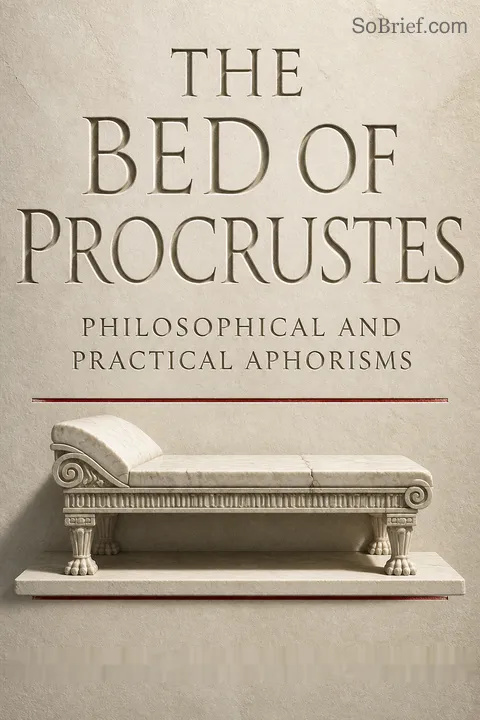
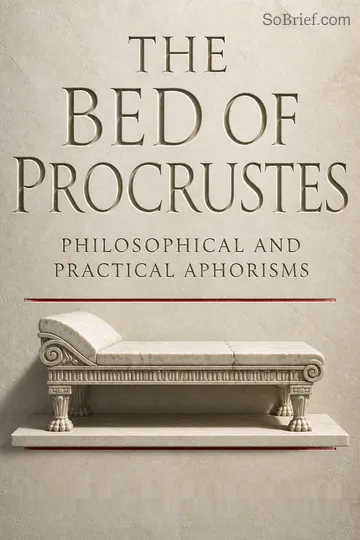
The myth explains the method. Procrustes, in Greek myth, forced travelers to fit his bed by stretching them or cutting off their limbs. Theseus turned the method back on him. Taleb uses the bed as a warning: people often alter the thing being measured instead of questioning the measure. Schools, workplaces, and institutions can demand that people conform to rigid systems, then call the resulting damage improvement.
Ask what gets cut off. When a system produces a poor fit, first consider whether the system needs changing. The problem may not be a student who struggles with a curriculum, or a worker who resists a schedule. The Procrustean bed is any rule, category, or narrative that makes reality look neat by removing what does not fit.
The metaphor offers a useful test for institutional design: when people repeatedly fail a system, is the problem individual weakness, or a bad fit between human needs and the system's assumptions? This question connects to human-centered design, which starts by observing users rather than blaming them for not behaving as a blueprint predicts. The metaphor also has a limit. Some shared rules protect people from arbitrary treatment, and not every personal preference can determine policy. The practical challenge is to distinguish necessary standards from convenient simplifications that quietly make people bear the cost of a system's inflexibility.
Treat more information as more chances to invent false patterns
The mind overexplains. Taleb argues that people readily turn incomplete observations into tidy stories. We may mistake what has not been seen for what does not exist, or treat a coincidence as evidence of a clear cause. More information can intensify this tendency: a stream of vivid examples encourages confident explanations even when the underlying process remains uncertain.
Visibility is not a full record. The book points to medicine as an example: successes are conspicuous, while failures may be hidden or forgotten. A record assembled from visible wins can therefore make a treatment or expert look more reliable than the full evidence warrants. Taleb's advice is not to reject facts, but to notice what is missing, what is hard to observe, and how much of a conclusion rests on a story rather than a robust pattern.
This is a sharp warning about selection effects: the evidence available for inspection may not represent the evidence that exists. It also resembles a basic problem in data science, where a large dataset can still produce a misleading result if its collection process is biased. More information is valuable when it improves measurement and includes failures, but volume alone does not guarantee better judgment. A useful discipline is to ask what cases are absent, what alternative explanations fit, and whether the conclusion would survive new evidence. That turns skepticism into a method rather than a reflex.
Subtract unreliable rules before adding confident advice
Knowledge can mean avoiding harm. Taleb favors subtractive knowledge: learning what does not work, what to avoid, and which assumptions are unsafe, rather than collecting ever more instructions about what to do. In a complicated world, false patterns can be more dangerous than missing information. His example is the adviser who gives a confident prescription without first identifying the risks or limits of the situation.
Start with what to remove. The book applies this logic to happiness: people may not agree on a precise recipe for being happy, but they often recognize what reliably makes them miserable. This is not an argument against useful advice. It is a case for asking whether a recommendation has survived contact with failure, and whether removing one damaging condition is safer than adding a grand new plan.
The subtractive approach resembles safety engineering, where preventing a known failure can matter more than adding another feature. It also counters the appeal of elaborate solutions: a new intervention feels productive, while restraint can look like doing nothing. Yet subtraction is not automatically wise. A risk-avoidant person can shrink life by treating every uncertainty as a reason to withdraw. The strongest version of the principle is selective: remove exposures with credible downside and little compensating value, while leaving room for experiments whose losses are limited and whose lessons are useful.
Test ideas in the messy world, not only in games and models
Clean tests can mislead. The ludic fallacy is the mistake of treating life like a game with clear rules, known possibilities, and measurable outcomes. Domain dependence describes how a person can reason or behave differently in different settings, without noticing the inconsistency. Taleb illustrates this with a businessman who hires a porter to carry his bags, then exercises by lifting weights at a gym.
Skills may not transfer. Success at chess shows skill at chess; it does not by itself show broad judgment. Taleb questions the assumption that classroom performance or standardized scores automatically measure competence in less structured life. Models and tests can be useful within their boundaries, but their results should not be carried into another setting without evidence that the relevant skills transfer.
This insight is closely related to construct validity: a test measures something, but the important question is whether it measures the thing people claim it measures. Controlled tasks make comparisons easier, yet they can strip away context, incentives, and ambiguity that shape real behavior. The businessman example is pointed because it exposes how people compartmentalize effort. Still, a simplified test can provide useful information when its scope is stated honestly. The mistake is not using a model; it is confusing success inside the model with competence across the wider world.
Make forecasters share the consequences of being wrong
A Black Swan resists confident forecasts. In Taleb's vocabulary, a Black Swan is an event that an observer did not predict and that carries large consequences. The central danger is not simply that forecasts sometimes miss. It is that people can make confident claims about complex events without bearing any cost when those claims fail.
Put judgment at risk. Taleb argues that opinions about consequential uncertainty deserve more trust when the speaker has something to lose. A forecast without exposure can function like entertainment: the forecaster gets attention while others absorb the damage. He also distinguishes robustness from fragility. A robust person or system can withstand errors or disruptions; a fragile one is badly harmed by them. The practical test is to examine both the prediction and who pays if it is wrong.
Accountability improves forecasting because it changes incentives: a person who bears the downside has reason to state uncertainty, define a time horizon, and keep a record of misses. This is especially important when audiences cannot easily verify expertise beforehand. But personal exposure is not a perfect truth test. A reckless forecaster can have plenty at stake, while a careful analyst may have little control over outcomes. The better standard combines consequences with calibration, transparency, and a clear account of what evidence would change the forecast.
Protect unscheduled time from salaries, screens, and manufactured efficiency
A full calendar can hide captivity. Taleb distrusts a life organized entirely around employment, routines, and activities that imitate freedom while remaining tightly scheduled. He describes modern efficiency as capable of making people more dependent on the systems that promise to save time. Work can also occupy attention beyond its official hours, leaving little space for unplanned thought or action.
Leave room to improvise. The book prizes time that is not already assigned a measurable purpose. Walking without turning it into a workout, or allowing a day to contain small surprises, represents a different idea of living from filling every hour with goals. Taleb's view is deliberately provocative, especially in its attack on salaried work, but its practical challenge is clear: examine whether convenience and productivity are creating more freedom, or merely more managed activity.
This argument connects to the idea of time autonomy: control over when and how time is used can matter as much as income or convenience. Unstructured periods also create conditions for reflection, play, and discoveries that a tightly planned day may crowd out. Yet paid work is not uniformly oppressive, and schedules can reduce stress or make cooperation possible. The useful distinction is not work versus leisure, but chosen commitments versus obligations that expand until they consume the attention they were meant to serve.
Choose work that serves your ethics, not ethics that excuse work
Legality is not enough. Taleb worries that modern institutions can separate what is permitted by law from what is ethically defensible. A person may follow professional incentives while gradually adjusting personal beliefs to make those incentives feel acceptable. The book argues for the reverse: choose a profession and conduct that remain answerable to one's principles.
Generosity should not be a deal. Taleb distinguishes unconditional help from help offered in expectation of money, praise, emotional reward, or social credit. Helping someone who cannot repay the favor is his clearest test of generosity. This does not mean that every rewarded act is bad; it means that a useful benefit should not be mistaken for pure duty. The broader question is whether a good deed remains good when nobody is keeping score.
The separation between legal and ethical judgment is a central problem in large organizations, where responsibility can be distributed until no individual feels accountable. Personal integrity matters, but it cannot replace institutional safeguards: people need systems that make harmful conduct visible and costly. Taleb's account of generosity also clarifies motive without requiring that every act be emotionally pure. Mixed motives are common. A more practical test is whether the recipient's needs, rather than the giver's reputation or return, guide the decision.
Define success by desires you chose, not status others can see
Wanting sets the measure. Taleb challenges the idea that wealth has a stable meaning independent of desire. He uses the term unwealth for the gap between what a person has and what that person wants. Someone can gain money and still feel poorer if the desired standard keeps rising.
Separate achievement from display. The book's account of success is personal: it means becoming, in adulthood, something close to what one genuinely imagined as a child, rather than simply acquiring public markers of status. Taleb also warns that the pursuit of recognition can turn success into a new form of dependence, replacing one audience's judgment with another. The useful question is not only what has been achieved, but whether the achievement serves a life the person actually wants.
This view anticipates the familiar problem of adaptation: people can normalize improvements and move the goalposts, so objective gains do not necessarily produce lasting satisfaction. Defining success by chosen desires helps expose that cycle. But childhood ambitions are not automatically authentic; they can reflect family expectations, fantasy, or limited experience. A more durable test is whether a goal remains worthwhile when stripped of applause and comparison. Taleb's framework is strongest as an invitation to inspect desire, not as a claim that every private wish should become a life plan.
Judge people and beauty by particulars, not by universal templates
Context changes the rule. Taleb argues that broad judgments often fail when applied to individual cases. Something harmful in general can help in a particular situation, and something usually beneficial can cause harm under different conditions. The more complex the setting, the less reliable a single universal rule becomes.
Notice what makes this case distinct. The book applies this resistance to generalization to relationships and art. Love, in Taleb's account, is a bond with a particular person, not merely approval of a category. Beauty, too, can depend on irregularities rather than polished sameness. These ideas point toward careful attention: before applying a rule, look at the person, place, or work in front of you, and ask what the general description leaves out.
The emphasis on particulars resembles case-based reasoning, where sound judgment develops by comparing specific situations rather than forcing every decision through an abstract rule. It also guards against a common social error: treating people as interchangeable examples of a group. Yet universal principles can protect against favoritism and inconsistent treatment. The challenge is to use general rules as starting points, then test whether relevant differences change the decision. In art and relationships, particularity can deepen attention; in public policy, it needs to coexist with fairness.
Use aphorisms as prompts for thought, not slogans to obey
Compression makes ideas portable. This book is built from aphorisms: brief, self-contained observations designed to carry a larger thought in a small space. Taleb treats each one as a complete unit, meant to be read slowly rather than absorbed as part of a continuous argument. The form suits his subject because a concise statement can expose an assumption before a long explanation protects it.
A sharp line is not proof. Aphorisms can make a reader notice an overlooked contradiction, but their brevity also leaves context unstated. Taleb describes the best ones as thoughts that may take more than one reading to understand. The reader's task is therefore active: test the idea against experience, ask what it excludes, and decide whether its apparent clarity survives closer examination.
Aphorisms work like cognitive handles: a compact phrase is easy to remember and can help retrieve a larger question in the moment. Their rhetorical force is also a risk. Brevity can make a provocative generalization feel truer than its evidence warrants, especially when wit disguises missing qualifications. The most productive reading practice is to treat each line as a hypothesis or lens, not as a rule. Its value lies in what it helps a reader examine, including the cases where it fails.
Analysis
The book is less a manual than a collection of small attacks on the human appetite for neat explanations. Its recurring image, the Procrustean bed, gives those attacks a common structure: when reality resists a category, people often modify reality rather than revise the category. The aphoristic form reinforces the argument. Each short entry interrupts habitual reading and invites a reader to notice an assumption before moving on.
The strongest ideas concern limits of inference. Taleb asks readers to distinguish visible evidence from the full record, a clean model from a complex world, and a confident forecast from accountable judgment. These are not merely calls to be skeptical. They suggest concrete tests: inspect what is missing, ask whether a skill transfers across settings, and identify who bears the cost of error. His emphasis on subtraction is similarly practical, encouraging the removal of unreliable assumptions before the addition of elaborate solutions.
The book's weakness and its energy share a source: its deliberately combative voice. The attacks on employment, academia, technology, and economics make institutional complacency difficult to ignore, but they sometimes turn a useful warning into a sweeping judgment. Work can provide autonomy and meaning; models can clarify bounded questions; institutions can protect people as well as constrain them. The more defensible lesson is not to reject these structures wholesale, but to test whether they fit their purpose and whether their hidden costs are being counted.
The collection rewards readers who do not mistake memorable phrasing for demonstrated proof. An aphorism can sharpen attention, but it cannot substitute for evidence or context. Read this book as a set of provocations to examine, not a doctrine to adopt. Its most lasting contribution is a habit of asking what a tidy account has cut away, and who pays for the neatness.
Review Summary
The Bed of Procrustes is a collection of aphorisms by Nassim Nicholas Taleb, offering philosophical and practical insights on various topics. Readers appreciate Taleb's wit and unconventional wisdom, though some find him arrogant and abrasive. The book is praised for its thought-provoking content and criticized for its occasional obscurity. Many reviewers recommend reading it slowly to fully absorb the ideas presented. While some aphorisms are considered brilliant, others are deemed controversial or difficult to understand. Overall, the book is seen as a unique and challenging read that sparks reflection and discussion.
People Also Read





Glossary
Procrustean bed
Forced fit to a templateA Procrustean bed is a system of categories, rules, or expectations that forces people or events to conform by removing what does not fit. Taleb draws on the Greek myth of Procrustes, who altered travelers to match his bed. The metaphor warns against preserving a rigid model by damaging the reality it is meant to describe.
epistemic arrogance
Overconfidence about what is knownEpistemic arrogance is the confidence to dismiss what has not been observed, or to assume that an incomplete account captures reality. Taleb uses the term for a failure to respect hidden factors and uncertainty. It can lead people to treat their map as complete and to deny evidence that falls outside its categories.
subtractive knowledge
Learning what to avoidSubtractive knowledge is knowledge gained by removing what is unreliable, harmful, or unsupported, rather than only by adding new information or instructions. Taleb argues that avoiding false patterns and damaging actions can be more valuable than acquiring another confident prescription, especially when systems are complex and the consequences of error are hard to predict.
ludic fallacy
Treating life like a gameThe ludic fallacy is the mistake of applying the clarity of a game to real life. Games have defined rules and limited possibilities, while actual events can involve unknown factors, changing conditions, and outcomes that are difficult to measure. Taleb uses the term to challenge conclusions drawn from tidy tests or formal models when applied beyond their proper scope.
domain dependence
Judgment shifts by settingDomain dependence describes the way people can think or behave differently across settings without recognizing the inconsistency. A skill or judgment that works in one context may not transfer to another. Taleb uses the idea to question assumptions that success in a controlled task, classroom, or game automatically demonstrates competence in a less structured environment.
Black Swan
Unpredicted event with major effectsA Black Swan is an event that is unpredicted by a particular observer and has large consequences. Taleb uses the term for events that expose the limits of confident forecasts and tidy explanations. The label is observer-relative: an event may surprise one person or model while being imaginable, or even anticipated, by someone else.
robustness
Resilience to error or disruptionRobustness is the ability of a person or system to withstand mistakes, uncertainty, or unexpected change without suffering severe harm. Taleb contrasts it with fragility, where errors or disruptions produce substantial damage. The distinction shifts attention from whether a model is perfectly correct to whether acting on it remains safe when it is wrong.
unwealth
The gap between having and wantingUnwealth is Taleb's subtractive measure of wealth: the distance between what someone has and what that person wants. It emphasizes that wealth has no reliable absolute measure when desires differ and can expand. Someone's material holdings may rise while their sense of lack grows if their wants increase faster.
FAQ
What's "The Bed of Procrustes" about?
- Collection of Aphorisms: "The Bed of Procrustes" by Nassim Nicholas Taleb is a collection of philosophical and practical aphorisms. These are short, pithy statements that convey deep insights.
- Procrustean Metaphor: The book uses the metaphor of the Procrustean bed to illustrate how humans often force complex realities into simplistic frameworks, leading to distorted understanding.
- Themes of Knowledge and Limits: It explores themes related to the limits of human knowledge, the unseen and unknown, and the consequences of trying to fit life into predefined categories.
- Standalone Thoughts: Each aphorism stands alone, offering a compressed thought that challenges conventional wisdom and encourages readers to think critically about the world.
Why should I read "The Bed of Procrustes"?
- Thought-Provoking Content: The book offers thought-provoking insights that challenge conventional thinking and encourage readers to question their assumptions.
- Brevity and Depth: Each aphorism is concise yet profound, making it easy to digest while providing deep philosophical reflections.
- Unique Perspective: Nassim Nicholas Taleb provides a unique perspective on human behavior, randomness, and the limitations of knowledge, which can be both enlightening and unsettling.
- Practical Wisdom: The aphorisms offer practical wisdom that can be applied to various aspects of life, from personal growth to understanding societal dynamics.
What are the key takeaways of "The Bed of Procrustes"?
- Limits of Knowledge: The book emphasizes the limitations of human knowledge and the dangers of overconfidence in what we think we know.
- Procrustean Beds: It highlights the tendency to fit complex realities into simplistic frameworks, often leading to distorted understanding and decision-making.
- Value of Uncertainty: Taleb advocates for embracing uncertainty and randomness as inherent parts of life, rather than trying to eliminate them.
- Critical Thinking: The aphorisms encourage critical thinking and skepticism towards conventional wisdom and societal norms.
What is the Procrustean bed metaphor in "The Bed of Procrustes"?
- Greek Mythology Origin: The Procrustean bed metaphor originates from Greek mythology, where Procrustes would force travelers to fit his bed by stretching or cutting them.
- Fitting Reality into Boxes: Taleb uses this metaphor to describe how humans often try to fit complex realities into predefined categories or narratives.
- Consequences of Simplification: This simplification can lead to a distorted understanding of the world and have explosive consequences.
- Changing the Wrong Variable: The metaphor also highlights the tendency to change the wrong variable, such as altering people to fit systems rather than adapting systems to fit people.
How does Nassim Nicholas Taleb view modernity in "The Bed of Procrustes"?
- Critique of Modernity: Taleb critiques modernity for creating systems that prioritize efficiency and predictability over authenticity and robustness.
- Loss of Wisdom: He argues that modernity has led to a loss of wisdom, as people rely more on technology and less on traditional knowledge and intuition.
- Fragility of Systems: Modern systems are often fragile because they are built on assumptions of predictability and control, which can be easily disrupted by unforeseen events.
- Emphasis on Appearance: Taleb points out that modernity often values appearance and superficial measures of success over deeper, more meaningful achievements.
What are some of the best quotes from "The Bed of Procrustes" and what do they mean?
- "To bankrupt a fool, give him information." This quote suggests that an overload of information can lead to poor decision-making, especially for those who lack discernment.
- "Procrastination is the soul rebelling against entrapment." It implies that procrastination can be a natural response to feeling trapped or constrained by external pressures.
- "The difference between love and happiness is that those who talk about love tend to be in love, but those who talk about happiness tend to be not happy." This highlights the paradox that discussing happiness often indicates its absence, while love is more naturally expressed.
- "You are rich if and only if money you refuse tastes better than money you accept." This quote reflects the idea that true wealth is about having the freedom to refuse money, rather than being driven by financial gain.
How does "The Bed of Procrustes" relate to Taleb's other works?
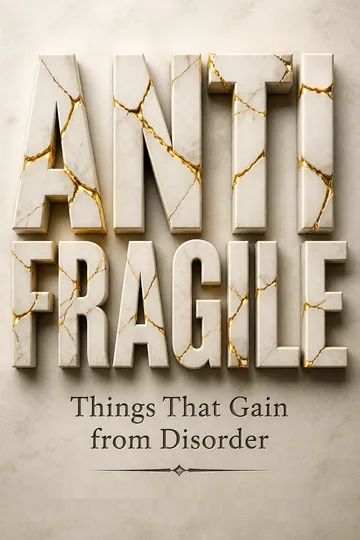
- Continuation of Themes: The book continues themes from Taleb's other works, such as "The Black Swan" and "Fooled by Randomness," focusing on uncertainty and the limits of knowledge.
- Aphoristic Style: Unlike his other books, "The Bed of Procrustes" presents ideas in an aphoristic style, offering concise and standalone insights.
- Philosophical Exploration: It delves deeper into philosophical questions about human behavior, randomness, and the nature of knowledge.
- Complementary Insights: The aphorisms complement the more detailed discussions in his other books, providing a different format to explore similar concepts.
What is Taleb's view on education in "The Bed of Procrustes"?
- Education's Limitations: Taleb criticizes the traditional education system for making fools more dangerous by giving them information without wisdom.
- Value of Erudition: He values erudition, which involves deep understanding and wisdom, over mere accumulation of knowledge.
- Critique of Academia: Taleb compares academia to prostitution, suggesting that it often prioritizes superficial knowledge over genuine understanding.
- Importance of Self-Education: He implies that true learning comes from self-education and critical thinking, rather than formal schooling.
How does "The Bed of Procrustes" address the concept of randomness?
- Embrace of Randomness: Taleb encourages embracing randomness as an inherent part of life, rather than trying to eliminate or control it.
- Randomness vs. Order: He argues that randomness is often indistinguishable from undetected order, challenging the human tendency to impose patterns.
- Role in Success: Randomness plays a significant role in success, and recognizing this can lead to a more humble and realistic understanding of achievements.
- Critique of Predictability: Taleb critiques the human desire for predictability, suggesting that it leads to fragility and vulnerability to unexpected events.
What does "The Bed of Procrustes" say about human behavior?
- Contradictory Nature: The book highlights the contradictory nature of human behavior, where people often act against their own interests or beliefs.
- Influence of Narratives: Humans are influenced by narratives and stories, which can distort their perception of reality and lead to irrational decisions.
- Self-Delusion: Taleb points out the human tendency for self-delusion, where people convince themselves of false beliefs to maintain comfort or security.
- Importance of Awareness: The aphorisms encourage awareness of these behavioral tendencies to make more informed and rational choices.
How does Taleb view technology in "The Bed of Procrustes"?
- Critique of Overreliance: Taleb critiques the overreliance on technology, suggesting it can lead to a loss of authenticity and increased fragility.
- Technology vs. Freedom: He argues that technology often creates an illusion of efficiency while reducing true freedom and spontaneity.
- Impact on Human Behavior: Technology can change human behavior, making people more predictable and less adaptable to unexpected events.
- Balance with Nature: Taleb advocates for a balance between technology and natural human instincts, emphasizing the importance of maintaining robustness.
What is the significance of the title "The Bed of Procrustes"?
- Metaphor for Conformity: The title refers to the Procrustean bed, a metaphor for forcing things to fit into predefined categories, often at the cost of truth and authenticity.
- Critique of Simplification: It critiques the human tendency to simplify complex realities, leading to distorted understanding and decision-making.
- Challenge to Conventional Thinking: The title challenges readers to question conventional thinking and avoid the trap of fitting life into rigid frameworks.
- Symbol of Human Error: The Procrustean bed symbolizes the errors and biases that arise from trying to impose order on the inherently chaotic and unpredictable nature of life.
Incerto Series
About the Author
Other books by Nassim Nicholas Taleb
Download PDF
Download EPUB
.epub digital book format is ideal for reading ebooks on phones, tablets, and e-readers.








