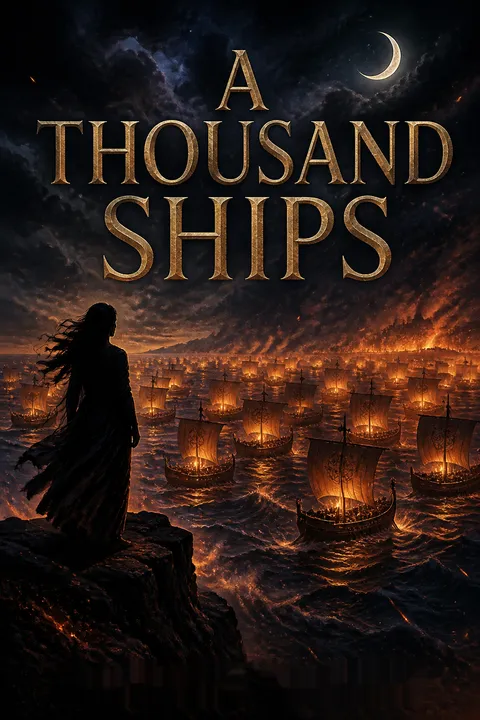


Plot Summary
The Muse Takes Charge
The poet asks Calliope, muse of epic poetry, to help him begin another tale of war. She has heard the same demands from generations of men and doubts that this singer has anything new to offer. But his age and weariness catch her attention. Rather than grant inspiration freely, she decides to take the small golden brooch fastened to his cloak as payment.
Her bargain opens a story that will not belong to one hero alone. Calliope intends to make the poet follow the women whose lives war has pushed to the margins, and to keep directing him whenever he mistakes their suffering for incidental detail.
The opening makes the act of telling part of the conflict. Calliope is not a passive source of inspiration but a figure negotiating the terms under which inherited stories can be repeated. The brooch turns poetic authority into an exchange: the poet receives material, while the Muse claims a measure of control. Her impatience also identifies the book’s central problem. The old tales are not empty of women; their tellers have repeatedly chosen not to look at them.
Troy Burns at Dawn
Creusa wakes to what she first mistakes for a storm, then sees Troy’s temples and streets burning. Her husband, Aeneas, and their son, Euryleon, are missing, and Greek soldiers have entered the city. Only days earlier, Creusa had watched the Greek fleet sail away and joined the Trojans in bringing its immense wooden horse inside their walls.
The captive Sinon persuaded King Priam that the horse was a sacred offering; when the priest Laocoon opposed him, the deaths of Laocoon’s sons seemed to confirm the gods’ warning. The Trojans celebrated their victory, unaware that Greek fighters hid inside the horse. When they opened the gates, the returning army set Troy alight. Creusa loses her way in the smoke and dies before dawn.
Creusa’s confusion is more than a suspense device: the city’s destruction first arrives as an ordinary sensory error, then overturns the meaning of every familiar landmark. Her certainty that Troy has won makes the deception especially devastating. The Greeks exploit not only the gates but the Trojans’ desire to believe the siege is over. Creusa’s death also refuses the heroic escape promised by Aeneas’s plans. A household’s future can be imagined, discussed, and still be erased before its members can find one another.
The Leopard-Skin Door
After the city falls, Hecabe gathers the Trojan women on the shore while Greek soldiers loot the ruins and decide who will be taken as a captive. Several women are missing, including Theano, a priestess of Athene.
Her story explains why: suspecting the Greeks are hiding inside the horse, Theano persuades her husband, Antenor, to open Troy’s gates rather than let the city and their daughter be destroyed. The Greeks spare their household, marking its door with an animal skin.
Hecabe recognizes the bargain when a captive describes the sign. Antenor’s family survives, but Hecabe and the other women are enslaved. Their different fates leave the queen facing an ugly question: whether survival purchased by betrayal is better than loyalty that ends in ruin.
Theano’s choice makes moral judgment difficult without making it vague. She acts from maternal fear and political foresight, but the price is paid by the city and by women who had no part in her decision. Hecabe can condemn Antenor and still see the practical result: his women retain freedom while hers lose nearly everything. The contrast exposes how war turns private responsibility into public consequence, especially for women whose choices are made within systems controlled by men.
Penthesilea Faces Achilles
Before Troy’s final destruction, the Amazon princess Penthesilea rides south with her warriors after accidentally killing her beloved sister, Hippolyta. Grief makes her seek an honorable death at the hands of Achilles, the Greek fighter reputed to be impossible to defeat. King Priam welcomes the Amazons as Trojan allies, and Penthesilea leads them into battle.
Her archers strike the Myrmidons, but Achilles reaches her before she can claim the death she wants. He kills her, then realizes that his opponent was a woman. The recognition shocks him into seeing the many civilians he has slaughtered without thought. Hecabe later remembers Penthesilea’s fall as the moment she understood that Troy could not be saved.
Penthesilea’s arrival begins as an attempt to make grief legible through combat: if she can choose the manner of her death, she can impose some order on her guilt. Instead, Achilles’ speed denies her even that control. His horror comes not from discovering that a woman can fight, but from recognizing how many women he has already killed without registering them as people. The encounter briefly interrupts his habit of converting every death into another mark of martial greatness.
Ithaca Watches the Fleet
Penelope remembers how Odysseus tried to avoid the Greek expedition to Troy. Newly married and caring for their infant son, Telemachus, he pretended to be mad and ploughed a field with salt. Agamemnon tested the performance by placing the baby in the plough’s path. Odysseus stopped, revealing that he was sane, and had to join the army.
Penelope watched him sail away expecting him back within months. The war lasted ten years. As Telemachus grew up without his father, she tried to keep hope alive while resenting the king whose test had taken Odysseus from them. By the time rumors announced Troy’s fall, the long absence had already changed the shape of their family.
Penelope’s account shifts attention from the famous departure to the household left behind. Odysseus’s deception nearly protects his family, but Agamemnon turns the child into a test and makes refusal impossible. Penelope’s counterfactual wish to injure herself rather than endanger Telemachus reveals the emotional cost of Odysseus’s choice without reducing it to simple blame. She understands why he yielded, yet the years force her to measure his decision in missed childhood, not battlefield reputation.
Two Captives, One Plague
Greek scouts capture Chryseis, a Trojan priest’s daughter, while she secretly meets a shepherd outside the city. In the Greek camp she befriends Briseis, another captive, whose family was killed by Achilles.
Briseis gives Chryseis herbs to put in Agamemnon’s wine, helping her resist his assaults. When Chryses comes to ransom his daughter, Agamemnon humiliates and refuses him. Apollo answers the priest’s appeal with a plague that kills animals and soldiers. The Greek leaders demand that Agamemnon return Chryseis.
He agrees only after claiming Briseis as compensation, taking her from Achilles. Enraged by the insult, Achilles withdraws himself and his Myrmidons from battle, leaving the Greeks to face the Trojans without their strongest fighter.
The exchange of the two women turns them into prizes in a dispute among powerful men, yet Briseis and Chryseis act within the narrow space available to them. Their friendship carries practical knowledge as well as comfort: the herbs do not free them, but they give Chryseis a way to limit Agamemnon’s power over her body. The plague makes the cost of Agamemnon’s pride collective. His refusal to return one captive exposes an army to divine punishment and triggers Achilles’ withdrawal.
Patroclus Wears the Armor
With the Greeks driven back toward their ships, Patroclus enters battle wearing Achilles’ armor and is killed by Hector. Achilles’ grief ends his refusal to fight. His mother, Thetis, knows the choice he faces: a long life without lasting renown or a short life remembered in song. She gives him new armor, but cannot redirect him from battle.
Achilles kills Hector and drags his body around Troy before Priam comes to plead for it; Achilles finally relents and returns the corpse. Later, Apollo’s arrow kills Achilles. Briseis, who has witnessed these losses from captivity, mourns Patroclus and the dead rather than praising the warrior who caused so much grief.
The armor passes from Achilles to Patroclus and back as a visible sign of how identity and violence become entangled. Patroclus tries to save the Greeks by acting in his friend’s place, but the substitution cannot protect him. Thetis understands the cost of Achilles’ chosen fame, yet her love can only equip him, not change him. Briseis’s mourning refuses the heroic accounting that would make the dead valuable chiefly as proof of Achilles’ greatness.
A Bronze Husband Waits
Before the fleet reaches Troy, Laodamia begs her husband, Protesilaus, not to be the first Greek to step ashore. He is first anyway, and Hector kills him, fulfilling the danger she feared. Laodamia waits each day by the road from the sea, unable to return to ordinary life. A local blacksmith, recognizing the force of her grief, secretly makes a bronze likeness of Protesilaus.
When Laodamia clings to it, her parents eventually remove it and burn it as a funeral offering. She throws herself toward the flames. The gods allow Protesilaus to return from the dead for one day, but when he must go back, Laodamia takes her own life. Her people later honor them together.
Laodamia’s story makes waiting a physical condition rather than a pause between dramatic events. Her warning cannot prevent Protesilaus’s death, and the bronze statue offers the shape of a husband without the life that made marriage reciprocal. The blacksmith’s compassion briefly gives her grief an object that others can recognize. Yet the family’s attempt to end her attachment destroys that fragile support. Her fate shows how easily care becomes coercion when survivors are expected to recover on someone else’s schedule.
A Wedding at Aulis
Agamemnon summons his wife, Clytemnestra, and daughter, Iphigenia, to Aulis under the pretense that Achilles will marry the princess. Iphigenia prepares for her wedding, unaware that Artemis has withheld the winds needed by the Greek fleet. At the shore, her father leads her to an altar instead of a bridegroom.
A priest has declared that her death will appease the goddess and let the ships sail. Iphigenia understands what is happening as soldiers restrain Clytemnestra and Agamemnon cuts her down. A breeze rises afterward. The fleet can leave, but Clytemnestra carries the killing into the years of waiting that follow, while Iphigenia’s supposed wedding becomes the source of a family’s lasting fracture.
The false marriage turns a daughter’s trust into part of the mechanism of her sacrifice. Iphigenia is not simply killed for the army’s convenience; she is brought to the altar through a ritual that uses her hopes and her mother’s presence against her. The returning wind can make the act appear divinely effective, but it cannot make it just. Clytemnestra’s grief begins as a private injury inflicted by a husband and becomes a political force within the royal household.
The Apple Starts a War
At Thetis and Peleus’s wedding, Eris discovers that every god has been invited except her. She brings a golden apple marked for the fairest, and Hera, Athene, and Aphrodite quarrel over it. Zeus sends them to Paris, a Trojan prince raised as a herdsman, to judge. Hera offers him a kingdom, Athene offers victory and strategic skill, and Aphrodite promises Helen, the most beautiful woman alive.
Paris chooses Aphrodite and leaves his wife, the mountain nymph Oenone, for Sparta. Themis later reveals that she and Zeus arranged the chain of events to start a war, answering Gaia’s complaint that humanity had grown too numerous for the earth to bear. Paris’s choice is personal, but the gods have made it useful to their design.
The apple gives divine rivalry a small, portable object that can travel from a wedding to a battlefield. Paris appears to choose freely, but each offer links desire to political consequence, and the gods have already arranged the conditions around him. The revelation about Gaia makes the war’s scale still more disturbing: human beings become a population problem to be managed by divine violence. Individual responsibility remains real, but it operates inside a plan whose authors treat entire cities as expendable.
Oenone Turns Paris Away
Oenone had believed she and Paris were happy on Mount Ida, where they raised their son away from the Trojan court. After the goddesses’ judgment, Paris returns to claim his place as a prince, then sails to Greece and comes back with Helen. Oenone understands that a war will follow and keeps their son safe in the mountains.
Years later, Paris arrives badly wounded and begs her to use her healing knowledge. She asks whether he has considered what his abandonment cost her and their child. He admits that, facing death, he thought only of himself. Oenone refuses to treat him. He disappears from her mountain home, leaving her to continue without the man whose return she once imagined.
Oenone’s refusal is neither a simple act of vengeance nor a clean moral victory. Paris comes seeking the healing he once took for granted, still centered on his own need; Oenone finally makes him confront the person he abandoned. Her power to heal gives her a choice that war rarely grants the women around her, but the choice cannot restore the family he left. She protects her son and her own boundaries by refusing to turn love into limitless service.
The Last Trojan Son
Among the captive women, Hecabe blames Helen for the war until Helen reminds her that Paris chose to pursue her and that Aphrodite compelled the journey. Hecabe then hears that her youngest son, Polydorus, whom she and Priam secretly sent to Thrace, has washed ashore dead. They had entrusted him and a store of gold to Polymestor, a supposed ally.
Odysseus arrives to question Hecabe about whether she has hidden another son, since a surviving Trojan prince could threaten the Greeks. Hecabe insists all her sons are dead, then tells Odysseus who sheltered Polydorus. She agrees to travel with him toward Thrace, while concealing her real purpose: she intends to confront the man who was supposed to protect her child.
Polydorus’s body converts a distant political arrangement into an intimate, visible betrayal. Hecabe had sent him away to preserve the family line, but safety depended on a bond that gold could not secure. Odysseus understands the logic of hiding a child because he has a son of his own, yet his concern remains entangled with the possibility of future resistance. Hecabe’s decision to travel with him marks a shift from grief without leverage to action shaped by the limited power she still possesses.
Hecabe’s Reckoning in Thrace
Odysseus brings Hecabe to Thrace and arranges for Polymestor to meet them. The king claims Polydorus is alive, then contradicts himself when Odysseus asks to see the boy. Hecabe recognizes that Polymestor killed her son for the gold Priam entrusted to him. With the Trojan women who accompany her, she attacks the Thracian king and kills his two sons, then blinds him.
She tells him that he traded a child for treasure and must live with the loss he caused. Odysseus does not stop the revenge. After Polymestor curses the voyage ahead, Hecabe boards the Greek ship, saying that the death of her son has already left her beyond the reach of further threats.
Hecabe’s vengeance is deliberately costly: she answers the destruction of her family by destroying another, including children who did not make their father’s choice. The story offers no simple reconciliation between her victimization and her violence. Odysseus’s presence gives the act a kind of political cover, but Hecabe carries it out herself. Her refusal to fear Polymestor’s curse shows how grief can remove the future’s power to intimidate, even as it narrows the range of actions that still seem possible.
A Princess and a Baby
After Hecabe leaves, Menelaus takes Polyxena from the Trojan women and delivers her to Neoptolemus, Achilles’s son. Polyxena understands that she is to be sacrificed for the dead warrior and chooses to face the knife rather than become a captive. The Greeks also decide that Hector’s infant son, Astyanax, must die because he might grow up to avenge Troy.
Andromache promises that she will never teach him to fight, but the herald takes the child from her arms and throws him from the city walls. Hecabe and the women bury him near Polydorus. The Greeks have killed not only Troy’s defenders but also the children whose lives might have carried its name into another generation.
Polyxena and Astyanax are treated as threats for different reasons: one can be made into a ritual offering, while the other is killed for a future he has not chosen. Their deaths expose how victory reaches beyond combat into the deliberate management of memory and lineage. Andromache’s promise to raise a peaceful child cannot matter to a conquering army that treats kinship itself as a source of danger. The women’s burial rites are small acts of care against that political erasure.
Cassandra Sees the Ending
Cassandra once asks Apollo for the ability to see the future. After he grants it, she refuses his sexual demand, and he punishes her by making no one believe her warnings. She sees Troy’s destruction and the deaths of her family but cannot persuade them to act. During the city’s fall, Ajax drags her from Athene’s sanctuary and rapes her.
Cassandra knows the goddess will punish the sacrilege, though the knowledge cannot undo what happened to her. Captured by the Greeks and taken to Agamemnon, she can foresee her own arrival in Mycenae and the violence waiting there. Her visions make the future vivid, but Apollo’s curse leaves her unable to turn knowledge into protection for herself or anyone else.
Cassandra’s punishment separates knowledge from social power. She is not confused about what is coming; the people around her are protected from acting on the truth by their refusal to trust its source. That asymmetry makes prophecy a form of isolation rather than mastery. The rape at Athene’s sanctuary repeats the book’s pattern of violated sacred and personal boundaries, while Cassandra’s foreknowledge of punishment offers only a narrow consolation, not repair.
Purple Tapestries, Red Blood
Ten years after Iphigenia’s death, Clytemnestra welcomes Agamemnon home to Mycenae with purple tapestries laid across the palace entrance. She has spent the war preparing revenge and has allied herself with Aegisthus, her husband’s enemy. When Agamemnon enters the bath, she traps him in a robe she has sewn shut and stabs him.
Cassandra, whom Agamemnon brought back from Troy, has already recognized the Furies that Clytemnestra associates with her daughter’s vengeance. Clytemnestra kills Cassandra too. The Furies then turn their attention to Electra, locked away in the palace, and drive her toward finding her brother Orestes. The household’s old injury has become a new chain of violence.
Clytemnestra’s revenge is designed with the same ritual precision that marked Iphigenia’s sacrifice: clothing, ceremony, and a controlled setting become instruments of death. Her act answers a real injury, but it does not end the family’s violence; the Furies redirect its force toward the next generation. Cassandra’s presence makes the homecoming especially bleak, since the survivor who can read the pattern cannot escape it. The palace receives its king as a victor and transforms his return into judgment.
The Long Way Home
After leaving Troy, Odysseus blinds the Cyclops Polyphemus and boasts of his identity, giving Poseidon a reason to obstruct his return. Aeolus sends him toward Ithaca with favorable winds, but his crew opens the wind bag and drives them back. Cannibal giants destroy all but one ship.
On Circe’s island, Hermes gives Odysseus the herb that protects him from her magic, allowing him to free his men from their pig forms. He visits the dead, then sails past the Sirens and loses six men to Scylla. His surviving crew disobeys him by killing Helios’s cattle; Zeus destroys their ship, leaving Odysseus alone. He reaches Calypso’s island, where he remains until the gods intervene and let him sail again.
The voyage repeatedly tests the difference between ingenuity and wisdom. Odysseus can solve immediate dangers, but his boast to Polyphemus turns escape into a renewed conflict with Poseidon. His men’s disobedience costs them their lives, yet the story also asks what years of danger have made obedience mean to exhausted people. Penelope’s letters turn adventure into duration: each marvel that fills a bard’s song is another stretch of unshared time at home.
The Beggar at Ithaca’s Door
While Odysseus is held on Calypso’s island, Penelope keeps the Ithacan suitors from forcing a marriage by weaving a shroud for Laertes by day and secretly undoing it at night. A maid betrays the trick, and the young men threaten both Penelope and Telemachus. Odysseus finally reaches Ithaca in disguise, meets his grown son at the swineherd Eumaeus’s hut, and enters his palace as a beggar.
Penelope sets a contest with her husband’s bow. When Odysseus strings it and shoots through the axe-heads, he reveals himself and, with Telemachus, kills the suitors. He also orders the execution of maids accused of aiding them. His return restores the household, but Penelope is left to reckon with the violence that restored it.
Penelope’s weaving is both resistance and a way to buy time, but time does not remain under her control once a servant exposes her. Odysseus returns to a home whose political crisis has become a domestic siege. His bow proves his identity through a skill the suitors cannot reproduce, yet the test leads directly to mass killing. Penelope’s final uncertainty about the man who came back preserves an important distinction: reunion is not the same as returning unchanged.
Andromache Builds Again
Taken to Epirus as Neoptolemus’s captive, Andromache initially lives as though she has already died. Weaving a warm cloak gives her a practical reason to endure the cold and marks the first return of ordinary desire. She bears Neoptolemus a son, Molossus, though love for the child remains shadowed by the memory of Astyanax.
After Neoptolemus is killed, his grandfather Peleus protects Andromache and Molossus. She later marries the Trojan prince Helenus, Cassandra’s brother, and helps establish a settlement modeled on Troy. In the book’s final frame, Calliope declares that the poet has at last sung of women as well as men. Their histories have not repaired what war destroyed, but Andromache has made a life within its aftermath.
Andromache’s recovery does not depend on forgetting. The cloak matters because it answers a bodily need, not because it symbolizes an easy return to happiness. Her love for Molossus coexists with fear and with the knowledge that another child has already been taken from her. Building a new Troy with Helenus gives memory a form that can shelter the living. Calliope’s closing claim makes that act of survival part of the record, rather than a footnote to the men’s war.
Analysis
A Thousand Ships does not replace the Trojan War with a separate women’s story. It changes the scale at which the war is understood. Battles still matter, but their consequences continue in kitchens, camps, ships, temples, and the homes of people who never chose to fight. Creusa’s bewildered flight, Briseis’s captivity, Laodamia’s waiting, and Penelope’s letters make the costs of war intimate without making them small. The book also refuses a clean division between heroic men and helpless women. Penthesilea fights; Penelope strategizes; Hecabe takes revenge; Andromache survives through work and attachment. Their agency is real, but it does not cancel the coercive conditions in which they act. The divine plot sharpens this tension. Gods arrange the conflict, exploit desire, and weigh human lives against the earth’s burden, while mortals remain responsible for the choices they make within that design. Paris’s desire helps ignite the war, but it is neither its only cause nor its only consequence. Likewise, Hecabe can be both a devastated mother and a perpetrator of violence. The novel’s moral force comes from allowing both truths to stand. Its frame makes storytelling itself part of that reckoning: Calliope challenges a tradition that treats the battlefield as the whole epic and the women’s suffering as aftermath. By the end, survival does not mean restoration. Andromache builds a new home, but it remains shaped by the one she lost; Penelope receives Odysseus, but must face the violence he brings with him. The book’s lasting claim is not that every wound can be healed, but that no account of war is trustworthy if it leaves half the people affected outside the song.
Review Summary
A Thousand Ships retells the Trojan War from women's perspectives, receiving mixed reviews. Many praise its feminist approach and engaging prose, while others criticize its lack of originality and disjointed narrative structure. Some readers found the multiple viewpoints refreshing, while others felt it hindered character development. Penelope's letters and the goddesses' portrayals garnered particular attention. Overall, opinions varied on whether the book successfully gave voice to overlooked female characters or merely rehashed familiar stories without adding significant depth.
People Also Read




Characters
Calliope
Muse reclaiming the songThe Muse of epic poetry, Calliope is accustomed to being summoned by poets who assume inspiration is theirs to command. She is sharp, skeptical, and increasingly unwilling to let the familiar catalogue of male heroes define what counts as an epic. Her attention to the overlooked women is both artistic and ethical: she believes their experiences belong within the story of war, not outside it. Calliope’s dry impatience gives the book a questioning frame, while her persistence makes the act of remembering feel like a responsibility.
Hecabe
Dispossessed Trojan queenHecabe is the queen of Troy, wife of Priam, and mother to a large royal family. She is politically alert, proud, and accustomed to carrying responsibility for the people around her. Her grief is sharpened by her habit of counting losses and judging the choices that led to them. She can be harsh toward those she believes have failed Troy, yet she understands the pressures that make survival morally complicated. Hecabe’s authority is rooted less in ceremony than in her refusal to let others dictate what her losses mean.
Penelope
Ithacan queen in waitingPenelope is Odysseus’s wife and Telemachus’s mother, left to govern Ithaca during her husband’s long absence. Intelligent, observant, and dryly funny, she measures heroic reputations against the practical costs borne at home. Her letters reveal both devotion and anger, especially as years pass and Telemachus grows up without his father. Penelope is skilled at reading people and finding leverage in a constrained household. Her patience is not passivity: she questions the stories told about Odysseus even while holding open the possibility that he may return.
Andromache
Widowed Trojan survivorAndromache is Hector’s wife and the mother of Astyanax. Quiet and attentive, she is especially perceptive about the risks that Hector’s public role creates for his family. Her care is practical: she watches, warns, comforts, and tries to keep a child safe amid forces she cannot command. Andromache’s story explores how a person can remain capable of attachment after terrible loss without pretending that grief has disappeared. Her resourcefulness is expressed through small acts of making and tending, not through the battlefield’s measures of glory.
Cassandra
Prophetess no one believesCassandra is a daughter of Hecabe and Priam and a priestess associated with Apollo. Her visions are vivid and relentless, but the people around her interpret her warnings as madness. That gap between what she knows and what others can accept isolates her from her family and city. Cassandra’s speech, silences, and sudden distress are not signs that she lacks insight; they reflect the strain of seeing danger without being able to persuade anyone to respond. Her character gives the book one of its sharpest portraits of knowledge without social authority.
Odysseus
Ithacan strategist at seaOdysseus is the king of Ithaca, Penelope’s husband, and Telemachus’s father. His intelligence expresses itself through planning, disguise, improvisation, and a taste for difficult problems. He wants to avoid the Trojan expedition when it threatens his young family, but once drawn into war he becomes known for the schemes that help the Greeks prevail. His cleverness is real, as are the costs his choices impose on companions and enemies. The book repeatedly sets his self-image as a resourceful hero beside Penelope’s experience of waiting for him.
Achilles
Myrmidon champion of GreeceAchilles is the greatest fighter among the Greeks, son of the sea nymph Thetis, and commander of the Myrmidons. His speed and violence make him feared, while his fierce attachment to Patroclus reveals a more vulnerable private self. He is intensely conscious of recognition and rank, especially when Agamemnon refuses to acknowledge his standing. Thetis’s warnings and the choices he makes around fame and mortality place his martial identity under pressure. Through the women who encounter him, the story measures the human cost hidden inside his celebrated reputation.
Clytemnestra
Queen shaped by grievanceClytemnestra is the queen of Mycenae, wife of Agamemnon, and mother of Iphigenia, Orestes, and Electra. She is forceful, politically capable, and unwilling to accept that a husband’s authority makes his decisions morally final. Her sense of justice is bound to family loyalty and to the gods whose rites matter to her. Clytemnestra can be calculating in public while privately consumed by a long-held injury. Her character complicates the division between victim and perpetrator by showing how power can be reclaimed through methods that carry their own consequences.
Briseis
Captive with clear eyesBriseis is a princess from Lyrnessus whose family is killed during a Greek raid. Captured and passed between Greek leaders, she watches their rivalries with unsentimental clarity. Her friendship with Chryseis lets her offer practical protection in a camp where captive women have little control over their safety. Briseis is grieving, but she refuses to let her captors dictate what her grief should look like or whom she must admire.
Chryseis
Priest’s spirited daughterChryseis is the daughter of Chryses, a priest of Apollo. Curious and restless, she slips beyond Troy’s walls to meet a shepherd and is captured by Greek scouts. Her boldness does not make her invulnerable, but it helps her observe the Greek camp and reconsider her assumptions about her father and her captors. Her bond with Briseis gives her a source of knowledge and solidarity at the moment she most needs both.
Creusa
Aeneas’s wife in TroyCreusa is Aeneas’s wife and the mother of their young son, Euryleon. She has spent much of her life inside a besieged city, balancing domestic hopes with the habitual fear that her husband may not return from fighting. Creusa values home, family, and the ordinary future she imagines for her child. Her perspective brings the fall of Troy down from a tale of strategy to the confusion experienced by someone trying to find her family in a burning city.
Theano
Priestess and wary motherTheano is a priestess of Athene, wife of Antenor, and mother of Crino. She has lost several sons in the war and believes Troy’s leaders have ignored warnings that might have prevented disaster. Theano is practical, outspoken, and driven by the need to protect her surviving child. Her religious knowledge does not make her certain of divine favor; instead, it gives her reasons to question the city’s choices and act before others are willing to.
Penthesilea
Amazon warrior in griefPenthesilea is an Amazon princess and sister to Hippolyta. Raised among skilled women warriors, she is disciplined, physically confident, and deeply attached to the sister who has long been her closest companion. Her sense of identity is bound to combat and to the community of women who ride with her. When she allies herself with Troy, she brings a different kind of military leadership to a conflict usually narrated through Greek and Trojan men.
Laodamia
Queen waiting for husbandLaodamia is the young queen of Phylace and wife of Protesilaus. Their marriage is affectionate, and she is acutely sensitive to the danger that the expedition to Troy poses. Her fear is not abstract: she imagines the precise moment her husband might reach the shore. Laodamia’s identity is shaped by intimate attachment and by a community that expects grief to follow familiar rules, even when those rules cannot make loss bearable.
Iphigenia
Bride at a false altarIphigenia is the eldest daughter of Agamemnon and Clytemnestra. Young, proud, and eager for the adult life promised by marriage, she sees the world partly through the expectations of her royal upbringing. Her attention to appearance and ceremony is not vanity alone; it reflects a girl preparing for a future she believes has been arranged for her. Her relationship with her mother is affectionate, though both are caught inside decisions made by powerful men and gods.
Oenone
Nymph abandoned on IdaOenone is a mountain nymph with gifts for prophecy and healing, daughter of the river god Cebren. She knows the landscape of Mount Ida intimately and values the life she builds there with Paris and their son. Her confidence in her own foresight does not prevent her from being blindsided by Paris’s choice to leave. Oenone’s independence and healing skill give her unusual agency, while her history with Paris makes that agency emotionally difficult to exercise.
Helen
Desired Spartan queenHelen is the daughter of Zeus and wife of Menelaus, renowned for a beauty that shapes how others treat her. She is often blamed by Trojans and Greeks for a war whose causes include male ambition, divine pressure, and an old oath. Helen can be perceptive about the people who claim to possess her and resistant to being reduced to a symbol. Her presence unsettles the women around her, who may resent her while still finding it difficult to look away.
Paris
Trojan prince and seducerParis is a son of Priam and Hecabe, raised away from Troy as a herdsman. Handsome and accustomed to being indulged, he is drawn toward what pleases him in the moment and often avoids considering who will bear the consequences. His judgment in a dispute among goddesses connects private desire to the fate of cities. Paris’s relationships with Oenone, Helen, and his family reveal how charm can win affection without producing responsibility.
Thetis
Sea nymph and anxious motherThetis is a sea nymph married to the mortal king Peleus and mother of Achilles. She is immortal, but cannot make her son’s mortality disappear. Protective and proud, she tries to keep him away from the war and later offers counsel when his choices place his life at risk. Her grief is complicated by the gulf between a mother’s desire to preserve her child and a warrior’s desire to be remembered.
Patroclus
Achilles’s closest companionPatroclus is a Greek warrior and Achilles’s closest friend, bound to him by years of shared life and battle. He has a gentler manner than Achilles and often tries to calm his friend’s anger without denying his importance. Patroclus is capable of seeing individual pain even within a camp that treats captives as spoils. His compassion does not erase the power he holds over Briseis, making his role morally more complicated than simple kindness.
Agamemnon
King whose pride commandsAgamemnon is king of Mycenae and commander of the Greek expedition. He expects obedience and public recognition, but his authority is often undermined by vanity, impatience, and a reluctance to accept responsibility for the consequences of his choices. His family and soldiers alike are affected by the distance between the leader he believes himself to be and the man they experience. His conflicts with priests, captives, and other commanders expose the fragility beneath his command.
Polyxena
Trojan princess, clear-eyedPolyxena is Hecabe and Priam’s youngest daughter, remembered for her beauty, kindness, and close attachment to her family. She is thoughtful enough to question whether the gods, rather than any single warrior, determined Troy’s fate. Unlike Cassandra, she speaks in ways her relatives can hear, though that does not give her control over what happens to the women of the royal household. Polyxena’s steadiness offers Hecabe a rare source of tenderness amid the family’s long crisis.
Neoptolemus
Achilles’s feared sonNeoptolemus is the son of Achilles, known to Greeks and Trojans as a dangerous, volatile young warrior. He lives under the weight of comparison with a father whose martial reputation is nearly impossible to match. His authority over captives and his conduct in battle reveal a man shaped by inherited expectations as well as his own choices. Andromache’s perspective allows the reader to see both his capacity for cruelty and the limits of what she can safely hope from him.
Polydorus
Youngest child of TroyPolydorus is the youngest son of Priam and Hecabe. His parents try to protect him from the siege by sending him away with an ally, trusting that distance and gold can keep him safe. He is remembered by his family as a kind, open-hearted boy. His absence from the city becomes a source of hope for Hecabe during the war.
Telemachus
Odysseus’s son in IthacaTelemachus is the son of Odysseus and Penelope, raised in Ithaca while his father is away at war and sea. He grows up in a household where his father is more a celebrated absence than a daily presence. Thoughtful and cautious, he is close to the loyal swineherd Eumaeus and looks for news that might clarify his family’s future. His relationship with Penelope is central to her experience of waiting.
Plot Devices
Calliope’s framing bargain
Muse redirects the epicCalliope’s exchanges with the poet frame the book as a contest over whose experiences deserve to be remembered. She interrupts or redirects the expected heroic narrative whenever it leaves women at the edge of the action. The frame also gives the collection a shared voice and purpose despite its many viewpoints. Its function is interpretive rather than merely structural: the Muse makes the reader notice how a story changes when its focus shifts from commanders to captives, wives, mothers, and survivors.
The Trojan horse
Trust becomes a weaponThe Greeks leave a massive wooden horse outside Troy and persuade the Trojans that it is a sacred offering. Sinon’s account and the apparent divine punishment of Laocoon’s sons help the exhausted city accept the horse and drag it inside. Greek fighters hidden within then open the gates to the returning army. The device turns the Trojans’ hope that the war is over into the means of their defeat, showing how a desire for peace can be exploited by an enemy.
Penelope’s letters
Waiting gains a voicePenelope addresses letters to Odysseus as stories of his journey reach Ithaca. The letters recount the dangers he faces while registering the years passing for the people left at home. Their wry tone lets Penelope challenge the versions of his adventures sung by traveling poets, and their changing emotional temperature records hope giving way to anger, fear, and doubt. The device links the Odyssey’s outward journey to the slower, less celebrated ordeal of waiting.
Prophecy and the Fates
Foreknowledge without controlProphecy shapes the choices of Cassandra, Oenone, and others, while the Fates represent the limits placed on mortal lives. Cassandra can see disasters but cannot make people believe her; Oenone’s gifts do not protect her from Paris’s decisions. These powers create dramatic irony, but they do not make characters omnipotent. Instead, the book asks what knowledge is worth when social authority, divine whim, or another person’s choice prevents it from changing events.
The loom and shroud
Delay made by handWeaving recurs as skilled labor, domestic duty, and a means of surviving political pressure. Penelope uses the unfinished shroud to postpone the suitors’ demand that she remarry, while Andromache’s weaving gives her a practical task in a life narrowed by captivity and grief. The work does not undo their losses, but it lets women shape time and material when they cannot command the larger events around them. In this story, making and unmaking become forms of limited resistance.
FAQ
Synopsis & Basic Details
What is A Thousand Ships about?
- Women's Untold Trojan War: A Thousand Ships by Natalie Haynes reimagines the Trojan War, shifting the narrative focus entirely to the women—mortal and divine—whose lives were irrevocably shaped by the conflict, from its origins to its devastating aftermath. It explores their suffering, resilience, and often overlooked agency.
- Polyphonic Narrative Structure: The novel employs a unique polyphonic structure, presenting the war through the eyes of various female characters like Hecabe, Cassandra, Andromache, Penelope, Clytemnestra, Briseis, and the goddesses, offering a tapestry of their diverse experiences and emotional landscapes.
- Challenging Epic Tradition: Guided by the muse Calliope, who is weary of male-centric epics, the story subverts traditional heroic narratives, highlighting the personal costs of war, the cycles of vengeance, and the quiet acts of heroism performed by those typically relegated to the margins of history.
Why should I read A Thousand Ships?
- Fresh Mythological Retelling: Readers should delve into A Thousand Ships for its innovative reinterpretation of myth, offering a vital and often heartbreaking counter-narrative to the male-dominated epics of the Trojan War. It provides a unique lens on familiar stories.
- Deep Emotional Resonance: The novel excels in its psychological and emotional depth, allowing readers to intimately experience the grief, rage, resilience, and complex motivations of women enduring unimaginable loss and trauma, making their suffering palpable and profoundly human.
- Powerful Thematic Exploration: Natalie Haynes masterfully explores enduring themes such as the nature of heroism, the futility of war, the impact of divine interference, the power of storytelling, and the enduring strength of women, making it a compelling read for those seeking profound literary analysis.
What is the background of A Thousand Ships?
- Classical Mythological Foundation: A Thousand Ships draws heavily from ancient Greek and Roman literature, including Homer's Iliad and Odyssey, Euripides' tragedies (Trojan Women, Hecabe, Iphigenia in Aulis, Andromache), Virgil's Aeneid, and Ovid's Heroides, reinterpreting these foundational texts from a distinctly female perspective.
- Author's Scholarly Approach: Natalie Haynes, a classicist, meticulously researches and re-contextualizes these myths, often highlighting obscure fragments or overlooked details (like Penthesilea's lost epic or the British Museum's Thetis earrings) to build a richer, more nuanced narrative that challenges centuries of male-centric interpretation.
- Feminist Reimagining: The novel is rooted in a feminist critique of traditional epic, aiming to rectify the historical silencing of women's voices in war narratives. Haynes explicitly states her intention to show that "heroism is something that can reside in all of us," regardless of gender or role in conflict, directly addressing the bias in historical storytelling.
What are the most memorable quotes in A Thousand Ships?
- "Men's deaths are epic, women's deaths are tragic": This meta-commentary from Calliope (Chapter 12) encapsulates the novel's central thesis, directly challenging the traditional narrative's valorization of male suffering over female, and setting the stage for the re-evaluation of heroism.
- "When a war was ended, the men lost their lives. But the women lost everything else.": Spoken by Hecabe (Chapter 3), this quote powerfully distills the profound and enduring cost of conflict for women, emphasizing the loss of freedom, family, and identity that extends far beyond the battlefield.
- "Waiting is the cruellest thing I have ever endured. Like bereavement, but with no certainty.": Penelope's poignant reflection (Chapter 23) captures the unique psychological torment of those left behind, highlighting the prolonged agony of uncertainty and the quiet, often unacknowledged, heroism of endurance.
What writing style, narrative choices, and literary techniques does Natalie Haynes use?
- Shifting Point-of-View: Haynes employs a dynamic, multi-vocal narrative, rotating through various female perspectives in short, impactful chapters. This choice creates a mosaic of experiences, allowing for a comprehensive analysis of A Thousand Ships' themes from diverse angles, from the divine detachment of Eris to the visceral grief of Andromache.
- Sensory and Visceral Detail: The prose is rich with sensory details, particularly those related to the horrors of war and its aftermath. Descriptions of smoke, blood, the stench of death, and physical pain (e.g., Creusa's "acrid tang" and "greasy soot" in Chapter 2) immerse the reader in the characters' immediate, often brutal, realities, making their suffering tangible.
- Direct Address and Internal Monologue: Many chapters feature direct address (Penelope's letters to Odysseus, Calliope's addresses to the poet) or deep internal monologue, providing intimate access to characters' thoughts, motivations, and emotional states. This technique fosters strong reader empathy and allows for complex character motivations to be explored without external narration.
Hidden Details & Subtle Connections
What are some minor details that add significant meaning?
- Thetis's Tears and Achilles's Regret: Thetis's description of her tears tasting of "nothing" (Chapter 11) subtly foreshadows Achilles's later regret in the Underworld, where he tells Odysseus he'd rather be a living peasant than a dead hero. This detail highlights the emptiness of his chosen glory and the profound, unfulfilled longing of his divine mother.
- Creusa's "Dark Bird" of Anxiety: Creusa's initial fear for her husband being replaced by a "familiar pinching anxiety... like a dark bird perching on her shoulder" (Chapter 2) reveals the insidious, normalized dread that Trojan women lived with daily. This seemingly small detail underscores the constant psychological burden of war, even before the city's fall.
- Polymestor's Scented Hair Oil: Cassandra's observation that Polymestor's "suffocating sweetness of cinnamon and myrtle" (Chapter 28) battles with the "smell of fear" on him, highlights his duplicity and moral decay. This sensory detail subtly contrasts his outward show of wealth and piety with his inner corruption, a key element in Polymestor's motivations for betraying Polydorus.
What are some subtle foreshadowing and callbacks?
- Laodamia's "Presentiment of Grief": From the moment she meets Protesilaus, Laodamia feels a "desperate presentiment of grief" (Chapter 14), subtly foreshadowing his inevitable death as the first Greek casualty. This premonition, distinct from Cassandra's explicit prophecies, emphasizes the intuitive, often unheeded, wisdom of women regarding impending doom.
- Penelope's Weaving as Fate: Penelope's endless shroud-weaving, which she unravels nightly (Chapter 38), is a direct callback to her mythological cunning, but also subtly mirrors the Fates' spinning and cutting of life threads (Chapter 41). This connection suggests that even in domestic acts, women are engaged in a form of destiny-shaping, albeit on a personal scale, offering a deeper symbolism in A Thousand Ships.
- Achilles's "Child" Voice: Briseis and Patroclus both note Achilles's "plaintive, like a child" (Chapter 10) or "child behind the man" (Chapter 10) tone when he expresses his grievances or seeks comfort. This subtle characterization foreshadows his emotional immaturity and inability to cope with loss, ultimately leading to his destructive rage and Patroclus's death, a key aspect of Achilles's motivations.
What are some unexpected character connections?
- Clytemnestra and Cassandra's Shared Understanding: Despite their vastly different experiences and Cassandra's curse, Clytemnestra is the only one who truly believes Cassandra's prophecies (Chapter 39). This unexpected connection, born of shared trauma and a mutual desire for vengeance against Agamemnon, highlights a profound, almost telepathic, bond between two women otherwise isolated by their suffering and gifts.
- The Blacksmith's Empathy for Laodamia: The unnamed blacksmith, a minor character, connects with Laodamia's grief over Protesilaus's death due to his own past loss of a child and wife (Chapter 14). His act of crafting the bronze statue, a seemingly small gesture, creates a powerful, unexpected bond of empathy that transcends social status and provides Laodamia with a tangible object for her mourning.
- Odysseus's Contempt for Polymestor: Odysseus's disdain for Polymestor's "two-faced dealings" (Chapter 28) reveals a surprising moral alignment with Hecabe, despite being her captor. This connection suggests that even among the "victors," there are codes of honor (or at least self-interest) that distinguish them, and that betrayal is universally condemned, offering a nuanced Odysseus character analysis.
Who are the most significant supporting characters?
- Patroclus: Achilles's Moral Compass: Patroclus, Achilles's closest friend, serves as a crucial moral counterpoint to the volatile hero. His kindness to Briseis (Chapter 10) and his attempts to soothe Achilles's rage highlight his compassionate nature, making his death a profound catalyst for Achilles's return to battle and a tragic loss for Briseis.
- The Unnamed Blacksmith: Artisan of Empathy: This minor character (Chapter 14) is pivotal in Laodamia's story, crafting the bronze statue of Protesilaus. His personal experience with grief allows him to understand and respond to Laodamia's despair in a way her own family cannot, demonstrating how profound empathy can emerge from unexpected sources.
- Sinon: The Deceptive Catalyst: Sinon, the Greek left behind to trick the Trojans (Chapter 5), is more than just a plot device; his manipulative performance and the Trojans' gullibility underscore the theme of cunning over brute force in warfare. His role highlights the psychological warfare employed by the Greeks, making him a significant, albeit loathed, supporting figure in A Thousand Ships' plot.
Psychological, Emotional, & Relational Analysis
What are some unspoken motivations of the characters?
- Agamemnon's Insecurity and Vanity: Agamemnon's constant need for validation, his "puffed up with his misplaced sense of self-worth" (Chapter 10), and his jealousy of Achilles's popularity are unspoken drivers of his actions, including his petulant seizure of Briseis. This deep-seated insecurity, rather than pure malice, explains much of his destructive behavior and his inability to lead effectively.
- Paris's Spoiled Indulgence: Paris's "petulant confusion" (Chapter 16) when his family recoils from Helen, and his inability to take responsibility for the war, stem from a lifetime of being "spoiled" and having "everyone always allowed him, encouraged him even, to take whatever he wanted." His unspoken motivation is a profound lack of accountability, shaped by his upbringing.
- Helen's Apathy and Resignation: Helen's seemingly detached responses to Hecabe's accusations (Chapter 16) are not just defiance but a deep-seated apathy born from being a pawn of the gods and men. Her "shrugged" shoulders and "rolled eyes" suggest a weariness with her own beauty and its consequences, an unspoken resignation to a fate she cannot control, offering a nuanced Helen of Troy analysis.
What psychological complexities do the characters exhibit?
- Hecabe's Transformation into Vengeance: Hecabe's journey from grieving queen to brutal avenger (Chapter 28) showcases a profound psychological shift. Her initial "anguish" transforms into "quiet fury," culminating in the blinding of Polymestor. This complexity reveals how extreme trauma can warp moral boundaries, turning a victim into a perpetrator in the pursuit of justice, a key aspect of Hecabe's motivations.
- Andromache's Love Amidst Trauma: Andromache's struggle to love her second son, Molossus, born of her captor Neoptolemus, after the murder of Astyanax (Chapter 42), illustrates the profound psychological impact of war on motherhood. Her "small flame of inexpressible joy" for Molossus, tainted by "fear, revulsion, anger, guilt," highlights the complex, often contradictory, emotions of survival and adaptation.
- Penelope's Calculated Endurance: Penelope's "ruthlessness" (Chapter 18) and her "abiding sense of happiness" (Chapter 38) in her well-stocked storeroom, contrasted with her later "stretched like the thinnest thread" patience, reveal a woman whose psychological resilience is built on meticulous planning and self-control. Her internal monologues expose the immense mental fortitude required to maintain hope and order in chaos, a deep Penelope character analysis.
What are the major emotional turning points?
- Achilles's Shame at Penthesilea's Death: The moment Achilles realizes he has killed a woman, Penthesilea, and feels a "sudden wrench of shame" (Chapter 7), is a significant emotional turning point for him. It's the "one act he would regret," humanizing the seemingly invincible warrior and revealing a capacity for remorse previously unseen, impacting Achilles's motivations.
- Oenone's Refusal to Heal Paris: Oenone's decision to let Paris die (Chapter 20), despite her healing powers and past love, marks a powerful emotional turning point. Her realization that his plea is "not for me, for yourself" signifies her liberation from his influence and her embrace of self-preservation over past affection, highlighting the profound impact of betrayal.
- Clytemnestra's Triumph in Vengeance: Clytemnestra's "savage joy" (Chapter 39) and feeling "warm and flushed" after murdering Agamemnon is a chilling emotional climax. This moment, long anticipated, reveals the intoxicating power of fulfilled vengeance, transforming her prolonged grief into a brutal, almost ecstatic, satisfaction.
How do relationship dynamics evolve?
- Briseis and Patroclus: Captor to Confidant: The relationship between Briseis and Patroclus evolves from one of captor and captive to a nuanced bond of mutual respect and even tenderness (Chapter 10). Patroclus's genuine concern and Briseis's willingness to confide in him, despite his connection to Achilles, demonstrate the unexpected human connections forged in the brutal context of war.
- Odysseus and Penelope: Distance and Doubt: The twenty-year separation between Odysseus and Penelope, chronicled through her letters, transforms their relationship from one of loving partnership to one fraught with distance, doubt, and unspoken resentments (Chapters 8, 18, 23, 29, 33, 38, 40). Penelope's growing independence and her questioning of Odysseus's choices reveal the erosion of trust and the profound impact of prolonged absence on marital bonds.
- Hecabe and Helen: From Antagonism to Shared Blame: Initially, Hecabe expresses open disdain for Helen, blaming her for the war (Chapter 16). However, their interactions evolve into a complex dynamic where they share the burden of blame and discuss the gods' manipulation. This shift highlights how shared suffering can transcend personal animosity, leading to a deeper, albeit bitter, understanding between them.
Interpretation & Debate
Which parts of the story remain ambiguous or open-ended?
- Odysseus's True Intentions: Penelope frequently questions whether Odysseus's prolonged journey home is due to divine punishment or his own "boasting" and "gloating" nature (Chapter 18, 23, 33). The narrative leaves it ambiguous whether his "choices" are truly his own or merely the fulfillment of a god's curse, inviting debate on Odysseus's motivations and agency.
- The Nature of Heroism: Calliope's final reflections (Chapter 43) deliberately leave the definition of heroism open-ended, challenging the reader to decide if it resides in traditional male combat or in the "endurance, suffering, and strength" of women. The book doesn't provide a definitive answer, instead prompting a re-evaluation of what constitutes a heroic act.
- The Fates' True Influence: While the Moirai (Fates) are depicted as spinning and cutting the threads of life (Chapter 41), the extent to which their actions are truly deterministic versus influenced by mortal choices remains ambiguous. The occasional "misjudgments" or "botched" mortal spans suggest a degree of fallibility or randomness, leaving room for debate on free will versus destiny in A Thousand Ships' themes.
What are some debatable, controversial scenes or moments in A Thousand Ships?
- Hecabe's Blinding of Polymestor: Hecabe's brutal act of blinding Polymestor and killing his children (Chapter 28) is highly controversial. While presented as vengeance for Polydorus's murder, it mirrors the very cruelty she condemns in the Greeks, prompting debate on whether her actions are justified retribution or a descent into barbarism, and the cyclical nature of violence.
- Penelope's Questioning of Odysseus's Loyalty: Penelope's blunt accusations of Odysseus's infidelities and her contemplation of taking a young suitor (Chapter 38) challenge the traditional portrayal of her as solely faithful. This controversial internal debate forces readers to confront the realities of long-term separation and the psychological toll it takes on marital fidelity, offering a raw Penelope character analysis.
- The Gods' Petty Motivations: The depiction of the Olympian gods, particularly in the "Goddesses' Contest" (Chapter 17), as vain, petulant, and self-serving, using mortals as pawns for their trivial squabbles, can be controversial. It strips away their traditional grandeur, presenting them as flawed beings whose actions cause immense suffering for petty reasons, sparking debate on divine justice and responsibility.
A Thousand Ships Ending Explained: How It Ends & What It Means
- Calliope's Final Declaration: The novel concludes not with a traditional plot resolution for all characters, but with Calliope's powerful meta-narrative declaration (Chapter 43). She asserts that she has "sung of the women, the women in the shadows," fulfilling her promise to the poet to tell "their story," regardless of whether he accepts it. This signifies the triumph of the untold narrative.
- The Enduring Power of Women's Voices: The ending emphasizes that the true "epic" is the collective experience of women, whose "endurance, suffering, and strength" are as significant as any battlefield glory. It means that their stories, once hidden or ignored, are now brought "in plain sight," ensuring their memorialization and challenging centuries of historical erasure.
- A Call to Re-evaluate History: The final lines, "A war does not ignore half the people whose lives it touches. So why do we?", serve as a direct challenge to the reader. The A Thousand Ships ending explained is not a neat wrap-up of individual fates, but a profound statement on the responsibility of storytelling and the necessity of including all perspectives to truly understand the human cost of conflict.

Download PDF
Download EPUB
.epub digital book format is ideal for reading ebooks on phones, tablets, and e-readers.








