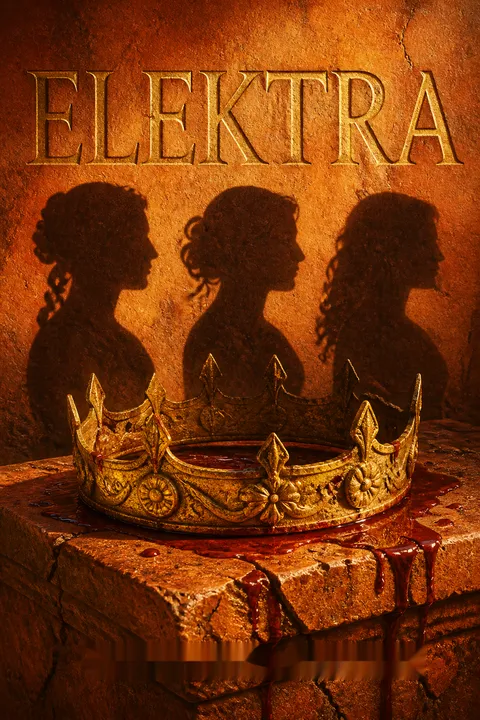


Plot Summary
Prologue
Ten years after Agamemnon sailed for Troy, his youngest daughter Elektra watches a chain of beacons carry news toward Mycenae. She has spent her childhood believing her absent father will return victorious, and the signal seems to reward that faith.
Her mother, Clytemnestra, keeps to the palace shadows, while Elektra imagines the reunion that will restore their family. The beacons announce Troy’s fall, but Elektra cannot yet know what the returning army will bring home with it.
The opening makes Elektra’s hope vivid before the story reveals the cost of her father’s war. The beacons are both practical news and a child’s imagined promise: Agamemnon is coming, so the family’s broken order can be repaired. By beginning near the end of the war and then returning to earlier generations, the novel makes the reader hear that hope with foreknowledge. Elektra’s certainty is not foolishness so much as a survival structure built during years of absence. The coming homecoming will test not only her faith in her father, but her ability to distinguish the father she remembers from the man the war has made.
A Spartan Marriage Bargain
Years before Troy, Helen’s Spartan suitors nearly turn her wedding choice into a bloodbath. Odysseus prevents the rivals from fighting by binding them to defend whichever man Helen selects; she chooses Menelaus, while Clytemnestra notices his brother Agamemnon. When the brothers return from Mycenae, Agamemnon has killed his usurping uncle, Thyestes, but left Thyestes’ young son, Aegisthus, alive.
Clytemnestra’s earlier argument that a powerful king need not fear one boy helped shape that choice. Agamemnon asks her to marry him, and she leaves Sparta for his palace, trusting that their new alliance will bring her a place beside him. The family’s old violence is already present, but Clytemnestra believes this time it can be contained.
The marriage begins as political arrangement and private possibility at once. Clytemnestra’s counsel is consequential because it treats mercy as a form of strength, yet Agamemnon adopts it partly as a way to consolidate power. The decision to spare Aegisthus does not erase the past; it postpones its consequences and leaves a living witness to inherited grievance. The Spartan oath similarly turns female choice into a pact among men, securing Helen while making her body the object around which Greek loyalties gather. Clytemnestra enters Mycenae with intelligence and influence, but the structures around her convert both into instruments of dynastic rule.
Apollo’s Unwanted Gift
In Troy, Princess Cassandra remembers her mother Hecabe’s dream that a newborn son would set the city aflame. Priam and Hecabe spare the baby, Paris, by handing him to a shepherd, and the family later treats the prophecy as safely past. Cassandra grows up wanting a life in Apollo’s temple rather than a marriage arranged for her.
The god comes to her there, forces his power upon her, and leaves her able to foresee events but unable to persuade anyone that her visions are true. Her parents and the priestesses call the encounter madness. Cassandra returns to her duties, but prophecy now invades her mind without warning, making her knowledge a source of pain rather than authority.
Cassandra’s gift is inseparable from coercion: divine knowledge arrives through an assault, and the god’s punishment makes her truthful voice socially unusable. Her experience exposes a brutal asymmetry between seeing and being believed. The people around her judge the credibility of a claim by the speaker’s status and composure, not by its accuracy, so Cassandra’s distress becomes evidence against her. Hecabe’s earlier dream also establishes the family’s recurring bargain with prediction: people can glimpse disaster, yet fear and attachment make them reinterpret what they know. Cassandra’s isolation is therefore not simply supernatural; it is produced by ordinary habits of disbelief.
Paris Carries War Home
When the grown Paris returns to Troy, Cassandra recognizes the abandoned baby from Hecabe’s prophecy and sees disaster following him. Paris claims that Aphrodite sent him to Sparta, where he takes Helen from Menelaus and brings her to Troy. Cassandra warns her family not to welcome him, but Priam accepts his son and Helen, while Helen herself offers Cassandra a rare measure of understanding.
Menelaus appeals to Agamemnon, whose ambition has long been to command all Greece. The old Spartan oath supplies a ready alliance, and Agamemnon gathers the Greek kings and their armies to recover Helen. Cassandra watches the fleet approach and knows Troy is in danger, while the people around her mistake the expedition for a war that can be managed.
Paris’s return converts a private act into a public catastrophe, but the novel resists making Helen’s beauty the sole cause. Agamemnon sees the crisis as an opportunity to establish supremacy, while the oath gives his ambition a respectable pretext. Cassandra’s warning is accurate, yet her family’s preference for reunion and diplomatic hope over painful truth leaves her powerless. Helen’s moment of sympathy complicates the division between the woman blamed for the war and the prophet who foresees it. Both are isolated in different ways: one is desired as an object, the other dismissed as a voice no one wants to hear.
The Aulis Altar
At Aulis, the Greek fleet cannot sail, and Agamemnon summons his daughter Iphigenia under the false promise of marriage to Achilles. Clytemnestra brings the girl to camp, believing she is preparing a wedding. At dawn, soldiers separate mother and daughter while Agamemnon kills Iphigenia at the altar to secure the wind Artemis demands.
Clytemnestra reaches her daughter too late and remains with her body as the army sails. She returns to Mycenae carrying grief that hardens into a vow to make Agamemnon suffer. At home, young Elektra cannot understand the loss and clings to the story that the gods required it. Agamemnon’s lion-decorated dagger, secretly given to Elektra before he left, becomes her keepsake of the father she still adores.
The sacrifice is the novel’s decisive rupture because it transforms political calculation into intimate violence. Agamemnon treats Iphigenia as a resource for the campaign, while Clytemnestra experiences the act as the destruction of motherhood’s most basic promise of protection. Elektra’s childhood explanation, that a goddess demanded the death, shows how religious language can make human choices appear inevitable. Her father’s dagger preserves affection in a form that will later carry a different meaning. Clytemnestra’s vow gives grief a direction, but it also begins to organize her future around the very logic of blood repayment that she once hoped Agamemnon might escape.
Aegisthus Returns in Secret
With Agamemnon and every able-bodied man away, Clytemnestra gives birth to Orestes and takes charge of Mycenae. Her work managing the kingdom gives her purpose, but she remains emotionally distant from her surviving children. Aegisthus, the boy Agamemnon spared and later drove from the city, returns as a young man.
He and Clytemnestra recognize in one another a shared hatred of Agamemnon, and she helps him recruit guards and supporters among those who remember his father, Thyestes. She presents Aegisthus to the elders as a rightful claimant and Agamemnon as a king who abandoned his people and killed his daughter. Elektra sees her mother laughing with the newcomer and begins to fear that her father’s home is no longer safe.
Clytemnestra’s political competence offers a second life after the altar, but that life is built around an unhealed injury. Aegisthus gives her recognition and a shared language for grievance; he also makes revenge seem like governance. The alliance is not a simple seduction into evil, since Mycenae’s elders and servants have their own memories of the dynasty’s upheavals. Yet Clytemnestra’s capacity to rule cannot protect her from reproducing the house’s coercive methods. Elektra, meanwhile, reads political change through the child’s need for dependable parents. Her suspicion begins where her mother’s silence and public authority meet.
Elektra’s Waiting Years
Elektra finds companionship in Georgios, a farmer’s son, while Clytemnestra and Aegisthus rule and Chrysothemis grows increasingly compliant. Through Georgios, Elektra learns the House of Atreus’ history: Tantalus’ crime, Pelops’ treachery, and the generations of murder that followed.
She decides that Agamemnon’s return will restore the family and punish Aegisthus. Meanwhile, news from Troy unsettles even Clytemnestra. Agamemnon has seized Briseis from Achilles, whose withdrawal weakens the Greek army, and Clytemnestra recognizes in the captive woman another person treated as a prize.
Elektra hears her mother’s concern for Briseis and cannot reconcile it with Clytemnestra’s affair. The war reaches its tenth year, while Elektra’s imagined father grows more heroic with every season he remains away.
Elektra’s devotion to Agamemnon is less a judgment of the man than a structure she builds to endure his absence. Georgios supplies facts, but she converts them into a story of restoration in which her father’s return will repair every betrayal. The contrast with Clytemnestra is psychologically important: the queen can recognize the suffering of Briseis because she sees the violence done to women, while Elektra can only hear that recognition as hypocrisy. Both are responding to the same patriarchal system, but their loyalties divide them. The inherited curse becomes Elektra’s identity before it becomes her choice.
Hector Falls to Achilles
Cassandra watches Troy endure years of siege, hunger, and daily deaths. Apollo sends plague through the Greek camp, briefly giving the Trojans hope, but the illness lifts before it can end the war. Achilles remains withdrawn after Agamemnon takes Briseis.
Patroclus, wearing Achilles’ armor, enters battle to rally the Greeks; Hector kills him, believing he has killed Achilles. Achilles returns in grief and fury, slaughters Trojans, and kills Hector outside the city. He then drags Hector’s body before Priam and Hecabe, crushing Troy’s remaining hope.
Cassandra knows Hector’s death will bring vengeance rather than victory. Even after Paris later wounds Achilles with an arrow, the war continues, and the city’s defenders are left without their strongest protector.
The battlefield’s reversals make private possession and public violence part of one chain. Agamemnon’s seizure of Briseis humiliates Achilles, whose refusal to fight leaves others exposed; Patroclus’s intervention then costs him his life and brings Hector down. Each warrior’s grief is real, but it becomes a license to injure someone else. Cassandra sees the pattern without being able to interrupt it. Her perspective refuses the clean arithmetic of heroic fame: the deaths that bards turn into victories are also the loss of a city’s protector, a father’s son, and a woman’s husband.
The Horse Enters Troy
After Paris is wounded, his former wife Oenone refuses to heal him, and he dies. Soon the Greeks appear to abandon the siege, leaving a huge wooden horse on the shore. Cassandra recognizes the danger, and the priest Laocoon agrees, striking the horse with a spear. When sea serpents kill Laocoon and his sons, the Trojans take the deaths as proof that the horse is sacred.
Greek captive Sinon reinforces that comforting interpretation. Helen tests the structure by calling out in voices that imitate the Greeks’ families; no one inside answers, and the city accepts the horse. Cassandra tries to burn it, but her brother Deiphobus stops her. As the Trojans celebrate, Greek soldiers emerge from the horse and open the gates to their returning army.
Troy’s fall depends less on a lack of evidence than on the emotional exhaustion that makes evidence unbearable. Laocoon’s warning and Cassandra’s prophecy are both available, but the serpents’ intervention is interpreted in the way that best supports the city’s wish for closure. Helen’s test is unsettlingly rational, yet even it cannot prove the horse safe; silence becomes reassurance because the people need it to. Cassandra’s attempt to destroy the structure is not madness but a practical response to a danger others refuse to test. The city’s last defense fails through a collective surrender of doubt.
Troy Burns, Women Divided
The Greeks sack Troy, kill Priam and seize the surviving women. Neoptolemus sacrifices Polyxena at Achilles’ tomb, then the Greeks assign Cassandra to Agamemnon. During the voyage home, Athena’s storm wrecks much of the fleet; Ajax, the Greek who assaulted Cassandra in Athena’s temple, dies in the goddess’s punishment.
Cassandra reaches Mycenae knowing Agamemnon’s wife has reason to hate him, but she cannot know whether Clytemnestra will protect or punish her. At the shore, Menelaus takes Helen back to Sparta rather than killing her, while the remaining Trojan women are divided among victors. Cassandra’s captivity binds Troy’s destruction to the house that began the expedition, carrying its violence into Agamemnon’s home.
The victory’s spoils expose the war’s actual economy: women and children are treated as objects through which men honor the dead, reward themselves, or assert possession. Polyxena’s death echoes Iphigenia’s, making one father’s sacrifice an excuse for another young woman’s killing. Cassandra’s assault and enslavement also reveal the limits of divine protection. Athena punishes Ajax, but only after he has harmed Cassandra and the fleet has already paid a devastating price. Helen’s survival beside Menelaus further shows how differently women are judged according to the desires of the men who claim them.
The Beacons Mislead Elektra
The beacon chain reaches Mycenae, and Elektra races to tell Georgios that her father is coming home. Clytemnestra prepares the palace for the returning king, but when Elektra approaches, she orders guards to lock her in her chamber.
Agamemnon arrives with Cassandra behind him, a captive he displays as proof of conquest. Clytemnestra welcomes him with rich tapestries laid underfoot, persuading him that accepting this honor will confirm his greatness.
Elektra glimpses the procession through her window and mistakes the captive for a rival to her father’s affection. She cannot hear the plans unfolding below. The homecoming she has imagined for years is therefore split in two: a daughter imprisoned upstairs and a wife arranging the king’s final welcome.
The beacons deliver accurate news but distort its meaning for Elektra. She reads Agamemnon’s arrival as the return of a loving father and the restoration of a rightful household; Clytemnestra reads it as the long-awaited opportunity to answer his crime. Locking Elektra away is both protection and a repetition of control: Clytemnestra prevents her daughter from intervening, but also denies her the agency to understand what is happening. Cassandra’s presence makes the homecoming a collision of victims from opposite sides of the war, not a simple reunion.
The Bath Becomes a Trap
Clytemnestra draws Agamemnon into a flower-filled bath chamber, drugs his wine with poppy extract, and questions him about Helen. When he confirms that Menelaus spared her, Clytemnestra’s resentment sharpens, but she continues with her plan. She traps Agamemnon in a robe she has sewn shut and strikes him repeatedly with an axe.
Then she visits Cassandra, who understands that survival would mean captivity and asks, without words, to die. Clytemnestra kills her too, holding her as she falls. Aegisthus arrives and joins Clytemnestra in announcing Agamemnon’s death as justice for Thyestes and Iphigenia. Clytemnestra refuses Aegisthus’ wish to cast the body to dogs and orders a royal burial, a final act she can offer Elektra.
Clytemnestra’s revenge is at once deliberate, politically successful, and emotionally unsatisfying. The robe and drug transform the bath, a domestic space of care, into an instrument of execution, mirroring Agamemnon’s conversion of a wedding into an altar. Her killing of Cassandra is more ambiguous: it is a terrible act, but also a response to a captive woman’s refusal of continued life. The contrast with Aegisthus matters. He claims the political reward, while Clytemnestra performs the violence and then insists on burial rites. Justice arrives in the shape of another killing, carrying the curse forward.
A Daughter Chooses Exile
After Agamemnon’s death, Elektra finds his tomb but cannot bear to look at his body. Georgios brings her young brother Orestes there and arranges to hide him with allies in Phocis; Elektra gives him their father’s dagger before he leaves. She remains in Mycenae, then accepts Georgios as her husband so Aegisthus cannot marry her off elsewhere.
Clytemnestra searches for Orestes in Sparta, where Helen has no news of him, and returns without her son. Years later, Elektra hears that Odysseus met Agamemnon among the dead and learned how he had been killed. The report renews Elektra’s conviction that her father’s honor demands vengeance, despite Georgios’ warning that retaliation only repeats the family’s violence.
Elektra’s marriage to Georgios is a strategy rather than a romantic resolution. It gives her a safer position near Mycenae, but her inner life remains organized around the absent father and brother. Sending Orestes away is an act of care that she barely recognizes because it conflicts with her longing to keep the family together. Clytemnestra’s search for him reveals a belated maternal concern, yet Elektra’s distrust makes reconciliation almost impossible. The report from the Underworld then converts grief into a moral obligation, demonstrating how stories about the dead can recruit the living into repeating their injuries.
The Oracle Demands Blood
Orestes returns to Mycenae as a grown man with his friend Pylades. He has lived safely in Phocis, but an oracle of Apollo has warned him that he must avenge Agamemnon’s killers or face divine punishment. Elektra welcomes her brother and supports his plan to enter the palace under a false story, then strike Aegisthus.
Orestes hesitates over whether killing his mother is also required. Elektra insists that Clytemnestra wielded the axe and must answer for Agamemnon’s death. Georgios objects that the family’s revenge has no end, but Elektra refuses to turn aside. She leaves him and joins Orestes and Pylades, directing her brother toward matricide even as she knows the Furies may punish him.
The oracle gives Orestes a command that feels like divine certainty but creates an impossible ethical bind: obeying the demand to avenge his father requires killing his mother. Elektra resolves the contradiction by narrowing her attention to the injury she has endured and the father she has idealized. Georgios offers a competing model, one based on seasonal renewal rather than inherited retaliation, but his argument cannot dislodge the identity Elektra has built around loyalty. Pylades’ companionship makes the act possible without making it less terrible. The decision shows how moral agency can persist even under divine pressure, and how people may use prophecy to authorize what they already desire.
Blood Calls the Furies
Orestes and Pylades lure Aegisthus out by claiming that Orestes is dead, and Orestes kills him at the palace entrance. Clytemnestra orders her guards not to attack her son. Orestes turns toward her, and Elektra urges him to finish the revenge they planned. He kills Clytemnestra, then drops his sword as the Furies appear to him, invisible to Elektra and Pylades.
The siblings and Pylades leave Mycenae, carrying Orestes through the madness that follows matricide. The epilogue finds them eventually purified at Delphi. Orestes returns to rule Mycenae, Georgios serves as a trusted adviser, and Elektra makes a quiet life with Pylades and their child, far from the palace that shaped her.
The final killing fulfills the family’s logic and exposes its failure. Agamemnon’s murder demanded retaliation; retaliation against Clytemnestra summons a different divine law, and Orestes becomes both dutiful avenger and polluted matricide. Elektra’s insistence has consequences beyond the immediate death: she gains the retribution she imagined, but cannot control the punishment it brings her brother. Her later life away from Mycenae suggests that release is not the same as erasure. The family’s history ends not when every injury is repaid, but when the survivors stop treating revenge as the only proof of love.
Epilogue
After Orestes kills Clytemnestra, the Furies drive him into madness, and Elektra and Pylades help him endure a long flight from one rejecting household to another. At Delphi, purification finally quiets the pursuit.
Orestes returns to rule Mycenae, with Georgios as an adviser, while Elektra chooses a remote life with Pylades and their baby. She no longer waits at the palace for her father or for revenge to complete her family. On a cold shore, she carries her daughter home through the rain, allowing the past to remain memory rather than command.
The ending does not claim that purification repairs everything. Orestes can rule, Georgios can hold influence, and Elektra can raise a child, but the family has already paid for its inherited demands in bodies and exile. Elektra’s separation from Mycenae is significant because she once believed that remaining near the tomb and the palace was the only way to honor Agamemnon. Her new life depends on relinquishing that vigil. The baby in her arms makes care, not vengeance, the story’s final action. Seasonal grief remains, but it no longer dictates what the next generation must do.
Analysis
Elektra reworks the war at Troy and the House of Atreus as a history experienced by women and children who are usually treated as its consequences. The men name the causes of violence as honor, strategy, divine demand, or rightful revenge. The women live the mechanisms: Clytemnestra watches her daughter die, Cassandra is dismissed when she predicts disaster, Helen becomes a prize claimed by competing kings, and Elektra grows up inside a household whose adults make choices she cannot understand. These perspectives shift the moral center from heroic achievement to the intimate costs concealed by it.
The novel’s central conflict is not simply whether revenge is justified. It asks how a demand for justice becomes indistinguishable from the desire to repeat an injury. Clytemnestra’s grief is grounded in Agamemnon’s deliberate sacrifice of Iphigenia, and Orestes’ obligation is reinforced by Apollo. Yet each answer creates another victim and another claimant. The curse persists partly because characters interpret inherited violence as proof that they have no alternative. Georgios offers the counter-image of farming, where loss and renewal belong to a cycle that does not require a human enemy. Elektra cannot accept that model until the family’s vengeance has already consumed her childhood and driven her from home.
Cassandra’s story adds an epistemic dimension to this pattern. She knows what is coming, but power belongs to those who can make others accept their version of events. Her credibility is denied at Troy just as Clytemnestra’s account of Agamemnon’s crime is suppressed by the language of sacrifice and heroic necessity. Both women possess knowledge that could change how their communities understand events, but neither can make truth alone into authority.
The ending offers no clean escape from grief. It offers a change in what the living ask of the dead. Elektra’s final life with Pylades and her child suggests that memory can remain without dictating the next act. The cycle loosens not through a perfect verdict, but through survival, care, and the refusal to make another generation pay.
Review Summary
Elektra retells Greek mythology from the perspectives of Clytemnestra, Cassandra, and Elektra during the Trojan War. While some readers found it engaging and appreciated the focus on women's experiences, others felt it lacked depth and originality. The characterization of Elektra was particularly divisive, with some finding her unsympathetic. Many praised Saint's writing style and research, though some found the pacing slow. Overall, opinions were mixed, with fans of Greek mythology generally enjoying it more than those less familiar with the source material.
People Also Read







Characters
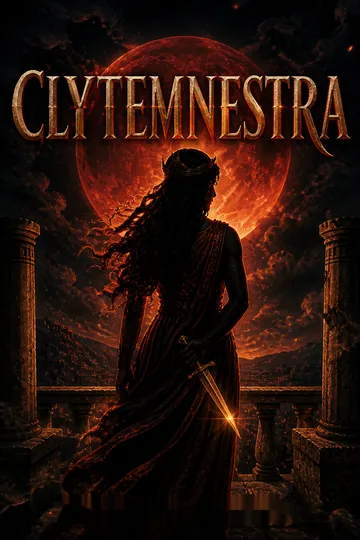
Clytemnestra
The grieving queenHelen’s twin sister and Agamemnon’s wife, Clytemnestra begins as an observant Spartan princess who wants influence over the life chosen for her. She is politically perceptive, proud, and capable of tenderness, especially as a mother. Her strongest instinct is to protect her children, but the violence surrounding her marriage repeatedly forces her to choose between obedience and action. She can read the motives of powerful men while underestimating the cost of making their methods her own. Her relationship with Elektra is shaped by love that becomes difficult to express through grief, secrecy, and opposing ideas of justice.
Cassandra
The disbelieved prophetA princess of Troy and daughter of Priam and Hecabe, Cassandra is quiet, watchful, and uncomfortable with the expectations placed on royal women. She seeks the priesthood because she wants her voice to carry authority, but her prophetic ability makes her more isolated rather than more powerful. Her perceptions are sharp, yet she is often forced to live inside the gap between what she knows and what others can accept. The war tests her loyalty to Troy, her faith in Apollo, and her ability to recognize compassion when it comes from someone she has reason to fear.
Elektra
The waiting daughterThe youngest daughter of Clytemnestra and Agamemnon, Elektra grows up frail in health but fiercely attached to the father who leaves while she is still a child. She remembers his affection more clearly than his flaws and turns his return into the answer to every loss at home. Curious and imaginative, she is also vulnerable to the stories that give her suffering a purpose. Georgios offers friendship and another way to understand the family’s history, but Elektra’s loyalty to her father makes it hard for her to accept a future not organized around him.
Agamemnon
The conquering kingKing of Mycenae and commander of the Greek expedition to Troy, Agamemnon is ambitious, commanding, and acutely sensitive to challenges to his authority. His exile as a child helps explain his hunger to rule, but it does not excuse the harm he inflicts in pursuit of power. He can inspire fierce loyalty, particularly in Elektra, while regarding people around him as pieces in a larger political design. His choices affect not only his enemies but the women and children who depend on him, and his family experiences his public triumphs as private catastrophe.
Aegisthus
The exiled heirThe son of Thyestes, Aegisthus is driven by the memory of his father’s death and his own childhood expulsion from Mycenae. He is anxious and physically unimposing beside Agamemnon, but exile has taught him to watch for openings and to attach himself to people with power. His grievance is real, though the methods by which he seeks security bind him to the same inheritance of revenge. He becomes a threat within the royal household, especially to the children whose futures remain tied to Agamemnon’s claim.
Helen
The coveted queenHelen is Clytemnestra’s twin, famed for a beauty that makes men treat her as a prize and a cause. Beneath the legend, she is thoughtful, socially perceptive, and more composed than those around her expect. She chooses carefully when she can, but her choices are absorbed into stories told by men who need to justify war or blame. In Troy she must build a place among strangers, and she recognizes something of her own isolation in Cassandra. Her relationship with Clytemnestra is intimate but complicated by distance, loyalty, and the consequences of the war.
Orestes
The absent sonThe only son of Clytemnestra and Agamemnon, Orestes is born after his father has sailed to Troy and grows up without knowing him. Elektra tries to preserve the family’s history for him, while Clytemnestra’s grief leaves little room for a close bond. He is sensitive to the moral weight of inherited violence and reluctant to treat vengeance as simple duty. His close friendship with Pylades gives him a source of loyalty beyond his bloodline, though the expectations attached to his name remain powerful.
Georgios
The farmer’s sonElektra’s childhood friend, Georgios is the son of a farmer whose family serves the land around Mycenae. He listens to Elektra, shares what he knows about her family, and offers her practical protection without pretending to be a hero. His knowledge of farming gives him a perspective shaped by patience, recurring seasons, and work that must continue after loss. He values Elektra deeply, but he does not accept that love requires endless retaliation. His steady presence provides a humane counterpoint to the royal family’s inherited contests of power.
Pylades
Orestes’ steadfast friendPylades is Orestes’ companion from Phocis and the son of a family connected to the House of Atreus. He chooses to stand beside Orestes when duty becomes frightening, offering loyalty without pretending the choice is easy. His restraint and steadiness contrast with the passionate certainty that drives Elektra. He is also a reminder that kinship can be made through friendship, not only inherited through a bloodline.
Iphigenia
The sacrificed daughterClytemnestra and Agamemnon’s eldest daughter, Iphigenia is loving, trusting, and old enough to be both excited by the future and dependent on her mother’s reassurance. Her relationship with Elektra is tender, and her father’s affection makes his absence painful to her younger sister. The promise of marriage gives her hope at the very moment political necessity turns her into a sacrifice. In memory, she remains the clearest measure of what the war costs Clytemnestra.
Chrysothemis
The accommodating sisterClytemnestra and Agamemnon’s middle daughter, Chrysothemis is practical, gentle, and more willing than Elektra to adapt to the household’s new rulers. She helps care for Orestes and tries to comfort Elektra, but she does not share her sister’s appetite for confrontation. Their different responses to danger strain their bond. Chrysothemis represents the survival strategy of accommodation, which Elektra experiences as abandonment.
Priam
Troy’s grieving kingKing of Troy and father of Cassandra, Paris, Hector, and many other children, Priam is affectionate and proud of his family. He values hospitality and hopes diplomacy can prevent catastrophe, but his attachment to Paris compromises his judgment. His authority carries the weight of a city, yet he is also a father whose decisions are shaped by grief and hope. Cassandra’s warnings force him to choose between the danger she describes and the future he wants to believe in.
Hecabe
The haunted queenQueen of Troy and Cassandra’s mother, Hecabe is a capable ruler whose dreams sometimes carry warnings about the city’s future. She loves her children but cannot bring herself to obey the prophecy that condemns Paris as a baby. Her refusal to believe Cassandra’s later account of Apollo reflects both fear of divine anger and a wish to preserve the family she has left. Hecabe’s life is shaped by the burden of knowing that one loving choice may expose many people to danger.
Paris
The returning princeThe son of Priam and Hecabe, Paris is raised outside Troy after a prophecy marks him as a danger to the city. He grows into a romantic, charismatic man who prefers beauty and desire to the duties of rule or battle. His confidence in divine favor allows him to interpret personal longing as destiny. Paris is capable of warmth, but he rarely considers how his choices will be paid for by others.
Hector
Troy’s defenderPriam and Hecabe’s eldest surviving son, Hector is Troy’s foremost warrior and its most dependable protector. He combines courage with a strong sense of responsibility to the city and family. Unlike Paris, he understands the cost of war because he sees its consequences directly, yet he continues to fight when his people need him. His bond with Andromache and their child gives his public role a private tenderness.
Menelaus
Helen’s husbandKing of Sparta and brother to Agamemnon, Menelaus is a quieter man than his brother and wins Helen’s affection through devotion rather than forceful display. His marriage becomes the center of a Greek military pact after Helen leaves Sparta. He is shaped by humiliation and longing, but his feelings do not fit neatly into the violent reputation expected of a king. His decisions influence the war while revealing how private attachment can survive public pressure.
Odysseus
The oathmakerA Greek king known for strategy, Odysseus devises the oath that binds Helen’s suitors to defend the man she chooses. He is observant, persuasive, and skilled at making others accept a plan that serves a larger purpose. His choices help assemble the forces that sail to Troy. He is also Penelope’s husband and a father, so the war’s demands pull him away from a household he values.
Achilles
The unmatched warriorThe most feared Greek fighter, Achilles is the son of the sea-nymph Thetis and is surrounded by stories of near-divine strength. His pride and fierce attachment to his honor can shape the course of the war as powerfully as any army. His friendship with Patroclus is central to his emotional life, while his conflict with Agamemnon exposes how personal insult can endanger thousands.
Patroclus
Achilles’ companionPatroclus is Achilles’ closest companion and a Greek fighter whose loyalty draws him into the battle even when Achilles refuses to take part. He is moved by the suffering of the Greek army and acts to restore its confidence. His bond with Achilles gives the war one of its most intimate relationships, while his intervention changes the emotional course of the conflict.
Andromache
Hector’s wifeAndromache is Hector’s wife and the mother of their young son, Astyanax. She lives close to the consequences of the siege, watching her husband defend Troy while fearing what may happen to their child. Her tenderness and composure make the city’s public struggle inseparable from family life. Through her, Cassandra sees what is at stake beyond the victories and names of the battlefield.
Polyxena
The youngest princessPolyxena is Priam and Hecabe’s youngest daughter, still young when Troy’s war reaches its end. She is gentle but capable of meeting danger with composure. Her closeness to Cassandra and Hecabe makes her part of the family’s vulnerable inner circle, where the war’s consequences are felt as immediate personal loss.
Neoptolemus
Achilles’ avenging sonThe son of Achilles, Neoptolemus arrives in Troy determined that his father’s death be honored. His youth does not soften his view of revenge, and he treats the defeated as instruments for settling a warrior’s account.
Laocoon
The warning priestA Trojan priest, Laocoon recognizes the wooden horse as a possible Greek trap and tries to stop his city from accepting it. His warning places him against a crowd hungry to believe the siege is over.
Ajax
The desecrating soldierA Greek soldier who violates Cassandra in Athena’s temple during the sack of Troy. His actions turn the goddess’s anger against the homecoming fleet and reveal the violence hidden beneath Greek victory.
Apollo
The punishing godThe god of prophecy and Troy’s divine protector, Apollo gives Cassandra foresight but ensures that others will not believe her. His power can heal or punish, yet his relationship with mortals is governed by desire and divine authority rather than fairness. His treatment of Cassandra makes the boundary between blessing and violation impossible to ignore.
Plot Devices
The House of Atreus curse
Inheritance turned into violenceThe family history begins with Tantalus and continues through Pelops, Atreus, Thyestes, Agamemnon, Clytemnestra, and their children. Each generation inherits both the memory of a crime and the desire to answer it. The curse functions as more than divine punishment: it is a family narrative that makes retaliation seem like duty and lets each new act borrow authority from the last. Elektra learns its history and takes it as a mandate, while Georgios questions whether the cycle can ever provide justice. The device makes the central conflict psychological as well as supernatural, because characters are shaped by what they believe their blood requires.
Cassandra’s prophecy
Truth without credibilityApollo gives Cassandra the ability to see events before they happen, then ensures that no one will believe her warnings. The device creates dramatic irony at Troy: readers and Cassandra can recognize danger while the royal family and citizens proceed toward it. It also complicates the usual idea of prophecy as power. Cassandra gains knowledge but not the social authority to act on it, and her distress is used to discredit her. Her visions reveal the costs of a world where credibility is assigned according to status, composure, and convenience rather than evidence.
The suitors’ oath
A marriage pact becomes warOdysseus binds Helen’s suitors to defend whichever man she chooses. The pledge prevents immediate violence in the Spartan hall and protects Menelaus’ claim, but it later gives Agamemnon a coalition of Greek rulers when Paris takes Helen to Troy. The oath converts a private marriage arrangement into a military obligation, allowing political ambition to travel under the language of honor. It also frames Helen as the object around which men make promises, even though she has made her own choice and must live with the consequences.
The beacon chain
Hope travels faster than truthClytemnestra arranges watchmen and signal fires so news of Troy’s fall can reach Mycenae quickly. The beacons work as a practical communication network, but they also become the image Elektra has awaited throughout her childhood. Their light confirms the war’s end without explaining what kind of man is returning or what he has done. The device therefore produces a dangerous mismatch between information and interpretation: Elektra sees the signal as the promise of family restoration, while Clytemnestra understands that the return begins the final stage of her plan.
The wooden horse
A gift conceals an armyThe Greeks leave a massive wooden horse outside Troy after seeming to withdraw. Sinon’s story and the deaths of Laocoon and his sons persuade the exhausted Trojans that the structure is sacred rather than dangerous. Helen tests it by calling out in voices that imitate Greek families, but the silence inside reassures rather than alarms the crowd. Cassandra recognizes the trap and tries to burn it, yet the city chooses the comfort of victory over the risk of doubt. The horse turns the Trojans’ longing for peace into the opening through which the Greek army enters.

Download PDF
Download EPUB
.epub digital book format is ideal for reading ebooks on phones, tablets, and e-readers.








