

Plot Summary
Prologue
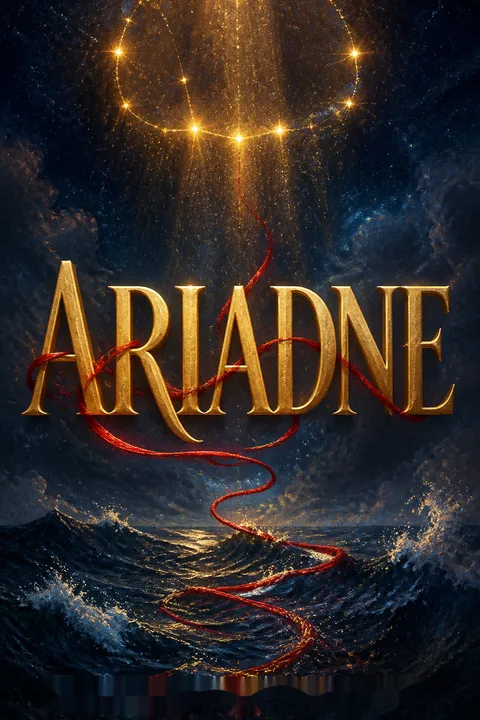
King Minos tells his daughter Ariadne how he conquered Megara and punished its princess, Scylla, after she betrayed her father for love. He presents himself as a righteous ruler: Scylla’s desire made her treacherous, and her death was justice.
Ariadne sees the story differently. Her father used Scylla’s trust to win a kingdom, then made her pay for his victory. The tale becomes a warning that shapes Ariadne’s understanding of power: men can call their advantage justice, while women bear the consequences.
The prologue establishes a conflict over who gets to define a woman’s actions. Minos presents Scylla’s love as evidence of moral failure, which lets him disguise both his manipulation and his violence as public virtue. Ariadne’s response is not yet an act of rebellion, but a refusal to accept her father’s account as complete. That distinction matters: the novel’s central struggle begins with interpretation, before it becomes escape or resistance. Scylla is also a preview of Ariadne’s danger. The same loyalty that makes a woman vulnerable can be recast as betrayal by the men who benefit from it.
A House Built Over Terror
Ariadne grows up in Knossos, where her mother, Pasiphae, teaches her to dance and Daedalus fills the palace with inventions. That warmth collapses after Minos cheats Poseidon by keeping a sacred bull instead of sacrificing it. The god’s revenge drives Pasiphae into a frenzied union with the animal, and she gives birth to Asterion, a child with a human face and a bull’s body.
Ariadne helps care for him, but he grows violent and kills her handmaiden Eirene after breaking out of his stable. Minos claims the creature as a weapon, names him the Minotaur, and orders Daedalus to build a maze beneath the palace. Athens must then send fourteen young people each year as tribute.
The family’s curse is not simply a divine punishment. Minos converts it into an instrument of rule, treating the Minotaur’s violence as useful once it can frighten other kingdoms. Ariadne’s early tenderness toward Asterion complicates the familiar monster story: she recognizes a vulnerable infant before the court turns him into a political symbol. Pasiphae’s withdrawal shows another cost of the men’s choices, one that leaves her unable to protect either herself or her children. The labyrinth makes the family’s private shame architectural. What began as one king’s attempt to evade a god becomes a system that imprisons a child and consumes strangers.
A Bride and Fourteen Captives
At eighteen, Ariadne learns that Minos has promised her to Cinyras, a wealthy king from Cyprus, in exchange for copper. Cinyras handles her without permission, and Minos dismisses her objections as irrelevant to Crete’s advantage. Her younger sister, Phaedra, follows her to the throne room but cannot change their father’s decision.
As they watch the Athenian tribute arrive, Phaedra begs Ariadne to find a way to stop the yearly deaths. Ariadne has always avoided looking at the captives, but this time she watches them being marched ashore. Among them is a tall young man who comforts a frightened girl before lifting his eyes toward the princess on the cliff. Ariadne recognizes the calm green gaze again, though she does not yet know his name.
Ariadne’s threatened marriage and Athens’s tribute are parallel forms of exchange: Minos treats both women and children as material to be transferred for political gain. His power depends on making those transactions seem ordinary, which is why Ariadne’s protest unsettles the court even though it changes nothing. Phaedra’s presence is important because she converts Ariadne’s private dread into an ethical question about the captives. The young stranger’s kindness gives Ariadne a human point of focus, but the larger pressure already exists. Her desire to leave Crete will become entangled with a cause that predates her attraction to him.
The Prince Chooses the Maze
At the funeral games for Ariadne’s dead brother Androgeos, she is forced to sit beside Cinyras while Minos displays his Athenian prisoners. She recognizes the stranger when Phaedra identifies him as Theseus, prince of Athens, who volunteered to take a captive’s place.
Theseus defeats Minos’s brutal general, Taurus, in the wrestling contest. Minos offers him freedom as a reward, but Theseus refuses because he has sworn to enter the Labyrinth with the other Athenians. Ariadne sees courage in his choice, while Phaedra watches him with open fascination.
Minos orders Ariadne to crown the victor, forcing her into public contact with him. At the feast afterward, she studies the bound captives instead of turning away, and her admiration begins to sharpen into a decision.
Theseus’s refusal of freedom gives his heroism its first double edge. He accepts danger for the sake of his people, but he also refuses the ordinary survival that would keep him from a legendary deed. Ariadne cannot yet distinguish those motives; she sees a moral clarity absent from Minos’s cold calculations. The contrast is persuasive because it is enacted in public, with the captives present as witnesses to both men’s power. Yet Theseus’s choice also makes Ariadne’s intervention possible. His heroic ambition and her moral alarm align for a time, even though they will not remain the same thing.
A Thread Through Darkness
At the feast, Ariadne appeals to Pasiphae, reminding her that Asterion’s victims are other mothers’ children. Her mother briefly reconnects with the plea but cannot offer a way to challenge Minos. Ariadne turns instead to Daedalus, who is watched constantly by the guards.
She uses a loose tile on her dancing floor as a pretext to speak with him privately. Daedalus understands that she wants to save Theseus and the captives, and warns that Theseus intends to defeat the Minotaur, not escape without fighting.
He gives Ariadne a ball of red thread and the key to the Labyrinth. He also tells her that helping Theseus means leaving Crete forever, because Minos will punish her for the betrayal. Ariadne accepts the risk rather than return to her arranged marriage.
Ariadne’s choice emerges from several motives that do not neatly cancel one another. She is horrified by the tribute, drawn to Theseus, and desperate to escape a father who treats her future as a diplomatic asset. Daedalus refuses to flatter her with the idea that love alone explains her decision; his challenge makes her confront the political cost of what she is doing. The thread and key offer practical agency, but they do not make the choice safe or morally simple. Ariadne can open the maze, yet she cannot control the story Theseus will tell about what happens inside it.
The Sister’s Stolen Club
That night, Ariadne unlocks Theseus’s cell and leads him to a secluded place by the sea. He recounts the violent feats that brought him to Athens, including killing the fifty sons of Pallas, who had arranged Androgeos’s death.
He also describes how he volunteered for the Cretan tribute after learning that Minos had forced Athens to surrender fourteen children each year. Theseus intends to kill the Minotaur and end the payment, not flee from Crete. Phaedra reveals that she followed Ariadne and listened from hiding.
She has retrieved Theseus’s iron club and refuses to be left behind. Ariadne agrees that Phaedra must escape too, and Theseus explains how his sailors will wait at a hidden cove. He kisses Ariadne and promises a future together, while she gives him the thread and instructions for the maze.
The sisters’ different temperaments turn one secret act into a shared risk. Ariadne measures the danger and tries to protect Phaedra, while Phaedra insists that loyalty means acting rather than waiting for permission. Theseus can make the plan sound secure because he has already organized its route and timing, but the women still bear the greatest personal cost if it fails. His promised marriage gives Ariadne a private future to imagine alongside the public rescue. The red thread therefore binds two kinds of hope: the captives’ path out of the maze and Ariadne’s belief that Theseus will carry her into a life of her own choosing.
The Monster’s Bloodied Exit
On the day of the sacrifice, Ariadne secretly places Theseus’s club beside the Labyrinth entrance and opens the doors. When the Minotaur stirs, she slips into the maze and barely escapes before the doors close.
Theseus enters with the red thread tied to him and emerges later with all thirteen other captives alive, a wound on his arm, and the Minotaur’s remains in a sack. At the cove, Phaedra is missing. Theseus refuses to risk the Athenians by waiting, so he takes Ariadne to the ship and promises to return for her sister.
He then breaks the Minotaur’s remains against the shore and leaves the fragments behind. His men have also plundered Knossos. Ariadne sails away from Crete, carrying her mother’s dress and Daedalus’s bee pendant, but not Phaedra.
The rescue succeeds, but its success is already compromised by the unequal value placed on different lives. Theseus saves every Athenian captive, yet decides that the risk of waiting for Phaedra is unacceptable. His judgment may be tactically sound, but Ariadne experiences its cost as another separation from the sister she has spent her life trying to protect. The destruction of Asterion’s remains makes the victory physically undeniable and emotionally brutal. Ariadne’s departure is not a clean liberation: she has escaped Minos, but she has also lost her home, her brother, and the certainty that Theseus’s promises mean what she thinks they mean.
Naxos Gives Her Breath
Theseus leaves Ariadne asleep on Naxos and sails away before dawn, taking the Athenian survivors with him. She wakes to see his black-sailed ship vanishing and finds provisions left for only a few days.
Alone, she rations water, wanders the island, and finally breaks into furious grief at the grapes she had hoped would keep her alive. The vines then grow back, and water pours from a statue of Dionysus. The god arrives by ship with Acoetes, the one sailor who resisted a plan to sell him into slavery.
Dionysus turns the rest of the crew into dolphins and welcomes Ariadne into his palace. He offers her food, safety, and a place as guardian of his home. For the first time since leaving Crete, she has shelter that is not conditional on a marriage bargain.
Theseus’s abandonment strips away the heroic romance that had made Ariadne’s sacrifice feel worthwhile. The small ration of food is especially cruel because it converts betrayal into a slow, practical death rather than a dramatic confrontation. Dionysus’s arrival reverses that condition through hospitality, not conquest: he feeds Ariadne, listens to her account, and gives her a role that is not defined by her father’s alliance-making. Yet the miracle does not erase her vulnerability. She remains dependent on a god whose power is immense and whose attention she cannot predict. Safety begins here as an offered refuge, not a guarantee.
A Queen Learns the Court
While Ariadne settles on Naxos, Phaedra is sent to Athens as part of Deucalion’s attempt to secure peace with the city. Theseus tells her that Ariadne died from a divine punishment on Naxos, and Phaedra has no proof to challenge him.
Aegeus dies after mistaking Theseus’s black sails for a sign that his son was killed, making Theseus king. Phaedra enters a city she expects to despise, but its people treat her with sympathy rather than blame. When Theseus repeatedly leaves on quests, she persuades his advisers to let her attend court and gradually influences policy.
She helps unite Attica through a public festival honoring Athena. She also bears two sons, Demophon and another child, but finds motherhood lonely and difficult. When Hippolytus, Theseus’s son by the Amazon queen Hippolyta, arrives in Athens, Phaedra sees a man unlike her husband.
Phaedra’s political education gives her a kind of agency that her marriage does not. She learns the machinery of Athens and helps strengthen the city, although the men around her often treat her judgment as an extension of Theseus’s authority. Her competence coexists with private isolation: she can guide public decisions yet feels trapped by the demands of motherhood and by a husband whose absences leave her alone with them. Hippolytus matters first as a contrast, not yet as a romantic possibility. His restraint and care for his horses expose the difference between strength used to dominate and strength practiced with gentleness.
A Crown Among the Stars
Dionysus returns to Naxos and tells Ariadne about his mother Semele, whom Hera’s jealousy caused to die, and about his grief for the mortal Ampelos. He also describes entering the Underworld to see Semele, then bringing her back to Olympus.
Ariadne comes to understand him as more capable of attachment than the gods she feared. Their friendship becomes love, and they marry simply on the beach. Dionysus casts Ariadne’s wedding crown into the sky, where it becomes a constellation. They build a life among gardens, vineyards, and Dionysus’s maenads, and Ariadne bears five sons.
She keeps their domestic joy deliberately modest, hoping not to attract the attention of jealous gods. Dionysus still travels, but he returns often, and Ariadne believes their shared life matters more to him than fame or worship.
Ariadne’s new life is built through repeated acts of care: cultivating food, raising children, and making a home with someone who listens to her. Dionysus’s stories deepen their bond because he speaks of grief rather than only triumph, a contrast to Theseus’s polished record of heroic victories. Still, the constellation crown introduces an ambiguity. It preserves Ariadne in the sky, but it also turns a personal gift into a public sign beyond her control. Her wish to keep her family unnoticed reveals how deeply Crete has taught her to fear divine attention, even while she lives with a god.
Sisters Meet Across the Sea
Years later, Phaedra learns from an Athenian captain that Ariadne is alive and married to Dionysus. She also learns that Theseus’s account of her death was false, though he claims he believed it at first.
By then Phaedra has discovered that Hippolytus is Theseus’s son and has become convinced that her love for him can free her from her marriage. She sails to Naxos, hoping Dionysus will shelter them both. Ariadne welcomes her, but Phaedra speaks of a forbidden future with Hippolytus and rejects her sister’s warning that he is devoted to Artemis and sees her as a mother.
Ariadne also objects to Phaedra’s assumptions about the maenads and their rites. Hurt and humiliated, Phaedra leaves at dawn, determined to make her confession to Hippolytus without Ariadne’s help.
The reunion exposes the cost of years lived inside separate stories. Ariadne has believed Phaedra safe in Athens; Phaedra has believed Ariadne dead, and each has built a life around incomplete knowledge. Their affection survives, but it cannot make them agree about what freedom requires. Phaedra sees desire as a route out of a stifling marriage, while Ariadne recognizes the danger of entrusting her future to a man’s response. Neither sister is simply foolish or wise: both are trying to recover a self that family and political arrangements have constrained. Their failure to persuade one another prepares the next tragedy.
The Blood Beneath the Vines
After Phaedra leaves, Ariadne notices blood washing from the maenads’ clothes and follows them into the mountains. There she sees Dionysus lead a frenzied rite in which the women tear apart a young goat; he then restores the animal to life.
One of the maenads, Euphrosyne, explains that she fled Athens after her husband ordered their infant daughter abandoned and left to die. Ariadne understands why women might seek a ritual that gives grief a shared, bodily outlet, but the scene unsettles her trust in Dionysus.
She chooses to sail to Athens, hoping to stop Phaedra before she confesses her love. Dionysus objects but does not prevent her. In Athens, Ariadne meets Hippolytus and realizes he regards Phaedra as a mother, while Phaedra mistakes his reserve for hidden affection.
The goat rite changes Ariadne’s understanding of Dionysus without making the maenads’ pain easy to judge. The women’s violence is real, but so is the abandonment that brought Euphrosyne to Naxos. Their ritual gives grief a communal form; it does not repair the original loss. Ariadne’s choice to leave shows that domestic peace has not made her indifferent to her sister. At the same time, her arrival cannot control Phaedra’s desire. The novel keeps compassion distinct from agreement: Ariadne can recognize the wound beneath Phaedra’s hope while still believing that the hope is dangerous.
A Name on Papyrus
Phaedra approaches Hippolytus in the stables and confesses her love, but he recoils and tells her he has regarded her as his mother. He leaves in distress. Phaedra hears that Theseus has returned and, convinced that her shame will become public, writes only Hippolytus’s name before hanging herself.
Ariadne finds her body with Theseus, who reads the note as proof that Hippolytus assaulted his wife. Ariadne argues that Phaedra loved Hippolytus and that his refusal may be all that happened, but Theseus calls on Poseidon to punish his son.
A monstrous wave overturns Hippolytus’s chariot and kills him. Ariadne cannot determine the full truth of what passed between them. She returns to Naxos with Tauropolis, grieving both her sister and the young man destroyed by Theseus’s certainty.
Phaedra’s death grows from the collision of desire, shame, and a political world that leaves her few safe ways to speak. Her note names Hippolytus but does not explain what happened; Theseus turns that ambiguity into a verdict that confirms his own assumptions about men. Ariadne offers a different interpretation, but she cannot make uncertainty survivable once Theseus invokes divine punishment. Hippolytus’s death is therefore not simply the consequence of Phaedra’s choice. It is also the result of a father who mistakes accusation for evidence and possesses the power to make his belief lethal.
The Gate of Argos
Back on Naxos, Ariadne tells Dionysus what happened in Athens, and he comforts her without interrupting her grief. Their marriage continues, but the earlier ease between them has been damaged by what she witnessed in the mountain rite.
Dionysus is increasingly angry that his half-brother Perseus forbids his worship in Argos. Ariadne reminds him that Perseus displays Medusa’s severed head as a weapon, much as Minos used the Minotaur to terrify his enemies. Dionysus invites her to accompany him to Argos.
They approach on foot and ask admission at the city gates, but Perseus refuses, fearing Hera’s anger if he favors another son of Zeus. Dionysus treats the refusal as an insult and vows to make Perseus regret it. Ariadne sees that the dispute has become a contest for submission, not a simple disagreement over worship.
Ariadne’s comparison between Medusa and the Minotaur gives her a moral reason to support Dionysus, but it also lets him redirect her anger toward his own rivalry. Perseus is not merely a villain at the gate: he is a mortal negotiating the danger of Hera’s power. Dionysus, by contrast, can afford to treat rejection as a personal affront. Ariadne’s presence makes the expedition feel intimate, yet the conflict concerns public authority and religious allegiance. The scene marks the narrowing of her refuge. Naxos has been a place of safety, but Dionysus’s need to be recognized is pulling their family into the world’s contests for power.
The Gorgon Looks Back
Dionysus calls the women of Argos to join his rites, but they refuse. He answers by driving them into madness, and they carry their babies from the city. His power restores a goat after ritual violence, but it cannot return the human children; the mothers emerge from the city grieving.
Ariadne, horrified, tells Dionysus to hold back Perseus’s advancing army without harming it, then promises to negotiate peace and leave Naxos to the women. She runs toward Perseus, but Hera has blinded him to her plea. As she reaches him, his shield turns her to stone.
Dionysus lifts her from the battle and sends her into the sky as a star in her crown-shaped constellation. The epilogue reveals that he later makes peace with Perseus, leaves Naxos to their sons and the maenads, and takes his place on Olympus.
The final disaster exposes the distance between Dionysus’s language of freedom and his use of power. The Argive women refuse his invitation, so he removes their ability to choose; the ritual that once seemed to contain grief becomes a tool that multiplies it. Ariadne’s attempt to negotiate is an act of protection, especially for her children and the women who sought refuge on Naxos, but it cannot overcome Hera’s manipulation of Perseus or the reach of divine violence. Her transformation into a constellation offers permanence while denying her a living future. The ending therefore grants her symbolic visibility at the exact moment her bodily agency is taken away.
Epilogue
From the night sky, Ariadne watches her sons grow into quiet lives, free of the hunger for fame that shaped their fathers. Dionysus eventually makes peace with Perseus and repairs the harm done to Argos. He leaves Naxos to Ariadne’s sons and the maenads, then takes his place on Olympus.
Ariadne’s crown remains above the sea, and women across the world look toward it as they struggle through childbirth. She turns her light toward them, keeping company with those who bring new lives into the world.
The epilogue changes the meaning of Ariadne’s celestial transformation without undoing its violence. She has lost the embodied life she built on Naxos, yet the final narration gives her a continuing relation to mortal women rather than reducing her to a trophy of a god’s grief. Her star becomes useful to people whose labor and danger are otherwise overlooked. The sons’ ordinary futures also reverse the family’s inherited demand for greatness: their quietness is framed as a gift, not a failure. The novel ends by making remembrance an ethical act. Ariadne’s light matters because it is directed toward those who need help, not toward the fame of a hero.
Analysis
Ariadne is organized around the struggle to distinguish liberation from another form of dependence. Minos confines women through marriage bargains and uses the Minotaur to make political fear tangible. Theseus appears to offer a clean alternative: he risks himself for Athens and tells a persuasive story of heroic justice. Ariadne’s trust in him is understandable because his deeds seem to answer the cruelty she has witnessed. His abandonment exposes the danger of treating visible courage as proof of private responsibility. The novel does not suggest that Ariadne should never trust; rather, it shows how the language of heroism can conceal a person’s willingness to spend others for his reputation.
The alternating accounts of Ariadne and Phaedra make that problem familial as well as political. The sisters inherit the same constrained world but respond differently. Ariadne tries to preserve attachment while claiming agency; Phaedra seeks a more decisive escape from a life she experiences as suffocating. Their conflict is not a contest between a wise sister and a foolish one. Both have been deprived of reliable information, and each makes choices from the emotional conditions she knows. Their separation reveals how patriarchal power works not only through direct coercion but by arranging women’s futures so that they must compete, leave, or mistake danger for possibility.
Myth itself is another instrument of power. Minos calls Scylla treacherous, heroic tradition makes Medusa a monster, and Theseus’s account of himself omits the facts that would unsettle his reputation. Ariadne learns to read these stories against their grain, asking who speaks, who benefits, and whose suffering has been excluded. Yet the novel refuses a simple reversal in which women’s perspective guarantees safety. Dionysus offers genuine tenderness and a refuge for the wounded, but his need for worship eventually turns that refuge toward coercion. His failure with the Argive mothers shows that sympathy does not neutralize power when the powerful person refuses to accept another’s no.
The ending gives Ariadne an afterlife as a star associated with women’s labor and survival, but it does not erase the cost of her transformation. Her lasting significance comes not from becoming a hero’s prize or a god’s possession, but from directing attention toward lives that heroic history often treats as incidental. The book’s sharpest lesson is therefore ethical rather than consoling: remembrance matters when it restores attention to the people who paid for someone else’s glory.
Review Summary
Ariadne retells the Greek myth from the perspective of the titular character and her sister Phaedra. Many readers praised the beautiful writing, feminist themes, and exploration of women's struggles in a male-dominated world. Some found it reminiscent of Madeline Miller's Circe. Critics noted slow pacing, underdeveloped characters, and overreliance on existing myths. Overall, reviews were mixed, with some hailing it as a stunning debut while others felt it fell short of its potential. The book's emotional depth and fresh take on classic mythology resonated with many readers.
People Also Read








Characters
Ariadne
The Cretan rebel princessAriadne is the daughter of Minos and Pasiphae, raised among the splendor of Knossos and the fear produced by the Minotaur beneath it. She dances, observes, and listens closely, developing a strong sense of how power disguises itself as justice. Her tenderness toward her family coexists with a growing refusal to accept the roles chosen for her. She is drawn to the stories of heroes, but also notices the women those stories leave behind. Her central drive is to make a life that belongs to her, even when the choices available to her are compromised. She is thoughtful rather than fearless, and her courage often consists of acting while fully aware of what she may lose.
Phaedra
The defiant younger sisterPhaedra is Ariadne’s younger sister, quick to challenge limits and impatient with passive acceptance. Growing up after Pasiphae’s collapse, she does not share Ariadne’s memories of an earlier, brighter family life. She wants distance from Knossos and the social contempt attached to her household, and she is attracted to grand possibilities beyond Crete. Her directness can be brave and generous, but it can also make her cling to an interpretation once she has invested her hopes in it. Phaedra’s relationship with Ariadne is affectionate and deeply important, though the sisters approach danger differently. She wants a life large enough to escape the shadow of her family.
Theseus
The fame-hungry heroTheseus is the prince of Athens, celebrated for defeating criminals and monsters on his journey to claim his birthright. He is strong, poised, and capable of risking himself for his people, qualities that make his reputation persuasive. He also understands how a heroic story is made and tends to place public glory above private obligations. His confidence can look like moral certainty, especially beside Minos’s tyranny, but his attention is often fixed on the next deed that will enlarge his name. To Ariadne and Phaedra, he represents both escape from Crete and the danger of mistaking a compelling performance for dependable character.
Dionysus
The laughing wine godDionysus is the Olympian god of wine, celebration, and ecstatic rites, born from Zeus and the mortal Semele. He moves easily among humans and often shows more curiosity and warmth than the gods Ariadne has feared. His early life among nymphs and his experience of grief make him unusually attentive to mortal feeling. He is hospitable, playful, and capable of intimacy, but his divine power and desire for recognition remain consequential parts of his character. He wants both genuine connection and public devotion, needs that do not always sit comfortably together. Ariadne is drawn to his apparent openness, while the story asks whether affection can remain safe when one partner holds overwhelming power.
Minos
The calculating kingMinos rules Crete through wealth, military strength, and the fear generated by the Labyrinth. He describes his conquests as righteous judgment, presenting self-interest as moral necessity. His children matter to him chiefly when they can reinforce his authority or secure an alliance. He is controlled rather than openly impulsive, which makes his cruelty seem like policy instead of anger. Minos’s relationship to Pasiphae and Asterion is shaped by shame and advantage: what begins as a divine humiliation becomes useful once he can command it. He embodies a political order that turns intimate suffering into public spectacle and expects women to bear the cost.
Pasiphae
The wounded queenPasiphae, daughter of Helios and queen of Crete, once teaches Ariadne to dance and fills the palace with warmth. Poseidon’s punishment after Minos betrays him leaves her traumatized, isolated, and unable to meet her children as she once did. Her suffering is intensified by public gossip that treats the consequences of divine violence as evidence of her own corruption. She remains a mother to Asterion even when the rest of the family fears him, and her connection to him is bound up with love, pain, and shame. Pasiphae’s story shapes Ariadne’s understanding of how women can be punished for the choices and transgressions of men.
Asterion
The imprisoned royal childAsterion is the son of Pasiphae and the sacred bull, born with a human infant’s face and a bull’s body. Ariadne first encounters him as a vulnerable baby and tries to nurture the human part of him. His rapid growth and violent instincts make him dangerous, while Minos’s decision to exploit his strength shapes the identity the court gives him. He is both Ariadne’s brother and the source of Crete’s most feared weapon, a contradiction that makes him more than a simple monster. His story reveals how confinement and political use can erase a person’s original name.
Daedalus
The captive inventorDaedalus is the master craftsman whose inventions fill Knossos, including the dancing floor Ariadne loves and the Labyrinth that confines Asterion. He treats Ariadne as an intelligent companion rather than an ornamental princess, encouraging her curiosity about the wider world. His skill makes him valuable to Minos, but that value also becomes a form of captivity. Daedalus carries guilt for helping create the conditions that imprison the Minotaur and endanger the tribute children. He is patient, perceptive, and careful about consequences, offering Ariadne help while insisting that she understand the price of using it.
Hippolytus
The reserved Amazonian heirHippolytus is Theseus’s son by Hippolyta, raised among the Amazons and devoted to Artemis. He is quiet, disciplined, and more comfortable caring for horses than navigating palace ceremony. His restraint contrasts with Theseus’s appetite for attention and conquest, while his upbringing gives him a different model of masculinity. He seeks a place in Athens without claiming the throne from his younger half-brothers. Phaedra reads his seriousness through her own longing, but Hippolytus’s values are formed independently of her expectations.
Deucalion
The measured Cretan heirDeucalion is Ariadne and Phaedra’s brother, sent away from Crete to grow up under a gentler uncle. He is practical, moderate, and attentive to the danger of rebellion after Minos’s rule weakens. His instinct is to stabilize Crete through negotiation rather than reproduce his father’s reliance on terror. That caution can still make him treat family members as pieces in a political settlement, especially when he seeks peace with Athens. He represents a possible change in government, though not a complete escape from dynastic calculations.
Icarus
Daedalus’s daring sonIcarus is Daedalus’s young son, who grows up under guard in Crete after his father is imprisoned. As a child he plays with Phaedra and Ariadne, bringing moments of ordinary companionship into the palace. His bond with Daedalus is central to the inventor’s choices, since Daedalus’s plans must account for his son’s safety as well as his own. Icarus’s youth and eagerness place him at the edge of a world governed by adult ambition and divine danger.
Aegeus
The anxious Athenian kingAegeus is king of Athens and the father Theseus believes he must prove himself worthy to succeed. He wants an heir and fears the city’s instability, leaving him vulnerable to manipulation before Theseus arrives. He is capable of recognizing his son through the sword hidden beneath a great stone, and his relief at finding an heir is genuine. His decisions help frame the difference between ruling as a burden of care and pursuing a throne as the reward for heroic deeds.
Perseus
The guarded king of ArgosPerseus is a son of Zeus, a famous monster-slayer, and ruler of Argos. He keeps Dionysus’s worship outside his city, partly because he fears provoking Hera and has built a temple to secure her favor. His shield, bearing Medusa’s head, symbolizes the power he gained through a heroic victory. He is cautious where Dionysus is impulsive, but his position is shaped by the same dangerous divine hierarchy that governs the other kingdoms.
Hera
The jealous queen goddessHera is queen of the Olympians, fiercely protective of her status and resentful of Zeus’s mortal lovers and children. Her punishments often fall on the women and offspring caught in Zeus’s betrayals rather than on Zeus himself. She is politically formidable as well as personally vindictive, and her influence can shape what mortals believe they see. For Ariadne, Hera’s stories confirm that divine attention is dangerous, especially for women whose lives are already controlled by men.
Poseidon
The vengeful sea godPoseidon rules the sea and is capable of turning wounded pride into punishment that reaches far beyond the person who offended him. His response to Minos’s broken promise devastates Pasiphae and changes the fate of the Cretan family. He is also connected to Theseus through the disputed story of the hero’s parentage. Poseidon represents divine power that can alter mortal lives without accepting responsibility for the suffering it causes.
Eirene
The truthful handmaidenEirene is Ariadne’s handmaiden and an early source of stories that reveal the suffering hidden beneath heroic myths. She tells the sisters the history of Medusa, helping Ariadne recognize that women can be punished for men’s violence. Her death also makes the Minotaur’s growing danger impossible to keep abstract.
Rhadamanthus
The wary old judgeRhadamanthus is an elderly Cretan judge whom Phaedra initially dismisses as an unsuitable husband. His handling of a domestic abuse case shows that he can use the language of practical benefit to restrain a violent man when appeals to compassion fail. He offers Phaedra a glimpse of a gentler kind of authority.
Euphrosyne
The grieving young motherEuphrosyne is a young woman who comes to Naxos after her husband orders their infant daughter abandoned. Her loss helps Ariadne understand why the maenads seek Dionysus’s rites and community. She gives the island’s gathering of women a history rooted in ordinary cruelty, not just divine myth.
Acoetes
The sailor who resistsAcoetes is the sailor who refuses to participate when his crewmates plan to sell Dionysus into slavery. His conduct earns the god’s gratitude and allows him to survive the transformation that overtakes the rest of the crew. He serves as a reminder that individual decency can matter even when the person one helps has overwhelming power.
Semele
Dionysus’s mortal motherSemele is the mortal woman who bears Dionysus after Zeus disguises his identity from her. Hera manipulates her into demanding that Zeus reveal his divine form, an exposure that proves fatal. Her story gives Dionysus a personal understanding of grief and the harm inflicted on mortals by divine rivalries.
Ampelos
The god’s mortal belovedAmpelos is the mortal youth Dionysus loves and loses in an accidental fall. His death leaves Dionysus searching for meaning in mortality and grief, and it shapes the god’s unusual sympathy for human attachment. Through Ampelos, the novel shows that not every mortal death is caused by divine punishment; chance can wound as deeply as malice.
Androgeos
The fallen Cretan princeAndrogeos is Ariadne’s eldest brother, an accomplished athlete whose death in Athens becomes the pretext for Minos’s war and the tribute demanded from the city. His death matters politically more than emotionally to Minos, whose response turns private loss into public punishment.
Plot Devices
The red thread and key
A way through darknessDaedalus gives Ariadne a key that opens the Labyrinth and a ball of thread that marks a route back through it. The two objects make knowledge practical: Ariadne can grant access, while Theseus can use the thread to guide himself and the captives through the maze. They also tie his success directly to her intervention, even when his public version of the deed minimizes her role. The device joins escape, betrayal, and intimacy in one physical object. Its use costs Ariadne her place in Crete, and the red cord becomes a reminder that helping a hero does not ensure that he will honor the person who helped him.
The Labyrinth
A prison made politicalDaedalus’s maze is built to contain Asterion, but Minos turns it into a tool of punishment and a threat to Athens. Its twisting passages make escape impossible without knowledge or guidance, while its central chamber isolates the Minotaur from human contact. The structure converts the Cretan family’s shame into an institution that kills children from another city. For Ariadne, the maze is both home’s hidden underside and the place where she can intervene. It gives the story a physical form for the confusion created by power: every route is designed by someone else, yet a person who knows its construction can still find a way out.
The constellation crown
Memory made visibleDionysus gives Ariadne a jeweled crown at their wedding, then casts it into the sky so it will endure as a constellation. The stars carry a private promise into public memory, becoming a guide associated with the sea and a sign visible to women far from Naxos. The image also complicates permanence: being remembered in the heavens is not the same as retaining a mortal life or control over one’s fate. The crown connects Ariadne’s intimate marriage to the novel’s larger interest in who is commemorated and why. Its meaning changes as the story moves from romantic gift to a final emblem of her continuing presence.
Divine transformations
Power made bodilyThe gods and their favored heroes alter bodies in ways that make authority visible: Poseidon’s revenge transforms Pasiphae’s life, Athena’s punishment turns Medusa into a monster, Dionysus changes sailors into dolphins, and Perseus uses Medusa’s head to petrify those who face it. These transformations are never merely spectacle. They reveal who can impose a new identity on another person and who must live with the consequences. The novel repeatedly contrasts the gods’ freedom to act with mortals’ limited ability to resist. Ariadne’s own understanding of these myths changes as she learns to question the heroic accounts that make divine violence appear deserved.
The Dionysian rites
Grief given a ritualOn Naxos, Dionysus’s maenads gather for nocturnal rites involving wine, song, frenzy, and the tearing apart of a young goat that Dionysus restores to life. The ceremony offers women a collective outlet for pain that they otherwise carry privately, as Euphrosyne’s loss makes clear. Its meaning darkens when Dionysus brings madness to Argive women and cannot restore the human children they bring to him. The rite therefore shifts from a contained practice within a refuge to evidence of how divine power can exceed its own intended limits. It tests Ariadne’s trust in her husband and forces her to decide whom Naxos is meant to protect.

Download PDF
Download EPUB
.epub digital book format is ideal for reading ebooks on phones, tablets, and e-readers.








