

Plot Summary
Prologue
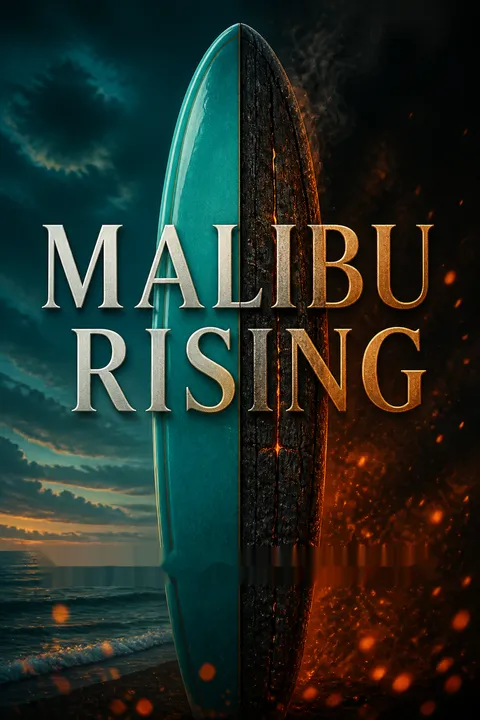
Malibu has burned repeatedly, its dry hills and Santa Ana winds turning small sparks into vast fires. In 1983, the blaze begins not in the mountains but at Nina Riva’s cliffside home, during the annual party that has drawn half of Los Angeles.
The story moves backward through the family’s history before returning to that night, when the house fills with strangers, old injuries surface, and the Rivas must decide what they will carry into their future. By dawn, the fire will consume the estate. Its cause is still walking away.
The prologue gives the novel its governing image before explaining its human history. Fire is not simply catastrophe here. It is a recurring natural force, fed by dry conditions and wind, that makes destruction part of Malibu’s landscape rather than an exception to it. That frame prepares the reader to see the Rivas’ night as both a literal disaster and a rupture in inherited patterns. The final suggestion that one person can set a fire and leave converts the landscape’s force into a moral question: who creates damage, who is left to contain it, and what can grow afterward?
Nina Hosts the Last Party
On August 27, 1983, Nina Riva wakes in the cliffside home her husband chose, knowing Los Angeles will soon arrive for the family’s annual party. Tennis champion Brandon Randall has left her for fellow star Carrie Soto, and a magazine has turned Nina’s humiliation into a public story. She takes her surfboard into the ocean, where the waves briefly quiet the shame, then returns to work at the family seafood restaurant.
Her brothers Jay and Hud and younger sister Kit meet her for lunch, teasing her about Brandon until she laughs. Nina keeps the party because her siblings love it and because the Rivas have always made it their own. Beneath her careful preparations, however, everyone brings a private hurt.
The party is established as both Nina’s duty and the family’s ritual, so her decision to host is more than a social obligation. She is trying to protect a shared tradition while her marriage becomes public property. Surfing offers a form of attention that does not demand performance: Nina must respond to the wave rather than satisfy an audience. At the restaurant, by contrast, customers treat her face and body as available because fame has made them feel entitled to her. The contrast introduces Nina’s central problem in concrete terms. She knows how to keep other people comfortable, but has trouble recognizing what she herself wants.
June Chooses the Singer
In 1956, seventeen-year-old June Costas works at her parents’ struggling Pacific Fish restaurant and imagines a life beyond its tables. She meets Mick Riva, a handsome young singer chasing fame, on the beach.
Over dinners and long drives, they discover matching dreams: a loving family, a home by the water, and a future more generous than either grew up with. Mick proposes with a small ring, then lands a record deal and replaces it with a larger one.
June’s parents agree to the marriage after Mick promises to take over the restaurant if his career fails. He instead becomes a rising star, and June becomes pregnant before their wedding. Mick buys the beach house she dreamed of, complete with two bathroom sinks, and their first daughter, Nina, arrives.
June’s choice is shaped by aspiration, not simple foolishness. Mick offers her proof that the life she wants might exist beyond the restaurant, and his early success seems to validate her faith. Yet their hopes already contain a tension: June imagines security through family, while Mick imagines escape through fame and wealth. The two-sink house makes their shared dream tangible, but it cannot guarantee shared priorities. June’s story begins with a genuine expansion of possibility, which makes later disappointments more complex than a lesson about choosing the wrong man. The life she wanted was real; the person who promised it could not sustain it.
Hud Arrives Unannounced
While June is caring for Nina and baby Jay, actress Carol Hudson appears at the family home with her infant son, Hudson, and identifies Mick as the father. June is furious at Mick’s infidelity but refuses to leave the baby without care, and she brings Hud into the family. She and Mick conceal his parentage from the outside world, presenting Hud and Jay as twins.
Mick’s apologies and promises draw June back into the marriage, but his affairs continue. His relationship with actress Veronica Lowe finally breaks the household: one night he announces that he is taking Veronica to Paris and drives away. June is left with Nina, Jay, and Hud, forced to turn the life she had built around Mick into a life she must manage without him.
The Father Who Came Back
After nearly two years away, Mick returns to June’s beach house and asks to rebuild the family. He speaks of regret and the children’s future, and June, still longing for him, takes him back. They remarry in 1962, and Mick becomes attentive enough that even cautious Nina begins to trust him. He plays with the children, takes Nina to fly a kite, and helps June care for the household.
Kit is born, making the family four children. Then Mick leaves for another tour and never returns to them. His music remains everywhere, but he does not call on birthdays or holidays. June resumes running the restaurant, and the children grow up with a famous father whose voice is familiar from records and whose presence is not.
Mick’s return demonstrates why the family’s attachment survives his absence. He does not merely promise change; for a time, he performs it through ordinary acts of care that matter intensely to children. Nina’s regained trust is especially consequential because it shows how hope can be rebuilt even after betrayal. That trust makes the second disappearance more damaging, not less. Mick’s fame keeps him symbolically present, giving the children a public image of him while denying them the private relationship that image implies. June and the children must adapt to a contradiction: the man who is everywhere in the culture is unavailable in their home.
June’s House Goes Quiet
As the years pass, June runs Pacific Fish and raises the children with help from her mother, Christina. She begins drinking in the morning and keeps vodka close, though she still gets the children to school and shows up for their events.
Nina quietly takes over driving because June’s drinking makes the road unsafe. When Kit finally names the problem after June burns dinner and insists the family eat it, the siblings stop pretending everything is normal. They comfort one another and try to protect their mother.
In 1975, after learning Mick has married again, June drinks alone, falls asleep in the bathtub, and drowns. Nina finds her body the next morning, calls for help, then gathers her siblings on the beach and tells them their mother is dead.
June’s alcoholism is shown through domestic consequences rather than a single dramatic collapse: Nina driving, the burned meal, and children learning when to ignore their mother. This gradual accommodation makes the family’s care both loving and precarious. Kit’s blunt accusation breaks the household’s shared silence, but recognition does not give the children power to cure June. Her death leaves Nina with a role she has already been rehearsing, though no one should have had to assume it. The beach becomes the place where the siblings receive devastating news together. Their closeness is not an abstract bond; it is the first practical shelter available when both parents have failed them in different ways.
Nina Becomes the Parent
At seventeen, Nina promises her siblings they will remain together and takes charge of the household. She manages school forms, bills, meals, and Riva’s Seafood while hiding their situation from authorities. After turning eighteen, she petitions for legal guardianship; Mick does not claim the children.
Nina keeps Jay and Hud in school, and they graduate while she continues running the restaurant. Money remains scarce until a magazine editor notices her surfing and offers her a photo shoot.
The images make Nina a famous model and bring enough income to repair the restaurant, pay debts, and support her siblings’ ambitions. Jay pursues professional surfing, Hud develops as a surf photographer, and Kit begins to see a future for women on the waves. Nina starts the annual party as a celebration of what they survived.
Nina’s competence is not presented as effortless virtue. She earns it through exhaustion, skipped schooling, financial improvisation, and the constant fear that one unpaid bill could split the family apart. Her modeling career changes the material conditions of their lives, but its success carries a cost: the public rewards the image of Nina’s body more readily than her skill as a surfer. She accepts that bargain because the money serves concrete needs. The party begins as a rare moment when the family can celebrate rather than merely endure. It also establishes a pattern that will later trouble Nina: she creates good things for everyone, often without asking what they cost her.
Brandon Leaves Nina
Nina meets Brandon Randall, a celebrated tennis player, while he is posing for a magazine shoot near the beach. His gracious public manner and steady attention make him seem unlike her father. He welcomes her siblings, accepts their place in her life, and buys a cliffside home designed for surfing and their annual party.
Nina marries him, though she prefers the old beach house and lets Brandon make the major decisions. When Brandon’s tennis results falter, he hides his pain and fear from Nina.
At the French Open, Carrie Soto challenges his careful nice-guy image, and their affair gives him a burst of competitive confidence. After winning Wimbledon, Brandon leaves Nina for Carrie. Later, pain and pressure make that new relationship feel less like rescue, and he returns to Nina seeking another chance.
Brandon’s appeal lies in the safety he appears to offer: he respects Nina’s siblings and makes room for them, a contrast to Mick’s absence. But care mixed with unilateral decision-making can still diminish another person’s agency. Nina repeatedly accepts Brandon’s choices because dependable affection feels like rest after years of responsibility. His decline exposes the vulnerability beneath his polished identity. Rather than let Nina see fear or weakness, he seeks a relationship that seems to intensify his competitive self. The betrayal therefore grows from more than desire. Brandon confuses feeling powerful with being loved, while Nina’s old habit of accommodation makes it easier for him to mistake her patience for permission.
The Party Reopens the Wound
On party evening, Nina’s sister Kit asks for help dressing in a way that feels attractive without feeling unlike herself. Nina cuts Kit’s jeans into shorts and reshapes her shirt, giving her a look she can claim as her own.
Jay, meanwhile, has become infatuated with Lara Vorhees, a blunt waitress who refuses to flatter him. After telling her about his heart condition, Jay hears her treat a future beyond surfing as possible. As guests arrive, Brandon finds Nina upstairs and begs her to return to him.
He pulls her before the crowd and stages a public plea. Embarrassed by the attention and still unsure how to refuse, Nina agrees. The cheering guests turn her private decision into a performance, while her siblings see how little the answer resembles the certainty Brandon wants.
The party begins with two contrasting forms of self-definition. Kit asks Nina to help her look more like herself, not like a conventional ideal; Nina responds by altering clothes rather than prescribing a new identity. Brandon’s public plea reverses that intimacy. He makes Nina’s private uncertainty into a spectacle and uses the crowd’s approval to press for an answer. Her agreement is not proof that she has forgiven him. It is evidence of how deeply she has learned to smooth conflict and manage other people’s feelings. Jay’s connection with Lara offers a counterpoint: she does not promise to preserve his old identity, only to imagine that he can become someone else.
A Stranger Finds the Rivas
Among the arriving guests is Casey Greens, an adopted young woman whose parents have recently died. While sorting their papers, she found a note claiming that singer Mick Riva fathered her birth mother’s baby. Casey leaves her planned trip to college and drives to Malibu, hoping Nina might understand what it means to lose a parent.
Nina hears her out and sees the resemblance in Casey’s distinctive lower lip, but cannot confirm the claim. Meanwhile, Mick receives a handwritten invitation Kit has sent him every year, and he finally drives to the party. His appearance draws attention from the crowd, but Nina avoids him. Casey remains upstairs, caught between the possibility of new family and the fear that she has come to the wrong place.
Casey’s arrival expands the family’s question of inheritance beyond the four siblings who grew up together. She is not seeking celebrity or money; bereavement has made the missing facts of her adoption newly urgent. Nina recognizes the emotional need before she can verify the biological claim, and offers the one kind of understanding she knows how to give. Mick’s arrival is prompted by Kit’s repeated invitation, which turns a private act of defiance into an opening he can finally choose to accept. Yet neither action guarantees reconciliation. The scene places family connection in the uncertain space between blood, memory, and the care people are willing to offer.
The Night Comes Apart
As the party swells, Hud slips away with Ashley, the woman who once dated Jay. On the beach, he admits he lied when he told Jay he only wanted permission to ask her out. Ashley then reveals she is seven weeks pregnant, and Hud accepts the news with immediate tenderness.
Elsewhere, Carrie arrives and confronts Brandon over his return to Nina. Nina realizes he had slept with Carrie the previous night, and, after taking him back publicly, tells him and Carrie to leave.
Jay discovers intimate photographs of Ashley in Hud’s truck, confirming that the affair began while she was still with him. Kit kisses Ricky Esposito, then recognizes that her attraction is not to men. The house fills with drugs, broken china, and guests who mistake destruction for fun.
Several forms of denial break at once. Hud can no longer describe his relationship with Ashley as a future possibility because the pregnancy makes their shared past and future immediate. Jay’s discovery turns his brother’s secrecy into visible evidence, sharpening an old rivalry already charged by their different ambitions. Kit’s attempted kiss with Ricky is painful but clarifying; she stops treating desire as an obligation to perform correctly. Nina’s decision to eject Brandon marks the first public refusal of the night, though the party’s momentum keeps carrying damage forward. The chaos is not merely glamorous excess. It exposes how easily people with status assume someone else will absorb the consequences.
Brothers Fight in Public
Jay confronts Hud outside and accuses him of betraying both his trust and his relationship with Ashley. Hud admits the lie and says he will continue seeing her. Jay attacks him while guests gather to watch, and Hud refuses to fight back. Mick reaches the lawn during the brawl and pulls Jay off his brother. For the first time in years, the siblings face their father in person.
Kit challenges Mick for appearing only now, and the four children lead him down to the beach to explain why they cannot simply welcome him. Jay and Hud’s fight has made their private wound public; Mick’s attempt to intervene cannot undo the years in which Nina, rather than their father, had to keep the family intact.
The fight makes the brothers’ conflict physical, but its deeper force comes from the history compressed into it. Jay sees Hud’s secret as a breach of loyalty; Hud sees love as a commitment he cannot surrender to his brother’s veto. His refusal to strike back prevents the confrontation from becoming a simple contest of strength, though it cannot spare either man injury. Mick’s intervention arrives at precisely the moment his children are already managing damage without him. His presence is therefore both useful and inadequate. He can stop a fight in the yard, but he has not earned the authority to interpret what the family needs.
Nina Names the Abandonment
On the beach, Mick admits he failed to be a father, but Nina arrives and challenges the timing: his children are adults now, no longer dependent on him. She rejects his embrace and tells him the family has already learned to live without him.
When Casey joins them, she explains the note linking Mick to her birth mother, Monica Ridgemore. Mick cannot remember whether he knew Monica and offers no certainty, only the possibility of a paternity test.
He then describes his own parents’ violence and neglect, including the fire that killed them, but Nina refuses to let his childhood excuse his choices. She tells him his love means little without the daily acts of care that make it real. Jay, Hud, and Kit agree that it is too late to restore the family he abandoned.
Nina’s refusal separates explanation from repair. Mick’s childhood helps the family understand how he learned to flee responsibility, but it cannot convert inherited harm into an exemption from accountability. Nina’s anger is specific: she and June acted without the luxury of feeling ready, because children needed food, safety, and a home. Mick’s return asks them to make room for his regret after they have already built lives without his help. Casey’s uncertain parentage sharpens the irony. Mick may have another child, yet even biological connection cannot produce the knowledge or trust that sustained care would have created.
Madeira, Then the Fire
After police arrive and arrest several guests, the siblings tell Nina she no longer has to organize her life around them or Riva’s Seafood. They urge her to go to Madeira, the quiet Portuguese island where she has long imagined surfing and living beyond her public image.
Casey lends Nina her red pickup, and the siblings promise to visit. At the hospital, Jay tells Hud about his cardiomyopathy and the need to stop competitive surfing; Hud reveals Ashley’s pregnancy, and Jay begins to accept a future for them both.
Hud later proposes to Ashley. Kit and Hud plan to help Kit pursue surfing. Mick leaves, and Casey is welcomed into the family despite the unanswered paternity question. As Nina heads for the airport, Mick’s cigarette ignites the dry brush, and the mansion burns behind her.
Analysis
Malibu Rising asks what a family owes its members after love has repeatedly failed to become care. Mick’s central contradiction is not that he feels nothing. He does love his children, and he can be tender when he is present. The damage comes from treating affection as sufficient, as if a heartfelt intention could substitute for attendance, financial responsibility, or the daily work of parenting. His own childhood explains the emotional logic of his flight, but the novel refuses to let explanation absolve him.
June and Nina form the counterweight. Both take responsibility for children before they feel ready, but their devotion is not presented as uncomplicated virtue. June’s determination to preserve the marriage and Nina’s determination to preserve the family gradually narrow their lives. Nina’s skill at anticipating needs becomes a kind of captivity: she can imagine everyone else’s next step more easily than her own. Her decision to leave is therefore not a rejection of her siblings. It is possible because they finally return her care by taking responsibility for themselves.
The novel also treats fame as an imperfect inheritance. Mick’s celebrity gives his children opportunity and unwanted scrutiny, while his romantic image obscures the private failures that shaped them. Nina’s body becomes a public commodity; Brandon’s reputation as a gentleman conceals his need to feel invincible; Kit’s refusal to perform conventional femininity becomes a form of self-recognition. The story’s many relationships suggest that people can inherit patterns without being condemned to repeat them.
The fire gives this change a material ending. Mick’s discarded cigarette makes him responsible once again for damage he will not remain to manage, while Nina’s departure prevents the burning house from defining her future. The siblings do not repair every injury, and Casey’s biological connection remains uncertain. Instead, they create a workable family from those who stay, those who leave responsibly, and those who are newly welcomed. Renewal here is not innocence restored. It is the difficult choice to stop carrying what was never yours alone.
Review Summary
Malibu Rising received mixed reviews. Many praised the engaging family drama, compelling characters, and exploration of themes like sacrifice and family bonds. Some found it fast-paced and emotionally resonant. However, others felt disconnected from the characters, found the party scenes tedious, and thought the ending was anticlimactic. Several reviewers noted it wasn't as strong as the author's previous works. Overall, opinions were divided, with some calling it a perfect summer read and others finding it disappointing.
People Also Read










Characters
Nina Riva
The family’s steady centerNina is Mick and June’s eldest child, a gifted surfer whose fame as a model grows from images of her on the water. She is observant, capable, and quick to notice what other people need, partly because her siblings’ safety became her responsibility while she was still young. That competence can look like ease from the outside, but it is built from fear, work, and the habit of suppressing her own preferences. Nina loves Malibu’s natural coast more than its wealth or celebrity culture. Her central tension is between care and self-erasure: she knows how to hold a family together, but must learn that love does not require her to carry every burden indefinitely.
Mick Riva
The famous absent fatherMick is a celebrated singer whose charm, ambition, and appetite for attention make him compelling in public and unreliable at home. He grew up amid parental neglect and volatility, then built fame as a way to escape poverty and insecurity. He wants to be loved, but often treats love as a feeling that should excuse his behavior rather than a responsibility that requires sustained action. Mick can be tender and perceptive in the moment, particularly with his children, yet he repeatedly retreats when family life demands more than affection or money. His history helps explain his limitations, but does not erase the damage caused by his choices.
June Riva
The dreaming, devoted motherJune grows up helping her parents run Pacific Fish and longs for a life that includes romance, comfort, and a home by the sea. Mick’s ambition seems to offer that escape, and she invests deeply in the future they imagine together. She is warm, attentive, and fiercely capable of loving children, including a baby who arrives through her husband’s betrayal. But devotion can become self-abandonment: June repeatedly absorbs the cost of Mick’s choices while trying to preserve family life. Her children remember both her tenderness and the instability that shaped their home. June’s life shows how a person can be generous and resilient while still needing help she cannot bring herself to ask for.
Jay Riva
The restless championJay is Nina’s younger brother, a competitive surfer whose talent brings him attention, sponsorships, and the expectation that he will become a star. He is charismatic and often cocky, especially when he feels secure in his abilities, but he is more vulnerable than he lets on. Surfing gives him a clear measure of worth and a way to stand apart from his famous father’s shadow. His loyalty to his siblings is fierce, though it can turn possessive when their choices threaten his sense of control. Jay’s challenge is to imagine identity beyond victory and to trust that being loved does not depend on being exceptional.
Hud Riva
The family’s quiet witnessHud is Mick’s son with actress Carol Hudson, raised by June alongside Nina, Jay, and Kit. He is thoughtful, broad-shouldered, and more comfortable behind a camera than in the spotlight. His photographs make Jay’s surfing visible to the world, even as Hud’s own skill earns recognition. Hud values connection and often tries to keep peace, but his desire to be seen as good can lead him to hide the truth until concealment becomes its own betrayal. His adoption into June’s family gives him a deep sense of belonging and a lasting fear of repeating the abandonment that began his life.
Kit Riva
The youngest, sharpest RivaKit is the youngest sibling, a talented surfer with a blunt sense of humor and little patience for the assumptions placed on her. She admires Nina and her brothers but resents being treated as the child of the family, especially when her abilities are overlooked. Kit is still discovering how she wants to be seen, and resists the idea that femininity must follow one fixed pattern. Her loyalty is strong, though she often expresses affection through teasing or provocation. Kit’s independence is not indifference; it is her effort to claim space in a family where louder personalities and more established roles can easily define her.
Brandon Randall
The polished tennis starBrandon is a famous tennis champion known for graciousness, discipline, and a carefully maintained public image. He is drawn to Nina’s warmth and to the family loyalty that gives her life a depth his own world lacks. His need to win shapes more than his career: he struggles to face decline, uncertainty, or any version of himself that feels ordinary. Brandon’s manners are genuine in some moments, but they can also conceal an expectation that others will accommodate him. He wants to be a good man, yet repeatedly confuses wanting that identity with doing the difficult work required to deserve it.
Ashley
The brothers’ complicated loveAshley is Jay’s former girlfriend and Hud’s beloved partner. Thoughtful and affectionate, she cares about the Riva family even while trying not to become another source of strain between the brothers. She is not responsible for the secrecy Hud chooses, but she shares the emotional burden of its consequences. Ashley values being loved for herself and wants a future that is not built on half-truths. Her quietness should not be mistaken for passivity; she is capable of naming what she wants and making difficult choices.
Lara Vorhees
Jay’s unsparing possibilityLara works at the Sandcastle and meets Jay without being impressed by his surname or celebrity. Tall, direct, and self-possessed, she is comfortable naming her own desires and setting boundaries. Her plainspoken attention unsettles Jay because she does not reward his usual performance of confidence. Lara offers him a glimpse of intimacy that depends on honest conversation rather than admiration, while retaining her right to decide what she wants from him.
Casey Greens
A young woman seeking kinCasey is an adopted young woman whose parents’ deaths leave her alone with unanswered questions about her origins. She is reserved and overwhelmed by the glamorous world she enters, but her grief gives her the courage to seek people who might understand loss. Casey is not looking to be rescued or rewarded; she wants connection and a place where her memories can coexist with new relationships. Her carefulness reflects a sheltered life suddenly broken open, while her willingness to approach strangers shows an emerging capacity to choose her own future.
Tarine Montefiore
Nina’s candid friendTarine is a successful fashion model and Nina’s close friend. Beautiful, ambitious, and sharply observant, she refuses the social habit of disguising what she thinks to keep a room comfortable. Her confidence is not fearlessness so much as a practiced willingness to tolerate other people’s displeasure. Tarine offers Nina honesty that is sometimes difficult to hear, and she intervenes when the party’s disorder becomes dangerous. She is also thoughtful about her future, determined to build a life that does not depend entirely on being young or admired.
Carrie Soto
The formidable tennis rivalCarrie is one of the greatest tennis players in the world, known for discipline, force, and a refusal to soften her competitive nature for public approval. Her drive has made her powerful on court, but she expects the same intensity and honesty in private relationships. Carrie is willing to confront people who have hurt her, even when doing so makes her look difficult. Her presence exposes the gap between Brandon’s reputation for decency and his choices when his self-image is threatened.
Ricky Esposito
The earnest local photographerRicky works around Pepperdine’s photography facilities and has admired Kit from a distance for years. He is awkward, kind, and more sincere than smooth, relying on small gestures to make a connection. When Kit does not return his romantic feelings, Ricky listens rather than punishing her for honesty. His decency allows an uncomfortable moment to become the beginning of a genuine friendship.
Vanessa de la Cruz
Kit’s devoted best friendVanessa is Kit’s longtime friend and has carried a quiet crush on Hud for years. She is expressive, loyal, and willing to change course when she realizes she has been waiting for someone who does not see her romantically. At the party, she discovers that desire and possibility do not have to remain fixed on one person. Vanessa’s humor helps her recover from disappointment without pretending it never hurt.
Ramon
The restaurant’s steady managerRamon has worked his way from fry cook to manager of Riva’s Seafood. He is practical, loyal to the staff, and deeply invested in the restaurant’s daily survival. His care for the Rivas is expressed through dependable labor rather than grand gestures. Ramon represents the community and working life that sustain the family beyond its celebrity.
Wendy Palmer
The departing actressWendy works at Riva’s Seafood while pursuing acting in Los Angeles. Warm and sociable, she enjoys the party but is also considering a quieter life closer to home. She is learning that changing direction can be a choice rather than a failure.
Plot Devices
The annual Riva party
One night, every fractureThe party began as a gathering of local surfers and grew into a celebrity event at Nina’s home. It gives the Riva siblings a tradition they can share despite their very different lives, while bringing old partners, new guests, and public attention into one crowded space. The open invitation means people arrive without a guest list or clear limits. As private conflicts surface, the same house becomes a stage for reconciliation, humiliation, discovery, and destruction. The party’s excess exposes the difference between a family’s chosen rituals and the spectacle outsiders expect from famous people.
Surfing and the ocean
A measure of selfhoodSurfing connects the Rivas across generations and gives each sibling a way to discover what their body can do. The waves require attention rather than performance, offering Nina relief from public scrutiny and giving Jay a competitive identity. For Hud, photographing surfing turns observation into a craft; for Kit, the ocean becomes a place to prove her ability on her own terms. The sea also carries the family’s memories of June and Malibu. It does not solve their grief, but it gives them a shared physical language when words are inadequate.
The Riva inheritance
Blood is not enoughFame, appearance, ambition, and abandonment travel through the Riva family, but the novel refuses to treat inheritance as destiny. Mick’s children carry pieces of him while building values he did not model. June’s devotion sustains them, yet they must decide which of her burdens to keep. The family’s resemblance and shared history raise questions about what blood can explain, especially when Casey arrives with uncertain origins. The device ties personal identity to parentage while showing that belonging is made through repeated acts of care, not simply established by a name.
Kit’s yearly invitation
A small door left openKit sends Mick an invitation to the party each year, even though she has no reason to expect him to attend. The gesture lets her express anger and hope without having to speak directly to him. For years, his silence confirms her suspicion that he will not show up. When he finally comes, the invitation becomes the practical cause of their reunion, but it does not erase what happened before. The device distinguishes an opportunity to meet from an obligation to forgive.
Malibu’s recurring fires
Destruction makes roomThe novel’s opening frames Malibu as a place repeatedly transformed by fire, where dry brush and Santa Ana winds make small accidents consequential. This pattern gives the ending its physical force and links the family’s upheaval to the landscape around them. Fire can consume homes and possessions, but the image also supports the idea that what remains may be rebuilt differently. The final blaze is not a clean metaphor or a deserved punishment. It is a real danger caused by carelessness, reminding the reader that renewal does not cancel the harm that came before it.
About the Author
Other books by Taylor Jenkins Reid






Download PDF
Download EPUB
.epub digital book format is ideal for reading ebooks on phones, tablets, and e-readers.








