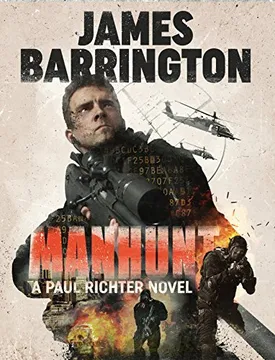


Plot Summary
Prologue
Before dawn in 1989, KGB officers break into a Ukrainian family’s apartment and beat Pavel Ostapenko to death over a mild criticism of a local Party official. His wife, Marisa, and their eight-year-old daughter watch as Captain Yevgeni Zharkov directs the assault and invents a confession from Pavel’s pain.
The girl never looks away. In the years that follow, she and her mother carry the memory of the officer who destroyed their family, though neither can yet reach him.
The prologue gives revenge a precise origin: not a grand political crime, but an ordinary family made helpless by state violence. Zharkov’s fabricated confession turns coercion into official truth, while the child’s fixed gaze preserves what the institution intends to erase. That contrast shapes the novel’s moral landscape. Memory becomes both evidence and inheritance, but it is also a burden: the daughter’s future choices will be formed around an injury she did not choose and cannot forget.
Richter Takes the Courier Job
Unemployed after leaving the Royal Navy, Paul Richter travels from Cornwall to London for an interview with Colonel Gerald Baldwin. Baldwin offers him a well-paid post carrying classified material, but the job’s secrecy, generous increments, and carefully tailored terms make Richter suspect the vacancy was created for him.
His bluntness nearly wrecks the interview, yet he accepts because he needs work and the travel sounds more interesting than selling insurance. On his first day, Baldwin sends him to meet Richard Simpson, head of a covert government unit Richter has never heard of.
A trip to Vienna is already arranged, with a package to collect and an elaborate return route through France. Richter accepts the task, but not the official story.
Richter enters the intelligence world through economic pressure rather than patriotism or ambition. His employment begins with an imbalance of knowledge: the institution knows his history, finances, and habits, while he is asked to trust people who withhold their own identities. His insubordination is not merely a flaw. It is an early form of self-protection, a refusal to surrender judgment just because an authority has issued an order. The mismatch between a courier’s modest title and the operation’s secrecy signals that the real test will be whether Richter notices what he has not been told.
A Directory Becomes Bait
At Heathrow, a Russian diplomatic courier collapses with typhoid and is taken to hospital, leaving his locked briefcase in British custody. Inside, investigators find a printout listing files on the London Data Centre’s most sensitive system.
It contains no documents themselves, but proves that someone with access is offering the Russians a menu of secrets. Soon, a Russian clerk reportedly appears at the British Embassy in Moscow, then vanishes, leaving a list of British files already sold and a claim that he can identify the source.
SIS chief Malcolm Holbeche and MI5 chief George Arkin convene an urgent inquiry. Simpson proposes a deception operation: invent a defector meeting in France and use Richter, an outsider unknown to the services, as bait for the suspected mole.
The breach begins with a list rather than a stolen secret, a small piece of metadata that reveals the architecture of betrayal. The intelligence services must act without knowing whether the missing clerk is genuine, whether the leak is new, or which institution has been penetrated. Their response depends on controlled uncertainty: they manufacture a believable story and watch who reacts. Yet the plan reproduces the same moral problem it is meant to solve. Richter is selected precisely because he is expendable to people who know more than he does, making the institution’s methods part of the danger rather than a clean answer to it.
Raya Opens a Back Door
At Yasenevo, Captain Raya Kosov works as deputy to Major Yuri Abramov, handling security checks and computer upgrades across the SVR network. Her access allows her to read files far beyond an ordinary officer’s reach.
For years she has secretly copied records connected to a British source called Gospodin, while preparing hidden directories that can capture new material without raising alarms. When Abramov orders her to create a directory for more Gospodin files, Raya discovers its code name has a second meaning and examines an old, continually consulted archive called Zagadka.
A file within it is still being updated, despite its source appearing inactive. Raya realizes that a second, highly placed British source is operating, and that the new discovery changes the risks of her long-planned escape.
Raya’s technical competence is both her institutional power and the means by which she can escape institutional control. She does not attack the SVR from outside; she works through its routines, turning routine maintenance into a private channel. The archive’s strange access pattern teaches her to read absence as evidence: a dormant source should not generate fresh attention. Her methodical mind and hidden purpose are not opposites. Both depend on patience, pattern recognition, and an ability to remain unremarkable while seeing more than others expect.
Vienna’s Parcel Opens
Richter ignores the prescribed route in Vienna, watches the collection address from a cafe, and only then enters to receive a sealed parcel. He chooses an Avis car instead of the arranged Hertz vehicle and drives south, intending to avoid the route Simpson planned.
At a service area he breaks the wax seals and finds mostly blank paper, an old Russian submarine manual, and a second envelope containing an SVR briefing and a plastic access card bearing his own photograph under the name Anatoli Markov.
The package is a prop, and the name confirms that someone has designed a role for him. Simpson orders him to keep the parcel sealed, but Richter has already learned enough to distrust the assignment and continues toward the rendezvous on his own terms.
The parcel converts suspicion into certainty. Richter is not merely carrying sensitive material; he has been cast as a person whose identity and story have been constructed by others. His decision to inspect the package breaks the rules, but it also gives him the information needed to resist being managed blindly. The fake pass and borrowed name anticipate the novel’s larger concern with identity as an operational tool. In this world, a convincing document can create a person, but it cannot compel that person to behave as planned.
Stanway Follows the Bait
Gerald Stanway, a senior SIS officer who has sold secrets for years, learns that a Russian defector may be able to identify him. He has already copied files from the London Data Centre and passed them to his Russian handler, Andrew Lomas, using dead drops and a disguised USB pen.
When an internal update places the supposed defector in Ax-les-Thermes, Stanway drives through France with a pistol hidden in his hired car. Meanwhile, Richter reaches the hotel, meets two Paris-based SIS officers while pretending to be Markov, and refuses to hand over his papers.
The officers suspect a plant because he seems too calm. Stanway watches the meeting, confirms Richter is the target, and enters his hotel room after dark. Richter has prepared a trap and takes him alive.
Stanway’s decision to act exposes the weakness of his own professional confidence. He has built a careful system around anonymity, money, and routine, yet the possibility of exposure narrows his thinking until murder seems like ordinary damage control. Richter’s calm, which makes him a poor fake defector, becomes useful in a different way: he sees that the situation is dangerous and prepares for the intruder. The two men embody contrasting uses of discipline. Stanway uses it to preserve a profitable lie; Richter uses improvisation to survive one.
Raya Leaves Moscow
Raya receives a coded call about her mother and uses the apparent family emergency to persuade Abramov to grant her leave. Her mother is already dead, but Raya needs time before the SVR discovers the truth and restricts her movements.
She forges a second travel warrant, leaves her computer behind, and boards an Aeroflot flight to Rome using her SVR identity card. At Sheremetievo, a suspicious border officer checks her authorization, but confirms only that she has permission to travel abroad.
He alerts Yasenevo after she is airborne. Abramov then discovers the forged destination and realizes Raya has defected. The SVR launches a search operation, dispatching agents to Italian airports and stations while ordering Abramov to remain available for questioning.
Raya’s escape is built from small acts of administrative manipulation rather than a dramatic breach of force. A leave request, a forged voucher, and an official identity card carry her farther than a weapon could. Her lie about her mother’s illness is particularly costly because it recruits Abramov’s compassion into a plan he does not understand. The scene shows how authoritarian systems make intimacy dangerous: family ties are both emotional bonds and instruments of surveillance. Raya gains a narrow opening, but each success also exposes someone who trusted her.
Rome Becomes a Trap
At Fiumicino, Raya darkens her skin, hides her cropped hair beneath a wig, and changes her eye color before leaving the terminal. When SVR agents arrive, she slips back inside and boards a train, helping an elderly passenger so she appears to be part of a group. At Trastevere, the pursuers spot her.
Raya runs through the streets, and nearby Italians briefly restrain the men chasing her, but one agent breaks free and fires. Raya seizes a Vespa and speeds away, then abandons it and uses buses to reach a cafe near the city center. With the airports and stations becoming dangerous, she persuades a local tour guide, Mario Villani, to drive her north. They reach Piombino, beyond the immediate search around Rome.
Raya survives by making other people misread the scene. Disguise buys her minutes; an elderly traveler gives her cover; the street crowd interrupts her pursuers; a stolen scooter converts a foot chase into escape. Her survival is not a sequence of perfect plans but a series of rapid adaptations under bodily fear. The brief alliances with strangers matter because they contrast with the SVR’s coercive networks. Mario’s help is personal and temporary, yet it gives Raya something the intelligence services cannot manufacture: a human connection not founded on leverage.
The Dowry Reaches Britain
From a cyber cafe near Piombino, Raya sends the British a large file listing SIS personnel and service histories, then switches off her newly purchased mobile phone. The message alerts London that the real defector is a woman and that her information could expose the British mole.
CIA officers in Rome identify her from a stolen Russian briefing sheet and try to trace her movements, while the SVR persuades Italian authorities to search transport links, hotels, and roads. Raya leaves Mario and reaches Nervi, where she arranges a meeting through coded texts.
Richter, still carrying the phone Simpson gave him, drives from France to meet her. The British believe the device can be tracked, but neither Richter nor Raya knows how much danger it has already brought to the rendezvous.
Raya’s data changes her from a fugitive who needs rescue into a strategic prize claimed by competing powers. Sending the personnel list is an act of trust, but it also advertises her location and value. The CIA’s interest is pragmatic: the scale of Russian pursuit suggests that Raya possesses something exceptional. Richter’s journey toward her therefore begins inside a contest over ownership, not simply a rescue mission. The mobile phone captures that contradiction in miniature. It is a lifeline connecting allies, but its signal may also turn their connection into a beacon.
Nervi’s Red Umbrella
At the Cafe Belvedere in Nervi, Richter waits with a red umbrella as the agreed recognition signal. Raya appears in disguise and completes their challenge and response, revealing that Yuri was a false name. She spots two armed men watching them and sends Richter toward the car while she leaves separately.
Richter recognizes the danger, abandons the umbrella, and follows her. Colin Dekker, an SAS sniper hidden above the square, shoots one pursuer in the leg and disables the arriving car. Richter and Raya escape together.
They conclude that someone tracked Richter’s mobile phone, since the pursuers knew the meeting place despite its being shared with very few people. Richter switches it off and removes its battery. The pair now have reason to doubt the British operation as well as the Russians.
The rendezvous succeeds as a recognition test and fails as a security measure. Raya and Richter identify each other correctly, yet the device linking them has exposed the meeting to armed strangers. The red umbrella becomes a useful symbol of the operation’s fragility: a visible signal can coordinate people, but it can also mark them for attack. Richter’s choice to follow Raya rather than preserve the planned protocol marks a shift from compliance to partnership. He now makes decisions with her safety in mind, not simply to satisfy Simpson’s instructions.
The Alps Close In
Richter, Raya, and Dekker avoid the watched road crossing and reach a small Italian airstrip. Richter steals a Piper Arrow and flies toward France, but an Italian fighter intercepts them.
He feigns an uncontrolled spin, recovers the aircraft low over the mountains, and broadcasts a distress call from French airspace. A CIA U2 has tracked the chase, and John Westwood offers the fugitives a lift in a Lear jet. Before they can reach Chambéry, French helicopter gunships find the Piper.
Richter lands in a field near Aime; Dekker shoots into a helicopter’s engine when its crew attacks them. The three steal a car and race to the airport, where Westwood takes them aboard. The Lear leaves France under American fighter escort and lands at RAF Northolt.
The escape across the Alps turns skill into a form of resistance. Richter’s flying knowledge, Dekker’s marksmanship, and Raya’s caution each solve a different immediate problem, but none can guarantee safety alone. The American intervention offers protection while introducing another claimant to Raya’s information. Westwood’s offer of a new life in the United States is generous and strategic at once. The sequence refuses a clean distinction between rescue and recruitment: every institution willing to help also hopes to gain something from the person it saves.
Raya Names Her Enemy
At the Hammersmith debriefing, Raya confirms that she was deputy network manager at Yasenevo and reveals why she chose the SVR as her means of escape. As a child, she watched Zharkov lead the raid that killed her father, Pavel Ostapenko, after a fabricated accusation of disloyalty.
Raya and her mother changed their family name, allowing her later to join the intelligence service without exposing the connection. She had planned to use her access to gather a valuable dowry and retaliate against the officer responsible.
In Moscow, she also planted evidence that directed suspicion toward Zharkov, including a call diverter leading to his apartment. Major Abramov follows the trail and arrests Zharkov, though whether he was guilty of the larger breach remains uncertain.
Raya’s revelation recasts her escape as both political defection and private retribution. She has not simply rejected the system that murdered her father; she has learned its tools well enough to make them turn inward. Her revenge is psychologically intelligible, but not morally uncomplicated. She engineers a process in which another person may be punished through evidence she has arranged, echoing the false accusation that shaped her childhood. Abramov’s intervention complicates the fantasy of perfect control: Raya can direct suspicion, but she cannot determine what the institution will do once it has a suspect.
The Mole Is Holbeche
Raya’s files establish that Gerald Stanway, code-named Gospodin by the Russians, has supplied British material for years, and that another, more senior source has been feeding Moscow strategic assessments. Stanway’s interrogation identifies his handler as Andrew Lomas but gives no address.
Reviewing call records, Richter notices a call from a public phone near the Russian Embassy to Lomas’s mobile, followed minutes later by another call from the same phone to Malcolm Holbeche.
The timing and location suggest that Holbeche is the senior source. Simpson intercepts the SIS chief at Heathrow as he prepares to leave for Paris and then Moscow. Holbeche admits his long service to the SVR, draws a pistol, and is shot dead by Simpson’s men before he can escape.
The revelation arrives through an ordinary pattern of telephone records, not a confession or a dramatic piece of stolen intelligence. Richter’s attention to timing allows him to see a relationship hidden in otherwise mundane data. The result exposes a deeply uncomfortable institutional fact: the man directing the investigation was also among the people with the most to lose from it. Holbeche’s position has made him both the keeper of the system and its most protected vulnerability. His death stops his flight, but it also prevents a public accounting of how far the betrayal reached.
The Safehouse Is Compromised
Raya’s hard drive contains a vast, encrypted copy of the SVR database, and Simpson promises asylum after she demonstrates its value. But she and Richter refuse to enter a safe house while the second British penetration remains unidentified.
Stanway’s interrogation has named Lomas, and Richter’s phone analysis points toward Holbeche, yet Lomas is still free. The pair spend the night at a Heathrow hotel under assumed names. Lomas, alerted that Raya has reached Britain, recruits two men who use Simpson’s name to lure Richter from their room.
They overpower him with a Taser, then torture and kill Raya. When Richter wakes, the police have handcuffed him beside her mutilated body and assume he is responsible. He calls Simpson, who arrives and recognizes the killing as a deliberate message from Moscow.
The murder makes the cost of incomplete security brutally concrete. Raya has escaped the SVR, exposed its sources, and reached British territory, yet her decision to avoid a compromised safe house leaves her vulnerable in an ordinary hotel. The killers exploit trust in a familiar name, turning institutional authority into a weapon. Richter’s unconsciousness is more than physical defeat: he is forced to encounter the consequence of every delay and uncertainty without being able to intervene. The novel’s espionage machinery does not merely conceal violence; it gives violence an address, a cover story, and a way to arrive unnoticed.
Richter Chooses the Hunt
Simpson concludes that Lomas arranged Raya’s murder to punish her for exposing the SVR’s British assets and to warn the intelligence services that Moscow can still reach across borders.
Stanway is in custody, Holbeche is dead, and Raya’s data offers Britain an extraordinary view into Yasenevo, but the second Russian operative has escaped. The police release Richter after Simpson intervenes. Instead of leaving intelligence work as he had planned, Richter accepts the job Baldwin first offered him.
He tells Simpson that he will find Lomas himself and make him answer for Raya’s death. Simpson welcomes him into the Foreign Operations Executive, though his new recruit’s motive is no longer employment or adventure. The story ends with Richter’s first mission of his own still ahead.
Richter’s final choice transforms the novel’s opening bargain. He entered the service because he needed a salary, and stayed because the operation’s danger demanded judgment; now he chooses the work because grief has given him a target. His vow restores agency after the helplessness of waking beside Raya’s body, but it also risks binding him to the same retaliatory logic that shaped her life. Simpson gains a capable operative, while Richter gains access to the system he intends to use against Lomas. The ending resolves his recruitment, not his revenge.
Analysis
Manhunt treats intelligence as a contest over who can control information, but it refuses to make information itself morally neutral. Stanway sells files for money, Holbeche trades the authority of his office for a long relationship with Moscow, Raya turns privileged access into both an escape fund and a weapon of revenge, and Simpson withholds truth to make his operation work. Each character converts knowledge into leverage, yet every conversion creates exposure. A directory listing, a phone record, or a travel warrant can alter the fate of a person who never sees the whole system operating around them.
The novel’s most revealing contrast is between institutional surveillance and personal memory. The SVR tracks its own officers through travel records and family ties, while Raya carries a memory of her father’s killing that official records have erased. Her technical skill lets her challenge the state’s version of events, but her revenge also reproduces its methods: she plants evidence and directs suspicion toward Zharkov. The book therefore complicates the satisfying fantasy that a victim can simply turn an oppressive system against its author. A retaliatory act may expose power, but it may also inherit power’s indifference to proof and consequence.
Richter offers a different response to institutional manipulation. He cannot command the organizations around him, and his refusal to trust them does not make him invulnerable. What distinguishes him is his willingness to keep judging each situation as it changes. He disobeys, improvises, protects Raya, and eventually chooses the work for reasons Simpson cannot provide. That choice is both a step toward agency and a danger: grief may make him harder to deceive, but it may also make him resemble the people who believe violence can settle an account.
The ending withholds justice. Stanway is caught, Holbeche is exposed, and Raya’s archive reaches British hands, yet Lomas remains beyond reach and Raya is killed on British soil. The intelligence services can recover data and eliminate sources, but they cannot guarantee the safety they promise. Richter’s recruitment closes the plot’s first circle while opening a more personal one: he has entered the system that used him, now intent on turning its methods toward a single unfinished pursuit.
Review Summary
Manhunt is a well-received spy thriller averaging 4.31 stars, praised for its gripping plot, strong pacing, and engaging protagonist Paul Richter. Readers appreciate its Cold War-era feel with modern elements, twisty storyline, and European chase sequences. The book serves as an origin story for the Paul Richter series, despite being published sixth. Common criticisms include a slow start, underdeveloped characters, some graphic content, and occasional pacing issues. Most readers eagerly continue the series after finishing, with many comparing Richter favorably to iconic spy fiction heroes.
Characters
Paul Richter
The stubborn former pilotRichter is a recently retired Royal Navy aviator whose career stalled after repeated clashes with superiors. Unemployed and short on money, he accepts a secret courier post but distrusts the people who hire him from the outset. He is blunt, observant, and unwilling to follow an order merely because it is official. His military training gives him practical skills, while his suspicion pushes him to question the gaps in every briefing. Richter’s defining tension is between a desire for independence and an instinctive willingness to protect people once he takes responsibility for them. He is not a natural bureaucrat or an unquestioning patriot; he becomes effective because he can improvise when the plan fails.
Raya Kosov
The SVR systems specialistRaya is a gifted computer specialist working inside the Russian Foreign Intelligence Service at Yasenevo. Languages, systems, and careful observation are her strengths, and she is trusted with a level of access that few officers receive. She is disciplined in public and private, able to perform routine duties while pursuing a purpose no colleague can easily read. Her intelligence is practical rather than showy: she notices patterns in file histories, understands how institutions keep records, and plans around the limits of surveillance. Raya’s connection to her mother and the memory of her childhood give her loyalties a personal depth that official ideology cannot contain. She is both capable and vulnerable, a strategist who must act under constant threat.
Richard Simpson
The deniable operations chiefSimpson directs the Foreign Operations Executive, a covert unit operating in the shadows of the British intelligence services. Small, fastidious, and intensely security-conscious, he treats information as something to ration and people as assets whose usefulness must be measured. He recruits Richter for a dangerous deception and withholds facts to protect the operation, revealing both his professional calculation and his limited patience for dissent. Yet Simpson is not simply a cold administrator. He recognizes talent when Richter acts beyond his instructions and can make promises he intends to honor. His relationship with Richter is a continual contest over control: Simpson needs an agent who thinks independently, even as he tries to manage every risk.
Gerald Stanway
The polished intelligence officerStanway is a senior SIS officer with a cultivated manner, a taste for fine living, and an ability to make wealth appear legitimate. He is patient and methodical, relying on established routines, controlled communications, and an elaborate financial arrangement. His confidence comes from years of operating inside the service without attracting suspicion. Stanway treats information as a commodity and his professional access as a private resource, making his polished public identity central to how he moves through the intelligence world. He is a foil for Richter: where Richter’s instincts make him difficult to manage, Stanway’s discipline serves a carefully maintained image.
Andrew Lomas
The hidden Russian handlerLomas is a Russian intelligence officer living in London under a carefully established English identity. Trained in language, tradecraft, and the details of British life, he operates through dead drops and infrequent meetings rather than conspicuous contact. His work depends on patience and concealment, and he presents himself as an ordinary resident with a plausible job and social circle. Lomas represents the long reach of intelligence networks: he need not hold a visible office to influence events inside British institutions. His ability to remain unknown makes him a persistent source of danger to anyone whose actions threaten his operation.
Colin Dekker
The watchful SAS sniperDekker is an SAS captain and experienced sniper assigned to protect the operation from a distance. Quietly competent, he prefers clear orders and practical solutions to bureaucratic explanations. His skill with a rifle gives Richter and Raya vital protection, but his judgment is not limited to marksmanship. He recognizes when an official plan treats a person as disposable and is willing to bend his role when someone is in immediate danger. Dekker’s dry humor eases the tension without making him careless, and his loyalty is expressed through action rather than promises.
Yuri Abramov
Raya’s trusting superiorAbramov is Raya’s supervisor at Yasenevo and a computer systems officer who relies heavily on her competence. He delegates routine security work and trusts her with responsibilities that should remain under stricter control. His instinct is not cruelty but professional dependence, which makes him more humane and less guarded than many of his colleagues. When the investigation turns against him, he must decide whether to protect his own position or follow the evidence. Abramov illustrates how trust can be both a source of humane connection and a serious vulnerability inside a security organization.
Yevgeni Zharkov
The hard-line security colonelZharkov is a senior SVR security officer whose authority rests on intimidation and absolute confidence in the institution’s power. He is impatient with uncertainty and treats suspicion as sufficient reason to exert control. His history in Soviet security work has taught him to regard fear as an efficient instrument, and he expects subordinates to obey rather than question. The memory of his role in a brutal KGB raid connects him to Raya’s family history, making him more than a bureaucratic antagonist. Zharkov embodies a system that mistakes the ability to punish for proof of truth.
Malcolm Holbeche
The SIS chief under scrutinyHolbeche heads the Secret Intelligence Service and is accustomed to handling delicate matters through formal authority and careful appearances. He is controlled, senior, and conscious of the damage a public scandal could do to the service. His working relationship with Simpson places him at the center of the investigation, where he must balance institutional protection against the need to identify a breach. Holbeche’s polished manner and long experience make him difficult to read, a reminder that rank and respectability offer little assurance in a story where access itself is suspect.
John Westwood
The ambitious CIA liaisonWestwood is a senior CIA officer visiting Rome who quickly recognizes that the Russian search for Raya signals an unusually valuable source. He is strategic, well connected, and comfortable mobilizing substantial resources when he sees an opportunity. His interest is partly humanitarian, since he helps protect a fugitive facing immediate danger, but it is also institutional: the CIA wants access to whatever Raya knows. Westwood is courteous without being naïve, and his offers reveal how even rescue can become a negotiation between intelligence services.
Marisa Ostapenka
Raya’s determined motherMarisa is Raya’s mother and a Ukrainian woman whose life is shaped by family loyalty and the dangers of speaking under Soviet rule. She witnesses the violence that destroys her household and carries its memory alongside her daughter. Marisa’s care is practical as well as emotional, helping Raya survive the aftermath and preserve a shared understanding of what happened. Her presence in the story represents the private lives that authoritarian systems invade, and the family bonds that can carry memory across years.
Pavel Ostapenko
Raya’s murdered fatherPavel is a Ukrainian farm worker and Raya’s father. His mild criticism of a local Party official makes him a target of the KGB, despite his having committed no serious offense. His fate becomes the central memory through which Raya understands state power and personal justice.
Mario Villani
The Italian guide who helpsMario is a young Italian tour guide who meets Raya in a Rome cafe. His fluency in English and willingness to help make him a temporary ally as she tries to leave the city. He is warm, curious, and drawn to her, but not equipped to understand the intelligence struggle around them. Mario’s ordinary generosity offers Raya a brief experience of trust without institutional bargaining.
David Adamson
The field surveillance officerAdamson is an SIS officer assigned to observe the operation in southern France. He works with Dekker to monitor the hotel and report movement, relying on patience and radio coordination. His role shows the routine, often tedious labor behind an intelligence operation.
Richard Hughes
The Paris station debrieferHughes is an SIS officer from Paris who interviews the supposed Russian defector at Ax-les-Thermes. Experienced in assessing defectors, he notices when Richter’s calm demeanor does not fit the story. His professional skepticism helps expose the limits of a convincing cover.
David Wallis
The Paris station interviewerWallis accompanies Hughes to assess the supposed defector. He photographs the false Yasenevo pass and takes notes during the interview, contributing to the careful verification process. His presence makes the staged debriefing convincing to anyone watching.
William Moore
SIS Russian affairs chiefMoore leads the SIS section responsible for Russian affairs and briefs senior officers on the evidence of a leak. He is measured and careful about uncertainty, resisting premature conclusions while helping shape the response.
George Arkin
The blunt MI5 chiefArkin heads MI5 and is brought into the inquiry because his service investigates treachery within SIS. Direct and relentless, he presses for concrete explanations and challenges the assumptions of his counterparts.
Yuri Morozov
The senior SVR security generalMorozov is the senior security officer at the SVR and Zharkov’s superior. He must weigh evidence against personal trust in a respected subordinate, while managing a damaging security crisis.
Plot Devices
The false defector
Bait for the hidden moleSimpson invents a Russian clerk who supposedly carries evidence against a British traitor. Richter impersonates the defector, using a false name, a replica SVR pass, and a packet of harmless papers. The deception is designed to make the real mole act before investigators can identify him through ordinary surveillance. The device exposes both the usefulness and the cost of treating a person as bait: Richter is not told the full plan and is considered expendable by the people who set it in motion. His suspicion and improvisation keep the ruse from becoming a simple execution.
Raya’s hidden archive
A portable intelligence dowryRaya exploits her position as deputy network manager to copy names, file histories, and highly classified material from the SVR system. She conceals her access through hidden directories and later stores a broad archive inside a modified CD player. The device gives her leverage with British intelligence and allows her to prove that she has privileged access. It also creates a bargaining problem: the British need to inspect the files, while Raya needs a guarantee of asylum before surrendering control. The archive represents knowledge as both escape currency and a dangerous burden.
Dead drops and coded calls
Contact without direct exposureStanway and his Russian handler Lomas communicate through chalk marks, concealed notes, and carefully chosen public phones. Their methods limit the records left by direct contact and help keep Lomas’s identity hidden. Raya uses coded calls with her aunt to create a plausible reason for leave, while later messages guide Richter toward the rendezvous. These different systems show how communication itself becomes a tactical risk. A message can protect its sender by withholding meaning, but it can also leave patterns that an observant investigator may trace.
The tracked mobile
A signal that betrays alliesRichter’s government-issued phone keeps him in contact with Simpson, but its location signal allows pursuers to identify the Nervi meeting area. Raya understands that a switched-on phone can reveal its user’s position and routinely keeps hers off. After the ambush, she removes Richter’s battery, and the pair later use the phone deliberately to mislead anyone tracking it. The device’s changing role makes a modern convenience into a source of danger, then a tool for deception. It binds the plot’s central question of whether the British operation itself has been compromised.
The planted call diverter
A trail toward ZharkovRaya modifies a call diverter in an unused Lubyanka office so that Yasenevo data can be copied elsewhere, while leaving a record that points to a Moscow number associated with Zharkov. She also plants keys and fingerprints in his office to make the accusation credible. Abramov discovers the diverter and follows the trail, leading to Zharkov’s arrest and interrogation. The device is both a technical mechanism and an instrument of revenge. Its evidence is convincing enough to trigger the machinery of the SVR, but the novel leaves room to question whether every clue proves guilt or reflects Raya’s deliberate design.
Paul Richter Series

Download PDF
Download EPUB
.epub digital book format is ideal for reading ebooks on phones, tablets, and e-readers.








