


Plot Summary
Prologue
In Saudi Arabia, Sadoun Khamil’s enforcer tortures a courier who exposed the cell’s location. Hassan Abbas, Khamil’s strategist, argues that their ambitions require Russian technology and proposes buying access with money the Russians need. Their partner, Minister Dmitri Trushenko, can supply weapons and covert delivery routes; the collaboration will take years to prepare.
Abbas later presents the scheme as certain to succeed, drawing confidence from a prophecy. Khamil mocks the idea but accepts the plan. The bargain joins three ambitions: Russia’s desire to dominate Europe, al-Qaeda’s hidden purpose, and a chain of weapons whose secrecy depends on every participant trusting the wrong person.
The opening binds bureaucratic calculation to intimate cruelty: Khamil’s cell uses torture to enforce silence, then treats mass violence as a logistical problem to be solved with money and technology. Abbas’s prophecy gives him a way to disguise uncertainty as destiny, while Khamil’s mockery shows that belief is less important than utility. Their alliance is therefore not founded on shared ideology but on mutually exploitable need. That distinction matters later: each side imagines it is directing the partnership, while the secrecy that makes cooperation possible also leaves room for a second plan to grow inside it.
A Corpse in Moscow
British intelligence sends former naval pilot Paul Richter to Moscow after Graham Newman, the British station chief, is reported killed in a car crash. Posing as an insurance investigator, Richter examines the wreck and the body with help from Embassy official Simon Erroll. The damage does not fit the corpse’s injuries: the crushed head and broken ribs make sense, but the driver’s legs show none of the damage the wreck should have caused.
Richter also spots a straight bruise across the chest, as if someone had tied the body upright. Back in London, he finds Newman’s medical record: the corpse has all its toenails, while Newman had one removed. The official death is false, but Newman is almost certainly dead elsewhere.
The mystery begins as a problem of bodily evidence, not secret intelligence. Richter trusts small physical inconsistencies more than the Embassy’s paperwork, making the body itself a witness that bureaucratic authority cannot fully silence. The impostor also establishes the novel’s recurring concern with substitution: identities, political intentions, and even nuclear threats can be made to look like something else. Richter’s attention to a minor medical detail is not merely a clever clue. It expresses his professional ethic: institutions may accept convenient narratives, but he believes concrete particulars can still resist them.
The Blackbird’s Escape
While Richter investigates in Moscow, an American SR-71 Blackbird crosses northern Russia to photograph a remote stretch of tundra. Russian radar detects it, and Colonel Yazov’s warning sends air-defence officers scrambling MiG fighters to intercept.
The Blackbird’s crew, Major Frank Roberts and reconnaissance officer Paul James, evade MiG-25s and MiG-29s with speed, electronic countermeasures, and false radar targets. MiG-31s finally box them in and fire missiles, but Roberts uses a steep dive and climb to escape most of them.
One missile runs out of fuel before its pilot can detonate it close enough to destroy the aircraft. Battle damage opens a fuel leak, forcing the Blackbird to land at RAF Lossiemouth in Scotland, where its film becomes accessible to British analysts.
The aircraft sequence turns technical superiority into a fragile reprieve. The Blackbird survives not because it can defeat Russia outright, but because its crew make a series of fast, disciplined choices under pressure. Its emergency landing then converts a covert American mission into an allied political problem. The plane’s photographs are valuable precisely because they are incomplete: Britain gains evidence without knowing what America fears. The chase thus introduces a structural tension between what surveillance can show and what human interpretation must supply. Hardware can map a landscape, but it cannot by itself explain why anyone risked a war to look.
The Missing Hill
At the Joint Air Reconnaissance Intelligence Centre, Richter watches Royal Navy analyst Penny Walters compare the Blackbird film with older satellite photographs. A hill about two hundred feet high has vanished, leaving a depression; earlier images also show military vehicles and construction machinery nearby, followed by an unexplained gap in American satellite coverage.
Richter links the flight path to Sosnogorsk, where Newman’s deputy, Andrew Payne, had recently travelled under the cover of translating for European businessmen. Payne’s visit was actually a contact with a Russian source, Nicolai Karelin, though its purpose remains obscure.
British seismic records then reveal an unusual nuclear detonation in the tundra on the date associated with the missing hill. The Americans have not photographed ordinary construction. Someone has tested a new weapon and hidden the evidence.
The hill becomes legible through absence: its disappearance matters more than anything visible in the photographs. Walters supplies the patient visual comparison, while Richter connects that technical work to Payne’s human trail and the seismic records. The investigators’ progress depends on combining disciplines that institutions usually keep separate. Yet the evidence still resists a clean explanation. A bomb has erased the landscape, but not the reason for the bombing. The scene makes intelligence a practice of disciplined inference, where a missing object, a coverage gap, and a seemingly routine trip acquire meaning only when placed beside one another.
Raven Sets the Clock
At Langley, CIA officers learn that a secret Russian source, codenamed RAVEN, has warned of a covert assault aimed at both America and Europe. His messages mention the tundra explosion, neutron radiation, Gibraltar, and an approaching date, but they do not explain the operation.
CIA director Walter Hicks first doubts the warning because no Russian troop build-up is visible. Analysis of the Blackbird records changes the calculation: the blast yielded several megatons, yet the aircraft detected almost no lingering radiation.
CIA officer John Westwood takes the puzzle to London, where Richter and Foreign Operations Director Richard Simpson pursue the link. As the deadline approaches, the United States raises its alert level and Britain begins coordinating with France, although neither government knows what the assault will look like.
RAVEN’s warning is deliberately insufficient: it transfers responsibility for interpretation without relieving the source of his own political hesitation. The agencies respond by treating uncertainty as a problem of readiness, and military escalation begins before anyone can name the threat. That gap between knowledge and action is the novel’s most dangerous institutional condition. Hicks’s initial skepticism is not foolish; it is an attempt to prevent a rumor from becoming a crisis. But once the physical evidence supports the warning, caution and delay become equally perilous. The novel shows how intelligence can fail not only through ignorance, but through the pressure to decide before certainty exists.
Richter Becomes the Target
In Moscow, Richter notices three watchers but completes his inquiries and returns to London. A Russian agent follows him at Sheremetievo and attacks in a restroom; Richter disables the man and escapes.
Later, someone shoots at Richter outside JARIC, and hired gunmen pursue him on the road to Cambridge. He survives by forcing their Jaguar off the road, then fights off two local thugs sent to kill him. The threats intensify when an explosive device destroys the Foreign Operations car outside his home, killing driver Brian Jackson.
Grieving and convinced the attacks connect to Newman and the Blackbird, Richter rejects Simpson’s caution and goes after Vladimir Orlov, the SVR station chief in London, hoping to learn what the Russians are protecting.
Richter’s investigation crosses from professional risk into personal consequence when the attacks begin killing people around him. His violence is tactical at first, but each escape narrows the distinction between the work and his private life. Jackson’s death is especially important because Richter cannot file it away as another failed attempt on himself. His decision to confront Orlov is driven by anger as well as evidence, and that mixture makes him effective but vulnerable. The thriller’s action therefore does not simply reward competence: it asks what happens when a man trained to survive begins to treat retaliation as a form of justice.
Orlov’s Deadly House
Richter breaks into Orlov’s guarded home, but infrared alarms alert the Russian before he reaches the bedroom. Orlov’s bodyguards disarm and beat him while Orlov demands to know what Britain has learned.
To buy time, Richter invents a story about a hidden Russian radar installation beneath the vanished hill. Orlov confirms enough to expose the larger scheme: nuclear weapons have been smuggled into American cities, while strategic neutron bombs are being positioned across Europe.
A Russian satellite can control the American devices, and a final bomb is travelling toward London. Richter kills Orlov’s bodyguards and Orlov himself during his escape, then takes the warning to Simpson. With the plot no longer conjecture, Britain turns to France to stop the convoy.
Orlov’s interrogation reverses the usual moral geometry of intelligence work: Richter is the captive, but he controls the information by feeding his captor a plausible falsehood. His fabricated radar explanation reveals how much depends on interpretation, even when both men are experts. The truth he extracts is terrifying because it transforms the earlier puzzle into a plan for coercion at continental scale. Richter’s escape also leaves no clean separation between inquiry and violence. He gains the information needed to act, but the method further binds him to a private logic of survival and reprisal.
The Road to France
British intelligence identifies a Russian convoy carrying the final London weapon through Europe. Richter travels to Paris under a diplomatic cover identity and persuades France’s DST to assist, despite the diplomatic danger of stopping a Russian lorry.
SAS captain Colin Dekker arrives with three troopers, while GIGN supplies an assault team and snipers. The convoy, led by a lorry and escorted by armoured Mercedes, is travelling under the supervision of SVR general Nicolai Modin and GRU officer Viktor Bykov.
French officers create roadworks delays, then clear a section of the A26 and prepare a staged accident. When the Russian vehicles approach, the team adjusts its plan to separate the escort cars from the bomb truck and prevent the convoy from reaching London.
The road operation turns the intelligence crisis into a problem of trust among allies. France must risk diplomatic repercussions, Britain brings a small covert force, and the Americans remain cautious about what they disclose. Richter’s role is neither command nor simple liaison: he translates an uncertain political threat into an actionable roadside plan. The convoy itself is a physical argument disguised as freight, protected by diplomatic status and armed men. This section demonstrates that institutions can cooperate under pressure, but only when individuals are willing to accept responsibility that formal authority would rather postpone.
Raven in the Limousine
On the A26, the staged accident stops the convoy and the SAS, GIGN, and French DST capture most of its personnel. Richter forces the escort to surrender, then questions the two senior passengers. Bykov is not RAVEN, as the Russians suspected; Modin admits that he is.
He had warned the CIA because he came to believe the operation would ruin Russia as well as its enemies. Modin explains that the satellite does not directly trigger the American bombs.
Instead, it continually sends a signal that keeps their firing circuits disarmed; destroying the satellite would make the weapons arm after a delay. The seized lorry contains the London bomb, but Modin warns that a separate weapon aboard a Russian ship in Gibraltar is due to demonstrate the new device’s power.
Modin’s confession reframes espionage as an argument with one’s own state. He has not rejected Russian identity; he has rejected the assumption that patriotism requires obedience to a plan he believes will destroy his country. His warning is therefore neither simple defection nor self-exoneration. By contrast, the fail-safe satellite system gives political blackmail a physical mechanism: any attempt to remove the threat could activate it. The scene reveals why the crisis cannot be solved by destroying a single piece of hardware. Modin’s knowledge buys time, but it also exposes how easily deterrence can become hostage-taking.
Gibraltar Under Fire
The British team reaches Gibraltar and finds the Russian freighter Anton Kirov moored at the North Mole. SAS troops use two feigning drunks to draw away the sentries, then board the ship, but a hidden Spetsnaz rifleman breaks their surprise and kills one trooper.
During the firefight, Richter climbs to the bridge and is hit in the chest; his protective vest saves him. He joins the search for the forward hold, where the nuclear device is locked behind heavy doors. With the ship’s officer refusing to help, the SAS cuts its way in.
Richter follows Professor Dewar’s instructions, disarms the anti-handling system, and removes the bomb’s mechanical trigger. As the detonation sequence begins, he pulls the trigger clear. The device cannot fire, but the crew has already sent an attack warning to Moscow.
The assault compresses the novel’s technical and moral stakes into a few physical actions: a sentry moves, a rifle fires, a door yields, and Richter’s hands must remain steady. His body is protected by armor, but the real danger lies in his judgment around a device whose wiring he barely understands. Dewar’s careful instructions turn expertise into a chain of trust across distance. The detonating lights make the bomb’s abstract function brutally immediate. The operation succeeds, yet the warning sent to Moscow ensures that success is not closure. Preventing one explosion only accelerates the race to control the system behind all the others.
The Krutaya Computer
Modin’s final clue, Krutaya, points Richter and computer specialist James Baker toward a remote settlement near Sosnogorsk. Baker’s automated search finds a protected computer network linked to the satellite uplink at Pechora.
Richter recognizes that Payne’s earlier message exchange with source Nicolai Karelin supplied the login name and password: Karelin and the seemingly meaningless words had been a deliberate access key. They enter the mainframe through Modin’s account, but its controls do not immediately let them disable the weapons.
Meanwhile, Russian security officer Valentin Kabanov tracks Trushenko to the Crimea. Trushenko tries to authorize a Washington detonation, but Richter misreads a Russian numeral and Baker alters the wrong code. Kabanov’s men reach Trushenko before he can finish the sequence and kill him.
The computer plot makes language itself a security boundary. Payne’s exchange, previously dismissed as routine source handling, becomes the only available route into a weapons network. Richter’s error in reading a numeral shows that access depends not simply on intelligence but on fatigue, context, and precise translation. The scene also refuses to make technology omnipotent: Baker can enter the system, yet lacks the authority to disable the weapons outright. Trushenko’s death removes the chief architect, but not the hidden adversary who can still use a different credential. Political command has been disrupted; the system remains alive.
Dernowi Takes Control
After Trushenko’s death, Baker secures the Krutaya network and Richter helps locate weapon sites, but an unknown user appears under the name Dernowi. The account uses a private backdoor code that Baker cannot block.
The name translates through Yiddish as the Prophet, and the login originates in southern France. Richter and the SAS fly to Toulouse, then drive to the suspected address near St Médard. They find a fortified old mill occupied by Hassan Abbas and three armed men.
As the attackers approach, Abbas uses the network to begin activating American weapons. Richter orders the local telephone cables cut, which breaks the connection and buys the assault team time, but Abbas escapes through the mill’s old watercourse with a laptop and a mobile phone.
The hidden operator exposes a second architecture beneath the Russian conspiracy: the people who financed the plan have retained their own means of control. The backdoor is not merely a technical vulnerability; it is the material expression of a partnership that was never equal or transparent. Richter’s team can interrupt the network only by acting locally, cutting cables and forcing the crisis into physical space. Abbas’s escape through the mill’s forgotten watercourse mirrors his code access: both depend on passages others stopped noticing. The pursuit begins with the realization that the real command center is not necessarily the computer, but the person who can reach it.
Abilene Burns
SAS forces assault the mill, where Abbas’s booby trap kills two troopers and wounds three others. Abbas and bodyguard Jaafar Badri reach a derelict outbuilding, while Saadi Fouad stays behind and is killed inside the house.
A sniper shoots Karim Ibrahim as he guards Abbas, and Dekker’s team closes in. On the laptop, Abbas abandons the impossible task of authorizing every weapon and selects individual targets. He completes the sequence for Abilene, Texas. The bomb detonates, destroying much of the city and killing a vast number of civilians.
Richter reaches Abbas before he can finish the Albany authorization. He shoots Abbas, stopping the second detonation, but the first blast has already turned the hidden operation into an American catastrophe.
Abilene is the cost of a failure measured not in strategy but in human bodies. The book lets the operational sequence remain legible: the attackers are delayed by the booby trap, Abbas changes tactics, and one completed authorization is enough to devastate a city. Richter’s arrival is neither a triumphant rescue nor a clean defeat of the enemy. He prevents another strike while confronting the irreversible consequence of being minutes too late. The scene punctures the fantasy that perfect intelligence or heroic speed can undo every harm. The plan is stopped in part, but history has already been altered.
The Weapons Go Dark
Richter takes Abbas’s laptop and mobile phone, but French authorities have shut down the local cells, temporarily severing Baker’s access. At a public telephone, Richter explains that Abbas’s Yiddish username may be a joke he repeated as a backdoor password in another language.
Baker tests words meaning prophet across language dictionaries and gets into Krutaya with an Ilongo term. He permanently disables the American bombs and the European neutron weapons, leaving only the London device as a controlled bargaining threat.
Britain and America agree not to launch a retaliatory strike, while Russia accepts responsibility and faces reparations. Khamil learns that Abbas’s plan has failed; al-Qaeda’s leaders blame Khamil and arrange his execution. The international crisis is contained, but Abilene cannot be restored.
The resolution depends on collaboration across human and technical systems: Richter supplies an interpretive hunch, Baker tests it, and the governments choose restraint after a nuclear detonation. The password is a final joke with deadly consequences, revealing how private meanings can outlast the institutions that try to control them. The London weapon’s deliberate preservation is morally uneasy. It converts the British Embassy in Moscow into leverage, using the same logic of hostage-taking that the plot has condemned. The ending therefore does not offer a return to innocence. It offers a managed equilibrium, purchased by secrecy, threat, and the decision not to answer one atrocity with another.
Newman’s Last Reckoning
After recovering from the ordeal, Richter returns to Moscow under diplomatic cover. He learns that Vladimir Gremiakin, the SVR interrogator who tortured Newman, has been ordered to kill General Modin.
Richter reaches Gremiakin first by presenting a genuine Russian identity card and a letter from Modin. He knocks the interrogator unconscious, takes him to an isolated clearing, and forces him to endure the pain he inflicted on others. Richter reveals that Newman was his cousin, making the pursuit personal rather than merely professional.
At the airport, Bykov confronts Richter but does not detain him. Bykov confirms that Gremiakin had tortured Modin and lets Richter leave, warning him only that powerful people may still resent what he has done.
The final encounter exposes the cost of Richter’s refusal to keep private grief outside professional work. Newman’s death was initially a case to be solved, but the revelation of kinship turns it into a debt Richter believes only he can collect. His revenge echoes the opening torture scenes, though he frames it as retribution rather than institutional procedure. Bykov’s quiet permission to leave prevents the ending from becoming a simple duel between nations; even within the machinery of the state, individuals make choices about what violence to continue. Richter survives, but the novel leaves his moral account unsettled.
Analysis
Overkill is built around a chain of misread intentions. The Western services mistake the Russians’ new weapon for a strategic advantage, the Russian planners mistake coercion for a controllable political instrument, and the Russians in turn mistake their Arab partners’ financing for agreement about the endgame. Each error is plausible because the actors possess partial evidence and strong incentives to believe their own story. The result is not one conspiracy but nested conspiracies, each concealed inside another.
The novel’s technical detail serves a dramatic purpose: it repeatedly converts abstract power into a vulnerable procedure. A satellite signal can arm a bomb, a cable can interrupt a command, a badly read numeral can alter an authorization code, and a password can open or close a city’s fate. These mechanisms make the catastrophe feel neither magical nor inevitable. Human beings built the system, and human attention, fatigue, loyalty, and error determine what it does.
Richter anchors the story because he distrusts total explanations. He studies toes, bruises, routes, image gaps, and words that others dismiss. His method is ethically compromised, however. He saves lives by using deception and violence, then claims a private right of revenge for Newman. The narrative does not erase that contradiction by making him a flawless hero. His competence is inseparable from a capacity to cross lines, and the book leaves readers to distinguish justified resistance from the habits of the systems he opposes.
The ending offers containment rather than restoration. Abilene’s dead cannot be recovered, the surviving weapons require physical accounting, and the London device remains a diplomatic threat. Governments avoid retaliation because they finally understand the larger plot, but their restraint rests partly on preserving leverage. The novel’s bleakest insight is that survival in a nuclear crisis may depend less on defeating an enemy than on refusing to let incomplete knowledge dictate an irreversible response.
Review Summary
Overkill receives mostly positive reviews, with an average rating of 4.28/5. Readers praise the complex plot, intense action, and well-researched technical details. Many enjoy Paul Richter as a realistic, flawed protagonist. Some criticize the slow start and excessive background information. The book is described as a gripping spy thriller with global stakes, exploring nuclear threats and political intrigue. While some find it too violent or complicated, most reviewers appreciate the suspenseful storytelling and look forward to more in the series.
Characters
Paul Richter
Field agent with a conscienceA former Royal Navy Sea Harrier pilot recruited into Britain’s deniable Foreign Operations Executive, Richter combines physical nerve with a gift for noticing small inconsistencies. He is not a polished spy: his scruffy habits and dry skepticism sit beside serious discipline, especially when danger forces him to act. He distrusts official explanations and prefers evidence he can inspect himself, whether a corpse, a photograph, or a faulty account of events. His emotional reserve protects him in the field, but it does not erase his loyalties or grief. Richter’s work repeatedly tests whether professional detachment can survive contact with personal obligation.
Dmitri Trushenko
Minister with a private empireA senior Russian minister whose mild, almost academic manner conceals political cunning and an appetite for control. Trushenko is patient enough to sustain a secret project for years, yet his ambition makes him mistake complexity for inevitability. He sees people and institutions as pieces in a design, and his private attachments coexist with a readiness to sacrifice strangers for political effect. His confidence rests on the belief that a carefully engineered crisis can force history to obey him. That belief makes him an especially dangerous planner, because he treats human consequences as variables rather than limits.
Nicolai Modin
The calculating SVR generalA senior intelligence officer formed by the Soviet security tradition, Modin is methodical, guarded, and conscious of the institutional weight behind his decisions. He values verification and professional control, but he is not simply a functionary: he continues to measure policy against what it may do to Russia and its people. His manner is restrained, and he rarely wastes words, which makes his rare disclosures carry unusual force. Modin’s position gives him access to plans most people cannot see, while his long service leaves him entangled in the very machinery he has learned to question.
Hassan Abbas
Al-Qaeda’s technical plannerA highly educated strategist, Abbas handles communications, operational security, and the practical bridge between al-Qaeda and its Russian partners. He understands computers and logistics with the same precision, cultivating ordinary routines to hide unusual activity. His Western fluency helps him move through systems that others regard as inaccessible. Abbas presents his plans as disciplined service to a larger cause, but his composure also reveals how thoroughly he has trained himself to see civilian lives as acceptable costs. He is patient, adaptive, and dangerous precisely because he treats secrecy as a craft rather than an instinct.
Sadoun Khamil
The cell’s ruthless sponsorKhamil leads the Saudi cell and prizes obedience, secrecy, and the ability to make other people carry out his decisions. His readiness to use cruelty is not a loss of control; it is a calculated way to discipline the group. He treats Abbas’s strategic thinking as a resource, while remaining wary of dependence on outsiders. Khamil’s ambition is political as well as ideological: he wants the existing global order to collapse so his movement can replace it. He is most dangerous when patience and brutality appear to serve the same purpose.
Graham Newman
The missing station chiefNewman is the British SIS head of station in Moscow, a disciplined officer whose work has made him important to both his own service and its adversaries. He keeps information compartmentalized and relies on trusted contacts rather than grand gestures. His professional caution shapes the clues left for his deputy, Andrew Payne, and gives Richter a trail to reconstruct. Newman is not present for much of the action, but the choices he made before the story opened help determine its course. His connection to Richter adds a private stake to a case that initially looks bureaucratic.
Viktor Bykov
The GRU’s polished enforcerA senior GRU officer and former artillery general, Bykov is sharp-featured, impatient, and accustomed to speaking in the language of national necessity. He brings military authority to a project that requires coordination across rival security services. Bykov is more disciplined than the brutal stereotype he can embody, and he understands that institutions survive through procedure as well as force. His loyalty is difficult to read from the outside because he guards his motives carefully. He is a useful counterpoint to Modin, showing a different kind of professional composure within the same political machine.
Richard Simpson
Richter’s hard-edged directorThe Foreign Operations Director is a fastidious, abrasive administrator who prefers evidence, clear reporting, and control over improvisation. He needles Richter and rarely offers warmth, yet he recognizes the agent’s unusual value and gives him room when circumstances demand it. Simpson’s bureaucratic habits are not merely comic: he knows that covert action must be made legible to ministers, allies, and the people who will later deny it. He provides institutional direction without pretending to share Richter’s appetite for danger. Their relationship rests on friction, mutual dependence, and a grudging respect neither man likes to name.
Colin Dekker
The SAS field commanderAn experienced SAS officer, Dekker is compact, practical, and comfortable making decisions under severe pressure. He approaches operations through rehearsed procedure, force disposition, and a clear-eyed reading of risk. His dry humor gives Richter a familiar point of contact, but it never softens his responsibility for the troopers under his command. Dekker respects expertise wherever he finds it and is willing to revise a plan when new information arrives. He represents the disciplined collective effort behind Richter’s more solitary style of action.
James Baker
The computer systems expertA gifted technical specialist, Baker understands the limits as well as the power of computers. He can build an automated search, interpret a network, and improvise when a foreign system refuses access, but he depends on Richter to recognize human patterns hidden in the data. His enthusiasm sometimes runs ahead of explanation, making his expertise difficult for others to follow. Baker’s work illustrates a central tension in the story: systems can enforce rules at extraordinary scale, yet one overlooked password or backdoor can give a single person leverage over them.
Vladimir Orlov
The SVR chief in LondonOrlov serves as the SVR’s senior London operative under diplomatic cover. He is controlled, observant, and accustomed to managing people through intimidation rather than public authority. His residence reflects his security-mindedness, and he assumes that preparation can turn a potential intruder into a predictable subject. Orlov understands the language of interrogation and counterintelligence, but his confidence depends on controlling the room. He is a representative of the covert state at its most personal: power exercised behind closed doors, where official titles conceal the threat.
Grigori Sokolov
The loyal investigatorA veteran SVR officer and longtime colleague of Modin, Sokolov is tasked with searching for a leak inside the project. He approaches the assignment with care because the people under suspicion include friends and senior officials. His experience makes him alert to what surveillance can and cannot prove; he knows that routine checks may reveal little about a careful operative. Sokolov’s loyalty is expressed through diligence rather than blind certainty. He embodies the cost of investigating a conspiracy from within an institution whose own methods make trust difficult.
John Westwood
The CIA’s Moscow specialistA senior CIA espionage officer, Westwood carries intelligence between Washington, London, and Paris while trying to protect sources and avoid provoking the threat he is investigating. He is analytical and cautious, but must work with incomplete information and reluctant allies. His instinct is to distinguish what the agency knows from what it merely suspects. Westwood’s dealings with Richter reveal the strain of intelligence-sharing: both men need cooperation, yet each service guards its own sources and judgments. He provides the American perspective without reducing it to certainty or omniscience.
Penny Walters
The photographic analystA Royal Navy analyst on exchange at JARIC, Walters is patient, observant, and confident in the slow work of comparing images. She notices the vanished hill and earlier vehicle activity that more senior colleagues have treated as insignificant. Her contribution comes from careful attention rather than rank, and she is willing to defend a detail even when she cannot yet prove its importance. Walters shows how expertise can reside in a person others have not thought to consult.
Genady Arkenko
Trushenko’s trusted contactArkenko is Trushenko’s longtime intimate and a carefully prepared communications link inside Moscow. He follows security procedures precisely, keeping his radio, codes, and routines ready while remaining isolated in his apartment. His loyalty is personal as much as political, which makes the secrecy imposed on him emotionally costly. Arkenko’s role illustrates the human vulnerability concealed inside clandestine systems: a message may travel through technology, but it depends on a person willing to wait, listen, and act.
Leonid Gremiakin
The old-school interrogatorA senior SVR interrogator, Gremiakin combines a genial manner with a reputation for extracting information through pain. He regards interrogation as a craft and cultivates the appearance of calm authority. The contrast between his pleasant exterior and his work makes him unsettling, while his seniority shields him from ordinary accountability. He represents the institutional habit of turning cruelty into expertise.
Plot Devices
Newman’s substitute corpse
A false death conceals abductionRussian operatives stage a fatal car crash using a body similar in height and coloring to Graham Newman. The destroyed face and burned hands prevent ordinary identification, while a forged accident report encourages the Embassy to accept the death. Richter notices that the injuries do not match the wreck and later finds the decisive medical distinction in Newman’s records. The device launches the investigation by making physical evidence contradict official paperwork. It also establishes the story’s pattern of deceptive appearances: a false corpse, a false explanation, and a real death hidden behind both.
The Blackbird and missing hill
Surveillance makes absence visibleAn SR-71 photographs a remote Russian region after seismic monitoring detects an unusual blast. Comparison with earlier satellite images shows that a hill has disappeared, while previous vehicle activity and a gap in satellite coverage suggest that the Americans already suspected a hidden development. The aircraft’s emergency landing at Lossiemouth allows JARIC to study the film, and Walters’ image analysis helps Richter connect the vanished terrain to the detonation. The photographs do not explain the plot directly; their value lies in the change they record. The missing hill becomes a physical clue that forces rival intelligence services to share a problem.
Strategic neutron weapons
Nuclear threat without lasting falloutThe Russian project develops neutron weapons with yields far beyond the usual tactical scale and comparatively little long-term radioactive fallout. Their purpose is coercive as much as destructive: they can threaten European populations and infrastructure without making the territory unusable to an occupying force. The American devices are conventional nuclear weapons hidden in cities, while the European weapons are designed to intimidate governments into submission. This distinction initially confuses the Western analysts, who assume a new weapon should strengthen Russia in a conventional nuclear exchange. The devices instead serve a political strategy: make resistance appear more dangerous than surrender.
The satellite hold-fire link
Destroying control could arm bombsA communications satellite continually transmits a signal that keeps the hidden American weapons disarmed. If that signal disappears for a prolonged period, the bombs arm themselves, so attacking the satellite could trigger the very catastrophe it is meant to prevent. A second satellite provides redundancy, while a computer in Krutaya manages the network and communicates with the Pechora uplink. This design makes the system a form of nuclear blackmail with a fail-safe turned inside out. It also means that the solution must come through access to the control system or the weapons themselves, not a dramatic strike against the satellite.
Passwords and backdoors
Human clues unlock the weapons networkThe Krutaya mainframe has tiered permissions, protected accounts, and a remote access system. Newman’s source contact, Nicolai Karelin, supplied a login name through an apparently obscure exchange with Payne; Modin’s credentials give Baker higher access, and a password hidden in a joke across languages later exposes a backdoor used by Hassan Abbas. Baker can change credentials and map weapon locations, but privileged access still limits what he can disable until he finds the correct route. The device binds technical vulnerability to character knowledge: a computer expert can manipulate the system, but only Richter can interpret why a particular word matters.
Paul Richter Series

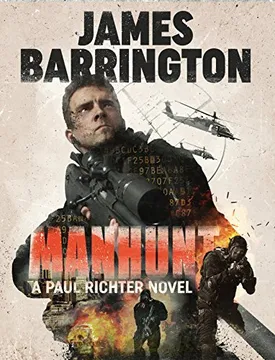
Download PDF
Download EPUB
.epub digital book format is ideal for reading ebooks on phones, tablets, and e-readers.








