Key Takeaways
1. Embrace Cosmic Unity and the Relentless Flow of Existence
Time is a river, a violent current of events, glimpsed once and already carried past us, and another follows and is gone.
Constant flux. Marcus Aurelius, deeply influenced by Heraclitus, viewed existence as an unceasing river of change. Everything, from the smallest grape ripening to the grandest empire, is in constant flux, rushing into and out of being. This dynamic nature means nothing is stable, and clinging to any fleeting moment or object is futile.
Cosmic perspective. From the vast chasm of infinite past and future, our individual lives and concerns shrink to insignificance. Marcus urged himself to remember this "same old thing" perspective—that all events, patterns, and human dramas have occurred before and will recur. This understanding helps to dispel arrogance, distress, and indignation over transient matters.
Interconnectedness of all things. The universe is a single, unified, living being, with all its parts intimately interwoven and cooperating. Every event, even seemingly random ones, is part of a providential, harmonious design. To complain about what happens is to deny the very nature of this cosmic whole, of which we are but temporary, transforming parts.
2. Master Your Judgments: The Only True Source of Distress
It is not things themselves that disturb people, but their judgments about those things.
Inner fortress. Drawing heavily from Epictetus, Marcus understood that external events hold no inherent power to harm us. Our distress stems solely from our judgments and perceptions of these events. The mind, when fortified by correct judgments, becomes an "impregnable fortress," invulnerable to external turmoil.
Control your reactions. Since we cannot control external circumstances, the only rational path to peace of mind is to control our reactions and interpretations. Whether facing illness, loss, or criticism, the mind can choose not to be affected, preserving its serenity and tranquility. This distinction between what is within our control (judgments, intentions) and what is not (external events, others' actions) is fundamental.
Freedom from negative emotions. By recognizing that fear, anger, and grief arise from faulty judgments about things beyond our control, we can systematically dismantle these destructive emotions. Marcus believed that true freedom comes from aligning our inner world with reason, thereby liberating ourselves from the tyranny of external events and the opinions of others.
3. Strip Away Illusions: Most Coveted Things Are Worthless Junk
The sex act is something rubbing against your penis, a brief spasm, and a little cloudy liquid.
Deflationary analysis. Marcus employed a rigorous analytical method to strip away the deceptive allure of commonly desired things. By examining their true nature, substance, cause, purpose, and duration, he revealed them as "stupid, paltry, decaying, putrid, filthy, vile, contemptible, worthless junk." This included:
- Luxuries: Marble as hardened dirt, gold/silver as residues, purple robes as shellfish blood.
- Food: Roasted meat as cooked carcass, wine as grape juice.
- Pleasure: Sex as a mere biological function, devoid of romanticized glamour.
Transient and meaningless. These material possessions and physical pleasures are fleeting, insubstantial, and ultimately meaningless. They can be owned by anyone, regardless of character, and quickly vanish into the river of time. To pursue them with passion is to chase shadows, diverting energy from what truly matters.
Cure for pride. This stark realism serves as a powerful antidote to pride and arrogance. When one sees the coveted objects of the world for what they truly are—disgusting, changeable stuff—the urge to accumulate them or boast about them dissipates. It redirects focus from external show to internal substance.
4. Prioritize Your Mind: The Body is a Temporary Vessel
You are a little wisp of soul carrying a corpse.
Body as a "battered crate." Marcus, echoing Epictetus, viewed the physical body with disdain, describing it as "a mess of blood, pieces of bone, a woven tangle of nerves, veins, arteries," or simply "earth and garbage." It is a temporary, decaying vessel, constantly demanding attention through hunger, thirst, fatigue, and pain.
Mind as the true self. In contrast, intelligence or mind is the precious, unique component of a human being. It is the only part we truly own, capable of discerning cosmic operations and acting appropriately with that knowledge. The mind is the "inner fortress," invulnerable to external threats and bodily afflictions if properly trained.
Freedom from bodily demands. Marcus looked forward to death as a release from the relentless demands and pains of the body. By prioritizing mental and spiritual fitness over bodily comforts and pleasures, one achieves a unique self-satisfaction, free from fear and desire, and integrated with the divine order.
5. Live Fully in the Present: It's All You Truly Possess
For you can’t lose either the past or the future. The past is gone. The future isn’t here. How, then, could you lose what you don’t have?
The fleeting now. Marcus emphasized that we live only in the present, a brief instant in the vast abyss of eternity. The past is gone and cannot be changed; the future is unknowable and may never arrive. Therefore, dwelling on past regrets or future anxieties is a futile waste of our most precious resource: the present moment.
Gift of the present. This understanding liberates us to focus intently on what is within our control now. It's an urgent call to action: to exercise reverence, justice, wisdom, and all virtues in our current circumstances. Postponing goodness for "tomorrow" is a self-inflicted wound, as tomorrow is never guaranteed.
Dispelling fear of death. By realizing that only the present can be lost, the fear of death diminishes. Whether one lives for three days or three thousand years, the actual loss upon dying is merely the current moment. This perspective equalizes all lives in the face of eternity, making death a natural, unremarkable transition.
6. Recognize Humanity as a Unified Social Body: Act for the Common Good
We were born to work together like feet, hands, and eyes, like the two rows of teeth, upper and lower. To obstruct each other is unnatural.
Inherent sociality. Marcus believed that rational beings are naturally drawn to one another, forming families, friendships, and communities. This impulse is stronger than any divisive tendencies, as humans are fundamentally "limbs" of a larger, rational social body. To act selfishly or foster discord is to "cut oneself off" from this natural unity.
Cosmopolitan duty. As citizens of both Rome and the entire cosmos, our "good" is inextricably linked to the good of both communities. What benefits the whole cannot harm its parts. Therefore, every action should aim at the common good, contributing to the well-being of fellow humans and the harmonious functioning of society.
Mereology of ethics. Just as a hand helps the body, and the body benefits all its parts, helping other rational beings is indirectly helping oneself. Antisocial actions are like a limb rebelling against its own body, weakening the structural integrity of one's life and the community. Even when others err, our duty is to instruct or endure them, never to abandon them.
7. Uphold Justice and Reverence: The Pillars of a Virtuous Life
To feel grief or anger or fear, Marcus concludes, is to become a fugitive from justice.
Justice as common good. Justice, for Marcus, means acting in ways that promote the common good, as rational beings are designed to help, not harm, one another. It is a responsibility to be fulfilled in one's own actions, not an expectation imposed on others. Injustice, therefore, is a transgression against nature's will and a degradation of oneself.
Reverence as obedience to nature. Reverence for the divine is understood as accepting and embracing whatever happens, as it is decreed by the law of nature (logos) and Providence. To complain, grieve, or fear what fate brings is to become a "fugitive" from this divine law, disrespecting the cosmic order.
Blasphemy and injustice. Marcus explicitly linked injustice and blasphemy. Lying, whether deliberate or involuntary, conflicts with truth and nature's harmony. Pursuing pleasure as good and fleeing pain as evil is also blasphemous, as it reproaches nature for its indifferent distribution of these things, which are not true goods or evils.
8. Employ Philosophy as a Therapeutic Guide for Character
He should not think of philosophy as his instructor, but as the sponge and egg white that relieve ophthalmia, as a soothing ointment, a warm lotion.
Philosophy as remedy. Marcus viewed philosophy not as an academic pursuit for intellectual show, but as a practical therapy for the soul. It's a "soothing ointment" for mental afflictions, curing the "ophthalmia" (inflammation of the eye) that blinds us to reality and prevents clear judgment.
Cultivating virtues. The task of philosophy is modest and straightforward: to instill virtues like modesty, humility, straightforwardness, and honesty. It helps us recognize our shortcomings and provides the tools to overcome them, protecting us from vices like arrogance, self-conceit, and the "imperialization" that can corrupt power.
Resilient mind. Philosophy trains the mind to be like a "self-cleaning spring" or a "blazing fire." A virtuous mind, like a spring, remains clear and unstained despite attempts to pollute it, carrying away impurities. Like a fire, it converts all obstacles into fuel, growing stronger and brighter with every challenge.
9. Make Goodness Your Sole Profession, Independent of External Validation
No matter what anyone says or does, my task is to be emerald, my color undiminished.
Intrinsic value of virtue. Virtues like justice, truth, kindness, and humility are inherently beautiful and sufficient unto themselves. Their value is not enhanced by praise nor diminished by contempt, much like an emerald's flawlessness is independent of whether it is admired. Our task is simply to be virtuous, regardless of external recognition.
Goodness as a profession. Marcus declared his profession to be "goodness," achieved through correct thought about the world and human nature. This means living truthfully and rightly, without hypocrisy, and accepting what nature assigns. The only true rewards are an unstained character and unselfish acts, not fame or material possessions.
Perfection of character. The ultimate goal is to perfect one's character, living each day without frenzy, sloth, or pretense. This involves a relentless self-scrutiny, acknowledging one's flaws (e.g., slow-wittedness, whining) and actively working to overcome them. It's about being content with what nature assigns and striving for justice and kindness.
10. Extend Unconditional Tolerance and Sincere Love to All
The people among whom his lot has fallen Marcus tells himself to love sincerely.
Compassion for flawed humanity. Despite often lamenting the foolishness, pettiness, and moral failings of those around him, Marcus recognized that people exist for one another. He urged himself to remember that wrongdoers act out of ignorance or compulsion, and that he himself has committed similar misdeeds.
No blame, only action. Blaming others is a pointless action, as their wills are beyond our control. Instead, our duty is to:
- Instruct them if possible.
- Repair any damage they cause.
- Tolerate them without anger, suspicion, or hatred.
- Maintain a watchful, friendly distance if necessary.
- Never abandon them, as they are our "closest relatives" and fellow cosmic citizens.
Sincere philanthropy. Marcus believed that loving those who share our lives is a duty, a "philanthropy" dictated by the cosmos. This active love, combined with tolerance and understanding, allows us to remain at peace, fulfilling our social role even amidst the imperfections of others.
Last updated:
Review Summary
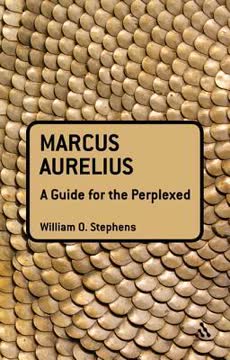
Marcus Aurelius: A Guide for the Perplexed receives strong praise as an accessible companion to Aurelius's Meditations. Reviewers appreciate its detailed biography, clear explanations of Stoic philosophy, and analysis of influences from Heraclitus and Epictetus. While some find the philosophical sections dense, most commend the book's readability for lay audiences. Several reviewers recommend reading it alongside Meditations for deeper understanding. Critics note it may be unnecessary for those already well-versed in Stoicism, though they acknowledge its value for contextualizing Aurelius's work and providing historical background.