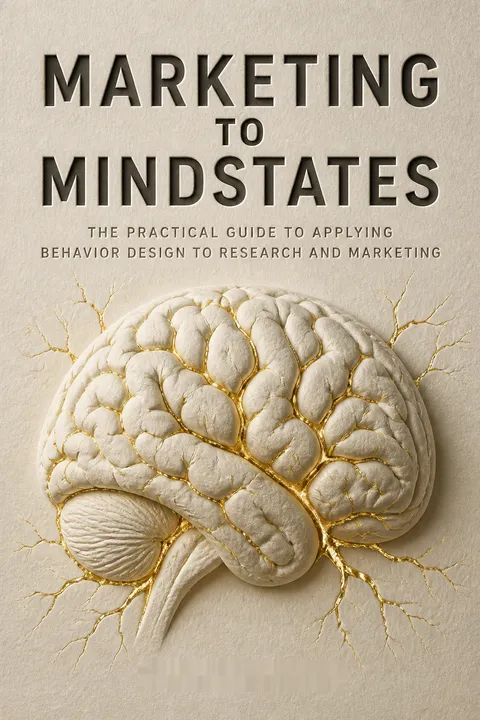


Key Takeaways
Market the mindstate people are in, not the preference they claim to have
Decisions depend on the moment. Leach opens with a new father who had spent months comparing day-care centers. After his son arrived prematurely, he stopped at one center near the hospital and enrolled immediately, without consulting his careful pros-and-cons list. The choice made sense in the intense emotional state of a newly responsible parent, even though it contradicted his usual decision style.
He calls such a temporary, emotionally heightened state a mindstate. His central proposal, behavior design, applies behavioral insights to customer interactions to influence action. He contrasts fast, automatic System 1 processing with the slower, deliberate System 2 that weighs options. The point is not that reason disappears, but that the moment can change which considerations feel important.
What's striking is how this story makes preference look less like a fixed possession and more like a response to circumstances. That fits situated cognition, the idea that thinking is shaped by the body, setting, and immediate demands, rather than happening in isolation. The practical implication is powerful: marketers should ask what a choice means in that moment, not simply who the buyer is. Still, an emotional state does not explain every purchase. Price, access, habit, and deliberate planning can matter just as much. A useful mindstate account should complement those forces, not become a universal explanation for behavior.
Study choices where they happen, not only what people say
Context changes the evidence. Leach argues that consumers often cannot reliably explain why they acted, and may construct reasonable-sounding accounts after the fact. Four contextual influences shape choices: location, the people present, physical and psychological feelings, and the way options are framed. A focus group may reveal stated opinions while missing the conditions that actually guide a purchase.
At PepsiCo, two groups bought chips differently in a research store, despite apparently identical products and conditions. The team then ran less expensive studies in Earl's, a real convenience store, where everyday shoppers encountered actual displays and offers. A rolling hot-dog grill, a server, and sales software replaced studies that had cost about $75,000 each. The real-world setting helped researchers observe behavior rather than relying only on explanations.
This is a strong case for ecological validity: findings are more useful when the research situation resembles the situation where decisions occur. It also highlights a basic measurement problem. What people report is not necessarily what they do, especially when habits and social pressures operate quickly. Yet field research is not automatically definitive. Store traffic, weather, local routines, and other variables can distort results. A disciplined approach pairs observation in context with controlled tests, then checks whether the pattern repeats across places and groups.
Trace purchases to the identity-level goal beneath the practical task
The stated job may be shallow. A functional goal describes an immediate task, such as losing weight or finding storage. A higher-order goal captures the emotionally meaningful outcome behind it. Leach recalls training for a triathlon, apparently to get fitter, but says the deeper aim was recovering confidence and feeling successful. That larger purpose kept him going after a flat tire forced him to carry his bike through much of the race.
In a home-storage study, one woman first described wanting to clear space in a cluttered closet. Asked what the mess meant to her, she became tearful and described feeling ashamed that it reflected poorly on her as a mother. For the brand, the opportunity was not merely to sell storage. It was to understand how an organized home could ease a painful self-judgment.
The move from task to identity is useful because it reveals why two people can buy the same product for very different reasons. It resembles the distinction in motivational psychology between an instrumental goal and a valued sense of self. The closet story also shows why interviews need care: probing can uncover meaningful insight, but shame is not just a marketing opportunity. Researchers should avoid turning vulnerability into a lever without regard for the person who disclosed it. Emotional understanding is most valuable when it improves relevance without exploiting distress.
Choose the emotional motive your brand can credibly serve
One category, different engines. Leach groups common consumer motives into nine types: achievement, autonomy, belonging, competence, empowerment, engagement, esteem, nurturance, and security. A single goal can be powered by different motives. Someone losing weight may want social recognition, while another person with the same goal may be trying to protect future health and family life. The product benefit alone does not reveal the emotional reason to act.
A shoe company assumed mothers in Eastern Europe valued durable children's shoes mainly because money was tight. Interviews at home suggested a deeper motive: mothers wanted to protect their children from bullying over scuffed or damaged shoes. The insight shifted attention from durability alone toward care and protection. Leach advises brands to focus on one or two motives they can genuinely support, rather than claiming relevance to all nine.
The framework's strength is its insistence that identical demographics do not imply identical motives. It helps teams move beyond broad segments toward the emotional logic of a particular decision. The nine categories are best treated as prompts for investigation, not universal boxes into which every customer neatly fits. Motives can overlap, vary by culture, and change with circumstances. The shoe example also illustrates a valuable research discipline: test the obvious explanation against the lived experience of the people involved before building a campaign around it.
Frame the same goal as opportunity or protection, depending on the person
People pursue goals differently. Regulatory focus is a person's approach to reaching a goal. A promotion focus emphasizes gains, growth, and opportunities; a prevention focus emphasizes avoiding mistakes, loss, and risk. These are strategies, not personality types, and the same person can use different approaches in different situations. A weight-loss message, for example, might emphasize added nutrients for someone pursuing positive gains, or fewer unwanted ingredients for someone trying to avoid harm.
Leach describes research for Greenpeace that challenged the organization's familiar use of environmental disaster imagery. The people studied, particularly older and higher-income potential donors, responded more to the positive possibilities of environmental action, such as jobs created through solar energy. Social-media engagement rose after the messaging shifted toward those gains. The lesson is to fit the frame to the audience's approach, rather than defaulting to the brand's habitual tone.
This distinction connects to a broader principle of message congruence: information feels more relevant when it matches the way a person is trying to solve a problem. It also helps explain why more facts do not necessarily make a message more persuasive. A prevention-oriented audience may need reassurance; a promotion-oriented audience may respond to possibility. The challenge is that audiences are rarely uniform, and focus can shift with context. Research should identify the dominant approach in a specific decision, while testing whether a single frame alienates meaningful parts of the audience.
Use the shortcut shoppers already trust to make action feel easy
Make the next step obvious. Cognitive heuristics are mental shortcuts people use to simplify decisions. They can include familiarity, social proof, scarcity, anchoring, or choosing a middle option. Leach's taxi example shows how choice presentation can change behavior without changing the service: New York cab credit-card screens offered tip buttons for 15, 20, and 25 percent. He reports that average tips more than doubled after the readers appeared, as passengers often selected the middle option rather than calculate a tip themselves.
The marketer's task is to discover which shortcuts matter in the actual purchase situation, then make the intended action easier. A story about how a shopper decided may reveal that a friend's recommendation, a free sample, or the first price seen guided the choice. Using several shortcuts at once can make a message cluttered, so Leach recommends identifying a small number and testing them.
The taxi screen illustrates choice architecture: the arrangement of options can steer decisions while leaving formal choice intact. That makes design powerful, but not ethically neutral. A middle option can reduce mental effort, yet it can also exploit discomfort or obscure what a customer truly wants. The useful test is whether a shortcut clarifies a sound choice or pressures someone toward the seller's preferred outcome. Transparent defaults, meaningful alternatives, and easy opt-outs preserve more agency than hidden friction or manufactured urgency.
Combine four behavior signals to identify the buyer's temporary state
Turn observations into a model. The Mindstate Behavioral Model organizes four kinds of evidence: the consumer's goal, the motive energizing it, the approach used to pursue it, and the mental shortcuts that simplify choice. Goals indicate the desired destination; motives explain the emotional drive; regulatory focus describes the route; heuristics help make a decision feel manageable.
The book's 18 mindstates come from pairing nine motivations with two regulatory approaches. For example, achievement combined with a promotion focus becomes optimistic achievement, while achievement paired with prevention becomes cautious achievement. These are temporary decision states, not permanent personality labels. Leach presents a profile for each state, with prompts for goals, feelings, framing, and relevant behavioral cues.
The model's appeal is practical synthesis: it gives researchers and creative teams a shared vocabulary for moving from observation to execution. Its structure also keeps motivation distinct from strategy. Wanting achievement does not by itself reveal whether someone seeks opportunity or tries to avoid failure. At the same time, 18 named profiles can create an illusion of precision. They are useful hypotheses, not validated diagnoses of individuals. Strong application depends on checking whether the categories predict actual choices in the specific setting being studied.
Win attention with psychological fit, not ever-louder spectacles
Relevance can beat volume. Leach warns that brands can get trapped escalating attention-grabbing stunts because competitors respond with something even bigger. His alternative is to make the message fit the shopper's immediate motive and context. At Earl's, a shelf message aimed at hungry, competitive lunchtime customers paired with a small blinking white light. The test produced a 6 percent category sales lift without a discount.
A separate cross-purchase test changed how a soda-and-chips offer presented its discount. Instead of spreading the same total savings over both products, the revised offer concentrated it on soda, the item shoppers felt more guilty buying. Leach calls this hedonic bundling. He reports that some weeks saw cross-purchases rise 20 percent. In both cases, the offer's framing changed while the basic products and total discount remained the same.
These cases make a useful distinction between attention and persuasion. A spectacle may earn notice, but relevance can make a choice feel personally suited to the moment. The bundling example also shows how consumers mentally assign different emotional costs to items in one purchase. Still, a reported lift from a particular store or campaign is not proof that the tactic will generalize. Results should be replicated, and marketers should avoid using guilt as a shortcut when a clearer, more respectful explanation can serve the customer.
Use mindstate profiles as creative guardrails, not plug-and-play scripts
Science should guide, not replace, design. Once research points to a likely mindstate, Leach recommends using its profile to shape creative strategy and test ideas. An optimistic-achievement execution might emphasize progress and visible accomplishment; a cautious-belonging execution might show people building connection while avoiding social exclusion. The specific imagery, wording, and pace should follow the evidence about the audience and decision moment.
He advises creative teams to begin with inspiration, develop ideas, then pressure-test them against the chosen profile and its activation brief. The brief can expose a mismatch, such as a solitary image in a campaign meant to evoke belonging. It is a guardrail, not a demand to use every tactic. The final test is whether the execution aligns with the brand and changes behavior, not whether it checks every box.
This balance matters because frameworks can improve creative discussion without turning design into a recipe. A behavioral brief gives teams reasons to debate choices beyond personal taste, yet visual conventions are not universal laws. A direct gaze, group scene, or energetic pose may carry different meanings across cultures and categories. The strongest use of a profile is therefore iterative: use it to generate and challenge ideas, then test the work with real audiences. Science can make intuition more accountable without pretending to eliminate judgment.
Analysis
Marketing to Mindstates is best understood as a practical translation project. It turns ideas from motivational psychology, behavioral economics, and decision research into a sequence marketers can use: uncover the goal, identify its emotional motive, determine whether the person is pursuing gains or avoiding losses, and reduce the effort required to act. Its memorable stories make this sequence concrete. The father who abandons a spreadsheet, the noisy snack bag that defeats stated environmental preferences, and the taxi tip screen each show that context and presentation can redirect choice.
The framework is most valuable as a research discipline, not as a claim that every decision is irrational or unconscious. Its insistence on observing customers in their actual settings corrects a weakness in conventional surveys: stated intentions are not always reliable forecasts of behavior. The 18 mindstates offer a compact vocabulary for developing hypotheses and aligning creative work, especially across research, brand, and design teams. The evidence in the text, however, is largely presented through case studies and reported business outcomes. Those examples establish plausibility and usefulness, but they do not by themselves show that a tactic caused a lift, or that it will travel to another audience. The book also leans on broad claims about the dominance of nonconscious decisions. In practice, people combine automatic responses with learning, deliberation, social norms, and material constraints. A state-based framework can illuminate one part of that mix without explaining all of it.
The biggest unresolved question is ethical. Making choices easier can help consumers find options that suit their goals, but it can also steer them toward the marketer's goals. The same design insight that reduces friction can exploit guilt, urgency, or social pressure. Responsible behavior design therefore needs a customer-centered test: does the intervention improve comprehension and choice quality, while keeping alternatives clear? Used that way, the model is not a recipe for control. It is a structured way to notice what a decision asks of people, and to make the interaction more relevant, testable, and humane.
Review Summary
Marketing to Mindstates receives mixed reviews, with ratings ranging from 1 to 5 stars. Positive reviews praise its practical approach to behavioral science in marketing, easy-to-understand framework, and useful tools for strategists. Critics argue it lacks scientific backing and originality, calling it an oversimplification of established concepts. Some readers find it repetitive or basic, while others appreciate its accessibility for those new to behavioral economics. The book's application of psychology and neuroscience to marketing is both lauded and criticized, with opinions divided on its value and originality.
People Also Read








Glossary
mindstate
Temporary emotional decision stateA temporary state of mind in which heightened emotional arousal makes intuitive, nonconscious influences more prominent. In Leach's account, a mindstate can change which goals, motives, and choices feel relevant at a particular decision point. It describes a moment, not a stable personality type.
behavior design
Behaviorally informed customer designThe application of behavioral and neurological insights to customer interactions in order to influence behavior. In the book, it combines research into goals, motivations, decision approaches, and mental shortcuts with marketing design. It is presented as a practical extension of creative work, not a replacement for design or brand judgment.
Mindstate Behavioral Model
Four-part consumer behavior modelLeach's framework for understanding and influencing choices in a decision moment. It examines a consumer's goal, the motivation driving that goal, the regulatory approach used to pursue it, and the cognitive heuristics that simplify choice. The combined evidence guides the selection of a relevant mindstate profile and the development of marketing tactics.
System 1 and System 2
Automatic and deliberate processingThe book uses System 1 for fast, automatic, largely nonconscious pattern recognition and judgment. System 2 refers to slower, deliberate reasoning, such as consciously comparing pros and cons. Leach argues that both contribute to decisions, while contextual and emotional influences often shape the initial intuitive response.
Nine human motivations
Nine recurring emotional driversLeach's grouping of motives that can energize consumer goals: achievement, autonomy, belonging, competence, empowerment, engagement, esteem, nurturance, and security. A product category may connect to several, but the framework advises identifying the primary motive or motives in a specific decision rather than trying to appeal to all of them.
regulatory fit theory
Match message to goal approachA theory concerning the fit between a person's motivational orientation and the way a goal is pursued. The book distinguishes promotion focus, which emphasizes gains and opportunities, from prevention focus, which emphasizes safety and avoiding losses. Messages that match the active approach may feel more natural and relevant.
cognitive heuristics
Shortcuts for making decisionsRules of thumb that help people make judgments without evaluating every option from scratch. Examples discussed in the book include familiarity, social proof, anchoring, scarcity, and loss aversion. They can make action feel easier, but they can also produce systematic errors or be used to steer consumers.
hedonic bundling
Place discount on guiltier itemA promotional technique that assigns a combined offer's discount to the item consumers feel more guilty about buying, rather than distributing the savings across all bundled products. The book describes shoppers as perceiving greater value from the same overall discount when it reduces the emotional cost of the item they regard as less virtuous.
behavioral activation brief
Creative guide for a mindstateA practical document tied to a mindstate profile. It translates the profile's goals, motives, regulatory approach, likely feelings, and relevant heuristics into content strategy and creative considerations. Leach presents it as a tool for briefing and pressure-testing work, rather than a checklist that every execution must follow.
FAQ
What's "Marketing to Mindstates" about?
- Behavioral Science in Marketing: "Marketing to Mindstates" by Will Leach is a guide on applying behavioral science to marketing and research. It focuses on understanding and influencing consumer behavior through nonconscious mindstates.
- Mindstate Behavioral Model: The book introduces the Mindstate Behavioral Model, which integrates four social sciences to understand the nonconscious factors driving human behavior.
- Practical Application: It provides actionable tactics for marketers to design creative messaging that emotionally connects with consumers, driving them to choose a brand.
- Field Guide Approach: Unlike academic texts, this book is a practical field guide aimed at solving real business problems using behavioral science.
Why should I read "Marketing to Mindstates"?
- Improve Marketing Effectiveness: The book offers insights into making marketing messages more effective by tapping into consumers' emotional mindstates.
- Understand Consumer Behavior: It helps marketers understand the nonconscious drivers of consumer decisions, which are often overlooked in traditional marketing.
- Actionable Strategies: Readers gain access to practical strategies and tactics that can be immediately applied to improve marketing ROI.
- Behavioral Science Simplified: The book simplifies complex behavioral science concepts, making them accessible and applicable for marketers at any level.
What are the key takeaways of "Marketing to Mindstates"?
- Nonconscious Decision Making: Most consumer decisions are made nonconsciously, influenced by emotional mindstates rather than rational thought.
- Mindstate Activation: Marketers can activate specific mindstates by aligning their messaging with consumers' goals, motivations, and regulatory focus.
- Behavior Design: Applying behavior design principles can make marketing messages more persuasive and effective.
- Eighteen Mindstates: The book identifies eighteen unique mindstates that marketers can target to influence consumer behavior.
How does the Mindstate Behavioral Model work?
- Four Key Factors: The model incorporates goals, motivations, regulatory approach, and cognitive heuristics to understand consumer behavior.
- Mindstate Profiles: It identifies eighteen mindstates based on combinations of motivations and regulatory focus, providing a framework for targeted marketing.
- Behavioral Activation Briefs: These briefs offer specific strategies and tactics for each mindstate, guiding marketers in crafting effective messages.
- Practical Application: The model is designed to be used in real-world marketing scenarios, helping brands connect with consumers on a deeper level.
What is behavior design according to Will Leach?
- Definition: Behavior design is the process of applying neurological and behavioral insights to influence consumer behavior through marketing.
- Consumer Interactions: It involves designing customer interactions that psychologically influence and change behavior.
- Science and Art: Behavior design combines scientific principles with creative marketing to emotionally engage consumers.
- Practical Examples: The book provides examples of behavior design in action, such as using cognitive heuristics to make decisions easier for consumers.
What are the nine core human motivations in "Marketing to Mindstates"?
- Achievement: The desire to feel successful and proud by overcoming obstacles.
- Autonomy: The need for independence and self-determination in actions.
- Belonging: The drive to feel aligned and connected with others.
- Competence: The motivation to feel capable and skilled in activities.
- Empowerment: The feeling of being authorized and equipped to act on choices.
- Engagement: The desire for ongoing excitement and interest in activities.
- Esteem: The need for approval, respect, and admiration from others.
- Nurturance: The feeling of being appreciated and the ability to care for others.
- Security: The need to feel safe and protected from threats.
How can marketers apply the Mindstate Behavioral Model?
- Identify Consumer Mindstates: Use research to determine which of the eighteen mindstates your target consumers are in during decision-making moments.
- Align Messaging: Craft marketing messages that align with the identified mindstate, focusing on the consumer's goals, motivations, and regulatory focus.
- Use Behavioral Activation Briefs: Follow the specific strategies and tactics outlined in the briefs to optimize marketing efforts.
- Test and Refine: Continuously test and refine marketing strategies to ensure they effectively engage consumers in their mindstates.
What are some examples of cognitive heuristics in marketing?
- Scarcity Effect: Consumers place more value on items perceived as scarce, prompting immediate action.
- Loss Aversion: People avoid losing things they feel ownership over, influencing purchasing decisions.
- Social Proof: Consumers are more likely to buy products perceived as popular among large groups.
- Anchoring: The first option presented often serves as a reference point for evaluating other options.
What are the best quotes from "Marketing to Mindstates" and what do they mean?
- "To change minds, you must first change the state of mind." This quote emphasizes the importance of understanding and influencing consumers' emotional mindstates to drive behavior change.
- "We don’t think as much as we think we think." It highlights the nonconscious nature of most consumer decisions, which are driven by emotions rather than rational thought.
- "Behavior design is part intuition, part artistry, and part science." This quote underscores the blend of creativity and scientific principles in crafting effective marketing messages.
- "The future of marketing is a blend of art and science." It suggests that successful marketing requires integrating behavioral science with creative strategies.
How does "Marketing to Mindstates" differ from traditional marketing approaches?
- Focus on Nonconscious: Unlike traditional marketing, which often targets rational decision-making, this book focuses on nonconscious, emotional drivers.
- Behavioral Science Integration: It integrates behavioral science principles into marketing strategies, offering a more scientific approach to influencing consumer behavior.
- Practical Field Guide: The book provides actionable tactics and real-world examples, making it a practical guide for marketers rather than a theoretical text.
- Mindstate Targeting: It introduces the concept of targeting specific mindstates, allowing for more personalized and effective marketing messages.
What is the role of regulatory focus in the Mindstate Behavioral Model?
- Promotion vs. Prevention: Regulatory focus refers to whether consumers approach goals with a promotion (seeking gains) or prevention (avoiding losses) mindset.
- Framing Messages: Understanding regulatory focus helps marketers frame messages in a way that aligns with consumers' natural decision-making strategies.
- Influence on Behavior: Aligning marketing messages with the appropriate regulatory focus can make them feel more natural and relatable to consumers.
- Strategic Application: The book provides strategies for identifying and applying regulatory focus in marketing efforts to enhance message effectiveness.
How can marketers identify consumer mindstates?
- Conduct Research: Use behavioral research methods to understand consumers' goals, motivations, and regulatory focus in decision-making contexts.
- Observe Behavior: Pay attention to consumer behavior in real-world settings to identify nonconscious drivers and mindstates.
- Use Mindstate Profiles: Refer to the mindstate profiles provided in the book to gain insights into consumers' psychological characteristics and decision-making processes.
- Test and Validate: Continuously test marketing strategies and validate them against consumer mindstates to ensure alignment and effectiveness.
Download PDF
Download EPUB
.epub digital book format is ideal for reading ebooks on phones, tablets, and e-readers.








